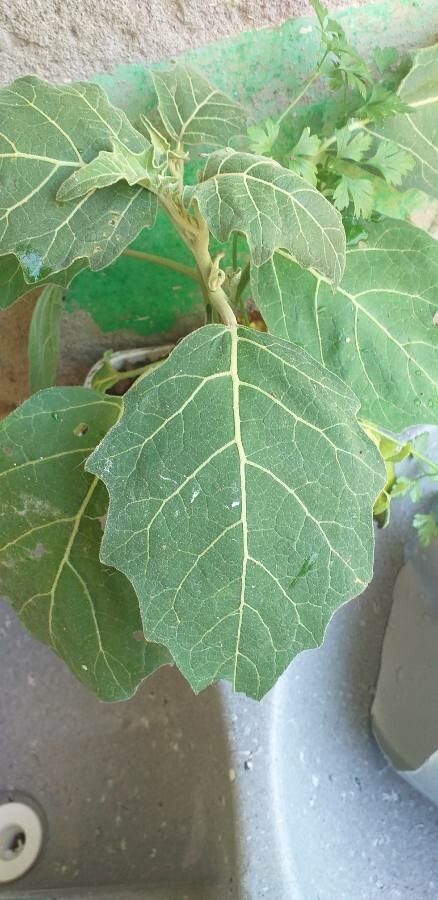
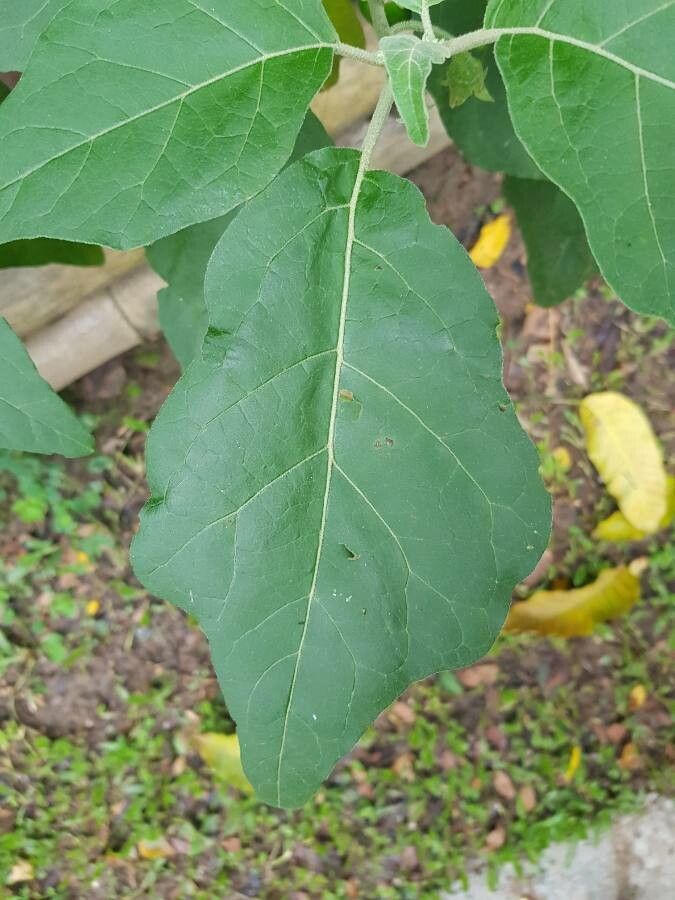
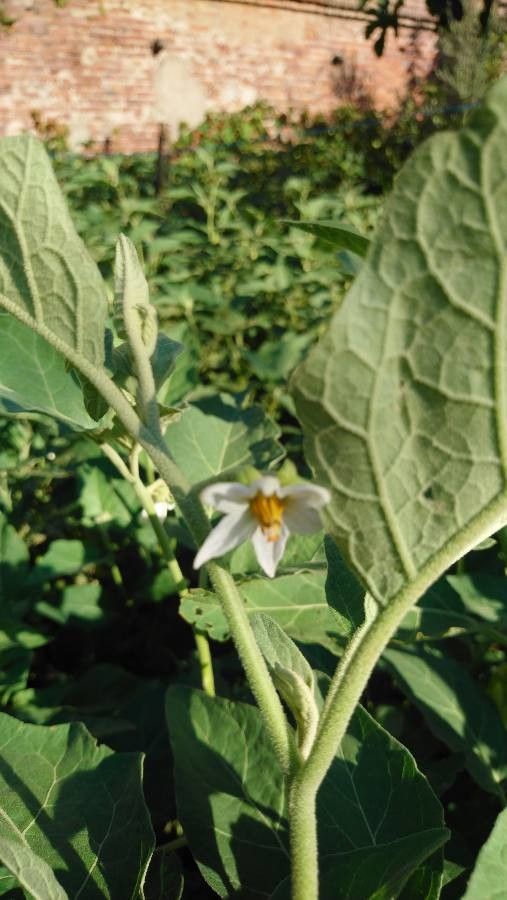
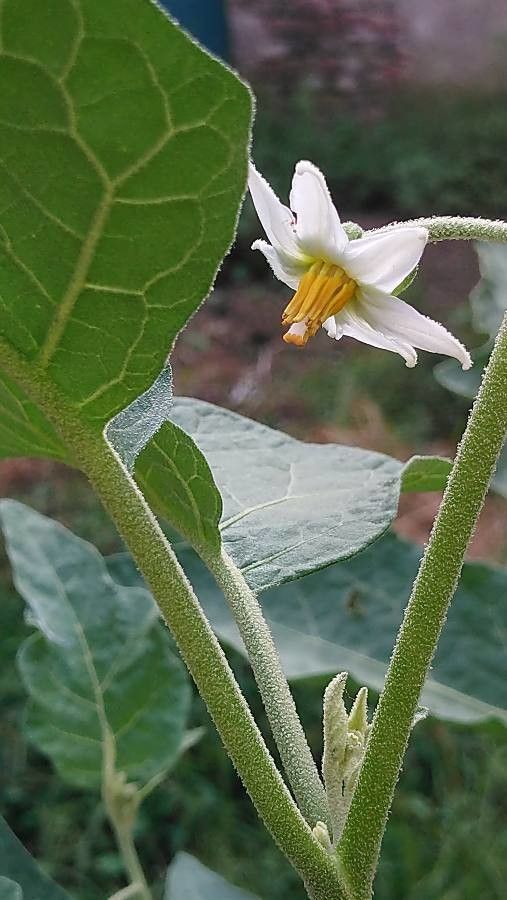
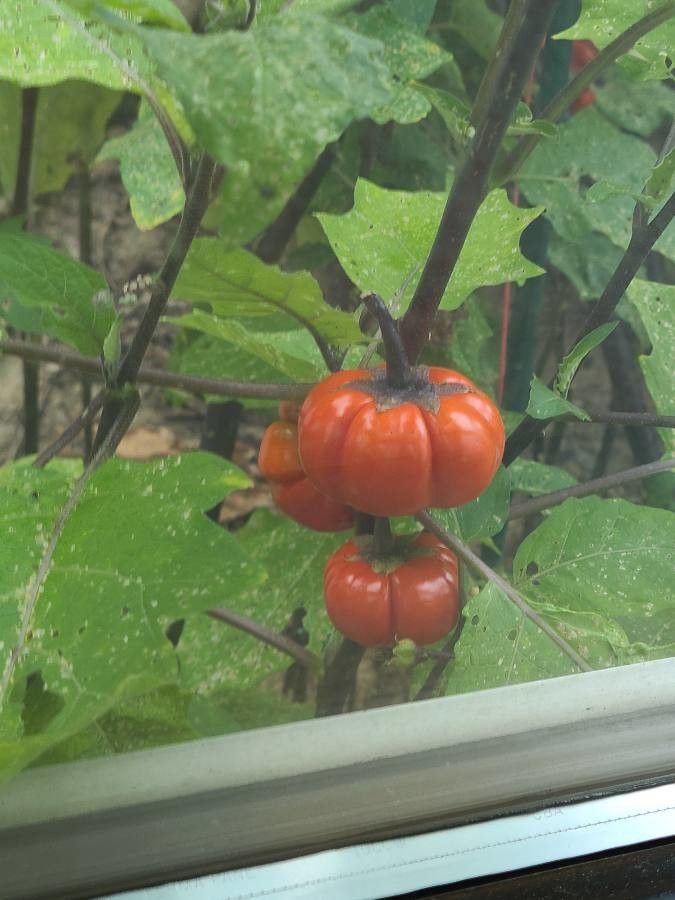
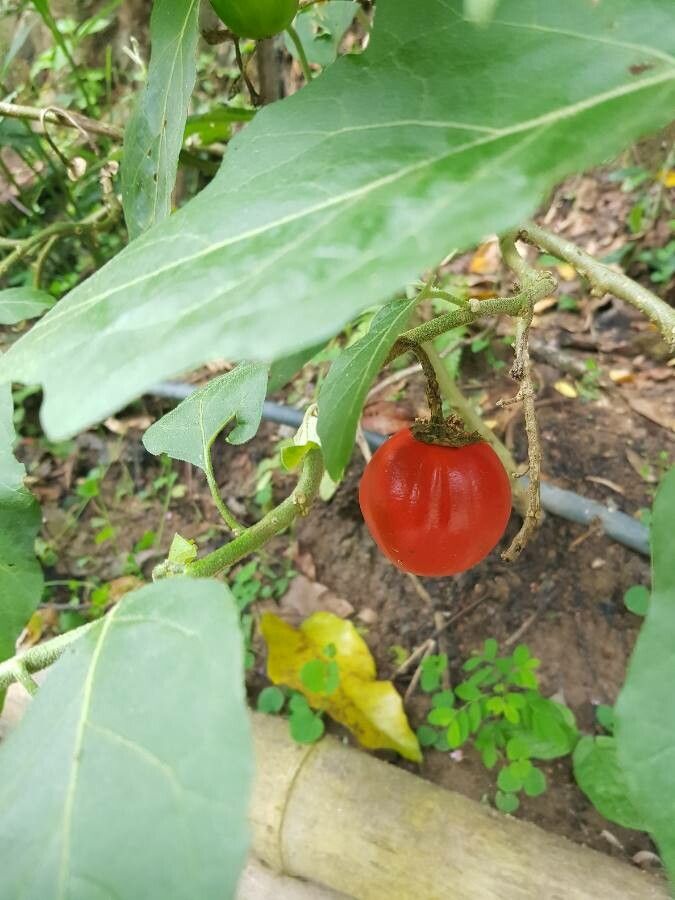
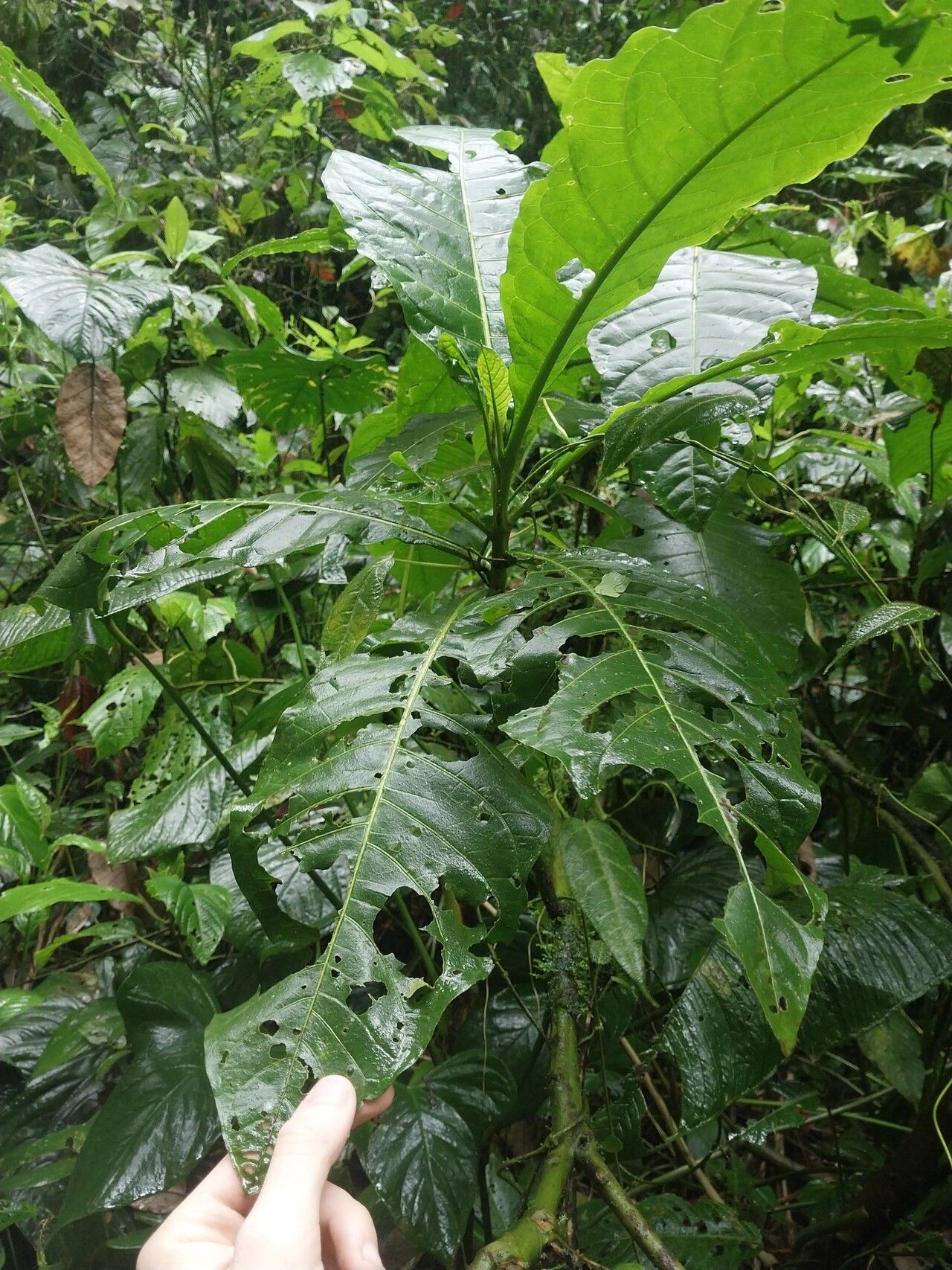
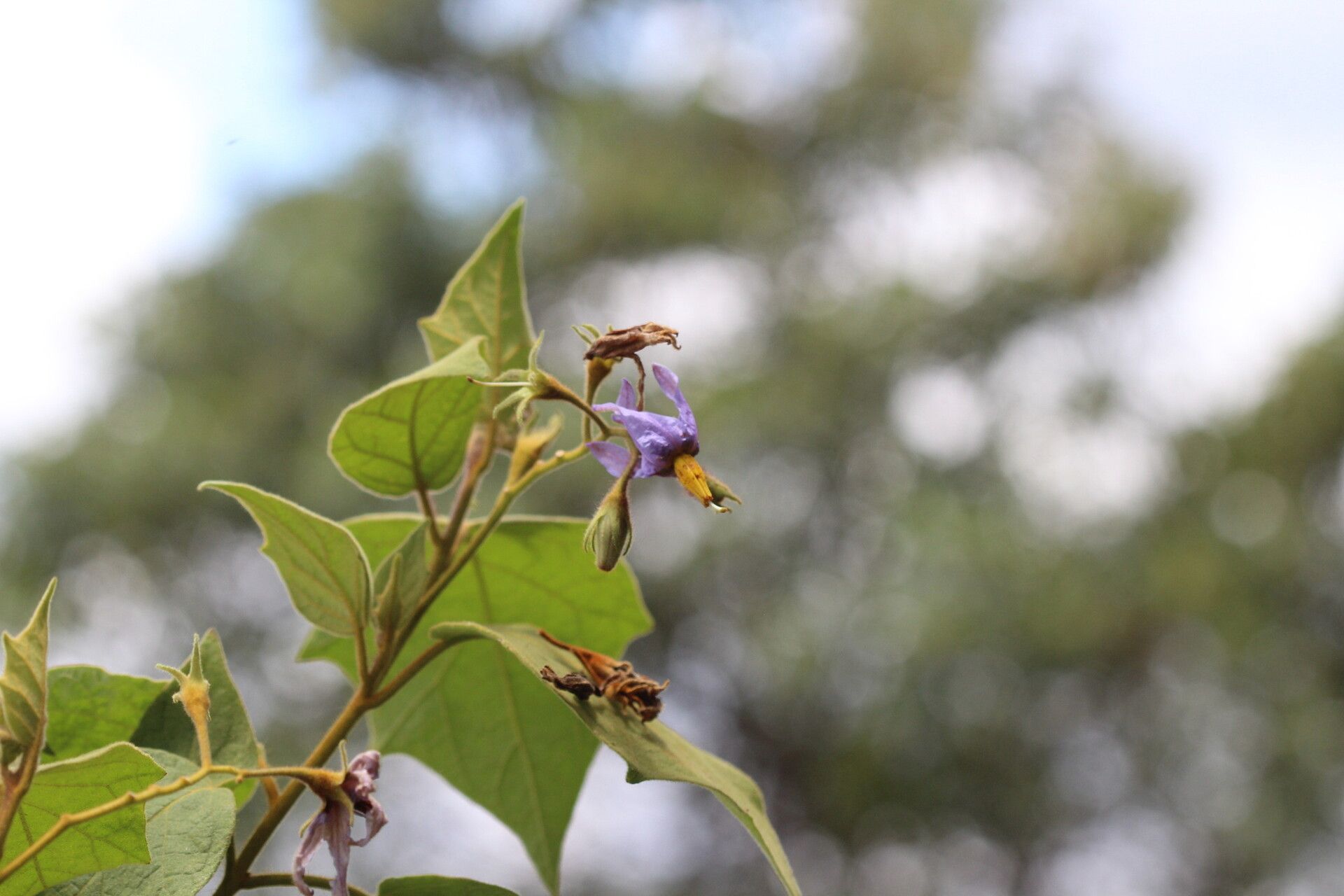
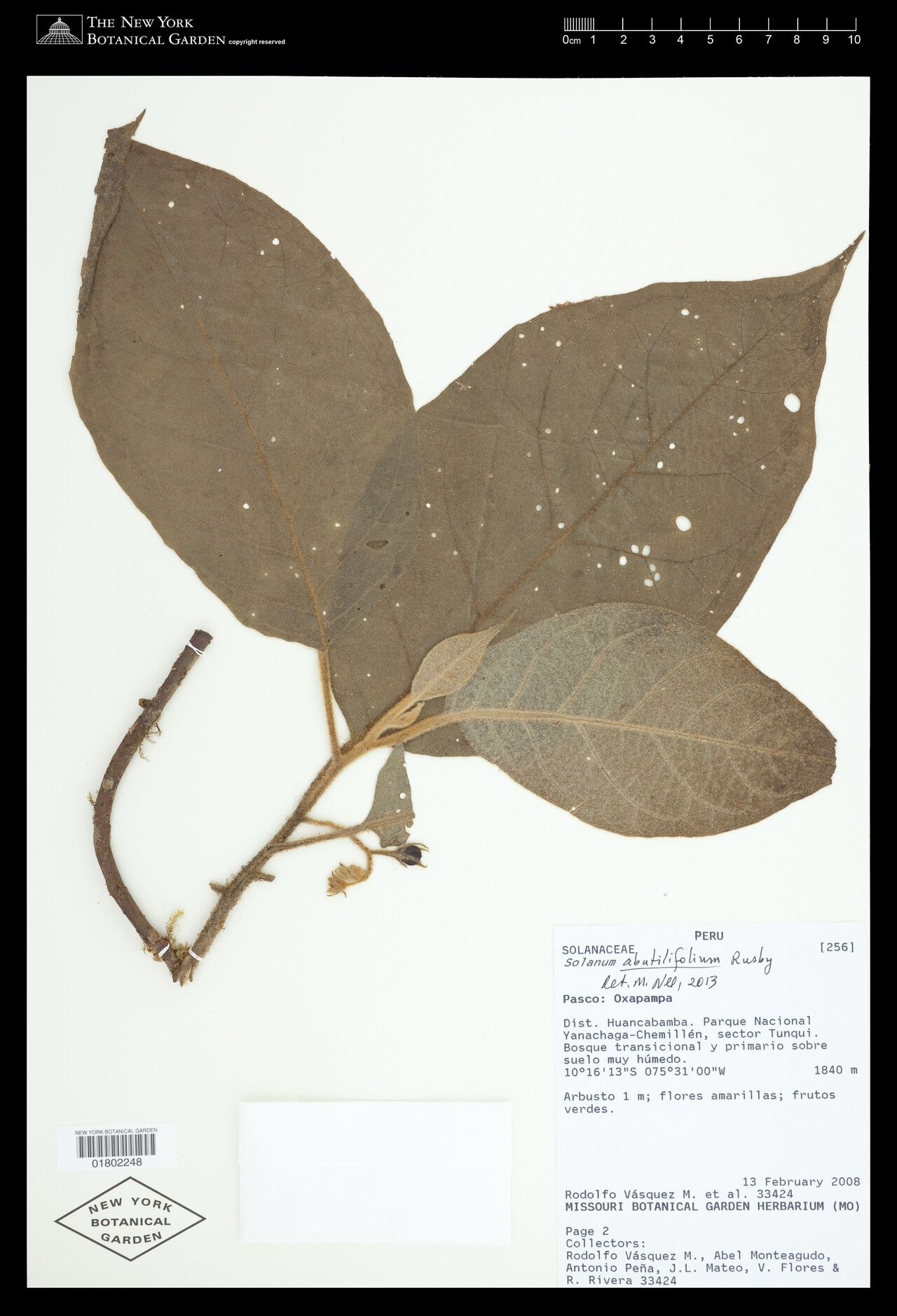
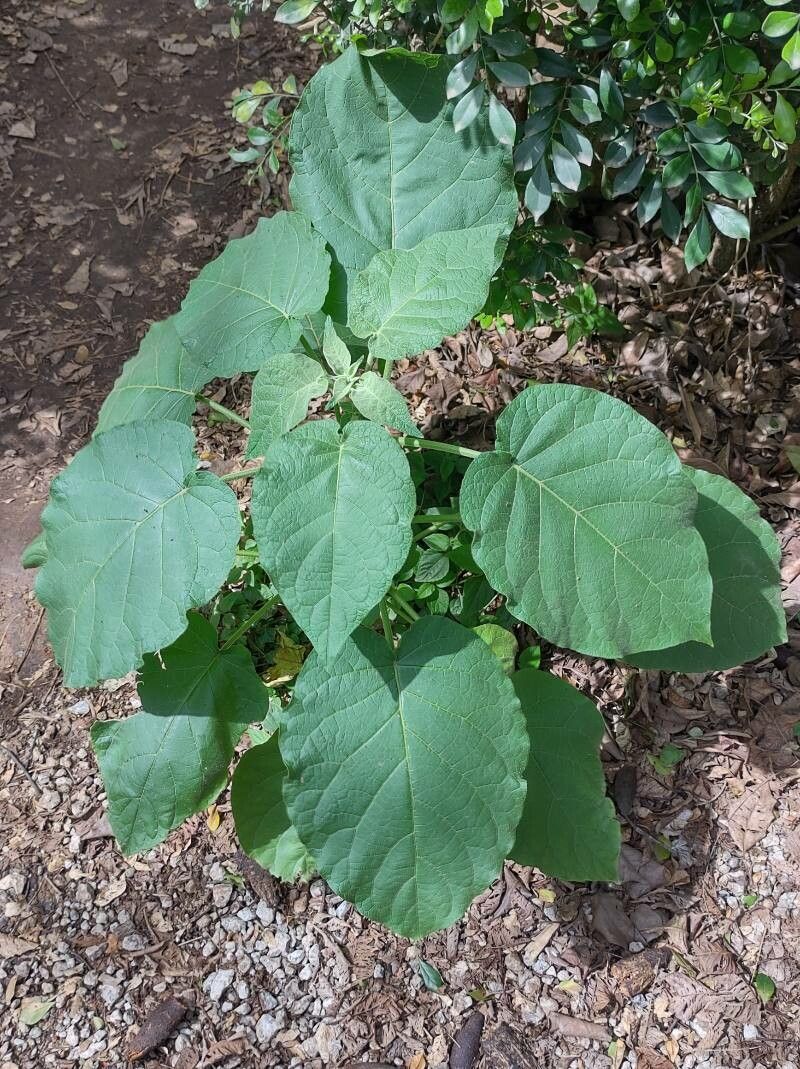
Solanum aethiopicum, the bitter tomato, Ethiopian eggplant, or nakati, is a fruiting plant of the genus Solanum mainly found in Asia and Tropical Africa. It is also known as Ethiopian nightshade, garden eggs, pumpkin-on-a-stick, and mock tomato. It is a popular vegetable in north-east India, and is known as khamen akhaba in Manipuri and samṭawk in Mizo. They are called Titay bii or simply bii in Darjeeling, Sikkim and Nepal and are relished with meat, particularly pork. These names are a result of its varied morphology, with ripe fruit often looking like a cross between an eggplant and a tomato, which are also from Solanum. In fact, the Ethiopian eggplant was so much confused with the ordinary eggplant that this was considered by some a variety violaceum of S. aethiopicum. Ethiopian eggplant may have originated from the domestication of Solanum anguivi. The scarlet eggplant, also known as Gilo or jiló, was long held to be a distinct species (S. gilo) but is nowadays generally considered to be a cultivar group of S. aethiopicum. Ethiopian eggplant has been used as a source of disease resistance genes for several commercially grown Solanaceae crops, including Solanum melongena (eggplant). A lack of genomic resources has meant that breeding has lagged behind other vegetables, although a 1.02-Gb draft genome has been sequenced by BGI, with single-nucleotide polymorphisms identified for use by breeders.
Bitter tomato has moderate resistance to disease and is not highly prone to leaf spot or powdery mildew. It can incur some insect damage, though this is generally minor. The plant is classified as easy to care for, needing only regular watering and occasional fertilization. It typically does not require pruning. Bitter tomato is appropriate for most people to grow outdoors with minimal attention, and it can also be grown indoors if given some care and effort.
How to keep Solanum Aethiopicum.
Light
Bitter tomato does best with strong, uninterrupted sunlight. It can still grow in locations with lower solar intensity, but its vigor and yield may decline. In its natural habitat the plant is accustomed to abundant sunlight. Too little sun can undermine its health, while excessive light can lead to wilting.
Water
Originating from subtropical regions, the bitter tomato thrives in environments with consistent moisture and warmth. It prefers to be watered regularly, ideally once a week, but can tolerate short periods of dryness. Adequate drainage is crucial during peak watering times to prevent root rot, which helps ensure healthy growth when the plant is cultivated outdoors.
Temperature
Bitter tomato is naturally suited to grow in temperatures from 68 to 100.4 °F (20 to 38 ℃), matching the conditions of its native habitat. During seasonal changes, it's advisable to keep temperatures within this preferred range to encourage growth.
Fertilizer
To feed Bitter tomato, apply natural or commercial fertilizer high in nitrogen for leaf growth, phosphorus for roots and blossoms, and potassium for photosynthesis and maximum fruit production. Plant in spring, enrich the soil with compost or manure, and fertilize seedlings once they are 2-4 inches tall. Insufficient macronutrients cause slow growth, wilting, and problems with fruit quality.
Pruning
Bitter tomato plants, known for their bitter-tasting fruit, benefit greatly from pruning between early and late spring. Key techniques include removing dead branches and improving air circulation. Regular pruning promotes healthy growth, reduces pests, and boosts yield. It's essential to use clean tools during pruning to prevent the spread of disease.
Botanical profile.
- Plant Type
- Herb
- Life Cycle
- Annual
- Genus
- Solanum
- Family
- Solanaceae
- Hardiness Zone
- 10-12
- Mature Height
- 76 cm
- Mature Spread
- 30 cm
- Leaf Color
- Green, Dark Green
- Leaf Type
- Deciduous
- Flower Color
- White
- Flower Size
- 2.54 cm
- Bloom Time
- Mid spring, Late spring, Summer, Early fall, Mid fall
- Planting Time
- Spring, Summer, Autumn
- Harvest Time
- Summer, Fall
- Native Area
- Egypt
Other names.
Reader questions.
How should I water my Bitter tomato plant?
Bitter tomato can be watered using various tools such as a garden hose with a spray nozzle, a watering can, or any common watering tool. This plant doesn't have specific preferences regarding the water source, as it can thrive with rainwater, tap water, or filtered water. However, it is advisable to avoid watering from overhead to prevent leaf and flower damage, as well as the potential for disease. A drip irrigation system is often recommended for watering Bitter tomato, as it ensures even and direct watering to the soil. If you are growing Bitter tomato in a container, you can follow a similar watering approach but adjust the tools you use. In this case, you can use a cup, watering can, or tap to water the plant specifically at the soil level.
Why should I put fertilizer on my Bitter tomato plant?
Not all plants require additional fertilizers as some can obtain the necessary nutrients on their own. Bitter tomatoes, like other plants, rely on nutrients for growth and internal processes. The main nutrients plants need, such as nitrogen, phosphorus, and potassium, serve different essential functions. Specifically, foliage growth greatly benefits from nitrogen. However, Bitter tomatoes often struggle to obtain enough nitrogen from the soil alone. This is why many gardeners opt to supplement Bitter tomatoes with additional nitrogen sources.
What are the sunlight requirements for Bitter Tomato plants?
Bitter Tomato plants, also known as Solanum aethiopicum, require a significant amount of sunlight to thrive. Specifically, these plants need full sun exposure, which translates to more than 6 hours of sunlight daily, to ensure their health and maximize yield. However, they can also tolerate partial sun conditions, which means about 3-6 hours of sunlight per day. It's crucial to observe the movement of sunlight through your garden carefully to find the ideal spots that offer the perfect mix of light and shade, enhancing your plant's growth and happiness.
What is the ideal temperature range for growing Bitter tomato?
The Bitter tomato is naturally adapted to thrive in temperature ranges of 68 to 100.4 °F (20 to 38 °C), which is suitable for the temperature of its indigenous environment. It benefits from maintaining these temperature ranges throughout varying seasons to ensure optimal growth. Bitter tomato is a heat-loving plant, and exposure to cold can be harmful. During autumn, it's important to move outdoor-grown Bitter tomatoes indoors, placing them near a bright window—but not too close to heaters—to ensure the temperature remains above 20°C, avoiding any drops towards 5°C which could be detrimental to the plant.
What should I do if I give my Bitter tomato plant too much water or too little water?
If you notice that your Bitter tomato plant is lacking moisture, the solution is simple: water it more frequently. However, overwatering can be a bigger problem if not caught early. Overwatered Bitter tomato plants are prone to diseases that can cause them to decline and die. To prevent this, choose a growing location with plenty of sunlight to dry out the soil and good drainage to allow excess water to drain. If you have overwatered a Bitter tomato in a pot, you may need to transfer it to a new pot with proper drainage and loose soil.
When should I fertilize my Bitter tomato for best results?
Bitter tomato plants generally grow well. To give them a boost during active growth, you can apply fertilizer about once a month. However, it's important to fertilize them only during the spring and summer months. During fall and winter, when the plant is less active and requires fewer nutrients, fertilization is not necessary. If you notice signs of new growth, that's when you should start fertilizing. Whether your Bitter tomato plant is grown outside or indoors in a container, the fertilization schedule remains the same. If it's in a container, you probably won't need to fertilize for the first one to two months. Container plants typically have enough nutrients in their potting soil, so you should only start fertilizing after the plant has been in the same soil for a while.
How does sunlight exposure affect Bitter Tomato plants?
Sunlight plays a crucial role in the growth and vitality of Bitter Tomato plants. These plants flourish under strong, continuous sun exposure, which is essential for their natural habitat that is abundant in sunlight. While Bitter Tomato plants can grow in areas with less intense sunlight, their health, vitality, and yield may suffer. Insufficient sun exposure can lead to health issues, whereas too much sunlight might cause the plants to wilt. Therefore, ensuring the right balance of sunlight is key to the success of these plants.
How does low temperature affect Bitter tomato, and what are the solutions?
Bitter tomato prefers warm temperatures and struggles with cold. It thrives best when temperatures are above 20°C, and it's crucial to keep it above 5°C during winter. Exposure to temperatures below 1°C may cause the leaves to lighten in color, and following frost damage, the plant's color can turn brown or black while showing symptoms of wilting and drooping. To combat this, trimming the frost-damaged parts and moving the plant to a warmer indoor space can help. It's best to position the plant near a south-facing window for sufficient sunlight while avoiding placement near heaters or air conditioning vents, which can lead to excessive dryness.
How often do I need to water my Bitter tomato?
Bitter tomato plants require regular watering throughout the growing season. In spring, water them once a week. As the weather gets warmer, increase watering to two to three times a week. However, be careful not to over-water, as this can harm the plants. It's important to keep the soil moist but not saturated. For potted Bitter tomato plants, water more frequently, as the soil in pots dries out faster. Generally, water container-grown plants a few times a week, compared to once a week for plants in the ground.
When should I not put fertilizer on my Bitter tomato?
To ensure the best results, avoid fertilizing a Bitter tomato that is not in good health. This includes instances where it has a disease or insect pests. Additionally, refrain from fertilizing a dehydrated plant, as this will exacerbate the issue. It is important to only fertilize healthy plants. When watering, be cautious not to splash fertilizer onto the leaves or stem, as it may cause burned spots. Unless you are using a specialized foliage fertilizer, take care to prevent direct contact between the plant and the fertilizer.
What solutions are available for indoor Bitter Tomato plants with inadequate sunlight?
For indoor Bitter Tomato plants struggling with insufficient sunlight, artificial lighting serves as an effective solution. Indoor gardening benefits greatly from artificial lighting, especially during winter or in less sunny areas. Optimal growth is facilitated by LEDs or other suitable artificial lights that provide necessary wavelengths, with full sun plants requiring 30-50W/sq ft, partial sun plants needing 20-30W/sq ft, and full shade plants 10-20W/sq ft of light. The artificial light source should be positioned 12-36 inches above the plant to mimic natural sunlight. To encourage healthy growth, it's recommended to keep artificial lights on for 8-12 hours daily, akin to natural daylight hours suitable for your plant species.
What should be done if a Bitter tomato is exposed to high temperatures?
During the heat of summer, it's essential to keep the Bitter tomato below 38°C to avoid stress from high temperatures. If temperatures soar above 43°C, the plant's leaves may lighten and become more prone to sunburn. Addressing this involves trimming away sunburned or dried parts of the plant and relocating it to a shaded area, especially from the midday and afternoon sun. It's also beneficial to water the plant in the morning and evening to maintain soil moisture and help cool the plant.