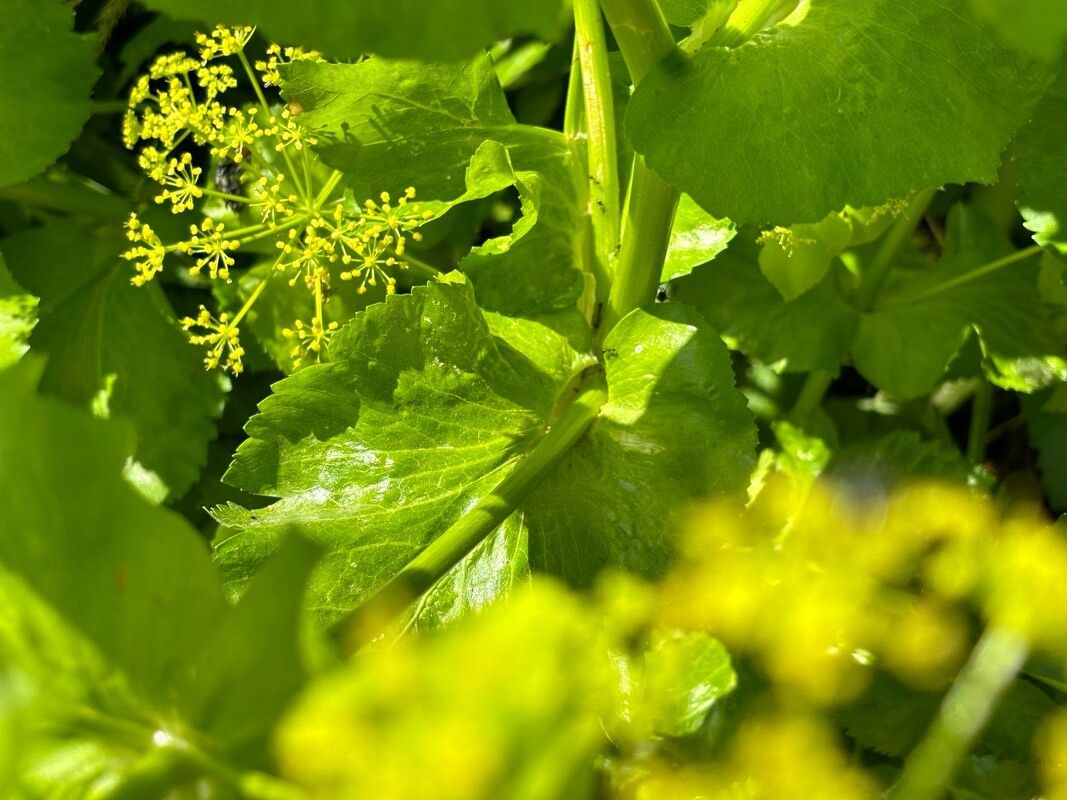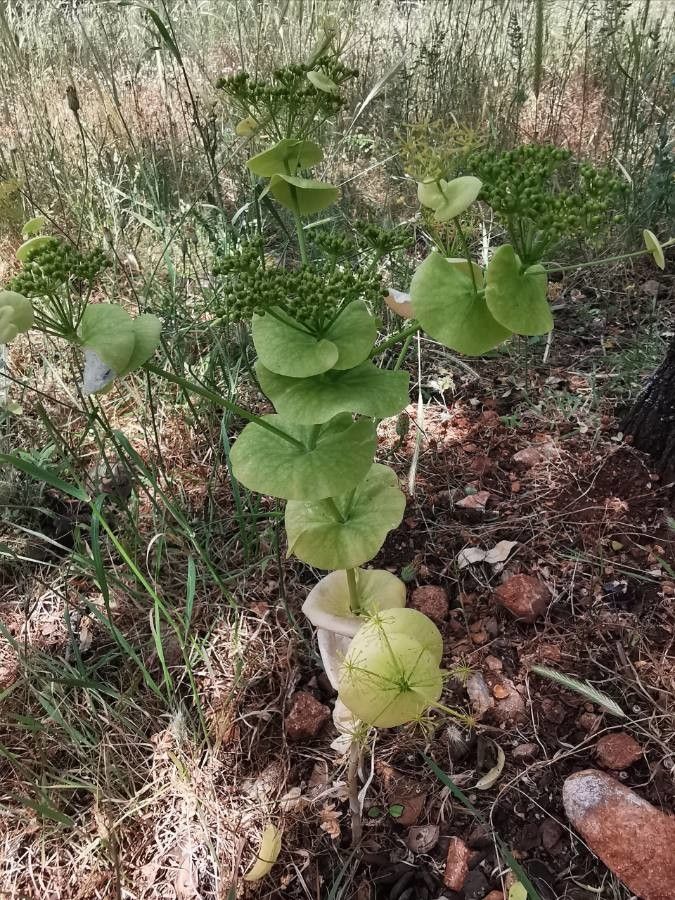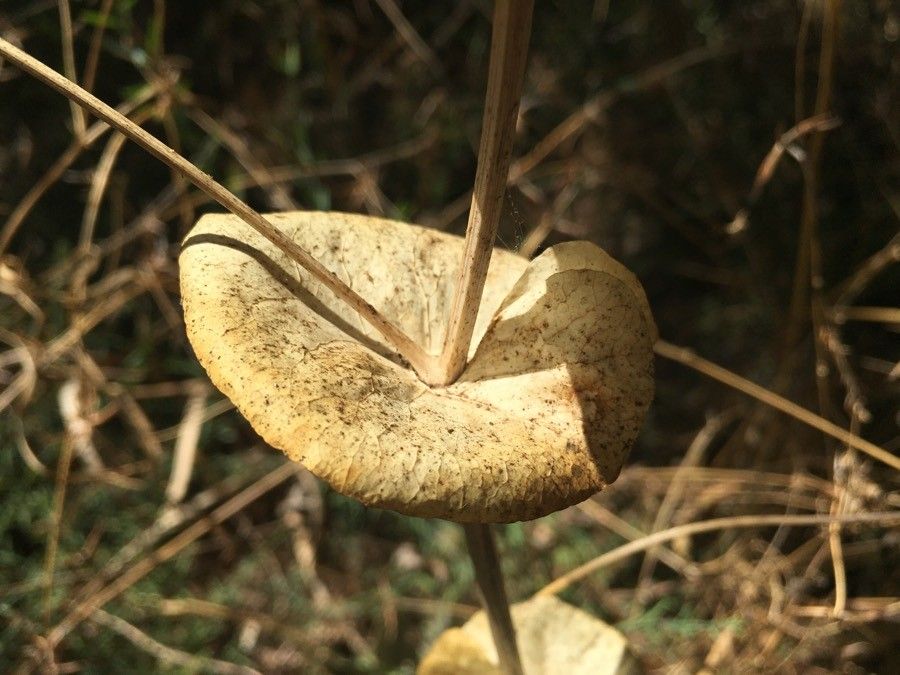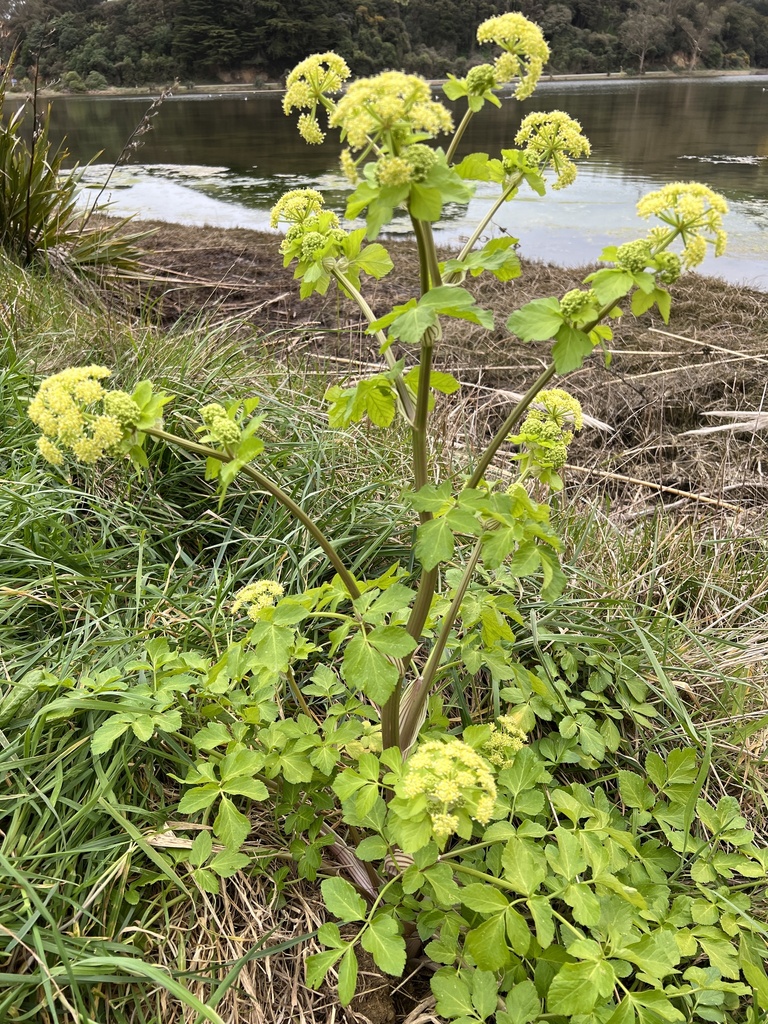
Smyrnium olusatrum, commonly known as Alexanders or black lovage, is a perennial herbaceous plant belonging to the Apiaceae family. Native to the Mediterranean region, it has been cultivated for centuries for its culinary and medicinal properties. This plant can grow up to 1.5 meters tall and features a stout stem with large, glossy green leaves divided into three leaflets. The flowers of Smyrnium olusatrum are small and yellow-green, arranged in umbels at the top of the stem. The plant blooms from April to June and produces small black seeds that are dispersed by the wind. Smyrnium olusatrum has a long history as a food source due to its high nutritional value. The young leaves can be eaten raw or cooked like spinach, while the stems can be used like celery or added to soups and stews for flavoring. In addition to its culinary uses, Smyrnium olusatrum has medicinal properties, such as being used as an antiseptic agent due to its high content of essential oils like limonene, pinene, and myrcene, among others. Overall, Smyrnium olusatrum is an interesting herbaceous perennial with both culinary and medicinal benefits, making it an important part of traditional medicine practices across Europe since ancient times. Today, it continues to be cultivated commercially in some parts of Europe, mainly in France and Italy.
Alexanders has moderate resistance to disease but can be susceptible to illnesses such as leaf spot. Its vulnerability to insect pests varies by variety, though most varieties are not highly resistant to pests. For care, Alexanders requires regular watering and fertilization, along with frequent pruning of yellow leaves. It is important to manage pests and diseases as they appear and to harvest the plant promptly. Alexanders is suitable for people who can spend some time and energy on regular care.
How to keep Smyrnium Olusatrum.
Light
Alexanders grows best when it receives continuous exposure to sunlight throughout the day. It can also tolerate situations where light is diffuse or only present intermittently. Too little or too much sun can upset the plant’s growth pattern and overall health, a condition that stems from its original light-absorbing habitat.
Water
Alexanders thrive in woodland understories and prefer consistent moisture and moderate humidity. They require evenly moist soil, which can be achieved by watering them weekly. During their active growth season in temperate regions, alexanders need to be watered more frequently to support their development.
Temperature
Alexanders originates from areas with temperatures of 68 to 95 °F (20 to 35 ℃). The plant favors a warm climate and may struggle to grow in cooler environments. Measures to provide extra warmth, such as using a greenhouse, can be helpful during colder seasons.
Fertilizer
To maximize Alexanders' yield and flavor, provide sufficient nitrogen throughout the growth cycle, including before planting and at harvest. Plants that are well watered and fertilized produce plentiful, healthy leaves and are less prone to bitterness. Before planting, amend the soil with organic matter such as compost or manure, preferably 2 to 8 weeks beforehand.
Pruning
Alexanders are distinguished by their green stems and aromatic leaves, flourishing through careful pruning from early to late spring. Important techniques involve removing damaged stems to encourage new growth, while also improving airflow and reducing the risk of disease. By pruning regularly, gardeners can keep alexanders vibrant, manageable, and as productive as possible.
Toxicity
Smyrnium olusatrum has no toxic effects reported.
Further reading →
The toxicity and danger assessments provided are for reference only. We do not assure their accuracy, so it's crucial not to depend on them. Seek professional advice when necessary for accurate guidance.
Botanical profile.
- Plant Type
- Herb
- Life Cycle
- Biennial, Annual
- Genus
- Smyrnium
- Family
- Apiaceae
- Hardiness Zone
- 5-9
- Mature Height
- 0.91 m to 1.22 m
- Mature Spread
- 61 cm
- Leaf Color
- Green
- Leaf Type
- Deciduous
- Flower Color
- Yellow
- Flower Size
- 1.02 cm to 5.08 cm
- Bloom Time
- Mid spring, Late spring
- Planting Time
- Spring, Autumn
- Harvest Time
- Early summer, Mid summer
- Native Area
- Libya, Tunisia, Turkey, Cyprus, Greece, Croatia, Morocco, Chad, Lebanon, Syria, Portugal, Italy, Spain, Albania, Algeria, France
Other names.
Reader questions.
How should I water my Alexanders?
The Alexanders have specific preferences for their water intake, and they also emphasize the importance of how you water them. Improper watering techniques can harm your tomatoes. To best water Alexanders, it is recommended to apply water directly to the soil in a slow and gentle manner. Avoid pouring all the water into the soil at once or using overhead watering. While watering slowly, make sure to water deeply to ensure all the soil the Alexanders grow in is sufficiently moist.
Why is it necessary to put fertilizer on my Alexanders?
Alexanders, a plant grown for its edible leaves, has specific nutritional requirements. Among the main nutrients that plants need (nitrogen, phosphorus, and potassium), nitrogen is especially important for the development of foliage. However, Alexanders often struggle to obtain enough nitrogen from the soil to produce a satisfying crop. Therefore, many gardeners choose to supplement the plant's nitrogen intake by providing it with an extra source of this nutrient.
What are the sunlight requirements for Alexanders?
Alexanders requires full sun, defined as over 6 hours of sunlight, or partial sun, about 3-6 hours of sunlight, to thrive optimally. It's crucial to observe the movement of sunlight through your garden to find locations that offer the right balance of light and shade for your plants, ensuring their health and happiness.
What is the native climate for growing Alexanders (Smyrnium olusatrum)?
Alexanders, known botanically as Smyrnium olusatrum, thrives in regions where the temperature range is between 68 to 95°F (20 to 35°C). This plant is best suited for warm climates and may struggle in cooler conditions. To aid its growth in colder weather, adjustments such as using a greenhouse can help. Especially during winter, it's crucial to keep the temperature above 20°C and take measures to protect the plant when temperatures dive towards -5°C (25°F), like bringing it indoors or covering it with protective materials.
What should I do if I give my Alexanders too much or too little water?
If you realize that you have watered your Alexanders too much and are worried about the risk of disease, take action right away. The best solution for an overwatered Alexanders is to remove it from where it is currently growing. Once the plant is out of the ground, let the roots dry a bit before planting it in a new location with well-draining soil. If you are growing in pots, you may also consider moving your plant to a pot with better drainage. On the other hand, if you have underwatered your plant, simply increase the frequency of watering.
When should I fertilize my Alexanders?
To benefit your Alexanders, there are a few points during the growing season when you should apply fertilizer. Firstly, when you prepare the ground for planting, make sure to amend the soil with nutrient-rich organic material like compost or manure at least 2 to 8 weeks before planting. Secondly, when planting, amend the soil once again using the same method. Once your seedlings sprout and reach about 2 inches tall, you can apply the next dose of fertilizer. From there, you can regularly feed your Alexanders with organic matter or commercial fertilizer until harvest, typically fertilizing every two to three weeks. Additionally, it's a good idea to add a layer of compost or manure around the plant to provide a continuous supply of nutrients.
How does Alexanders respond to sunlight?
Alexanders performs best when it receives sustained exposure to sunlight throughout the day. It is capable of withstanding periods of dispersed or intermittent sunlight. However, both insufficient and excessive sunlight can affect the plant's growth pattern and overall health, a trait that stems from its original light-absorbing environment.
How does Alexanders tolerate and react to low temperatures?
Alexanders has a moderate tolerance to low temperatures, flourishing optimally within 20°C to 35°C. In winter, it's essential to keep the plant above freezing point to avoid damage. Exposure to temperatures below -5°C can lead to leaf color darkening and, in extreme cases, cause symptoms like water-soaked necrosis, wilting, and a gradual browning of the leaves. If frost damage occurs, the recommended response is to trim the damaged parts, move the plant to a warm environment immediately, or create a makeshift greenhouse for protection. Placing the plant near a south-facing window once indoors ensures it receives enough sunlight, supplemented by artificial lighting if necessary.
How frequently should I give water to my Alexanders?
To ensure the proper growth of Alexanders plants, it is important to provide them with a significant amount of water throughout the growing season. This can be accomplished by consistently watering them early and often in the spring and summer. In the beginning of the growing season, it is recommended to water your Alexanders about once or twice per week. As the season progresses, it is advisable to increase the frequency of watering. Depending on the weather, you may need to water them twice per day or even more during the summer. Once your Alexanders have completed their major growth phases, you can reduce the frequency of watering to about once per week until the end of the growing season.
When is it best to not put fertilizer on my Alexanders?
When using nitrogen-rich fertilizers, be cautious about applying them near other vegetable plants that need to prioritize fruiting instead of growing foliage. In doing so, you may end up with a vegetable plant that has lots of leaves but produces very few vegetables. To prevent burning, avoid allowing any type of fertilizer to touch or splash onto the leaves of your Alexanders. It's recommended to apply fertilizer at least a couple of inches away from the base of the plant. If your Alexanders is experiencing health issues such as disease, pests, drought, or any other factors, hold off on fertilizing until those problems are resolved. While fertilizer can benefit healthy plants, it can actually harm the plant if applied while it is in poor condition.
What should I do if natural sunlight is insufficient for indoor Alexanders?
For indoor Alexanders, adequate lighting is essential for optimal growth, especially when natural sunlight is lacking, such as in winter or less sunny spaces. Artificial lighting offers a viable solution, with LED lights being a popular choice because they can be customized to provide specific wavelengths of light that plants need. For full sun, partial sun, and full shade plants, 30-50W/sq ft, 20-30W/sq ft, and 10-20W/sq ft of artificial light respectively are recommended. The light should be placed 12-36 inches above the plant to mimic natural sunlight, ensuring the plant receives 8-12 hours of light per day.
What should be done if Alexanders is exposed to high temperatures?
In high-temperature conditions, specifically above 35°C during summer, Alexanders' growth can slow, and leaves may become lighter in color, indicating susceptibility to sunburn. If the plant experiences temperatures exceeding 38°C, it's advisable to trim away sunburned or dried portions and relocate it to a shaded area, particularly away from the harsh afternoon sun. To maintain soil moisture and support the plant's health, watering should be done in the cooler parts of the day, such as morning or evening.