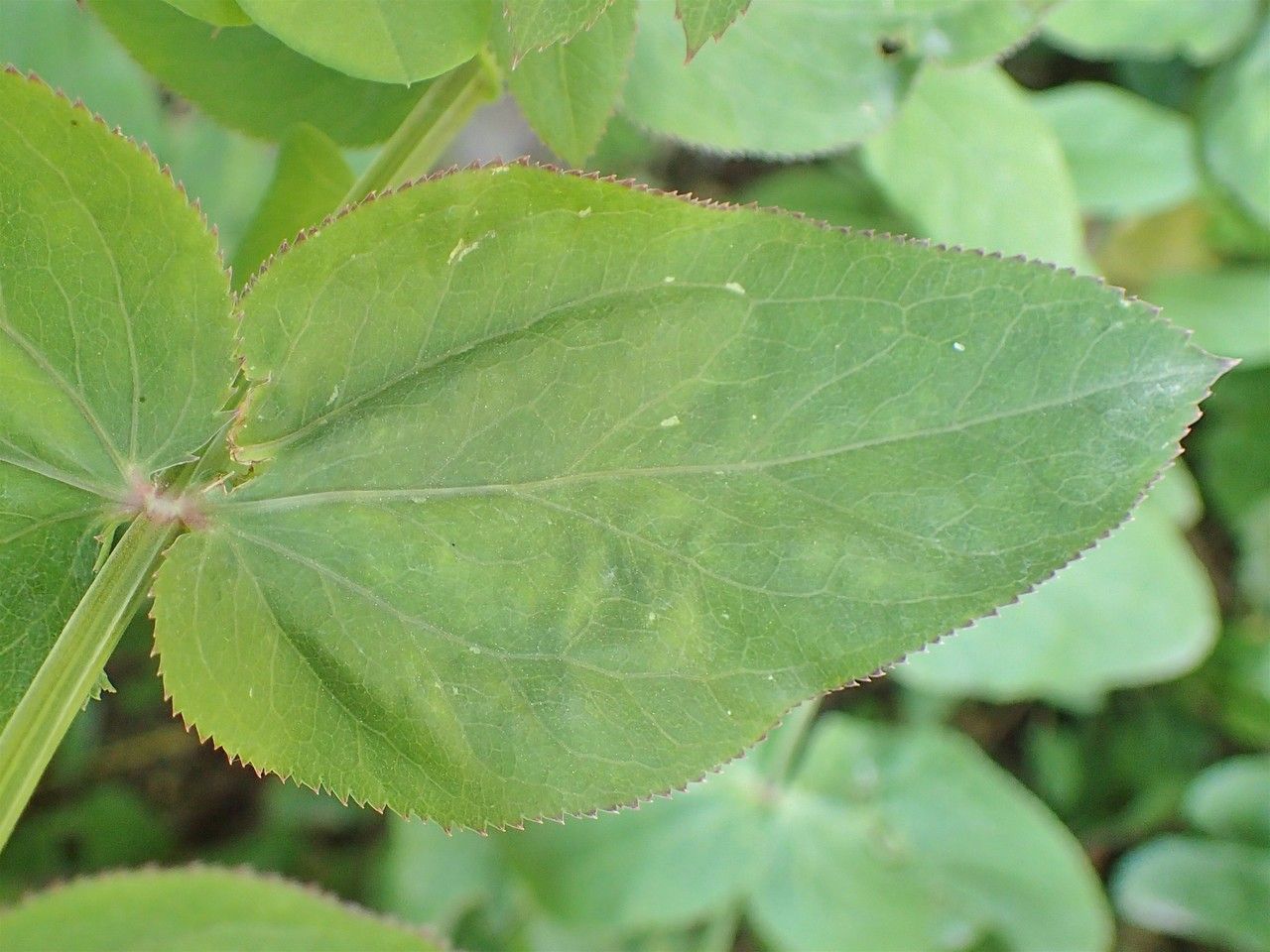
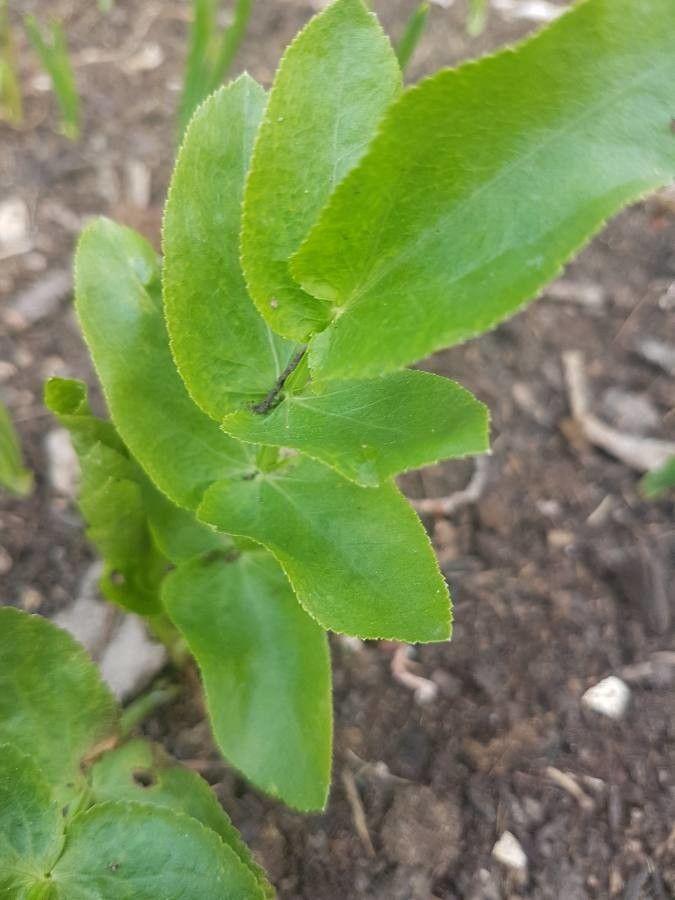
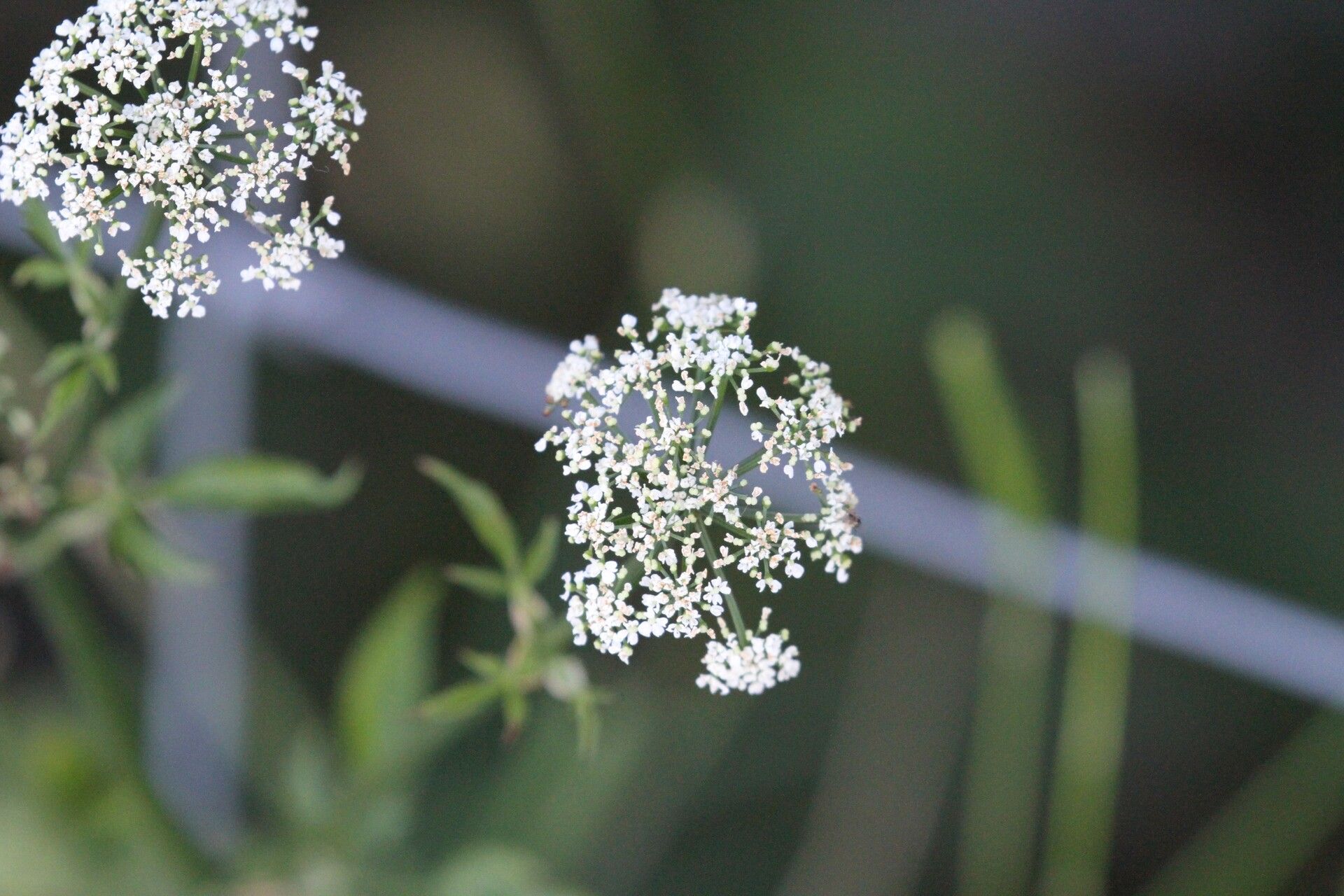
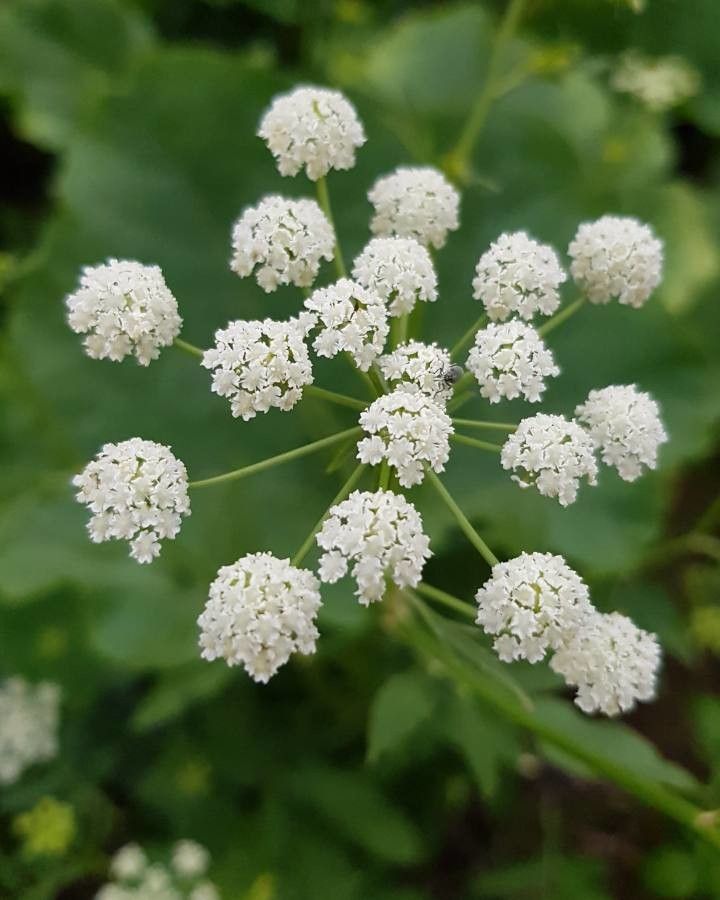
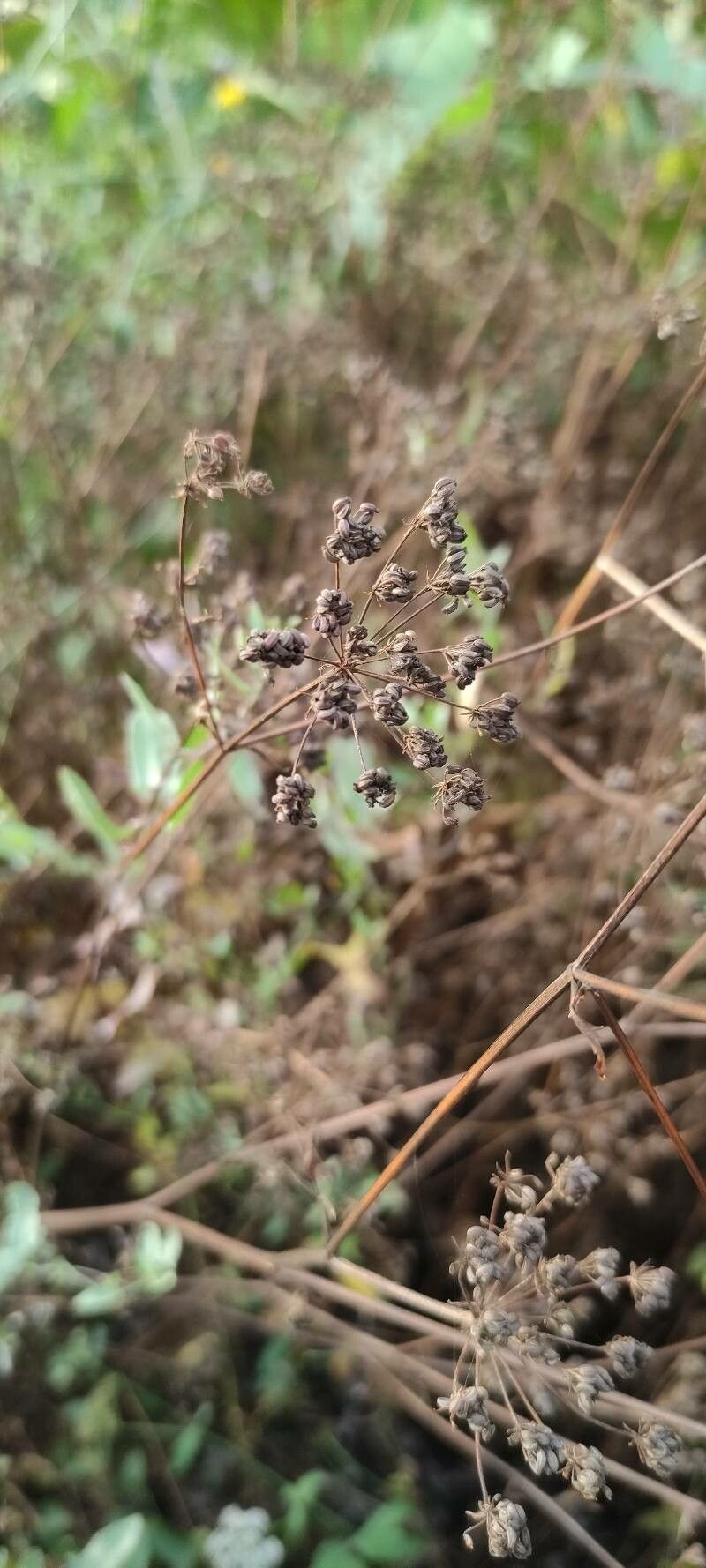
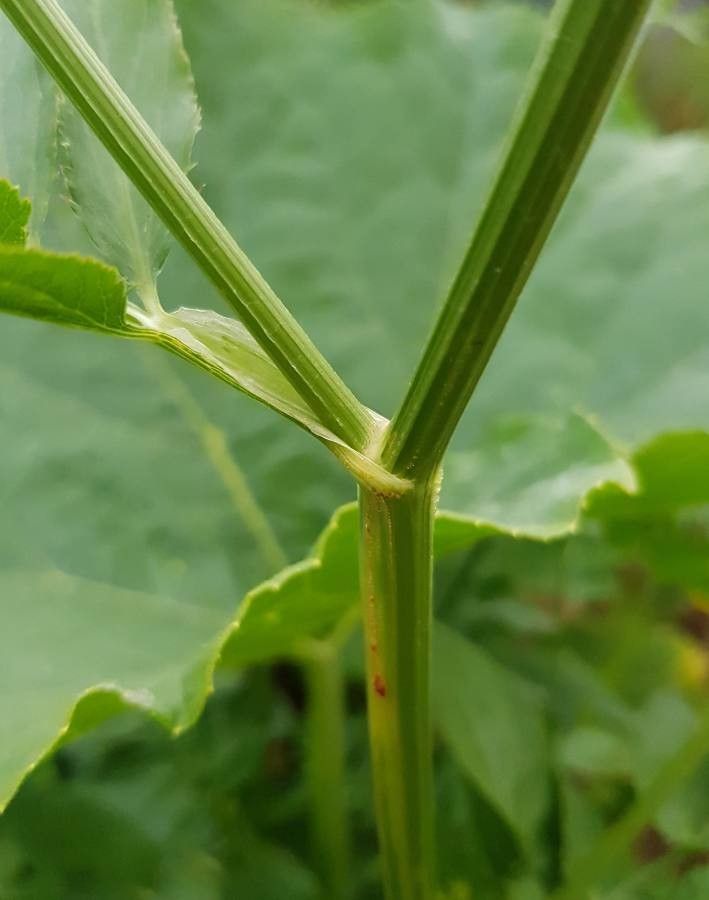
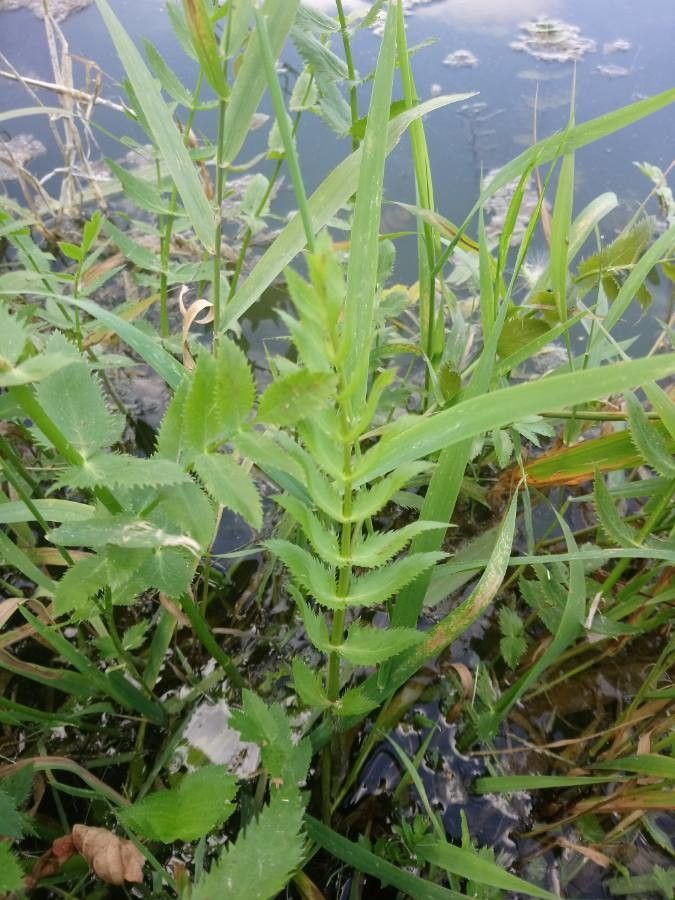
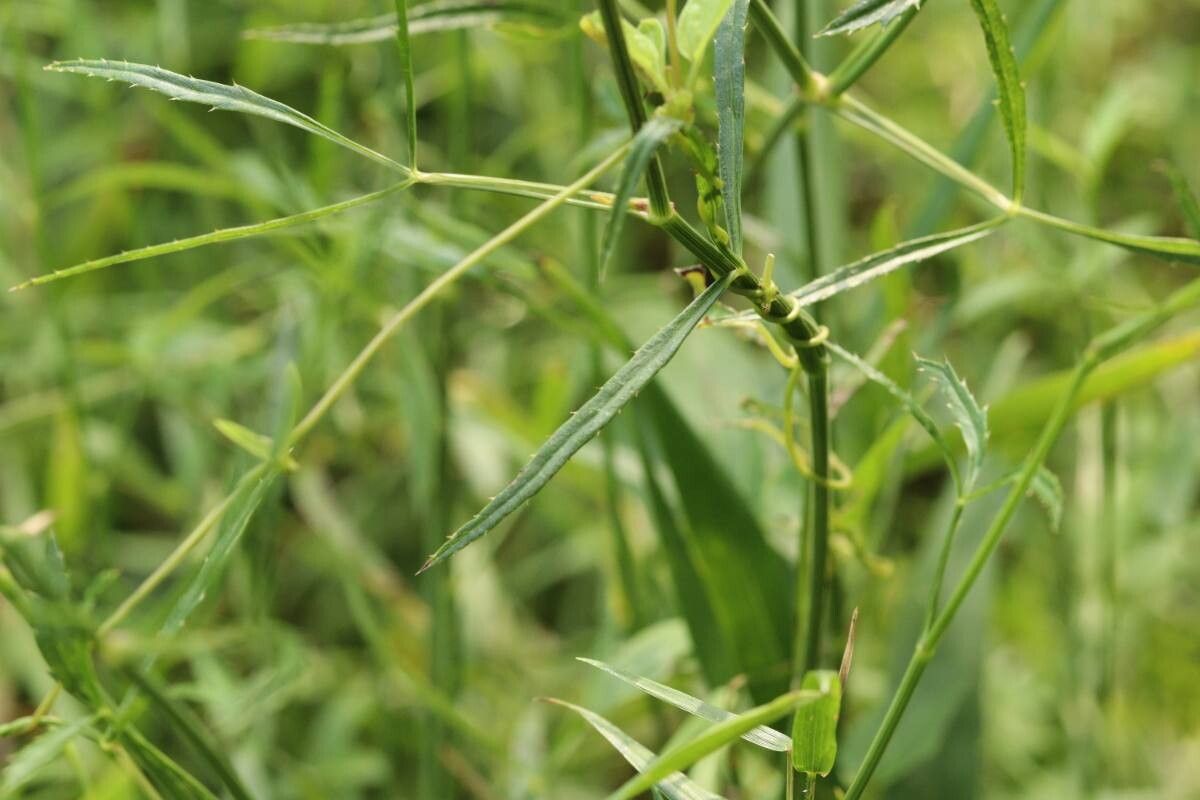
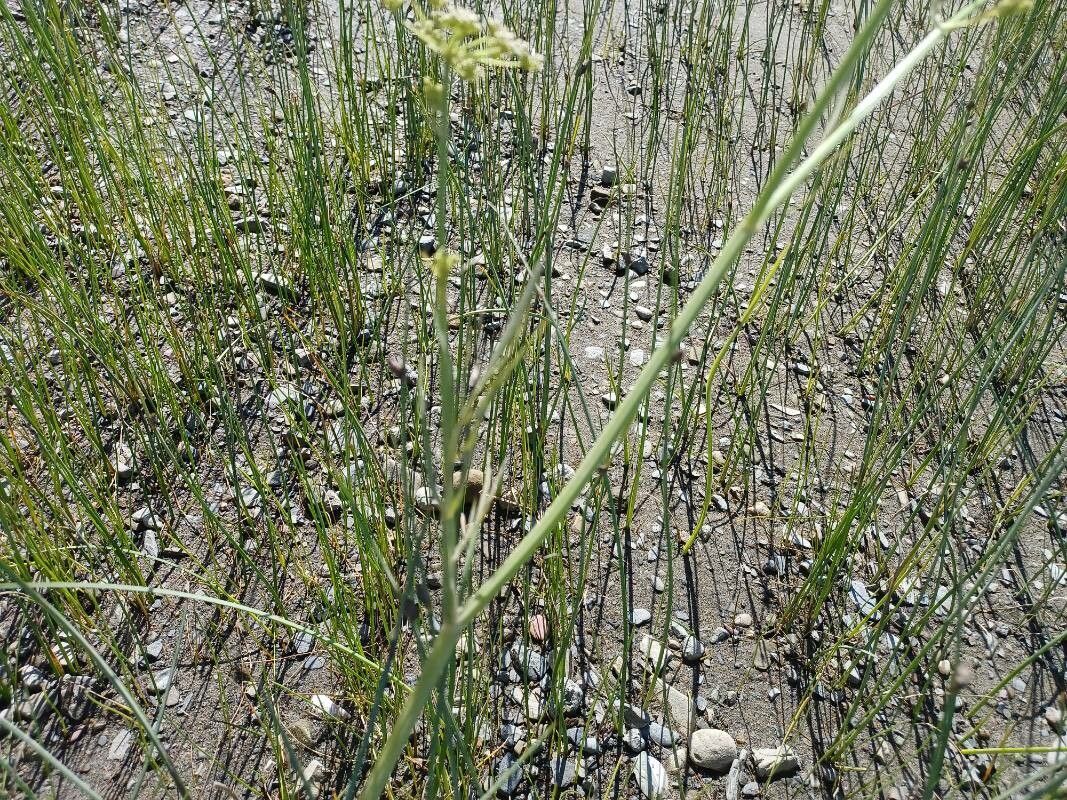
Sium sisarum, commonly known as skirret, is a perennial plant of the family Apiaceae sometimes grown as a root vegetable. The English name skirret is derived from the Middle English 'skirwhit' or 'skirwort', meaning 'white root'. In Scotland it is known as crummock. Its Danish name sukkerrod, Dutch name suikerwortel and German name "Zuckerwurzel" translate as 'sugar root'. Skirret has a cluster of bright white, sweetish, somewhat aromatic roots, each approximately 15–20 centimetres (5.9–7.9 in) in length. These are used as a vegetable in the same manner as the common salsify, black salsify and the parsnip.
Skirret has moderate resistance to disease but can be susceptible to illnesses like leaf spot. Its vulnerability to insect pests can differ by variety, although most varieties are generally less resistant to pests. For care, Skirret requires regular watering and fertilization and frequent removal of yellow leaves. It is important to manage pests and diseases when they appear and to harvest the plant promptly. Skirret is best suited to people who can spend some time and energy on regular maintenance.
How to keep Sium Sisarum.
Light
Skirret is native to habitats with abundant sunlight, such as open fields and sunny meadows. It favors full sun but can also tolerate partial sun.
Water
Skirret thrives best in moist soil, preferring weekly watering that avoids waterlogging. It is typically grown outdoors to take advantage of natural rainfall. During its active growing season, skirret needs well-draining soil that can retain moisture, reflecting its native habitat near bodies of water.
Temperature
Skirret prefers moderate temperatures—about what most people find comfortable. It grows best when conditions are neither excessively hot nor too cold. The main problem in high heat is the danger of sunburn, so providing some shade in summer is recommended to prevent overheating. When temperatures fall, Skirret goes dormant; if you want it to keep growing, you need to keep temperatures higher over winter. Frost can damage the plant and should be avoided.
Fertilizer
Skirret plants benefit from one or two applications of organic, natural fertilizers that include potassium and phosphorus. Apply the fertilizer before planting, make sure it is incorporated and that you water thoroughly. Usually a single application suffices, though a second can be made once seedlings are established. Avoid using too much fertilizer to prevent harming the plants.
Pruning
Skirret is a herbaceous perennial plant known for its edible roots. To promote healthy growth and keep the plant tidy, prune it from early to late spring. Consistently removing dead stems and excess growth helps improve air circulation, which reduces the risk of disease. This practice ensures a vigorous and productive growing season.
Botanical profile.
- Plant Type
- Herb
- Life Cycle
- Perennial
- Genus
- Sium
- Family
- Apiaceae
- Hardiness Zone
- 4-8
- Mature Height
- 91 cm
- Mature Spread
- 30 cm
- Leaf Color
- Green, Gray
- Leaf Type
- Deciduous
- Flower Color
- White
- Flower Size
- 0.25 cm to 0.51 cm
- Bloom Time
- Early summer, Mid summer
- Planting Time
- Spring, Summer
- Harvest Time
- Late summer, Early fall
- Native Area
- Russia, Hungary, Romania, Bulgaria, Moldova, Greece, Ukraine, Serbia
Other names.
Reader questions.
What are the sunlight requirements for Skirret?
Skirret, a sun-loving perennial herbaceous plant, thrives in full sun conditions, requiring above 6 hours of sunlight daily. It originates from open habitats like meadows and grasslands, indicating its preference for substantial sunlight exposure. However, it can also tolerate partial sun conditions. It's essential to observe how sunlight moves through your garden to ensure spots provide a perfect balance of light and shade, ensuring Skirret's happiness.
How can artificial lighting benefit indoor Skirret plants, and what are the guidelines for using it?
When natural sunlight is insufficient, artificial lighting can provide Skirret plants with the necessary light for optimal growth, especially during winter or in less sunny spaces. LED lights are recommended due to their ability to offer specific light wavelengths needed by plants. For full sun plants like Skirret, 30-50W/sq ft of light is needed, while the light source should be placed 12-36 inches above the plant to mimic natural sunlight. Ensuring 8-12 hours of light per day will promote healthier, faster growth.
What are the symptoms of light deficiency in Skirret?
Symptoms of light deficiency in Skirret include smaller new leaves, leggy or sparse growth, faster leaf drop, slower or no new growth, lighter-colored new leaves, and conditions like chlorosis, sunscald, leaf curling, wilting, and leaf scorching. These symptoms indicate inadequate lighting conditions, affecting the plant's growth and health significantly.
What solutions are available for addressing light deficiency in both indoor and outdoor Skirret plants?
To address light deficiency in Skirret, for indoor plants, gradually move them to a sunnier location, ensuring they receive at least 6 hours of direct sunlight daily, or use artificial light sources like desk or ceiling lamps for at least 8 hours a day. For outdoor plants, move them to a sunnier spot gradually to avoid sunburn, and consider pruning obstructions like trees to let more sunlight through. Transplanting smaller plants to a location with ample sunlight and good drainage during their dormant period is also advisable. While parts of the plant affected by insufficient sunlight may not recover, new growth should be healthy with increased light exposure.