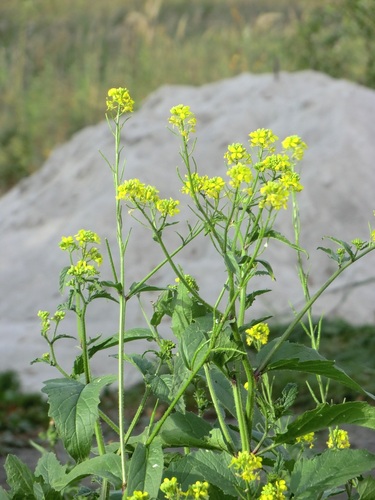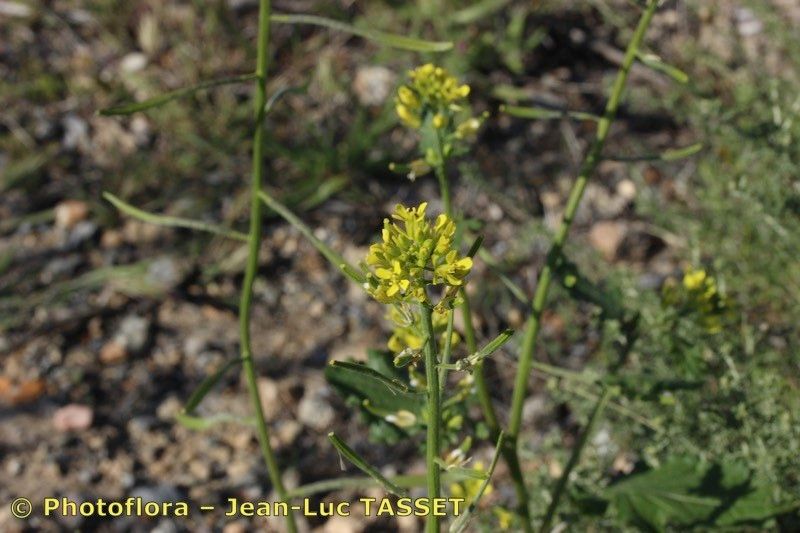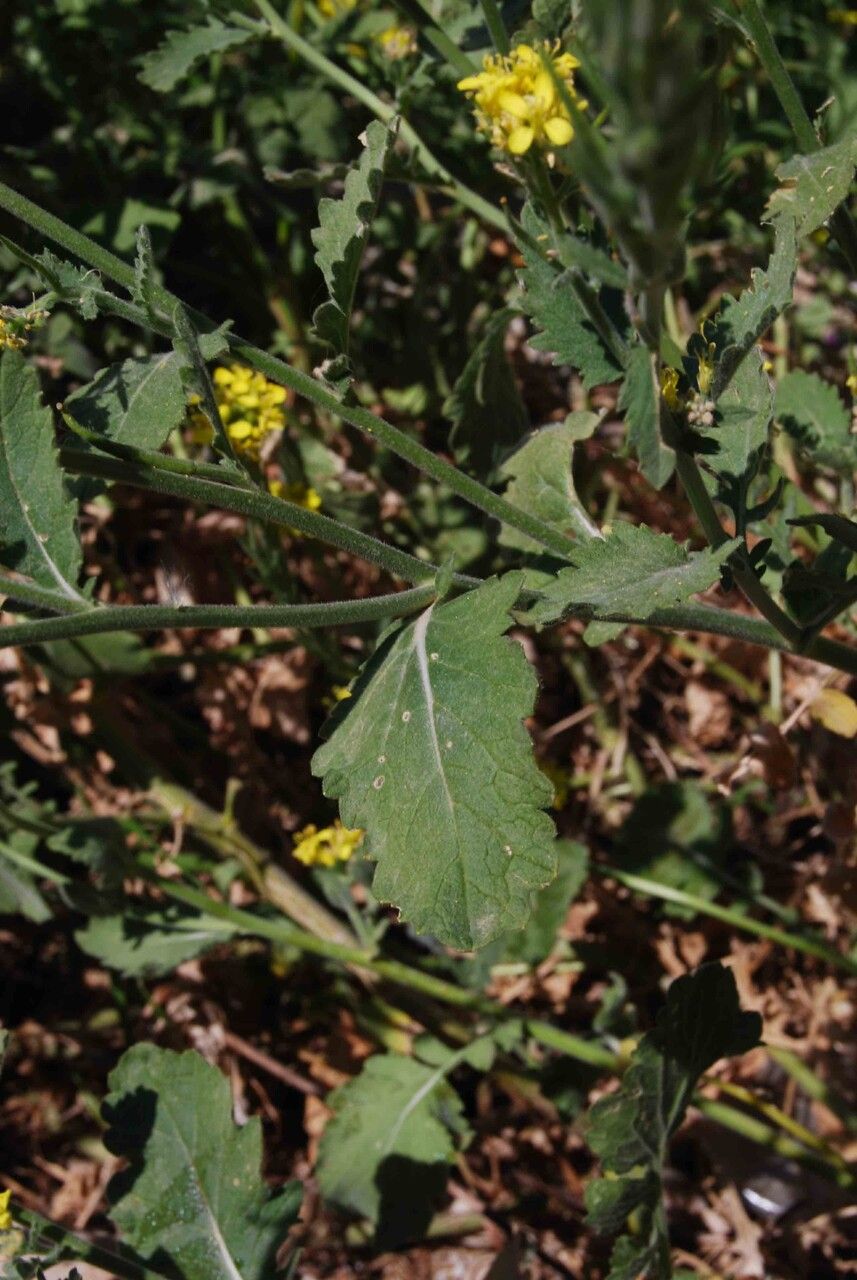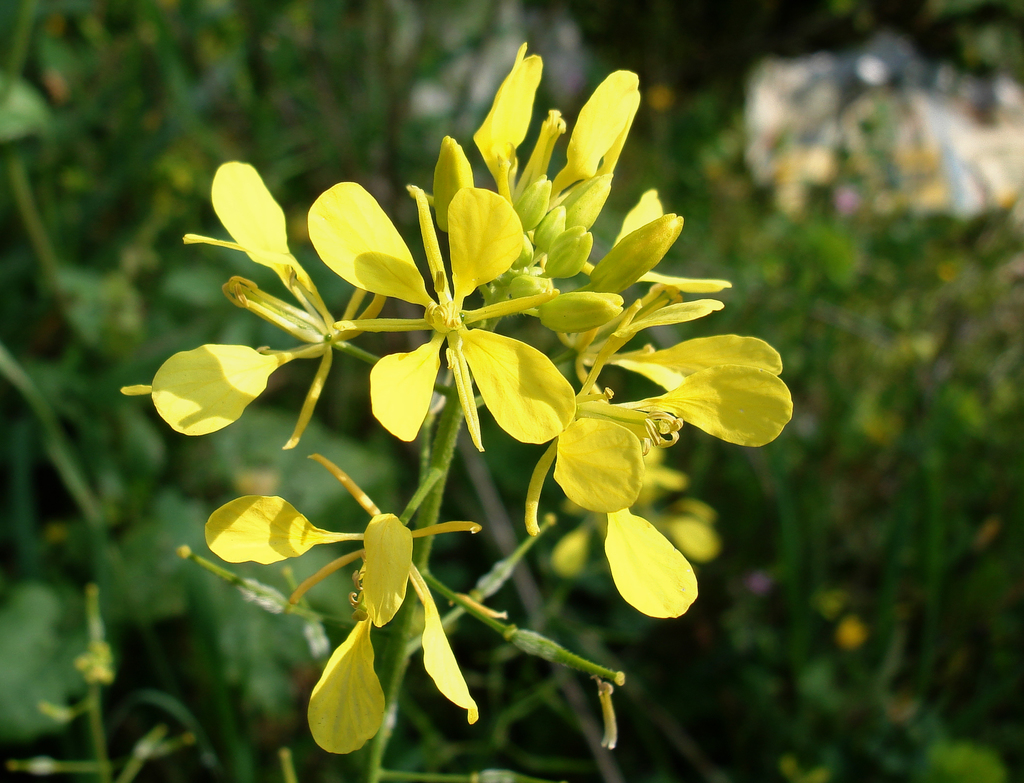
Sinapis alba, commonly known as white mustard, is an annual plant belonging to the Brassicaceae family. Native to the Mediterranean region, it has been extensively cultivated in various parts of the world. This plant can grow up to 1 meter in height and features a branched stem with large, lobed green leaves that are covered in fine hairs. The small, yellow flowers of Sinapis alba, which have four petals arranged in a cross shape, bloom from May to September. These flowers are followed by long seed pods containing small brown seeds. White mustard is widely used as a condiment for its pungent flavor, especially in European cuisine. The seeds can also be used to make mustard oil or as an ingredient in pickling spices. In addition to its culinary applications, white mustard has medicinal properties. It contains compounds such as sinigrin, which have been shown to possess anti-inflammatory properties and may help reduce pain associated with conditions like arthritis. Overall, Sinapis alba is a versatile plant that offers both culinary delights and potential health benefits, making it an important crop worldwide.
White mustard is fairly resistant to disease and generally does not suffer many illnesses. Still, it can be vulnerable to pests and diseases present in its environment. These problems are typically not severe. As for care, the plant requires moderate maintenance. It should be pruned regularly to preserve a tidy appearance and support healthy growth. Fertilizing can also help encourage flowering. White mustard is suitable for anyone with outdoor space, such as a garden or patio, and does not demand extensive care experience. It may need more attention if grown indoors.
How to keep Sinapis Alba.
Light
White mustard prefers sites that receive sunlight for most of the day, though it can also grow reasonably well in locations with only partial sun. Its various growth stages are not greatly influenced by differences in light exposure. Excessive or insufficient sunlight can lead to unhealthy plants.
Water
White mustard thrives in well-drained soils that are kept consistently moist. It should not be allowed to dry out completely. To promote vibrant blooms and optimal seed production, it needs to be watered weekly, especially during its flowering phase. This reflects its Mediterranean origins and its nature as a drought-resistant plant.
Temperature
White mustard originates from temperate regions and does best in temperatures of 68 to 95 °F (20 to 35 ℃). In cooler seasons, modifying the surrounding temperature to mimic this range can help promote healthy growth.
Fertilizer
For optimal development, White mustard needs three fertilizer applications: before planting, one month after the seedlings emerge, and a final application 1 to 1.5 months after the second. Some White mustard types also benefit from extra fertilizer at planting to encourage rapid growth.
Pruning
White mustard, known for its bright yellow flowers, is a fast-growing plant. To maintain its health and appearance, prune it from early to late spring. Focus on removing damaged stems and thinning out overcrowded areas to improve air circulation. Be sure to use clean, sharp tools to make precise 45-degree cuts, which will promote healthy growth and shape. For more detailed guidance, consult horticultural guides.
Toxicity
The seed contains substances that irritate the skin and mucous membranes. Sinapis alba allergy possibly especially in children and adolescents.
Further reading →
The toxicity and danger assessments provided are for reference only. We do not assure their accuracy, so it's crucial not to depend on them. Seek professional advice when necessary for accurate guidance.
Botanical profile.
- Plant Type
- Herb
- Life Cycle
- Annual
- Genus
- Sinapis
- Family
- Brassicaceae
- Hardiness Zone
- 5-9
- Mature Height
- 61 cm
- Mature Spread
- 30 cm
- Leaf Color
- Light Green, Yellow Green
- Leaf Type
- Deciduous
- Flower Color
- Yellow
- Flower Size
- 1.02 cm
- Bloom Time
- Late spring, Early summer
- Planting Time
- Spring, Autumn
- Harvest Time
- Early summer, Mid summer
- Native Area
- Libya, Egypt, Turkey, Sweden, Austria, Slovakia, Montenegro, Slovenia, Morocco, Croatia, Belarus, Uzbekistan, Russia, Iraq, Romania, Belgium, Portugal, Netherlands, Saudi Arabia, France, Tajikistan, Tunisia, Cyprus, Bulgaria, Poland, Armenia, Greece, Ukraine, Serbia, Lebanon, China, Norway, Afghanistan, Syria, Italy, Spain, Switzerland, Denmark, Iran, Albania, Ireland, United Kingdom, Hungary, Algeria, Azerbaijan, Turkmenistan
Other names.
Reader questions.
How should I water my White mustard?
Watering White mustard is simple and flexible. You can use a garden hose, watering can, or any common watering tool. This plant is not picky about its water source, so rainwater, tap water, or filtered water all work fine. However, it's best not to water from overhead to avoid damaging leaves and flowers or causing disease. A good option is a drip irrigation system, which evenly and directly waters the soil. For container-grown White mustard, similar watering methods apply, but you can use a cup, watering can, or tap water directly on the soil.
Why should I put fertilizer on my White mustard plant?
Plants, including White mustard, need nutrients to survive. This is common knowledge among gardeners, regardless of their experience level. Without proper nutrition, White mustard will die shortly after the first pollination. To ensure the plant thrives throughout the blooming season and produces beautiful flowers, it is important to provide the right type and amount of nutrients. Fertilizer plays a crucial role in helping White mustard develop a strong and healthy root system. Given that this plant has a thin and delicate root system, it requires extra support. By fertilizing during planting, White mustard can establish a solid root structure that not only provides stability but also sets the stage for an impressive display of flowers. When done at the right time, fertilization can significantly prolong White mustard's flowering period.
What are the sunlight requirements for White Mustard (Sinapis alba)?
White Mustard (Sinapis alba) flourishes best in full sun conditions, requiring more than 6 hours of sunlight daily. It can also grow in partial sun, with about 3-6 hours of sunlight. It's essential to observe how sunlight moves through your garden, choosing spots that offer a balance of light and shade to ensure the plants' optimal growth. Despite a preference for full sunlight, White Mustard adapts well to varying levels of sunlight, not significantly affected in its different growth stages by these variations. However, too much or too little sunlight may lead to unhealthy plants.
What is the native environment for white mustard?
White mustard, known botanically as Sinapis alba, is native to temperate regions. It thrives in temperatures ranging from 68 to 95°F (20 to 35°C), indicating its preference for moderately warm conditions. Despite its strong cold resistance, it generally does not need special frost protection measures during the winter months. For optimal growth, replicating these temperature conditions, especially in cooler seasons, can ensure the plant remains healthy.
What should I do if I give my White mustard plant too much or too little water?
The solution to underwatering White mustard is simple - water it more regularly when you notice it lacks moisture. Overwatering, however, can be much more problematic. If you don't catch the overwatering early, your White mustard may develop diseases that can cause its decline and death. To avoid this, it is important to choose a suitable location with lots of sunlight to dry out the soil and good drainage to prevent water from pooling. If you overwater your potted White mustard, you may need to change to a pot with better drainage. When repotting the overwatered plant, be sure to use loose soil and a pot that drains efficiently.
When should I fertilize my White mustard for the best results?
White mustard experiences significant growth in the early part of the growing season, once the threat of the last frost has passed. This is the crucial time to fertilize white mustard, specifically during planting. Whether you choose to plant it directly in the ground or in planters, it is important to apply fertilizer at this stage. This initial dose will be the only one until later in the year, when the blooms are in full bloom. Once the season is in full swing and most of the white mustard blooms have reached their full size, it is time to start fertilizing again. Start this second round of fertilization when the blooms are at their peak production, typically every three to four weeks, depending on the weather. However, once the white mustard begins to produce fewer new blooms, you should stop fertilizing. There is no need to continue fertilizing when the plant is no longer capable of producing additional blooms.
How does artificial lighting support White Mustard's growth indoors?
When natural sunlight is inadequate, especially during winter or in less sunny locations, artificial lighting becomes crucial for the growth of indoor White Mustard plants. For optimal growth, it's recommended to use LED lights since they can be tailored to provide specific wavelengths needed by the plants. Full sun plants require 30-50W/sq ft, partial sun plants need 20-30W/sq ft, and full shade plants need 10-20W/sq ft of artificial light. The light source should be placed 12-36 inches above the plant to simulate natural sunlight. Additionally, mimicking natural daylight hours, most plants thrive with 8-12 hours of light daily.
How can white mustard plants be protected from extreme cold?
White mustard has a notable resistance to cold and typically does not require special measures for frost protection during winter. However, in cases where winter temperatures are expected to plunge below -25°C, it's crucial to safeguard the plants from the extreme cold. This protection can be provided by covering the plants with soil or straw. Additionally, watering the plant abundantly before the first freeze of autumn is recommended. This practice ensures that the soil retains moisture and enters the winter in a frozen state, which helps prevent drought and water scarcity for the plant during the colder months and into early spring.
How many times should I water my White mustard plant?
White mustard requires regular watering throughout the growing season. In the spring, water the plant once a week. As the weather gets warmer, you may need to increase watering to two to three times a week. However, be careful not to exceed this rate as it can harm the plant. It is important to keep the soil moist but not wet, regardless of how often you water. When growing White mustard in a pot, you will need to water more frequently. The soil in pots tends to heat up and dry out faster than ground soil. In most cases, plan to water a container-grown White mustard a few times per week, compared to just once per week for an in-ground plant.
When is the best time to not use fertilizer on my White mustard plants?
Fertilizing is important for White mustard, but it's crucial to apply it at the right time. Sometimes, it's necessary to hold back on fertilizing due to various factors. These factors can be related to climate or within our control. If something is wrong with the plant, soil, or climate, it's best to wait until the issues are resolved and the plant has recovered. For example, severe or unexpected weather changes, like a sudden cold snap in the middle of summer, should be a signal to wait until it's warm again before fertilizing. Similarly, if the soil is too dry or compacted, it's better to hold off on fertilizing because the roots won't be able to absorb the fertilizer effectively. Additionally, during the hottest parts of the day when temperatures reach around 90 degrees Fahrenheit, refrain from applying fertilizer. Fertilizer can break down at different rates depending on the temperature, and it's important to prevent it from breaking down too quickly in hot temperatures. Lastly, any pests or diseases should be treated and resolved before reapplying fertilizer.
What are the symptoms of insufficient light in White Mustard?
When White Mustard is grown indoors under insufficient light, it may exhibit several symptoms indicating light deficiency. These include smaller new leaves compared to mature ones, leggy or sparse growth with longer spaces between leaves or stems giving the plant a stretched-out appearance, faster leaf drop to conserve resources, slower or halted growth as the plant enters survival mode, and lighter-colored new leaves indicating a lack of chlorophyll and essential nutrients. Excessive sunlight can also cause chlorosis (leaves turning yellow), sunscald, leaf curling, wilting, and leaf scorching, all of which impact the plant’s health negatively.
What are the symptoms of and solutions for white mustard in low temperatures?
White mustard is quite tolerant of low temperatures, flourishing best in conditions above 20°C. When winter temperatures consistently stay above 0°C, the plant generally remains healthy. However, if temperatures drop below -25°C, the plant may not show immediate damage during the winter but could experience reduced sprouting or fail to sprout at all in spring. To address this, any parts of the plant that have failed to sprout in spring should be removed to maintain the health and appearance of the plant.