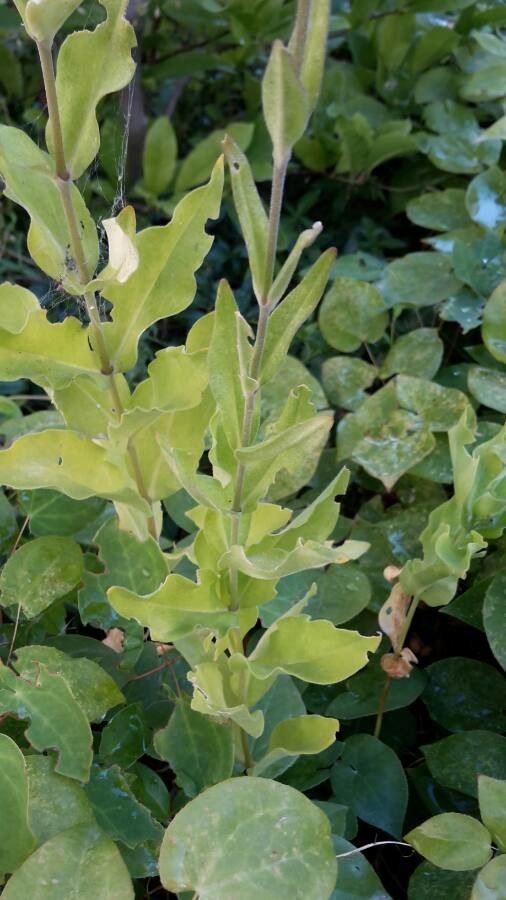
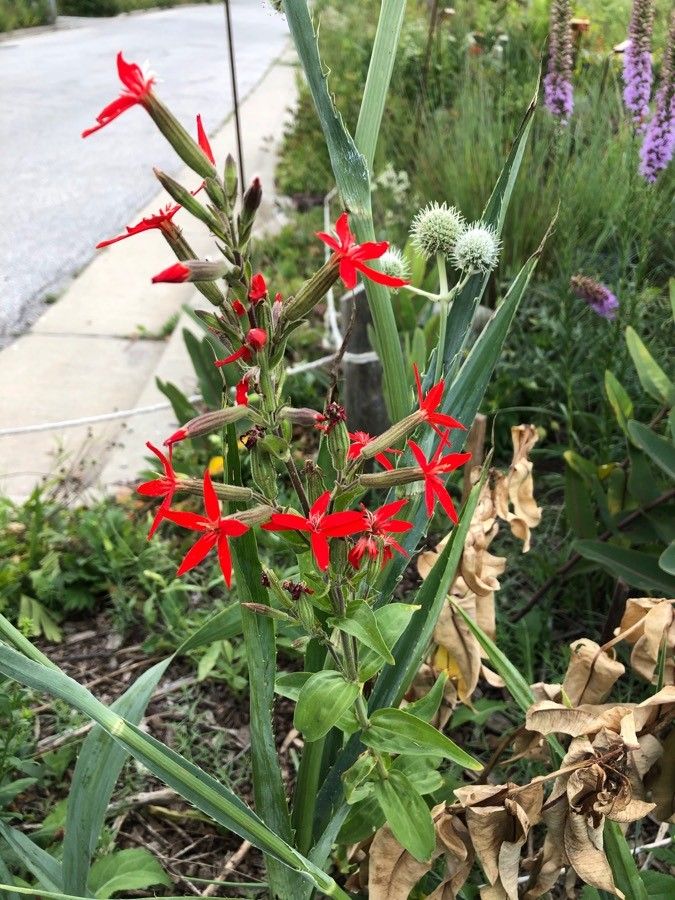
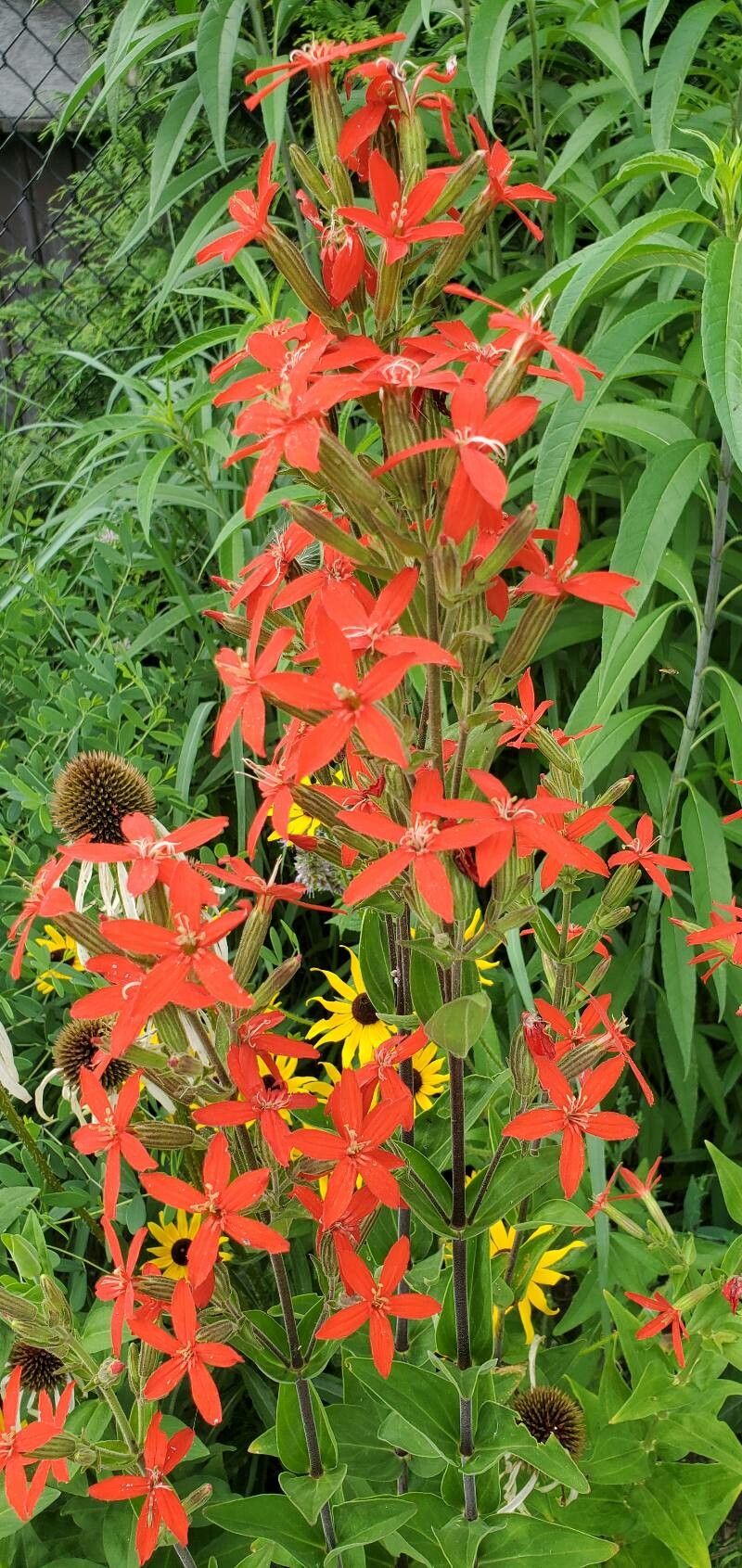
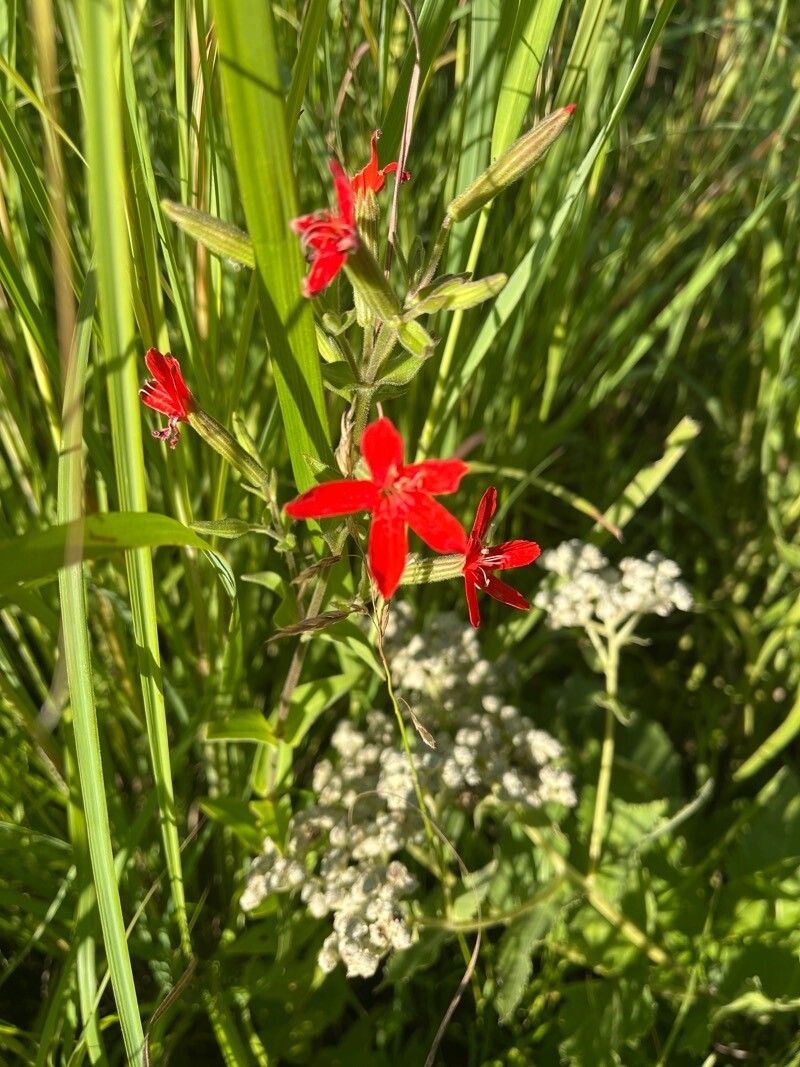
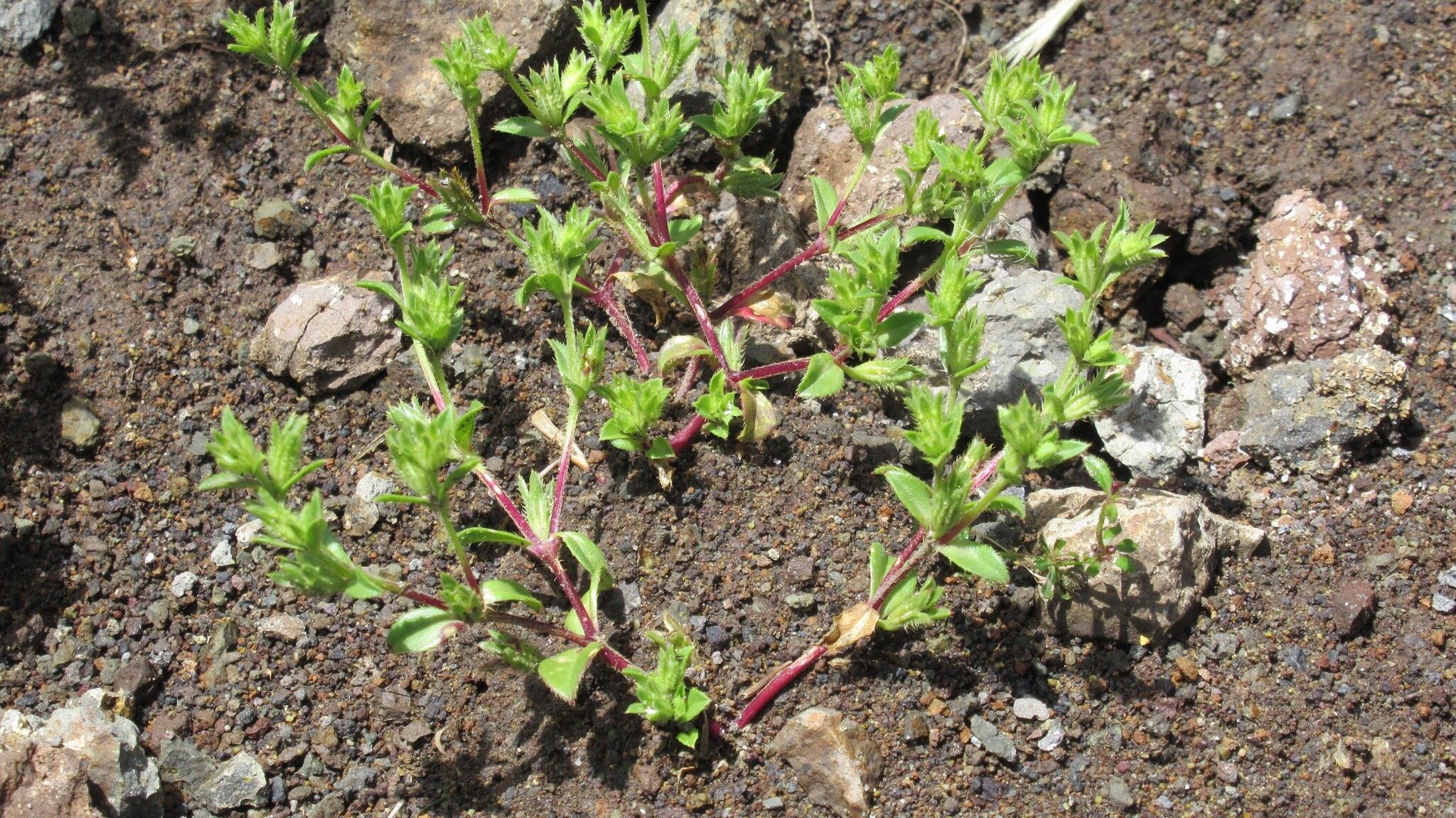
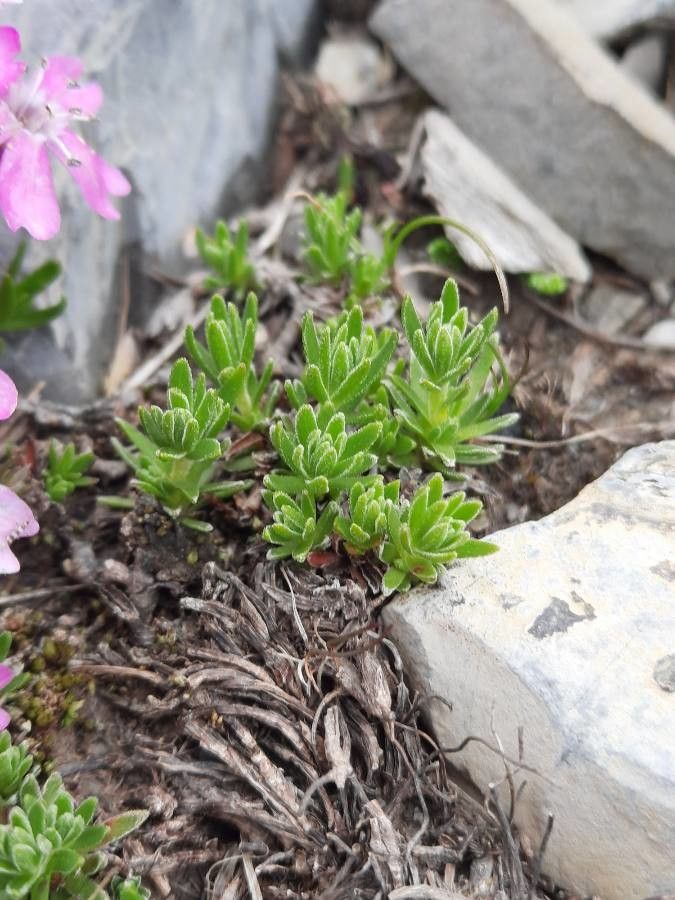
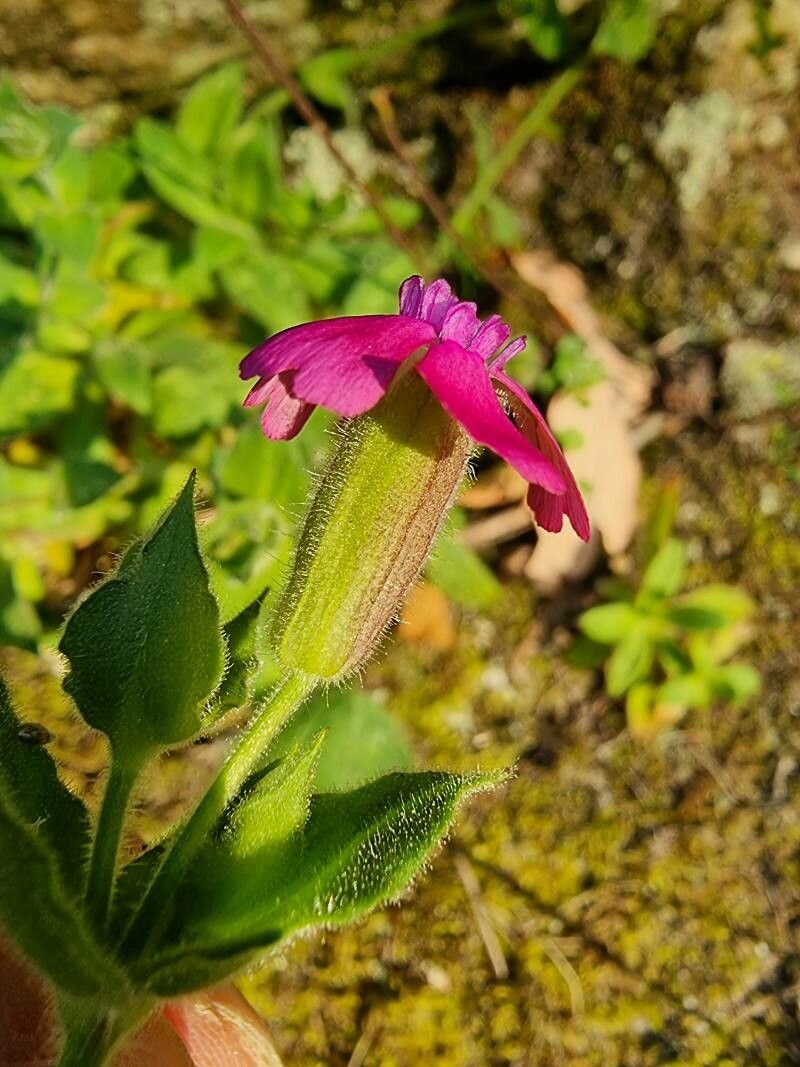
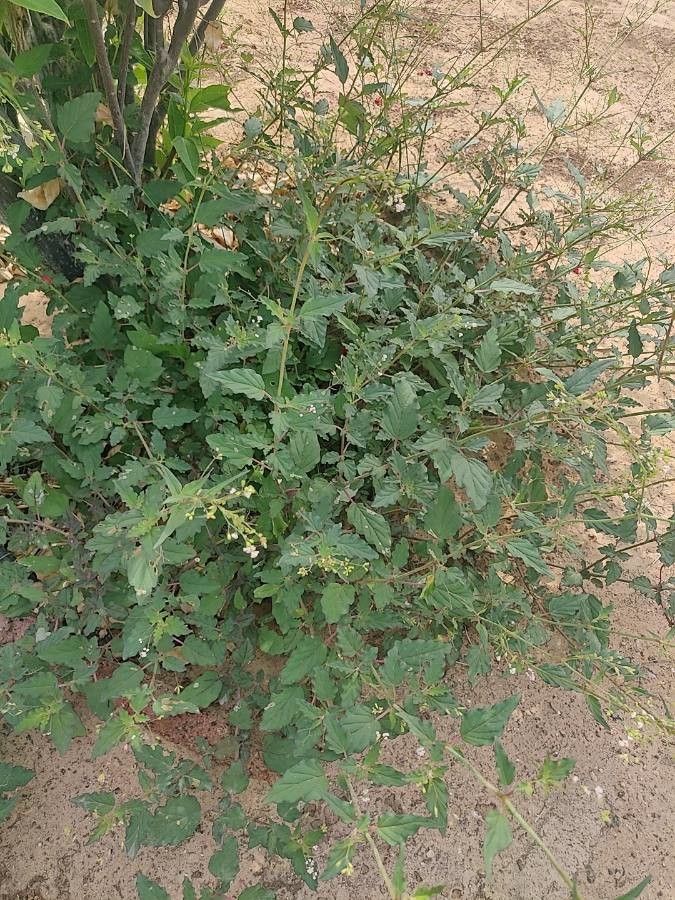
Silene regia is a species of flowering plant in the family Caryophyllaceae known by the common name royal catchfly. It is native to the central United States. A perennial herb, it grows from a fleshy taproot and has several erect stems growing up to 1.6 meters tall. The leaves are lance-shaped to oval and up to 12 centimeters long, becoming smaller farther up the stem. The inflorescence is an array of many flowers at the top of the stem. The elongate tubular calyx of sepals is up to 2.5 centimeters long and has 10 longitudinal veins. The lobes of the bright red corolla are 1 to 2 centimeters long.The flowers are pollinated by the ruby-throated hummingbird. This plant is similar to the other two red-flowered eastern North American Silene, S. virginica and S. rotundifolia.This plant is native to the tallgrass prairie of the American Midwest. It occurs in grassland and woodland. It has been found on roadsides and outcrops, and in pastures. It is found in open, sunny spots. It has been found in the states of Kansas, Oklahoma, Arkansas, Missouri, Illinois, Indiana, Ohio, Kentucky, Tennessee, Georgia, Alabama, and Florida. It has been extirpated from Kansas and Tennessee and it is rare throughout most of the rest of its range. It may be most prevalent in Missouri.The main threat to the species is the loss of habitat to agricultural use. Its native prairie habitat has been reduced so that now the plant mainly grows on roadsides and rights-of-way. It is also threatened by fire suppression, which eliminates the normal fire regime that keeps the habitat open and sunny. Larger and woody vegetation moves into the habitat when fire is reduced, and the Silene cannot compete.
Royal catchfly is fairly disease-resistant and usually not prone to illness. However, it can be vulnerable to pests and diseases present in its environment. These problems are typically not serious. In terms of care, the plant requires moderate maintenance. It needs regular pruning to maintain a neat appearance and healthy growth. Fertilizing can also help encourage flowering. Royal catchfly is suitable for anyone with outdoor space, such as a garden or patio, and does not demand extensive care experience. It may need extra attention when kept indoors.
How to keep Silene Regia.
Light
Royal catchfly is a perennial, herbaceous plant that prefers sunny sites and originates from open habitats, commonly found in meadows and grasslands. It favors full sun exposure but can also tolerate partial sun.
Water
Royal catchfly, native to North America's prairies, thrives in well-drained soils with moderate watering. This plant is drought-tolerant and generally requires watering once a week to stay healthy. As an herbaceous perennial, royal catchfly becomes dormant in winter, which reduces its water needs. This makes it well-suited for outdoor gardening in climates with varying conditions.
Temperature
Royal catchfly can tolerate a wide range of temperatures, but its distribution may still be restricted by different combinations of water and heat conditions. It does best in warm summer climates with adequate rainfall or watering. Long stretches of cloudy, rainy weather, as well as prolonged high temperatures, can raise the likelihood of Royal catchfly dying. In winter, suitable protection from cold can improve the plant's survival rate.
Fertilizer
The best time to fertilize a Royal catchfly is in early spring, as it breaks dormancy and starts active growth. Fertilizer supplies essential nutrients for healthy development. Although Royal catchfly has modest fertilizer requirements, an annual application can boost its survival and encourage stronger, longer-lasting flowers.
Pruning
The Royal Catchfly showcases vibrant red, star-shaped flowers that are highly attractive to hummingbirds. For bushier growth, prune the plant from early to late spring and remove spent flowers to extend the blooming period. Minimal pruning, which involves cutting back one-third of the plant, helps boost vigor, prevent disease, and improve air circulation.
Botanical profile.
- Plant Type
- Herb
- Life Cycle
- Perennial
- Genus
- Silene
- Family
- Caryophyllaceae
- Hardiness Zone
- 4-8
- Mature Height
- 0.91 m to 1.83 m
- Mature Spread
- 30 cm to 61 cm
- Leaf Color
- Green
- Leaf Type
- Semi-evergreen
- Flower Size
- 3.05 cm to 5.08 cm
- Bloom Time
- Summer
- Planting Time
- Spring, Summer, Autumn
- Harvest Time
- Late summer, Early fall, Mid fall
Other names.