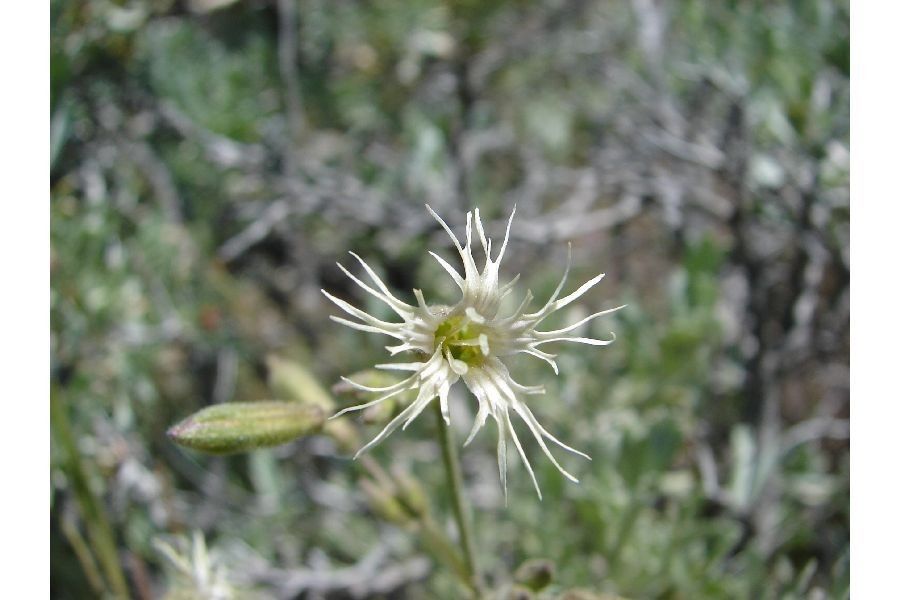
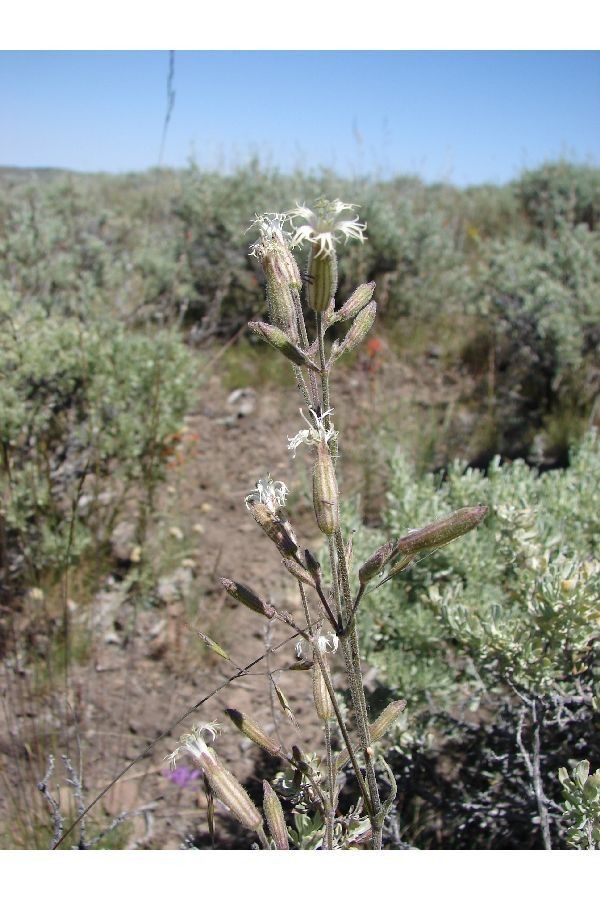
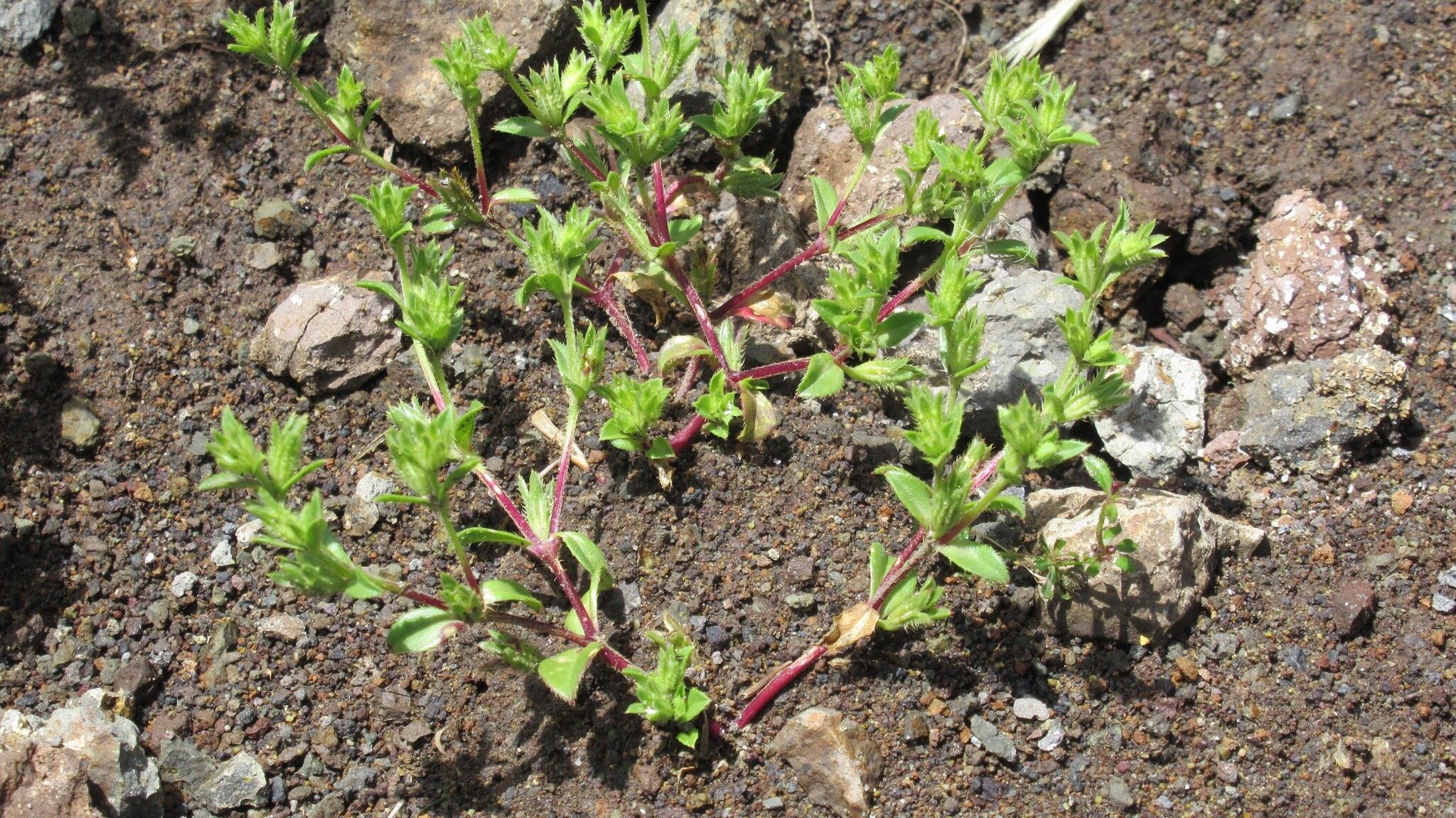
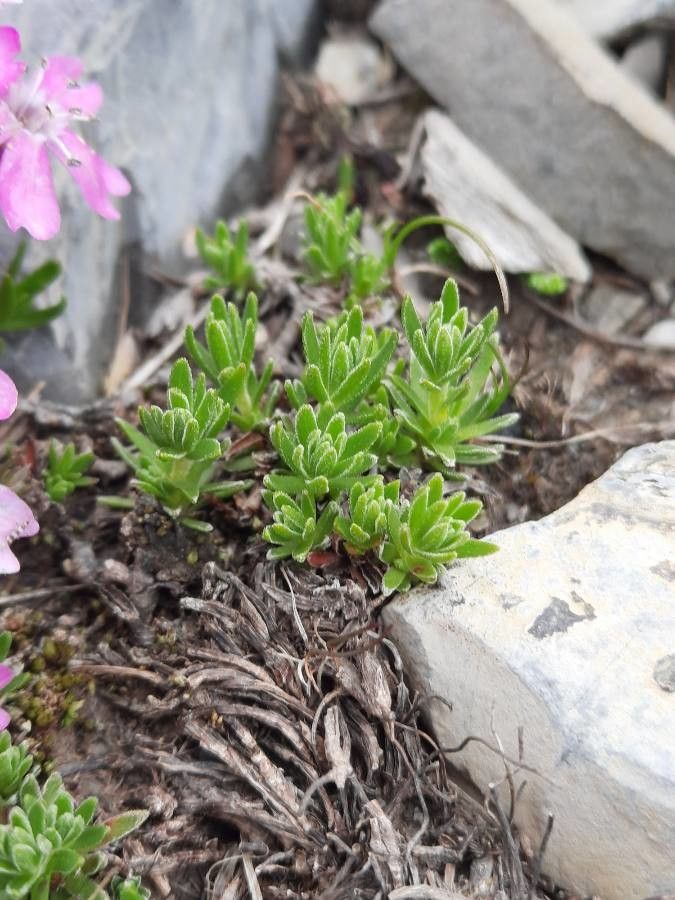
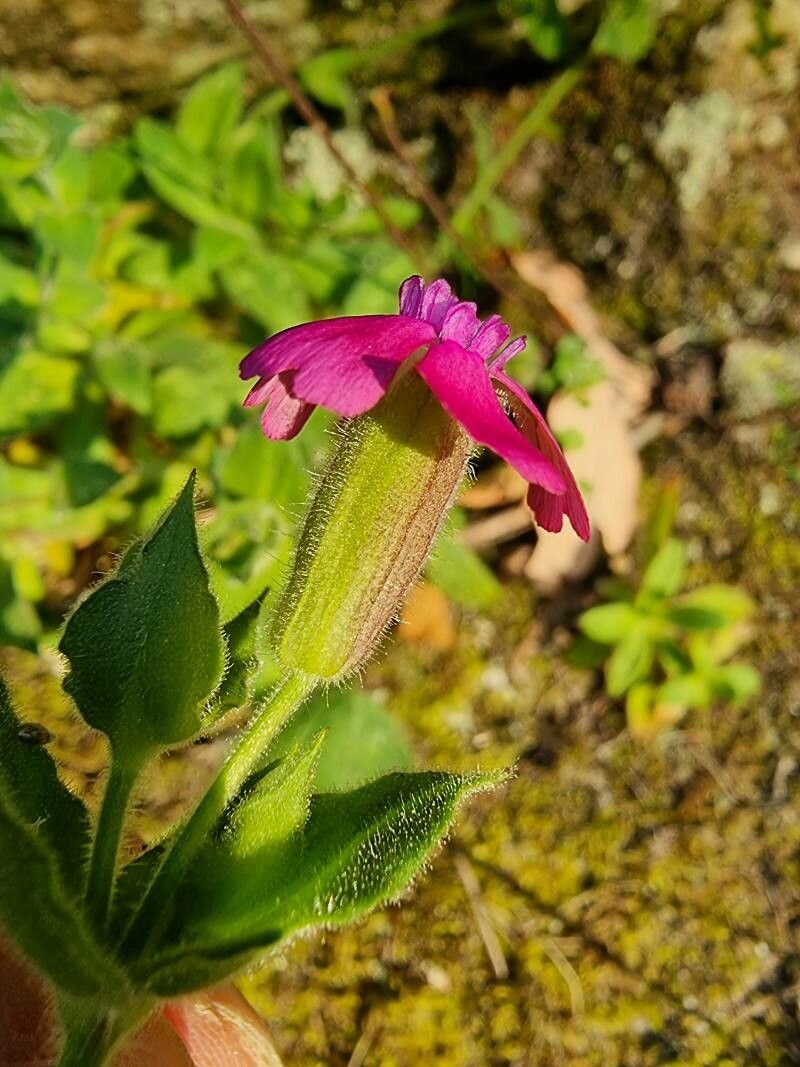
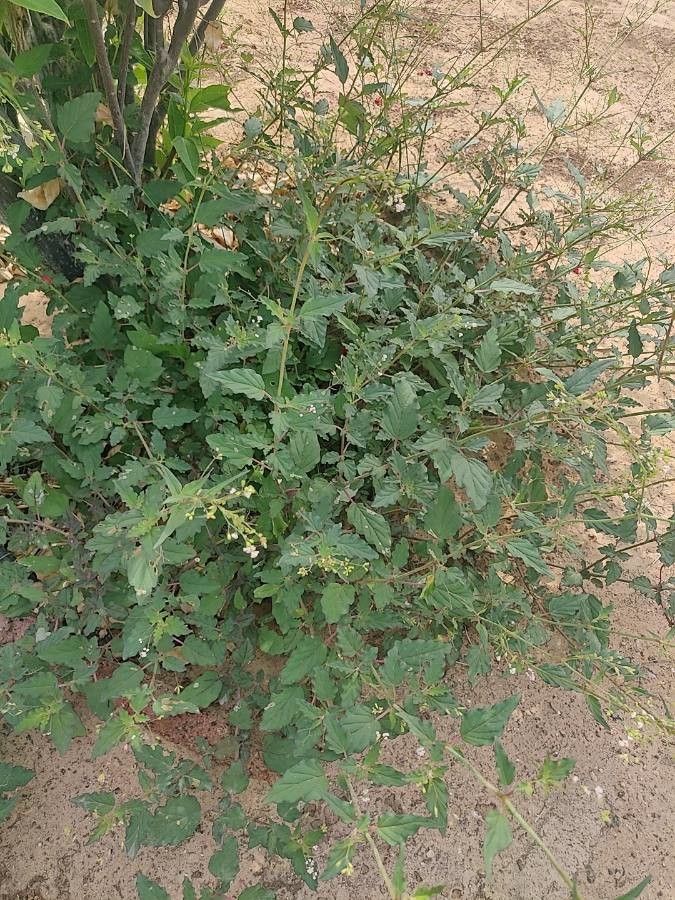
Silene oregana is a species of flowering plant in the family Caryophyllaceae known by the common names Oregon silene, Oregon campion and Oregon catchfly. It is native to the western United States, including the Great Basin, where it grows in habitat such as sagebrush and forests. It is a perennial herb growing from a woody caudex and taproot, sending up an erect, mostly unbranched stem which may be 70 centimeters tall. The lance-shaped leaves are up to 8 centimeters long around the caudex, and shorter farther up the stem. Flowers occur in a terminal cyme and sometimes in leaf axils. Each flower is encapsulated in a hairy, glandular calyx of fused sepals. The five petals are creamy white or pink-tinged in color and each has four to six long, fringelike lobes at the tip.
Oregon silene has strong resistance to disease and is generally not susceptible to illnesses. Still, it can be affected by pests and diseases present in its surroundings. Such infections are typically mild. As for upkeep, this plant requires moderate maintenance. It should be pruned on a regular basis to preserve an attractive appearance and healthy growth. Fertilizing can also encourage flowering. Oregon silene is appropriate for anyone with outdoor space, like a garden or patio, and does not demand extensive care experience. It may need more attention if grown indoors.
How to keep Silene Oregana.
Light
Oregon silene is a sun-loving perennial herbaceous plant native to open habitats, commonly flourishing in meadows and grasslands. It prefers full sun but can also tolerate partial sun.
Temperature
Oregon silene can tolerate a wide span of temperatures, but its distribution may still be restricted by particular combinations of moisture and heat. It performs best in warm summer conditions with sufficient rainfall or irrigation. Extended periods of cloudy, rainy weather or prolonged high temperatures can raise the chance of Oregon silene dying. In winter, proper protection from cold can improve the plant's survival.
Fertilizer
The best time to fertilize an Oregon silene is in early spring, when it is coming out of dormancy and beginning active growth. Fertilizing supplies essential nutrients for healthy development. Although Oregon silene has relatively low fertilizer requirements, applying fertilizer annually can boost its survival and encourage improved, longer-lasting blooms.
Botanical profile.
- Plant Type
- Herb
- Life Cycle
- Perennial
- Genus
- Silene
- Family
- Caryophyllaceae
- Hardiness Zone
- 4-8
- Mature Height
- 15 cm to 25 cm
- Mature Spread
- 5 cm to 15 cm
- Leaf Color
- Green
- Leaf Type
- Deciduous
- Flower Color
- Pink, White
- Flower Size
- 1.02 cm to 2.03 cm
- Bloom Time
- Early summer, Mid summer
- Planting Time
- Spring, Autumn
- Harvest Time
- Late summer, Early fall
Other names.