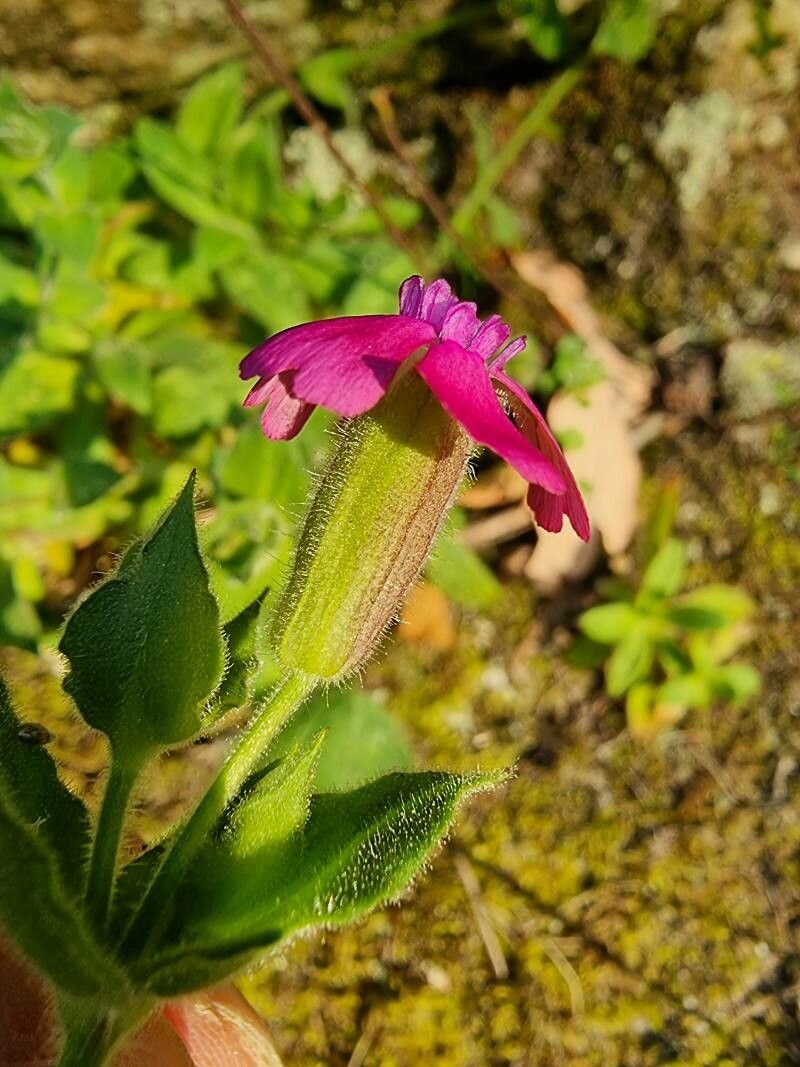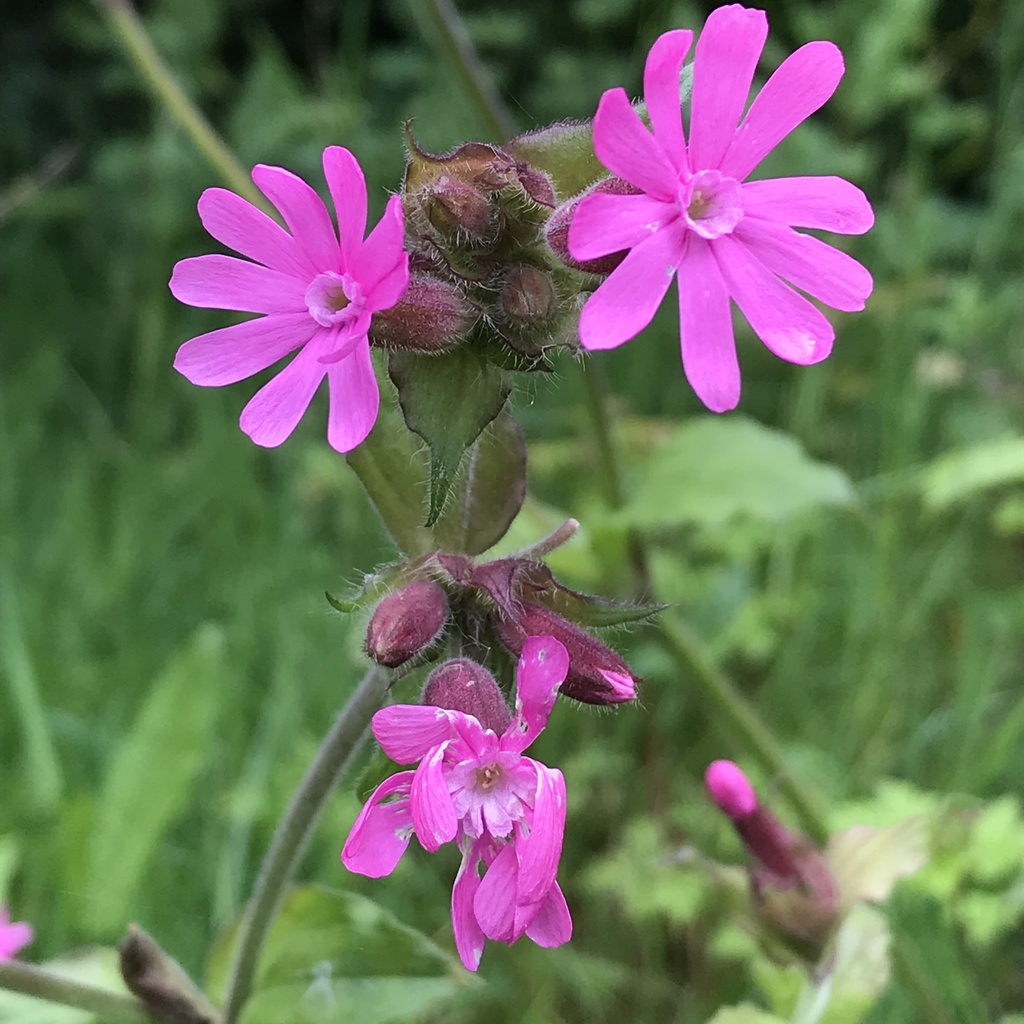
Silene dioica, commonly known as red campion, is a herbaceous perennial plant that belongs to the Caryophyllaceae family. Native to Europe and Asia, it has also been introduced to other parts of the world. The plant can grow up to 80 cm tall and typically forms clumps with erect, fine-haired stems.
The lance-shaped leaves of Silene dioica, which can reach up to 10 cm in length, are arranged in opposite pairs along the stem and have a slightly hairy texture. From May through August, the plant produces clusters of bright pink or red flowers, each with five petals.
Silene dioica thrives in moist soils in partially shaded areas such as woodland edges or hedgerows but can also tolerate full sun. It is commonly found growing along roadsides, riverbanks, meadows, and other disturbed areas.
In Ireland, red campion flowers are considered a protected species and are steeped in folklore. According to old tales, the red campion is said to be the fairies' very own flower. It is believed that these flowers serve as guardians of bees' honey and provide a hiding place for tiny fairies. Picking red campion was strictly forbidden, and bringing these flowers into the home was thought to bring bad luck. FUN FACT · FROM THE LIBRARY
Historically, the plant has been used for its medicinal properties. Its anti-inflammatory characteristics can help alleviate pain caused by arthritis or rheumatism when applied topically as an ointment or poultice.
Overall, Silene dioica is an attractive wildflower that benefits pollinators such as bees and has medicinal uses for humans, highlighting its importance in our natural ecosystem.
Red campion is fairly disease-resistant and typically not prone to illnesses. Still, it can be affected by pests and diseases present in its environment. These issues are generally minor. In terms of care, the plant requires moderate maintenance. It should be pruned regularly to keep a neat appearance and support healthy growth. Fertilizing can also encourage flowering. Red campion is suitable for anyone with outdoor space, such as a garden or patio, and does not need extensive care experience. It may need more attention when grown indoors.
How to keep Silene Dioica.
Light
Red campion does best with moderate sun: it needs plenty of light each day but should be protected from prolonged intense rays. It can tolerate abundant sunshine but often fares better with some shade. In the habitat where it comes from, light levels fluctuate but are not very strong. Too little light can stunt its growth, while too much can cause damage.
Water
Red campion does best in moist environments, needing soil that retains water well but doesn't become waterlogged. For optimal health, it should be watered once a week. In temperate regions, red campion is grown outdoors and typically benefits from natural rainfall, which often reduces the need for additional watering during its peak growing seasons.
Temperature
Red campion is indigenous to regions where temperatures range from 68 to 95 °F (20 to 35 ℃). It favors this moderate warmth, though it can tolerate slight departures. Seasonal adjustments may be required, based on local climate patterns.
Fertilizer
The best time to fertilize Red campion is in early spring, as it breaks dormancy and starts active growth. Fertilizer supplies essential nutrients for healthy development. Although Red campion needs relatively little fertilization, giving it fertilizer annually can boost its survival and encourage better, longer-lasting flowers.
Pruning
Red campion is a hardy perennial known for its vibrant pink flowers. To promote growth and extend blooming, prune the plant from early to late spring by removing dead stems and trimming any overgrown areas. Make sure to clean your tools to prevent the spread of disease. Regular pruning encourages dense foliage and helps maintain healthier plants.
Pot & Repot
When repotting Red campion, select a pot 1-2 inches (2.5–5.1 cm) larger with ample drainage. Use a well-draining potting mix. Repot in spring or fall, making sure the root ball sits slightly lower than the rim of the flower pot. Water thoroughly after repotting and place in a warm spot with indirect sunlight.
Botanical profile.
- Plant Type
- Herb
- Life Cycle
- Perennial, Biennial
- Genus
- Silene
- Family
- Caryophyllaceae
- Hardiness Zone
- 5-8
- Mature Height
- 61 cm to 91 cm
- Mature Spread
- 61 cm
- Leaf Color
- Green
- Leaf Type
- Semi-evergreen
- Flower Color
- Pink
- Flower Size
- 1.78 cm to 2.54 cm
- Bloom Time
- Late spring, Early summer, Mid summer
- Planting Time
- Spring, Summer
- Harvest Time
- Early summer, Mid summer
- Native Area
- Europe, United Kingdom
Other names.
Reader questions.
What should I do if I give my Red campion too much or too little water?
Overwatering is a more common issue for Red campion and can cause wilting, yellowing leaves and potentially lead to diseases like root rot, mold, and mildew. Underwatering is less common, but can still happen and result in brittle, brown leaves. It's important to notice and address signs of overwatering quickly, as some diseases may be irreversible if not caught early. Reduce watering if you see early signs of overwatering and check the soil's drainage. If it drains poorly, replace it with a loose, well-draining potting mix. If your Red campion is showing signs of receiving too little water, simply increase your watering frequency until the signs improve.
Why do I have to put fertilizer on my Red campion?
Fertilization plays a crucial role in the growth of Red campion and other plants. It provides essential nutrients for both above and below ground development. Despite this, Red campion's fertilization requirements are relatively low. While the plant can survive without fertilization at times, annual fertilization is highly advantageous. It helps to keep the plant healthy and may enhance the production of longer-lasting flowers. Therefore, for those looking to maintain the best appearance of their Red campion, regular annual fertilization is recommended.
What are the sunlight requirements for Red campion (Silene dioica)?
Red campion requires moderate sun exposure, benefiting from ample daily light but needing protection from continuous intense rays. While it can withstand a good amount of sunshine, it may do better with some shade provided. This balance is critical as its natural habitat does not experience overly strong light. Insufficient light exposure might stunt the plant's growth, whereas too much light can be harmful.
What is the native temperature range for Red campion?
Red campion is native to areas where temperatures range from 68 to 95 °F (20 to 35 °C). It thrives in moderate warmth but can adapt slightly if temperatures deviate from this range. Adjustments might be necessary depending on your local climate patterns to keep the plant healthy throughout the seasons.
How often do I need to water my Red campion?
If your Red campion plant is in a pot, the most precise way to determine if it needs water is by checking the soil. Simply stick your finger into the soil and if the top two to three inches feel dry, it's time to water it. If you're growing your Red campion outdoors in the ground, you can use a similar method to test the soil. Again, when the first few inches of soil have dried out, it's time to water. During the spring and early fall, you'll likely need to water this plant about once a week using this method. However, in extremely hot weather, you may need to increase watering to twice or more per week. It's worth mentioning that mature, well-established Red campion plants are quite resilient and can handle drought conditions fairly well.
When should I fertilize my Red campion to get the best results?
The best time to fertilize a Red campion is in late winter or early spring. This is when the plant is emerging from its dormant phase and starting to grow actively. Fertilizing at this time promotes healthy growth and sets the plant up for a successful season. While early spring is generally the most favorable time to fertilize, it is also acceptable to fertilize in the fall. However, it is not recommended to fertilize during the summer or winter seasons.
How can artificial lighting support Red campion growth indoors?
For indoor Red campion plants, artificial lighting can be crucial, especially when natural sunlight is insufficient, like in winter or less sunny spaces. Optimal growth is supported by using LED lights that can be customized to provide specific wavelengths needed by the plant. The lighting needs vary: full sun plants require 30-50W/sq ft, partial sun plants need 20-30W/sq ft, and full shade plants 10-20W/sq ft. It's important to position the light source 12-36 inches above the plant and mimic natural daylight hours, usually aiming for 8-12 hours of light per day.
Does Red campion need special frost protection measures during winter?
Red campion has strong cold resistance and usually does not require special frost protection measures during winter. However, if temperatures are expected to drop below -25°C, it's important to protect the plant from cold. This can be done by covering it with soil or straw. Additionally, before the first freeze in autumn, watering the plant abundantly to ensure the soil remains moist can help the plant withstand winter and early spring challenges.
How should I water my Red campion plant?
To properly water the Red campion, it is recommended to use filtered water at room temperature. Tap water may contain harmful particles, so filtered water is preferred. The plant is accustomed to a warm environment, so using cold water can be a bit of a shock. It is also advised to avoid watering from above, as this can cause issues with the foliage. Instead, slowly pour the filtered room temperature water onto the soil until it is completely soaked. This method benefits the plant by moistening the roots and allowing them to spread and gather nutrients from the soil.
When is it not a good time to fertilize my Red campion?
To avoid overfertilization and complications, it is best to fertilize your Red campion only during late winter and early spring. This plant has low fertilization needs, and a single annual feeding is usually enough. It is important to refrain from fertilizing during spring, summer, and fall, except if you didn't fertilize in spring, then it's okay to fertilize in fall. Also, there is no need to fertilize during winter when the plant is in a dormant growth phase and does not produce new growth.
What are some common symptoms of improper light exposure in Red campion?
Red campion may exhibit several symptoms when grown under inadequate light conditions. New leaves can appear smaller in size, growth may become leggy or sparse, and the plant might undergo faster leaf drop. Additionally, there can be slower or no new growth, lighter-colored new leaves, chlorosis (loss of green leaf color), sunscald, leaf curling, wilting due to water loss, and leaf scorching from excessive sunlight. These symptoms indicate the plant's stress due to improper light exposure.
What should be done if Red campion experiences very low temperatures?
If Red campion is exposed to temperatures below -25°C during winter, there may not be noticeable changes immediately, but it could lead to a decrease in sprouting or even no sprouting come springtime. To manage this, remove any parts of the plant that have failed to sprout in the spring.