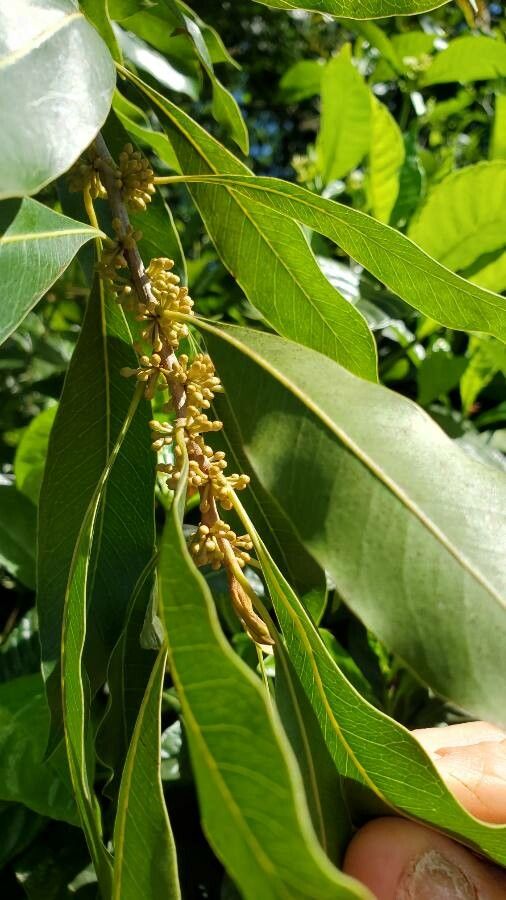
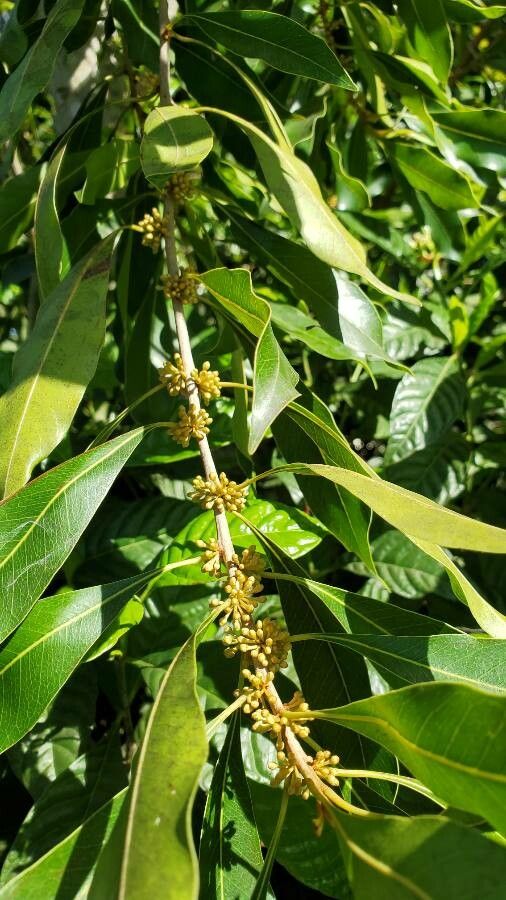
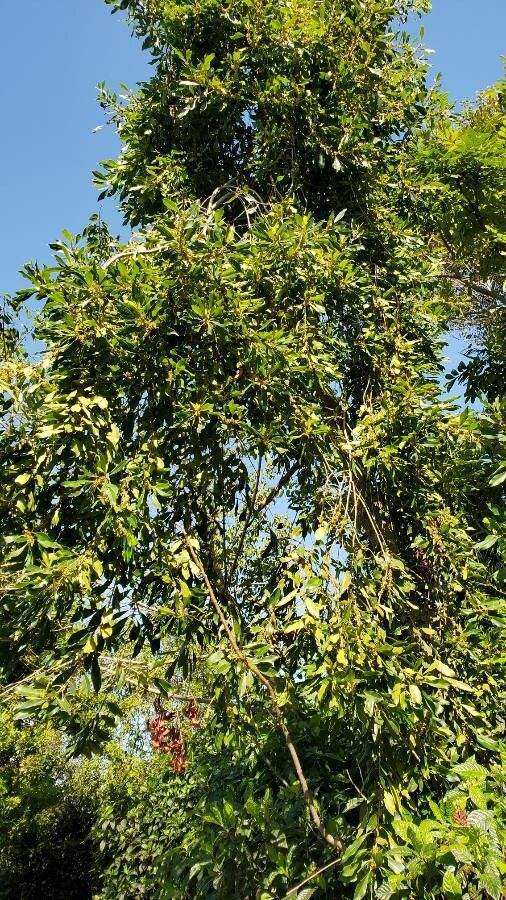
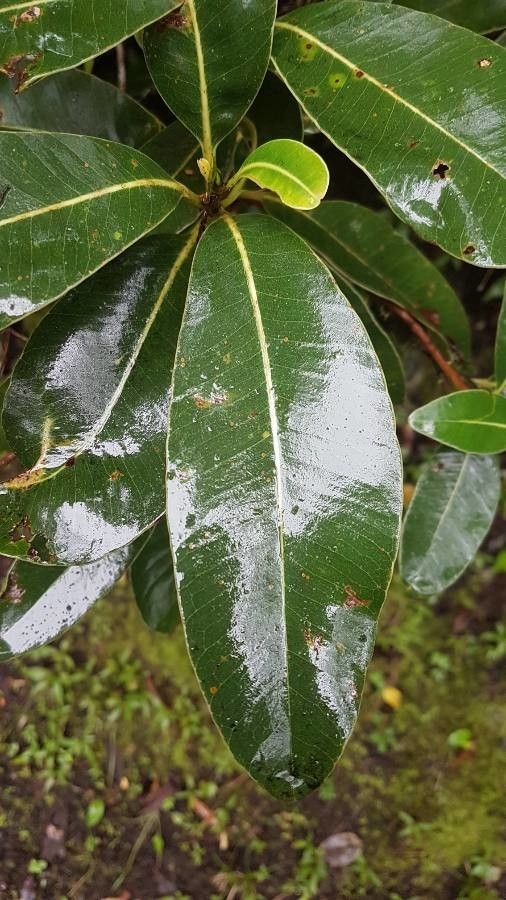
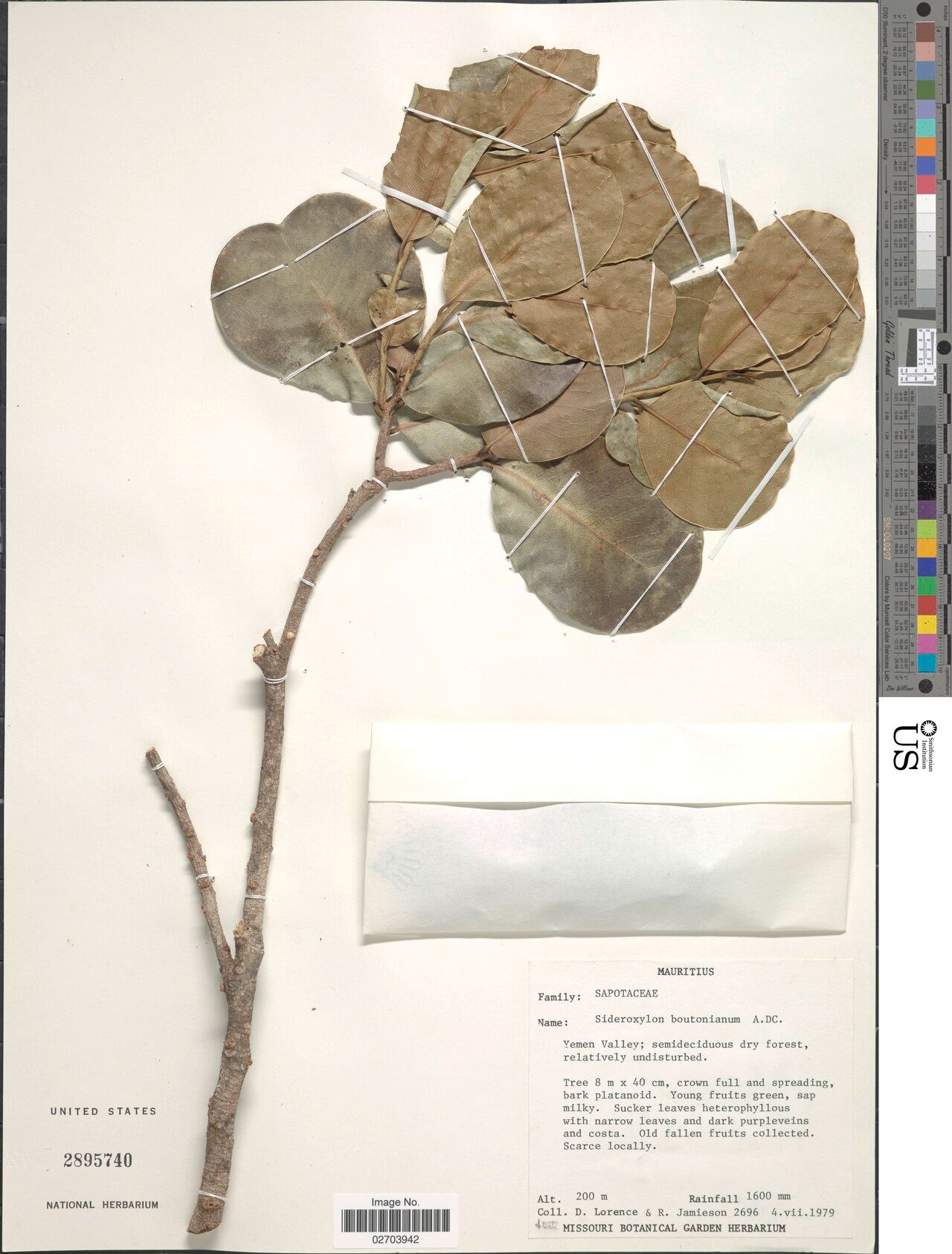
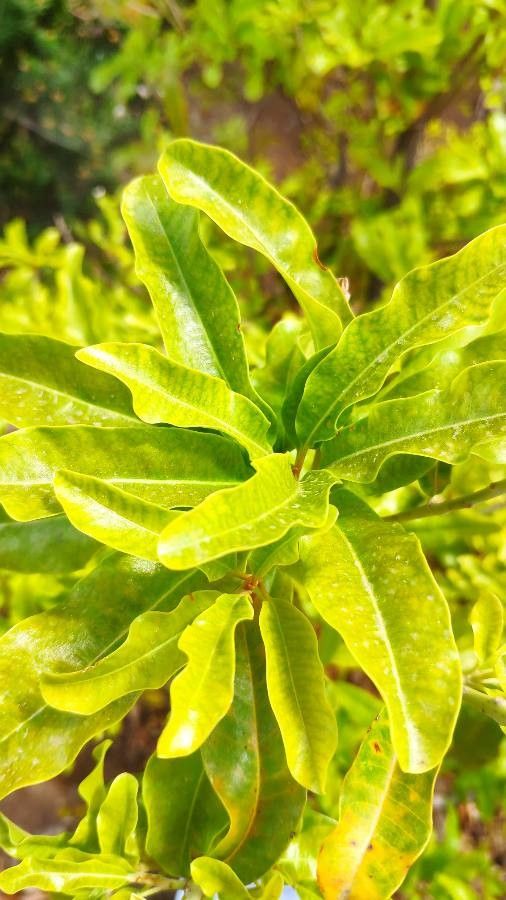
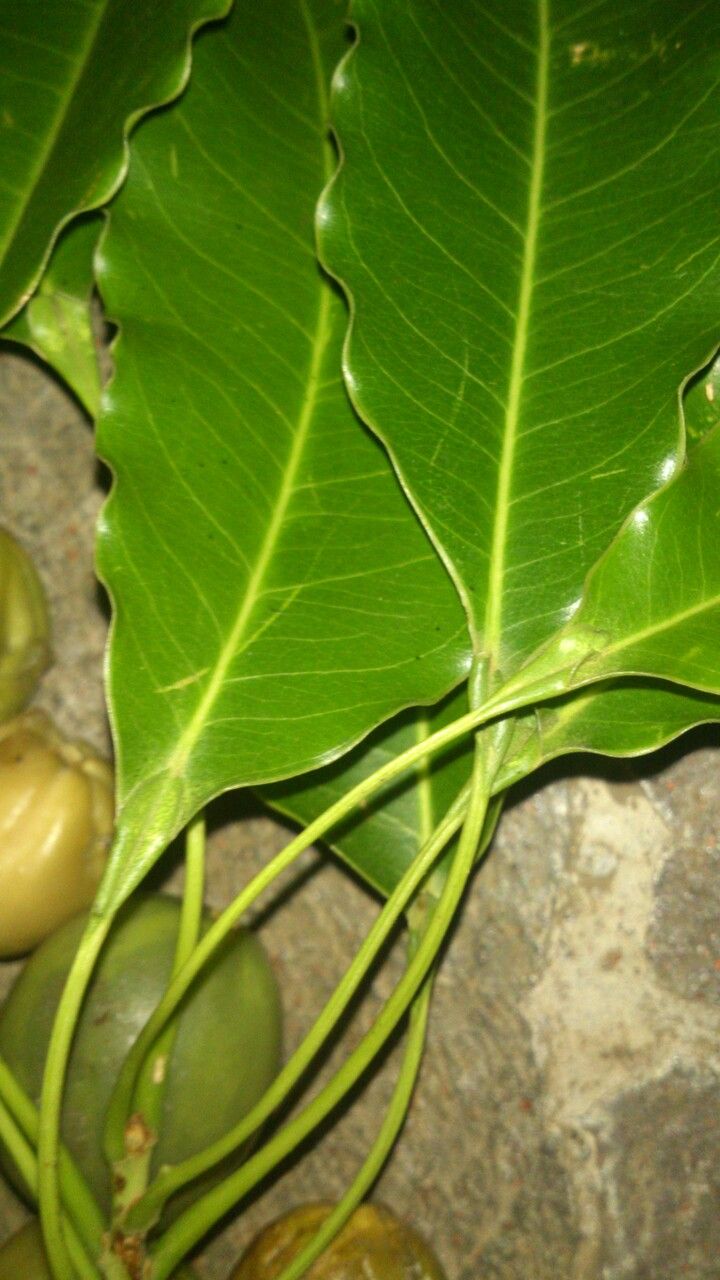
Sideroxylon salicifolium, commonly known as the willow-leaf bully, is a small to medium-sized evergreen tree belonging to the Sapotaceae family. Native to the Caribbean and South America, this tree thrives in various habitats, including dry forests, savannas, and coastal areas. The willow-leaf bully can reach up to 15 meters in height, with trunk diameters reaching up to 50 centimeters. Its narrow, elongated leaves resemble those of a willow, hence the common name. The bark is dark brown or blackish with deep fissures. This tree produces small white flowers that develop into fleshy fruits containing one or two seeds. While the fruits are edible, they are not commonly consumed by humans. Traditionally, Sideroxylon salicifolium has been used in various medicinal applications, including treatments for fever, diarrhea, dysentery, respiratory issues, and skin infections. It also holds cultural significance in some Caribbean countries, where it is used to make musical instruments like drums. Despite its many benefits for both humans and wildlife—providing food for birds—the willow-leaf bully faces threats from habitat loss due to deforestation for agricultural and urban development. Although reforestation programs have been initiated to conserve Sideroxylon salicifolium, more efforts are needed to implement sustainable management practices that balance human needs with environmental conservation.
White bully shows strong disease resistance and is generally unlikely to suffer from illnesses. Regarding care, this plant is fairly low-maintenance. When grown outdoors it needs minimal watering, and larger specimens usually do not require pruning. However, smaller plants should be trimmed after they have finished blooming. White bullyt is appropriate for anyone with an outdoor area, such as a garden or deck, and does not demand extensive plant-care experience.
How to keep Sideroxylon Salicifolium.
Light
White bully is found naturally in places like forest understories and rocky sites, where it grows in natural shade. It prefers partial sun but is able to tolerate both full sun and full shade, illustrating its hardy, adaptable character.
Temperature
White bully comes from tropical areas, where the weather is generally warm and humid. Consequently, it is well suited to high heat and moisture. It does not tolerate abrupt temperature shifts and favors a consistent thermal environment, so preventing indoor temperature swings is important. It typically cannot withstand cold conditions and needs relatively high temperatures to grow. If the surrounding temperature falls too far, the plant may stop growing or even perish.
Fertilizer
Fertilizing is essential for caring for the White bully. Regular feeding throughout the growing season preserves the energy required for its showy leaves and supports overall growth. If fertilization is neglected, leaves can become unhealthy, the plant’s ornamental appeal will decline, and growth may be stunted or weak and prone to breaking.
Botanical profile.
- Plant Type
- Tree
- Life Cycle
- Perennial
- Genus
- Sideroxylon
- Family
- Sapotaceae
- Hardiness Zone
- 10-12
- Mature Height
- 10.06 m to 14.94 m
- Mature Spread
- 4.88 m to 7.92 m
- Leaf Color
- Dark Green, Olive Drab
- Leaf Type
- Evergreen
- Flower Size
- 0.25 cm to 0.51 cm
- Bloom Time
- Late spring, Summer
- Planting Time
- Spring, Autumn
- Harvest Time
- Late summer, Fall
- Native Area
- Bahamas, Belize, Cuba, Honduras, Mexico, Guatemala
Other names.