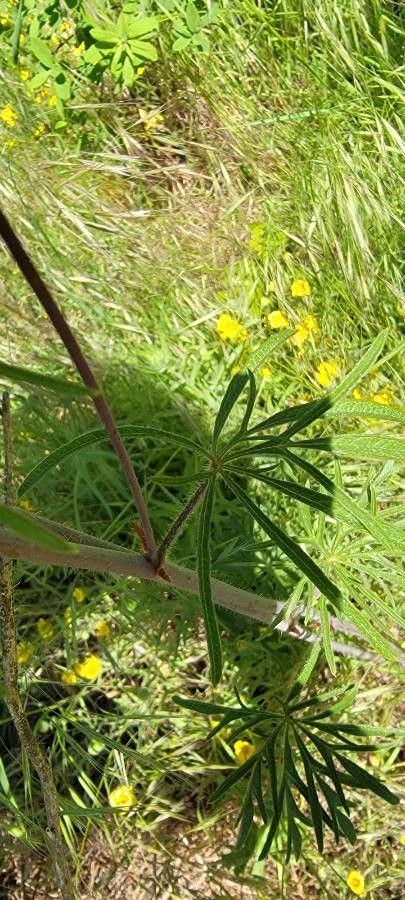
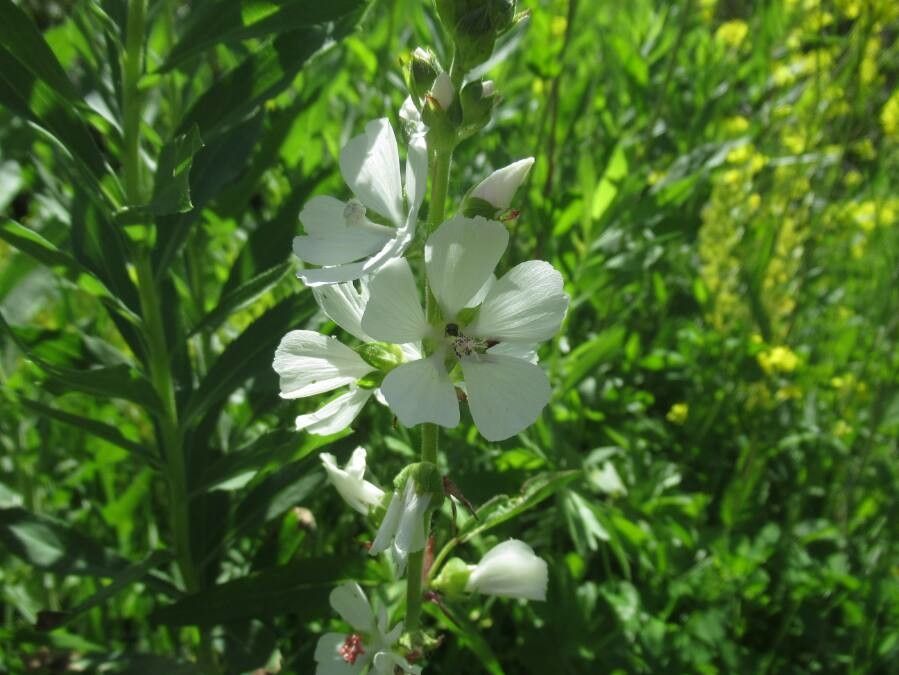
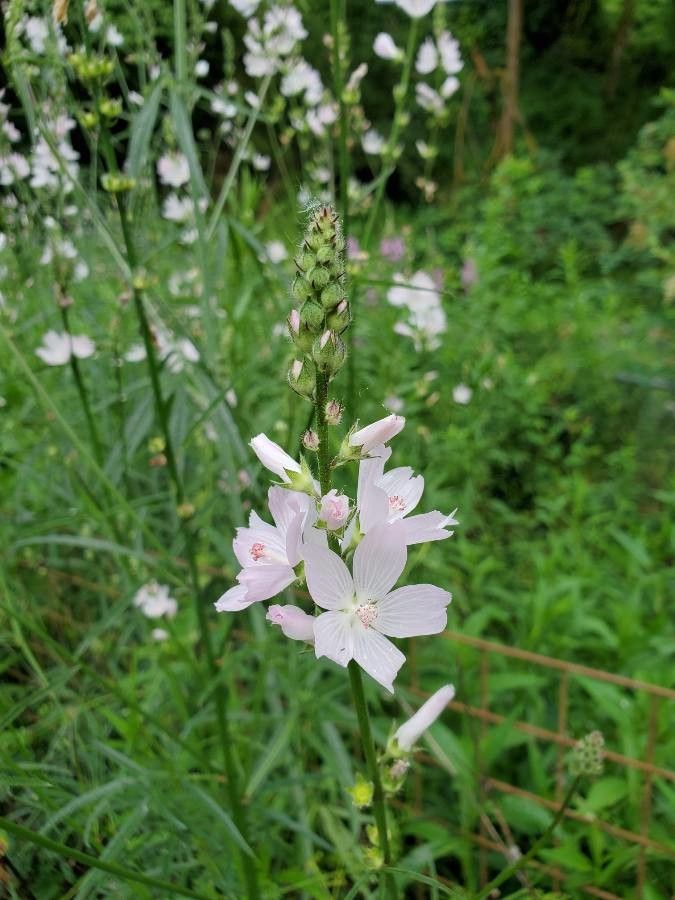
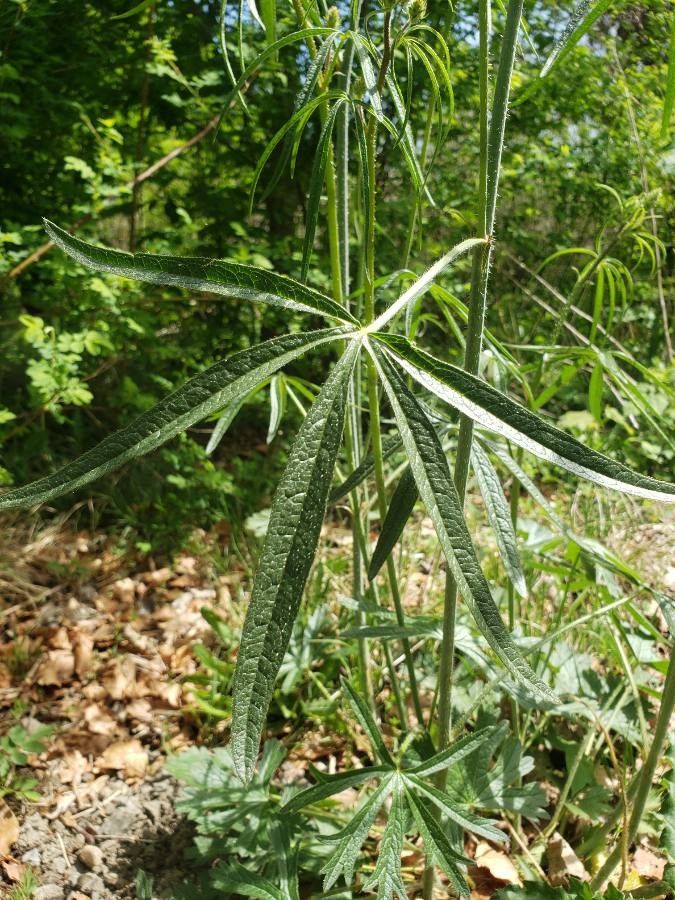
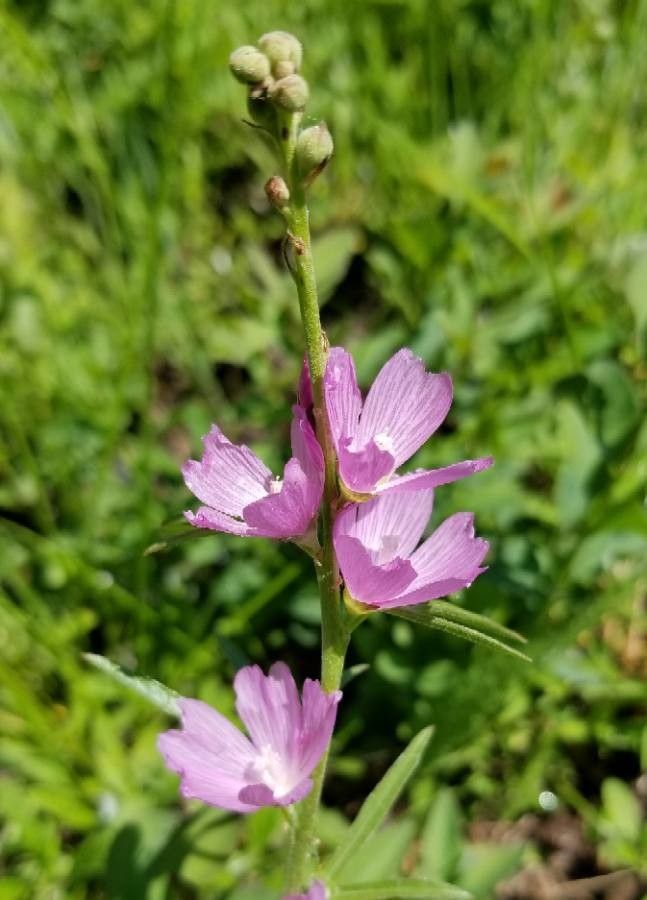
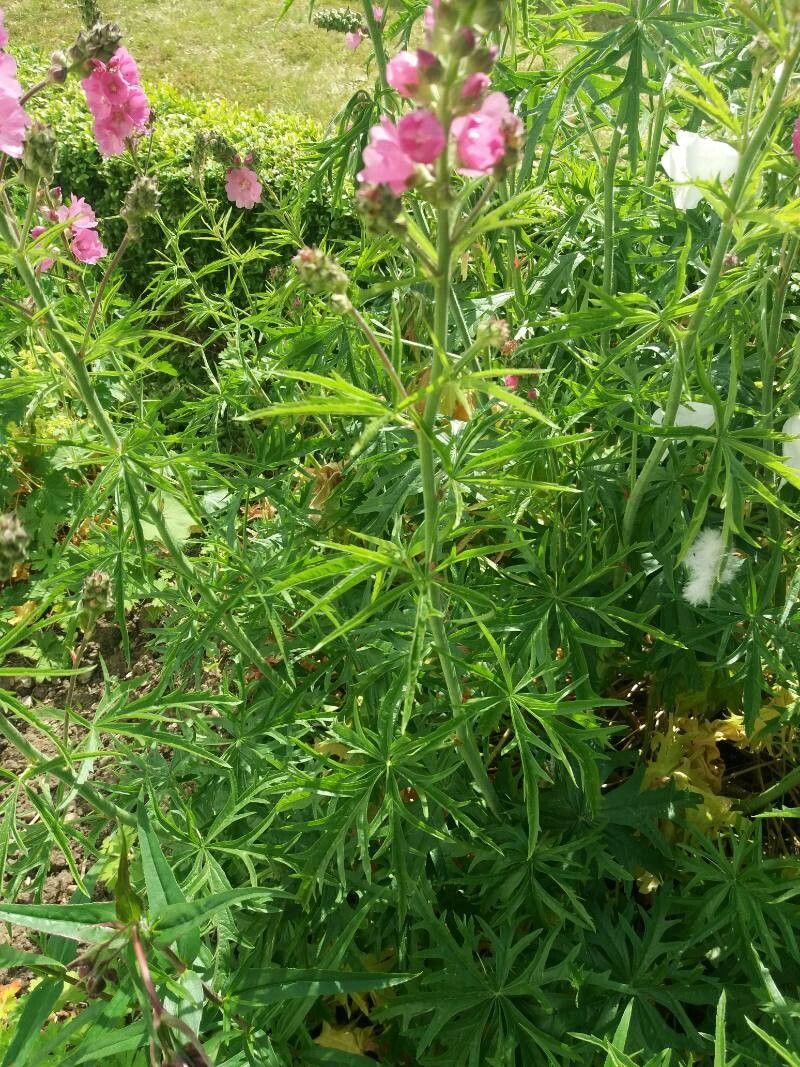
Sidalcea candida, commonly known as White Checkermallow, is a herbaceous perennial plant belonging to the mallow family. Native to North America, this plant thrives in moist meadows, along stream banks, and in open woodlands. It typically reaches a height of up to 3 feet and exhibits a clumping growth habit with multiple stems emerging from the base. The leaves are deeply lobed, have toothed edges, and are arranged alternately along the stem.
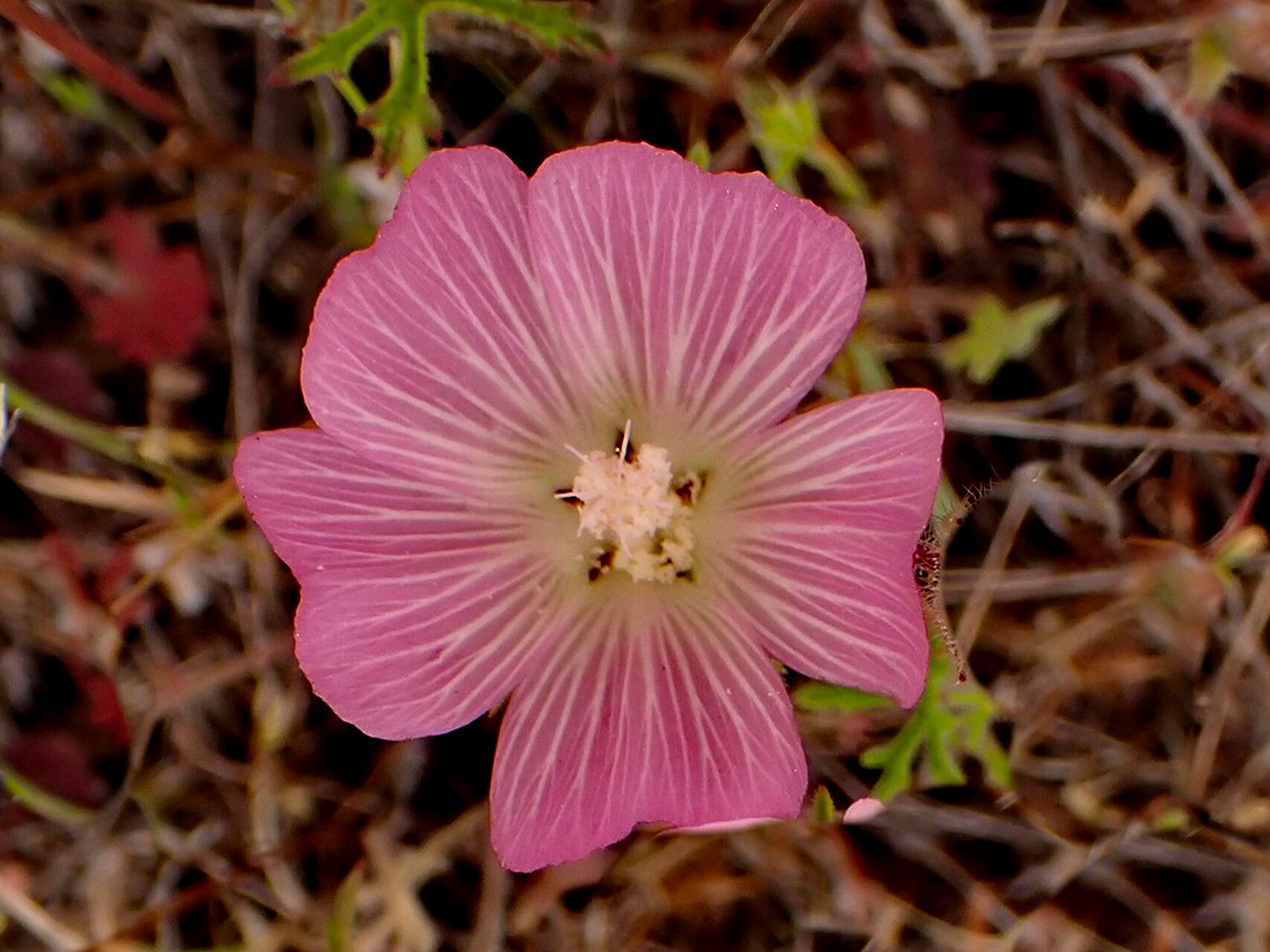
The flowers of Sidalcea candida are white or pale pink, featuring five petals that form a cup-shaped bloom. These flowers appear on long stalks above the foliage from late spring through summer, attracting bees, butterflies, and other pollinators.
This plant prefers full sun or partial shade but can also tolerate some shade. It thrives in moist soil conditions but can endure some drought once established.
Sidalcea candida is an excellent addition to any garden, boasting attractive flowers that bloom over an extended period during the summer months. Moreover, it provides essential food for pollinators such as bees and butterflies.
Prairie mallow has strong disease resistance and is generally not susceptible to illnesses. However, it can be affected by pests and diseases present in its surroundings. These outbreaks are typically not severe. In terms of care, this plant requires a moderate level of maintenance. It should be pruned regularly to maintain a neat appearance and healthy growth. Fertilizing can also help encourage flowering. Prairie mallow is suitable for anyone with outdoor space, such as a garden or patio, and does not demand extensive care experience. It may need more attention when grown indoors.
How to keep Sidalcea Candida.
Light
Prairie mallow is a sun-loving perennial herbaceous plant that originates in open habitats, frequently thriving in meadows and grasslands. It prefers full sun but can also tolerate partial sun.
Water
Prairie mallow flourishes in moist environments similar to its native meadows. It needs watering once a week to support its growth, but it's important to avoid overwatering, which can lead to waterlogging. As a herbaceous perennial, prairie mallow is particularly sensitive to overwatering during its dormant period, so careful water management is essential to prevent root rot.
Temperature
Prairie mallow can tolerate a wide range of temperatures, but its distribution may still be restricted by different combinations of moisture and heat. It performs best in warm summer climates with sufficient rainfall or irrigation. Extended periods of cloudy, rainy weather, as well as prolonged high heat, can raise the chance of Prairie mallow dying. In winter, protecting the plant from cold can increase its survival rate.
Fertilizer
The best time to fertilize a Prairie mallow is in early spring, as it emerges from dormancy and begins active growth. Fertilization supplies essential nutrients for healthy development. Although Prairie mallow has fairly low fertilizer needs, applying fertilizer annually can enhance its survival and encourage better, longer-lasting flowers.
Pruning
Prairie mallow flourishes in prairies and grasslands, displaying tall white flower spikes. To achieve the best results, prune the plant in early spring. This encourages new growth and helps maintain its shape. Regular thinning enhances air circulation, and pruning after the blooming period helps sustain flowering and overall plant health.
Botanical profile.
- Plant Type
- Herb
- Life Cycle
- Perennial
- Genus
- Sidalcea
- Family
- Malvaceae
- Hardiness Zone
- 4-8
- Mature Height
- 76 cm
- Mature Spread
- 61 cm
- Leaf Color
- Green
- Leaf Type
- Deciduous
- Flower Color
- White, Yellow, Cream
- Flower Size
- 3.05 cm to 5.08 cm
- Bloom Time
- Summer
- Planting Time
- Spring, Summer, Autumn
- Harvest Time
- Late summer, Early fall, Mid fall
Other names.
Reader questions.
What are the sunlight requirements for Prairie mallow?
Prairie mallow is a sun-loving plant that can thrive in conditions of full sun, which is above 6 hours of sunlight, and partial sun, about 3-6 hours of sunlight. It's important to observe how sunlight moves through your garden to choose spots that offer an ideal balance of light and shade for your plants.
What are the essentials for growing Prairie mallow?
Prairie mallow originates from open habitats and prefers full to partial sun conditions for optimal growth. When natural sunlight is not sufficient, especially indoors or during less sunny seasons, artificial lighting can be used to ensure healthy growth. LED lights are recommended for their ability to offer specific wavelengths needed by plants. Full sun plants should have 30-50W/sq ft, partial sun plants 20-30W/sq ft, and full shade plants 10-20W/sq ft of artificial light. The light source should be placed 12-36 inches above the plant, mimicking natural sunlight duration, with most plants requiring 8-12 hours of light per day.
What are the signs of insufficient light for Prairie mallow?
If Prairie mallow does not receive enough light, it may show several symptoms: new leaves may grow smaller, growth can become leggy or sparse, and there might be faster leaf drop or slower/no new growth. Leaves can become lighter in color or exhibit chlorosis, turning yellow due to a lack of chlorophyll. Additionally, excessive sunlight can cause sunscald, leaf curling, wilting, and leaf scorching. These symptoms indicate the plant's struggle with the light conditions, either too little or too much.
How can you remedy light deficiencies for Prairie mallow?
To address light deficiencies in Prairie mallow, gradually move the plant to a location with at least 6 hours of direct sunlight daily. For indoor plants that are large or difficult to move, supplement with artificial light, keeping a lamp on for at least 8 hours a day or using professional grow lights. Outdoors, adapt plants to more sunlight by gradually relocating them to avoid sunburn. If physical obstacles block the sunlight, consider pruning or transplanting to a sunnier spot. Note, though, parts of the plant already affected by low light may not recover, but new growth should be healthy with better light.