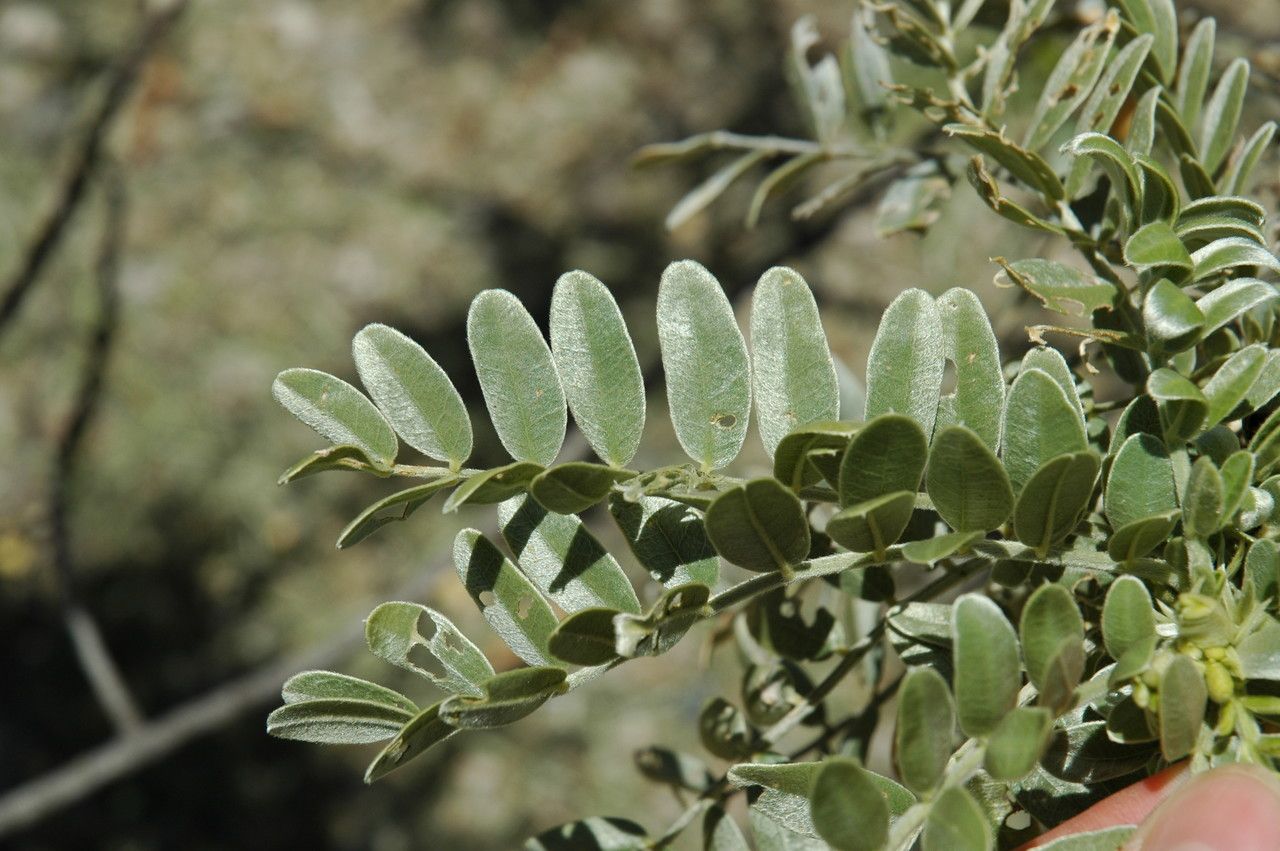
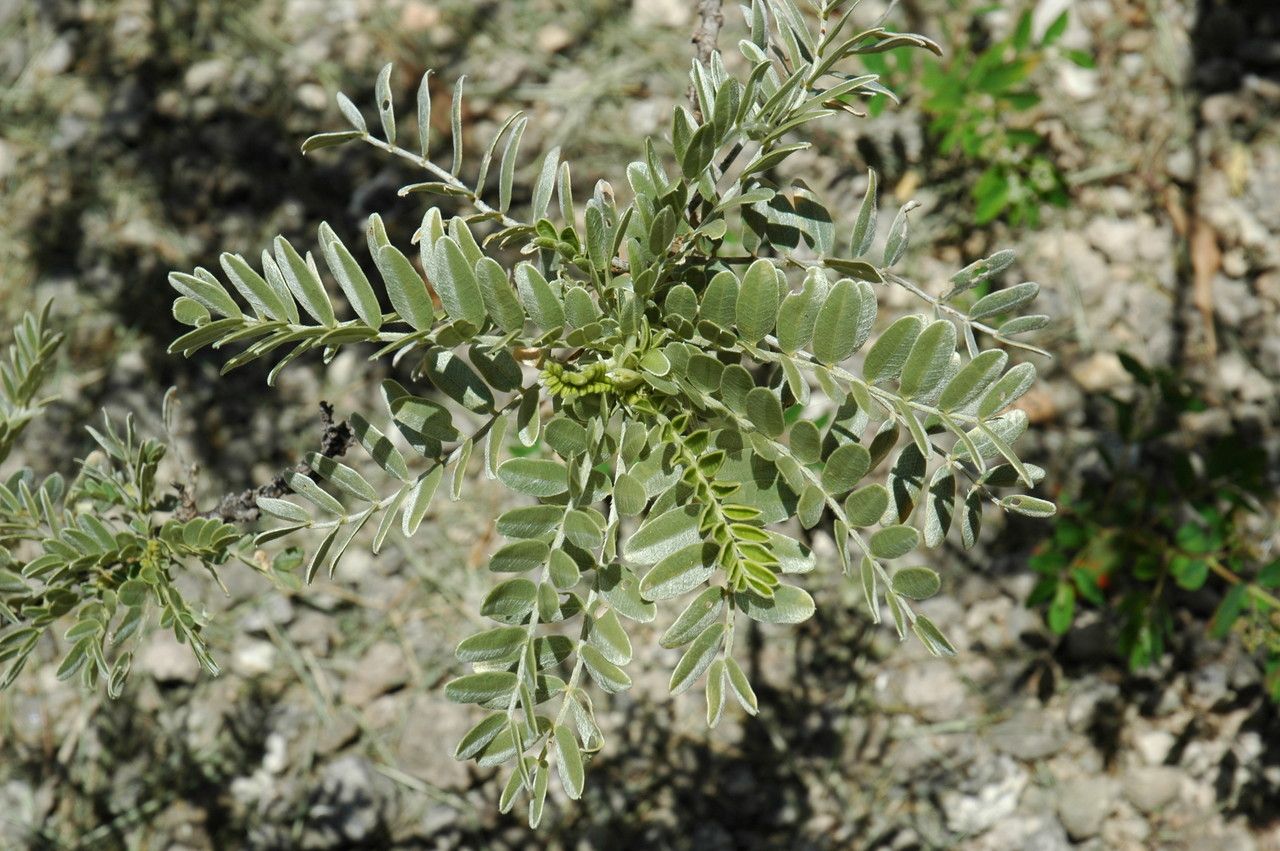
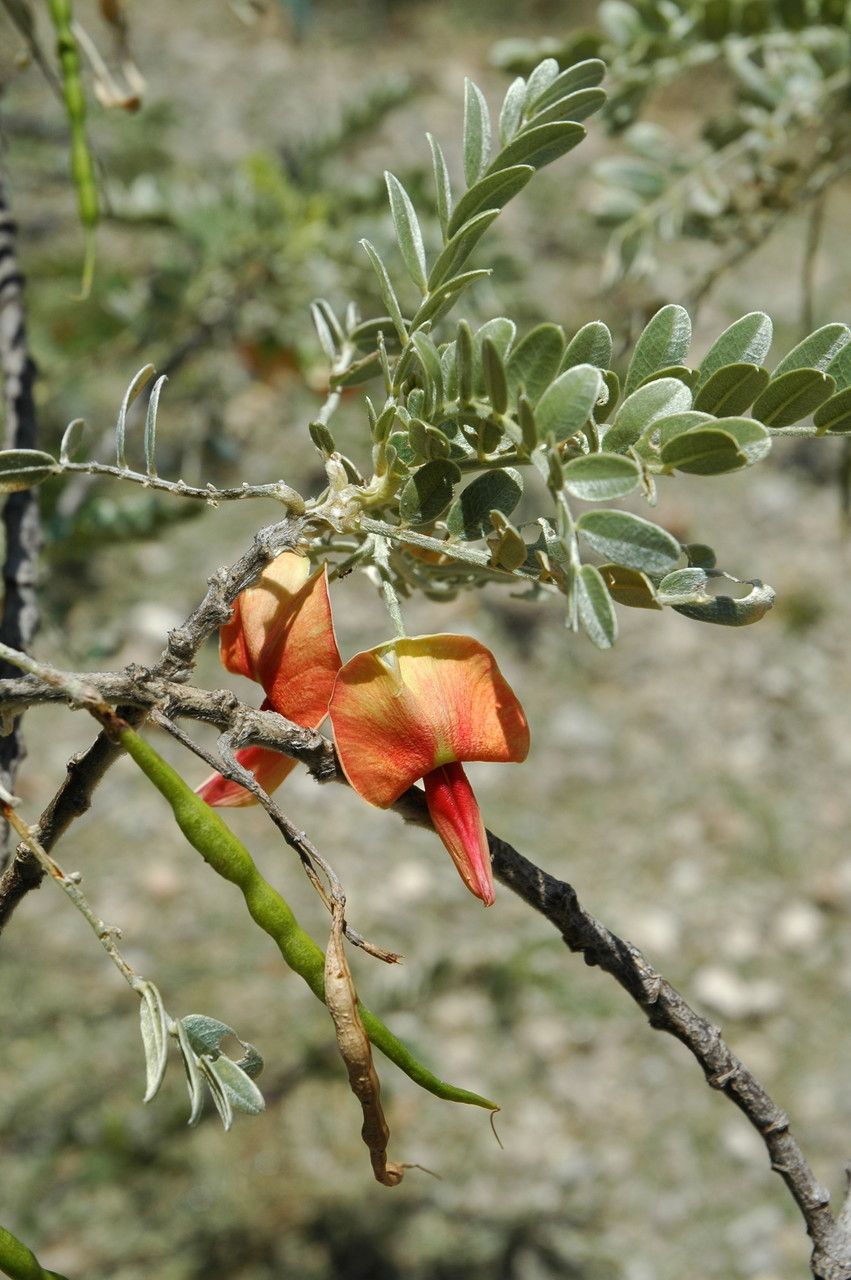
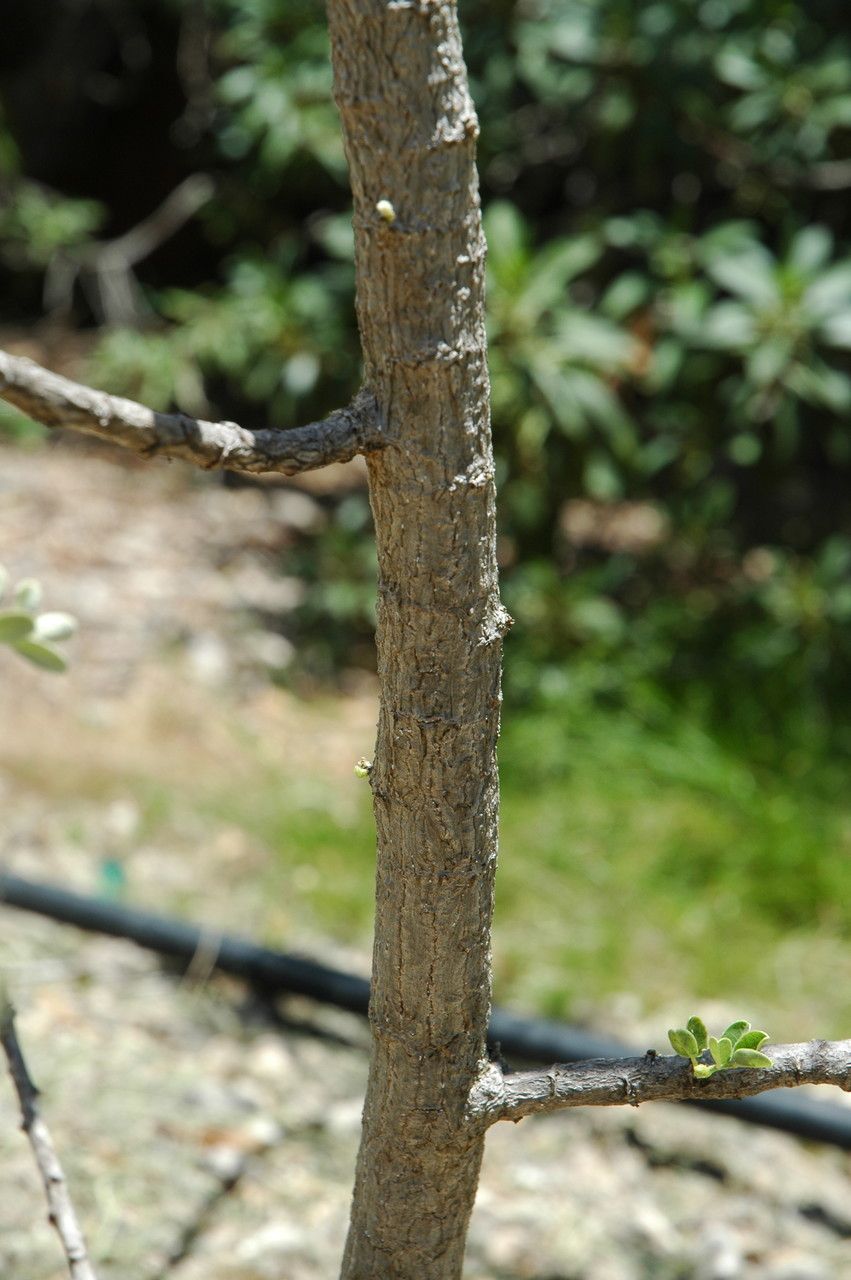
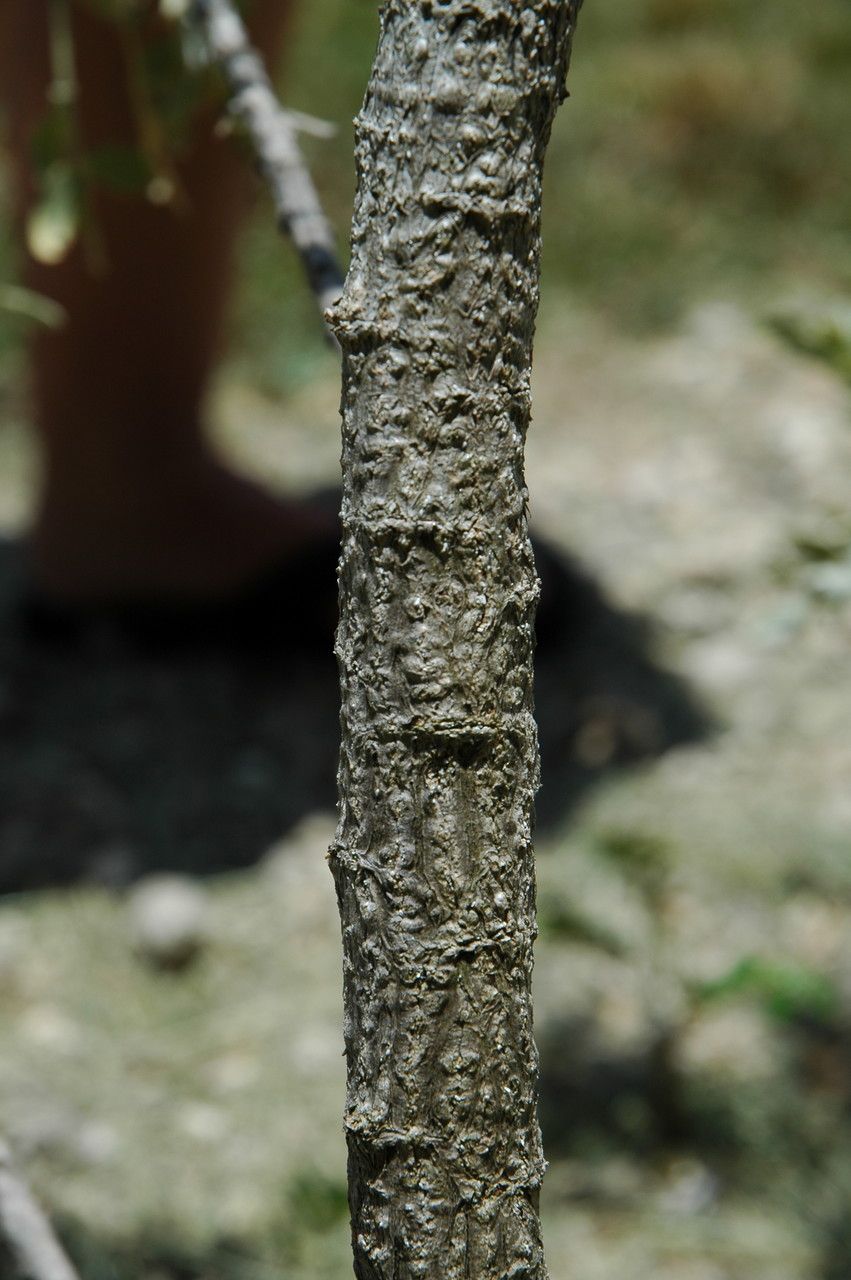
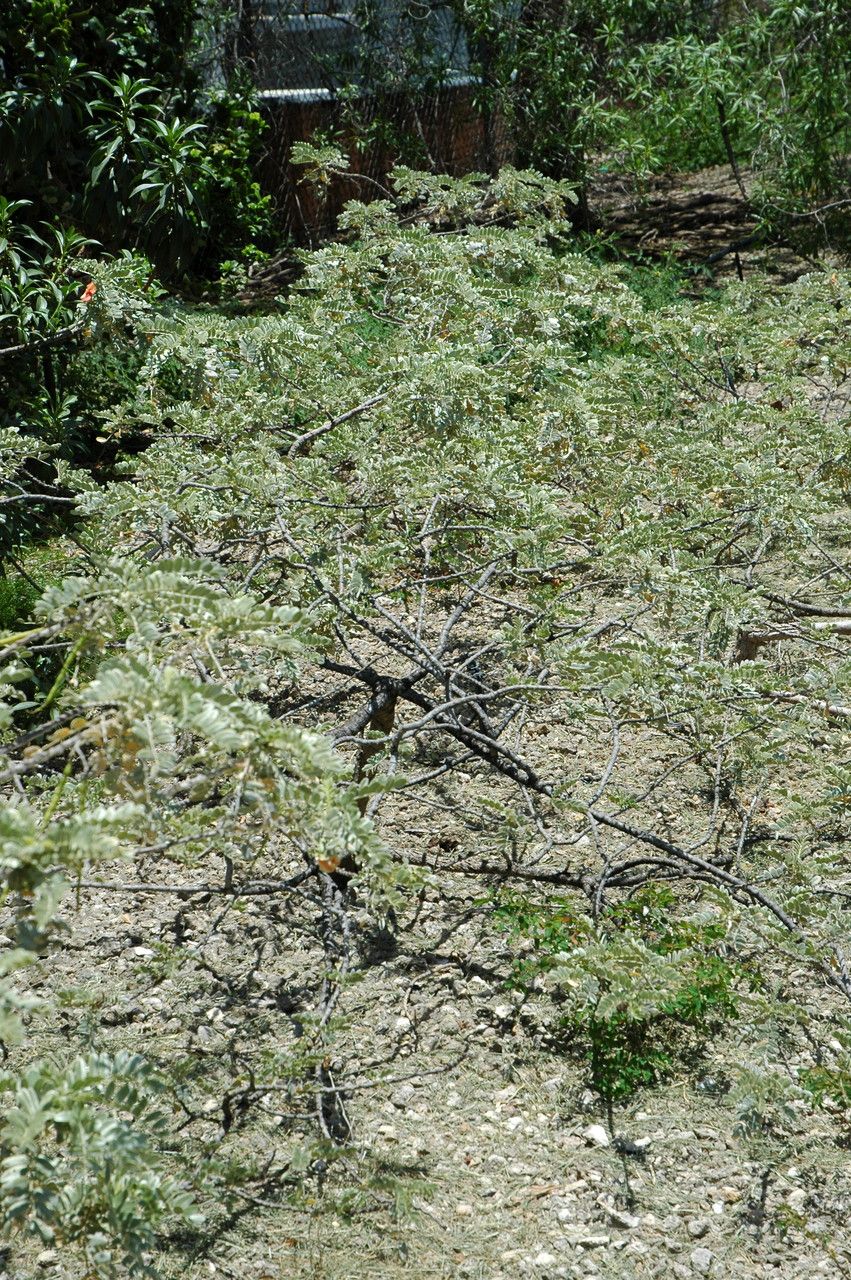
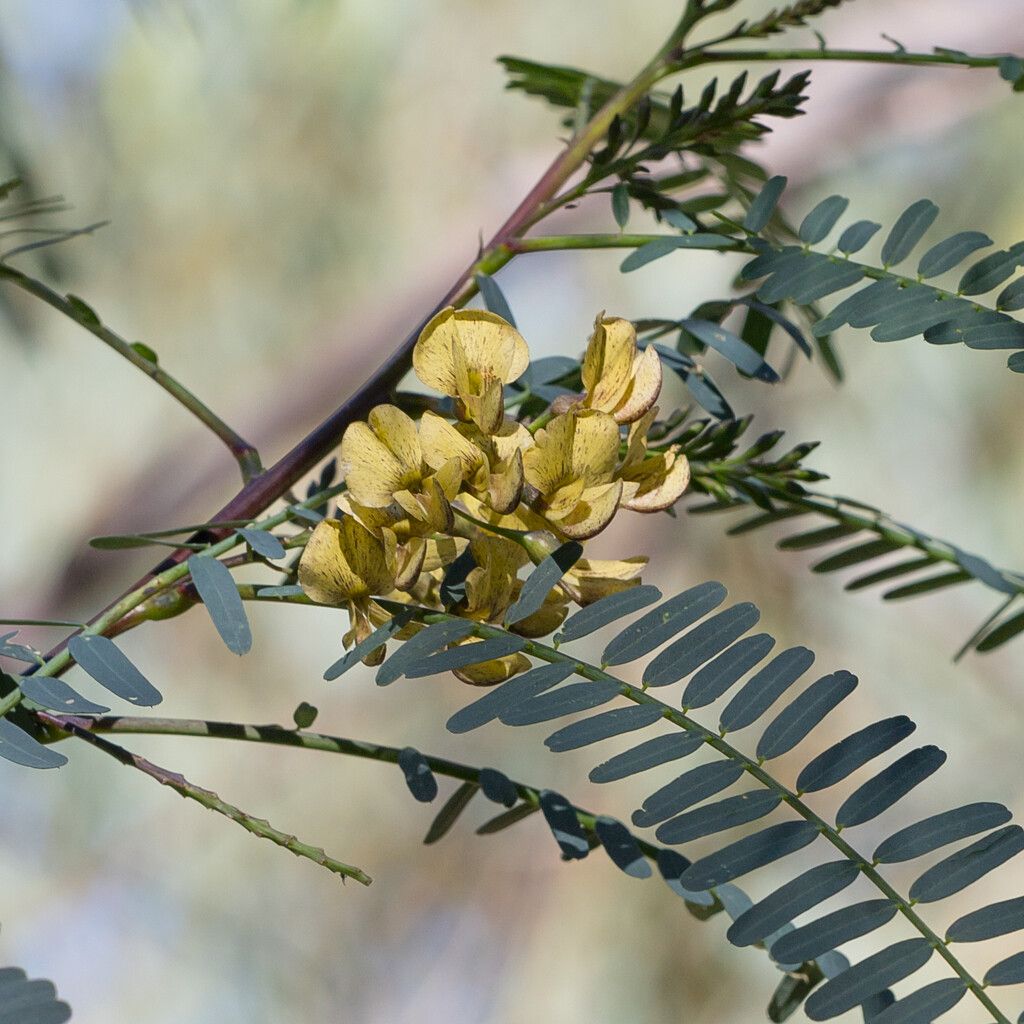
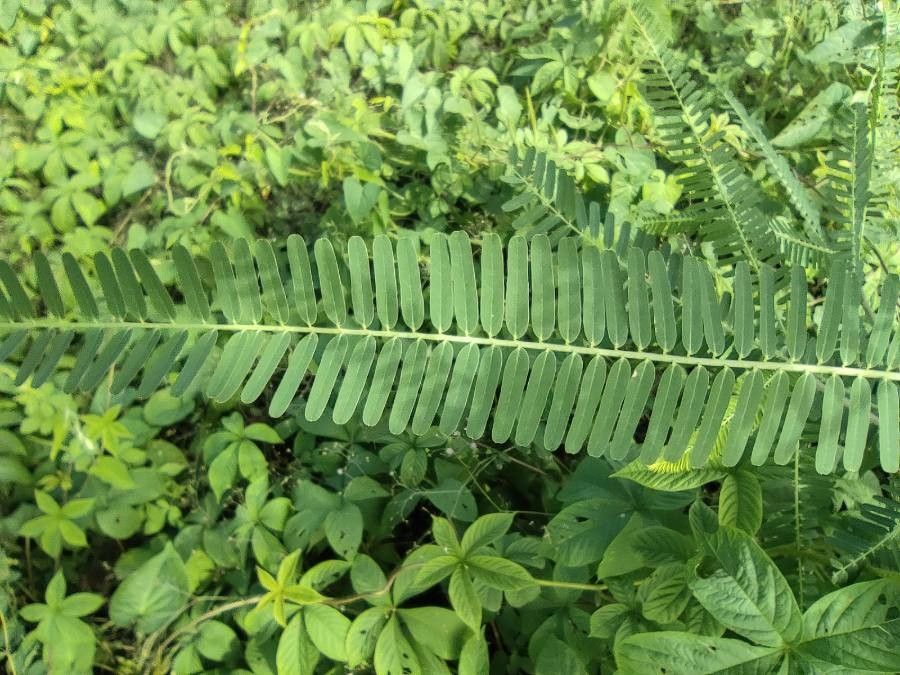
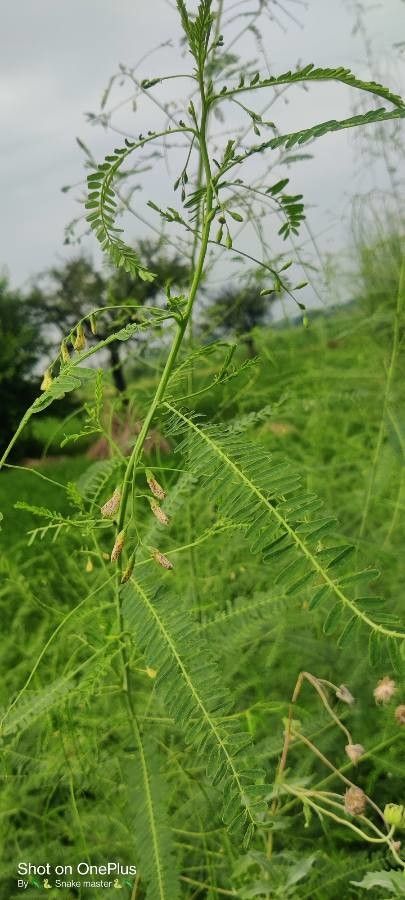
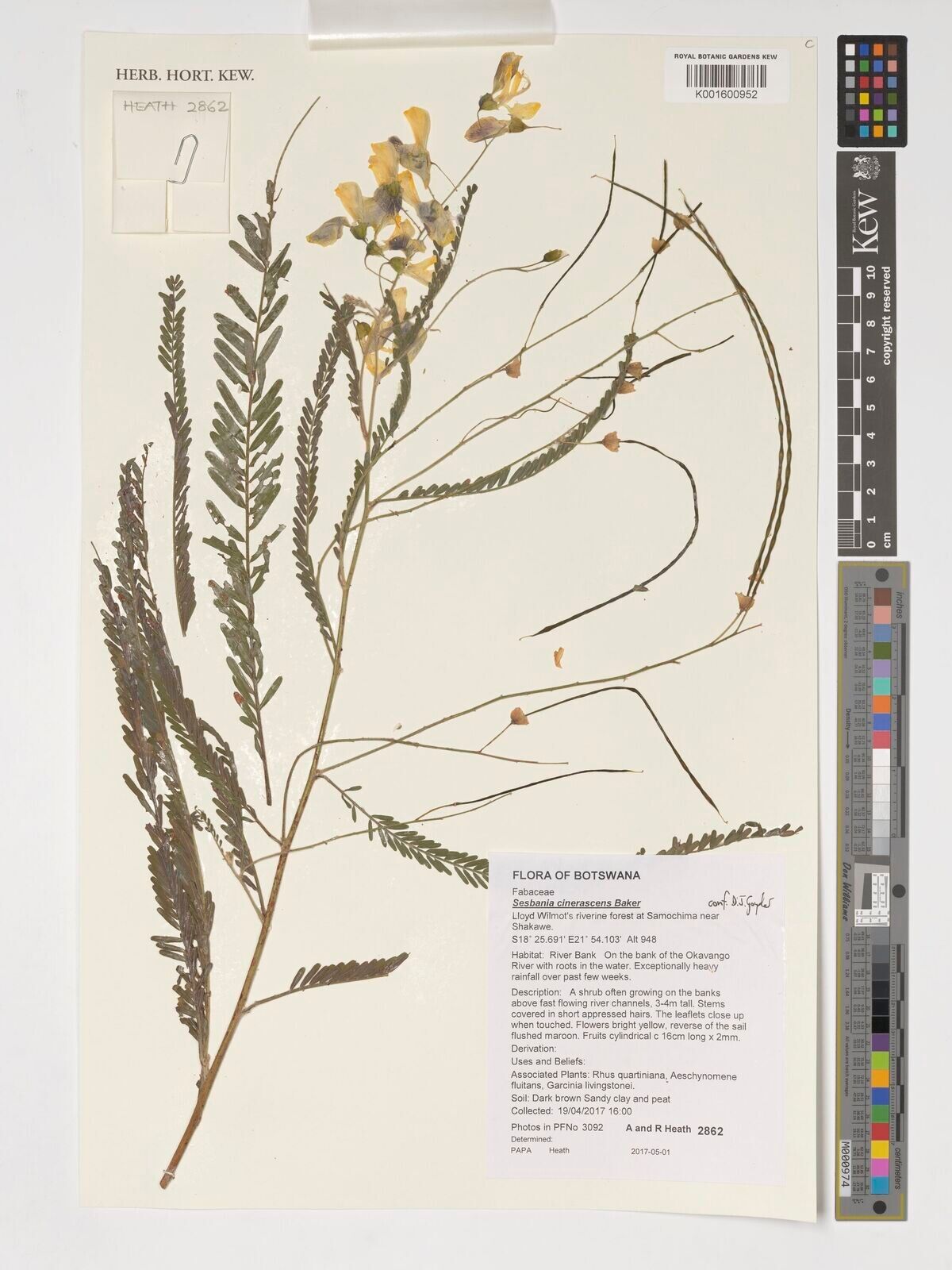
Sesbania tomentosa, commonly known as Oahu riverhemp and ʻōhai, is an endangered species of flowering plant in the pea family, Fabaceae, that is endemic to the main Hawaiian Islands as well as Nihoa and Necker Island. It inhabits low shrublands and, rarely, dry forests, at elevations from sea level to 2,500 ft (760 m). Associated native plant species include akiʻaki (Sporobolus virginicus), ilima (Sida fallax), naupaka kahakai (Scaevola taccada), and pili (Heteropogon contortus). Off-road vehicles, wildfires, grazing, and alien species competition have destroyed their habitat on the main islands, but they are still quite common on Nihoa and Necker. At least 2000 specimens grow on Nihoa, while there are far less on Necker. ʻŌhai is highly polymorphic, exhibiting broad variations in color and shape. Plants that grow on Nihoa have reddish-orange flowers and young leaflets that are relatively hairless. Necker plants have salmon to orange colored-flowers, and leaflets that are very hairy. A form that grows as a standing tree exists on Molokaʻi. ʻŌhai grows as a prostrate shrub with semi-glaucous leaves devoid of tomentum on the southernmost tip of the island of Hawaiʻi, Ka Lae.
Oahu riverhemp demonstrates strong resistance to disease and is typically not prone to illnesses. In terms of care, this plant is fairly low-maintenance. When planted outdoors it needs only minimal watering, and larger plants usually do not require pruning. Smaller plants, however, should be pruned after they have bloomed. Oahu riverhempt is appropriate for anyone who has an outdoor area, such as a garden or deck, and does not demand much care experience.
How to keep Sesbania Tomentosa.
Light
Oahu riverhemp comes from open habitats, such as sunny meadows and forest edges, where light is plentiful. It thrives in Full Sun but will also tolerate Partial Sun, adapting well to a range of sunlight conditions.
Temperature
Oahu riverhemp is fairly adaptable to temperature, tolerating high heat and considerable temperature fluctuations. In hot weather, attention should be paid to watering and providing adequate shade to avoid sunburn. Conversely, Oahu riverhemp has relatively low tolerance for cold; while it can endure some chill, excessively cold conditions may cause frost damage.
Fertilizer
Proper timing is important for fertilizing Oahu riverhemp. Apply fertilizer in early spring and continue once a month until early summer. Fertilizer encourages attractive blooms and supplies energy during both dormant and active growth periods.
Pruning
Oahu riverhemp is a shrubby plant with a dense, hairy texture. The best time to prune it is in early spring, concentrating on removing dead branches to promote healthy growth and structure. This practice improves air circulation, reduces the risk of disease, and encourages vigorous flowering. For the best results, use clean and sharp tools.
Botanical profile.
- Plant Type
- Shrub
- Life Cycle
- Perennial
- Genus
- Sesbania
- Family
- Fabaceae
- Hardiness Zone
- 10-12
- Mature Height
- 0.3 m to 10.97 m
- Mature Spread
- 0.49 m to 1.52 m
- Leaf Color
- Gray, Silver
- Leaf Type
- Evergreen
- Flower Color
- Pink, Red
- Flower Size
- 2.03 cm to 3.05 cm
- Bloom Time
- Late spring, Summer, Early fall
- Planting Time
- Spring, Summer, Autumn
- Harvest Time
- Mid summer, Late summer, Fall
Other names.