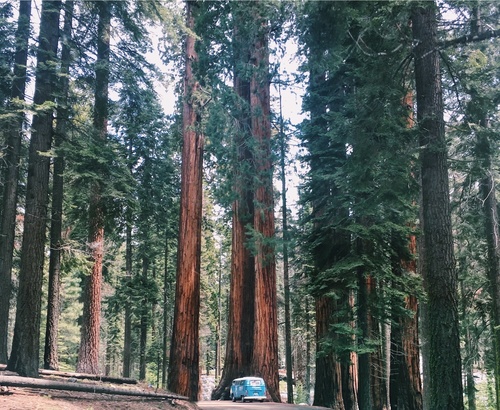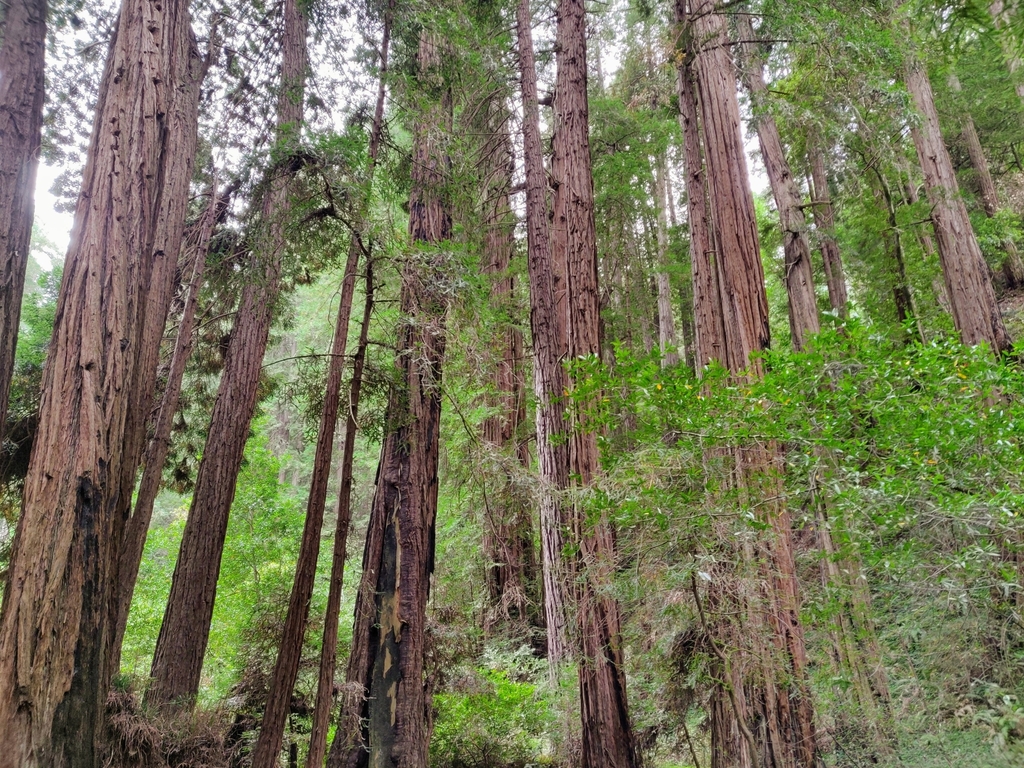
Sequoia sempervirens, commonly known as the coast redwood, is a towering evergreen tree native to the coastal regions of California and Oregon in the United States. Known as one of the tallest tree species in the world, some coast redwoods can exceed 350 feet (107 meters) in height. Their bark, which is reddish-brown, can be as thick as 12 inches (30 cm). The leaves, resembling needles, can grow up to 1 inch (2.5 cm) long.
Coast redwoods are renowned for their remarkable longevity, with some individuals living for over 2,000 years. They play a crucial ecological role in their native habitats by providing shelter for various wildlife species and helping to regulate local climate conditions.
Despite their ecological importance and cultural significance as symbols of California's natural beauty, coast redwoods have suffered extensively due to human activities such as logging and development. To protect the remaining populations and prevent further decline, numerous conservation efforts have been undertaken.
In summary, Sequoia sempervirens is an iconic tree species that epitomizes both the natural beauty and the environmental conservation efforts in California's coastal regions.
Coast Redwood: These trees are among the oldest living organisms on Earth. Their bark can be thick, soft, and fibrous, with a vibrant red-brown hue when freshly exposed, which is how they got the name "redwood." Because they are often found growing in coastal regions, they are also known as "coast redwoods."
Coast redwood is fairly disease-resistant and is generally not susceptible to illnesses. Regarding maintenance, this species is fairly low-maintenance. When grown outdoors it needs only light watering, and mature specimens typically do not require pruning. Still, smaller specimens should be pruned after they finish blooming. Coast redwood is appropriate for anyone with outdoor space, such as a garden or a deck, and does not demand extensive gardening experience.
How to keep Sequoia Sempervirens.
Light
The coast redwood grows best when it receives continuous sunlight during the day, though it can tolerate a moderate amount of shade. Its natural habitat consists of areas that are illuminated all day. Both excessive and insufficient sunlight can negatively affect the tree’s health, and too much shade in particular can impede its growth.
Water
The coast redwood flourishes in foggy coastal climates that offer high humidity and consistent moisture. It thrives in soil that remains evenly moist and needs to be watered every one to two weeks. Usually grown outdoors, the coast redwood benefits greatly from the use of mulch, which helps retain moisture—essential for preserving its evergreen foliage.
Humidity
This plant will thrive in moderate humidity, which is probably the level in your home. However, misting it a few times a week can be very beneficial. Make sure the room has good ventilation.
Temperature
The coast redwood is a temperate woody plant native to regions with cool summers and mild winters. It prefers temperatures between 59 to 95°F (15 to 35°C) and can tolerate occasional frosts. In summer it may need occasional watering to stay cool, while in winter it can handle drought and even slightly freezing temperatures.
Fertilizer
Coast redwood has particular nutrient needs and does not require heavy fertilization. Spring is the best time to apply fertilizer for optimal growth. Supplying nutrients enhances its health, increases its resistance to pests and diseases, and helps preserve its long lifespan.
Pruning
Pruning coast redwoods during their dormant period, from early to late winter, helps them thrive. Focus on removing dead or damaged branches to promote healthy growth, while avoiding heavy pruning to prevent stress. Lightly thinning the canopy can improve air circulation. Be sure to use clean, sharp tools to prevent infection and ensure the tree's structural integrity and longevity.
Toxicity
Redwood has been identified as a sensitizer, despite the fact that serious reactions are very rare. Asthma-like symptoms, eye, skin, and respiratory irritation are typically the most frequent reactions. For more details, read the articles Wood Allergies and Toxicity and Wood Dust Safety.
Further reading →
The toxicity and danger assessments provided are for reference only. We do not assure their accuracy, so it's crucial not to depend on them. Seek professional advice when necessary for accurate guidance.
Botanical profile.
- Plant Type
- Tree
- Life Cycle
- Perennial
- Genus
- Sequoia
- Family
- Cupressaceae
- Hardiness Zone
- 7-9
- Mature Height
- 114.91 m
- Mature Spread
- 3.96 m to 7.92 m
- Leaf Color
- Green
- Leaf Type
- Evergreen
- Flower Color
- Yellow, Green
- Flower Size
- 2.54 cm
- Bloom Time
- Spring
- Planting Time
- Spring, Autumn
- Harvest Time
- Mid summer, Late summer, Early fall
- Native Area
- Western United States
Other names.
Reader questions.
What should I do if I give too much or too little water to my Coast redwood?
Overwatering can sometimes happen because of poor soil conditions. If the soil doesn't allow water to drain well, your Coast redwood may start to deteriorate. In this situation, you have two options: improve the soil drainage by adding amendments or relocate your Coast redwood to a better spot. If you're growing your Coast redwood in a pot, you might also need to repot it with looser soil in a container that drains properly. Overwatering can lead to plant diseases, so it's important to address them promptly. On the other hand, if your Coast redwood is underwatered, the remedy is simple: water it more frequently, and it will recover. To determine if you've overwatered the plant, check the foliage, particularly the new growth. Discolored or easily breakable new growth can indicate excess moisture. Standing water or slow drainage in the plant's area is another sign of overly moist soil. Underwatered Coast redwood trees will also show symptoms in their foliage, such as sparse and brown leaves. If you notice these symptoms, consider recent heavy rains or consistently high temperatures as factors that may have affected the plant.
Why is it necessary for me to fertilize my Coast redwood?
To promote healthy growth of the Coast redwood, it is recommended to fertilize it in the spring. Keep in mind that this plant has a long lifespan and requires support. Adding nutrients to the soil not only improves the plant's health but also enhances its ability to resist common pests and diseases that could hinder growth or shorten its lifespan.
What are the sunlight requirements for plants?
Plants generally have varied sunlight requirements to thrive. Full sun plants require more than 6 hours of sunlight daily, while partial sun plants do well with about 3-6 hours of sunlight. It's essential to observe your garden's sunlight patterns to find the best spots that provide the right balance of light and shade, ensuring your plants are happy and healthy.
What is the coast redwood and where is it native to?
The coast redwood, botanically known as Sequoia sempervirens, is a temperate woody plant native to regions characterized by cool summers and mild winters. This majestic plant thrives in temperatures ranging from 59 to 95°F (15 to 35°C) and is capable of tolerating occasional frosts, making it a resilient choice for various landscapes.
How frequently should I water my Coast redwood?
A mature Coast redwood is mostly drought tolerant and can survive on rainfall alone. During the hottest months, you may need to water it once a week, but in other seasons, watering may not be necessary. The exception to this is if the tree is newly planted, in which case regular watering is advised to help establish the roots. However, it's important to avoid excessive watering as Coast redwoods do not like standing water. When unsure, it's better to not water the tree than risk overwatering it.
When should I put fertilizer on my Coast redwood?
Coast redwood is unique in that it doesn't need excessive nutrients like typical garden plants. The growing medium often falls short in providing the necessary nutrients for healthy growth. To address this, the optimal time to fertilize the Coast redwood is in the spring, before new growth emerges.
What are the essentials for growing Coast Redwood?
The Coast Redwood (Sequoia sempervirens) thrives best with continuous exposure to sunlight throughout the day but can also handle moderate amounts of shade. Its natural habitat is in areas with all-day light exposure. Both overexposure and underexposure to sunlight can impact the plant's wellbeing, with insufficient light affecting its growth. For indoor plants unable to receive natural sunlight, artificial lighting is a great alternative to support their growth, especially in less sunny locations or during winter. LED lights are recommended for their ability to provide specific wavelengths needed by plants, with varying wattage requirements based on the plant's natural sunlight needs.
What are the temperature preferences and tolerances of the coast redwood?
Coast redwood prefers temperatures between 59°F to 95°F (15°C to 35°C) and can handle occasional frosts. It exhibits strong cold resistance, thereby not usually requiring special frost protection measures in winter. However, if winter temperatures are expected to fall below -15°C, providing cold protection by wrapping the trunk and branches with non-woven fabric or cloth is advisable. Additionally, to aid in winter survival and promote spring vitality, watering the plant abundantly before the first freeze of autumn to ensure moist soil is recommended.
How much water does my Coast redwood tree need?
During the height of summer, it's important to water your Coast redwood. Generally, giving it about one inch of water per week is sufficient. However, the amount may vary depending on rainfall. If it has rained one inch or more that week, you don't need to water your Coast redwood. Keep in mind that newly planted Coast redwoods require more water during the establishment period. In this case, watering once every one to two weeks for the first few growing seasons should be enough.
When is it not a good idea to fertilize my Coast redwood?
While some plants benefit from monthly or weekly fertilization, Coast redwood is not one of them. This tree does not need excessive nutrients, and over-fertilization can actually harm it, leading to decline. It is best to only apply fertilizer during the spring and avoid doing so in the summer, fall, and winter. During these seasons, refrain from adding any fertilizer or organic matter to the soil.
What are some symptoms of inadequate light for Coast Redwood?
When a Coast Redwood doesn't receive enough light, it may show several signs. New leaves could grow smaller, and the plant might become leggy or exhibit sparse growth, indicating a stretched-out appearance due to longer spaces between leaves or stems. It could also experience faster leaf drop, slower or no new growth, lighter-colored new leaves, or conditions such as chlorosis, where leaves lose their green coloring. Extreme sunlight exposure might result in sunscald, leaf curling, wilting, or leaf scorching, reflecting damage or stress caused by too much light.
How should the coast redwood be cared for in low temperatures?
The coast redwood is cold-tolerant, performing best when temperatures remain above 15°C, and should ideally be kept above -10°C during winter. If temperatures drop below -15°C, you might not notice immediate damage, but come spring, branches may become brittle and fail to produce new shoots. To manage this, prune away any dead branches in spring that haven't developed new leaves, aiding the plant's recovery and growth for the season.