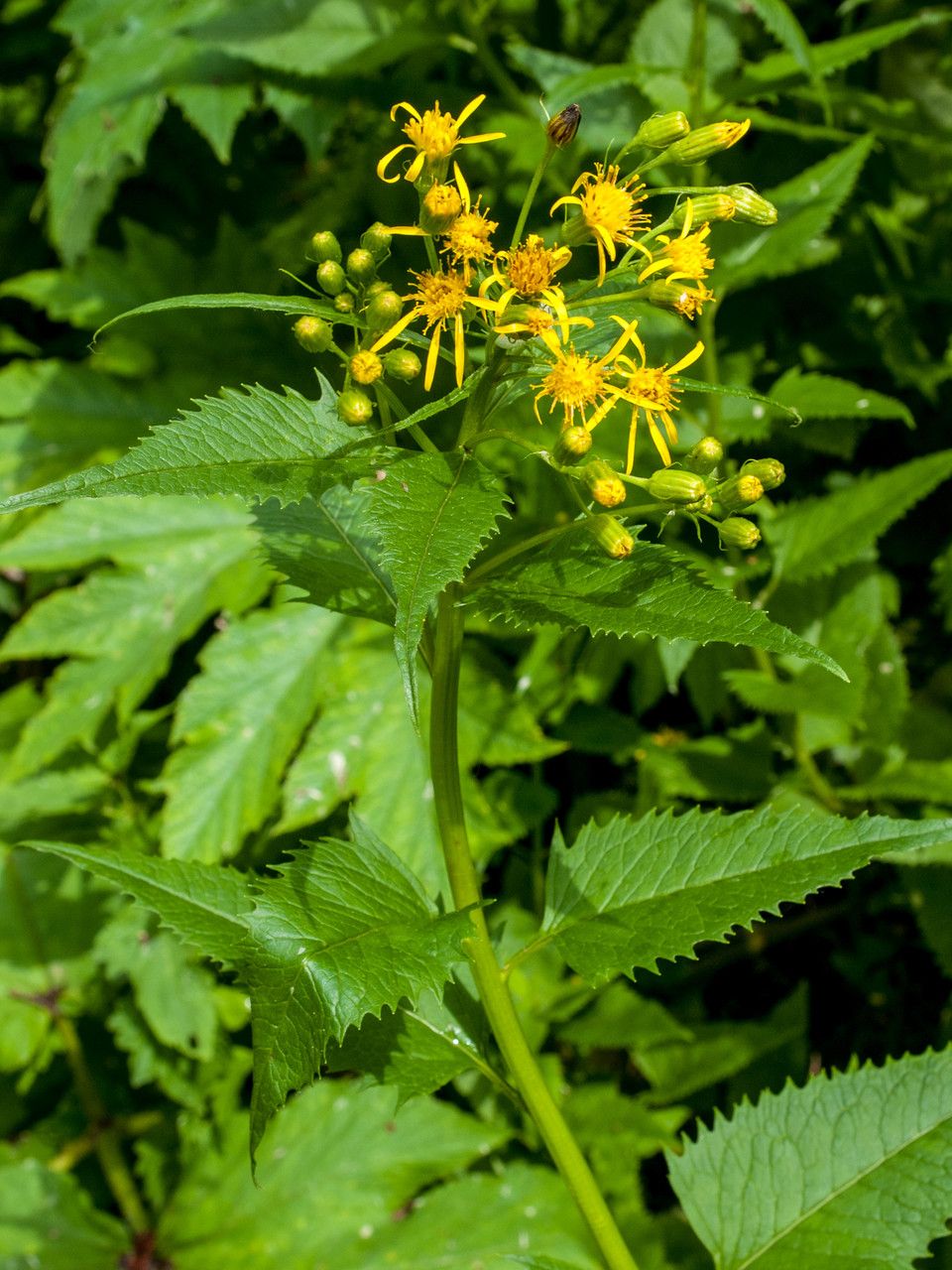
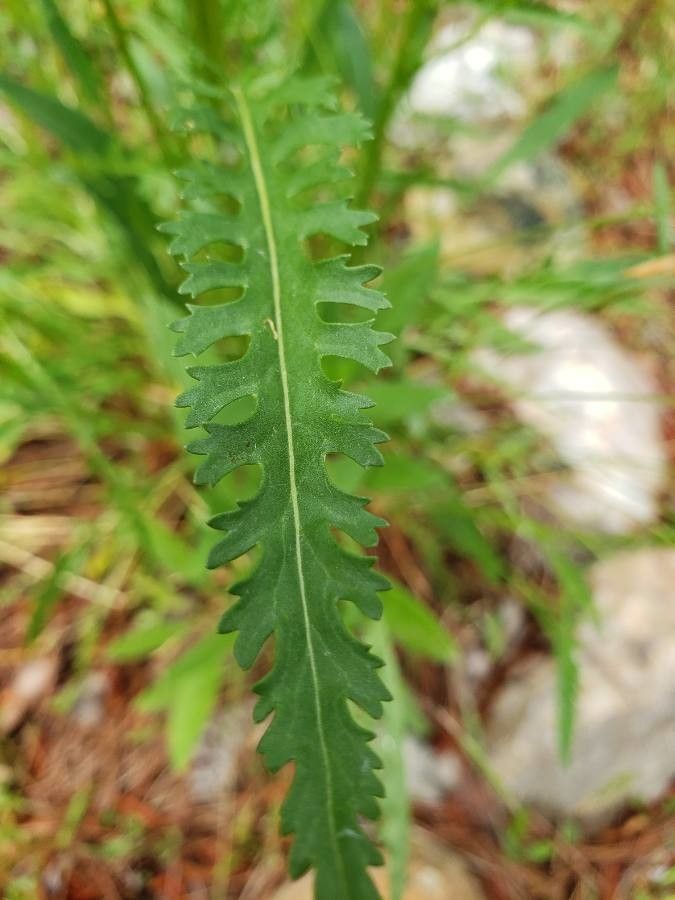
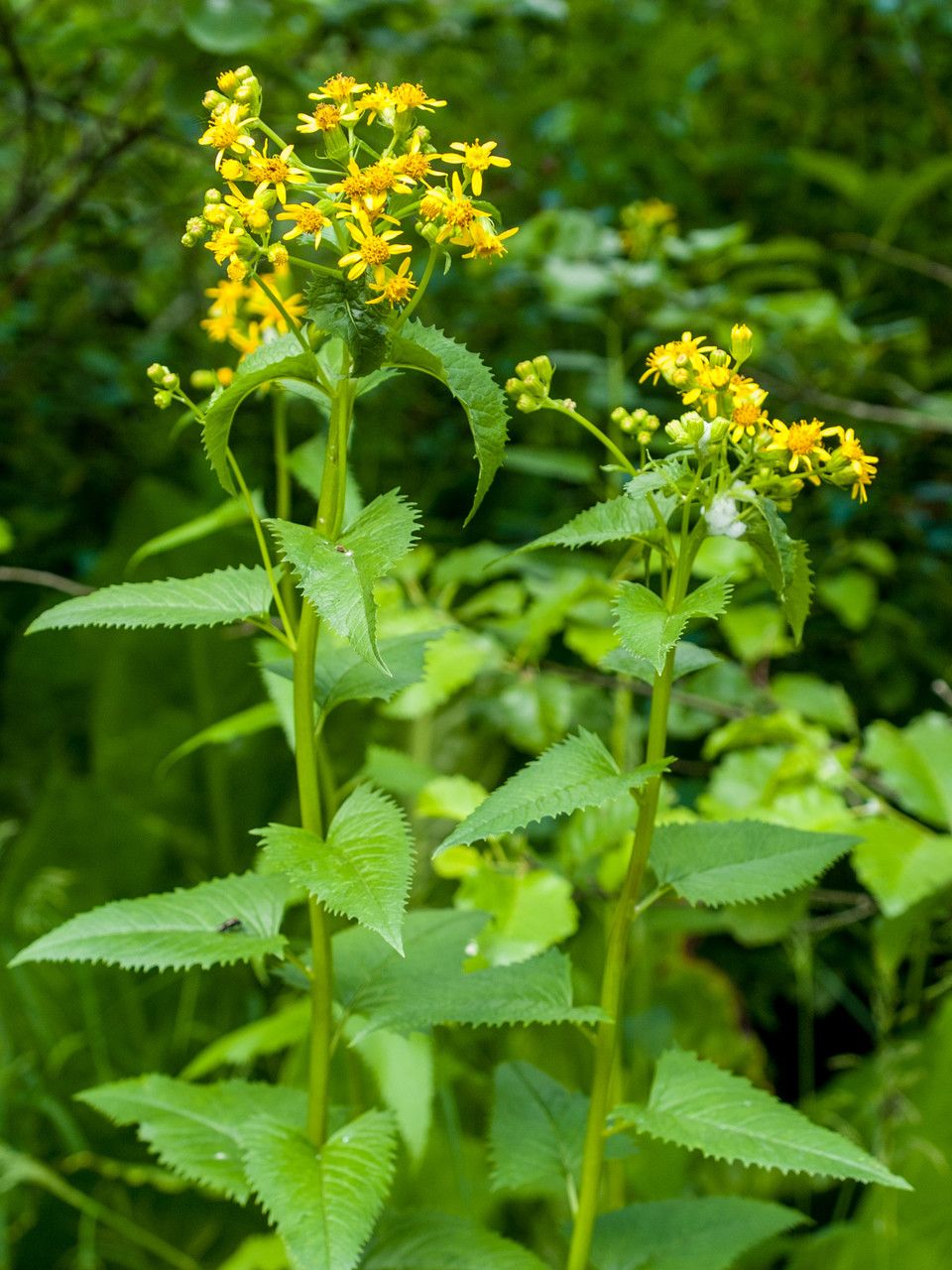
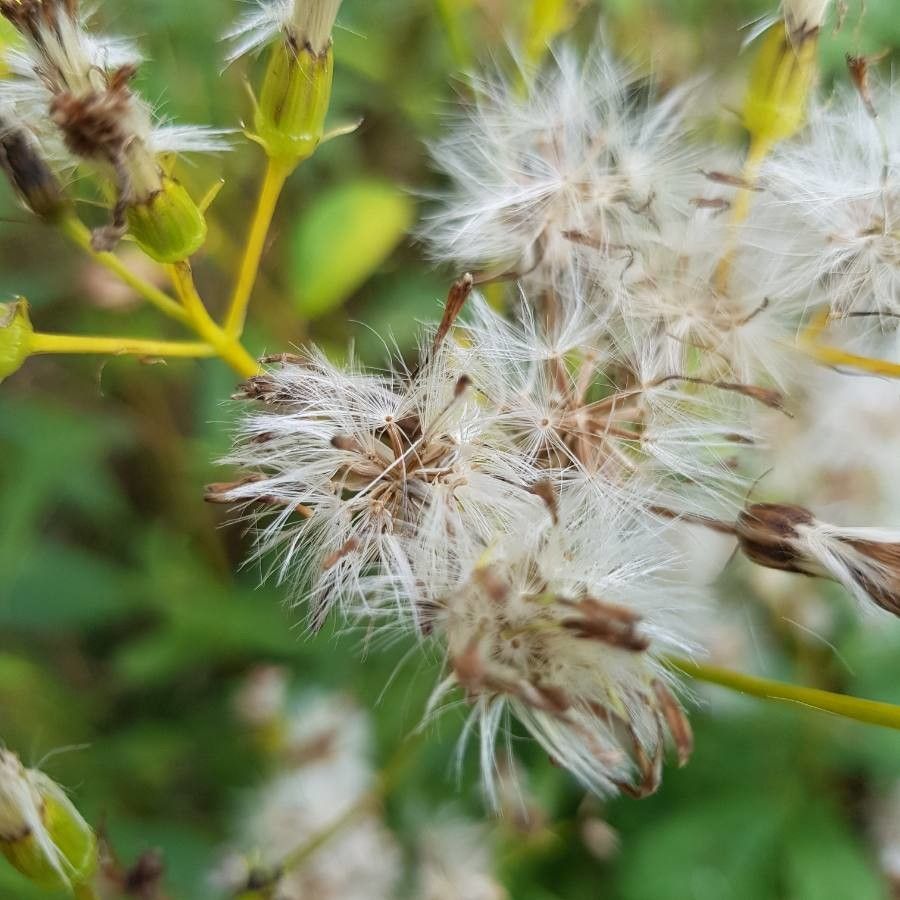
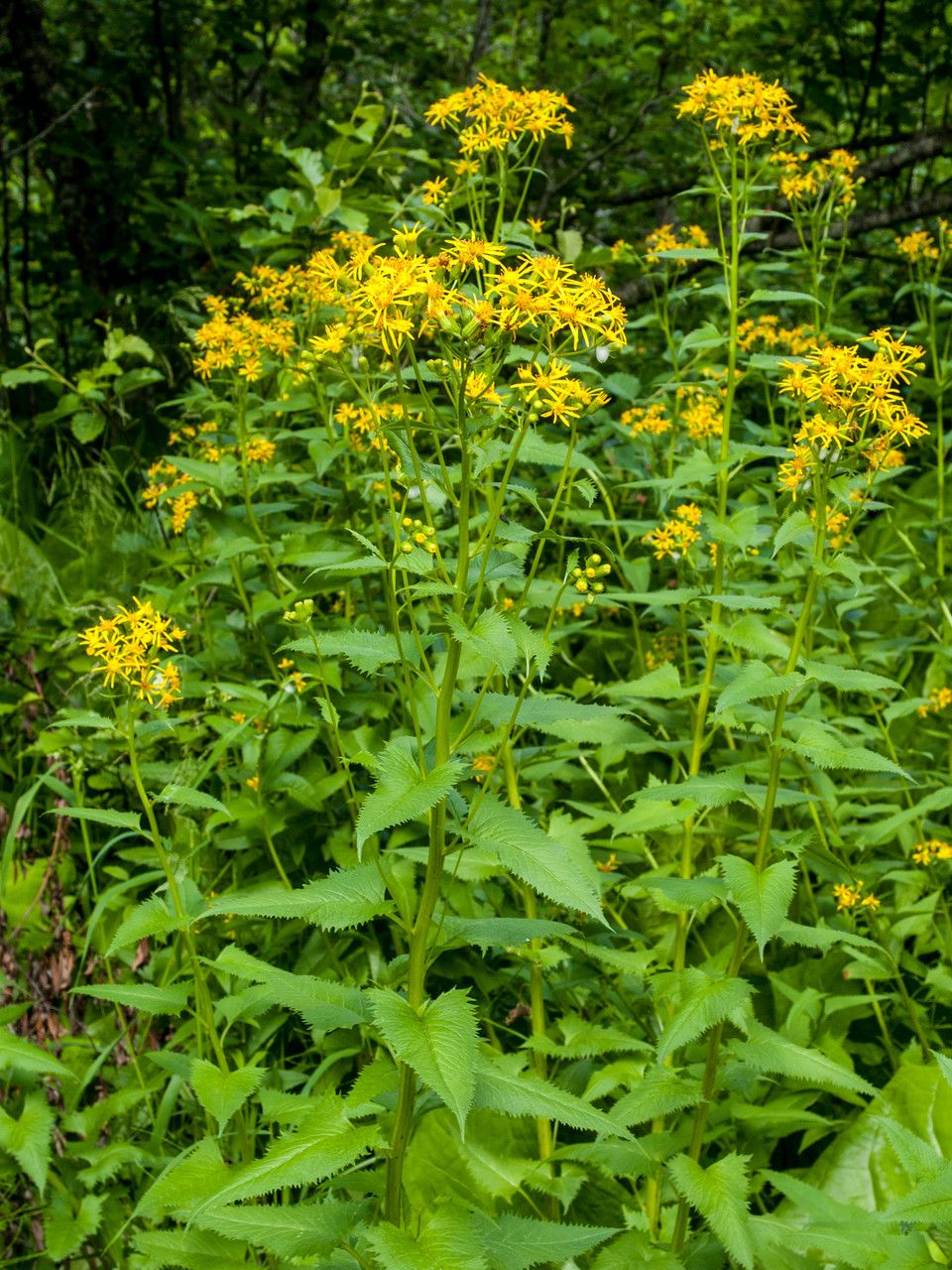
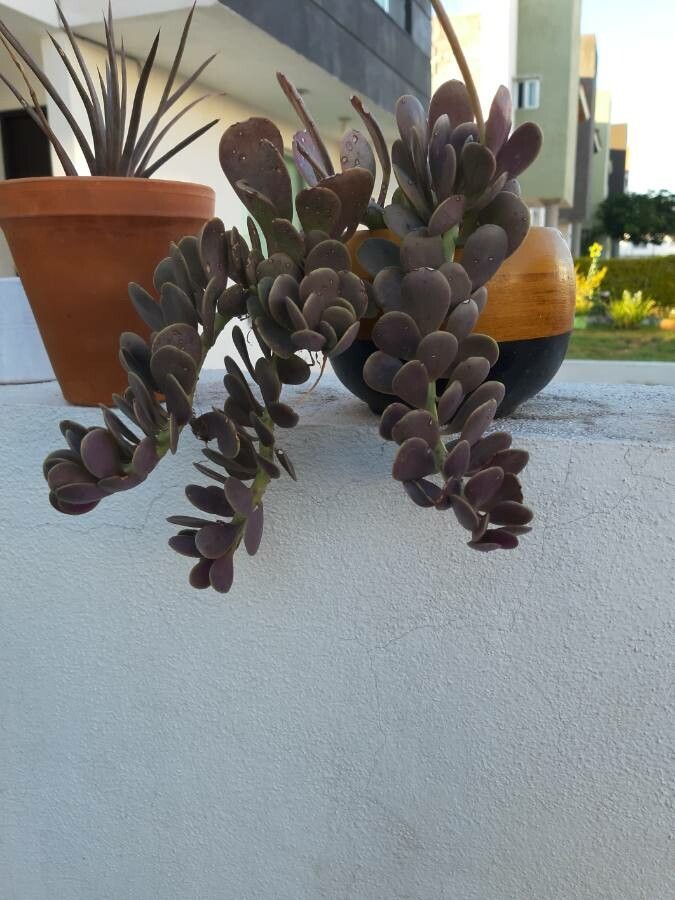
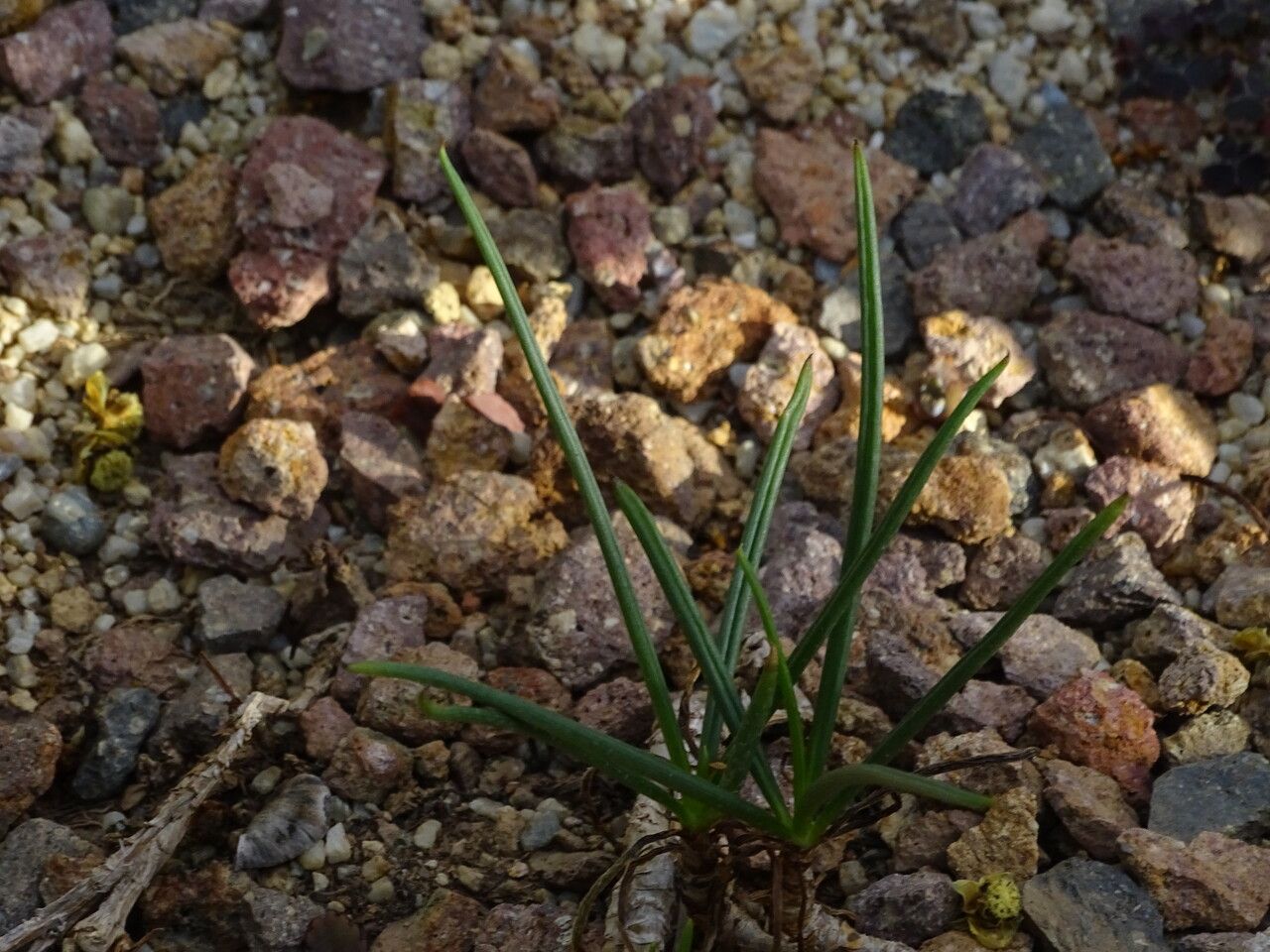
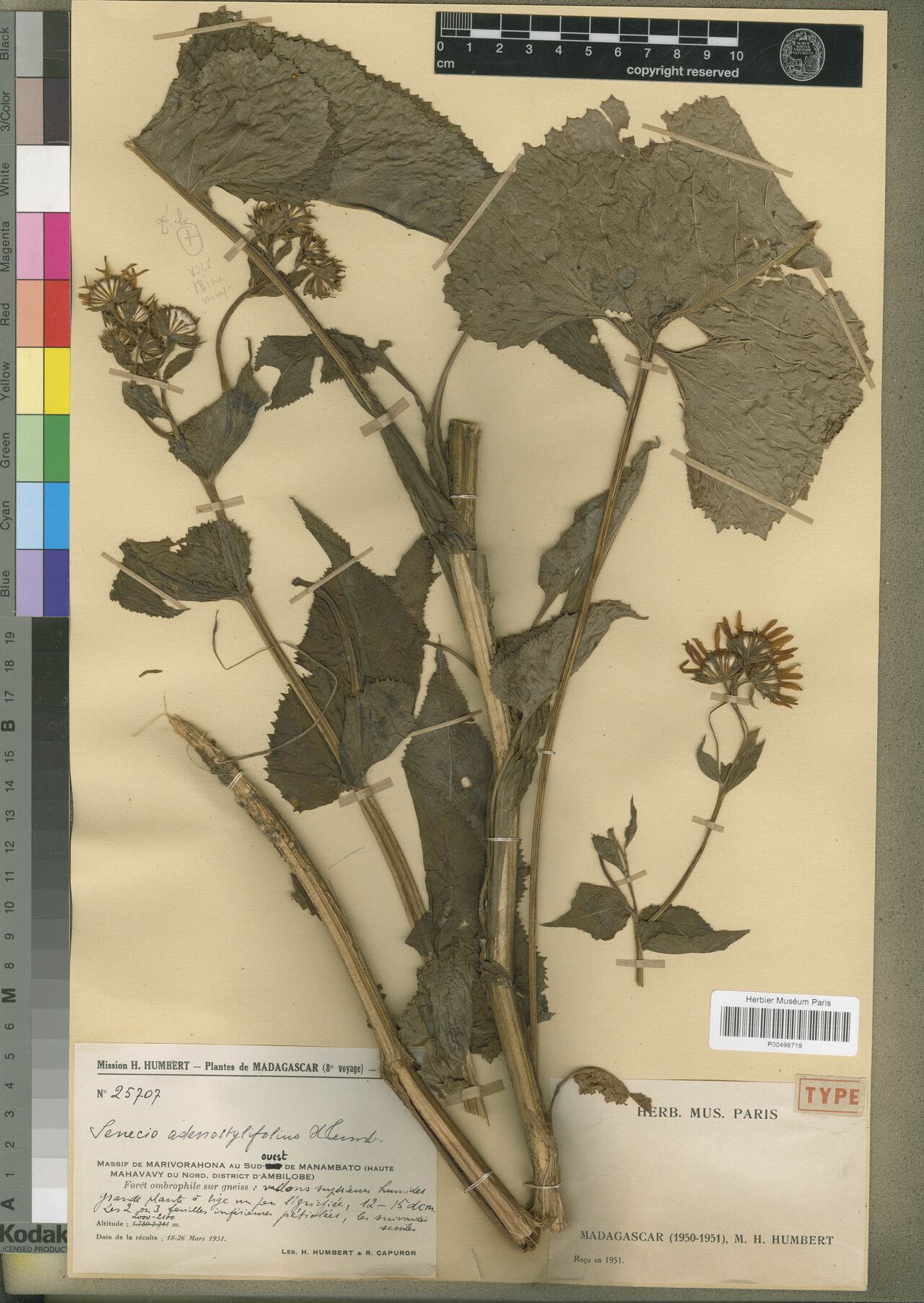
Senecio triangularis, commonly known as spearhead senecio, is a succulent plant native to South Africa. This small, compact plant typically reaches up to 6 inches in height and 8 inches in width. Its thick, fleshy leaves are triangular, tapering to a point that resembles an arrowhead or spearhead. The leaves are green with purple undersides and have small white hairs.
In the summer, Senecio triangularis produces small yellow flowers that grow in clusters at the top of long stems. These flowers attract bees and other pollinators.
This plant is easy to care for, requiring minimal watering and can tolerate drought conditions. It thrives in well-draining soil and prefers bright, indirect light or partial shade.
Senecio triangularis can be propagated through stem cuttings or by separating offsets from its base during its growing season.
Overall, this unique succulent is an excellent addition to any indoor garden due to its low maintenance requirements, striking appearance, and ability to thrive in various growing conditions.
Arrowleaf ragwort has good resistance to disease and is generally not vulnerable to illnesses. However, it can be affected by pests and diseases present in its environment. These infections are generally mild. Care-wise, the plant needs moderate upkeep. It should be pruned regularly to keep a neat appearance and encourage healthy growth. Fertilizing can also help boost flowering. Arrowleaf ragwort is appropriate for anyone with an outdoor area, such as a garden or patio, and does not require extensive gardening experience. It may need more attention when grown indoors.
How to keep Senecio Triangularis.
Light
The arrowleaf ragwort prefers sunlight throughout the day. It can also grow in lightly shaded spots, but it does best when in full sun. Its ancestral habitats are places that receive sun for most of the day. Both excessive and insufficient sunlight can impede its healthy growth.
Water
Arrowleaf ragwort is well-suited to moist, mountainous environments. It thrives with regular moisture and has moderate drought tolerance. To keep the plant healthy, it needs to be watered weekly. It grows best in well-draining but consistently moist soil, ideally in cooler climates with plenty of rainfall.
Temperature
Arrowleaf ragwort does best in its native habitat at temperatures of 0 to 32 ℃ (32 to 90 ℉). It prefers moderate conditions but can tolerate a broad range of temperatures. When seasons change, ensure the plant is kept at consistent moisture levels to prevent thermal stress.
Fertilizer
One fertilizer application in spring is generally enough for Arrowleaf ragwort, although several feedings can boost growth to its fullest. Apply fertilizer about every month to six weeks. Fertilization improves the leaves' appearance and function, helping maintain uniform color and a healthy texture. It also encourages root development and enhances nutrient uptake for sustained plant health.
Botanical profile.
- Plant Type
- Herb
- Life Cycle
- Perennial
- Genus
- Senecio
- Family
- Asteraceae
- Hardiness Zone
- 3-7
- Mature Height
- 0.3 m to 1.52 m
- Mature Spread
- 15 cm to 30 cm
- Leaf Color
- Green
- Leaf Type
- Deciduous
- Flower Color
- Yellow
- Flower Size
- 2.54 cm
- Bloom Time
- Summer
- Planting Time
- Autumn
- Harvest Time
- Late summer, Early fall, Mid fall
Other names.
Reader questions.
How should I water my Arrowleaf ragwort?
When watering the Arrowleaf ragwort, it is best to use filtered water at room temperature. Tap water may contain harmful particles for this plant. The water should be at room temperature or slightly warmer because the plant is adapted to warm environments and may not handle cold water well. It is not recommended to water from above, as it can cause foliage issues. Instead, water the soil with filtered room temperature water until it is completely soaked. This helps moisten the roots and allows them to spread through the soil and absorb nutrients effectively.
What are the sunlight requirements for arrowleaf ragwort?
Arrowleaf ragwort, or Senecio triangularis, flourishes best in conditions where it can enjoy all-day sun exposure. It is adaptable and capable of growing under partially shaded circumstances, but it achieves optimal growth when exposed fully to sunlight. This plant's natural preference is rooted in its ancestral habitats, which are predominantly sun-drenched for the majority of the day. However, both too much and too little exposure to sunlight can impede its healthy growth. It's crucial to observe the movement of sunlight through your garden to select locations that provide an ideal mixture of light and shade, guaranteeing the well-being of your plants.
What temperature is best for Arrowleaf ragwort?
Arrowleaf ragwort grows best within a specific temperature range of 65~75℉(18~25℃). Maintaining this temperature range will ensure the healthiest growth of the plant. Although Arrowleaf ragwort can tolerate higher and lower temperatures, it is best to keep the growing area within a few degrees of 65~75℉(18~25℃). If you cannot maintain this exact range, the plant will still continue to grow, but extreme temperatures beyond certain thresholds can result in damage or reduced growth. On the higher end, temperatures between 75~85℉(25~30℃) are more tolerable, while on the lower end, Arrowleaf ragwort can withstand temperatures as low as 5℉(-15℃). However, it is crucial to avoid temperatures exceeding 85℉(30℃) as this can cause growth to slow down or even lead to the plant's demise.
What should I do if I give my Arrowleaf ragwort too much or too little water?
Overwatering is a more common issue for Arrowleaf ragwort and can cause wilting, yellowing leaves, and diseases like root rot, mold, and mildew. Underwatering is less common but can result in brittle, brown leaves. It's important to detect signs of overwatering early and adjust your watering schedule accordingly. If the soil drains poorly, replace it with a well-draining potting mix. If your plant isn't getting enough water, increase your watering frequency until the signs improve.
What are the effects of insufficient or excessive sunlight on arrowleaf ragwort?
Arrowleaf ragwort shows various symptoms when exposed to inadequate or excessive light. Light deficiency may lead to smaller leaves, leggy growth, premature leaf drop, stunted or ceased growth, paler new leaves, and potential conditions like chlorosis and sunscald. Conversely, overexposure can result in symptoms such as leaf curling, wilting, scorching, and other damage indicative of too much direct sunlight. These symptoms highlight the plant's need for a balanced light environment to maintain health and vigor.
Does Arrowleaf ragwort need different temperatures at different stages of growth?
To ensure healthy growth, maintain a temperature range of 65-75℉ (18-25℃) for Arrowleaf ragwort. Avoid going below -5℉ (-20℃) as extremely cold temperatures can slow down growth. However, it's important to note that excessively high temperatures are more detrimental than cold temperatures. During the budding stage, if the temperature remains high, Arrowleaf ragwort may not flower.
How frequently should I water my Arrowleaf ragwort?
If your Arrowleaf ragwort is in a pot, you can check if it needs water by sticking your finger in the soil. If the top two to three inches of soil are dry, it's time to water. If it's planted in the ground, you can use the same method. When the top few inches of soil are dry, it's time to water. Usually, during spring and early fall, watering once a week is enough. But during really hot weather, you may need to water twice a week or more. However, mature Arrowleaf ragwort plants can tolerate drought well.
How can I address light-related issues for indoor and outdoor arrowleaf ragwort plants?
To address light-related issues in arrowleaf ragwort, gradual adaptation to the optimal light conditions is key. For indoor plants, gradually transitioning them to a location with at least 6 hours of sunlight daily is recommended. This can be achieved by utilizing south-facing windows or employing artificial lighting, like desk lamps or grow lights, to provide additional illumination. Outdoor plants should also be moved progressively to sunnier spots to prevent shock from sudden light intensity changes. For plants in the ground, reducing obstacles that block sunlight, such as pruning trees, or transplanting to a brighter location during dormancy periods, can significantly improve light exposure. Remember that while parts of the plant that have already suffered might not recover, new growth should appear healthy with these adjustments.
Here are three tips to help you control the temperature of Arrowleaf ragwort.
Here are some tips for growing Arrowleaf ragwort indoors: Tip #1: Choose the coldest room: When growing Arrowleaf ragwort indoors, select the coldest room in your home. This room should be on the side of your house that doesn't receive strong sunlight during the hottest part of the day. However, make sure the room still gets a good amount of sunlight as completely blocking out sunlight can hinder growth. Tip #2: Watch out for high temperatures: During the growing season of spring and early summer, high temperatures can affect Arrowleaf ragwort's ability to flower properly. Fluctuating temperatures can cause flowering buds to turn into non-flowering buds or partially open. To ensure optimal flowering, maintain a temperature range of 65-75℉ (18-25℃). Tip #3: Protect from frost: While Arrowleaf ragwort can tolerate low temperatures as low as -5℉ (-20℃), it is sensitive to significant frost. In late fall or winter, exposure to frost can cause damage to the plant. Look out for wilting and discoloration, which can progress to brown or black as the affected parts die. If you want to save the plant, prune any parts that display these colors.
How much water does my Arrowleaf ragwort plant need?
To properly water your Arrowleaf ragwort, don't hold back on the amount of water you give it. Make sure the top two to three inches of soil are dry, then give it a good, thorough watering. You want to soak the soil completely, so add enough water that it starts to drain out of the bottom of the pot. If you don't see any excess water draining, that means you haven't given it enough water. However, be careful not to let water accumulate in the soil, as that can harm the plant. On the other hand, if water isn't draining properly from the pot, it may indicate that the soil doesn't drain well, which is bad for the plant's health. If the plant is outdoors, it usually only needs about 1 inch of rain per week.
What is the role of artificial lighting in growing arrowleaf ragwort indoors?
Artificial lighting plays a crucial role in the indoor cultivation of arrowleaf ragwort, especially in scenarios where natural sunlight is insufficient, such as during winter or in less sunny locations. The right type of artificial light, like LED lights, can be tailored to mimic natural sunlight's beneficial wavelengths, promoting healthier and more robust growth. The intensity of the light should be adjusted based on the plant's needs, with full sun plants requiring 30-50W/sq ft, partial sun plants 20-30W/sq ft, and full shade plants needing 10-20W/sq ft of light. Moreover, the distance of the light source should be calibrated between 12-36 inches above the plant, and the duration should coincide with the natural daylight hours, typically between 8-12 hours daily, to simulate an optimal growing environment.
Does Arrowleaf ragwort require different temperatures for different seasons?
Keeping a steady temperature in your growing area is important, regardless of the season. If you live in an area with harsh winters or very hot summers, it may be best to bring your plants inside. This way, you can maintain a cool room where Arrowleaf ragwort can thrive under ideal conditions. If you choose to leave your plants outside, it is crucial to closely monitor the temperature. In hot summer climates, make sure your plants are not exposed to temperatures higher than 85℉ (30℃). High temperatures can quickly dehydrate and damage Arrowleaf ragwort, leading to their eventual demise.