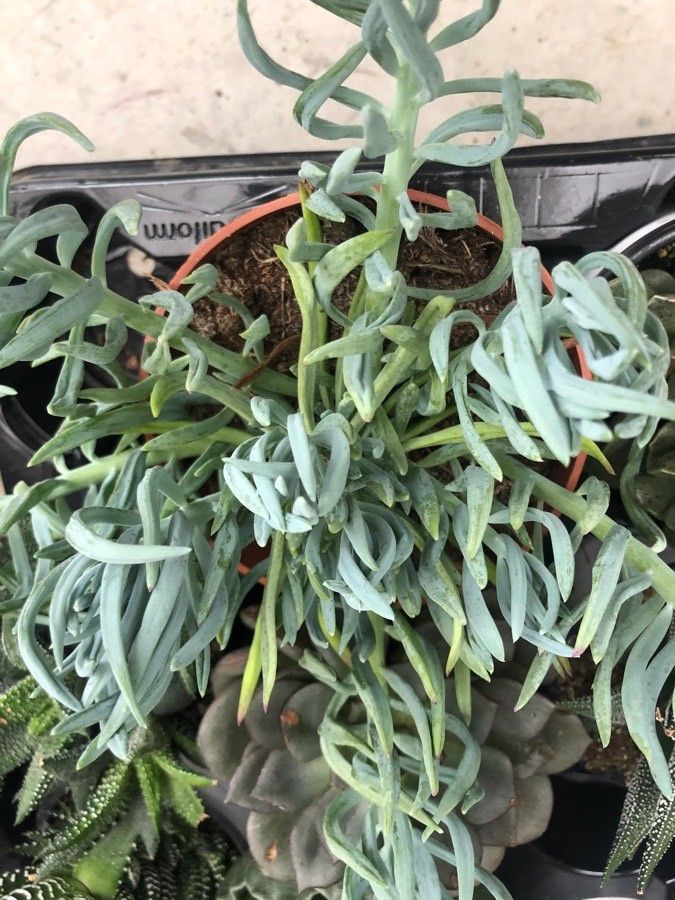
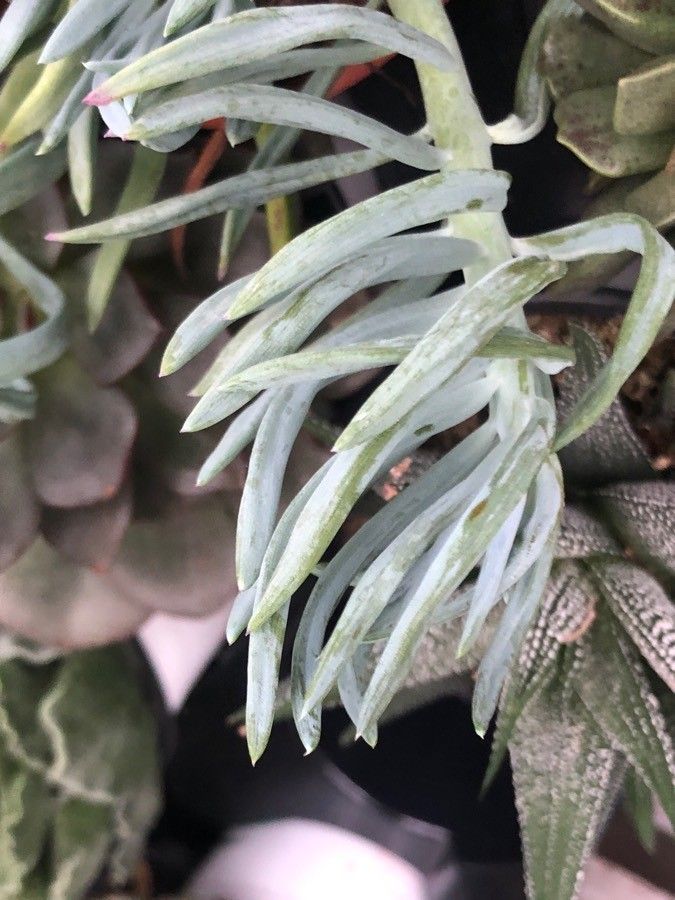
Curio talinoides, syn. Senecio mandraliscae, also known as blue straws, blue chalksticks, dassieharpuis, or narrow-leaf chalk sticks, is a succulent plant of the family Asteraceae that is native to South Africa. The origin of this plant is dubious and it may be a hybrid.
Curio talinoides var. mandraliscae has moderate disease resistance and is relatively sensitive to humidity. It becomes susceptible to disease under high humidity and is prone to root rot while dormant. In terms of care, Curio talinoides var. mandraliscae tolerates drought but requires increased watering during the growing season. Watering should be greatly reduced or stopped entirely during the dormant period. Curio talinoides var. mandraliscae is appropriate for growers with some experience, though it can be challenging to maintain, particularly during dormancy. It is especially suited to those who can dedicate time to its care during the winter months.
How to keep Senecio Mandraliscae.
Light
Curio talinoides var. mandraliscae, a species native to dry regions, flourishes under direct sunlight, as its original habitat exposes it to intense solar radiation and scarce shade. Nevertheless, it also tolerates partial sun, suggesting some flexibility in its cultivation conditions.
Water
As succulents, these plants have excellent tolerance for drought. For most types, allow the roots to dry out completely between waterings. Soaking in water will cause the roots and plants to turn mushy.
Temperature
Curio talinoides var. mandraliscae can endure some warmth, however, it predominantly flourishes and expands during the lower temperatures, going dormant during the summertime. It is essential to offer some cover in high summer heat to stop the plant from getting burnt by the strong sun rays. Additionally, it is important not to overwater during the peak hot season to avoid root damage. Winter and spring are the times when Curio talinoides var. mandraliscae displays lively growth. Provided the temperature does not fall excessively, it will maintain a steady growth cycle.
Fertilizer
For the Curio talinoides var. mandraliscae, moderate amounts of fertilizer once or twice a year during the growing period are adequate. Refrain from fertilizing during winter and summer when the plant is in a dormant state. Dial down the fertilizer application for plants that have been repotted and let a few months pass post-repoting before the next fertilization. Providing your plant with fertilizer aids in robust growth and promotes blooming.
Pot & Repot
When you are transplanting Curio talinoides var. mandraliscae, choose a container that is a bit larger than the current one, ensuring it has ample drainage. Opt for a succulent or cactus mixture that is well-draining and coarse. Delicately take the plant out of its existing pot, clear any surplus soil, and reposition it at an equal depth. Delay watering for several days to let any root injury recover. The optimal repotting time is either spring or autumn, and place the plant in a spot with abundant light.
Toxicity
All Senecio plants are toxic. Ingestion can cause fatal liver disease in animals when eaten in large quantities over a long period of time. Wear gloves when working with the plants; the sap can cause severe irritation. Be careful when planting Senecio species if you have children, pets, or livestock.
Further reading →
The toxicity and danger assessments provided are for reference only. We do not assure their accuracy, so it's crucial not to depend on them. Seek professional advice when necessary for accurate guidance.
Botanical profile.
- Plant Type
- Succulent, Shrub
- Life Cycle
- Perennial
- Genus
- Senecio
- Family
- Compositae
- Hardiness Zone
- 9-11
- Mature Height
- 30 cm
- Mature Spread
- 34 cm
- Leaf Color
- Steel Blue, Light Steel Blue
- Leaf Type
- Evergreen
- Flower Color
- White
- Flower Size
- 1.02 cm to 1.52 cm
- Bloom Time
- Summer
- Planting Time
- Spring, Summer, Autumn
- Harvest Time
- Late summer, Early fall, Mid fall
- Native Area
- South Africa