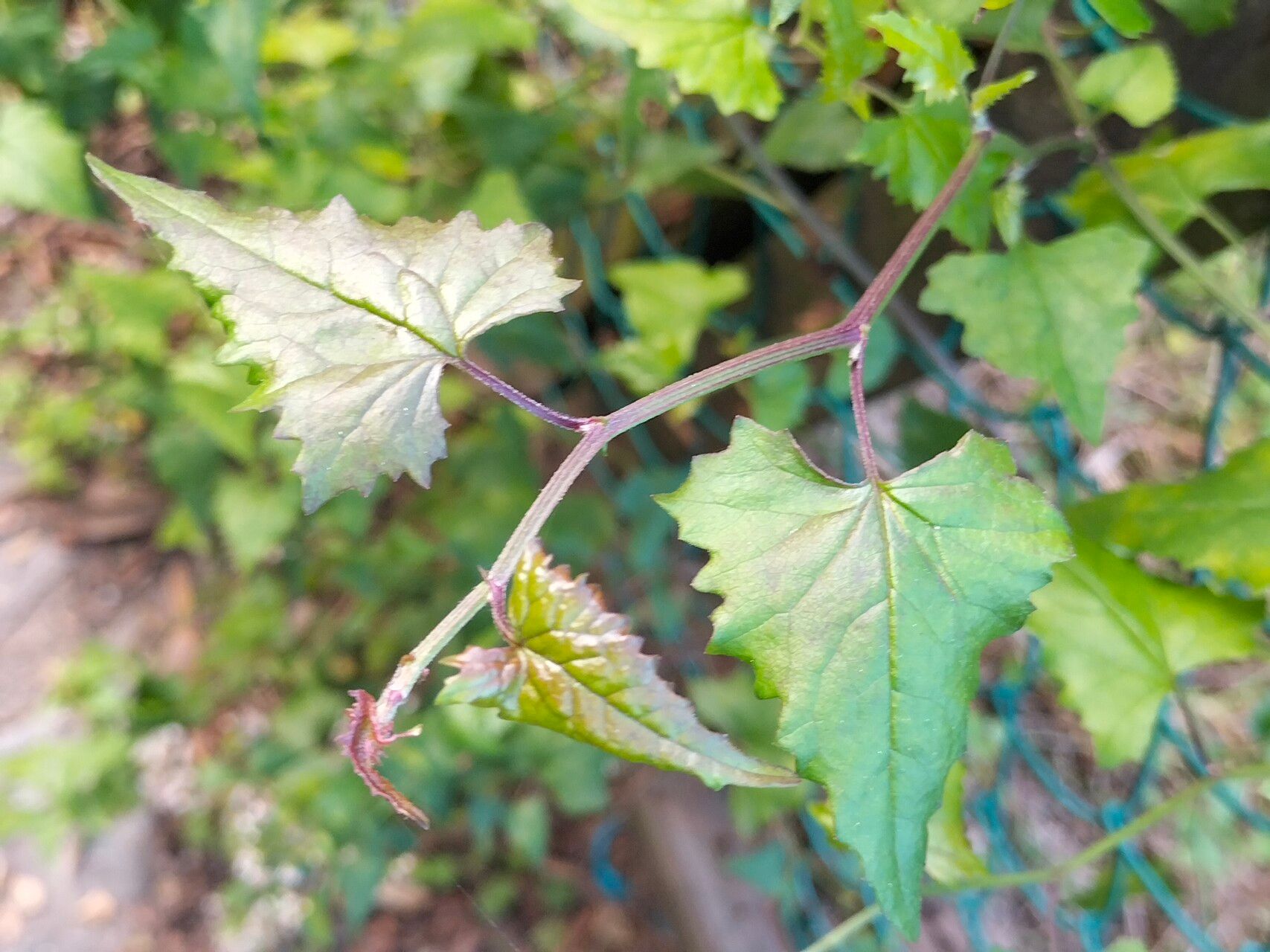
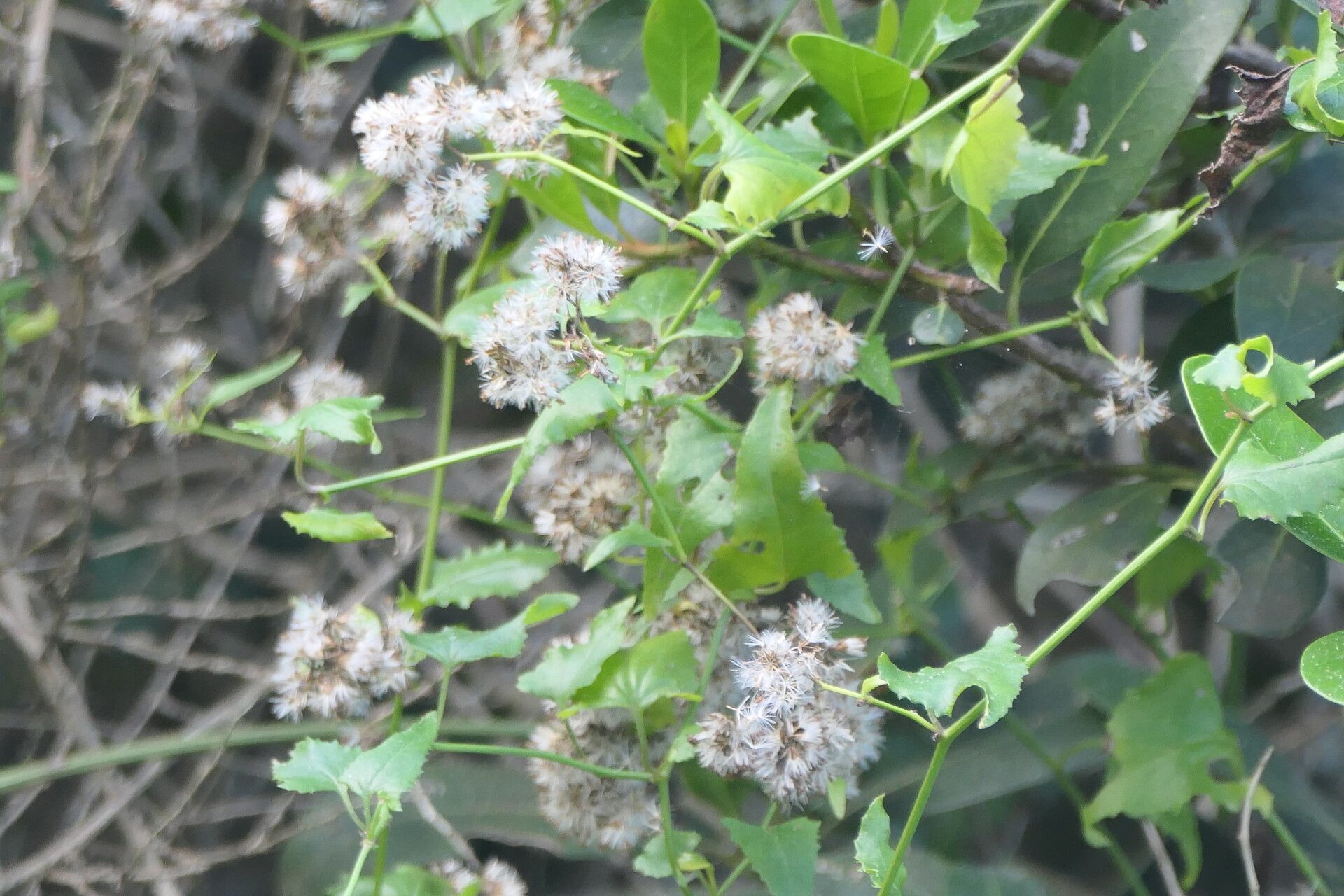
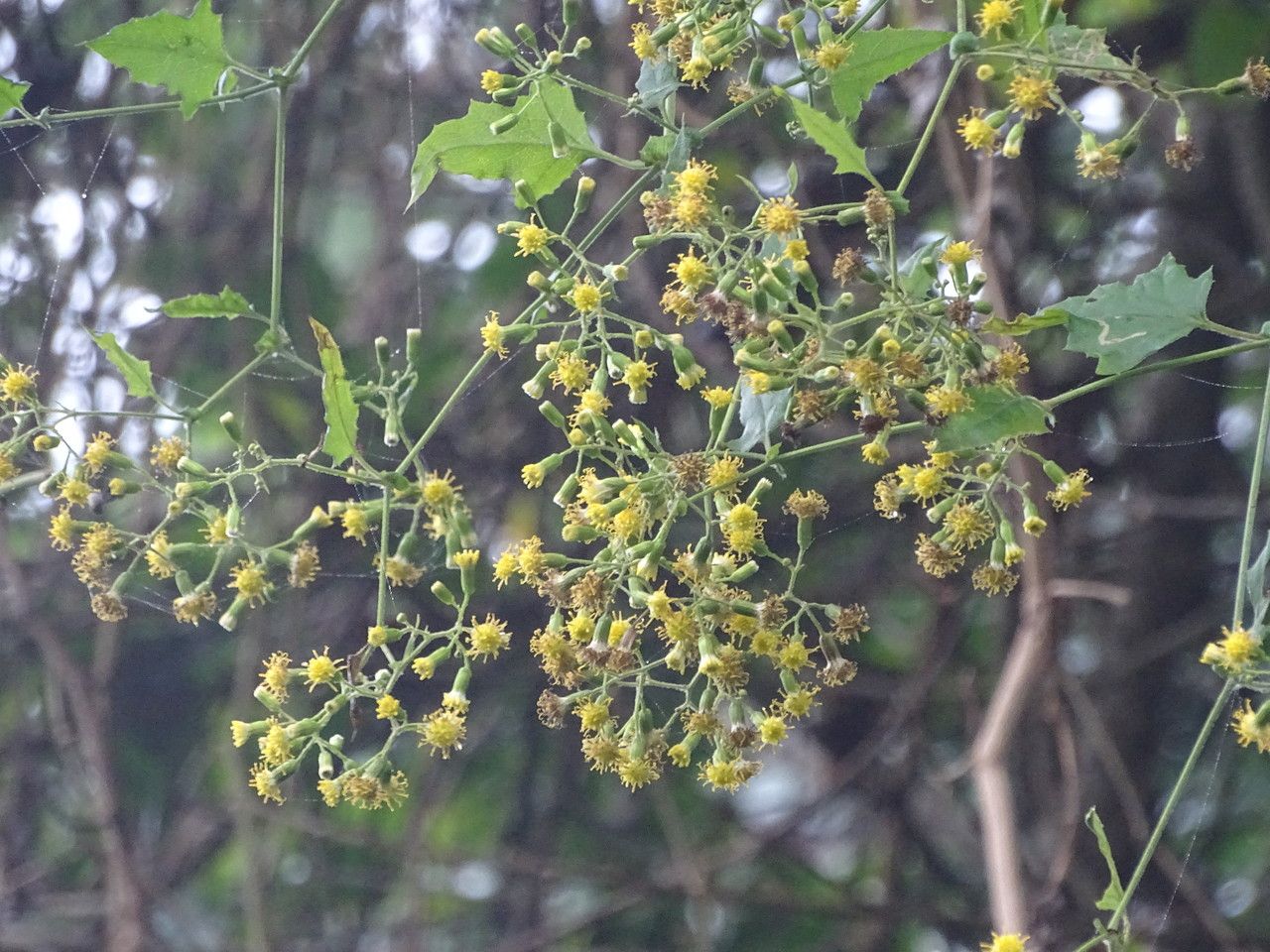
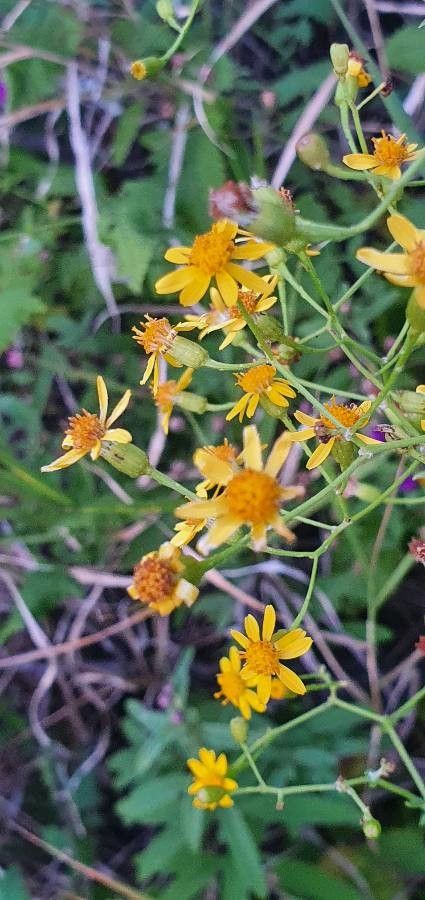
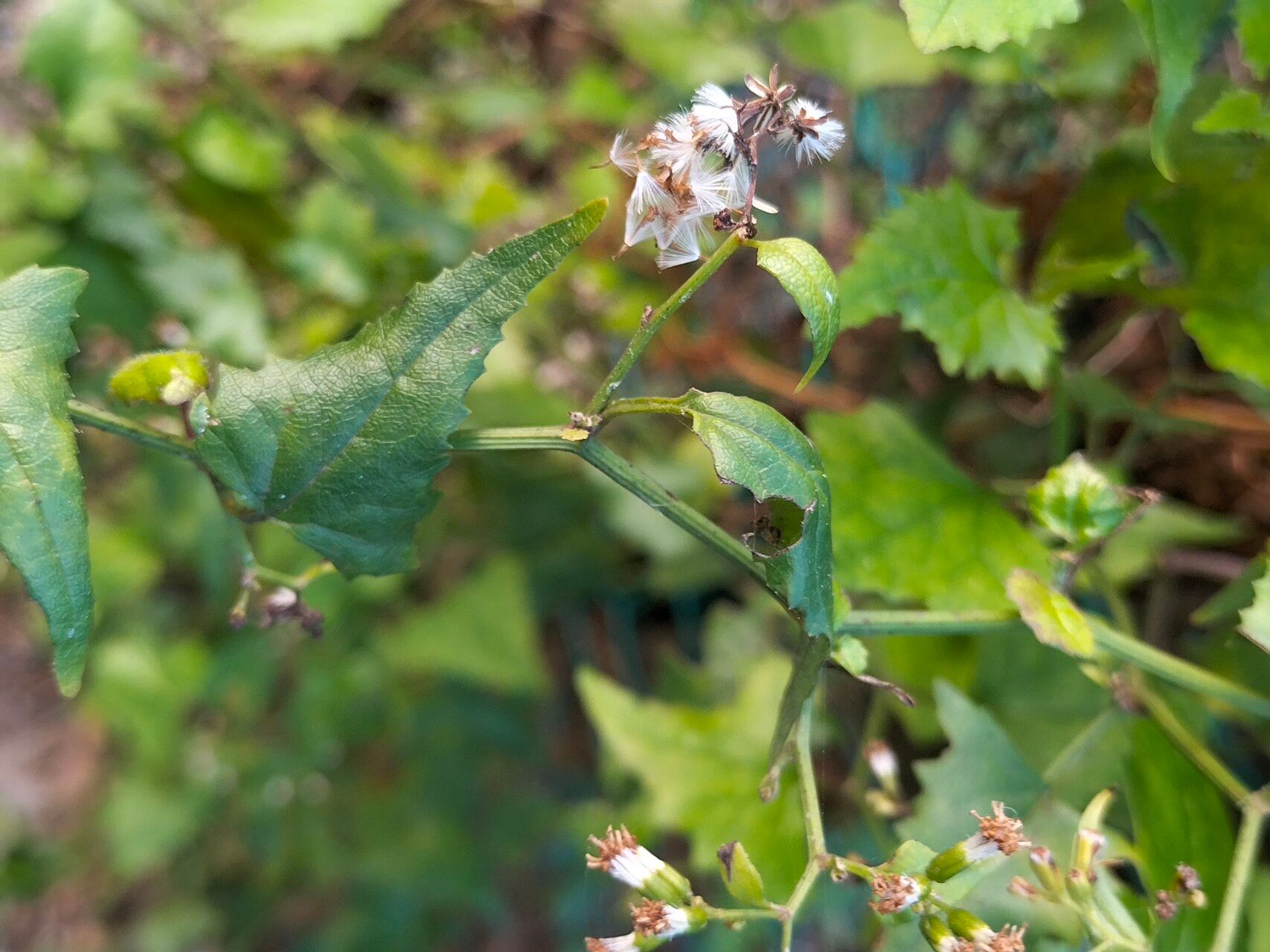
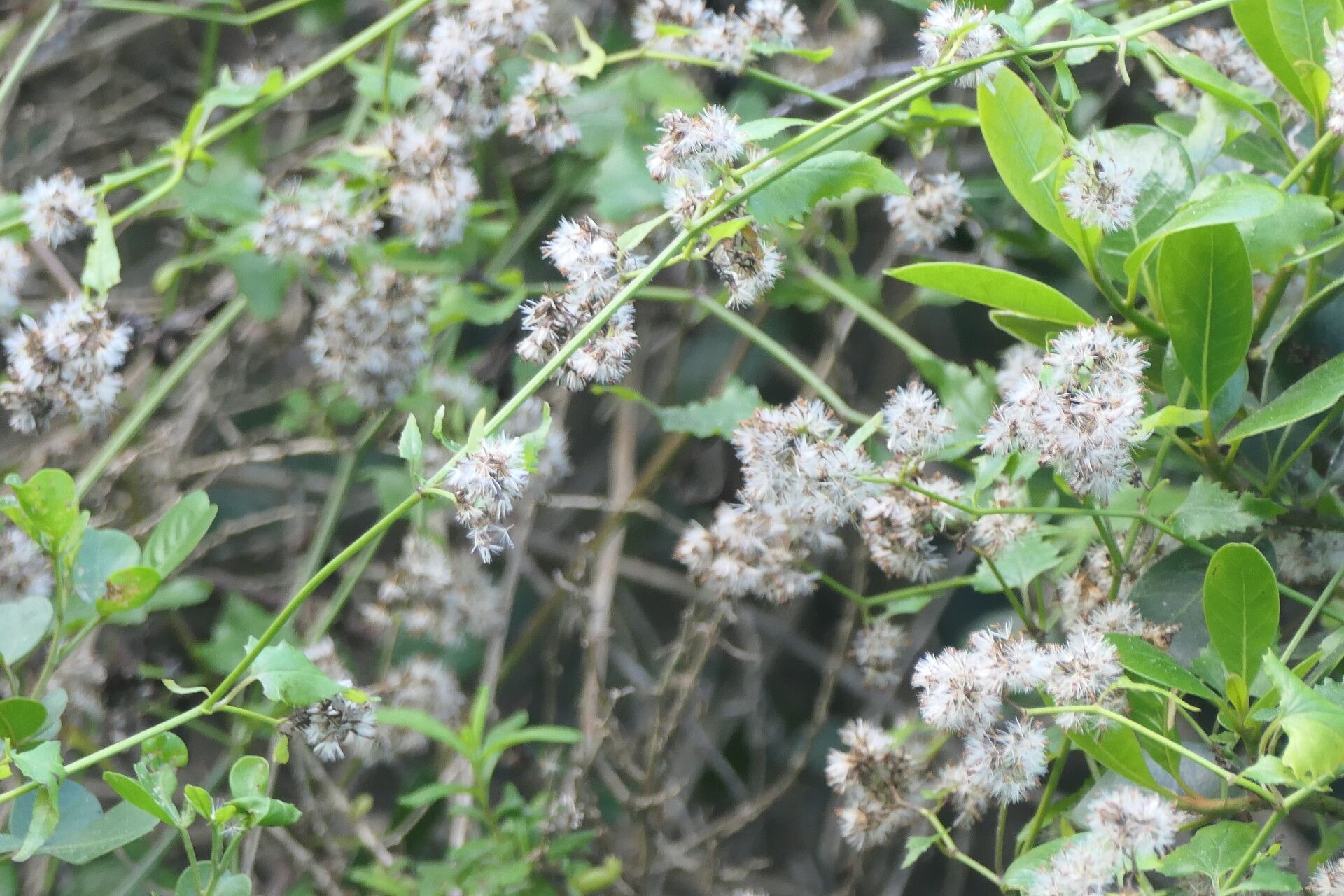
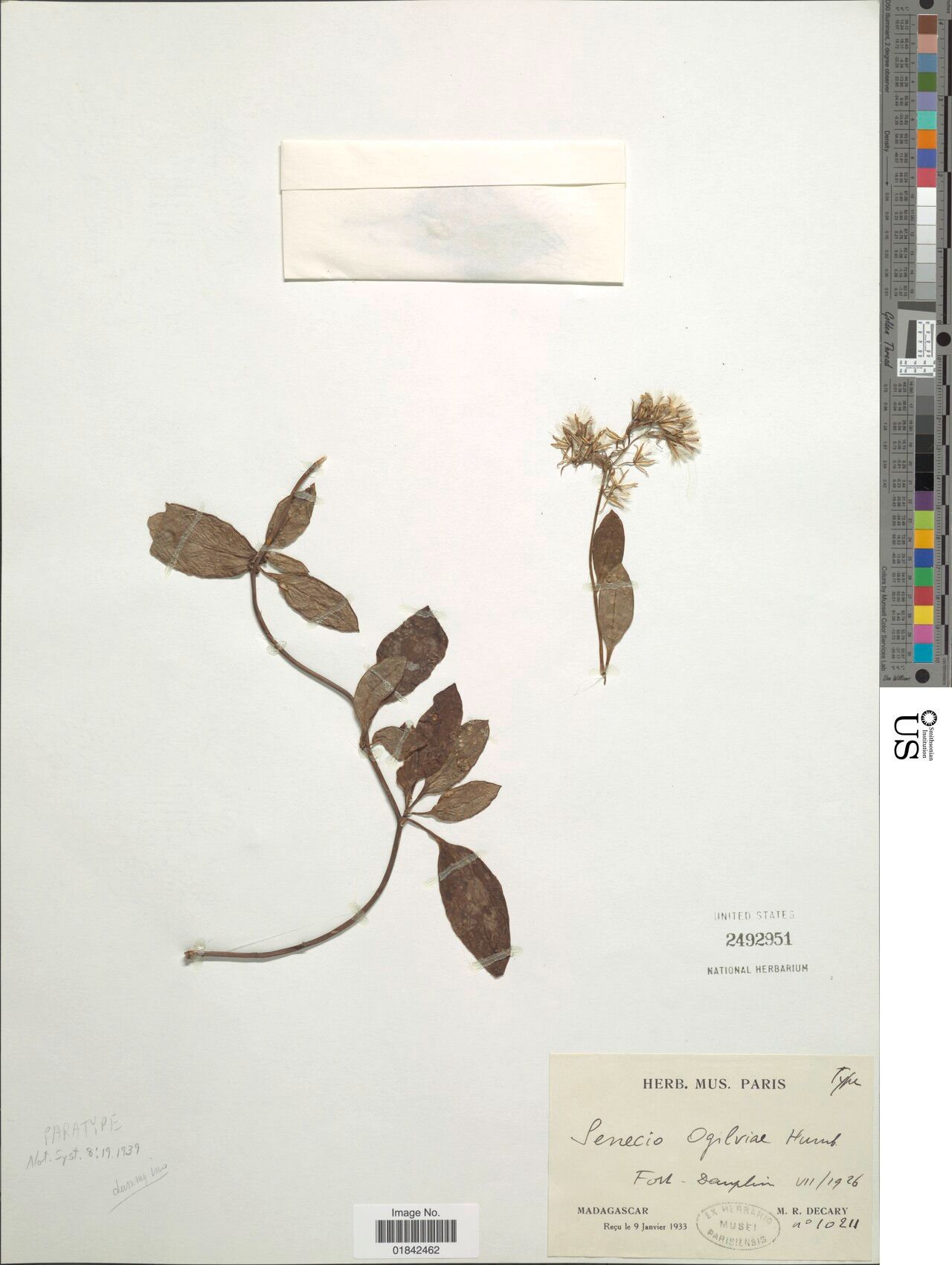
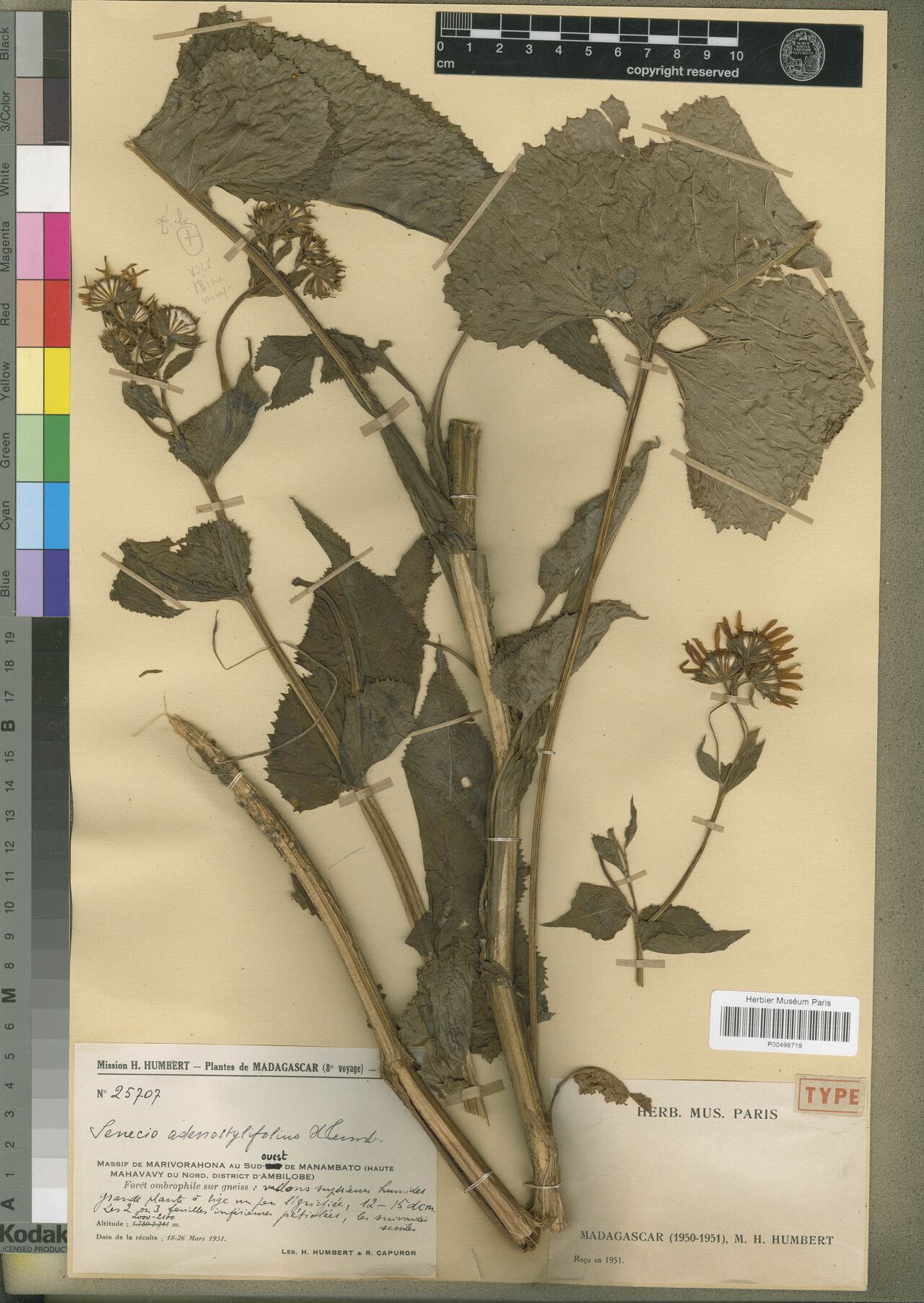
Senecio deltoideus, commonly known as the Delta-leaf Ragwort, is a perennial herbaceous plant that belongs to the Asteraceae family. It is native to North America and can be found in various habitats such as meadows, forests, and rocky slopes. The plant grows up to 60 cm tall and has triangular-shaped leaves that are green with toothed edges. Its yellow flowers, measuring 1-2 cm in diameter, bloom from June to August. Native Americans have historically used Senecio deltoideus for medicinal purposes, treating ailments such as coughs, colds, fever, and stomach issues. However, it is important to note that the plant contains toxic compounds called pyrrolizidine alkaloids, which can cause liver damage if ingested in large quantities. For cultivation, Senecio deltoideus prefers well-drained soil with moderate moisture levels, although it can tolerate drought conditions once established. The plant requires full sun exposure or partial shade. Overall, Senecio deltoideus is an attractive wildflower species that enhances natural landscapes and has some medicinal properties. However, it should be used with caution due to the toxic compounds it contains, which can be harmful if consumed improperly or excessively.
Canary creeper has moderate disease resistance but is more sensitive to humidity and overwatering. It is also more likely to suffer from disease when it has insufficient light and is overwatered. Regarding care, Canary creeper tolerates drought and can withstand long stretches without watering. It requires little fertilizer and only needs occasional pruning. Because of this, it is suitable for people of all experience levels, especially those who prefer to spend less time on plant care and who may sometimes be away from home for extended periods. It is a good option for anyone who does not want to devote a lot of time to plant maintenance but still wants an easy-to-care-for plant.
How to keep Senecio Deltoideus.
Light
Canary creeper is native to habitats with dappled light, for example the understory of forests or rocky sites that offer natural shade. It favors partial sun but can also withstand full sun.
Water
The canary creeper thrives best in well-drained soil with moderate moisture and benefits from weekly watering. Although it is drought-tolerant, it requires consistent hydration during its growing season to achieve optimal foliage and blooms. Typically grown outdoors, this evergreen plant demands careful attention to watering.
Temperature
Canary creeper does best in warm conditions and requires higher temperatures during the growing season to support growth and metabolic processes. It favors plenty of sunlight, proper moisture, and good air circulation. However, it can suffer harm from very low temperatures and too much watering. Maintaining a balance is essential, and overly high heat or excessively dry conditions should also be avoided.
Fertilizer
For Canary creeper, light applications of fertilizer once or twice a year during the growing season are sufficient. Avoid fertilizing in winter and in summer when the plant is dormant. Cut back on fertilizer for repotted plants and wait a couple of months after repotting before applying any. Fertilizing promotes healthy growth and encourages blooms.
Pruning
Canary creeper is a robust climbing plant with heart-shaped leaves that benefits greatly from regular pruning. To encourage healthy growth and abundant blooms, it's best to thin, remove damaged parts, and shape the plant from early to late spring. Consistent pruning not only prevents the plant from spreading uncontrollably but also helps maintain its shape and improves air circulation, resulting in an attractive display.
Botanical profile.
- Plant Type
- Herb, Succulent
- Life Cycle
- Perennial
- Genus
- Senecio
- Family
- Asteraceae
- Hardiness Zone
- 9-11
- Mature Height
- 2.13 m to 3.96 m
- Mature Spread
- 0.91 m to 2.13 m
- Leaf Color
- Green, Dark Green
- Leaf Type
- Semi-evergreen
- Flower Color
- Yellow
- Flower Size
- 1.02 cm to 2.03 cm
- Bloom Time
- Late summer, Early fall, Mid fall
- Planting Time
- Spring
- Harvest Time
- Mid fall, Late fall, Early winter
- Native Area
- Malawi, Saudi Arabia, Mozambique, South Africa, Eswatini, Kenya, Tanzania, Zimbabwe
Other names.
Reader questions.
What are the sunlight requirements for the Canary Creeper?
The Canary Creeper (Senecio deltoideus) requires specific sunlight conditions to thrive. It needs full sun exposure, which means it should receive above 6 hours of sunlight daily. For those who cannot provide full sun conditions, partial sun, which is about 3 to 6 hours of sunlight, is also acceptable. It's important to observe the movement of sunlight through your garden to select spots that offer a healthy balance of light and shade, ensuring the well-being of your Canary Creeper plants.