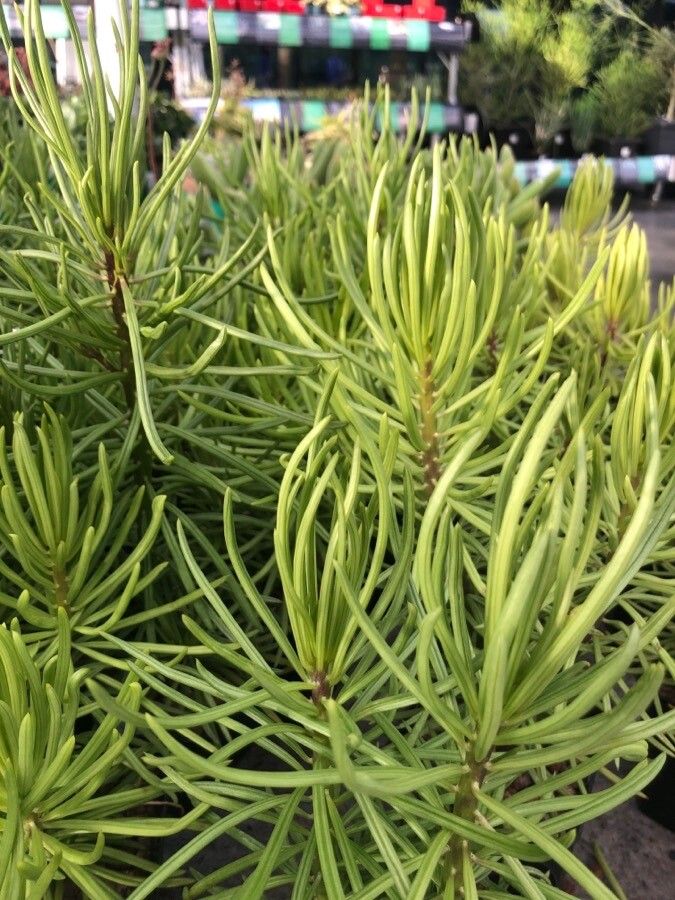
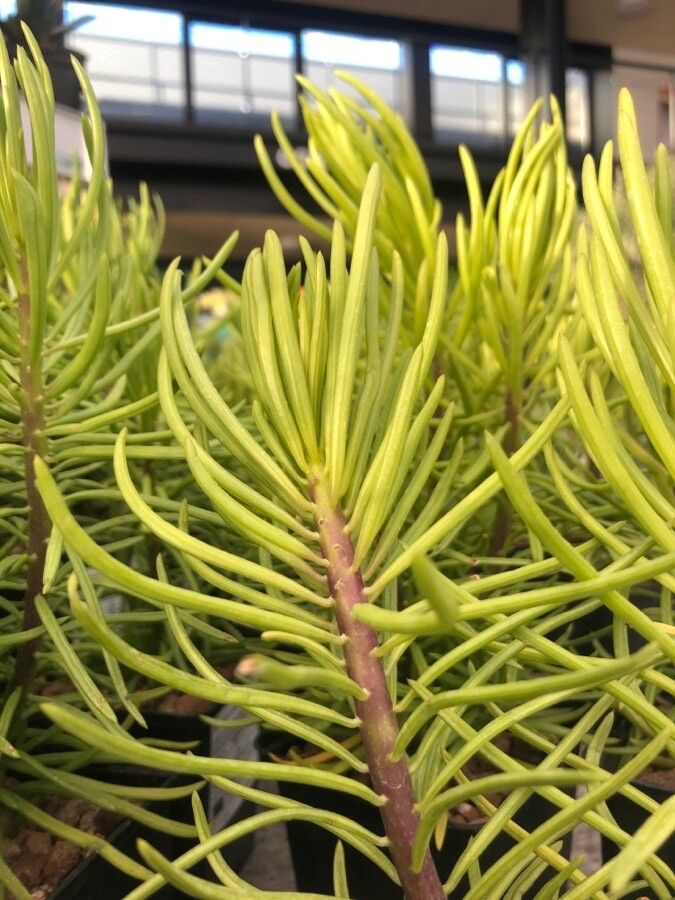
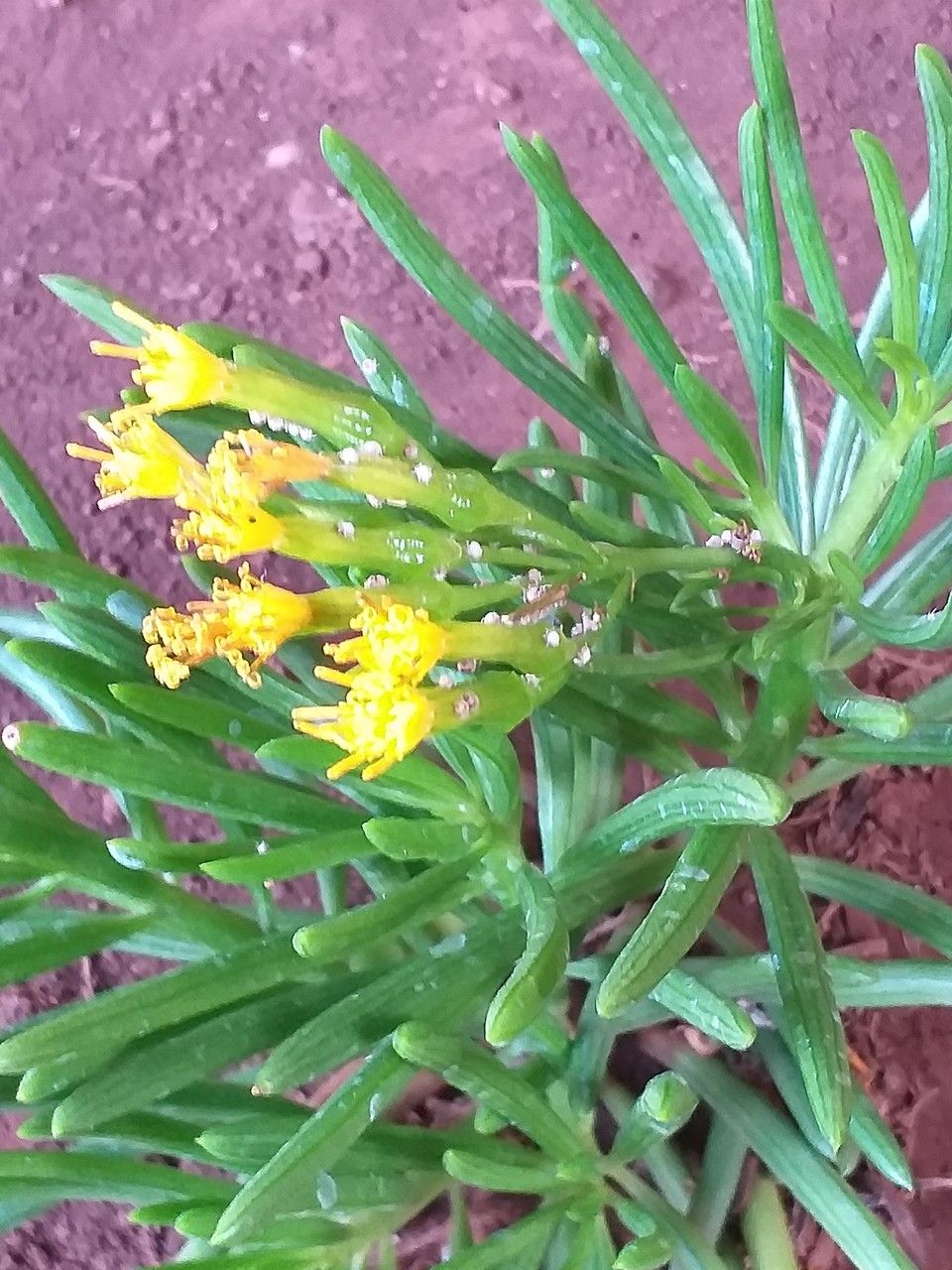
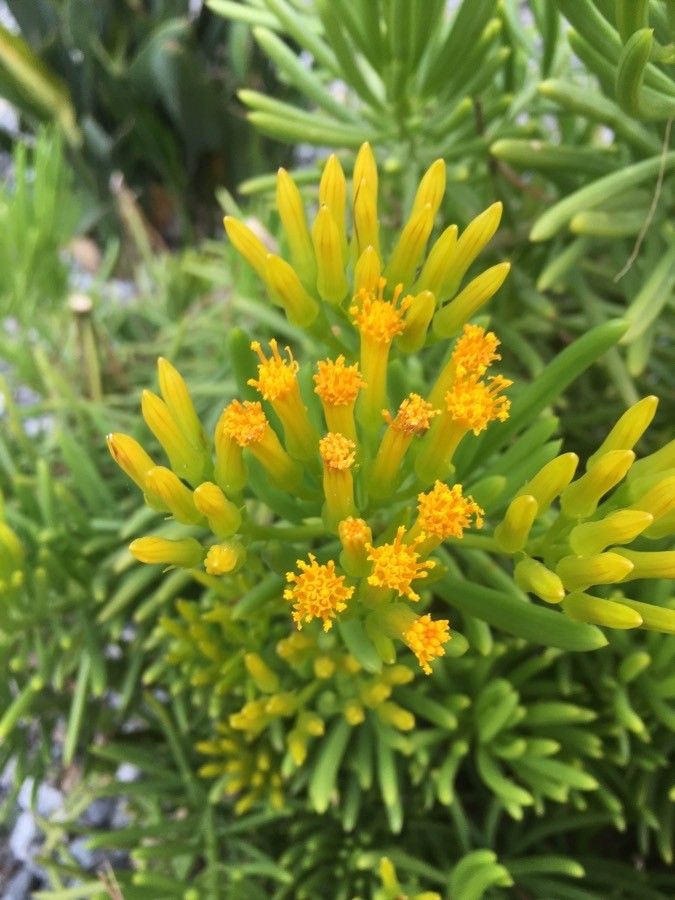
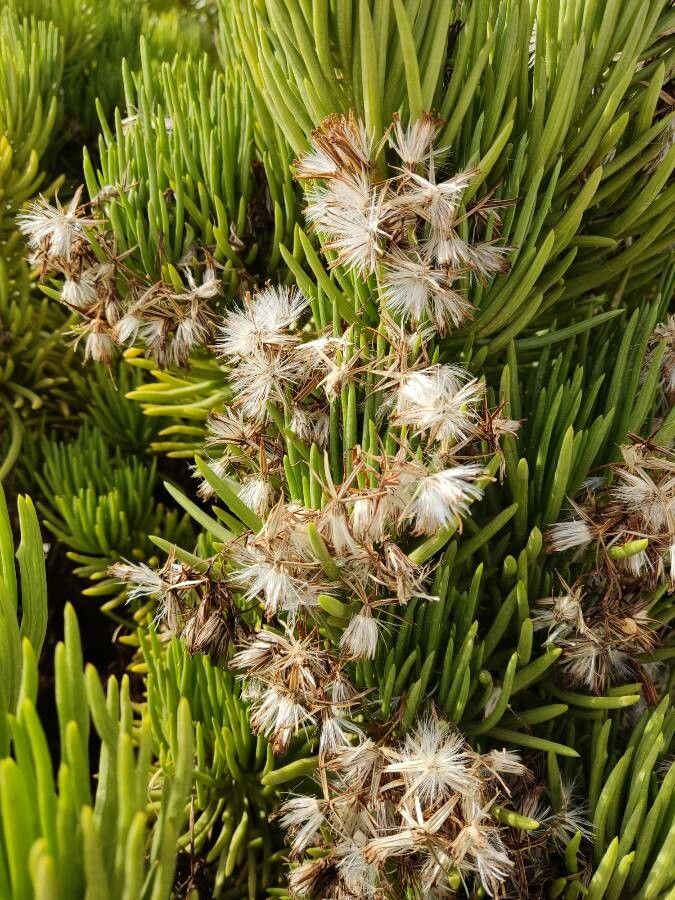
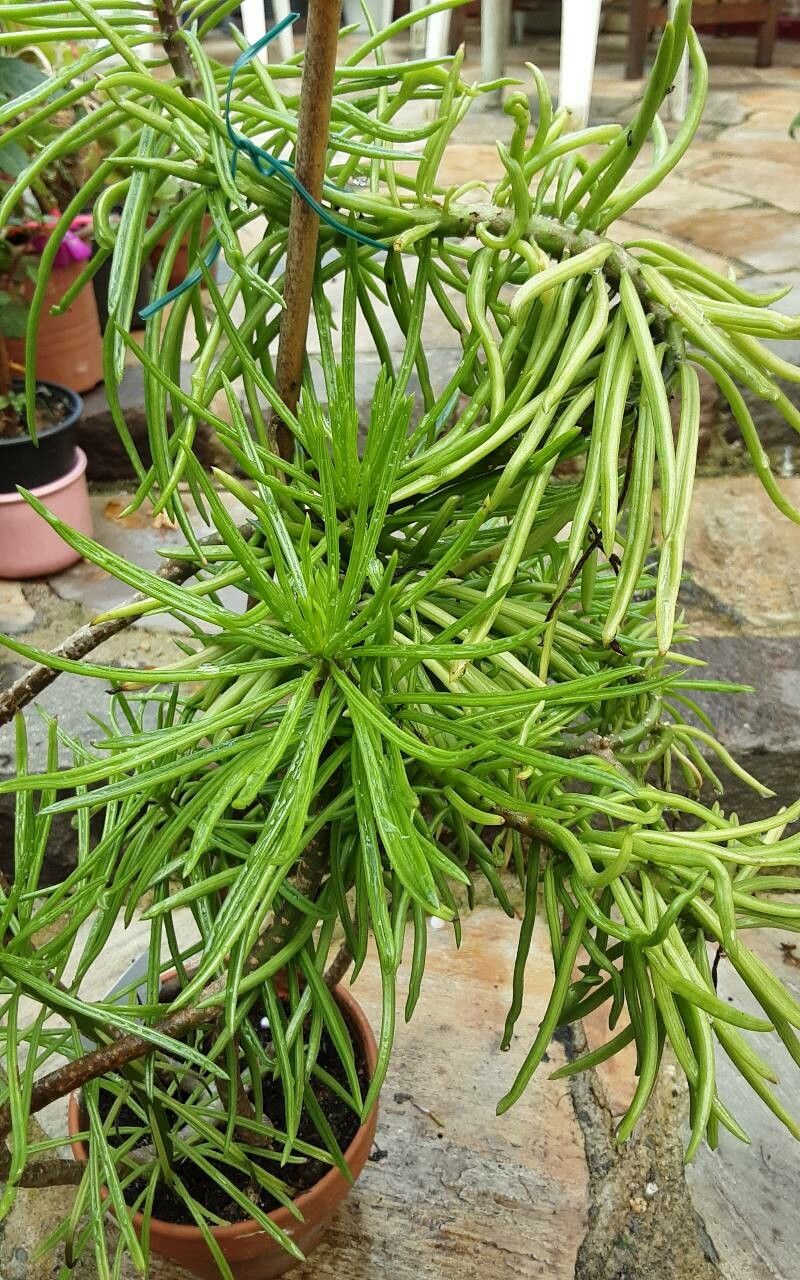
Senecio barbertonicus, commonly known as the Barberton Groundsel, is a perennial succulent that belongs to the Asteraceae family. Native to South Africa, it is typically found in rocky areas and on hillsides. This plant stands out with its thick, fleshy leaves covered in fine white hairs.
The leaves of the Senecio barbertonicus form a rosette at the base of the stem and can grow up to 15 cm in length. The stem itself can reach up to 60 cm in height and produces small yellow flowers during the blooming season.
Known for its resilience, Senecio barbertonicus thrives in harsh conditions, such as drought and poor soil quality, thanks to its succulent nature. It requires minimal care but should be planted in well-draining soil with plenty of sunlight.
Indigenous people have used Senecio barbertonicus for medicinal purposes for centuries, particularly for its anti-inflammatory properties. However, it is important to note that some species within this genus contain toxic compounds, which may cause harm if ingested or if they come into contact with skin or eyes.
Overall, Senecio barbertonicus is an intriguing addition to any garden. It boasts a unique appearance, can thrive under tough conditions, and offers potential medicinal benefits when used properly under the guidance of medical professionals.
Succulent bush senecio has moderate disease resistance and is relatively sensitive to humidity and overwatering. It is also more prone to illness when it receives insufficient light and is kept too wet. In terms of care, Succulent bush senecio is drought tolerant and can go long periods without watering. It needs little fertilizer and only occasional pruning. Because of this, it suits people of all experience levels, especially those who prefer to spend less time on plant care or who may be away from home for extended periods. It is a good option for anyone who does not want to invest much time in upkeep but still wants a plant that is easy to maintain.
How to keep Senecio Barbertonicus.
Light
The succulent bush Senecio comes from habitats with dappled light, such as forest understories or rocky locations that provide natural shade. It prefers partial sun but can tolerate full sun.
Water
Generally, these plants need to be watered once every one to two weeks in the warmer seasons. In the colder season, this succulent typically needs to be watered once per month. This succulent requires moderate watering. It is best to water this plant and then allow it to dry slightly before watering it again. Check the soil moisture regularly to determine when your plant needs water. If the top inch of soil is dry, it is time to water your succulent.
Humidity
This plant prefers dry conditions, so don't mist it. However, watering it less often can also thrive in higher humidity.
Temperature
The succulent bush senecio grows best in warm conditions and needs higher temperatures during its growing season to support growth and metabolic processes. It prefers abundant sunlight, suitable moisture, and good air circulation. However, it is vulnerable to damage from very low temperatures and overwatering. It’s also important to maintain balance and avoid excessively high heat and excessively dry conditions.
Fertilizer
For Succulent bush senecio, light doses of fertilizer once or twice a year during the growing season are enough. Do not fertilize in winter or in summer when the plant is dormant. Cut back on fertilizer for plants that have been repotted and wait a couple of months after repotting before you start fertilizing. Fertilizing helps maintain healthy growth and encourages flowering.
Pruning
Unlike other succulents, the Lemon Bean Bush needs to be pruned to keep it compact. To prune this succulent, cut off the stem above the leaf node. Prune your Lemon Bean Bush in the spring before it begins to form new growth. Dead, damaged, or yellowing foliage should also be removed as needed.
Toxicity
This plant is considered toxic to both humans and animals. Keep it out of the reach of children and pets.
Further reading →
The toxicity and danger assessments provided are for reference only. We do not assure their accuracy, so it's crucial not to depend on them. Seek professional advice when necessary for accurate guidance.
Botanical profile.
- Plant Type
- Shrub, Succulent
- Life Cycle
- Perennial
- Genus
- Senecio
- Family
- Compositae
- Hardiness Zone
- 9-11
- Mature Height
- 1.83 m
- Mature Spread
- 49 cm
- Leaf Color
- Green
- Leaf Type
- Evergreen
- Flower Color
- Yellow
- Flower Size
- 1.02 cm to 2.03 cm
- Bloom Time
- Mid summer, Late summer, Early fall
- Planting Time
- Spring, Summer, Autumn
- Harvest Time
- Fall
- Native Area
- South Africa, Eswatini, Mozambique, Zimbabwe
Other names.