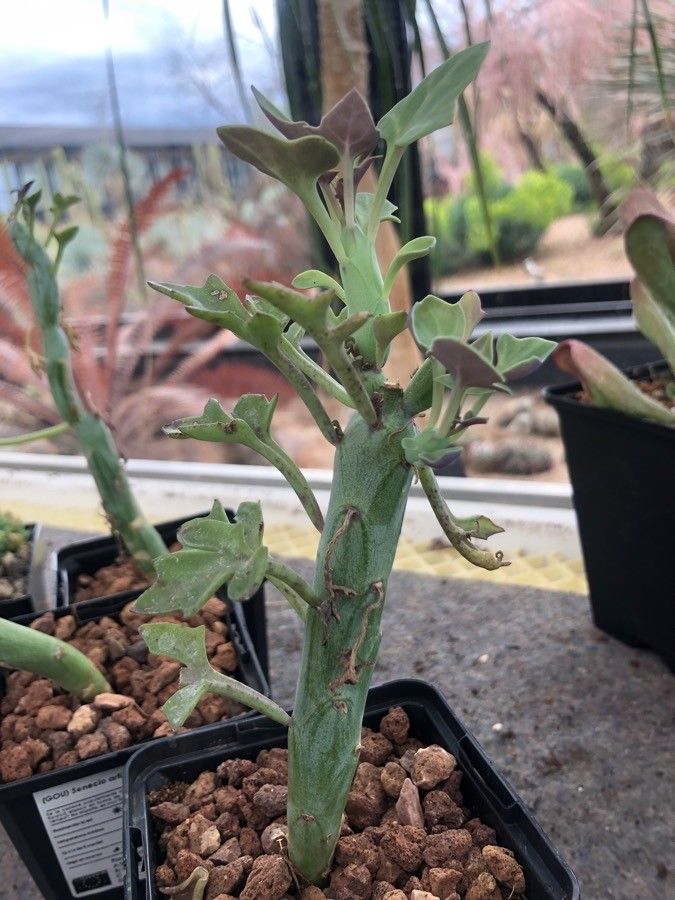
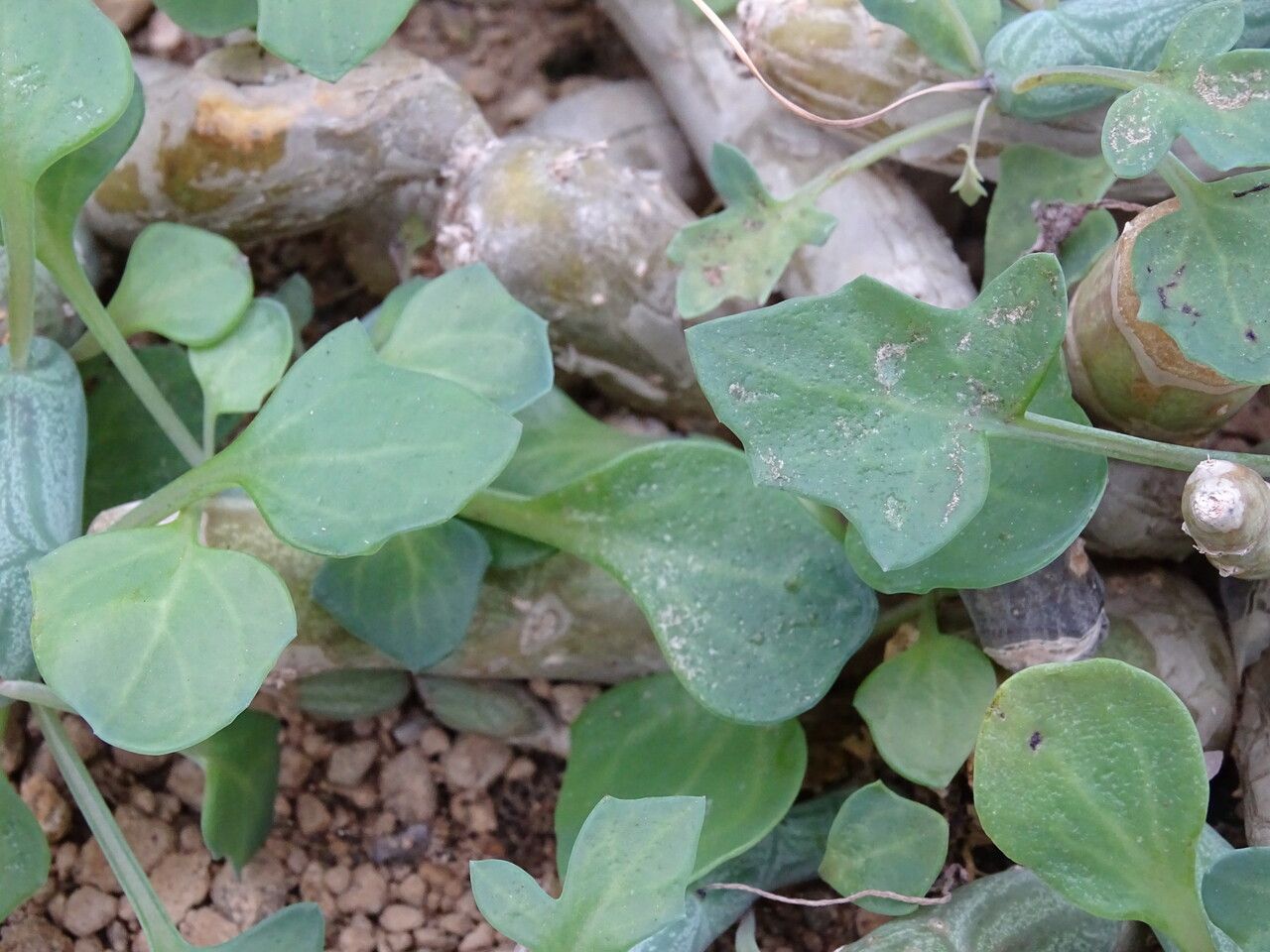
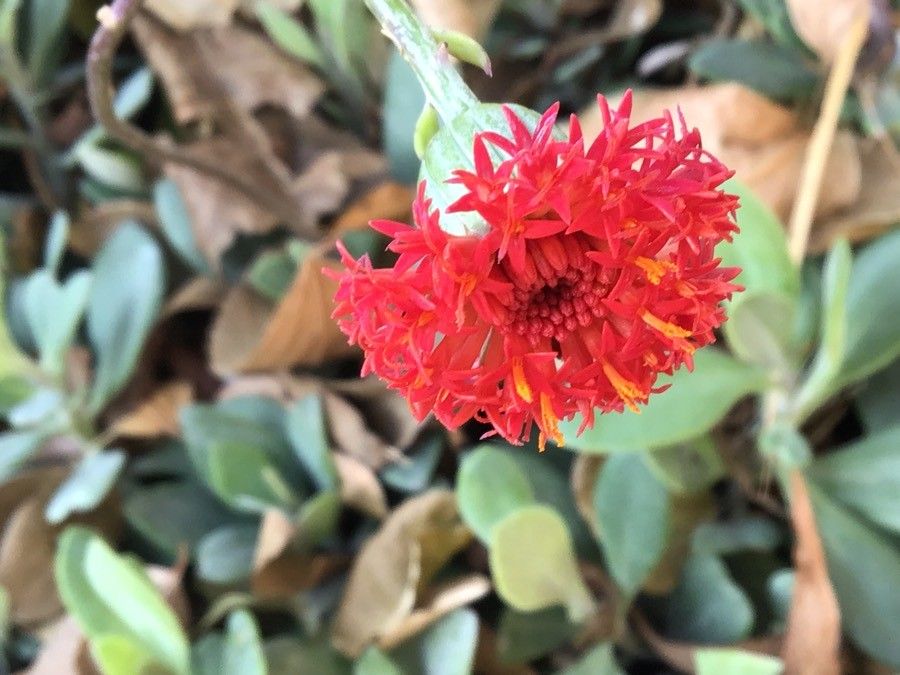
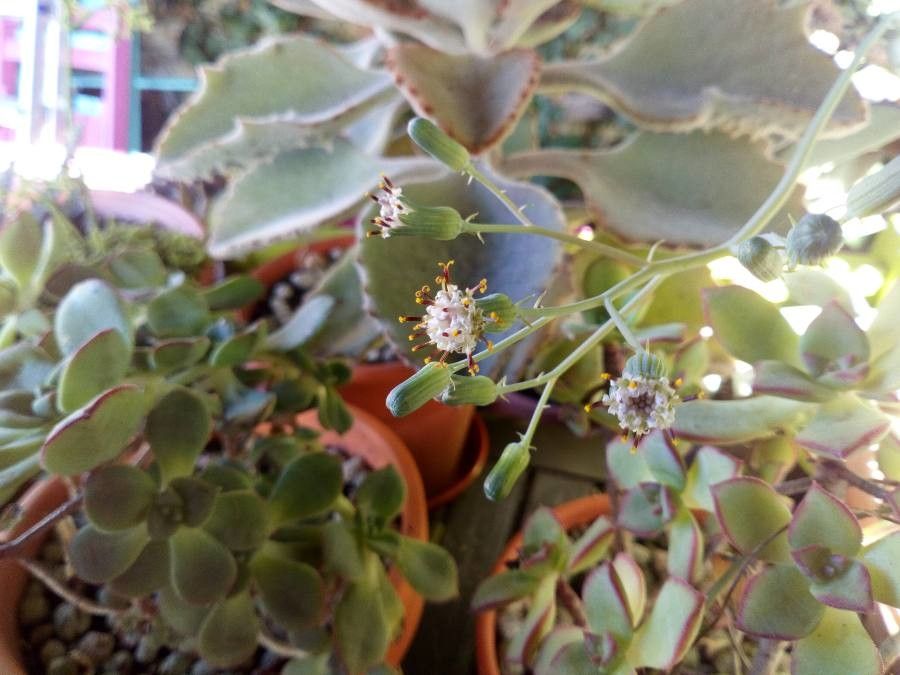
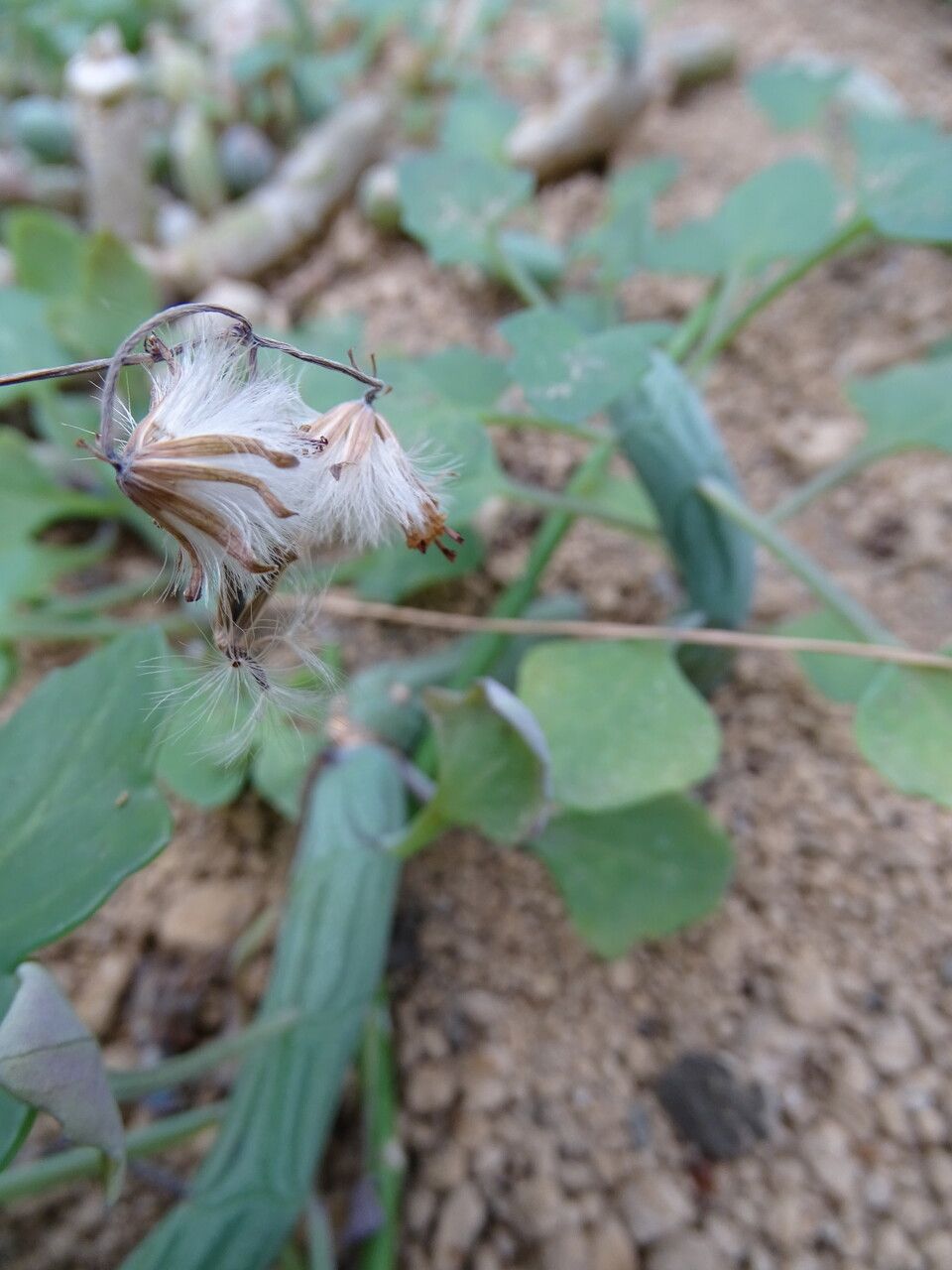
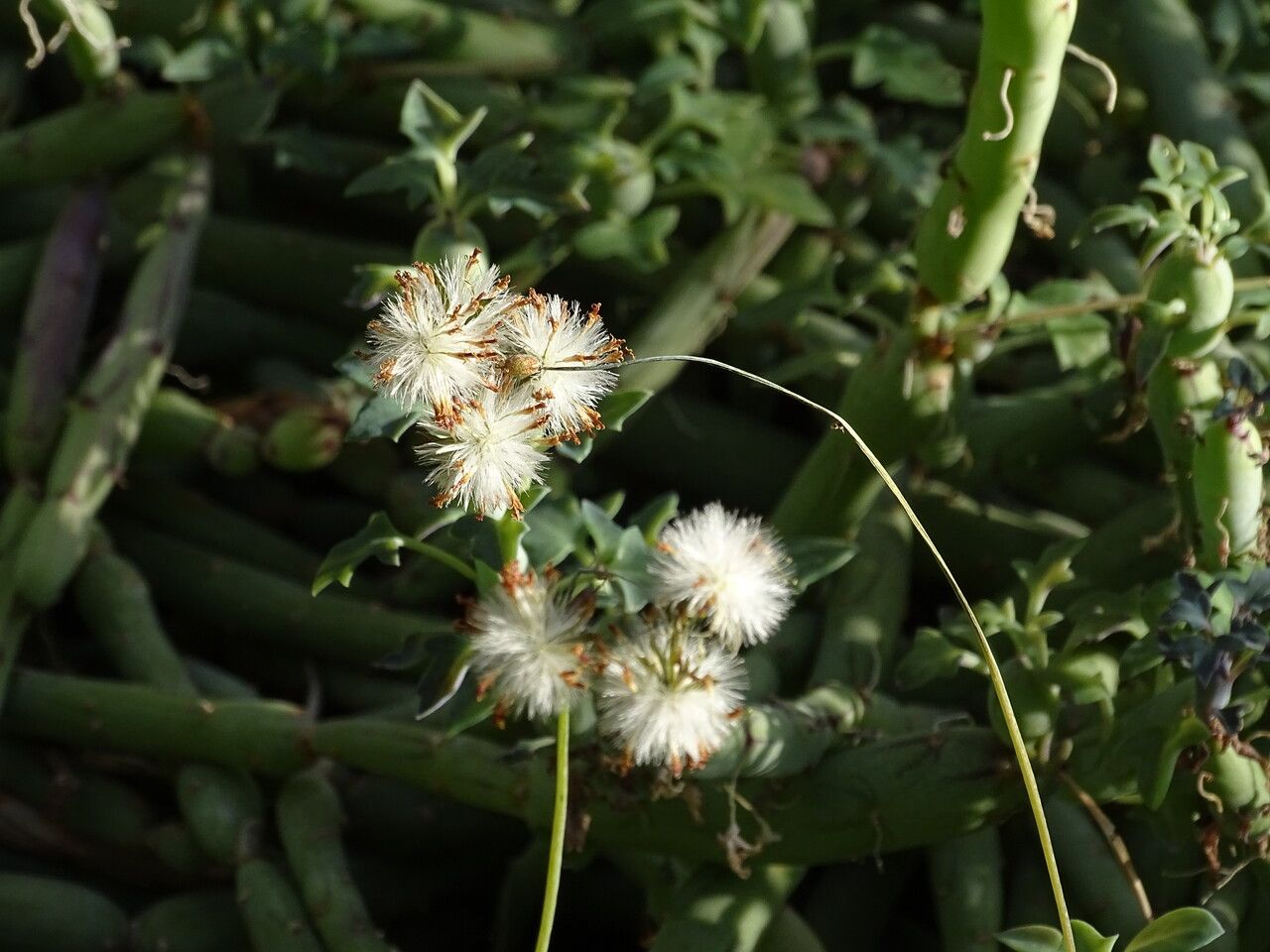
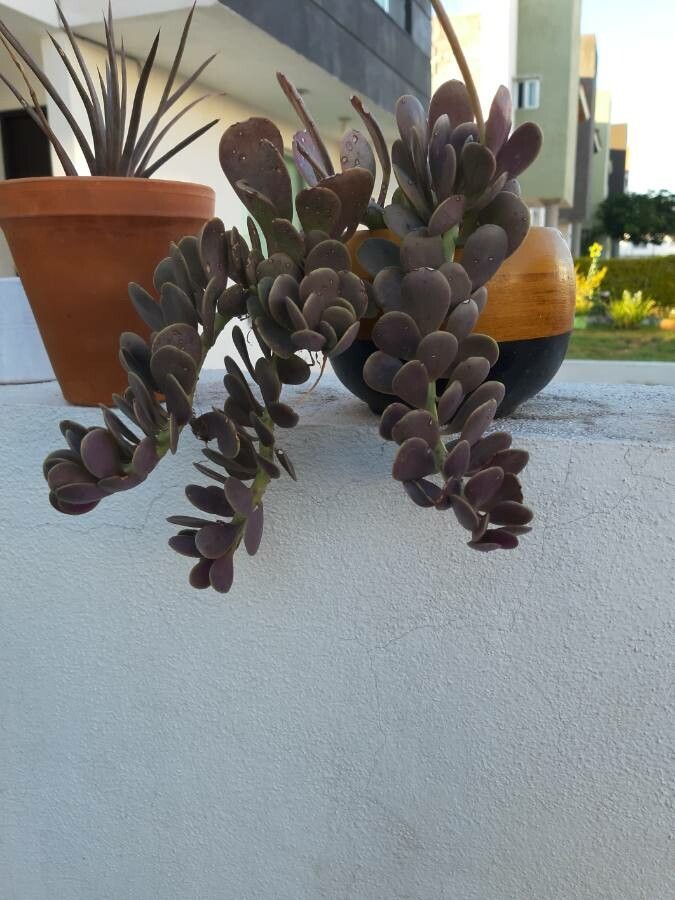
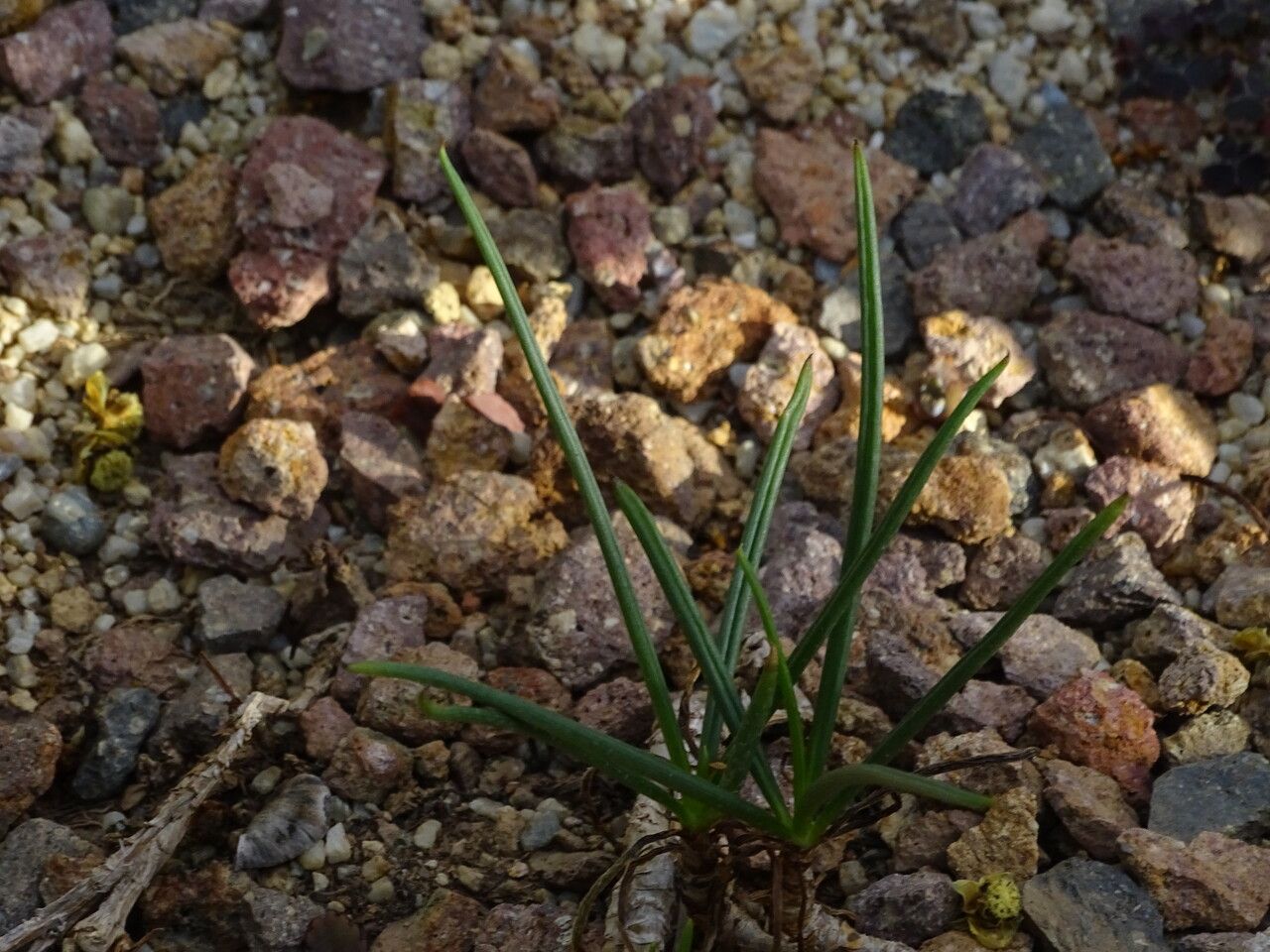
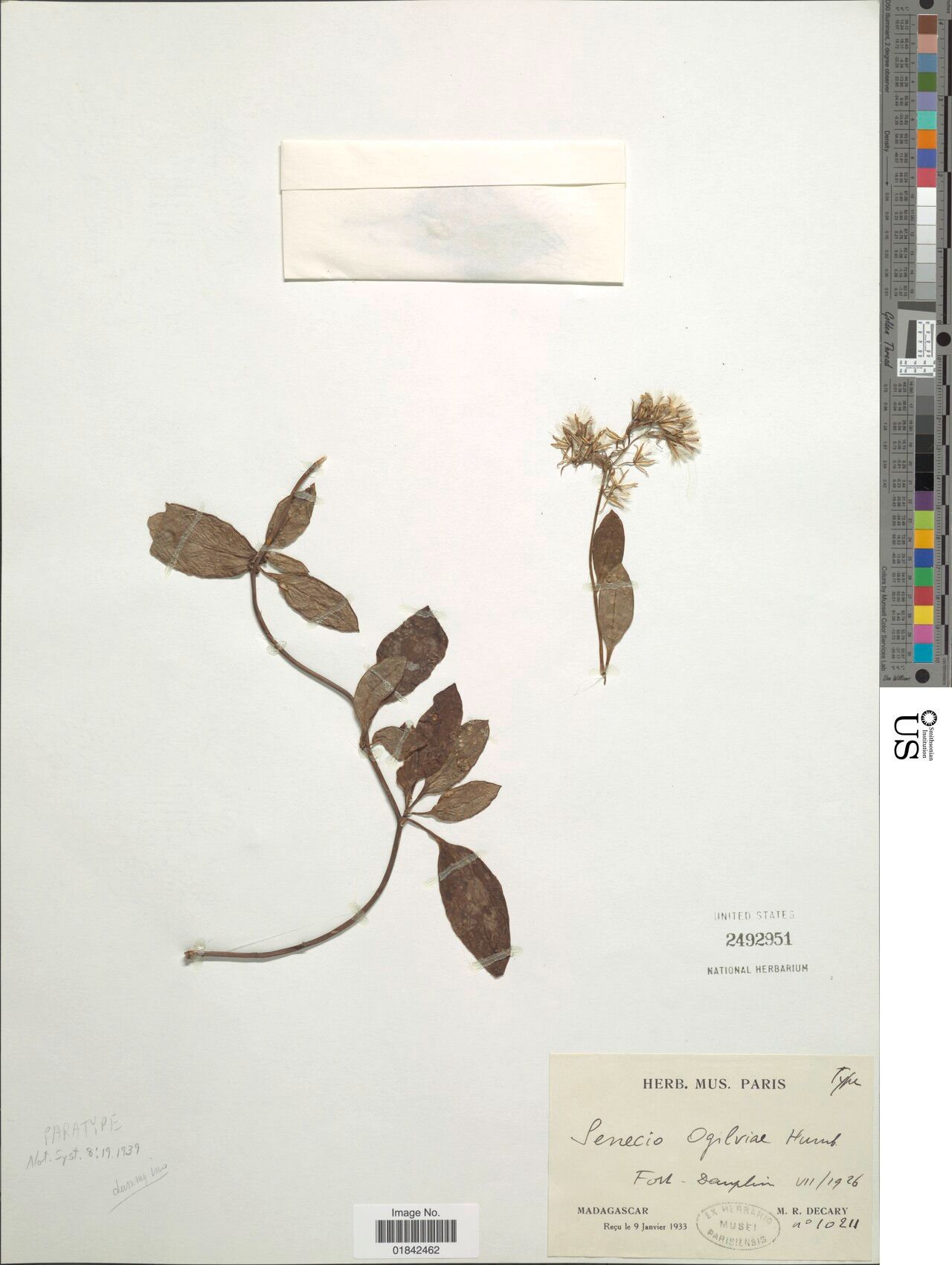
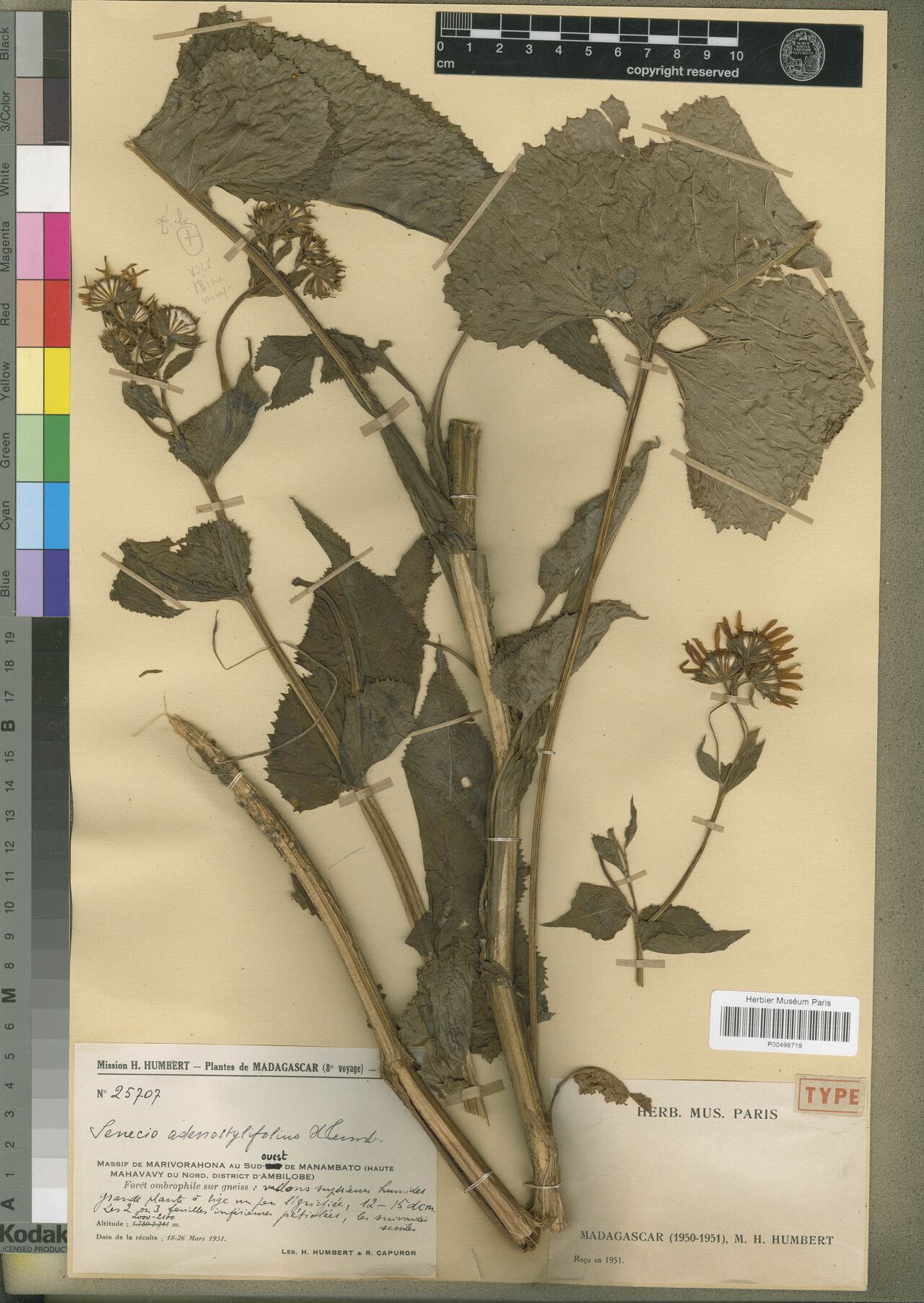
Senecio articulatus, commonly known as the Candle Plant or Hot Dog Cactus, is a succulent native to South Africa. It belongs to the Asteraceae family and is notable for its cylindrical stems, which can grow up to 60 cm in height and 3 cm in diameter. These stems are segmented into distinct sections resembling a string of sausages or candles. The plant has small green leaves arranged in pairs along the stem segments. During the summer and fall, it produces small yellow flowers at the tips of its stems. Senecio articulatus prefers well-draining soil and requires moderate watering during its growing season, which spans from spring to fall. It can tolerate full sun but also thrives in partial shade. Propagation of the Candle Plant can be done through stem cuttings taken during the spring or summer. These cuttings should be allowed to dry for a few days before being planted in well-draining soil. This plant has gained popularity among succulent enthusiasts due to its unique appearance and ease of care. However, it's important to note that all parts of Senecio articulatus are toxic if ingested by humans or animals, so it should be kept out of reach of children and pets.
Candle plant has moderate resistance to disease and is more sensitive to humidity. It becomes vulnerable to illness in high-humidity conditions and is liable to develop root rot during dormancy. Regarding care, Candle plant is drought-tolerant but requires more water in the growing season. Watering should be greatly reduced or stopped entirely during the dormant period. Candle plant is appropriate for people with some growing experience, though it can be challenging to care for, particularly while dormant. It is especially well suited to those who can dedicate time to its care during the winter months.
How to keep Senecio Articulatus.
Light
The candle plant does best in spots where sunlight doesn't cover the whole area all day. This partial sun exposure benefits the plant's growth. Too much sunlight can damage the plant, while too little can cause stunted growth. Native to habitats that offer some protection from strong sun rays, the candle plant has adapted to those conditions.
Humidity
This plant will thrive in moderate humidity, which is probably the level in your home. However, misting it a few times a week can be very beneficial. Make sure the room has good ventilation.
Temperature
The candle plant originates from temperate regions and needs a warm climate, ideally with temperatures between 68 and 100 °F (20 to 38 ℃). During colder months, adjustments should be made to keep it within that range.
Fertilizer
For the Candle plant, light applications of fertilizer once or twice a year during the growing season are enough. Avoid fertilizing in winter or in summer when the plant is dormant. Cut back on fertilizer for repotted plants and wait a couple of months after repotting before you start feeding. Fertilizing helps maintain healthy growth and promotes blooms.
Pot & Repot
When repotting Candle plant, choose a pot a little larger than the current one that drains well. Use a gritty, well-draining succulent or cactus mix. Gently remove the plant from its old container, brush off excess soil, and place it in the new pot at the same depth. Wait several days before watering to allow any root damage to recover. Repot during spring or fall and sit the plant in a brightly lit spot.
Botanical profile.
- Plant Type
- Herb
- Life Cycle
- Perennial
- Genus
- Senecio
- Family
- Compositae
- Hardiness Zone
- 9-11
- Mature Height
- 23 cm to 40 cm
- Mature Spread
- 10 cm
- Leaf Color
- Light Green, Dark Green
- Leaf Type
- Semi-evergreen
- Flower Color
- White, Yellow
- Flower Size
- 2.54 cm
- Bloom Time
- Winter, Early spring
- Planting Time
- Spring, Summer, Autumn
- Harvest Time
- Spring
- Native Area
- South Africa
Other names.