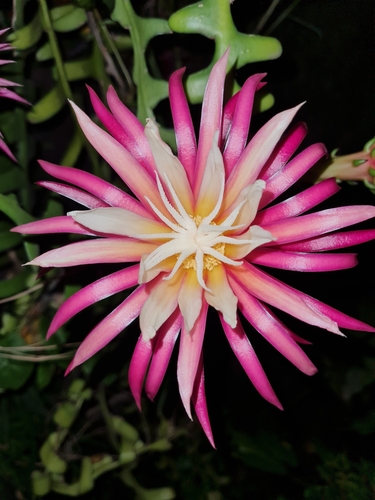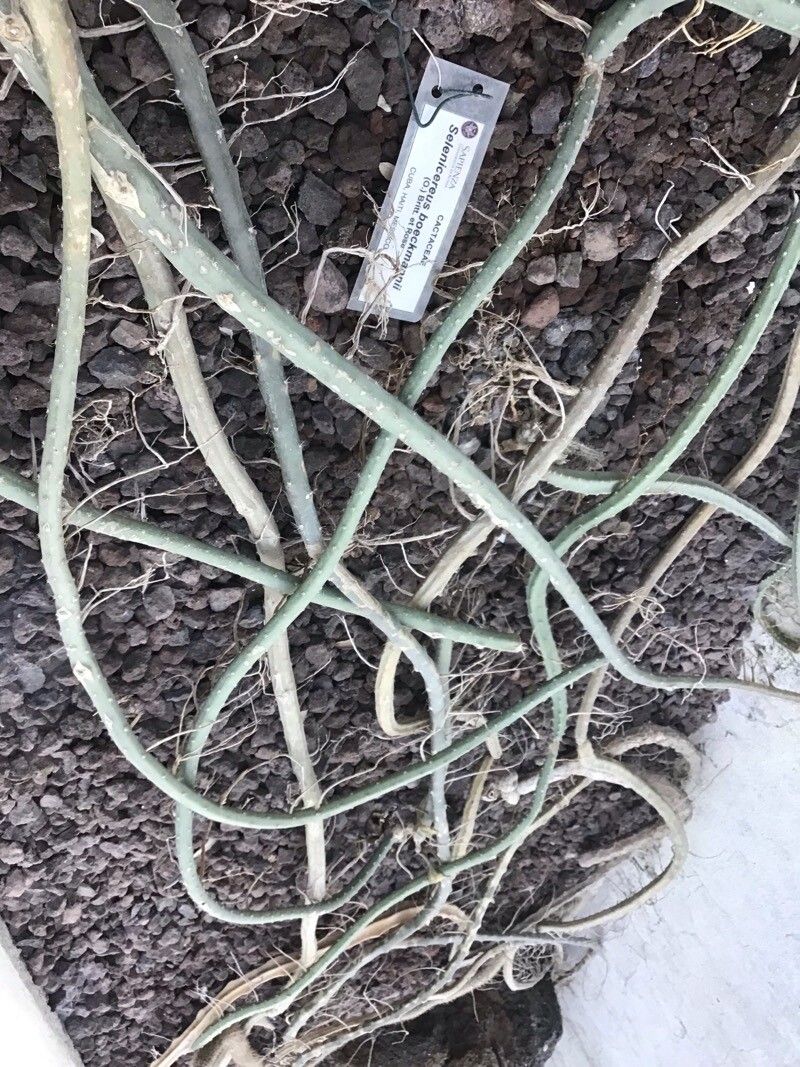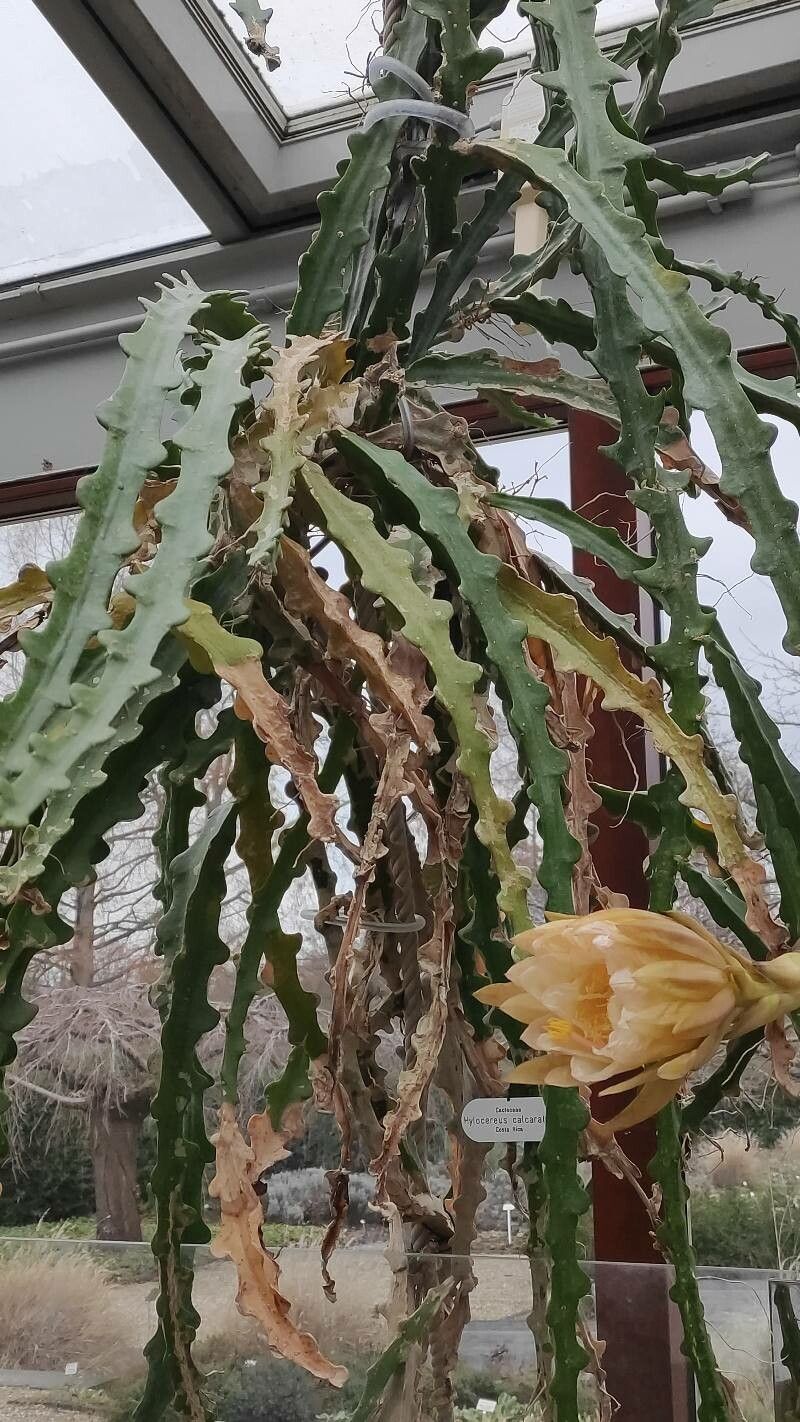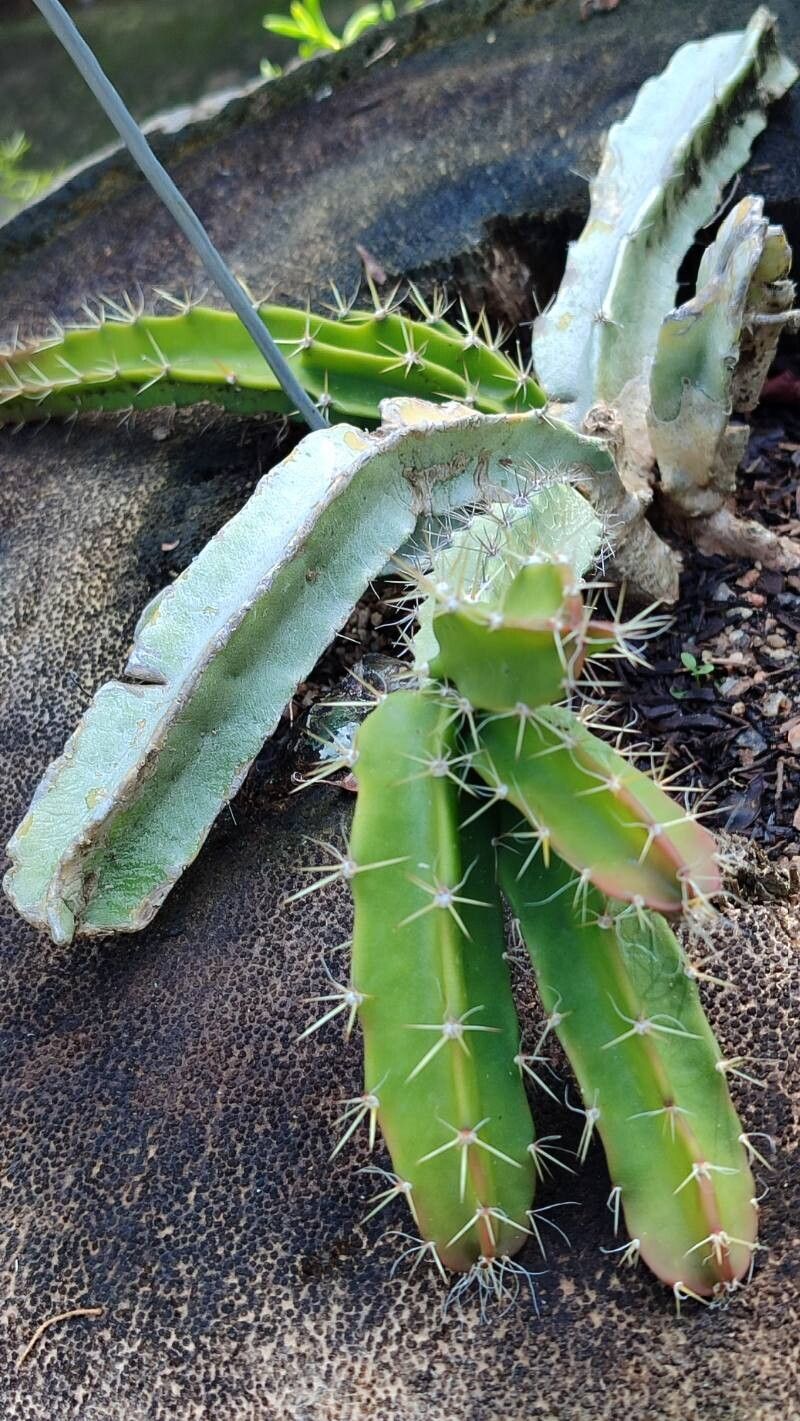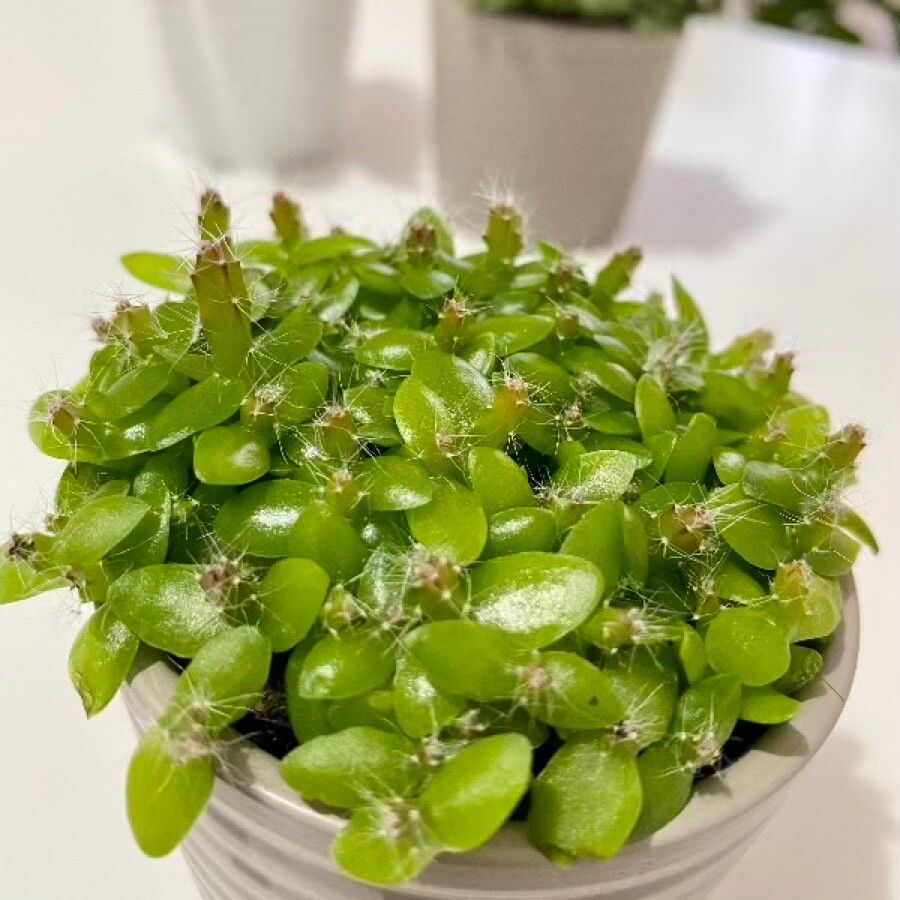
Selenicereus undatus, the white-fleshed pitahaya, is a species of Cactaceae and is the most cultivated species in the genus. It is used both as an ornamental vine and as a fruit crop - the pitahaya or dragon fruit. The native origin of the species has never been resolved.
White-Fleshed Pitahaya is disease resistant and tolerates normal care conditions without becoming ill easily. However, it can be prone to mealybugs, which may cause some damage but are generally not a serious threat. In terms of care, White-Fleshed Pitahaya is drought tolerant and does not need frequent watering. It can withstand long periods without water and requires little fertilizer. Nevertheless, it is highly susceptible to root rot if lighting is poor and it is overwatered. Overall, White-Fleshed Pitahaya is suitable for people who want to spend less time on plant care, but it is important to understand and meet its basic needs. It is particularly well suited to people who are away for long periods and may forget to water their plants regularly.
How to keep Selenicereus Undatus.
Light
White-Fleshed Pitahaya, native to dry regions, performs best in full sun; its natural habitat features intense sunlight and very little shade. It can also tolerate partial sun, providing some flexibility in its growth.
Water
White-fleshed pitahaya thrives in tropical climates characterized by high humidity and occasional heavy rains. While it is drought-tolerant, it still prefers moist conditions. To prevent over-watering, it's best to water it every two weeks. Usually grown outdoors, the growth cycle of white-fleshed pitahaya is influenced by seasonal rainfall patterns.
Humidity
This plant prefers dry conditions, so don't mist it. However, watering it less often can also thrive in higher humidity.
Temperature
White-Fleshed Pitahaya does well in its native habitat where temperatures range from 68 to 100 °F (20 to 38 ℃). If temperatures stay within that range, seasonal adjustments are usually unnecessary.
Fertilizer
For White-Fleshed Pitahaya, small amounts of fertilizer applied 1-2 times a year during the growing season are adequate. Do not fertilize in winter or summer when the plant is dormant. Use less fertilizer for plants that have been repotted and wait a couple of months after repotting before you fertilize. Fertilizing helps maintain healthy growth and promotes flowering.
Pruning
White-fleshed pitahaya requires minimal pruning. To ensure healthy growth, remove any withered flowers and branches. This allows the plant to allocate nutrients more efficiently.
Botanical profile.
- Plant Type
- Succulent, Vine
- Life Cycle
- Perennial
- Genus
- Selenicereus
- Family
- Cactaceae
- Hardiness Zone
- 10-12
- Mature Height
- 3.05 m to 10.06 m
- Mature Spread
- 2.13 m to 3.96 m
- Leaf Color
- Green
- Leaf Type
- Evergreen
- Flower Color
- White
- Flower Size
- 25.40 cm to 30.48 cm
- Bloom Time
- Summer, Early fall
- Planting Time
- Spring, Summer, Autumn
- Harvest Time
- Late summer, Fall
- Native Area
- Honduras, Mexico