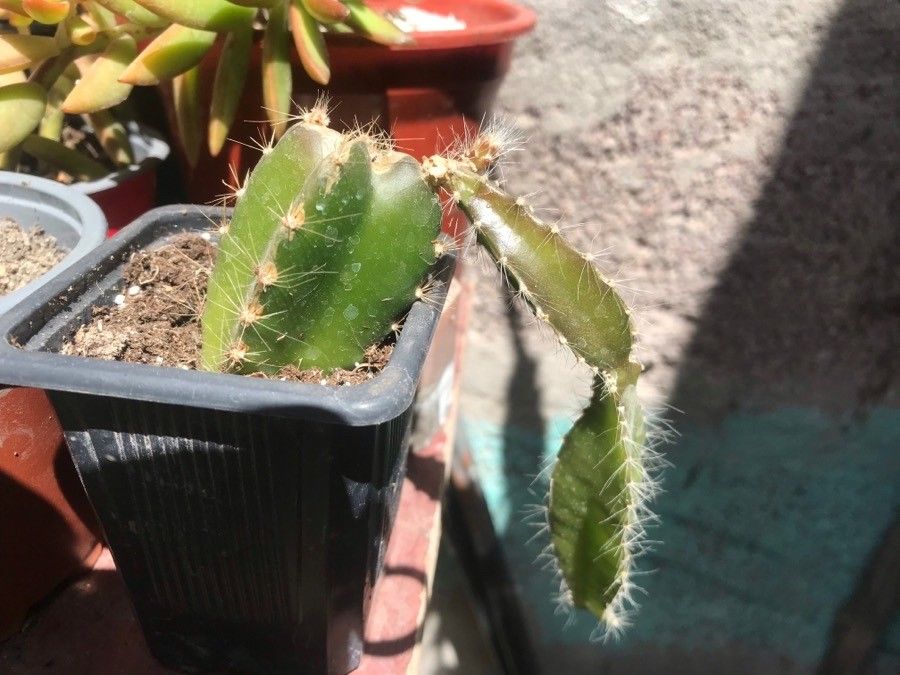
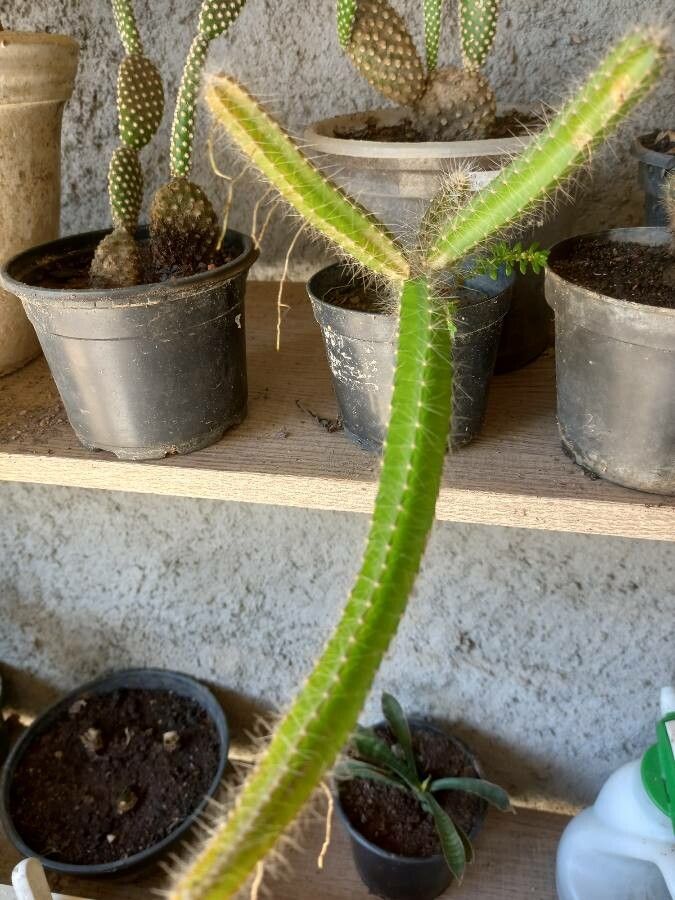
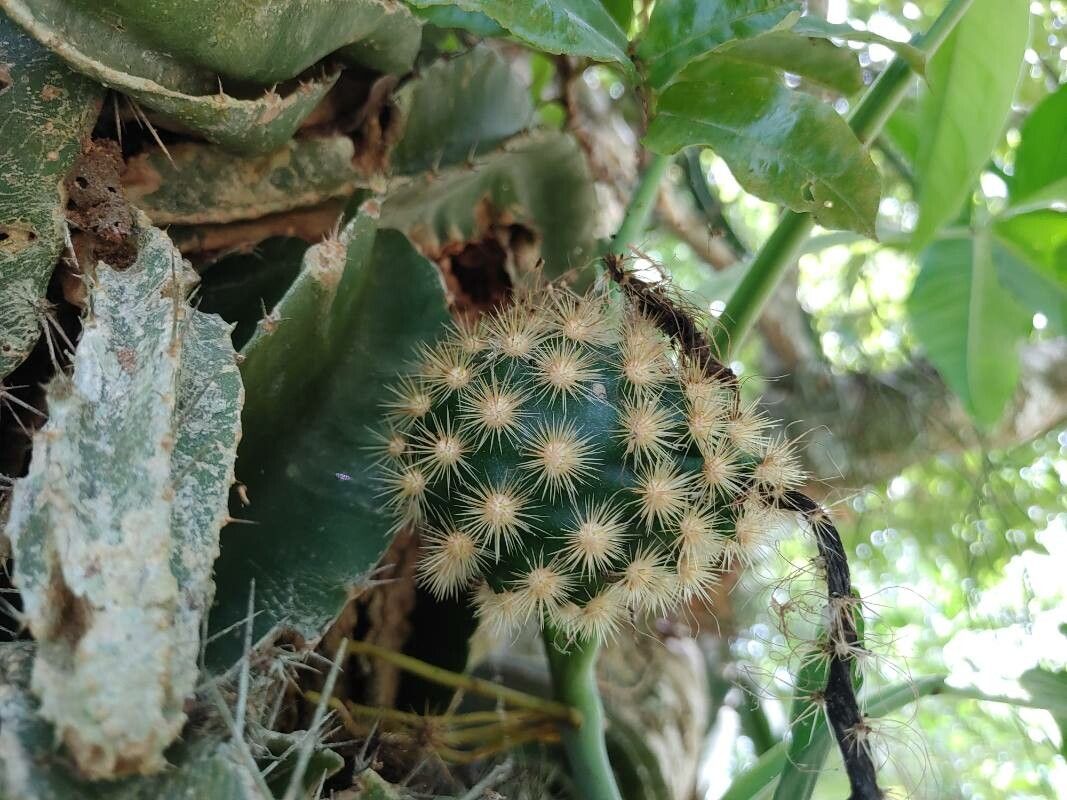
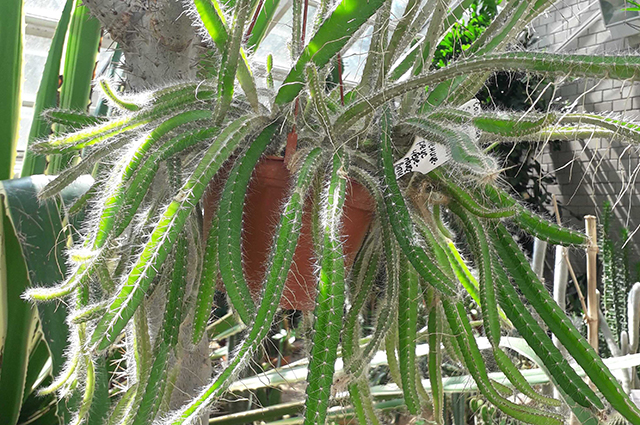
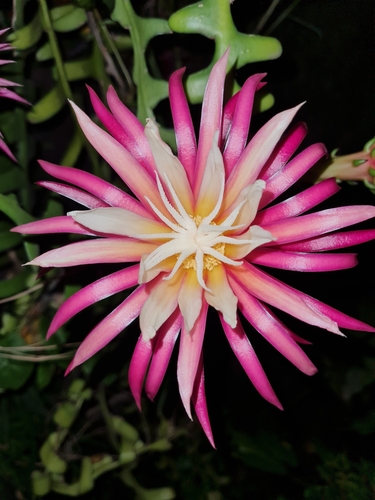
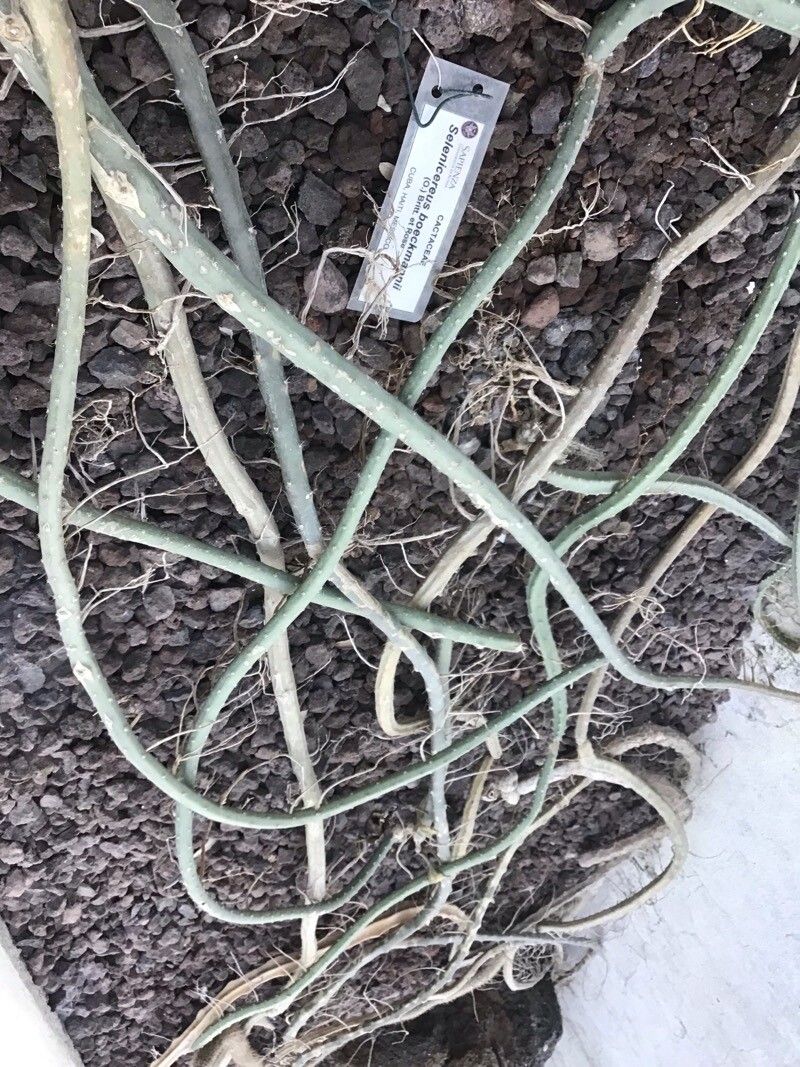
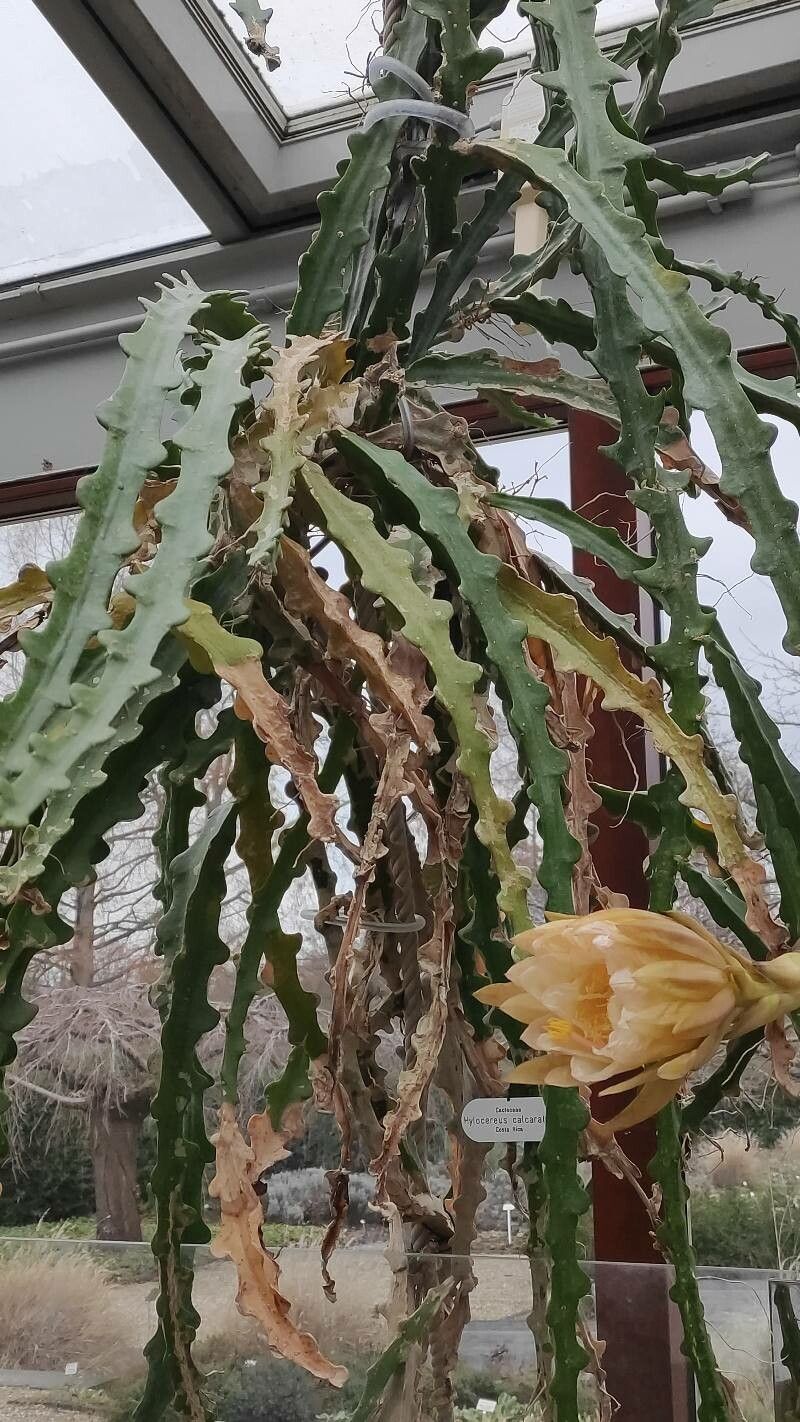
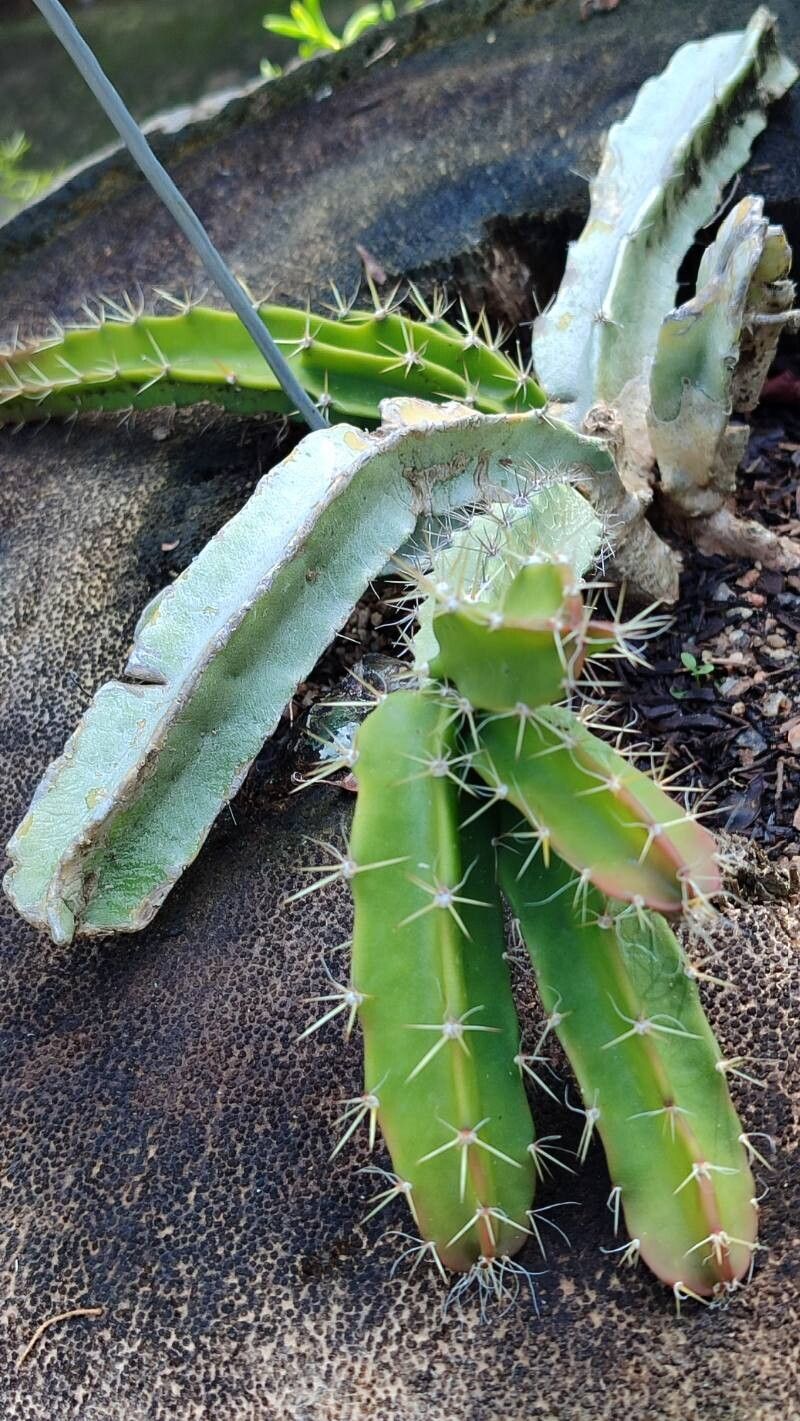
Selenicereus testudo is a tropical perennial succulent native to tropical South America. Its trailing, long, skinny, tail-like stems have earned it the name Dog Tail Cactus, though it is often confused with the Rat Tail Cactus. The cylindrical stems are lined with small spines. These succulents are considered polymorphic because their stems appear to broaden, changing their shape to look different from the young. In the summer, the cacti may bloom with large, fragrant, white blooms that only appear during the night.
Strophocactus testudo is generally resistant to disease and tolerates routine care without becoming ill easily. That said, it can attract mealybugs; they may cause some harm but are usually not a major danger. Regarding its care, Strophocactus testudo tolerates drought and does not need frequent watering. It can endure extended stretches without water and requires little fertilizer. Conversely, it is highly prone to root rot if grown in poor light and given too much water. All in all, Strophocactus testudo suits people who prefer low-maintenance plants, but it remains important to know and meet its basic requirements. It is especially appropriate for those who are often away for long periods and might forget to water regularly.
How to keep Selenicereus Testudo.
Light
Originating from arid regions, Strophocactus testudo does best in full sun, its native environment marked by intense sunlight and scarce shade. It will also tolerate partial sun, giving it some adaptability in its growth.
Water
As an epiphytic cactus, the Dog Tail Cactus needs more water during the summer. Wait for the soil to dry before watering it once more to avoid wet conditions and root rot.
Humidity
This plant prefers dry conditions, so don't mist it. However, watering it less often can also thrive in higher humidity.
Temperature
Strophocactus testudo does best in warm conditions and requires relatively high temperatures during the growing season to support growth and metabolic activity. It prefers plenty of sunlight, appropriate moisture, and good air circulation. However, it can be damaged by temperatures that are too low and by overwatering. It’s also important to maintain balance and avoid excessively high temperatures and overly dry conditions.
Fertilizer
For Strophocactus testudo, small amounts of fertilizer applied 1-2 times a year during the growing season are enough. Do not fertilize in winter or in summer when the plant is dormant. Use less fertilizer for repotted plants and wait a couple of months after repotting before you start fertilizing. Fertilizing helps maintain healthy growth and encourages blooms.
Pruning
The Dog Tail Cactus does not require pruning to support healthy growth.
Botanical profile.
- Plant Type
- Succulent
- Life Cycle
- Perennial
- Genus
- Selenicereus
- Family
- Cactaceae
- Hardiness Zone
- 9-11
- Mature Height
- 46 cm
- Mature Spread
- 91 cm
- Leaf Color
- Dark Green
- Leaf Type
- Evergreen
- Flower Color
- White
- Flower Size
- 15.24 cm to 20.32 cm
- Bloom Time
- Summer
- Planting Time
- Spring, Summer
- Harvest Time
- Late summer, Early fall, Mid fall
- Native Area
- Tropical South America
Other names.