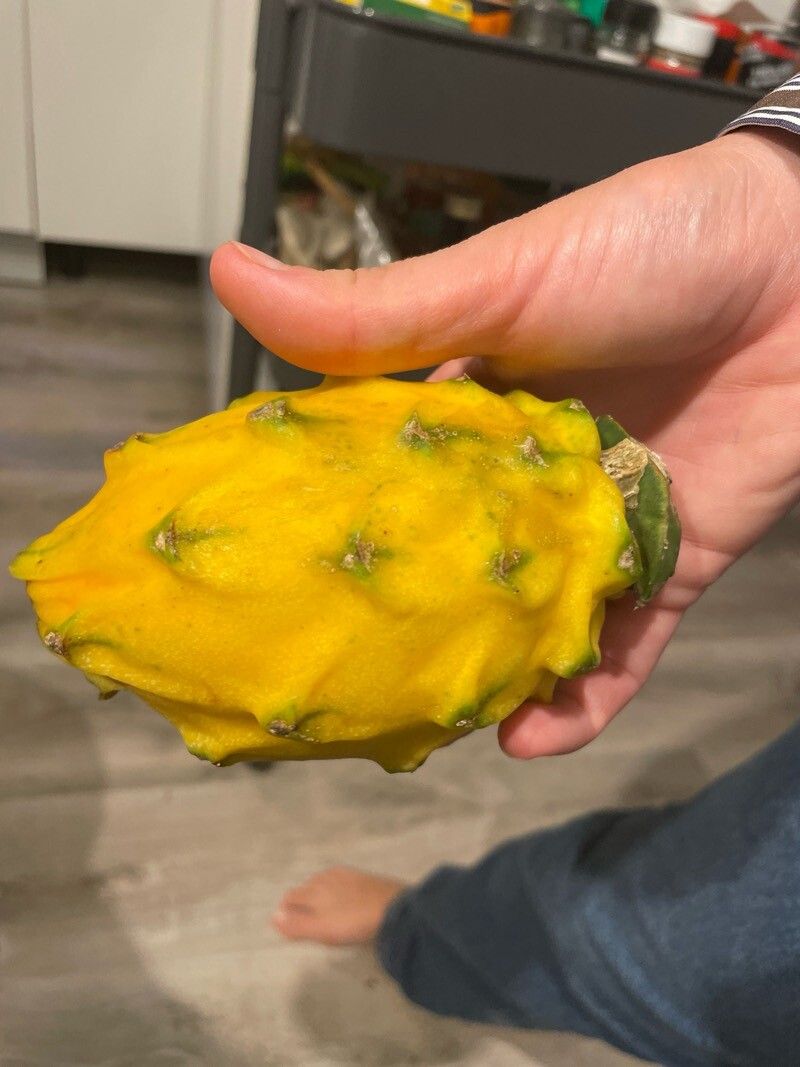
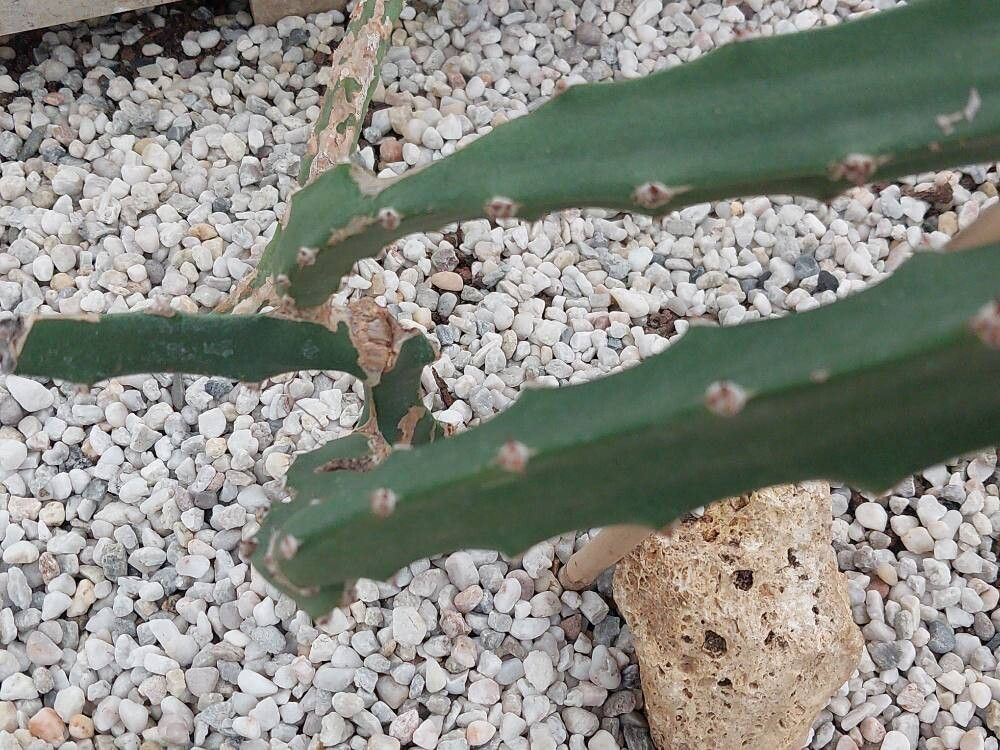
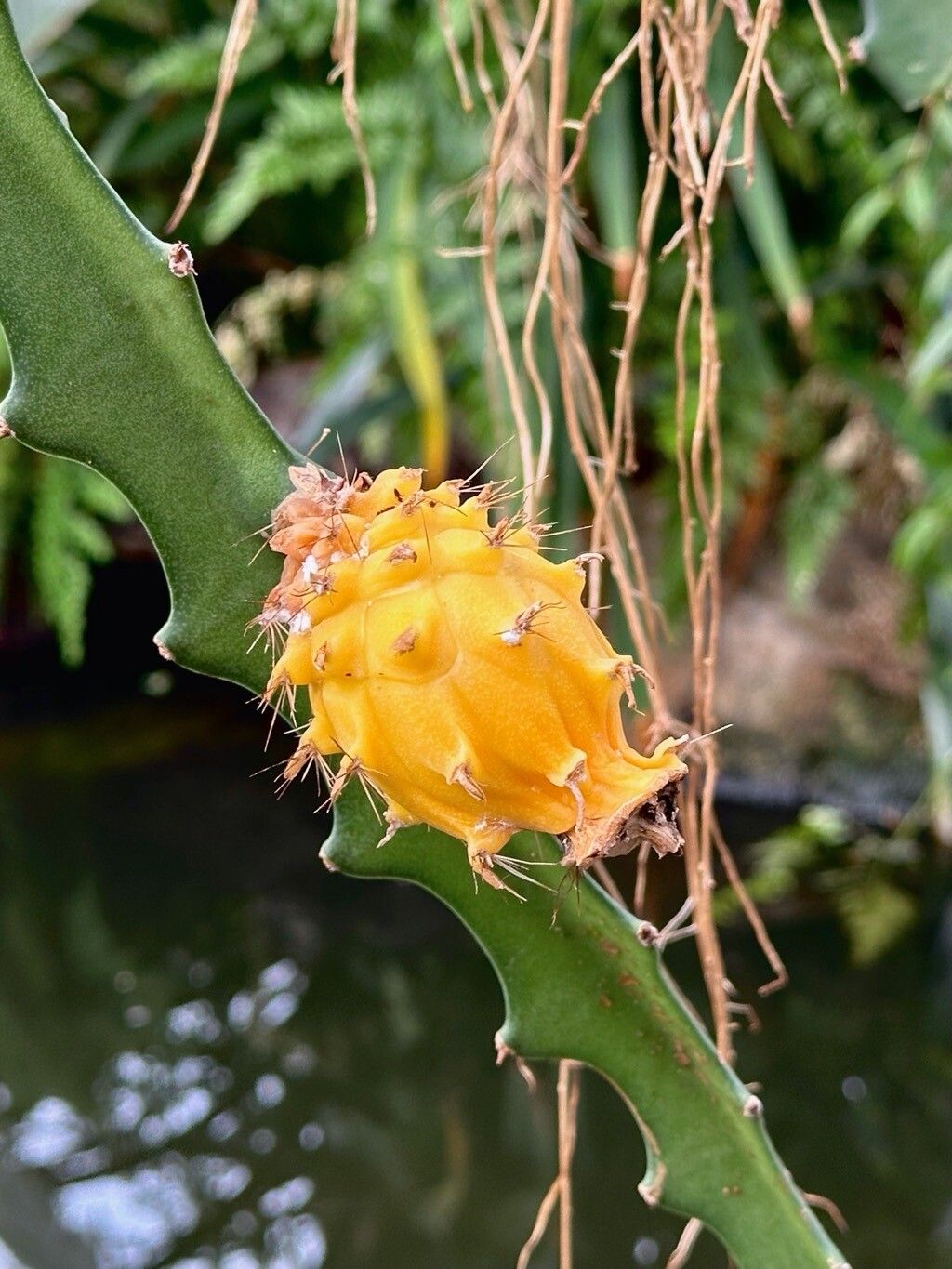
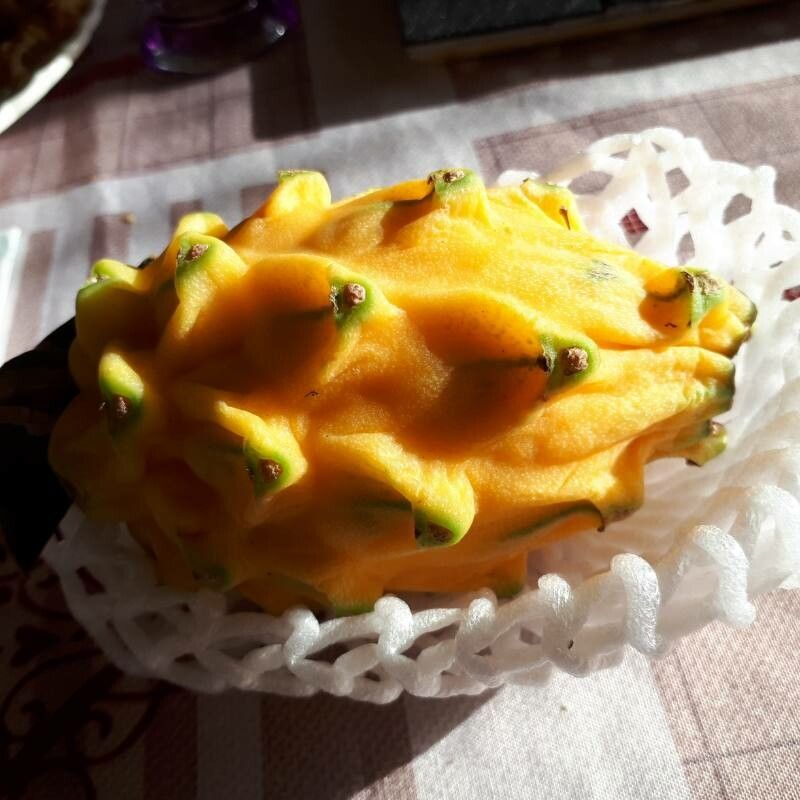
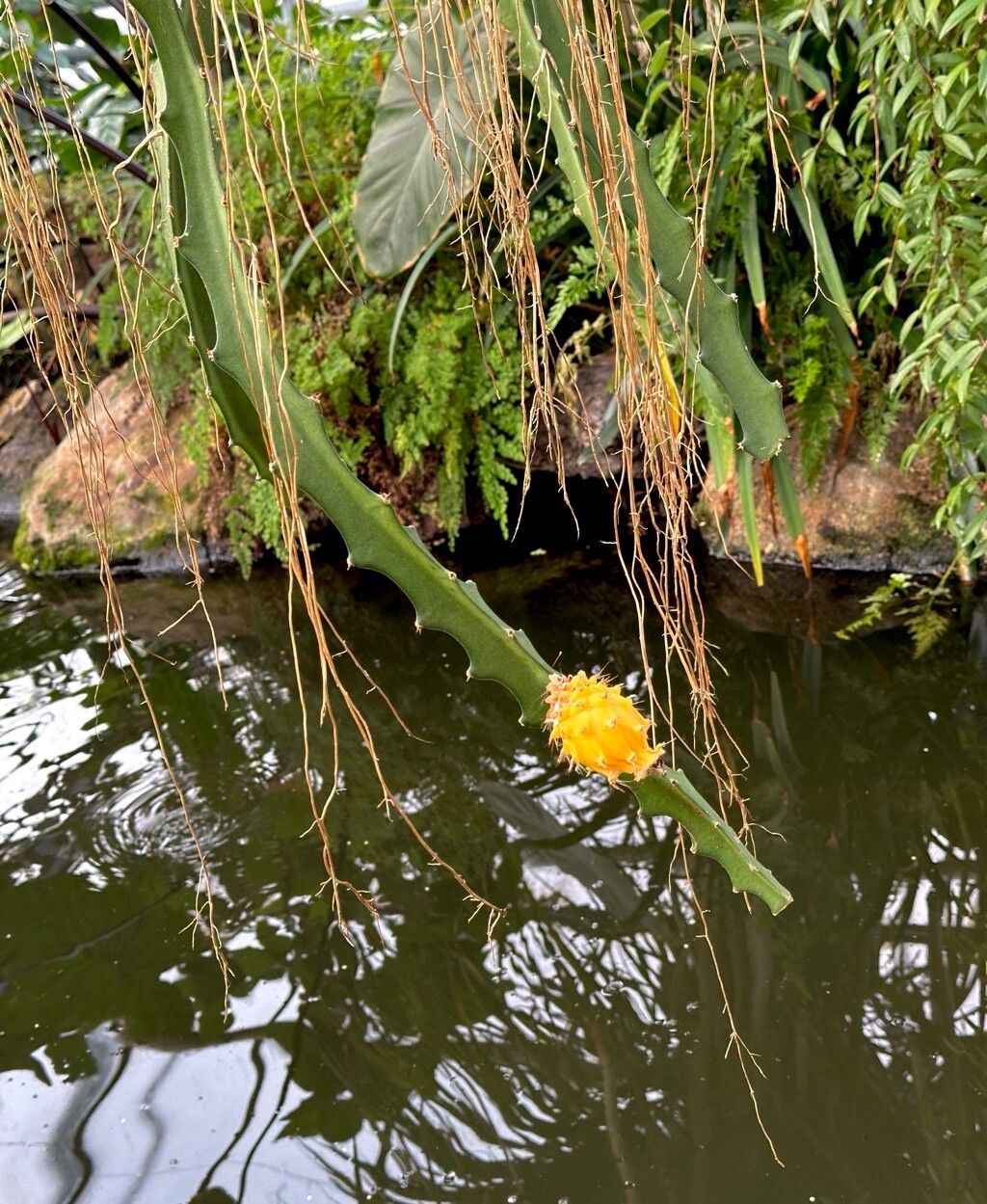
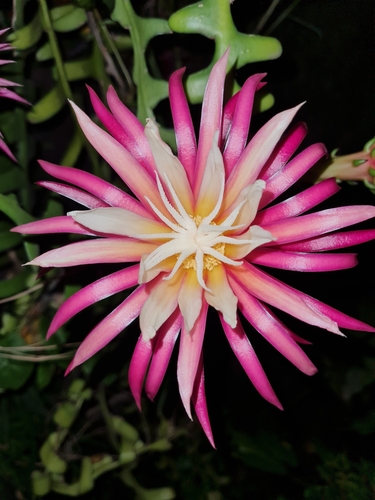
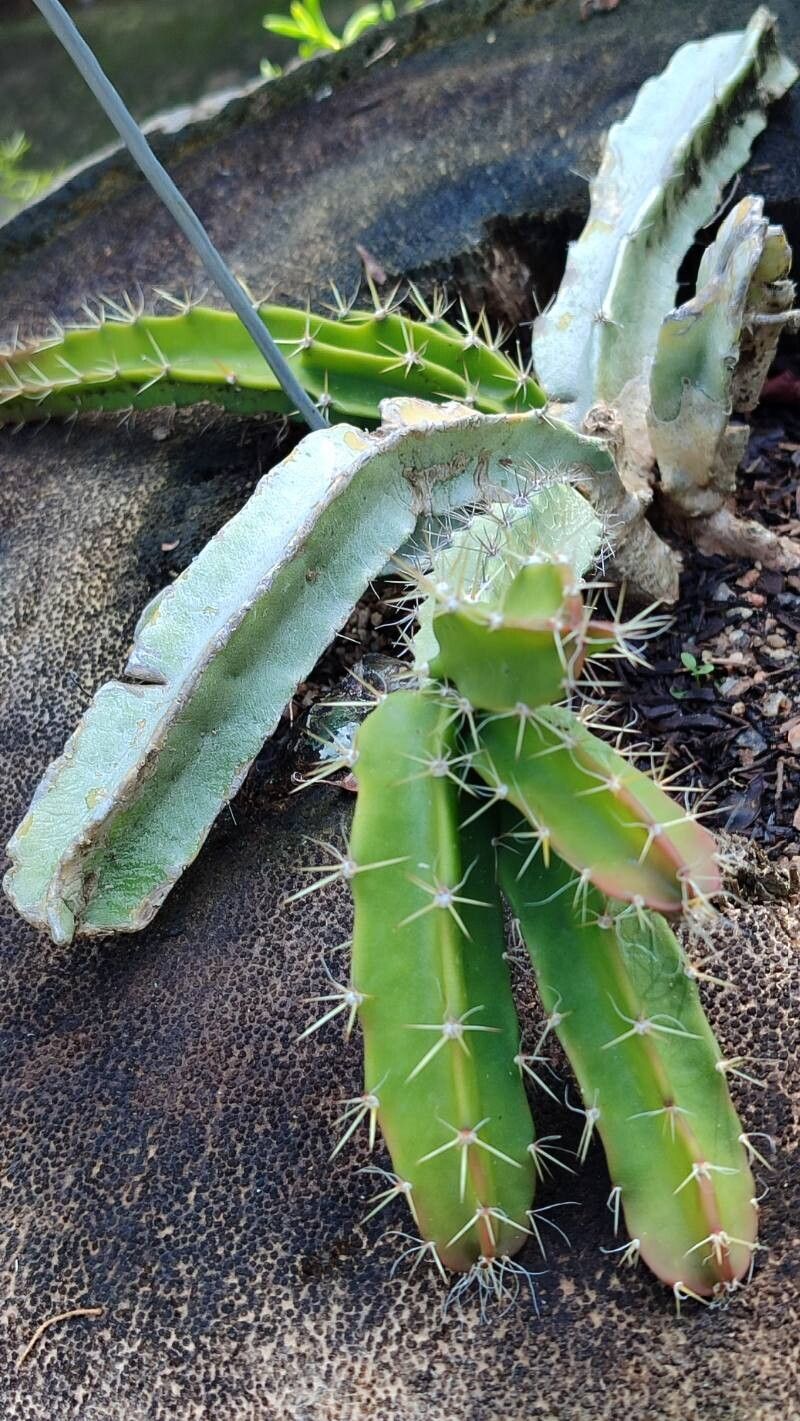
Selenicereus megalanthus, synonym Hylocereus megalanthus, is a cactus species in the genus Selenicereus that is native to northern South America, where it is known, along with its fruit, by the name of pitahaya. The species is grown commercially for its yellow fruit, but is also an impressive ornamental climbing vine with perhaps the largest flowers of all cacti.
Yellow pitaya has strong disease resistance and, under typical care conditions, is not prone to illness. It can, however, be vulnerable to mealybugs; they may cause some harm but are typically not a major problem. Regarding care, Yellow pitaya is drought-tolerant and does not need frequent watering. It can endure long spells without water and requires little fertilizer. On the other hand, it is very prone to root rot if kept in poor light and overwatered. In general, Yellow pitaya is a good choice for people who prefer low-maintenance plants, though it remains important to meet its basic needs. It is especially suitable for those who are away for long periods and might forget regular watering.
How to keep Selenicereus Megalanthus.
Light
Yellow pitaya performs best in intense sunlight but can also do well with moderate light. Plenty of sun encourages vigorous growth and intensifies its yellow color. Although it tolerates some shade, too little light can fade its coloration and slow its development. Its native habitat features strong solar intensity. Too much sun can burn its skin, while too little can limit its growth.
Temperature
Yellow pitaya is native to environments that experience temperatures between 68 to 100 °F (20 to 38 ℃). It performs best when the temperature is maintained within that range, and seasonal adjustments might be necessary to imitate its natural habitat.
Fertilizer
For Yellow pitaya, light applications of fertilizer once or twice a year during the growing season are sufficient. Avoid fertilizing in winter and in summer when the plant is dormant. Reduce fertilizer for plants that have been repotted and wait a couple of months after repotting before applying any. Fertilizing supports healthy growth and promotes flowering.
Botanical profile.
- Plant Type
- Vine, Shrub
- Life Cycle
- Perennial
- Genus
- Selenicereus
- Family
- Cactaceae
- Hardiness Zone
- 10-12
- Mature Height
- 2.13 m
- Mature Spread
- 49 cm
- Leaf Color
- Green
- Leaf Type
- Evergreen
- Flower Color
- White
- Flower Size
- 30.48 cm
- Bloom Time
- Late spring, Early summer, Mid summer
- Planting Time
- Spring, Summer, Autumn
- Harvest Time
- Mid summer
Other names.