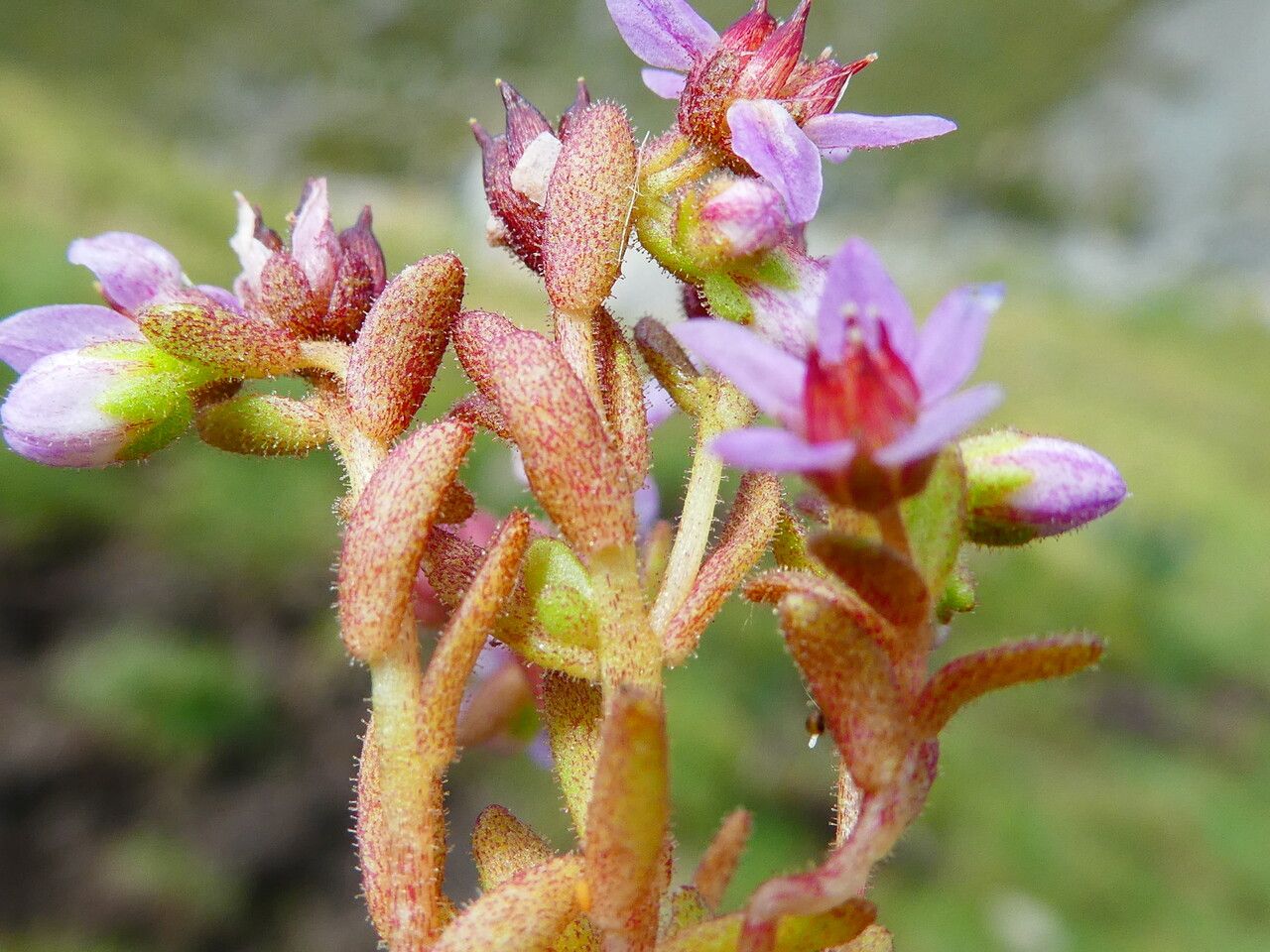
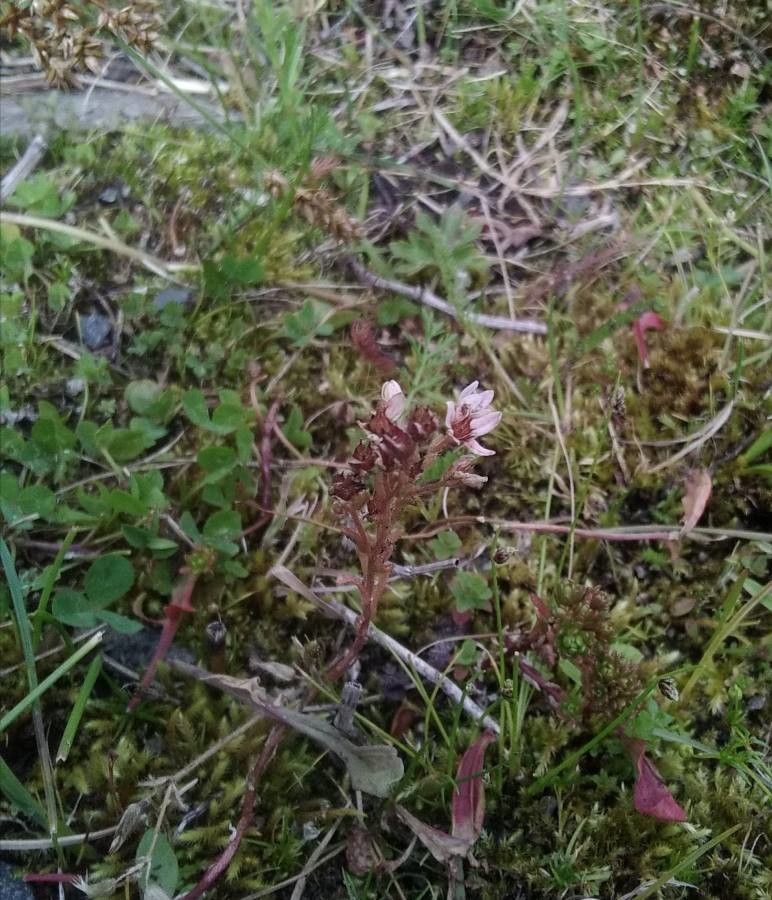
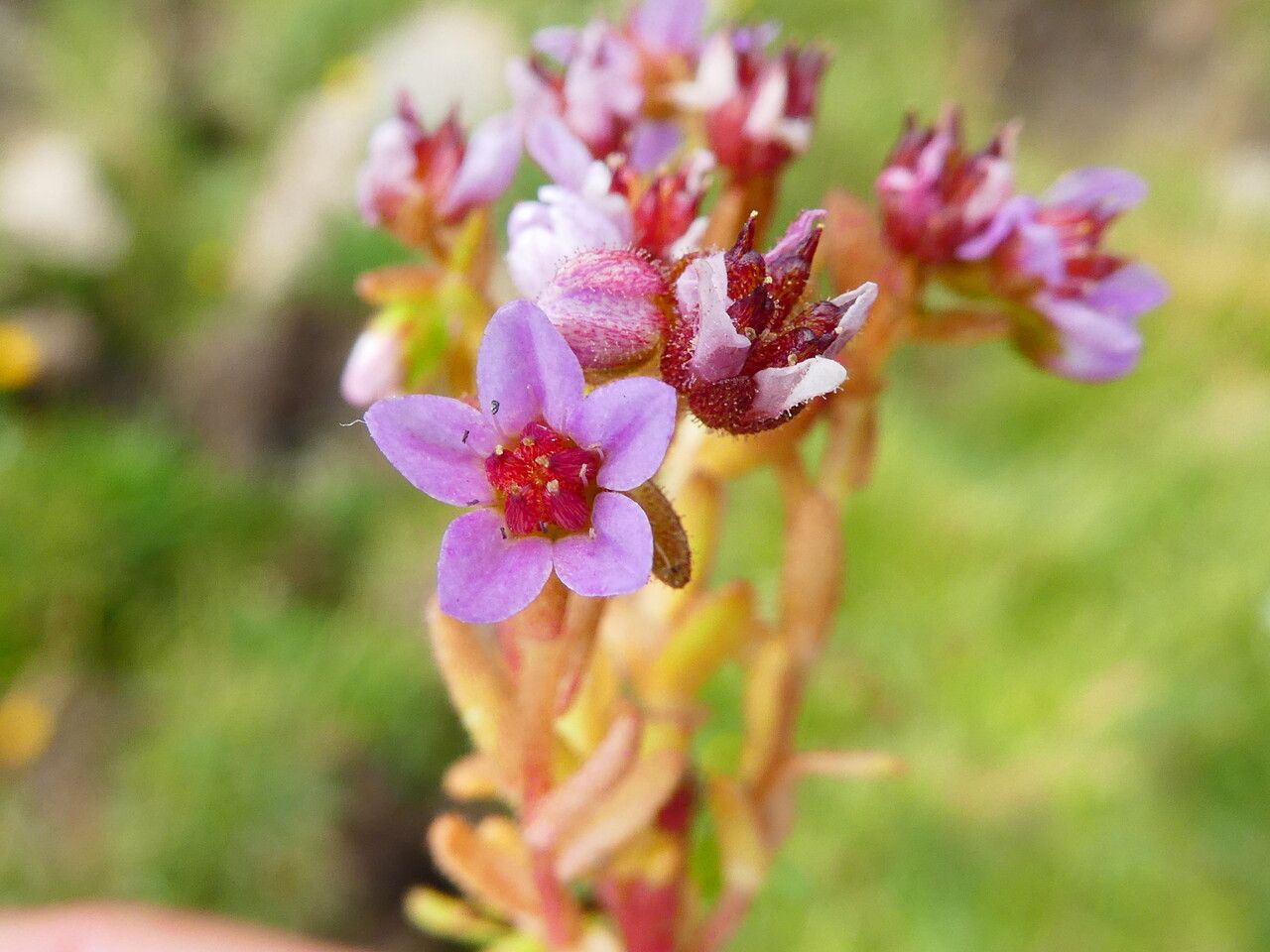
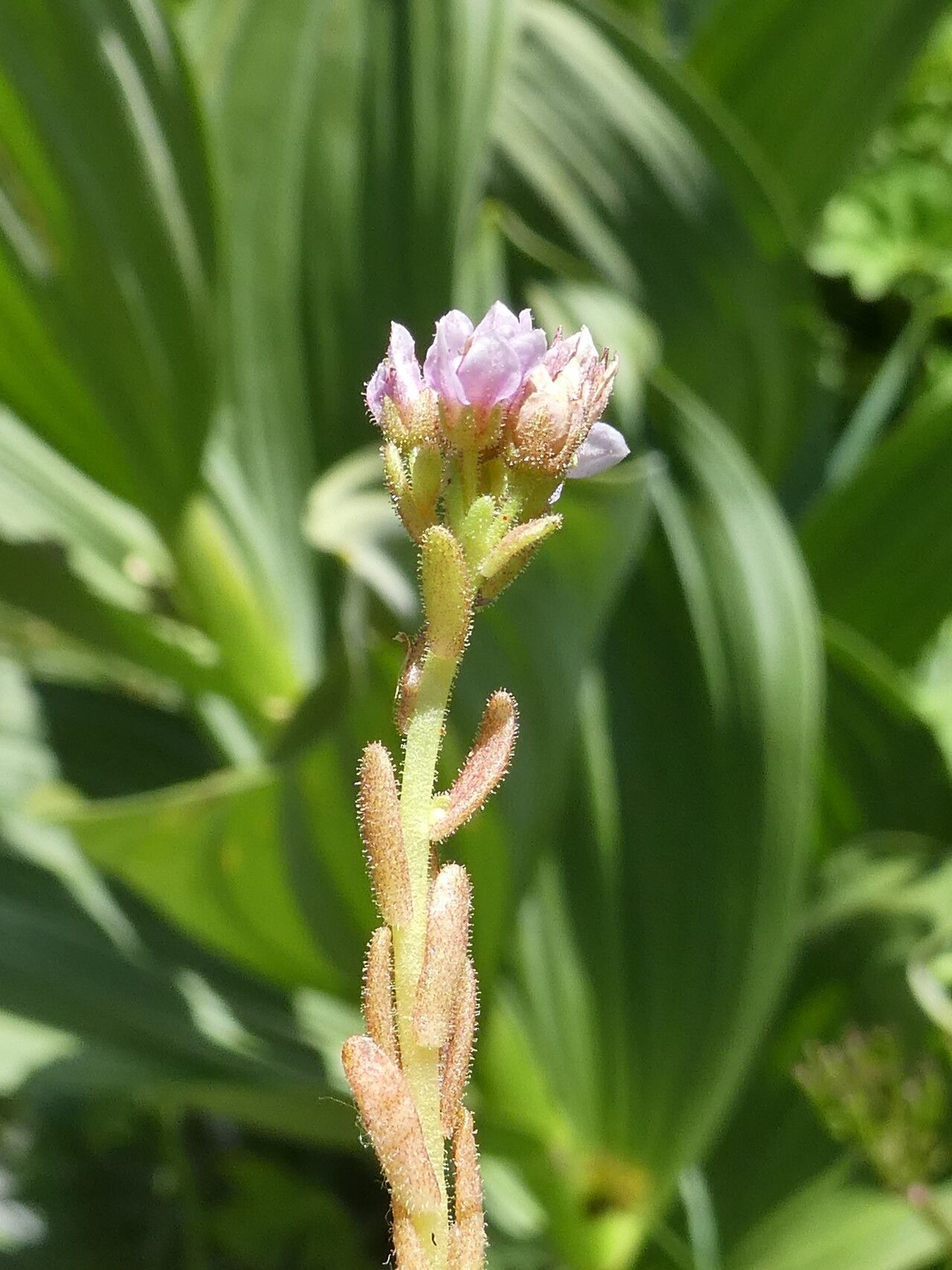
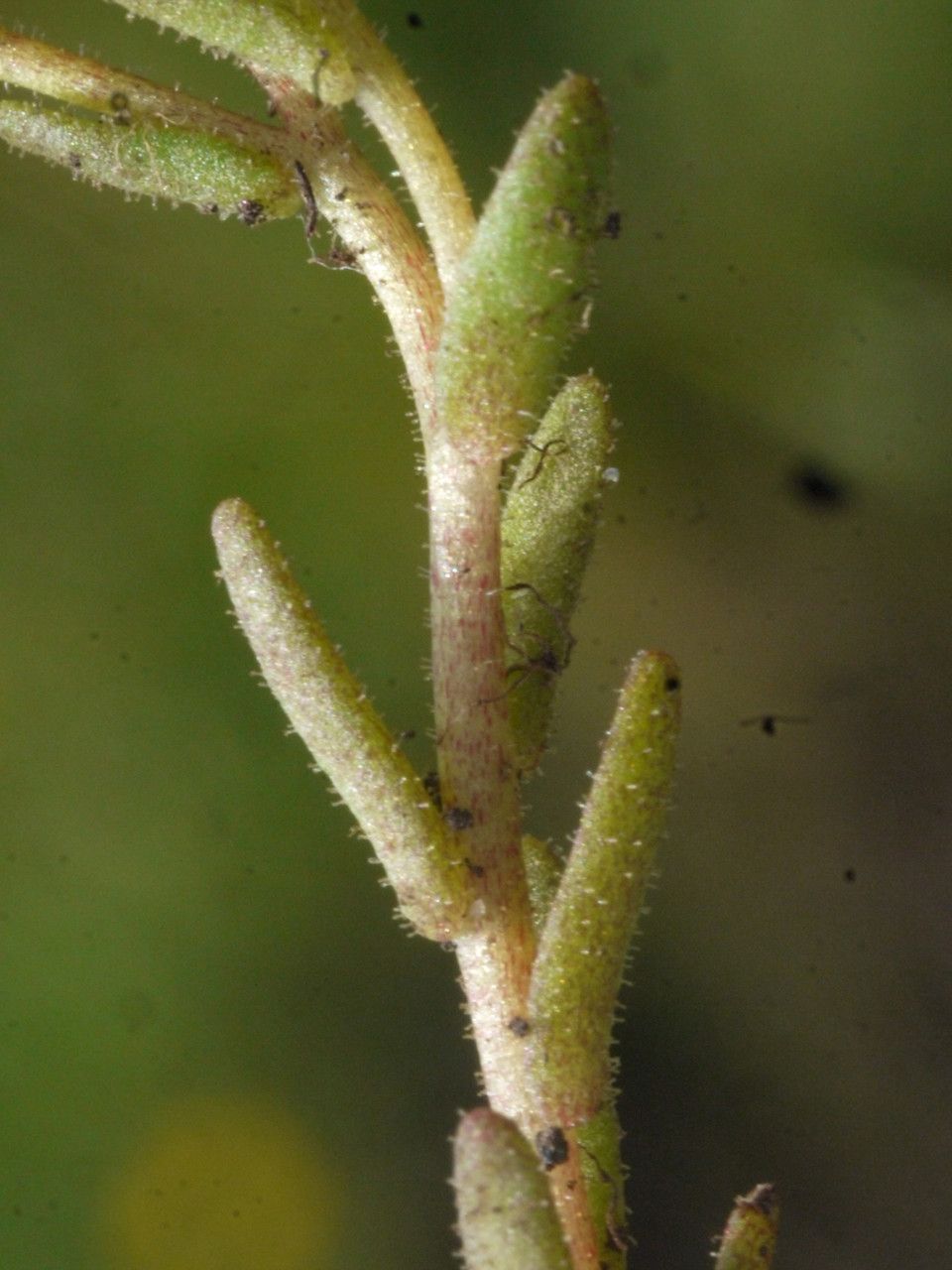
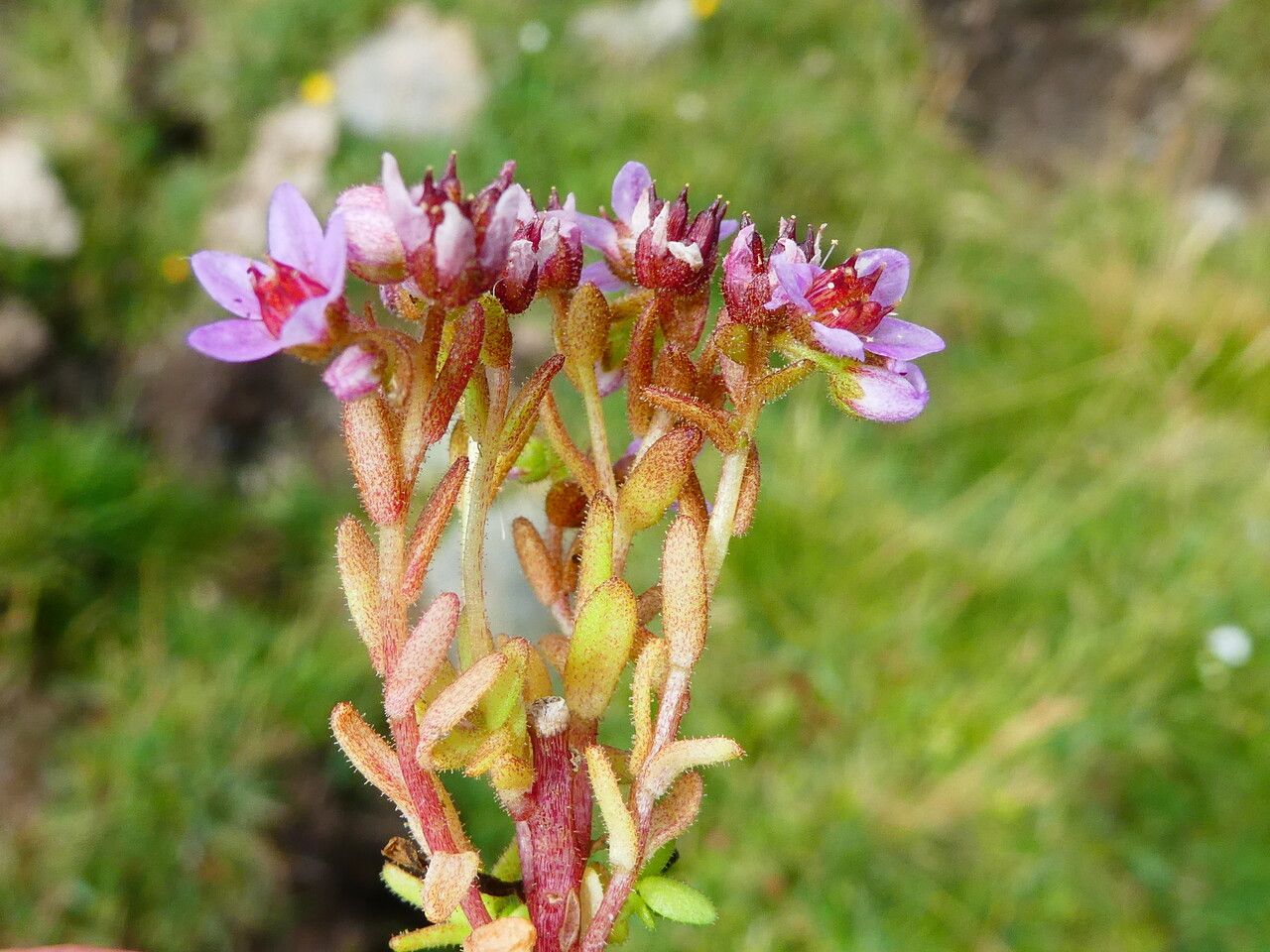
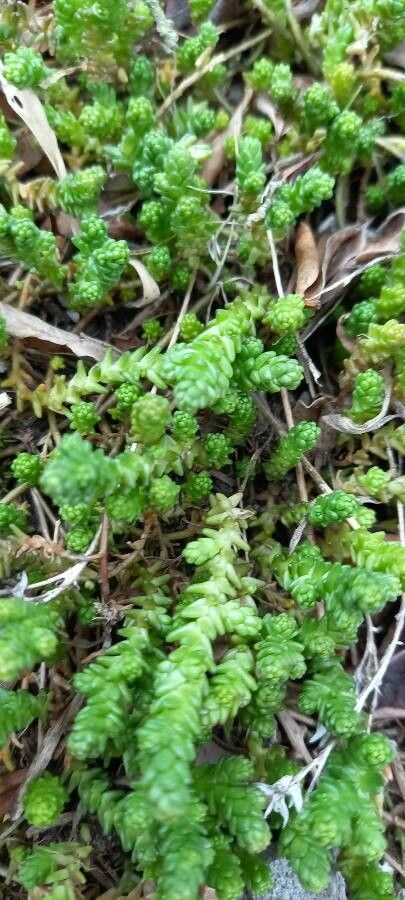
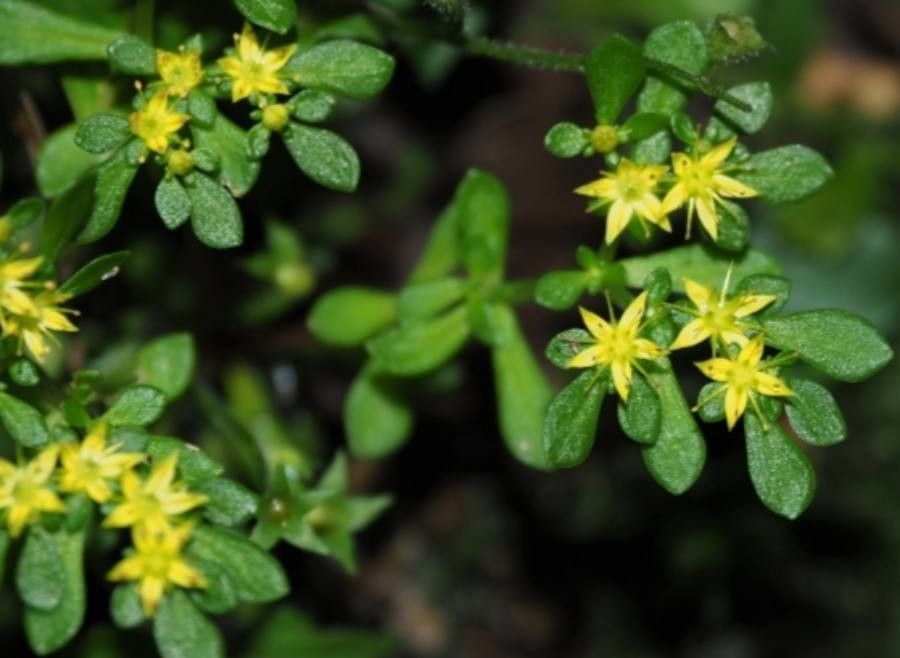
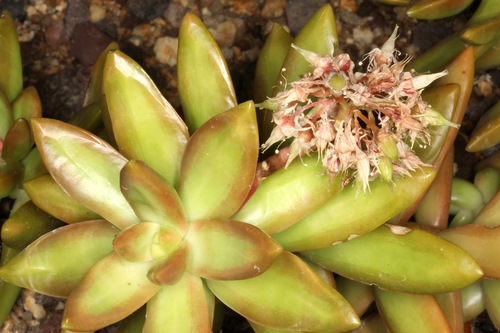
Sedum villosum, known as the hairy stonecrop or purple stonecrop, is a biennial to perennial flowering plant. Its leaves, which are 3–8 mm (0.1–0.3 in) long and may be reddish in colour, are generally covered with hairs, although S. villosum var. glabratum may have hairless leaves. Individual flowers have five pink petals, each up to 5 mm (0.2 in) long.It is native to Greenland, Iceland and northern and central Europe, east to Lithuania and Poland. It has also been recorded from islands in south-eastern Canada. Within Britain, it is found as far south as mid-Yorkshire. Compared to other species in the genus Sedum, it is unusual in preferring damp habitats.
Corsican stonecrop has moderate disease resistance but is more sensitive to humidity and to excessive watering. It becomes more prone to disease if it receives insufficient light and is overwatered. Regarding care, Corsican stonecrop tolerates drought and can go long periods without water. It requires little fertilizer and only needs pruning occasionally. Because of these traits, it is appropriate for people at any skill level, particularly those who prefer to spend less time on plant care or who are sometimes away from home for extended periods. It’s a suitable option for anyone who does not want to devote a lot of time to plant maintenance yet still wants an easy-to-care-for plant.
How to keep Sedum Villosum.
Light
Corsican stonecrop grows best with a generous amount of daily sunlight and can tolerate some shade. Native to regions with abundant sun, it adapts well to different levels of sun exposure. However, either too much or too little sun can impede its optimal growth.
Water
Hairy stonecrop originates from moist mountainous areas and thrives in consistently damp environments. For optimal health, it needs to be watered regularly, about twice a week. When grown outdoors, hairy stonecrop does best in well-draining soil that retains enough moisture to simulate its natural alpine conditions.
Temperature
Corsican stonecrop is native to temperate regions and prefers temperatures from 59 to 95℉ (15 to 35℃). During winter it can tolerate mild frost provided it is kept dry. To encourage dormancy, maintain temperatures between 60 and 70℉ (15.6 to 21.1℃) in the cooler months.
Fertilizer
Corsican stonecrop requires only light fertilizer applications once or twice a year during the growing season. Do not fertilize in winter or in summer while it is dormant. Use reduced fertilizer for repotted specimens and wait a few months after repotting before applying feed. Fertilizing helps maintain healthy growth and promotes flowering.
Pruning
The hairy stonecrop is a low-growing succulent with small, hairy leaves. To maintain its shape and improve air circulation, lightly prune the plant from early to late spring, taking care not to over-prune. This practice helps reduce the risk of disease during the plant's active growth phase, promoting healthier development.
Pot & Repot
When repotting Corsican stonecrop, choose a pot slightly larger than the current one that provides good drainage. Use a gritty, well-draining succulent or cactus mix. Gently remove the plant from its old pot, brush off excess soil, and place it back at the same depth. Wait a few days before watering so any root damage can heal. Repot in spring or fall and keep it in a brightly lit location.
Botanical profile.
- Plant Type
- Succulent, Herb
- Life Cycle
- Perennial
- Genus
- Sedum
- Family
- Crassulaceae
- Hardiness Zone
- 7-10
- Mature Height
- 5 cm to 15 cm
- Mature Spread
- 20 cm
- Leaf Color
- Green, Blue
- Leaf Type
- Evergreen
- Flower Color
- White, Pink
- Flower Size
- 0.51 cm to 0.51 cm
- Bloom Time
- Late spring, Early summer, Mid summer
- Planting Time
- Spring, Summer, Autumn
- Harvest Time
- Mid summer
- Native Area
- Turkey, Austria, Tunisia, Montenegro, Bulgaria, Greece, Croatia, Slovenia, Morocco, Serbia, Germany, Italy, Spain, Switzerland, France, Albania, Algeria, Romania, Portugal
Other names.
Reader questions.
What are the sunlight requirements for Hairy Stonecrop (Sedum villosum)?
Hairy Stonecrop (Sedum villosum) thrives in different sunlight conditions, depending on your gardening goals. For plants that enjoy full sun, they require above 6 hours of sunlight daily. For those that prefer partial sun, about 3-6 hours of sunlight per day is sufficient. It's important to watch how sunlight moves through your garden to find spots that offer the ideal mix of light and shade, ensuring your plants grow happily and healthily.