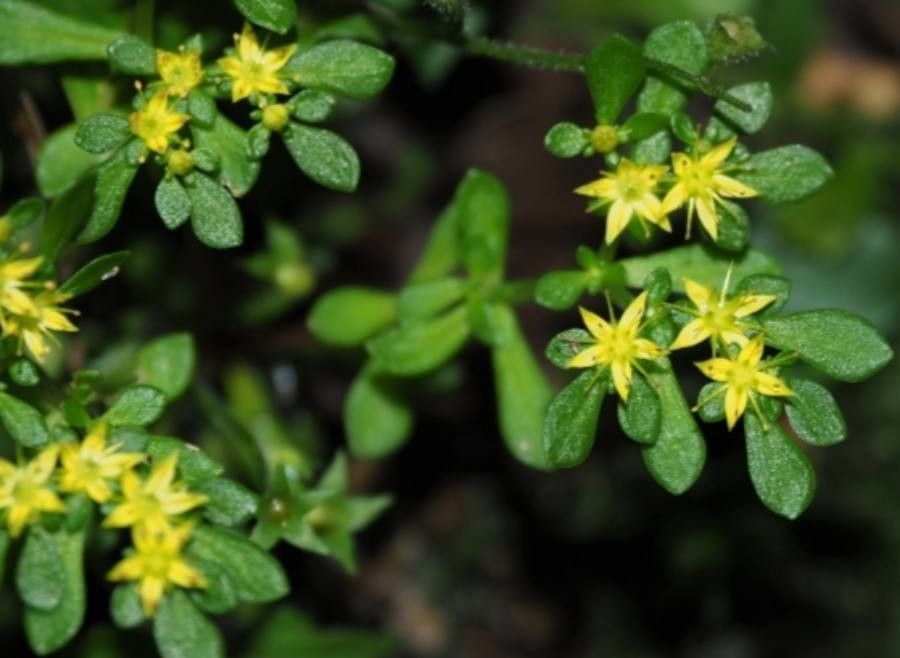
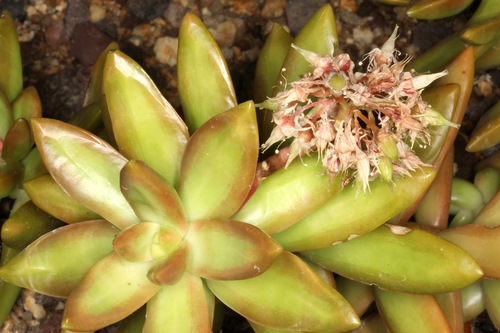
Sedum tetractinum, commonly known as Chinese Sedum or Four-angled Stonecrop, is a low-growing succulent plant in the Crassulaceae family. Native to China, it thrives in rocky areas and on cliffs.
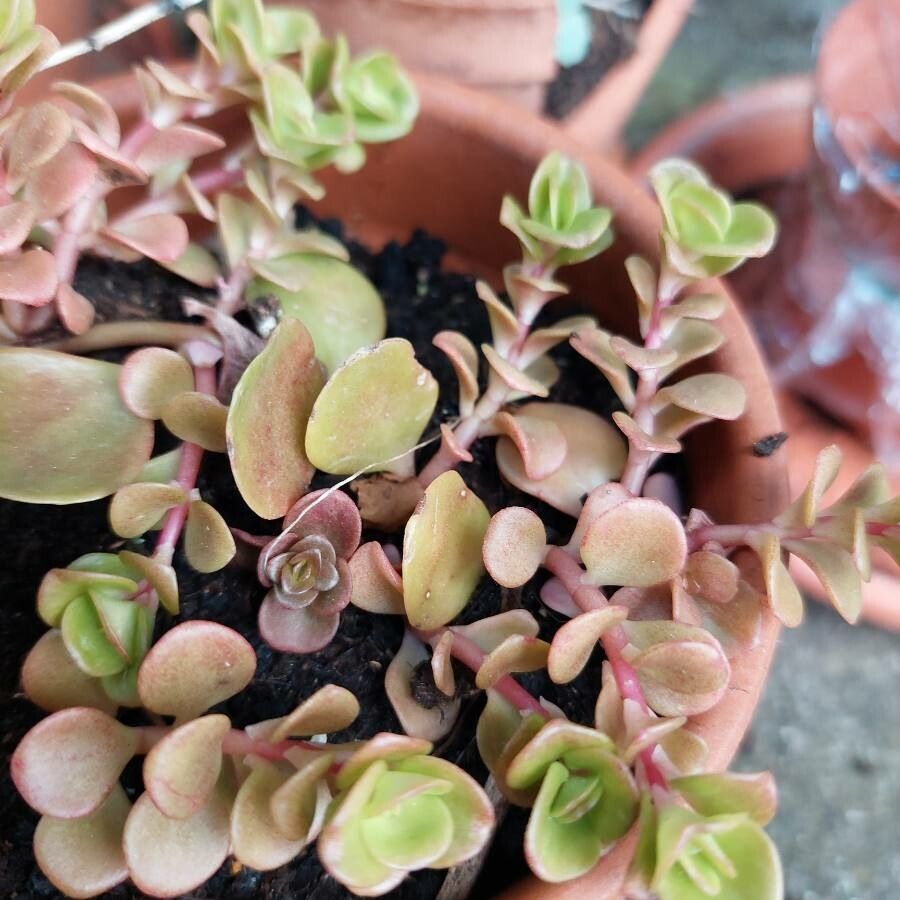
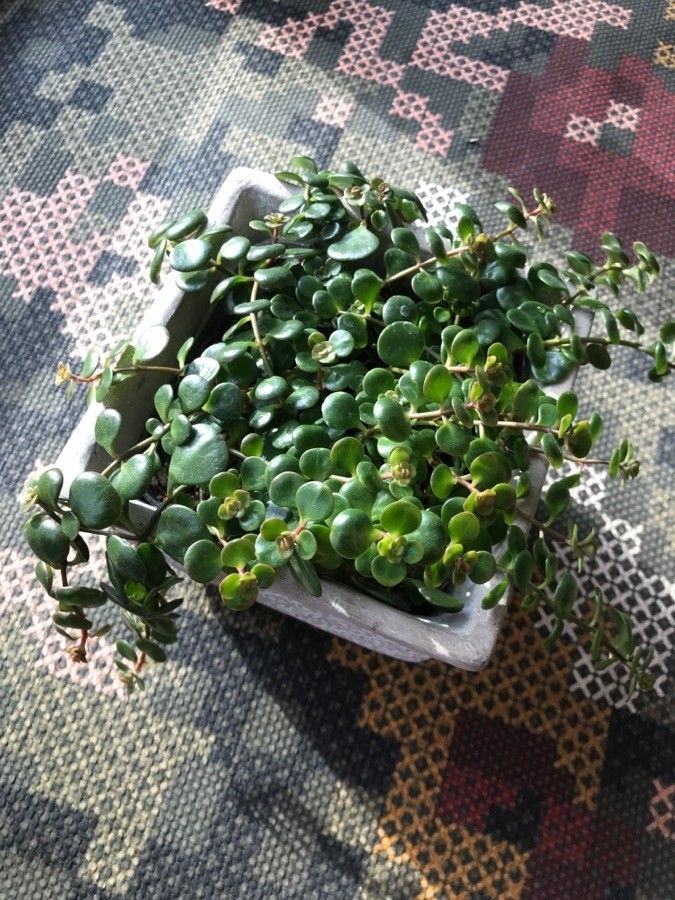
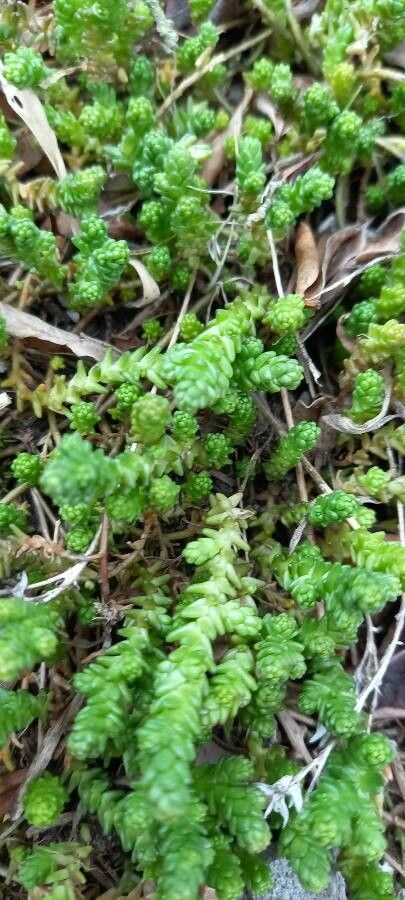
This plant features small, fleshy leaves arranged in opposite pairs along its stems. The leaves are green with a reddish tint and have a slightly rounded shape with pointed tips. Though the stems of Sedum tetractinum are thin and delicate, they can spread out over time to form dense mats of foliage.
During the summer, Sedum tetractinum produces small yellow flowers that cluster at the tips of its stems. These flowers attract pollinators such as bees and butterflies.
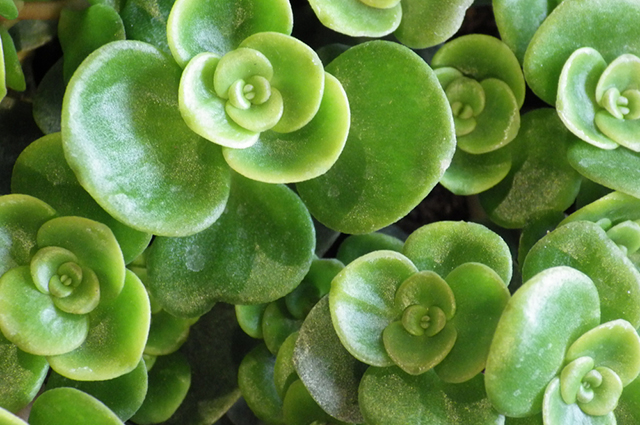
Golden sedum is a beautiful succulent with spoon-shaped leaves and a lotus-like form. Each leaf has a small tip at its end. The plant appears golden or yellow-green, making it instantly charming and delightful at first sight. FUN FACT · FROM THE LIBRARY
Sedums are renowned for their ability to thrive in harsh conditions like drought or poor soil quality, thanks to their succulent nature, which allows them to store water for extended periods.
Overall, Sedums like this one are excellent additions to rock gardens or container gardens due to their low maintenance requirements and unique appearance. They add texture and contrast when planted alongside other plants with different foliage shapes or colors.
Chinese sedum has moderate disease resistance and is more sensitive to moisture. It becomes prone to illness in high-humidity conditions and is liable to develop root rot during its dormant phase. Regarding care, Chinese sedum tolerates drought but requires increased watering in the active growing season. Watering should be significantly reduced or stopped entirely while it is dormant. Chinese sedum is better suited to growers with some experience, since it can be challenging to care for, particularly during dormancy. It is especially appropriate for people who can spend time tending it over the winter months.
How to keep Sedum Tetractinum.
Light
Originating from dry regions, Chinese sedum performs best in full sun, since its native habitat is marked by intense sunlight and very little shade. It can also tolerate partial sun, which gives it some flexibility in its growth.
Water
Chinese sedum is well-suited to rocky outcrops and has impressive drought tolerance, thanks to its succulent leaves that store water. Watering should be limited to every 2-3 weeks, allowing the soil to dry out between sessions. This plant is ideal for rock gardens and xeriscaping, as it thrives in low-moisture environments.
Temperature
Although Chinese sedum can tolerate some heat, it mainly does well and grows during cooler periods and goes dormant in summer. In very hot conditions, provide shade to avoid scorching from strong sunlight. Watering should be decreased or stopped during the hottest part of the year to prevent root rot. Chinese sedum shows vigorous growth in winter and spring. If temperatures do not fall too low, it will continue to grow steadily.
Fertilizer
For Chinese sedum, light applications of fertilizer 1-2 times a year during the growing season are sufficient. Avoid fertilizing in winter and during the summer dormancy. Reduce fertilizer for repotted plants and wait a couple of months after repotting before fertilizing. Fertilizing supports healthy growth and encourages blooms.
Pruning
To keep your large Chinese sedum looking its best, prune it by removing dense or excess branches in both the spring and fall. For propagation, cut a sturdy stem with 5-6 leaves, apply sulfur powder to the cut end, and allow it to heal before planting it in slightly moist soil.
Pot & Repot
To thrive, Chinese sedum needs excellent drainage in pots. This helps prevent root rot and other moisture-related problems. Using the right potting materials and techniques is crucial for maintaining the best growing conditions.
Toxicity
Some sources state that ingesting this plant is moderately dangerous, while others do not. In any case, when fresh and sensitive, stems and leaves may be eaten uncooked. If the stems and leaves are boiled quickly before the plants blossom, the edible components may still be eaten. Some people's skin might be irritated by the sap, and eating too many leaves can induce stomach distress.
Further reading →
The toxicity and danger assessments provided are for reference only. We do not assure their accuracy, so it's crucial not to depend on them. Seek professional advice when necessary for accurate guidance.
Botanical profile.
- Plant Type
- Succulent, Herb
- Life Cycle
- Perennial
- Genus
- Sedum
- Family
- Crassulaceae
- Hardiness Zone
- 4-9
- Mature Height
- 5 cm
- Mature Spread
- 30 cm
- Leaf Color
- Medium Sea Green, Forest Green
- Leaf Type
- Evergreen
- Flower Color
- Yellow
- Flower Size
- 1.02 cm to 1.52 cm
- Bloom Time
- Early summer, Mid summer
- Planting Time
- Spring, Autumn
- Harvest Time
- Late summer, Early fall
- Native Area
- China
Other names.