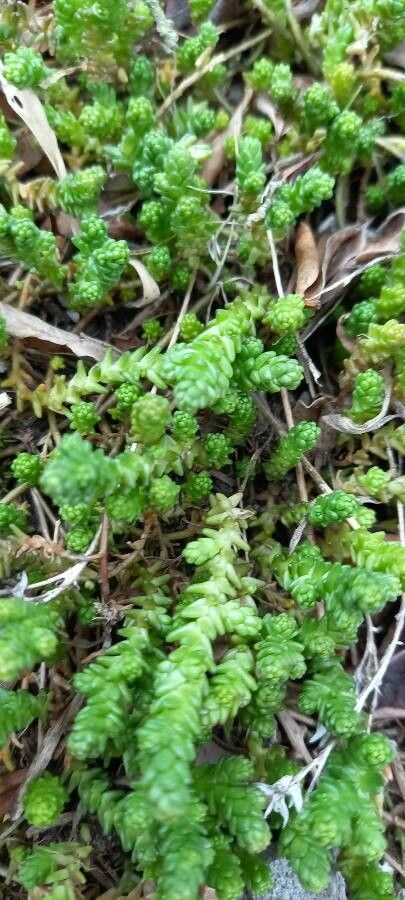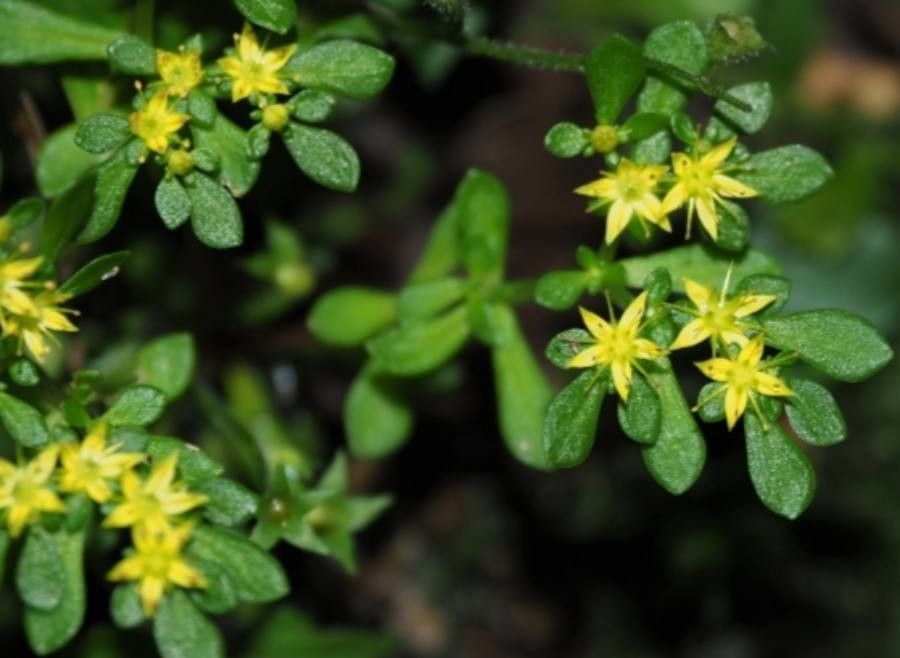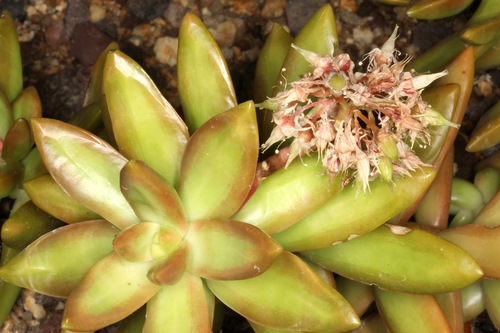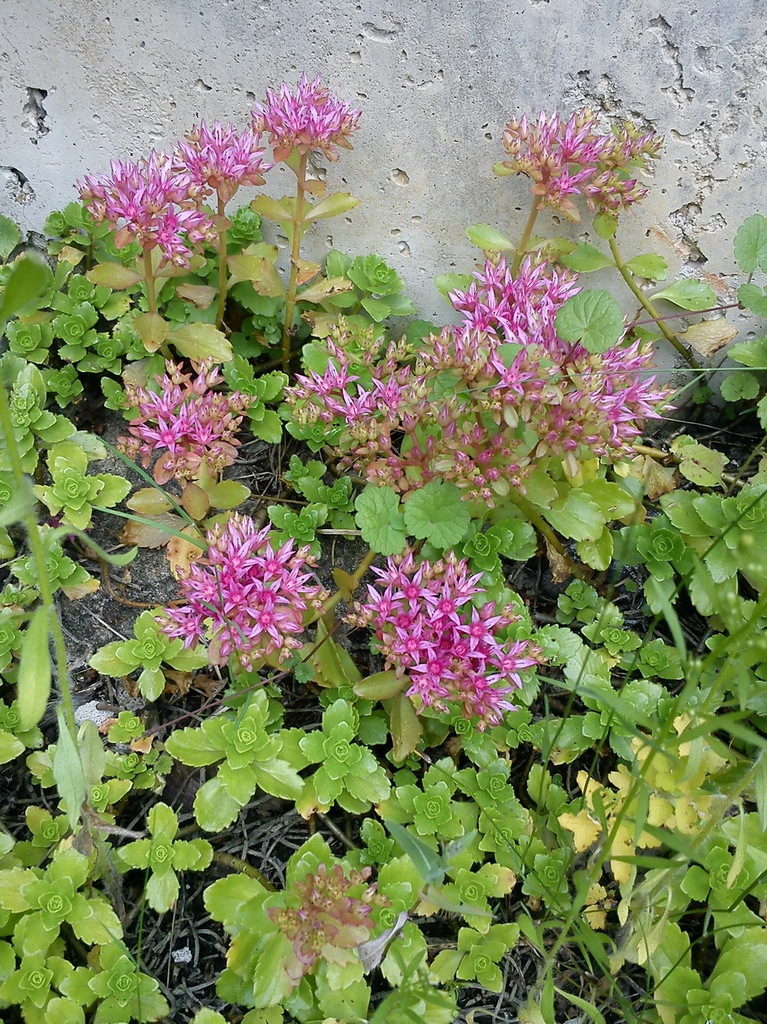
Sedum spurium, commonly known as Two-row Stonecrop, is a low-growing perennial plant belonging to the Crassulaceae family. Native to Europe and Asia, it has been widely cultivated in North America as an ornamental plant. This plant exhibits a mat-forming growth habit, reaching up to 15 cm in height and spreading up to 60 cm. The succulent and fleshy leaves of Sedum spurium are oval-shaped and vary in color from light green to reddish-brown. During summer or early fall, star-shaped flowers bloom in clusters at the ends of stems. These flowers can be pink, red, or white, depending on the variety. Sedum spurium is easy to grow and requires minimal care, making it ideal for rock gardens or ground covers. It prefers well-drained soil with full sun exposure but can also tolerate partial shade. Once established, the plant is drought-tolerant, although it benefits from occasional watering during prolonged dry spells. In addition to its ornamental value, Sedum spurium has medicinal properties that have been used for centuries by traditional healers to treat various ailments, such as wounds, burns, and fever, among others. Overall, Sedum spurium is an attractive, low-maintenance perennial that adds color and texture to any garden while also providing some medicinal benefits.
Caucasian stonecrop has moderate disease resistance but is more sensitive to humidity and excessive watering. It is also more prone to disease when it lacks light and is overwatered. In terms of care, Caucasian stonecrop is drought-tolerant and can endure long periods without watering. It does not require much fertilizer and only needs occasional pruning. This makes it appropriate for people of all experience levels, especially those who prefer to spend less time on plant care and who may sometimes be away from home for extended periods. It is a good option for anyone who does not want to devote a lot of time to plant care but still wants an easy-to-maintain plant.
How to keep Sedum Spurium.
Light
Caucasian stonecrop does best with abundant sunlight, though it can tolerate moderate sun because of its adaptable nature. Its native habitat receives generous solar exposure. Insufficient light can limit growth, while excessive exposure can cause scorching.
Water
Water your Dragon Blood Stonecrop once the soil has dried out. As with most succulents, this plant is very drought-tolerant and doesn’t appreciate overwatering.
Humidity
This plant prefers dry conditions, so don't mist it. However, watering it less often can also thrive in higher humidity.
Temperature
The caucasian stonecrop does well in its native habitats where temperatures range from 5 to 35 ℃ (41 to 95 ℉). It favors the cooler end of that range for optimal growth. During the winter season, keep the plant in a warmer location to prevent frost damage.
Fertilizer
For Caucasian stonecrop, light applications of fertilizer once or twice a year during the growing season are enough. Do not fertilize in winter or in summer when the plant is dormant. Cut back on fertilizer for repotted plants and wait a couple of months after repotting before applying fertilizer. Fertilizing helps maintain healthy growth and promotes blooming.
Pruning
Though it is a low-upkeep plant, it will benefit from a light pruning for maintenance. Cut them back if they begin taking over other plants. Remove any shoots that don’t have foliage. Trim back your Dragon Blood Stonecrop until ground level in the fall.
Pot & Repot
When repotting Caucasian stonecrop, choose a container a bit bigger than the current one that has adequate drainage. Fill it with a gritty, well-draining succulent or cactus potting mix. Gently take the plant out of its former pot, brush away extra soil, and set it in the new pot at the same planting depth. Hold off watering for several days so any damaged roots can recover. Repot during spring or autumn and place the plant where it receives bright light.
Toxicity
Dragon Blood Stonecrop is potentially poisonous if ingested and may cause gastrointestinal symptoms. However, it is classified as low risk. It’s best to be cautious and keep this succulent out of the reach of children and pets.
Further reading →
The toxicity and danger assessments provided are for reference only. We do not assure their accuracy, so it's crucial not to depend on them. Seek professional advice when necessary for accurate guidance.
Botanical profile.
- Plant Type
- Succulent, Herb
- Life Cycle
- Perennial
- Genus
- Sedum
- Family
- Crassulaceae
- Hardiness Zone
- 4-9
- Mature Height
- 5 cm to 15 cm
- Mature Spread
- 61 cm to 91 cm
- Leaf Color
- Green, Yellow, White, Red, Variegated
- Leaf Type
- Evergreen
- Flower Color
- Pink, White, Red
- Flower Size
- 0.76 cm to 1.02 cm
- Bloom Time
- Early summer, Mid summer
- Planting Time
- Spring, Summer, Autumn
- Harvest Time
- Mid summer