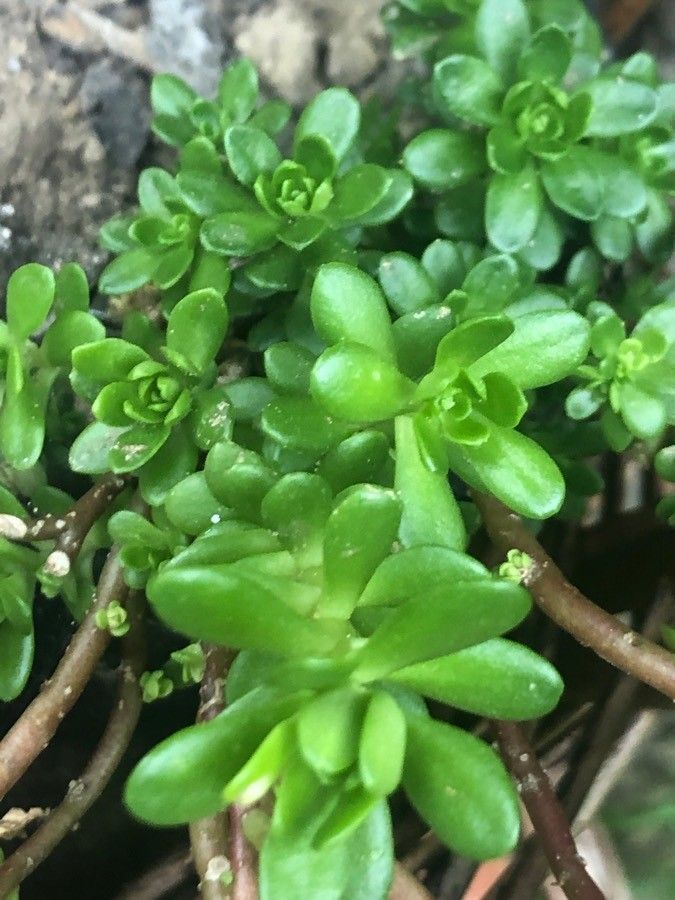
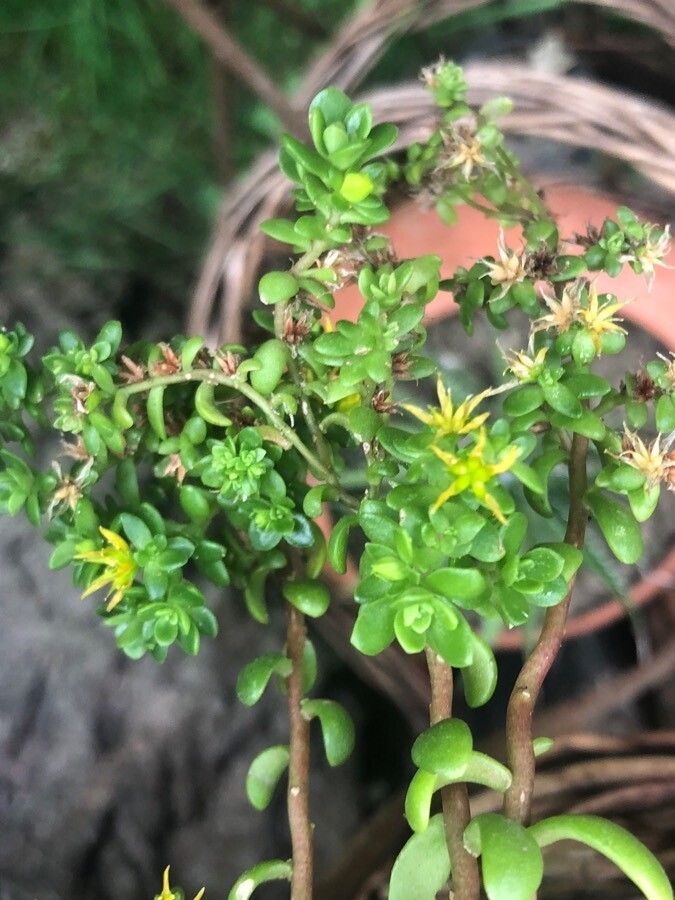
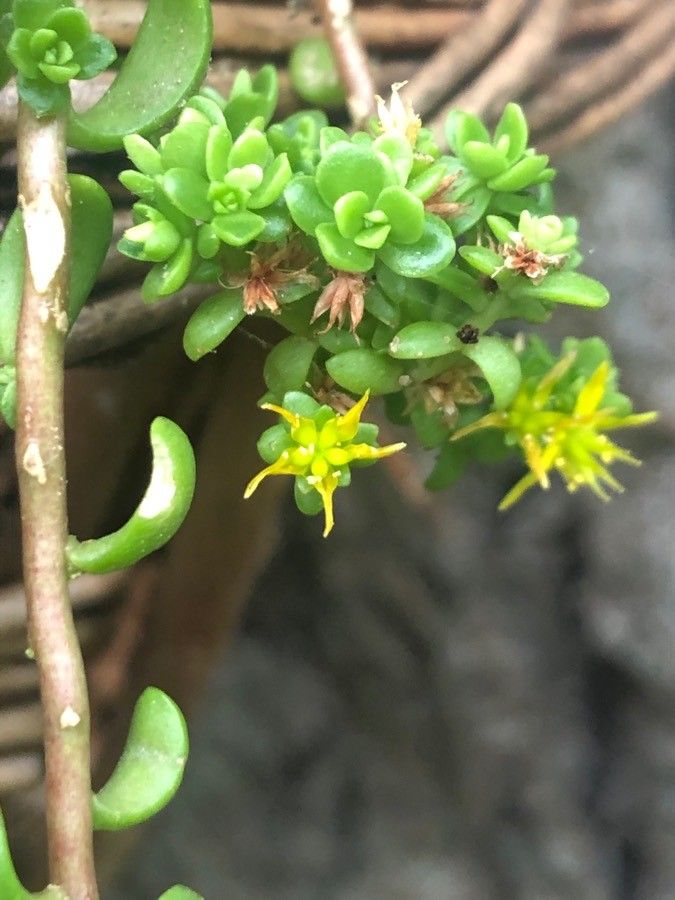
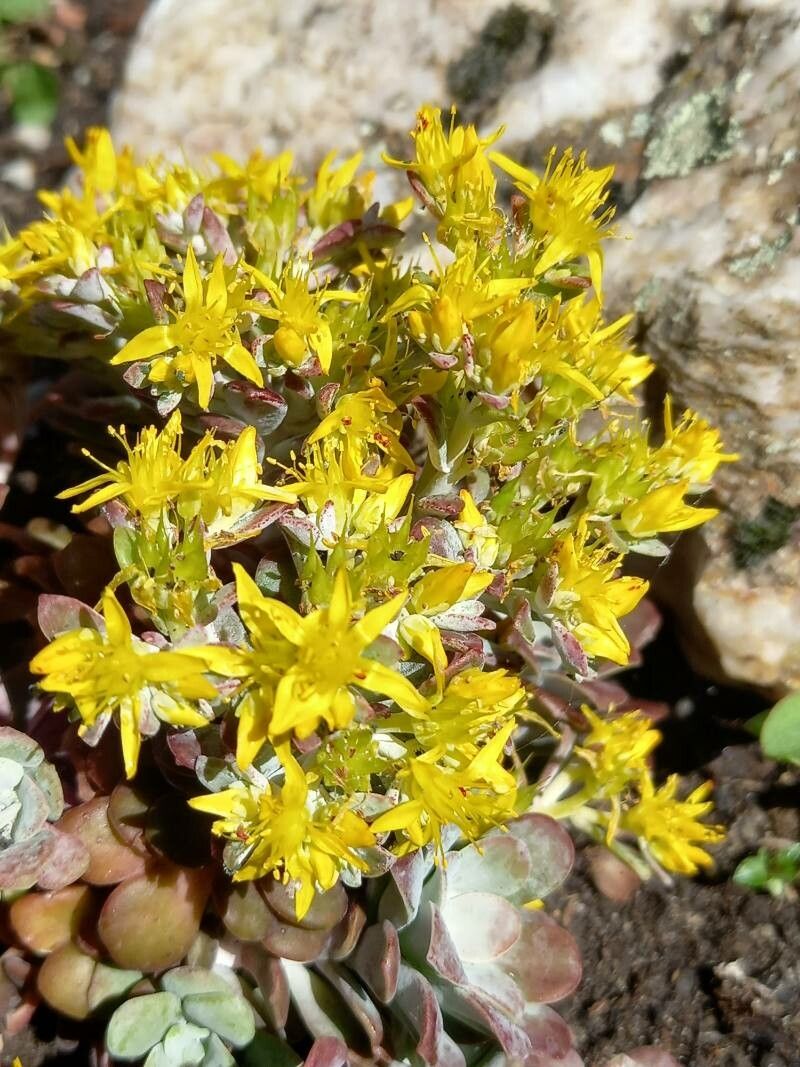
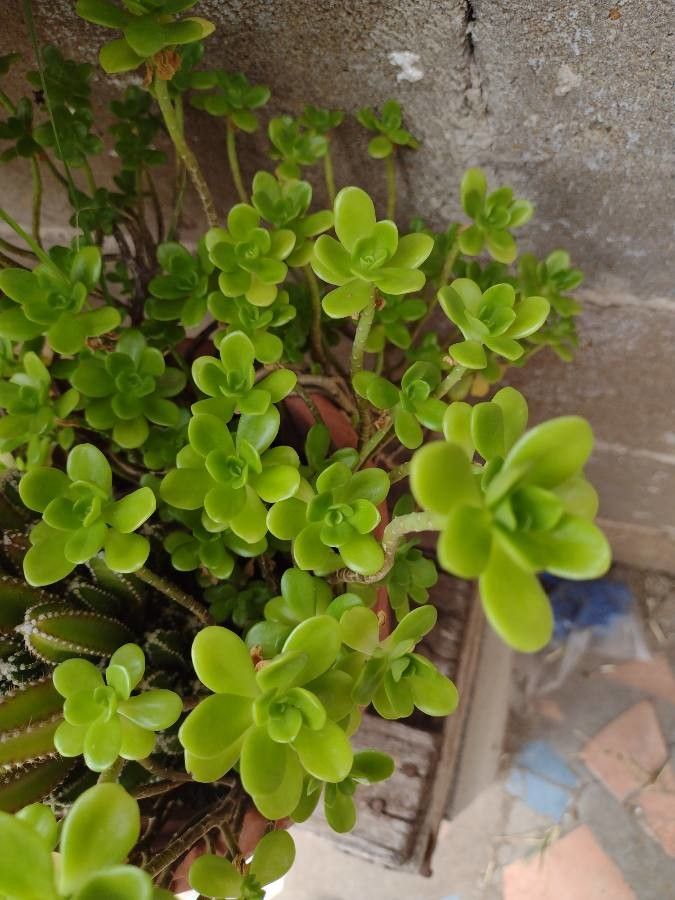
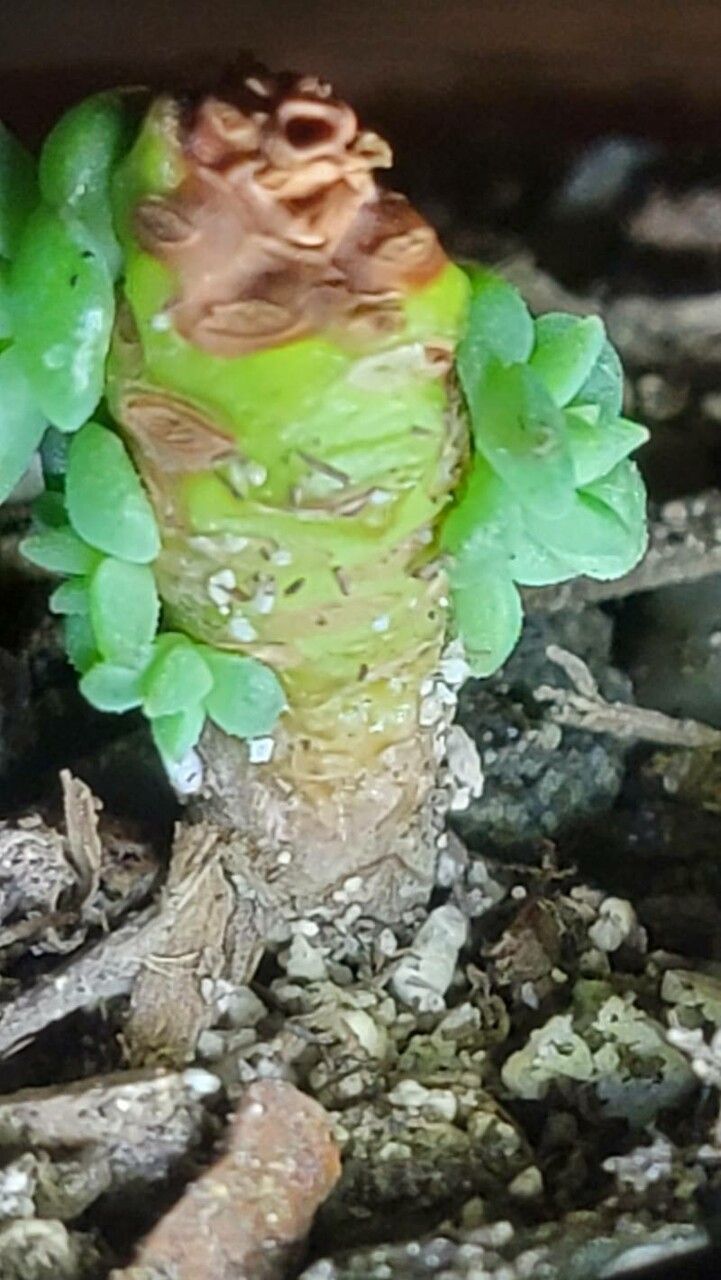
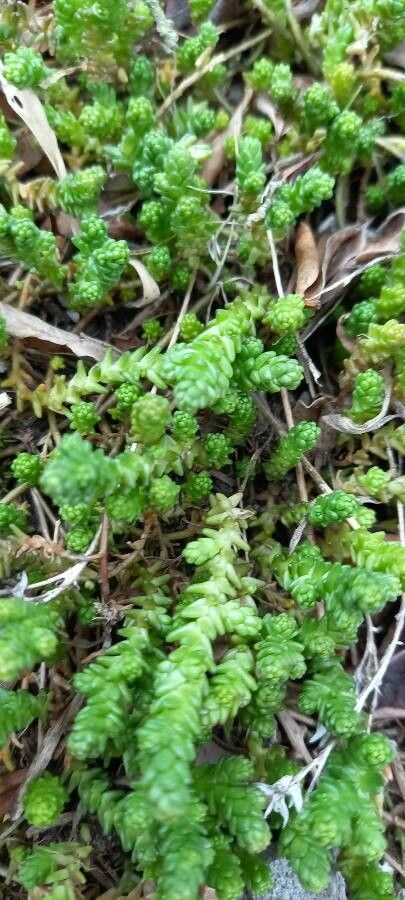
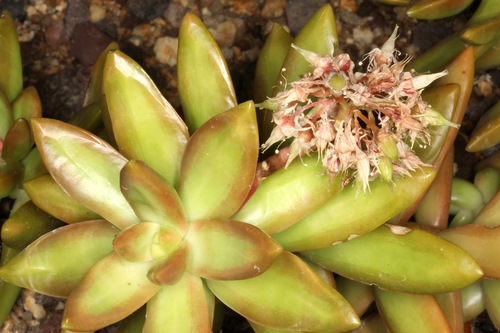
Sedum spathulifolium, commonly known as Broadleaf Stonecrop, is a low-growing succulent that belongs to the Crassulaceae family. Native to western North America, this plant often thrives in rocky areas, cliffs, and dry slopes. Its fleshy, spoon-shaped leaves are arranged in a rosette pattern and come in greenish-gray or bluish-gray hues, turning red at the tips during the summer months.
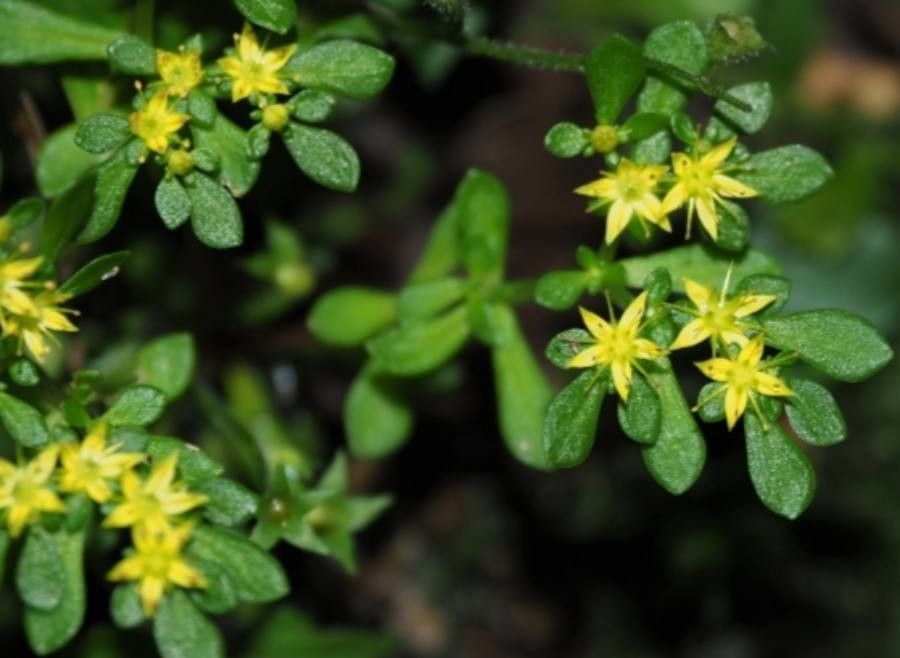
Broadleaf Stonecrop produces small yellow flowers that bloom from late spring to early summer. These flowers grow on tall stems above the foliage, attracting pollinators such as bees and butterflies.
This plant is easy to grow and requires minimal care. It prefers well-draining soil with low fertility but can tolerate various soil types, including sandy or rocky soils. Sedum spathulifolium thrives in full sun but can also handle partial shade.
The broadleaf stonecrop is one of the simplest plants to cultivate, whether in a garden or a container. It grows large and healthy with minimal effort. Its succulent leaves make it drought-tolerant, and its sweet, fragrant flowers attract a variety of important pollinators. Native to the Northern Hemisphere, these hardy plants often thrive naturally among stones and walls. FUN FACT · FROM THE LIBRARY
Broadleaf Stonecrop is a versatile plant with several uses. It serves as an excellent ground cover for rock gardens or dry slopes due to its drought tolerance and also makes a great addition to container gardens thanks to its compact size.
Overall, Sedum spathulifolium is an attractive succulent with unique foliage that adds visual interest wherever it is planted. Its minimal maintenance requirements make it an ideal choice for garden enthusiasts looking for easy-to-grow plants with year-round appeal.
Broadleaf stonecrop is an exceptional plant that thrives even in challenging environments. It is particularly well-suited for rocky gardens. Unlike typical Sedum plants, broadleaf stonecrop has larger and thicker leaves that can store more water, helping it endure hot and dry summer conditions. Due to its wide leaves and distinctive growth pattern, it has earned the name "broadleaf stonecrop."
Broadleaf stonecrop has moderate disease resistance and is relatively sensitive to high humidity and excess watering. It is also more prone to disease when light is limited and it is overwatered. In terms of care, Broadleaf stonecrop is drought-tolerant and can endure long periods without watering. It requires little fertilizer and only occasional pruning. This makes it appropriate for people of all experience levels, especially those who want to spend less time tending their plants and who may be away from home for extended periods. It is a good option for those who do not want to invest a lot of time in plant care but still want an easy-to-maintain plant.
How to keep Sedum Spathulifolium.
Light
Broadleaf stonecrop prefers locations that receive abundant sunlight throughout the day to thrive. It can also tolerate partial sun or a bit of afternoon shade, giving it some flexibility. Its native habitat likewise indicates places with plenty of light, but both excessive and insufficient light can harm its growth.
Water
Broadleaf stonecrop is native to the rocky west coast of North America, where it thrives in arid conditions. This drought-tolerant plant requires watering only once every three weeks and prefers dry soil. It is ideal for rock gardens, flourishing best with ample sunlight and minimal water, particularly during the warmer months.
Humidity
This plant prefers dry conditions, so don't mist it. However, watering it less often can also thrive in higher humidity.
Temperature
Broadleaf stonecrop is a temperate succulent that prospers in its native habitat, where typical temperatures range from 41 to 59 ℉ (5 to 15 ℃). This plant tolerates temperatures from 41 to 95 ℉ (5 to 35 ℃), with optimal growth occurring between 68 to 77 ℉ (20 to 25 ℃). During hot, dry summer months, it is advisable to provide some shade and reduce watering to prevent heat stress. In winter, protect the plant from prolonged frost exposure to avoid tissue damage.
Fertilizer
Broadleaf stonecrop needs only light applications of fertilizer once or twice a year during the growing season. Avoid fertilizing in winter and in summer when the plant is dormant. Cut back on fertilizer for repotted plants and wait a couple of months after repotting before applying any. Fertilizing helps sustain healthy growth and promotes blooming.
Pruning
To maintain the shape of broadleaf stonecrop, prune any excess or dense branches in the spring and fall. For propagation, cut a sturdy stem with 5-6 leaves during either spring or fall. Treat the cut end with sulfur powder, and once it has healed, plant it in slightly moist soil.
Pot & Repot
When repotting Broadleaf stonecrop, choose a pot slightly larger than the current one that has good drainage. Use a well-draining, gritty succulent or cactus mix. Gently remove the plant from its old pot, dust off excess soil, and place it at the same depth in the new pot. Wait a few days before watering so any root damage can heal. Repot in spring or fall, and position it in a brightly lit area.
Toxicity
All portions of the Broadleaf stonecrop are somewhat poisonous to animals, and ingestion may induce pain. It may also cause skin irritation.
Further reading →
The toxicity and danger assessments provided are for reference only. We do not assure their accuracy, so it's crucial not to depend on them. Seek professional advice when necessary for accurate guidance.
Botanical profile.
- Plant Type
- Succulent, Herb
- Life Cycle
- Perennial
- Genus
- Sedum
- Family
- Crassulaceae
- Hardiness Zone
- 5-9
- Mature Height
- 10 cm to 15 cm
- Mature Spread
- 20 cm to 30 cm
- Leaf Color
- Green, Silver, Gray, Red, Purple, Bronze
- Leaf Type
- Evergreen
- Flower Color
- Yellow
- Flower Size
- 0.51 cm to 1.02 cm
- Bloom Time
- Late spring, Early summer, Mid summer
- Planting Time
- Spring, Summer, Autumn
- Harvest Time
- Mid summer
Other names.
Reader questions.
What should I do if I give my Broadleaf stonecrop too much or too little water?
Broadleaf stonecrop and other succulents can go without water for long periods, so it's rare to see them suffering from underwatering. However, if you forget to water your Broadleaf stonecrop for a month or more, you'll likely notice it looking thirsty or with leaf damage. Signs of an underwatered Broadleaf stonecrop include shriveled, dry, and flat leaves, some of which may have turned brown and crispy or fallen off. The soil will also be completely dried out. To fix this, submerge the pot in water for 5-10 minutes until the soil feels moist, and remove any dried out leaves. Overwatering is dangerous for Broadleaf stonecrop and can even be fatal. Too much moisture leads to root rot, which prevents the roots from absorbing nutrients and water. Symptoms of overwatering include yellow, swollen, and translucent leaves that may burst open. If left untreated, the leaves may turn brown or black and fall off easily. To address overwatering, change the growing conditions, improve air ventilation, and adjust watering frequency. Saving an overwatered plant is challenging but possible with early intervention. Start by removing the plant from its pot and checking the roots and soil. Gently remove wet soil and rinse the roots in room-temperature water to eliminate any lurking fungus. If the roots are dark brown or black, soft, mushy, or slimy, it indicates root rot. If most of the roots are affected, it may be impossible to save the plant, so propagate healthy leaves instead. However, if only a portion of the roots are affected, use sterilized cutting tools to remove unhealthy roots, dip the remaining roots in fungicide, and repot the plant in fresh, well-draining soil. With proper care, the plant can recover and produce new growth in the next growing season.
Why should I put fertilizer on my Broadleaf stonecrop?
When fertilizing Broadleaf stonecrop, it adds nutrients to the soil and supports healthy growth, despite storing water and nutrients already. Fertilizing during the growing season can help mature plants produce blooms.
What are the sunlight requirements for broadleaf stonecrop?
Broadleaf stonecrop, or Sedum spathulifolium, thrives in areas that receive a generous amount of sunlight throughout the day, ideally above 6 hours of direct sunlight. It can also tolerate partial sun or light afternoon shade, making it somewhat versatile in its light needs. However, it's important to watch how sunlight moves through your garden to ensure plants receive the optimal balance of light and shade, as both excessive and insufficient light exposure can negatively impact the plant's growth.
What are the essential care instructions for Broadleaf stonecrop?
Broadleaf stonecrop, scientifically known as Sedum spathulifolium, is a temperate succulent that thrives in temperatures ranging from 41 to 95 °F (5 to 35 °C), with optimal growth observed between 68 to 77 °F (20 to 25 °C). It enjoys high temperatures but requires some shade and reduced watering during the hot and dry summer months to prevent heat stress. In winter, it's crucial to protect the plant from prolonged frost exposure to prevent tissue damage, as it goes dormant in cooler temperatures. When outdoor conditions drop below -20°C, the plant should be moved indoors and placed near a south-facing window for maximum sunlight exposure. Supplementary lighting can be utilized if natural light is insufficient. Watering should be reduced or stopped entirely as the temperature falls below 5°C to prevent root rot, and outdoor plants need watering to be halted during low temperatures. Temporary greenhouses or protective wraps can help insulate the plant during cold weather.
How frequently should I water my Broadleaf stonecrop?
To determine how often to water Broadleaf stonecrop, the best approach is to check the soil and only water when it is completely dry. You can use your finger or a moisture meter to check the soil below the surface. If you have planted it in a deep pot, you can use a stick or chopstick to perform this check. If the soil still feels slightly moist, wait a few days and check again. Generally, during the summer, watering every two weeks is sufficient, while in winter, once a month should be enough. However, there are various factors that can affect the watering frequency, which are listed below.
When should I fertilize my Broadleaf stonecrop?
Broadleaf stonecrop, like all plants, benefits from extra nutrients. However, it only requires a small amount of fertilizer during the growing season. You should fertilize it 1-2 times a year. The recommended times for fertilization are in spring and autumn, and it is important to avoid fertilizing during winter and summer when the plant is dormant. If you have recently repotted your plants, be cautious with the amount of fertilizer you use. It is advisable to wait a couple of months after repotting before starting to apply fertilizer.
Can I use artificial lighting for indoor broadleaf stonecrop plants?
Yes, artificial lighting is a suitable solution for indoor broadleaf stonecrop plants when natural sunlight is insufficient, such as during winter or in less sunlit spaces. LED lights are recommended due to their ability to be customized to provide specific wavelengths needed by your plants. Full sun plants require 30-50 watts per square foot, partial sun plants need 20-30 watts per square foot, and full shade plants require 10-20 watts per square foot. The light source should be placed 12-36 inches above the plant and turned on for 8-12 hours per day to mimic natural daylight hours.
How should I care for Broadleaf stonecrop in low temperatures?
Broadleaf stonecrop thrives in higher temperatures and struggles in conditions below 5°C, needing to be kept above -20°C during winter to prevent wilting and root rot. In case of exposure to temperatures below -25°C, the plant may weaken, displaying delayed symptoms of mild frost damage including wilting. To address frost damage, trim frostbitten areas, check for and remove any rotted roots, and propagate through cuttings if necessary. The plant should be moved to a warm indoor area and placed near a south-facing window to maximize sunlight. If sunlight is insufficient, consider using supplemental lighting to promote recovery.
What should I think about when watering my Broadleaf stonecrop?
There are multiple factors that will affect how you should water your Broadleaf stonecrop. These include the size of the container, the type of soil, the temperature, and the humidity. For the container and soil, it's important to choose one with good drainage to prevent overwatering. The size of the container also affects how often you should water the plant. A smaller container will hold less moisture and need to be watered more frequently, while a larger pot will stay wet longer and require less frequent watering. When repotting, only move to a container one size larger than the current one. A shallow container is preferred since Broadleaf stonecrop has shallow root systems. The watering frequency also depends on the season. In winter, the plant needs to be watered less often as growth slows down and less water is lost to evaporation. The soil stays wet for longer in cooler temperatures. The climate you live in is also important. In humid areas with a lot of rainfall, watering will be less frequent compared to dry and arid climates. However, note that weather conditions can vary within the same geographic location and with the use of indoor heating and air conditioning. If your Broadleaf stonecrop is planted in the ground, it generally doesn't need extra water beyond precipitation and dew. However, during long dry periods, you may need to water occasionally. If the plant is in a container, it can be moved outdoors in suitable temperatures and brought back inside when it gets colder. Keep in mind that a potted Broadleaf stonecrop kept outside will usually require more water due to increased sun exposure, even on a shaded porch.
When is the best time to not fertilize my Broadleaf stonecrop?
Broadleaf stonecrop, like other plants, goes through a dormancy period. During this time, it is best to avoid applying fertilizer. The plant stops growing in both summer and winter, making it important to refrain from fertilizing. Additionally, it is recommended to wait a couple of months after repotting in the spring before resuming fertilizer applications.
What are the symptoms of improper light exposure in broadleaf stonecrop?
Broadleaf stonecrop can develop several symptoms due to improper light exposure. Insufficient sunlight may lead to lighter-colored new leaves, indicating a lack of chlorophyll, and leggy or sparse growth. Older leaves may drop faster to conserve resources, and the plant may experience chlorosis (leaves turning yellow), sunscald, leaf curling, wilting, and leaf scorching due to excessive sunlight. These conditions affect the plant's ability to photosynthesize and overall health.
What should I do if my Broadleaf stonecrop experiences high temperatures?
During the summer, it's important to keep Broadleaf stonecrop's temperature below 35°C to prevent cessation of growth, water loss, wilting, and susceptibility to sunburn when temperatures exceed 38°C. To manage high temperature stress, remove any sunburned or rotten parts of the plant. Provide protection from the afternoon sunlight until the plant recovers and resumes growth. If the plant suffers from root rot induced by overwatering during warm conditions, cease watering until new roots develop, facilitating the plant's recovery.