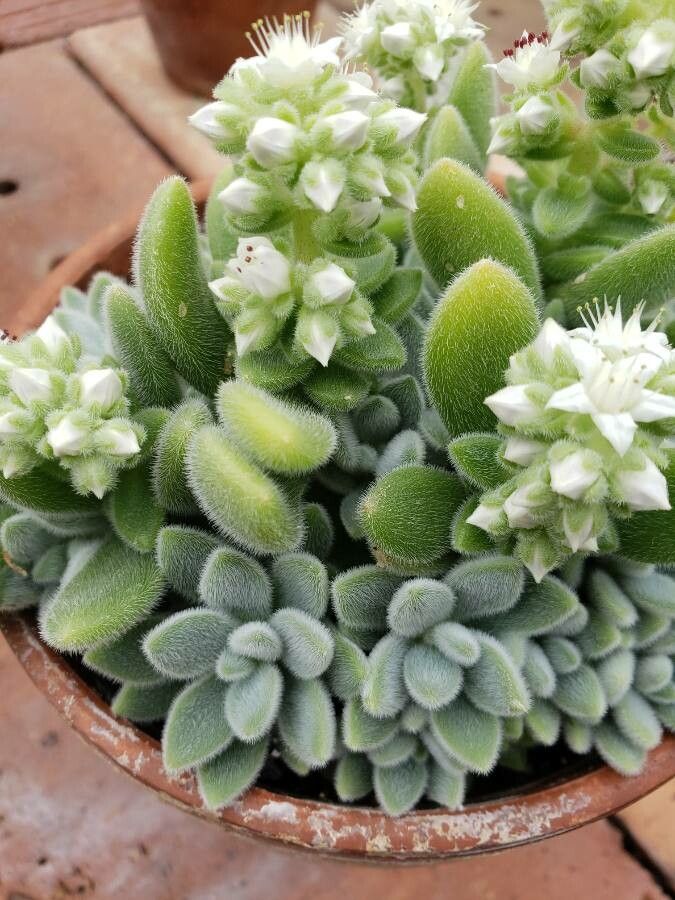
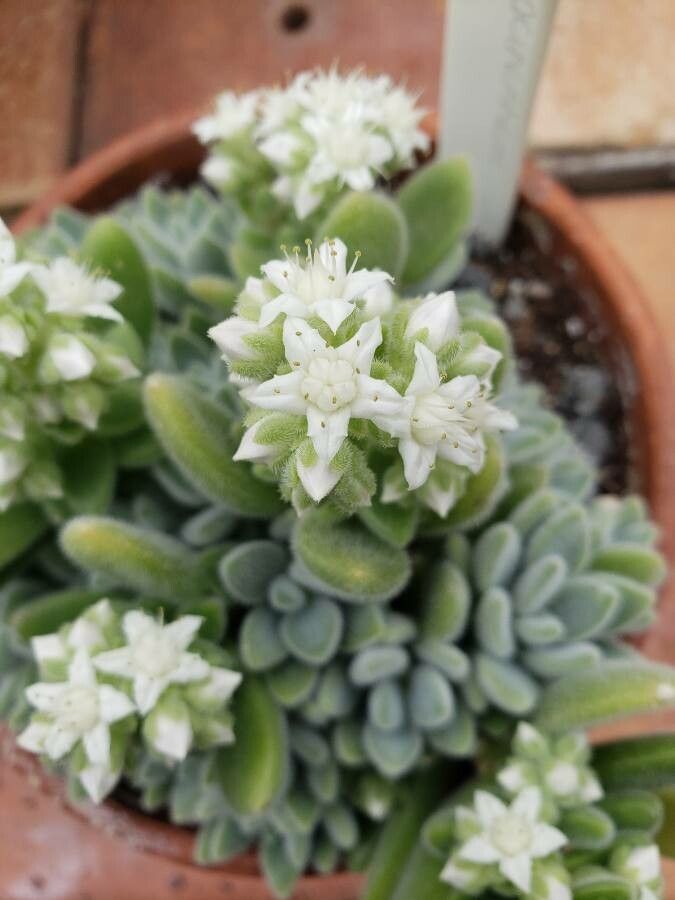
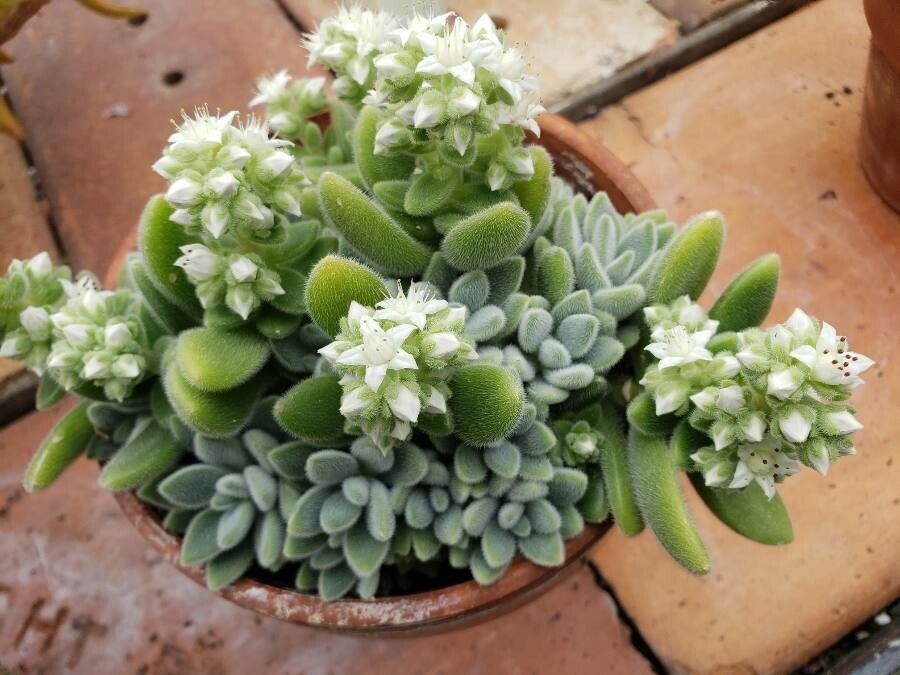
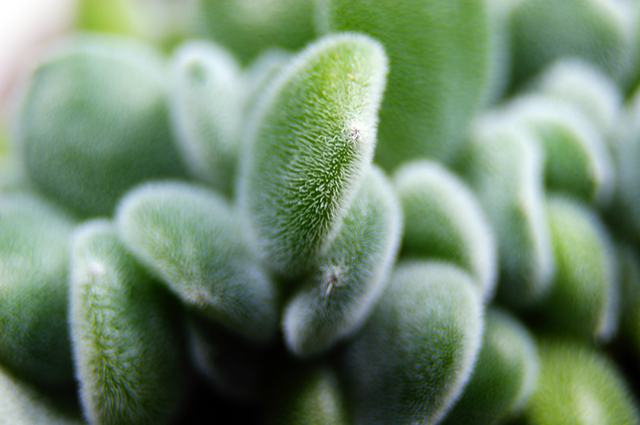
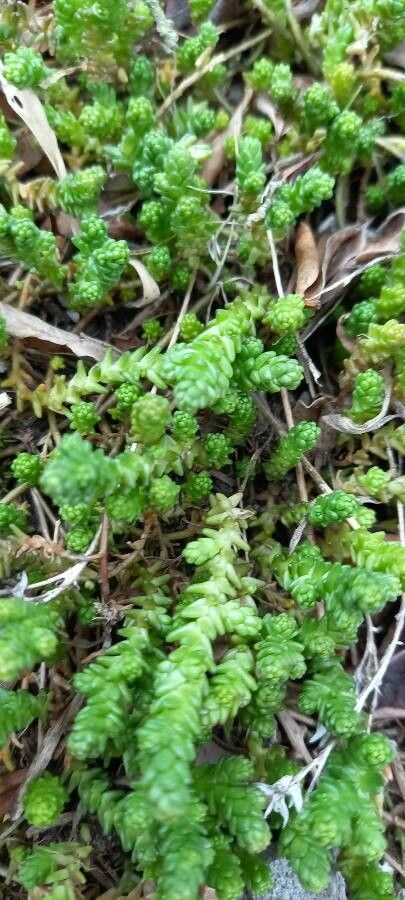
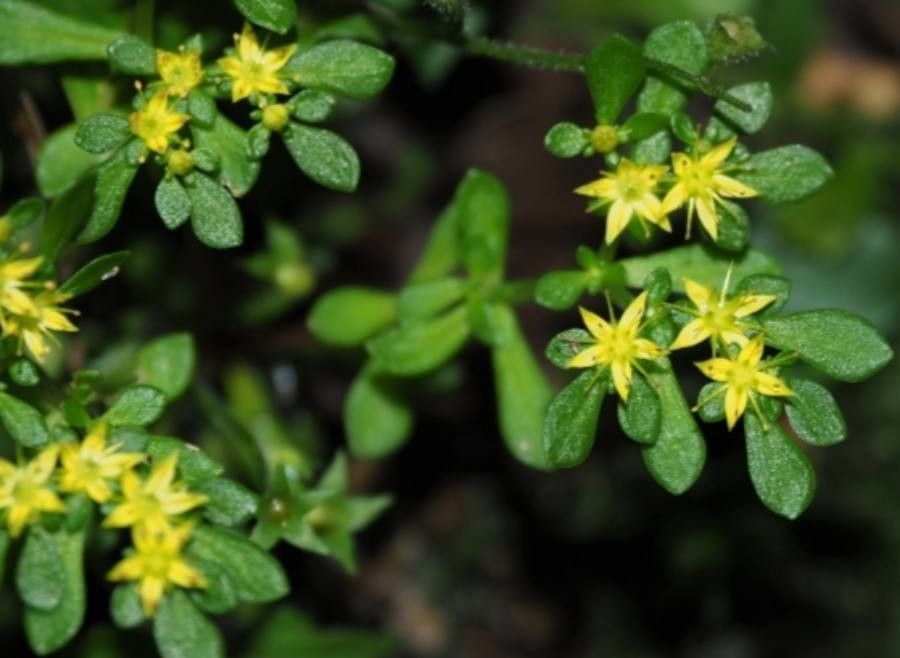
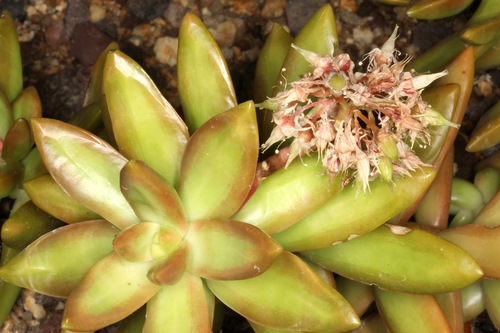
Sedum Mocinianum (Sedum Mocinianum) is one of the most appealing sedums. It is only found in the Sierra Los Agustinos, which is located in the Mexican High Plateau in Guanajuato, Mexico. It is a succulent perennial mat-forming plant with dangling stems up to 80 cm long. In Mexico, little white flowers with dark crimson anthers bloom throughout the winter and into April, which is always a delightful sight. It is recognized by a thick coating of white hyaline hairs up to 0.5 mm long that covers all of its components except the inside of the blooms.
Sedum mocinianum has moderate resistance to disease but is more sensitive to humidity. It becomes vulnerable to illness when humidity is high and is prone to root rot during dormancy. Regarding care, Sedum mocinianum tolerates drought but requires increased watering in the growing season. Watering should be greatly reduced or stopped entirely during the dormant period. Sedum mocinianum is appropriate for people with some growing experience, though it can be challenging to maintain, particularly during dormancy. It is especially well suited to those who can dedicate time to its care throughout the winter months.
How to keep Sedum Mocinianum.
Light
Native to dry areas, Sedum mocinianum does best in full sun, since its native habitat has intense sunlight and very little shade. It will also tolerate partial sun, providing some flexibility in its growth.
Temperature
Although Sedum mocinianum can tolerate some heat, it grows best in cooler seasons and goes dormant in summer. In hot summer temperatures, provide shade to prevent scorching from strong sunlight. Watering should be reduced or stopped during the hottest season to avoid root rot. Sedum mocinianum grows vigorously in winter and spring, and as long as temperatures do not fall too low, it will continue to grow steadily.
Fertilizer
Sedum mocinianum needs only light fertilizer applications once or twice a year during the growing season. Do not fertilize in winter or in summer when the plant is dormant. Cut back on fertilizer for plants that have been repotted and wait a couple of months after repotting before applying any fertilizer. Fertilizing helps maintain healthy growth and encourages flowering.
Pruning
To keep Sedum mocinianum in good shape, prune it in the spring and fall by removing any dense branches. For propagation, cut a sturdy stem with 5-6 leaves. Treat the cut end with sulfur powder, and replant it once it has healed. Make sure the soil is slightly moist to ensure successful planting.
Pot & Repot
Choose a container slightly larger than the current one that has good drainage. Use a gritty, well-draining succulent or cactus potting mix. Gently remove the plant from its old pot, brush off excess soil, and plant it at the same depth as before. Wait a few days before watering so any root damage can heal. Repot in spring or fall and place it in a brightly lit location.
Toxicity
Sedum mocinianum has no known toxicity. For safety reasons, cultivate it with care and position it where children and dogs cannot access it.
Further reading →
The toxicity and danger assessments provided are for reference only. We do not assure their accuracy, so it's crucial not to depend on them. Seek professional advice when necessary for accurate guidance.
Botanical profile.
- Plant Type
- Succulent
- Life Cycle
- Perennial
- Genus
- Sedum
- Family
- Crassulaceae
- Hardiness Zone
- 9-11
- Mature Height
- 30 cm
- Mature Spread
- 46 cm
- Leaf Color
- Light Green, Pale Green
- Leaf Type
- Evergreen
- Flower Color
- Yellow, White
- Flower Size
- 1.02 cm to 1.52 cm
- Bloom Time
- Early summer, Mid summer
- Planting Time
- Spring, Summer, Autumn
- Harvest Time
- Late summer, Early fall
- Native Area
- Mexico
Reader questions.
What are the sunlight requirements for Sedum mocinianum?
Sedum mocinianum thrives in full sun conditions, requiring above 6 hours of sunlight daily, due its origins in arid regions with strong sunlight and minimal shade. However, it can also adapt to partial sun conditions, which entails about 3-6 hours of sunlight. It's essential to observe how sunlight moves through your garden to choose spots that offer a balance of light and shade, ensuring the plants' well-being.
What are the optimal growth conditions for Sedum mocinianum?
Sedum mocinianum thrives best in warm environments and requires higher temperatures during its growing season to enhance its growth and metabolism. It prefers to have ample sunlight, appropriate moisture levels, and good ventilation to grow healthily. Care must be taken to protect it from extremely low temperatures and overwatering, as these conditions can cause damage. Maintaining a balanced environment that is not excessively hot or overly dry is crucial for the health of Sedum mocinianum. When winter approaches, and outdoor temperatures fall below 5°C, it's advised to move Sedum mocinianum indoors near a south-facing window to ensure it receives sufficient sunlight. If natural light is not adequate, supplemental lighting may be used to support its growth. During colder periods, particularly when temperatures drop below 20°C, the plant's growth rate decreases, and it's necessary to reduce or even stop watering to prevent root rot. For outdoor plants, watering should be halted during low temperatures. Protective measures such as setting up a temporary greenhouse or using materials like plastic film or fabric for insulation can be beneficial during cold spells.
How can artificial lighting be used for indoor Sedum mocinianum plants?
For Sedum mocinianum plants grown indoors, artificial lighting is crucial for optimal growth, especially when natural sunlight is insufficient. LED lights are recommended as they can mimic the specific wavelengths of light needed by the plants. The requirements vary based on the type of plant: full sun plants need 30-50W/sq ft, partial sun plants need 20-30W/sq ft, and full shade plants should have 10-20W/sq ft. The light source should be placed 12-36 inches above the plant and turned on for 8-12 hours per day to mimic natural daylight hours.
How does Sedum mocinianum react to low temperatures, and what are the solutions?
Sedum mocinianum is not tolerant of low temperatures and grows best when the temperature is consistently above 20°C. During winter, it's important to keep the plant above 5°C to avoid adverse effects. Exposure to temperatures below 1°C can cause the plant to become weak, wilt, and increase its susceptibility to root rot. Mild frost damage may not show immediate symptoms, but the plant may begin to wither approximately a week later. To manage frost damage, it's advisable to trim off the frostbitten areas while examining the roots for rot; rotted roots should be cut off. The plant can then be propagated through cuttings. It should be moved indoors to a warmer environment and placed near a south-facing window to maximize sunlight exposure. If the plant is not receiving sufficient natural light, supplemental lighting can be utilized to ensure its health.
What are the symptoms of light deficiency in Sedum mocinianum?
When Sedum mocinianum is subjected to suboptimal lighting, several symptoms may arise, including smaller new leaves, leggy or sparse growth, faster leaf drop, and cessation of new growth, indicating the plant is in survival mode. Leaves may turn lighter in color, or chlorosis can occur, leading to yellowing leaves. Excessive sunlight can also cause issues like sunscald, leaf curling to reduce water loss, wilting from excessive water loss, and leaf scorching, as indicated by brown, dry edges on leaves.
How should Sedum mocinianum be cared for in high temperatures?
During the summer, it's important to ensure that the temperature surrounding Sedum mocinianum doesn't exceed 41°C. If the temperature goes beyond 45°C, the plant's growth will halt, and it will likely suffer water loss, wilting, and become more prone to sunburn. In such cases, the sunburned and rotten parts of the plant should be removed. Providing shade during the intense afternoon sunlight until the plant recovers and resumes growth is crucial. In instances of root rot, it's necessary to halt watering until new roots start to form. These measures help the plant to recover from high temperature stress and continue healthy growth.
How can you address sunlight-related issues for Sedum mocinianum?
To optimize growth, gradually exposing Sedum mocinianum to more sunlight is advisable, aiming for at least 6 hours daily. For indoor plants, this may involve moving them closer to a south-facing window or using artificial lighting solutions, like desk or ceiling lamps, for at least 8 hours a day. When growing outdoors, avoid sudden changes in light exposure to prevent sunburn. If necessary, prune nearby trees to reduce shade. For smaller plants, consider transplanting during their dormant period to a location with better sunlight and drainage. Note that parts of the plant damaged by insufficient light may not recover, but new growth should be healthy after improving light exposure.