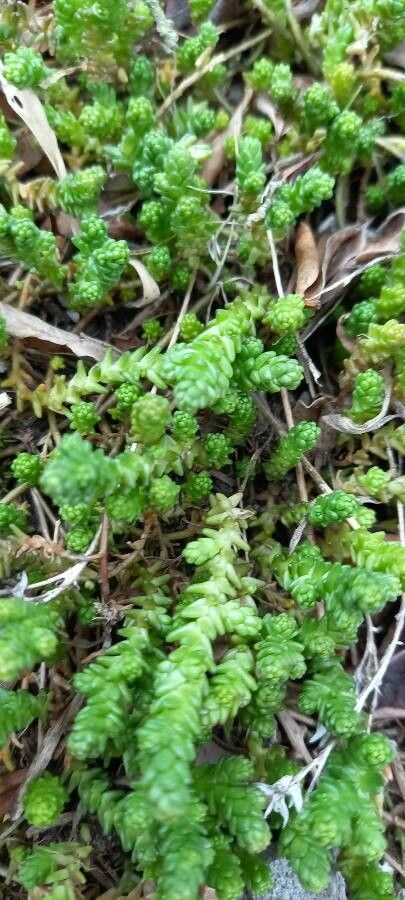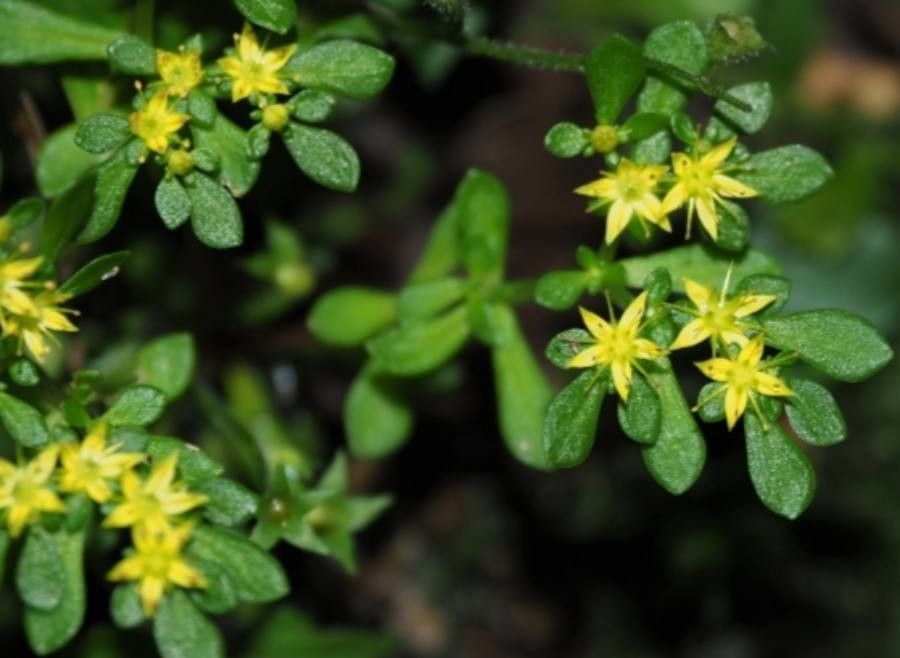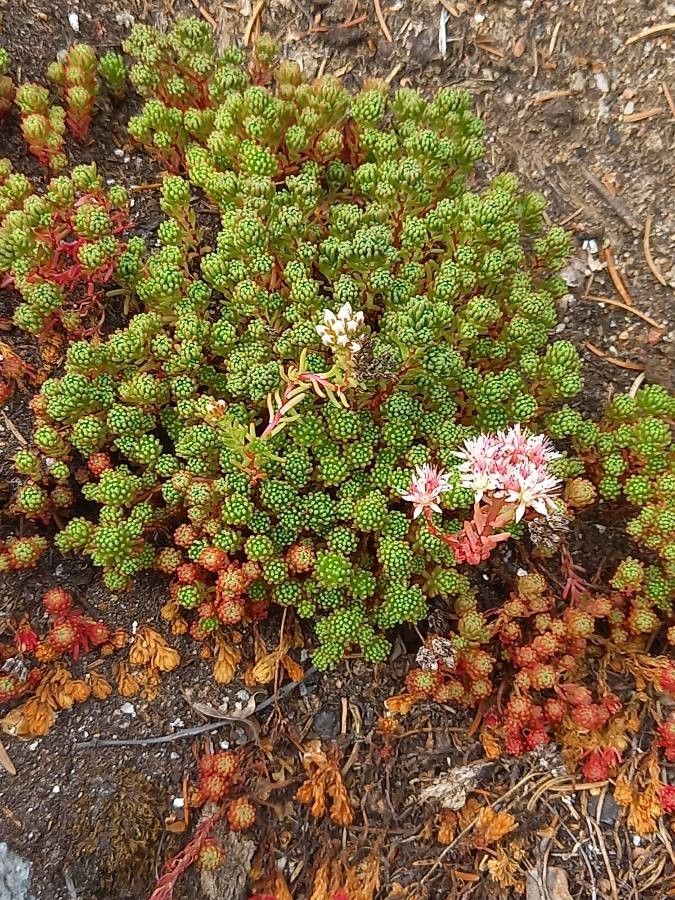
Sedum lydium, commonly known as Lydian stonecrop, is a low-growing succulent plant in the Crassulaceae family. Native to the Mediterranean region, it thrives in rocky areas, cliffs, and dry slopes. The plant features small, green, fleshy leaves arranged in a rosette pattern. These leaves are covered with fine hairs, giving them a velvety texture.
During the summer months, Sedum lydium produces small white or pink flowers. These flowers grow on tall stems above the foliage and attract pollinators such as bees and butterflies.
Thanks to its succulent nature, Sedum lydium is highly drought-tolerant, storing water in its leaves for extended periods. It prefers well-draining soil with full sun exposure but can also tolerate partial shade.
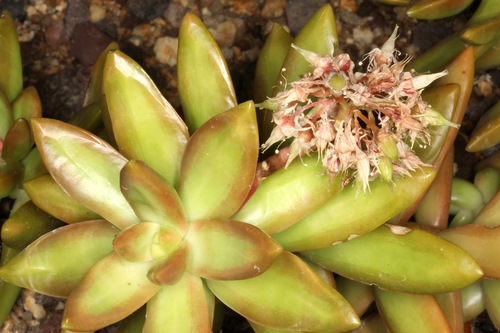
Golden sedum is a beautiful succulent with spoon-shaped leaves and a lotus-like form. Each leaf has a small tip at its end. The plant appears golden or yellow-green, making it instantly charming and delightful at first sight. FUN FACT · FROM THE LIBRARY
In addition to its aesthetic appeal, Sedum lydium has several medicinal properties. It has been used to treat wounds, burns, and skin infections due to its antibacterial properties.
Overall, Sedum lydium is an attractive, low-maintenance plant, ideal for rock gardens or ground cover. Its ability to spread quickly by producing offsets from its base makes it an excellent choice for landscaping projects requiring low-maintenance plants.
How to keep Sedum Lydium.
Water
Least stonecrop is highly drought-resistant and needs watering only every 2-3 weeks. It flourishes in well-drained soil and easily adapts to arid conditions, making it low-maintenance and tolerant of neglect. This plant is perfect for dry climates, demonstrating remarkable resilience throughout its growth cycle.
Fertilizer
Most types of stonecrop thrive in poor conditions and generally don't need fertilization. However, if you choose to fertilize, use a small amount of slow-release fertilizer in early summer. Avoid fertilizing during their dormancy period, as this can cause nutrient damage.
Pruning
Least stonecrop, a plant with small succulent leaves, benefits from pruning in early spring. By trimming away dead growth, you can encourage new shoots, improve air circulation, and prevent the plant from becoming leggy. Regular shaping not only enhances the plant's health but also ensures its vibrant appearance, making it an excellent choice for rock gardens and borders.
Pot & Repot
For least stonecrop to thrive and avoid root rot, it is essential to provide excellent drainage in its pots.
Botanical profile.
- Life Cycle
- Perennial
- Genus
- Sedum
- Family
- Crassulaceae
- Mature Spread
- 45 cm