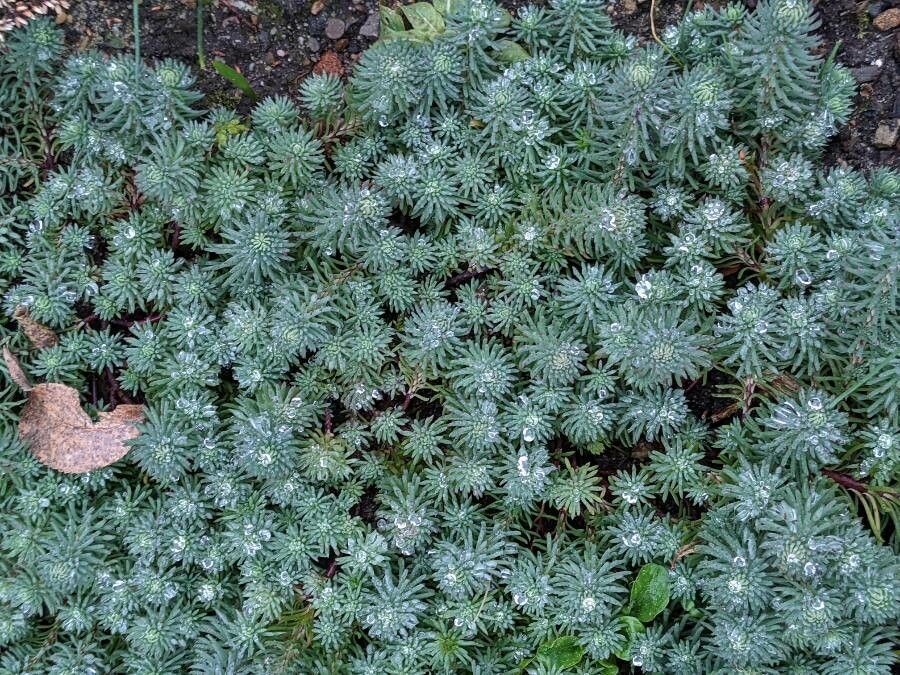
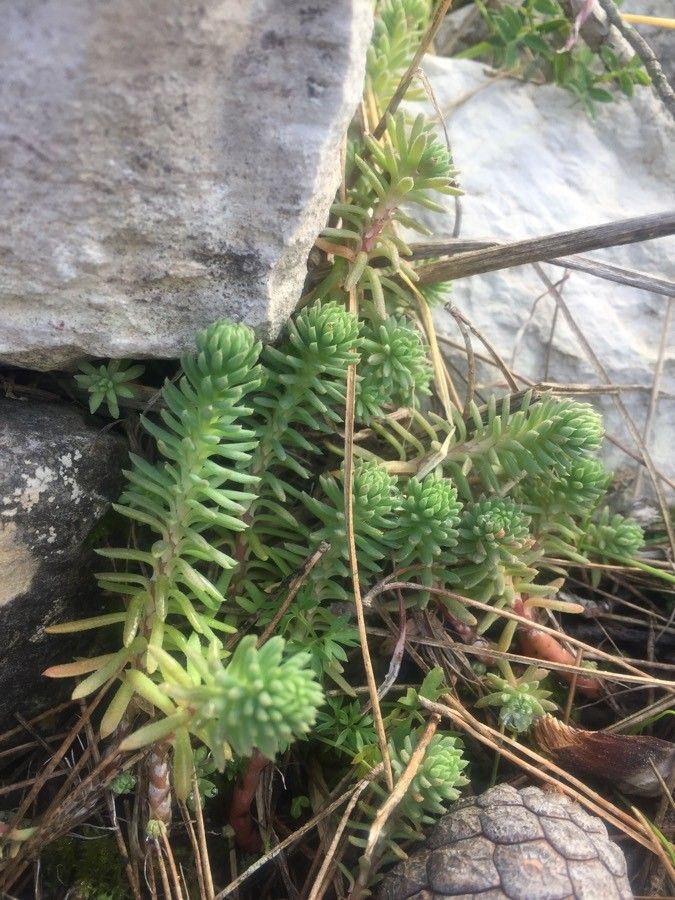
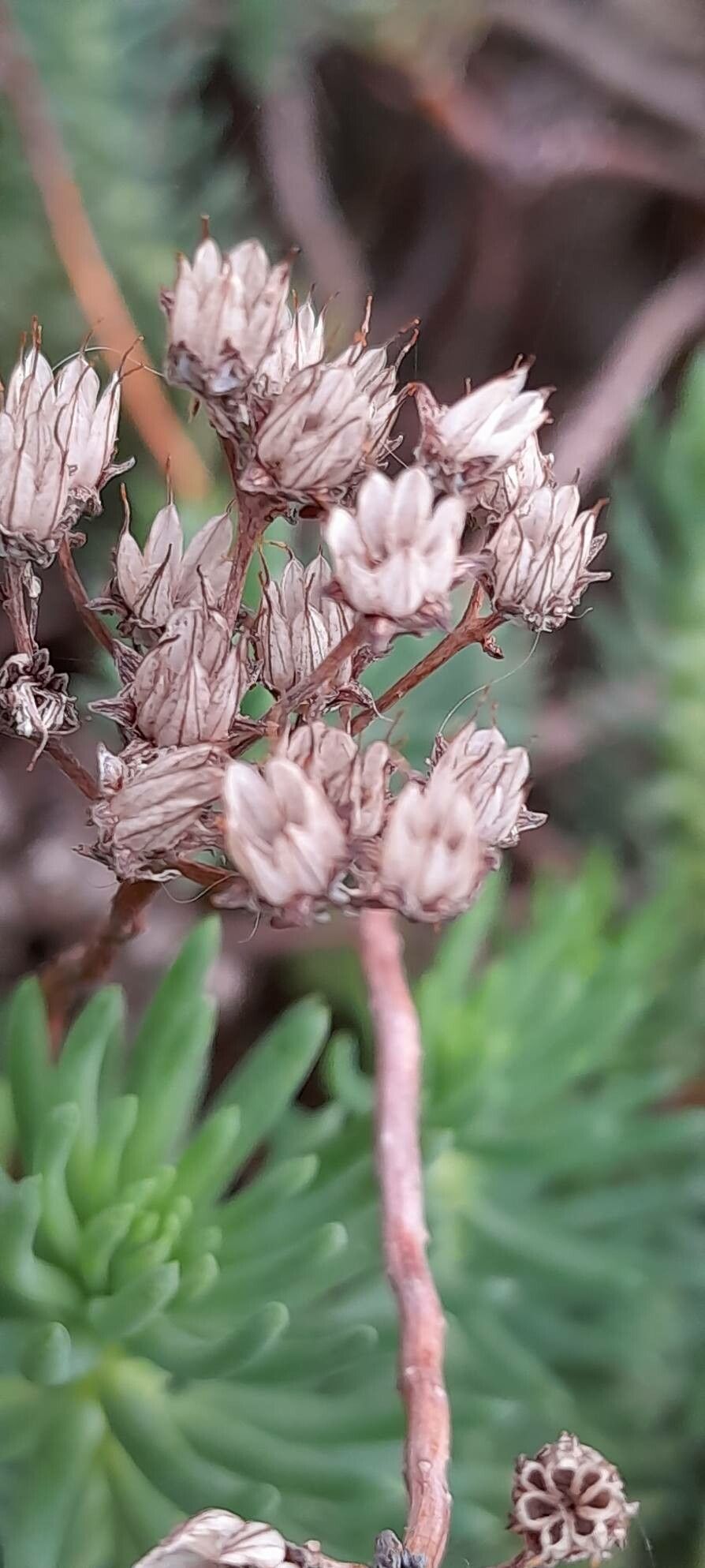
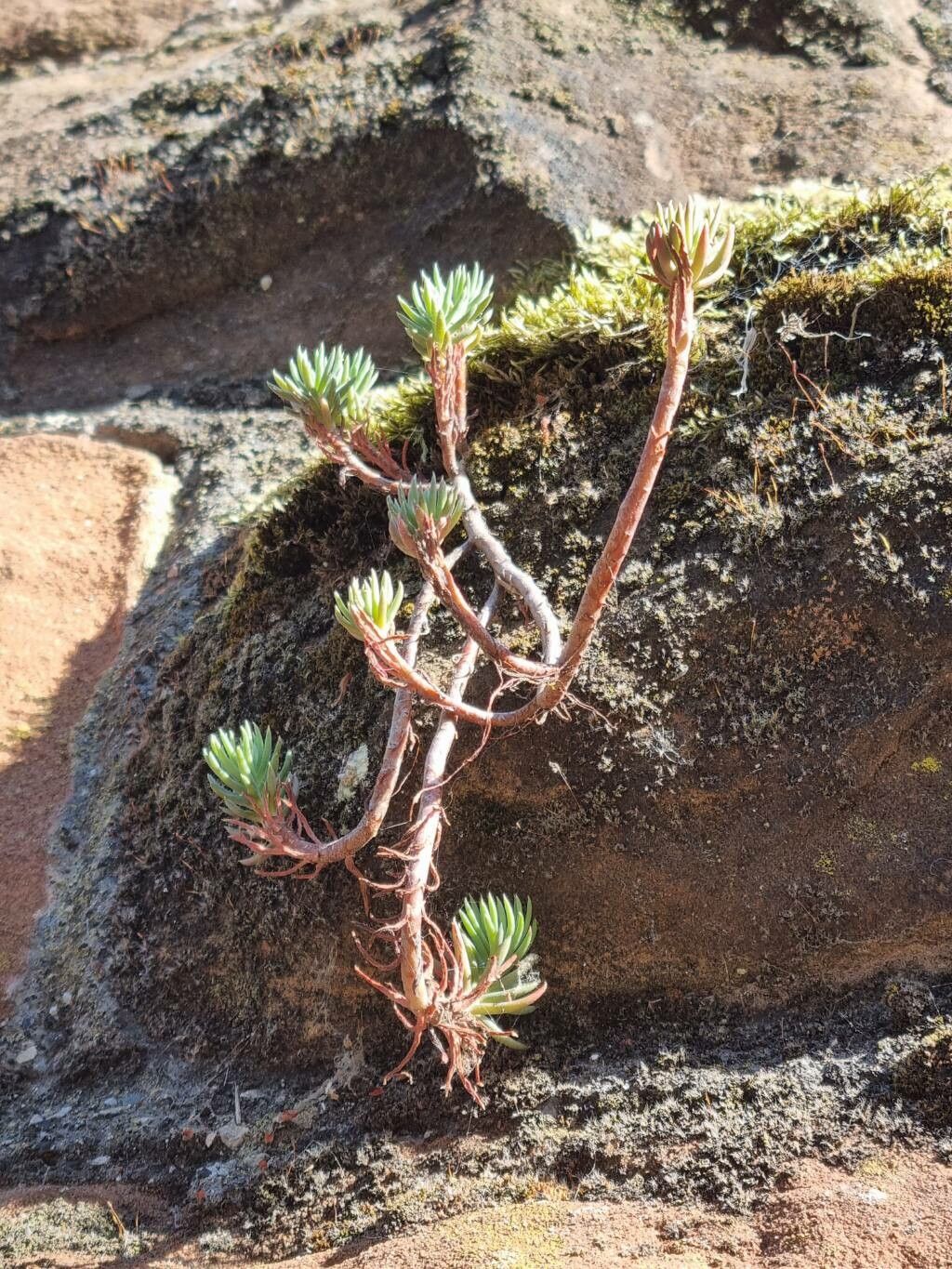
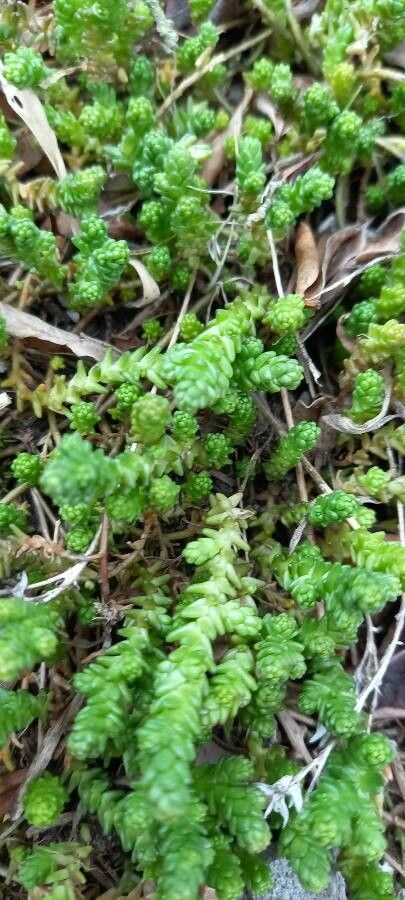
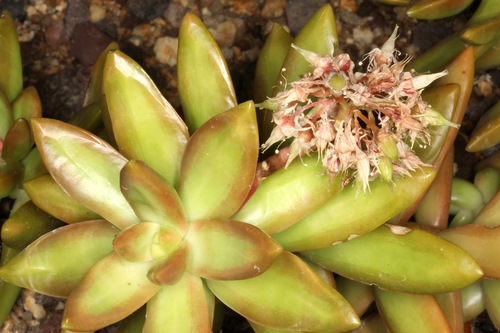
Sedum forsterianum, also known as rock stonecrop, is a low-growing succulent plant from the Crassulaceae family. Native to Europe and Asia, it thrives in rocky areas, cliffs, and walls. The plant features small, fleshy leaves arranged in a rosette pattern, which are green with red tips. These leaves can turn red or purple when exposed to sunlight or during the winter months.
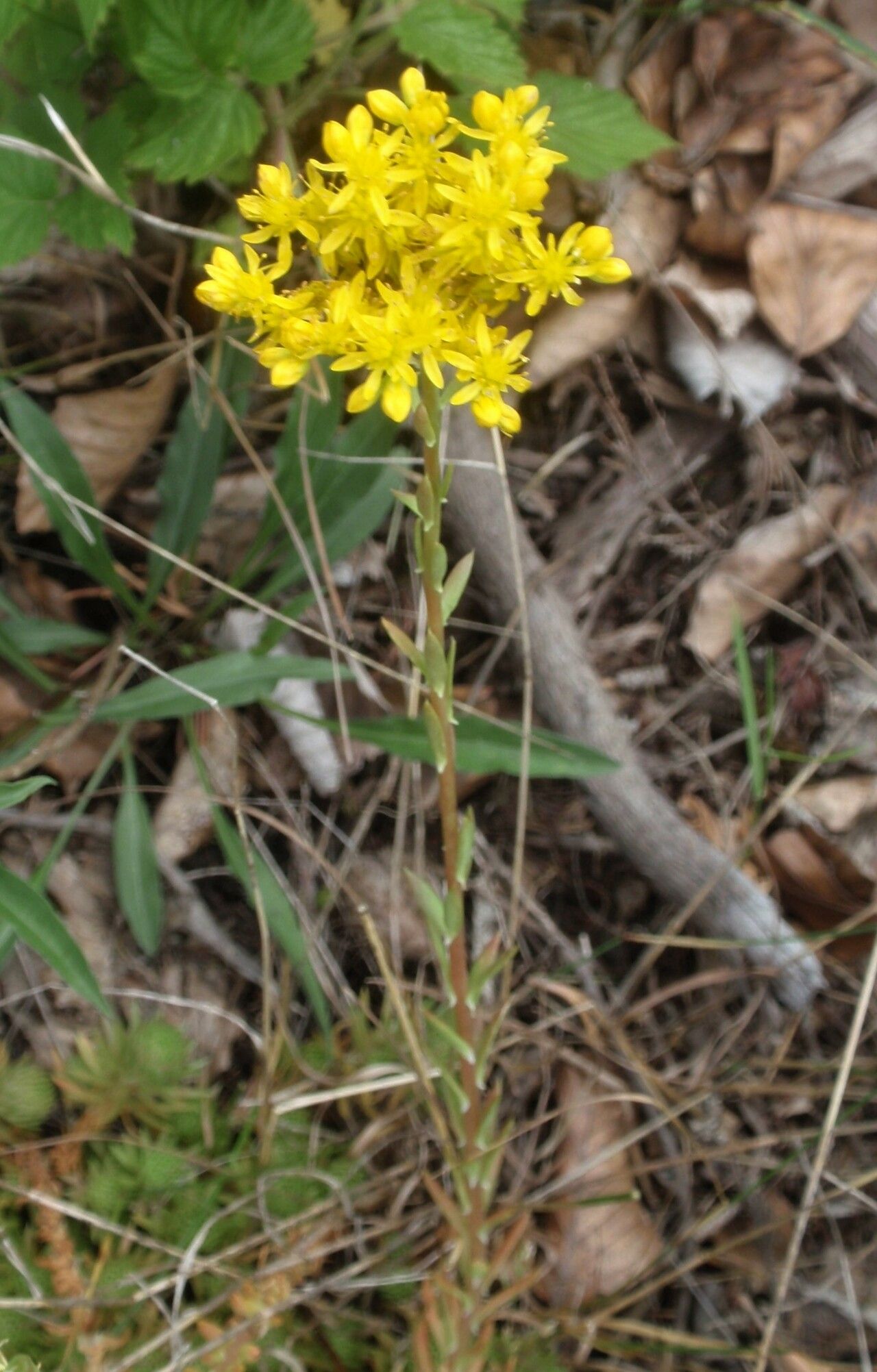
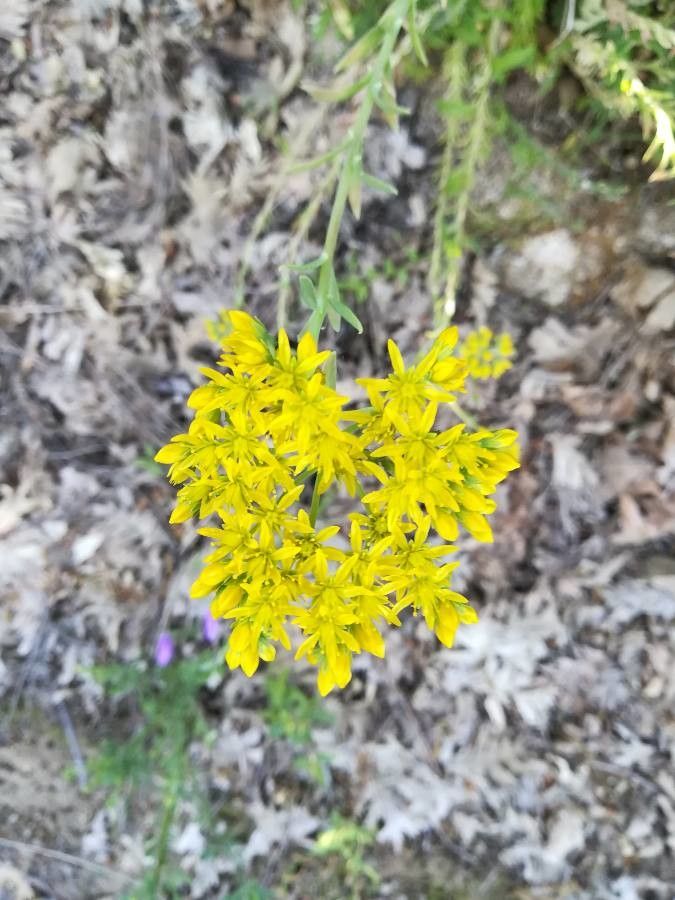
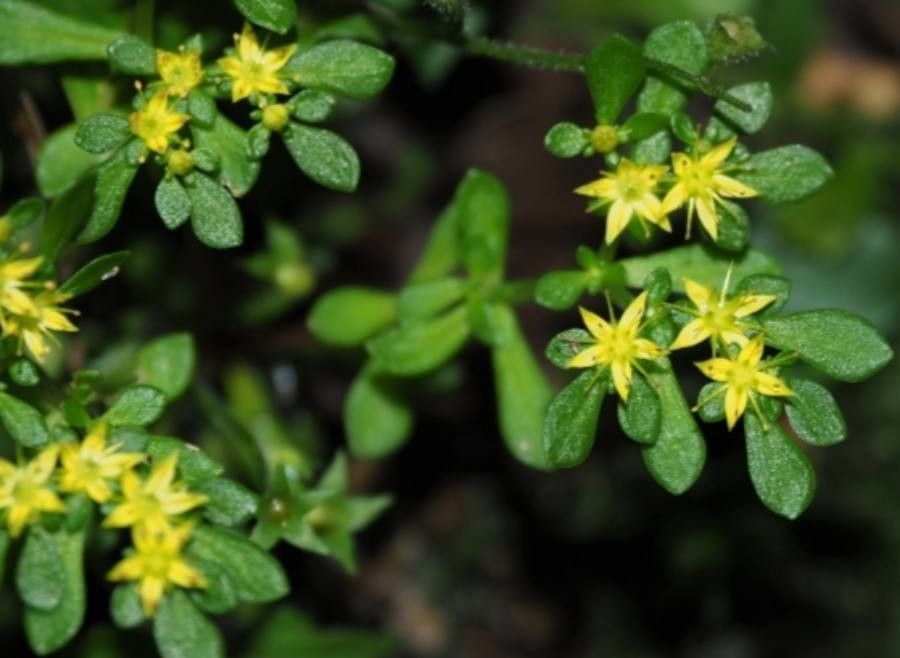
In late spring through summer, Sedum forsterianum produces small yellow flowers. These star-shaped blooms, with five petals each, grow in clusters at the top of stems that rise above the foliage.
This plant is easy to cultivate, requiring minimal care. It prefers well-draining soil with moderate moisture but can tolerate drought once established. While it thrives in full sun, it can also endure partial shade.
Rock stonecrop is an excellent choice for rock gardens, borders, or ground covers due to its low-growing habit and attractive foliage coloration throughout the year. Additionally, its nectar-rich flowers attract pollinators such as bees.
Overall, Sedum forsterianum is a valuable addition to any garden due to its hardiness and vibrant foliage year-round, making it a popular choice among gardeners worldwide.
Tasteless stonecrop has moderate disease resistance and is more sensitive to humidity. It becomes prone to illness when humidity is high and can develop root rot during dormancy. Concerning care, Tasteless stonecrop withstands drought but requires more frequent watering in the growing season. Watering should be sharply reduced or stopped entirely during the dormant period. Tasteless stonecrop is best for people with some growing experience, though it can be challenging to maintain, particularly during dormancy. It is especially appropriate for those who can spend time caring for it through the winter months.
How to keep Sedum Forsterianum.
Light
Tasteless stonecrop thrives in areas with abundant sunlight, though it can tolerate slightly shaded locations. Its native habitat conditions indicate this preference. Excessive sun can, in rare cases, cause damage, while insufficient light inhibits healthy growth and may result in weak, spindly development.
Humidity
This plant prefers dry conditions, so don't mist it. However, watering it less often can also thrive in higher humidity.
Temperature
Tasteless stonecrop naturally occurs in habitats where temperatures are mainly between 32 and 90 °F (0 to 32 ℃). The plant grows best within that temperature range. During cold seasons, make sure tasteless stonecrop is not exposed to temperatures below its tolerance.
Fertilizer
Tasteless stonecrop only needs light fertilizer applications once or twice a year during the growing season. Do not fertilize in winter or in summer while it is dormant. Use less fertilizer for plants that have been repotted and wait a couple of months after repotting before feeding them. Fertilizing helps maintain healthy growth and encourages blooms.
Botanical profile.
- Plant Type
- Herb
- Life Cycle
- Perennial
- Genus
- Sedum
- Family
- Crassulaceae
- Hardiness Zone
- 3-8
- Mature Height
- 15 cm
- Mature Spread
- 46 cm
- Leaf Color
- Green, Yellow, Red, Orange, Bronze, Brown
- Leaf Type
- Evergreen
- Flower Color
- Yellow
- Flower Size
- 0.25 cm to 0.51 cm
- Bloom Time
- Late spring, Early summer, Mid summer
- Planting Time
- Spring, Autumn
- Harvest Time
- Mid summer
- Native Area
- Austria, Czech Republic, Slovakia, Montenegro, Poland, Croatia, Slovenia, Belarus, Ukraine, Serbia, Lithuania, Hungary, Germany, Italy, Switzerland, Denmark, Estonia, Finland, France, Albania, Romania, Latvia, Belgium, Netherlands
Other names.