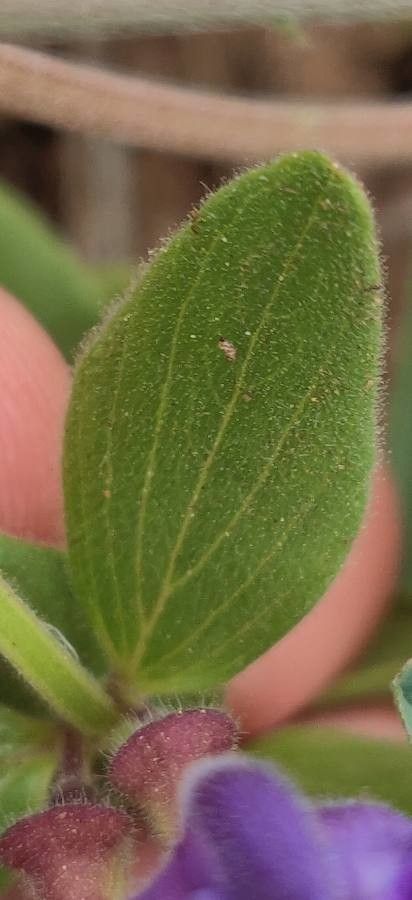
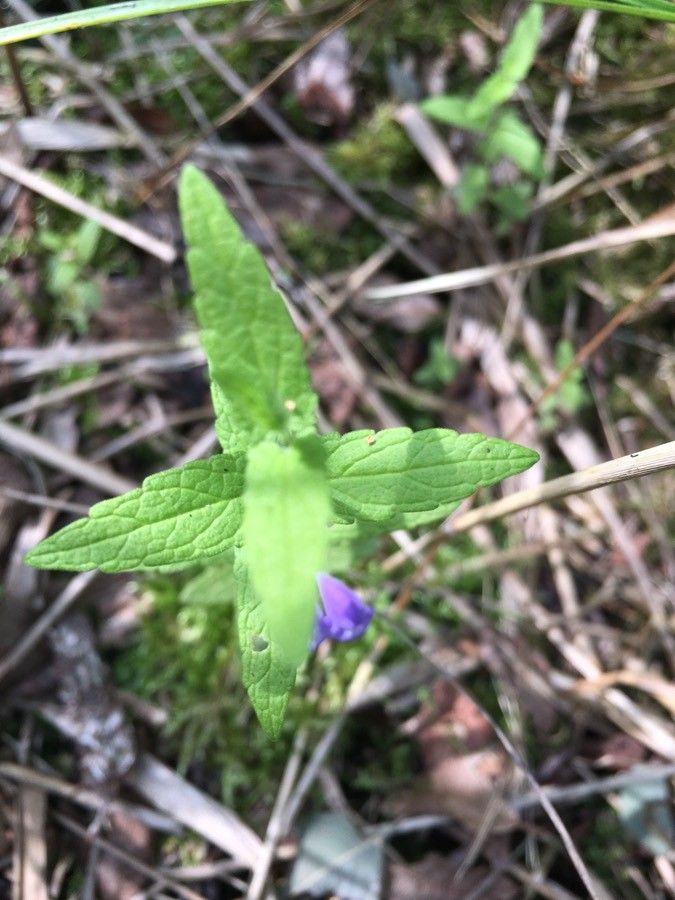
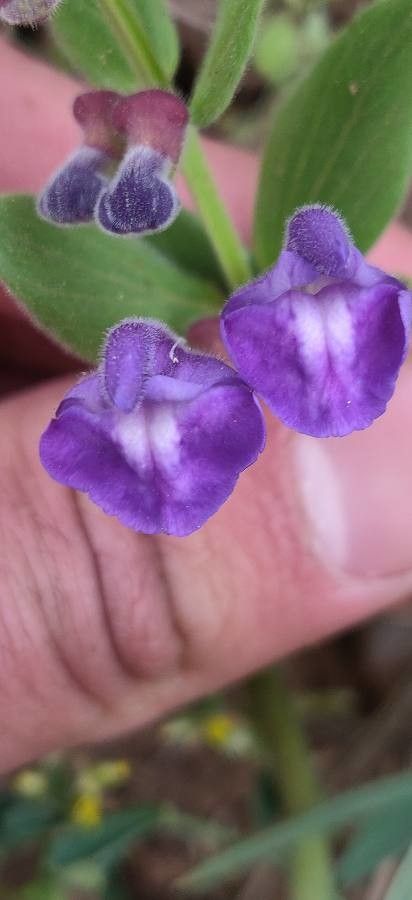
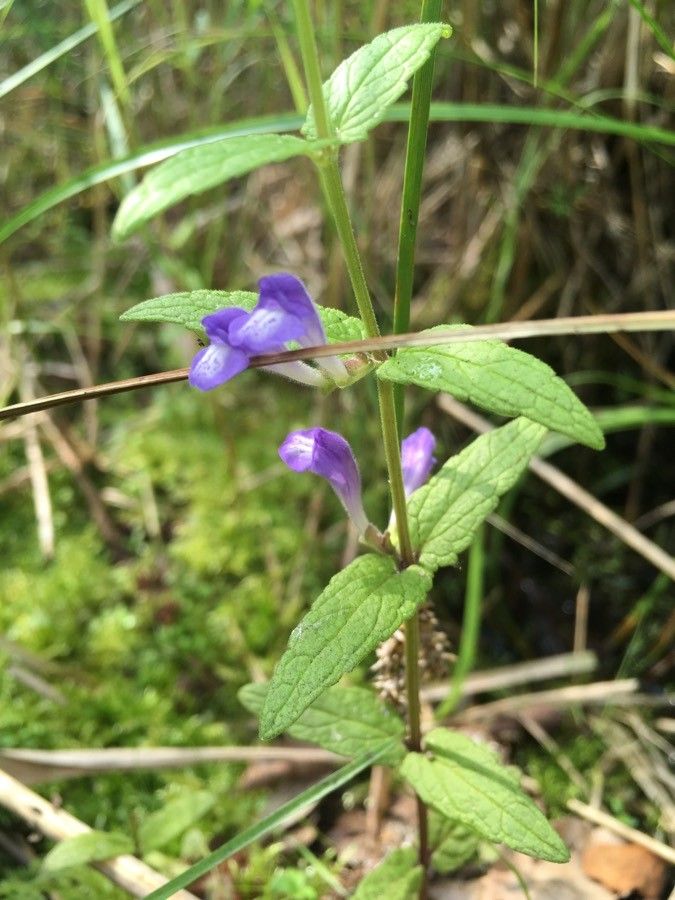
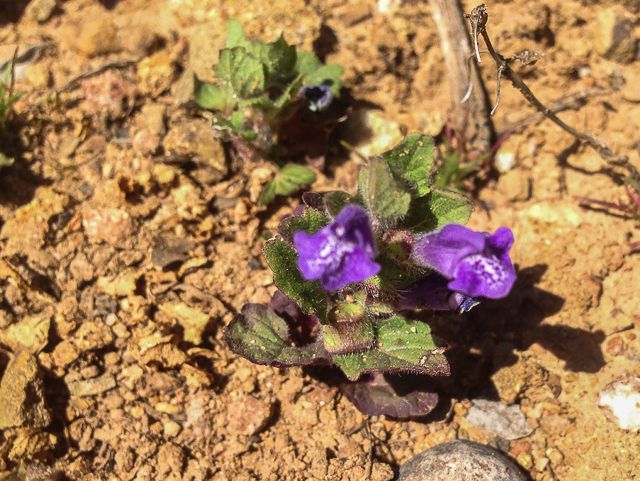
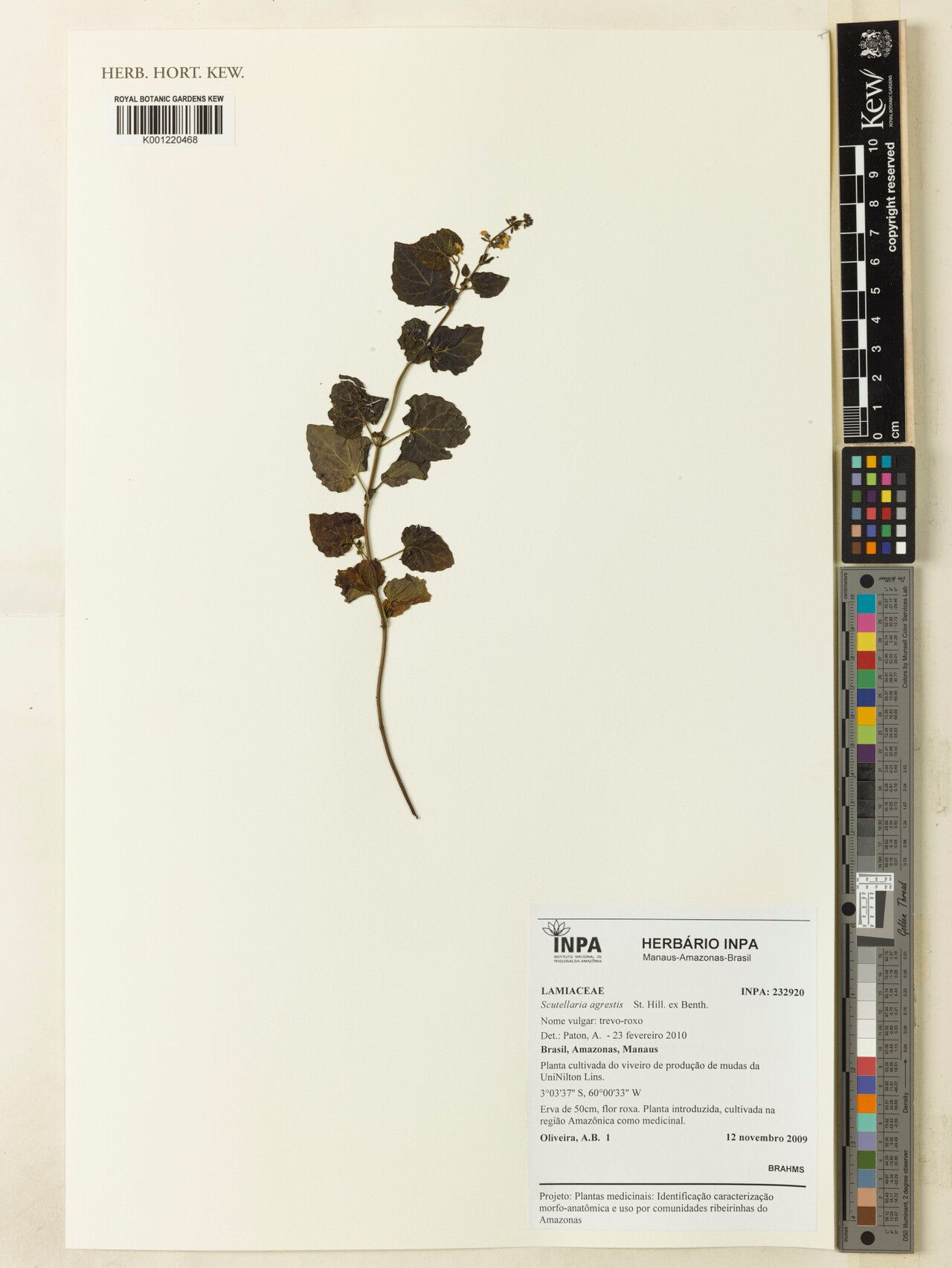
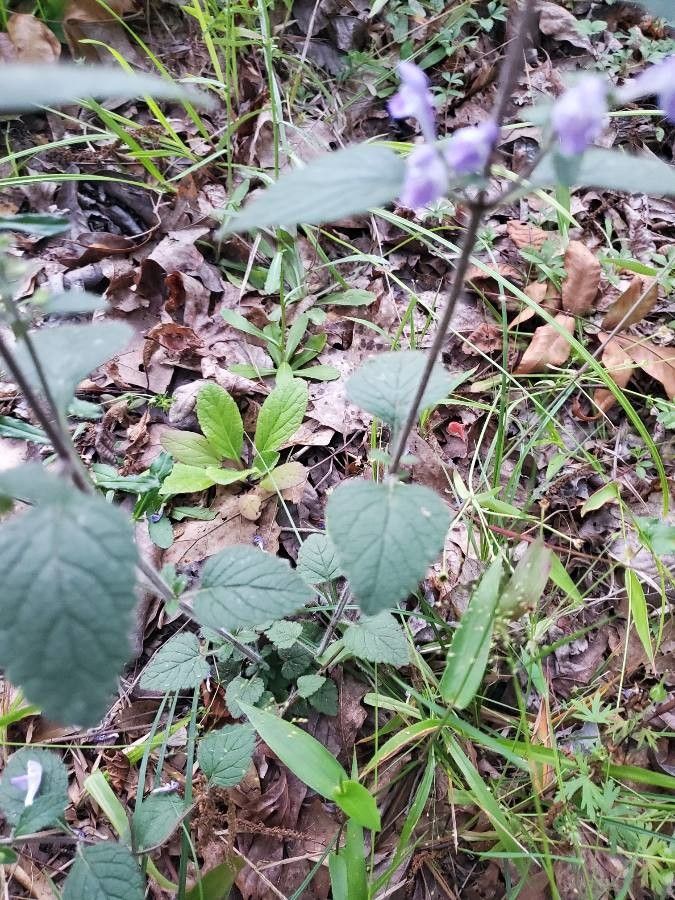
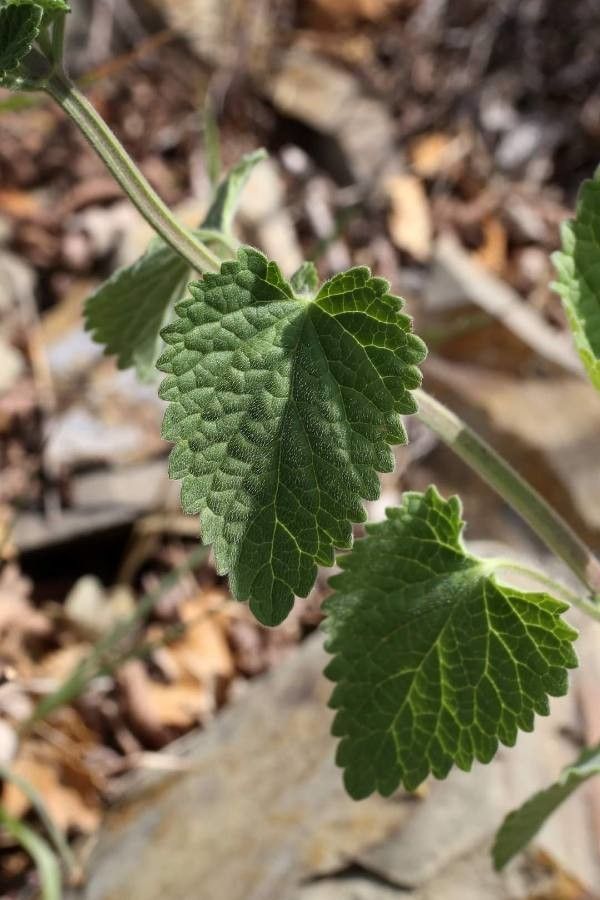
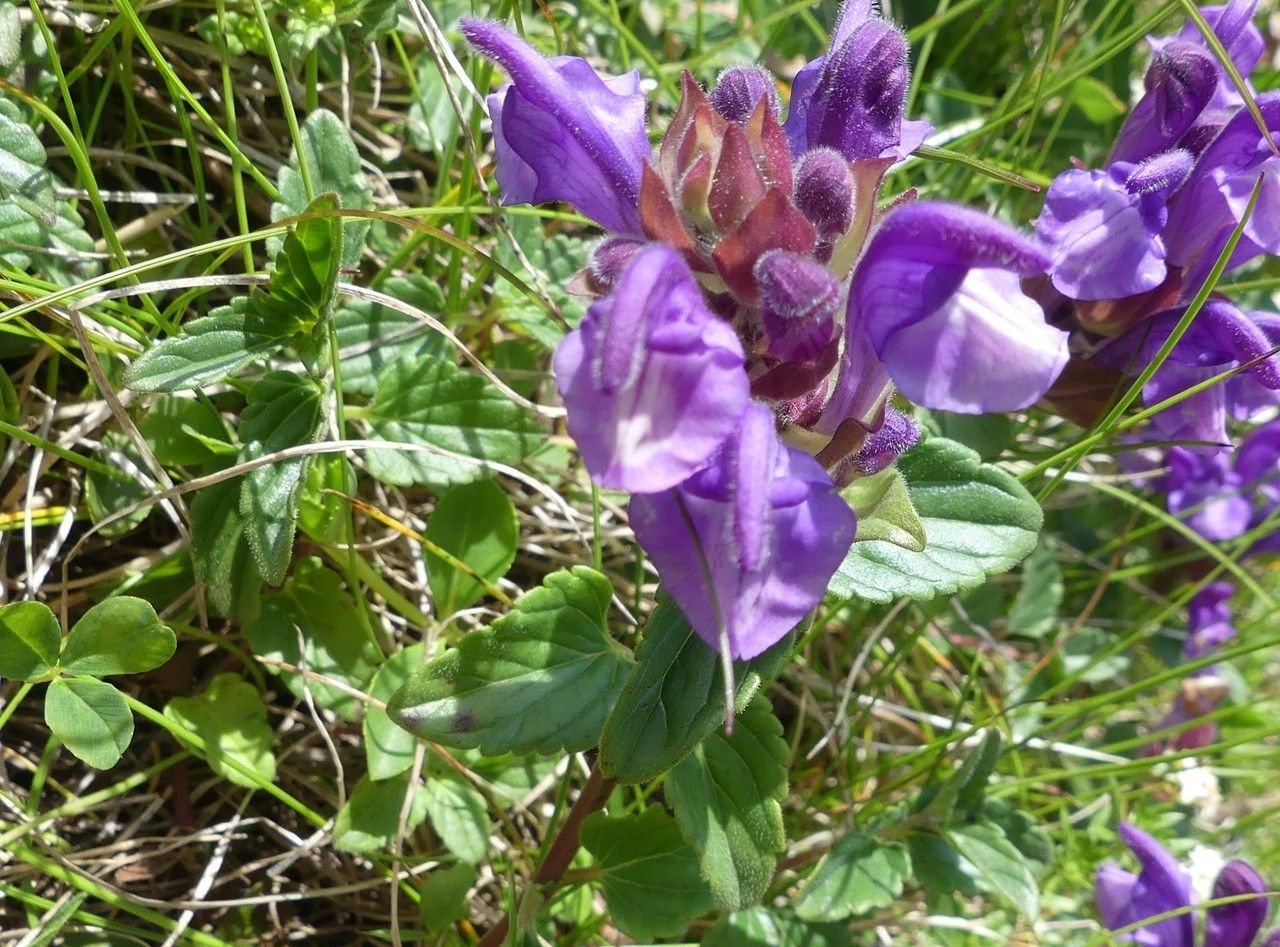
Scutellaria tuberosa is a species of flowering plant in the mint family known by the common name Danny's skullcap. It is native to western North America from Oregon through California to Baja California, where it is widespread throughout the mountain and coastal regions; it is absent from the deserts and the Central Valley of California. It can be found in forest and woodland habitat, and a variety of open habitat types, often appearing in areas recently cleared by wildfire. It is a perennial herb producing an erect stem or cluster of stems up to about 25 centimeters tall from a root system with tubers. The stems are coated in short, spreading hairs. The oval leaves are oppositely arranged. The lowest leaves are borne on short petioles. Flowers emerge from the leaf axils. Each flower is held in a calyx of sepals with a large ridge or dome-shaped appendage on the upper part. The tubular corolla is one to two centimeters long and has a large upper and lower lip. The upper lip is folded into a beaklike protrusion and the lower has three wide lobes. The corolla is deep purple-blue, usually with a white patch or mottling on the lower lip.
Danny's skullcap is fairly resistant to disease and generally not prone to illness. Still, it can be affected by pests and diseases present in its environment, though such problems are typically mild. Regarding care, this plant has moderate maintenance needs. It should be trimmed regularly to preserve its appearance and encourage healthy growth. Applying fertilizer can also support better flowering. Danny's skullcap is a good choice for anyone with outdoor space, like a garden or patio, and does not demand extensive gardening experience. When grown indoors, it may need more attentive care.
How to keep Scutellaria Tuberosa.
Light
Danny's skullcap prefers a sunny spot, thriving on abundant sunlight for vigorous growth, though it can tolerate shadier locations. It comes from environments where plentiful light is typical. Insufficient light will inhibit its growth, while excessive light can cause leaf scorch.
Water
Danny's skullcap thrives in moderate moisture conditions. It needs consistent watering to keep the soil evenly moist, yet it can tolerate occasional droughts. The plant benefits from weekly watering and is best suited for outdoor cultivation, where it can take advantage of natural rainfall. However, it is important to avoid waterlogged conditions.
Temperature
Danny's skullcap originates from temperate climates and does best at temperatures between 32°F and 95°F (0 to 35°C). Seasonal adjustments might be necessary to maintain these optimal conditions.
Fertilizer
The primary time to fertilize Danny's skullcap is in early spring when the flowers are starting to form. The proper fertilizer promotes better blooms and helps Danny's skullcap produce attractive flowers. Fertilizing in early spring ensures strong flowering during the season and supplies energy for dormant growth periods.
Pruning
Danny's skullcap is a low-growing perennial plant with tuberous roots and vibrant purple flowers. To encourage healthy growth, prune the plant from early to late spring by cutting back any dead stems. Lightly trimming the plant after it blooms helps maintain its shape and encourages more flowers. Be sure to use sterile tools for pruning to prevent disease and promote vigor.
Botanical profile.
- Plant Type
- Herb
- Life Cycle
- Perennial
- Genus
- Scutellaria
- Family
- Lamiaceae
- Hardiness Zone
- 3-9
- Mature Height
- 25 cm
- Mature Spread
- 15 cm to 25 cm
- Leaf Color
- Green, Dark Green
- Leaf Type
- Deciduous
- Flower Color
- Purple, Lavender
- Flower Size
- 0.76 cm to 1.27 cm
- Bloom Time
- Spring
- Planting Time
- Spring, Autumn
- Harvest Time
- Summer
- Native Area
- Mexico
Other names.
Reader questions.
How should I water my Danny's skullcap plant?
To ensure the health of Danny's skullcap, it is recommended to water it with filtered water at room temperature or slightly warmer. Tap water can contain harmful particles, so filtered water is preferred. The plant is accustomed to a warm environment, so using cold water can be stressful for it. It is also best to avoid overhead watering as it can cause issues with the foliage. Instead, simply water the plant by applying filtered room temperature water directly to the soil until it is fully soaked. This practice helps moisten the roots and supports their growth and nutrient absorption.
What are the sunlight requirements for Danny's Skullcap?
Danny's Skullcap thrives in both full sun, which is above 6 hours of sunlight, and partial sun, around 3-6 hours of sunlight. Observing the movement of sunlight through your garden helps in choosing spots that provide a perfect balance for plants, ensuring their growth and health. While it prefers sunlight-exposed positions and originates from habitats with abundant illumination, it's also adaptable to areas with less light. However, insufficient or excessive light can lead to growth issues or leaf scorch.
What is the optimal temperature range for Danny's skullcap?
Danny's skullcap, scientifically known as Scutellaria tuberosa, thrives best in temperate climates with optimal temperatures ranging between 32°F to 95°F (0°C to 35°C). The plant has a strong resistance to cold, but special attention to temperature adjustments may be necessary to maintain these conditions throughout different seasons.
What should I do if I give too much or too little water to my Danny's skullcap?
Both overwatering and underwatering can harm the health of your Danny's skullcap, but overwatering is more common. When this species gets too much water, its stems and leaves may wilt and turn yellow. Overwatering for a long time can also cause diseases like root rot, mold, and mildew, which can kill your plant. Underwatering is less likely for the Danny's skullcap since it can tolerate drought better. However, underwatering can still happen, and you may notice brittle, brown leaves. It's important to spot signs of overwatering quickly when taking care of your Danny's skullcap. Some diseases caused by overwatering, like root rot, may be irreversible if left unaddressed for too long. If you see early signs of overwatering, reduce your watering schedule immediately and check the soil quality. If the soil doesn't drain well, replace it with loose, well-draining potting mix. On the other hand, if your Danny's skullcap shows signs of insufficient water, increase your watering frequency until the signs disappear.
Can I use artificial lighting for Danny's Skullcap?
Yes, artificial lighting is an excellent alternative for Danny's Skullcap, especially when natural sunlight is insufficient, such as in winter or less sunny spaces. LED lights are recommended because they can be customized to provide specific wavelengths needed by plants. Full sun plants require 30-50W/sq ft, partial sun plants 20-30W/sq ft, and full shade plants 10-20W/sq ft of artificial light. The light source should be placed 12-36 inches above the plant, mimicking natural sunlight, and most plants need 8-12 hours of light per day.
How do I protect Danny's skullcap from extreme winter conditions?
Despite its strong cold resistance, Danny's skullcap requires protection if winter temperatures are expected to drop below -35°C. To safeguard the plant during extremely cold weather, you can cover it with soil, straw, or similar materials. Additionally, it's advisable to water the plant abundantly before the first freeze in autumn to ensure the soil remains moist and enters a frozen state, which helps prevent drought and water scarcity during winter and early spring.
How frequently should I water my Danny's skullcap plant?
If your Danny's skullcap plant is in a pot, the most accurate way to determine if it needs water is to check the soil moisture by sticking your finger into it. If the top two to three inches of soil are dry, it's time to water. If you grow your Danny's skullcap outdoors in the ground, you can use the same method to check the soil. Once again, if the top few inches of soil are dry, it's time to water. Usually, during the spring and early fall, this method suggests watering the plant once a week. However, in extremely hot weather, you may need to water it two or more times a week. Nevertheless, mature and well-established Danny's skullcap plants demonstrate a commendable ability to tolerate drought.
What are the symptoms of inadequate lighting for Danny's Skullcap?
Symptoms of light deficiency in Danny's Skullcap include small or new leaves growing smaller in size, leggy or sparse growth, faster leaf drop, slower or no new growth, leaves developing pale or irregular color patterns, chlorosis, sunscald, leaf curling, wilting, and leaf scorching. These symptoms indicate the plant is either getting too much or too little light, affecting its growth and health.
What should I do if the temperature falls below -35°C?
If temperatures drop below -35°C, Danny's skullcap may not show any noticeable changes during winter, but there could be a decrease in sprouting or even a complete lack of sprouting in spring. In such cases, remove any parts of the plant that have failed to sprout once spring arrives.
How much water does Danny's skullcap need?
To properly water your Danny's skullcap, it's important to be generous with the amount of water you give. When the top two to three inches of soil are dry, it's ideal to give the plant a deep watering by supplying enough water to thoroughly soak the entire soil. You'll know you've watered enough when excess water begins to drain through the pot's drainage holes at the bottom. However, if you don't see any excess water draining, it means you haven't watered enough. On the other hand, be careful not to let water accumulate inside the soil, as this can harm the plant. Additionally, if the water is not draining properly through the pot, it may indicate that the soil is not draining well, which is not good for the plant's health. If the plant is located outside, receiving 1 inch of rain per week is sufficient.
How can I address lighting issues for Danny's Skullcap?
To address lighting issues for Danny's Skullcap, gradually increase sunlight exposure to at least 6 hours daily, using a south-facing window for indoor plants and keeping curtains open. For outdoor plants, gradually move them to sunnier spots to avoid sunburn. For large or immobile plants, use desk or ceiling lamps for artificial light or invest in professional grow lights. If blocking obstructions like trees shade your plants outdoors, consider pruning to improve sunlight access. For small plants, transplanting during their dormant period to a location with better light and drainage can greatly improve their health. Note that parts affected by insufficient light might not recover, but new growth will be healthier with improved lighting.
How does high temperature affect Danny's skullcap?
During summer, it's crucial to keep the temperature below 35°C for Danny's skullcap. Exceeding 38°C may result in lighter leaf color, increased susceptibility to curling, sunburn, and in severe cases, wilting and drying of the entire plant. To mitigate these issues, trim away the affected parts, relocate the plant to a shaded area or use a shade cloth to protect it from midday and afternoon sun. Ensure the soil is kept moist by watering the plant in the morning and evening.