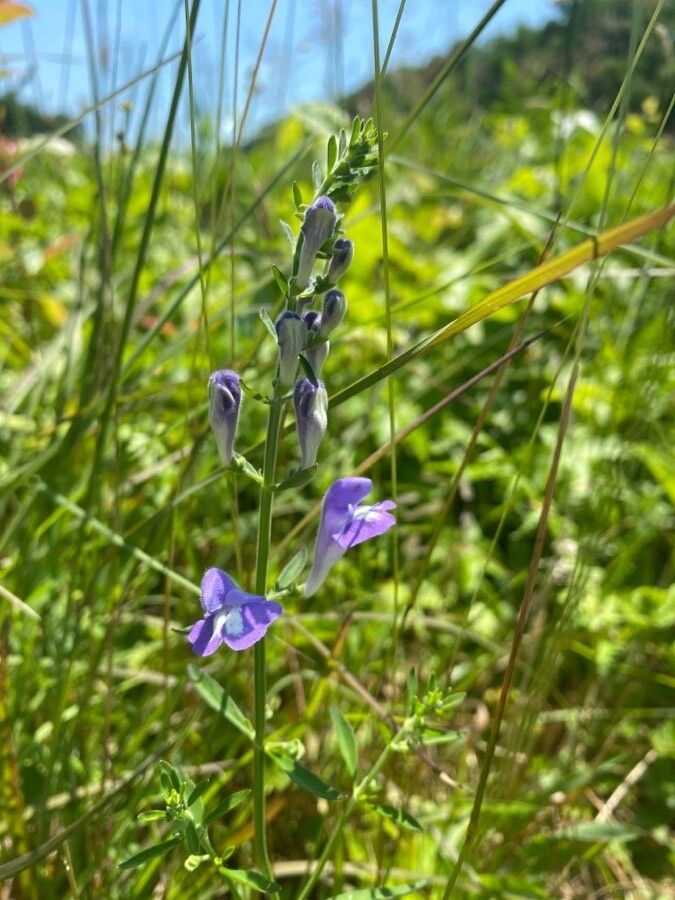
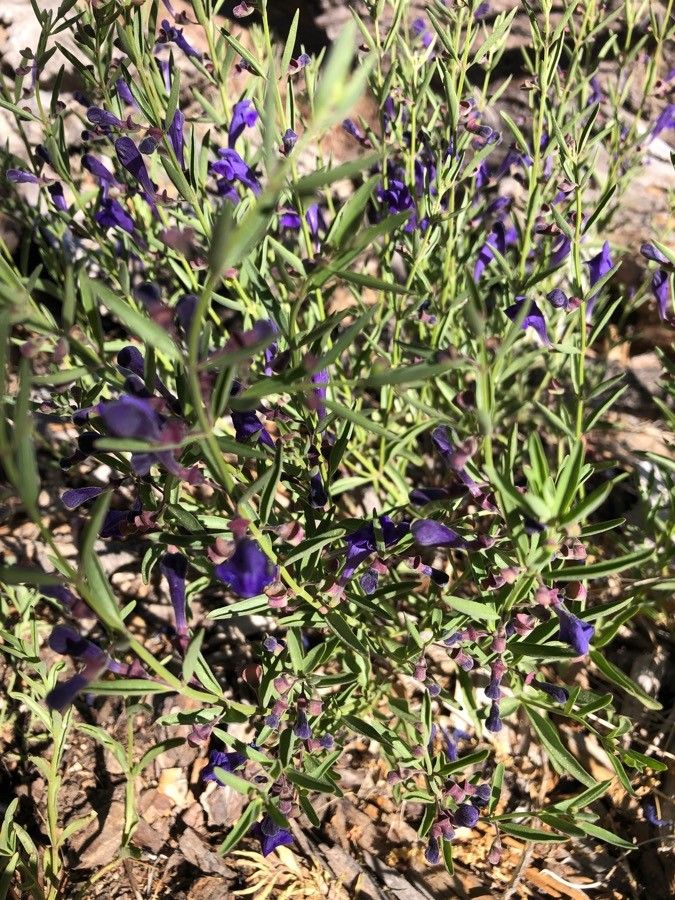
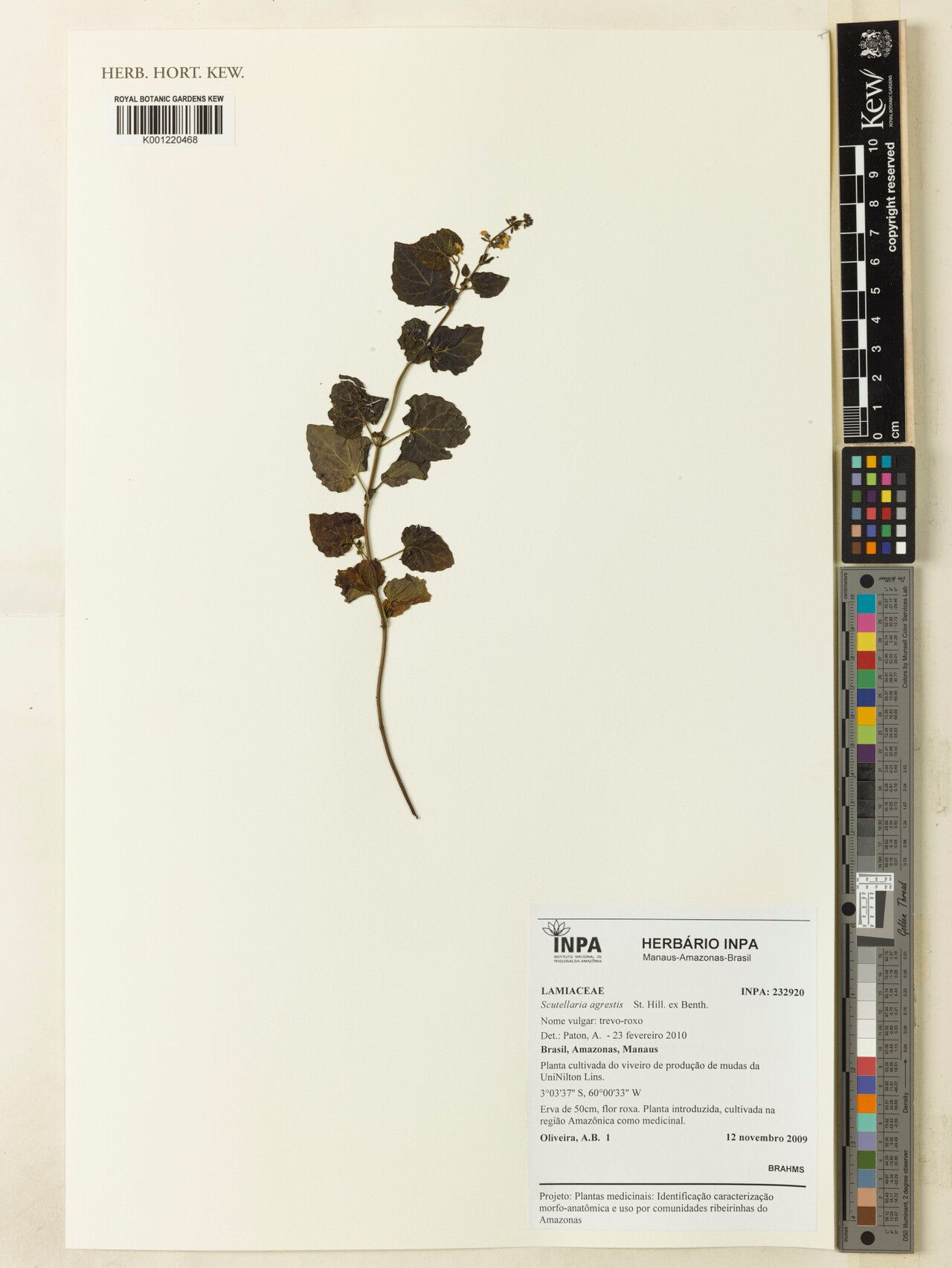
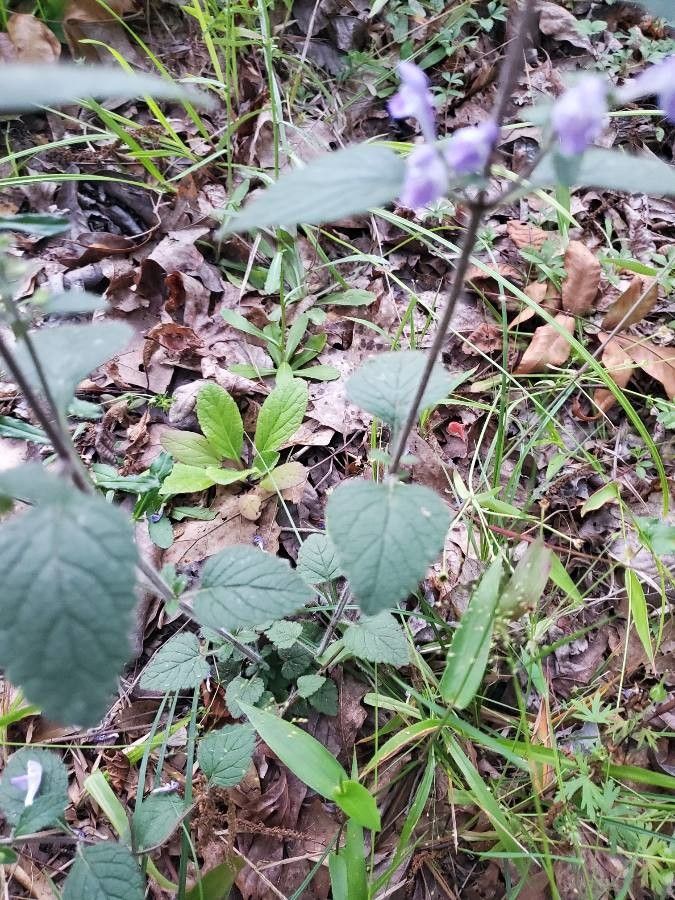
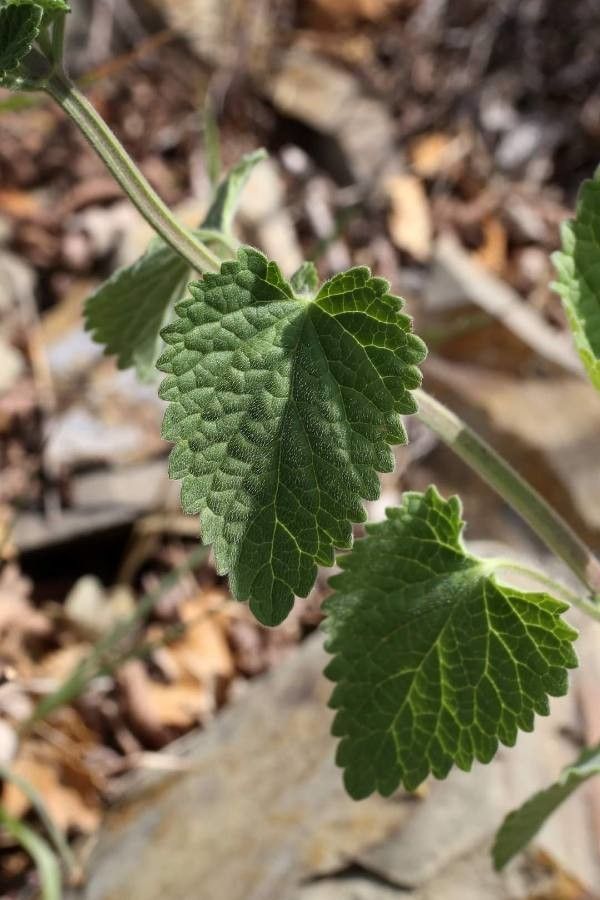
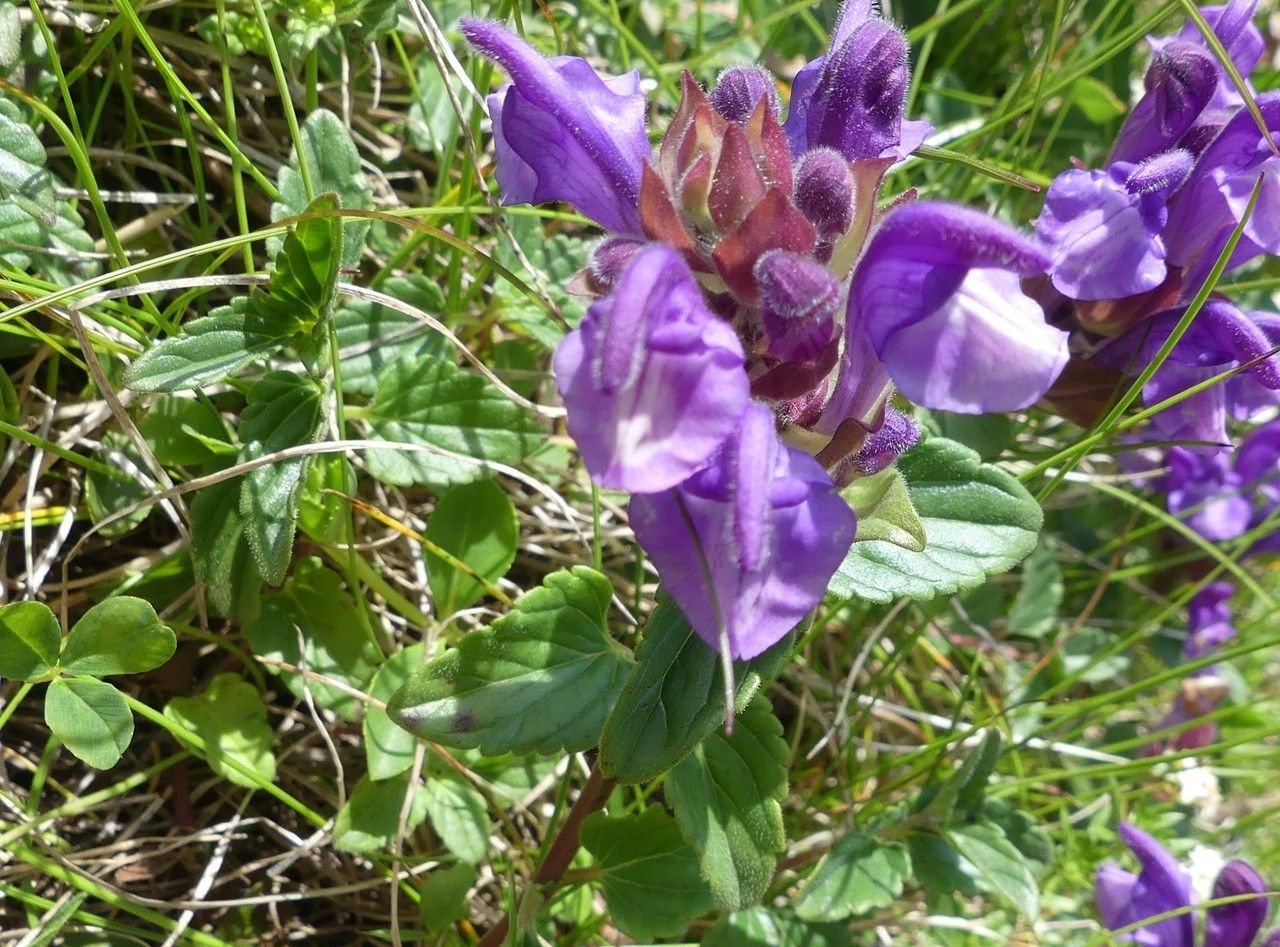
Scutellaria siphocampyloides is a species of flowering plant in the mint family known by the common name grayleaf skullcap. It is endemic to California, where it is widespread throughout the mountain and coastal regions; it is absent from the deserts and the Central Valley. It can be found in forest and woodland habitat, and a variety of open habitat types. It is a perennial herb producing an erect stem or cluster of stems up to about half a meter tall from a system of thin rhizomes. The stems are coated in short, flattened hairs which sometimes have resin glands. The oval leaves are oppositely arranged. The lowest leaves are borne on short petioles. Flowers emerge from the leaf axils. Each flower is held in a calyx of sepals with a large ridge or appendage on the upper part. The tubular corolla can be up to 3.5 centimeters long and has a large upper and lower lip. The upper lip is folded into a beaklike protrusion and the lower has three wide lobes. The corolla is pale lavender to deep purple in color, sometimes with white mottling on the lower lip.
Botanical profile.
- Life Cycle
- Perennial
- Genus
- Scutellaria
- Family
- Lamiaceae
Other names.
Reader questions.
What are the sunlight requirements for Grayleaf skullcap (Scutellaria siphocampyloides)?
The Grayleaf skullcap (Scutellaria siphocampyloides) has specific sunlight requirements to thrive. It needs full sun exposure, which means the plant should receive above 6 hours of sunlight daily. Alternatively, it can also grow in partial sun, defined as about 3-6 hours of sunlight each day. It's important to observe how sunlight moves through your garden throughout the day to find the best spots that offer a balance of light and shade. This careful selection ensures that your Grayleaf skullcap plants stay healthy and happy.
What is Grayleaf skullcap?
Grayleaf skullcap, known botanically as Scutellaria siphocampyloides, is a plant species recognized by its unique name but not described in detail here in terms of its essentials, symptoms it might treat or other relevant characteristics. Further information about its traits, uses, and habitats are not provided in the available data.