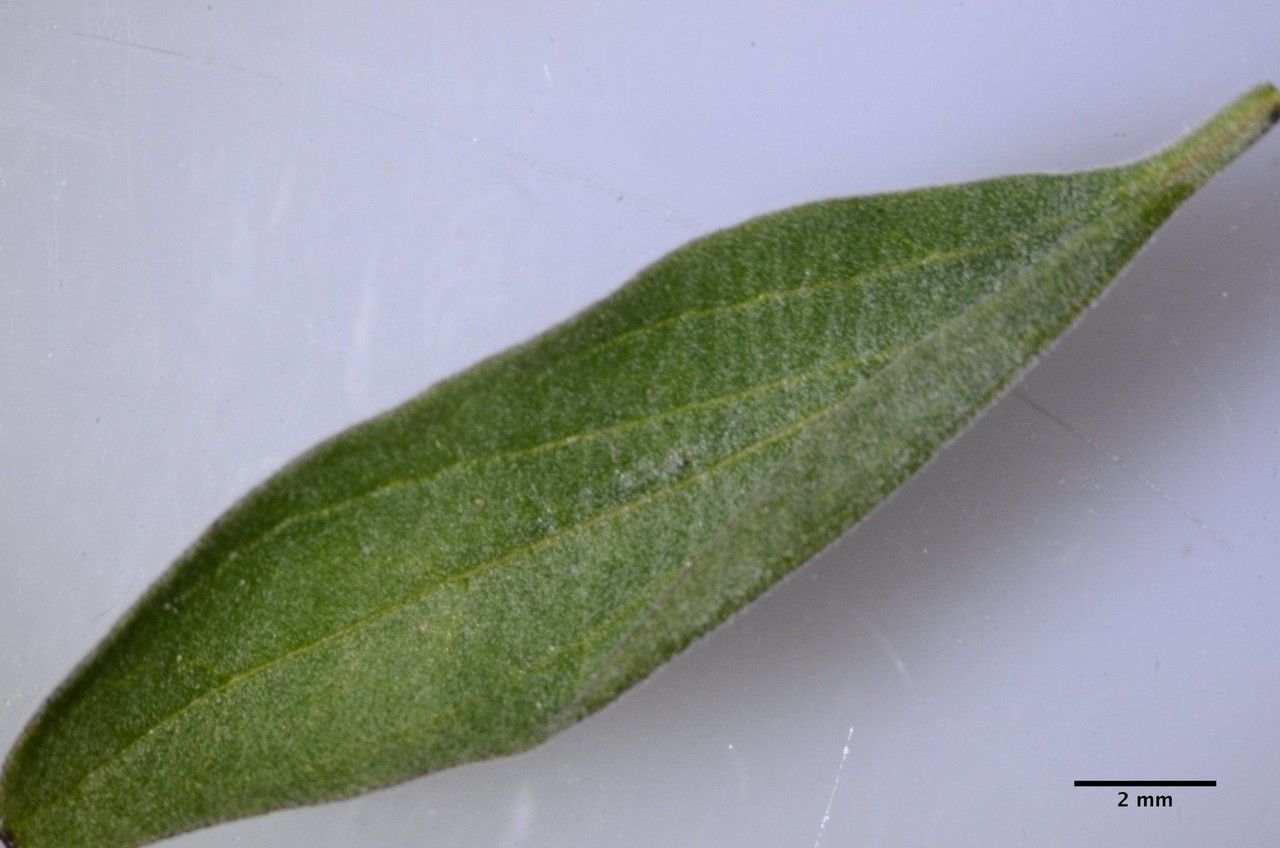
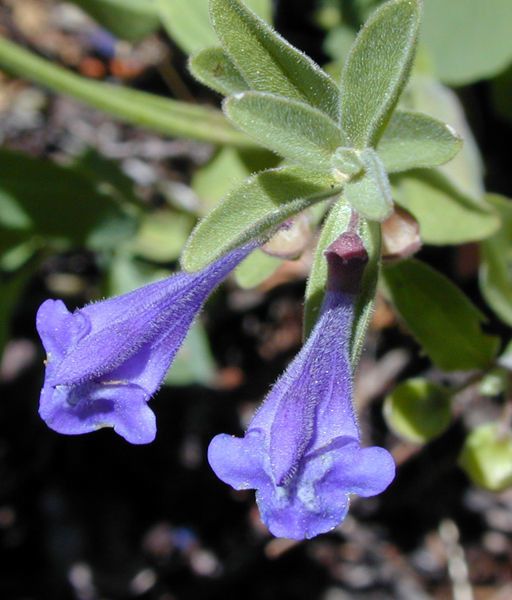
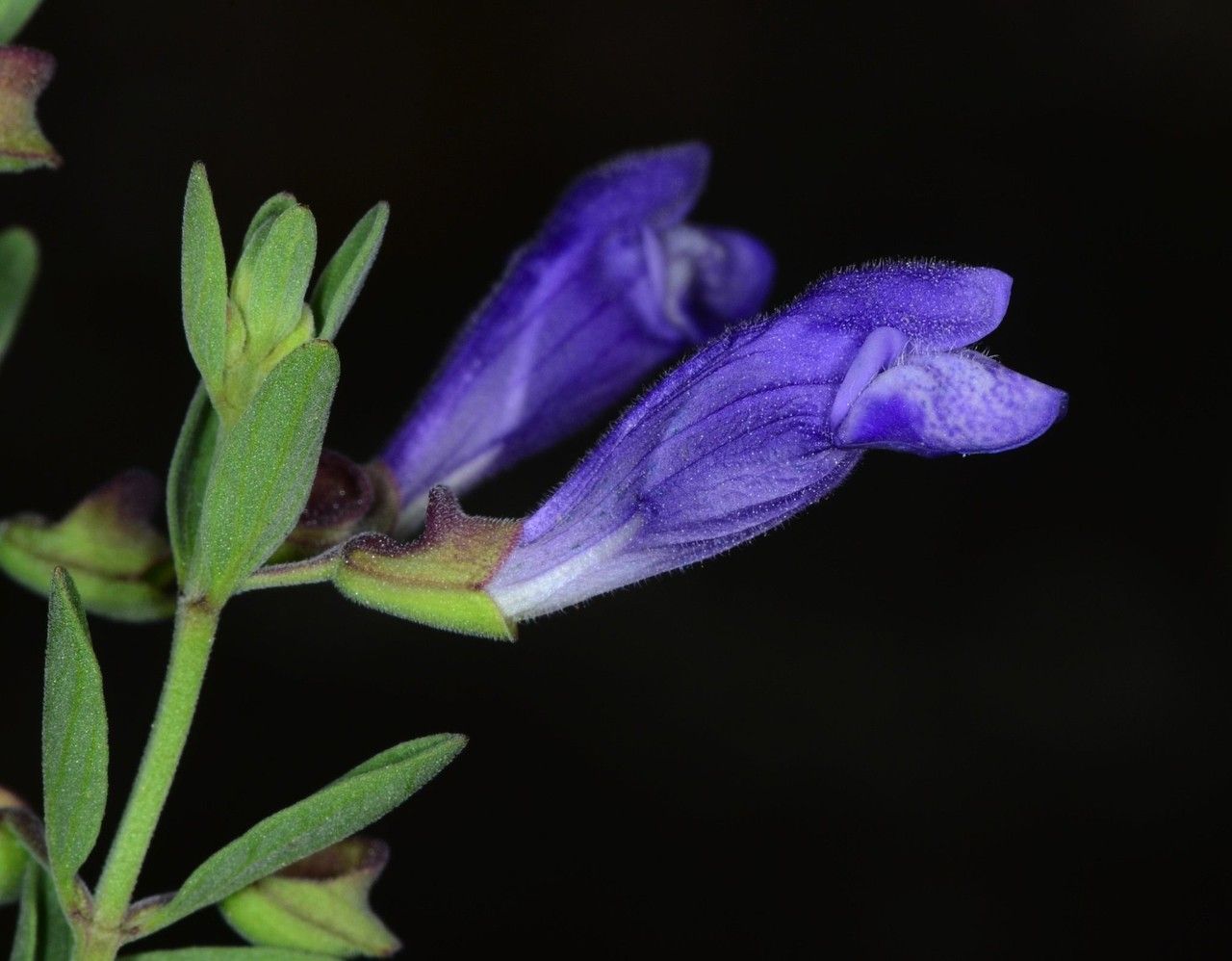
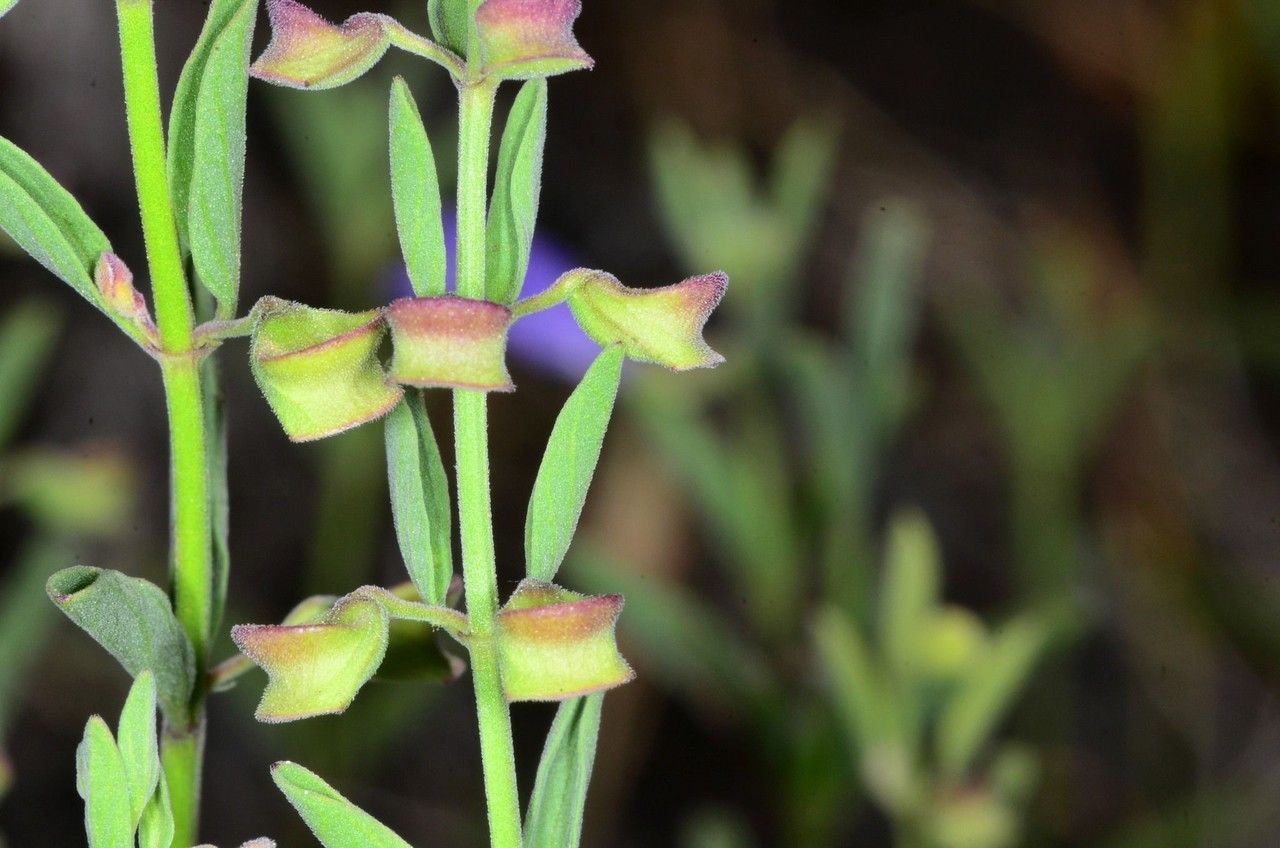
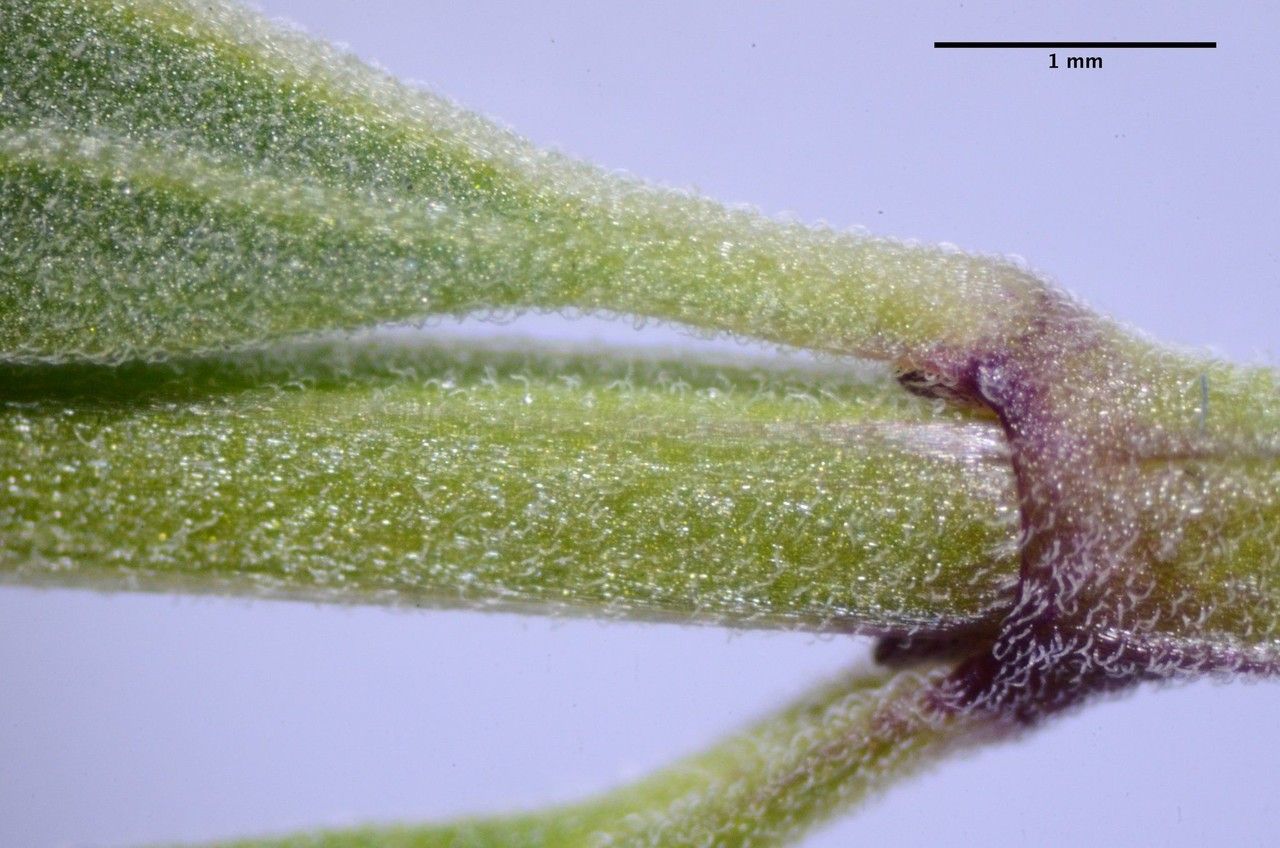
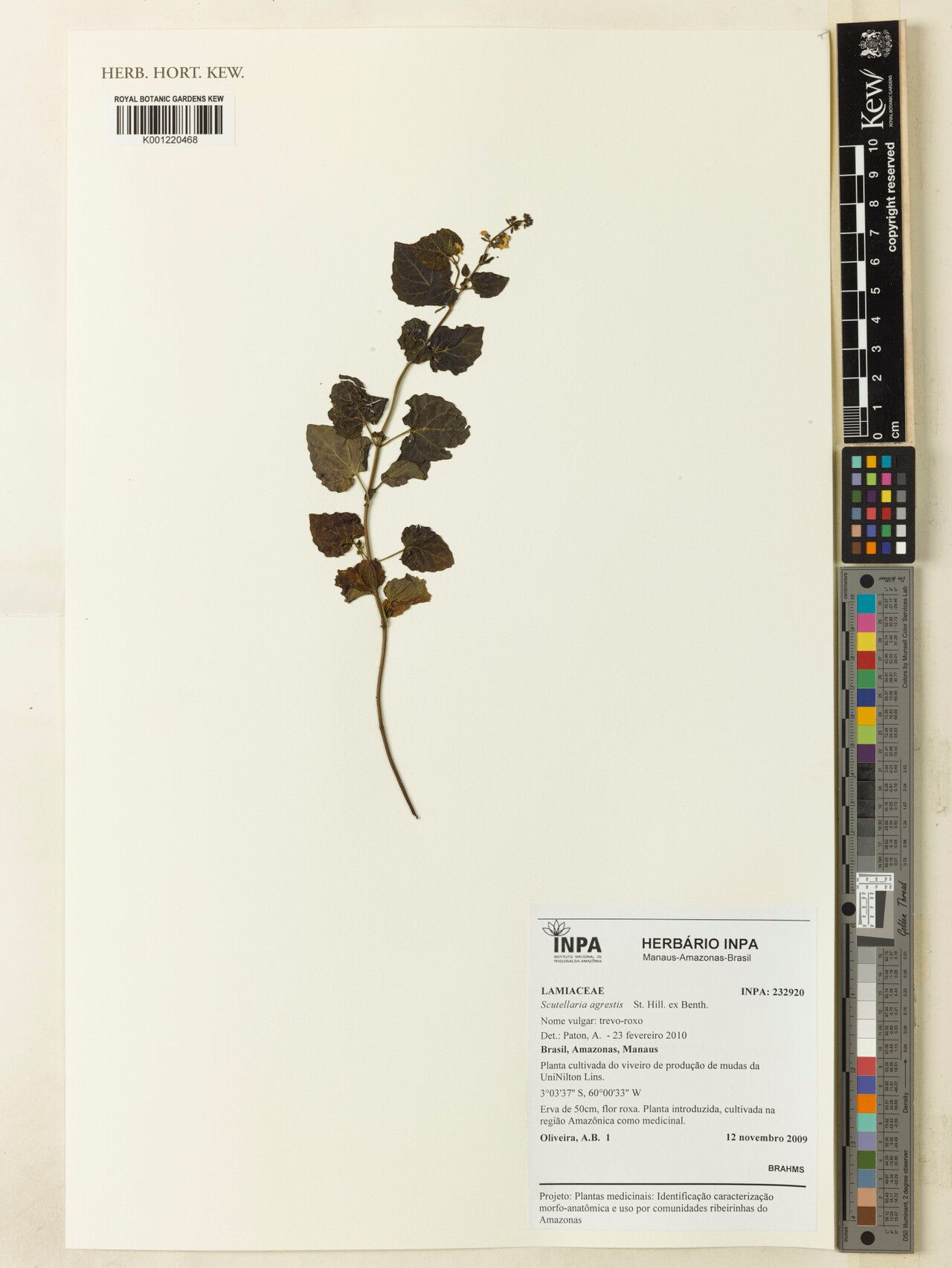
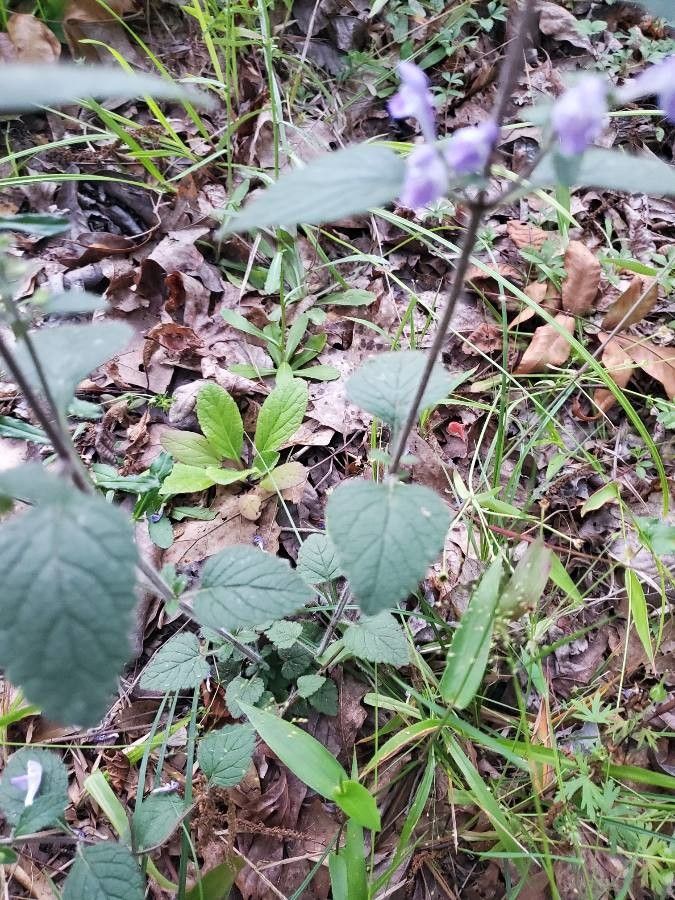
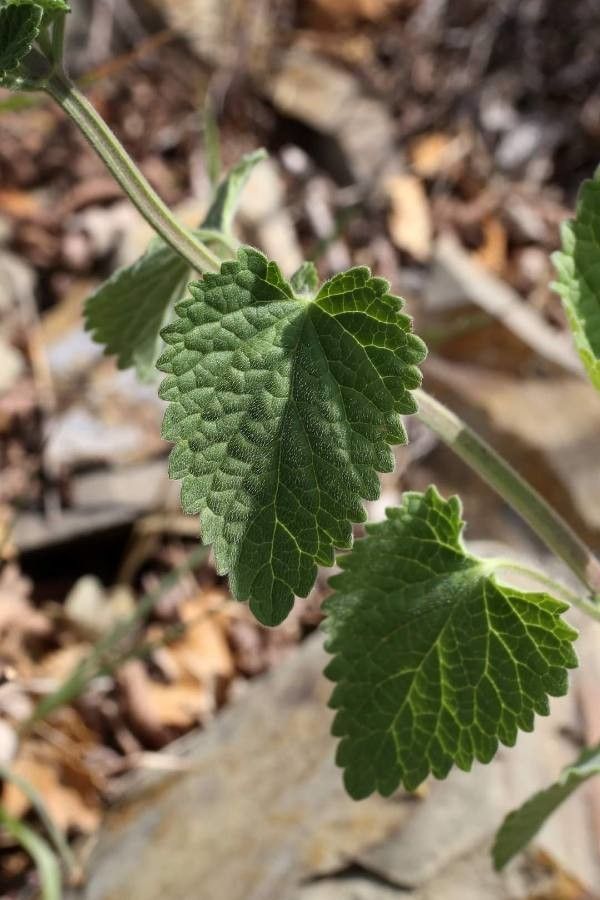
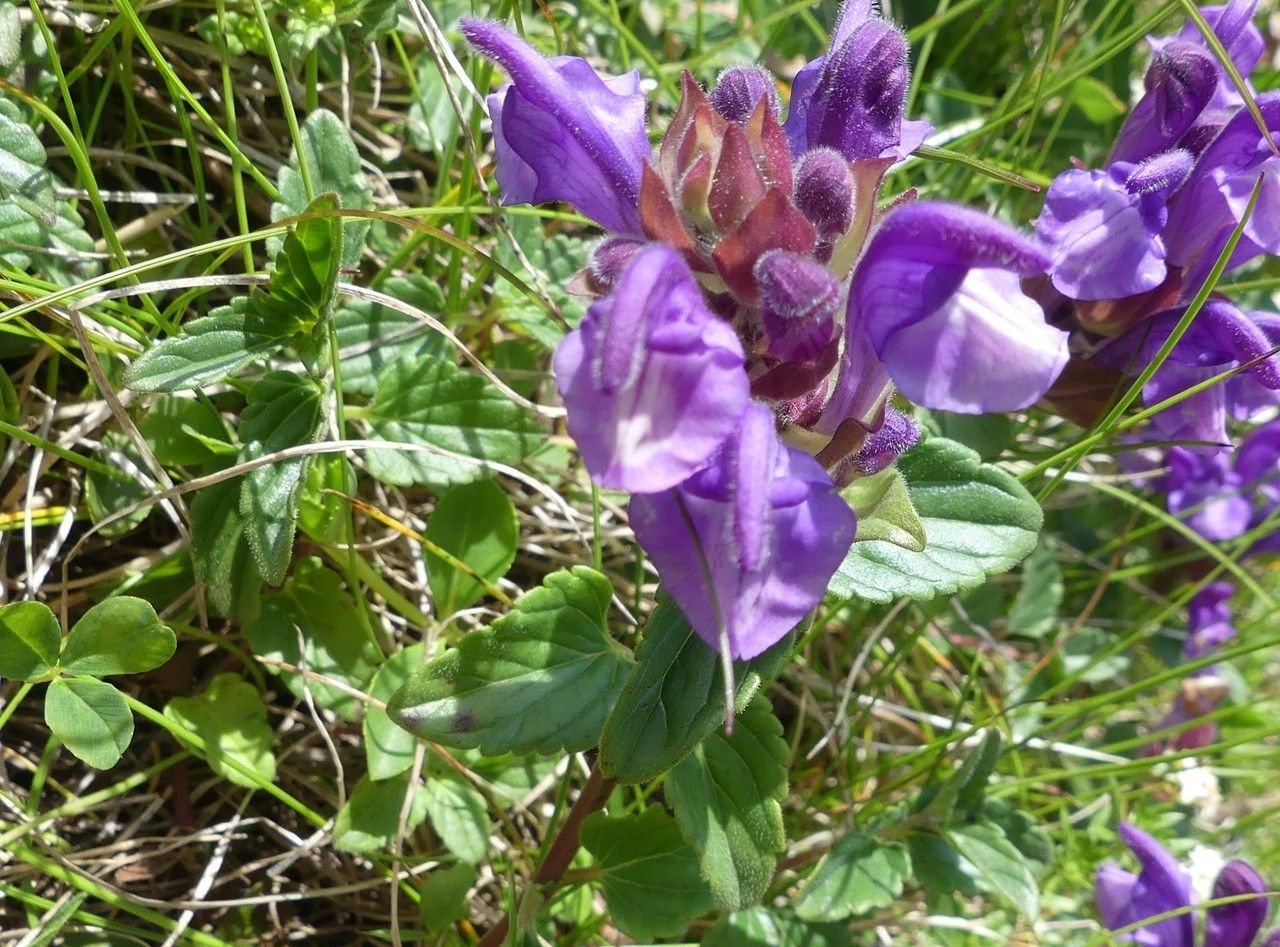
Scutellaria antirrhinoides is a species of flowering plant in the mint family known by the common names nose skullcap and snapdragon skullcap. It is native to the western United States, where it grows in forests, woodlands, and open, rocky habitat types. It is a perennial herb producing an erect stem or cluster of stems up to 35 centimeters tall from a system of thin rhizomes. The stems are coated in short hairs which are curled or angled upward and sometimes have resin glands. The oval leaves are coated in tiny hairs and are oppositely arranged. The lowest leaves are borne on short petioles. Flowers emerge from the leaf axils. Each flower is held in a calyx of sepals with a large ridge or appendage on the upper part. The corolla measures up to 2 cm long, tubular in shape with a large upper and lower lip. The upper lip is folded into a beaklike protrusion and the lower has three flat lobes. The corolla is purple to blue with an area of white mottling on the lower lip.
Nose skullcap is fairly disease-resistant and generally not prone to illness. However, it can be affected by pests and diseases present in its surroundings. Such infections are usually mild. Regarding care, the plant has moderate maintenance needs. Regular pruning is needed to keep a good appearance and support healthy growth. Applying fertilizer can also encourage flowering. Nose skullcap is suitable for anyone with outdoor space, such as a garden or patio, and does not demand extensive care experience. It may need more attention when grown indoors.
How to keep Scutellaria Antirrhinoides.
Light
Nose skullcap naturally occurs in habitats like forest understories and rocky areas, where it is subject to natural shade. It prefers partial sun but can tolerate full sun or full shade, demonstrating its versatile, hardy nature.
Temperature
Nose skullcap can tolerate a wide range of temperatures, but its range may still be restricted by different combinations of moisture and heat. It performs best in warm summer conditions with sufficient rainfall or watering. Extended periods of cloudy, rainy weather, as well as prolonged high temperatures, increase the chance of Nose skullcap dying. In winter, adequate protection from cold can raise the plant’s survival rate.
Fertilizer
The ideal time to fertilize a Nose skullcap is in early spring, as it emerges from dormancy and starts active growth. Fertilizing supplies essential nutrients for healthy development. Although Nose skullcap has relatively low fertilizer requirements, applying fertilizer annually can improve its survival and encourage better, longer-lasting flowers.
Pruning
To promote optimal growth, prune nose skullcap in early spring by removing old stems and spent blooms. This encourages bushiness and extends the flowering period. Make cuts just above leaf nodes to stimulate branching. Regular pruning helps maintain the plant’s shape, improves air circulation, reduces the risk of disease, and ensures that the nose skullcap stays healthy and attractive.
Botanical profile.
- Plant Type
- Herb
- Life Cycle
- Perennial
- Genus
- Scutellaria
- Family
- Lamiaceae
- Hardiness Zone
- 5-9
- Mature Height
- 20 cm to 30 cm
- Mature Spread
- 15 cm to 25 cm
- Leaf Color
- Green, Dark Green
- Leaf Type
- Deciduous
- Flower Color
- Purple, Lavender
- Flower Size
- 1.02 cm to 1.52 cm
- Bloom Time
- Late spring, Early summer, Mid summer
- Planting Time
- Spring, Summer
- Harvest Time
- Mid summer, Late summer, Early fall
Other names.
Reader questions.
What is the botanical name of Nose Skullcap?
The botanical name of Nose Skullcap is Scutellaria antirrhinoides.
What is the botanical name of Nose skullcap?
The botanical name of Nose skullcap is Scutellaria antirrhinoides. It's a unique species within the Scutellaria genus, known for its distinctive characteristics.
What are the sunlight requirements for Nose Skullcap?
Nose Skullcap requires full sun, which means it needs above 6 hours of sunlight a day, or partial sun, which is about 3-6 hours of sunlight a day. It's important to observe how sunlight moves through your garden so you can find spots that offer the right balance of light and shade for your plants, ensuring they thrive.