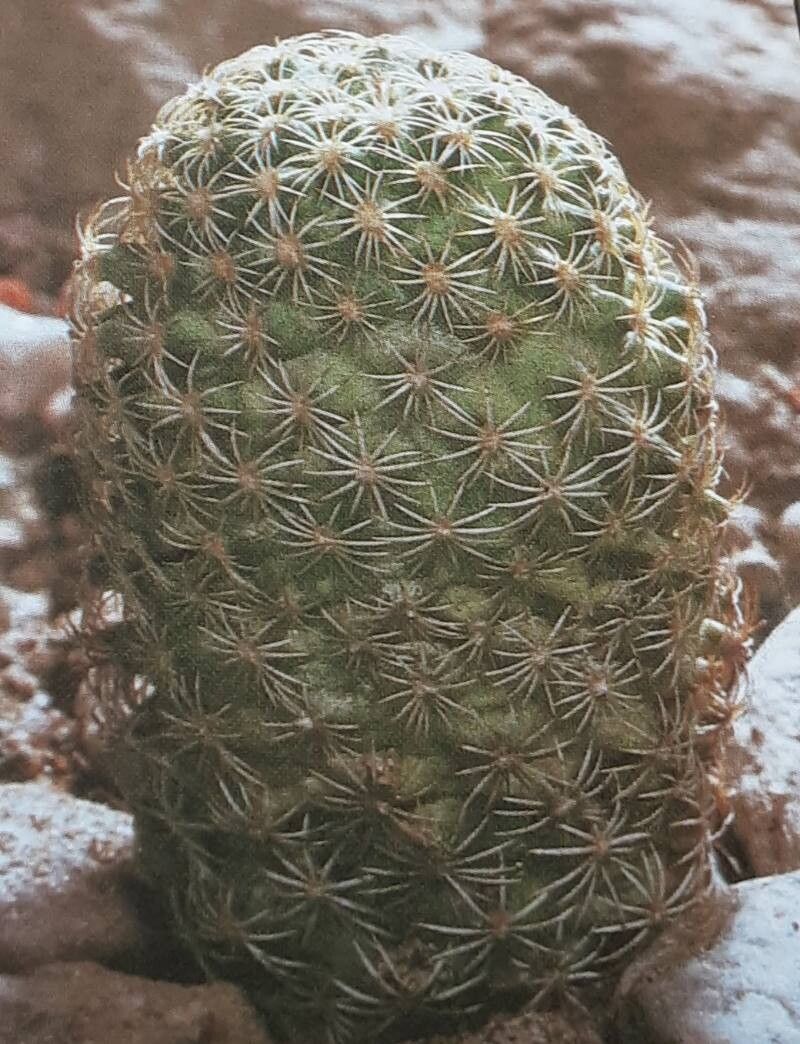
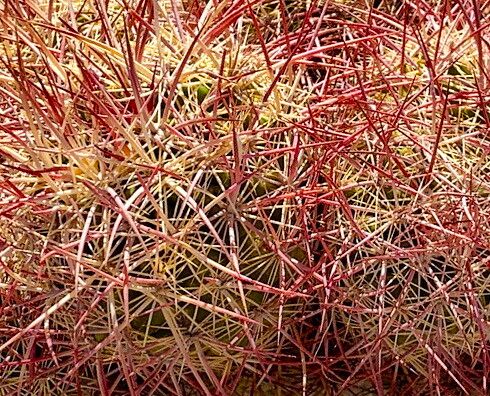
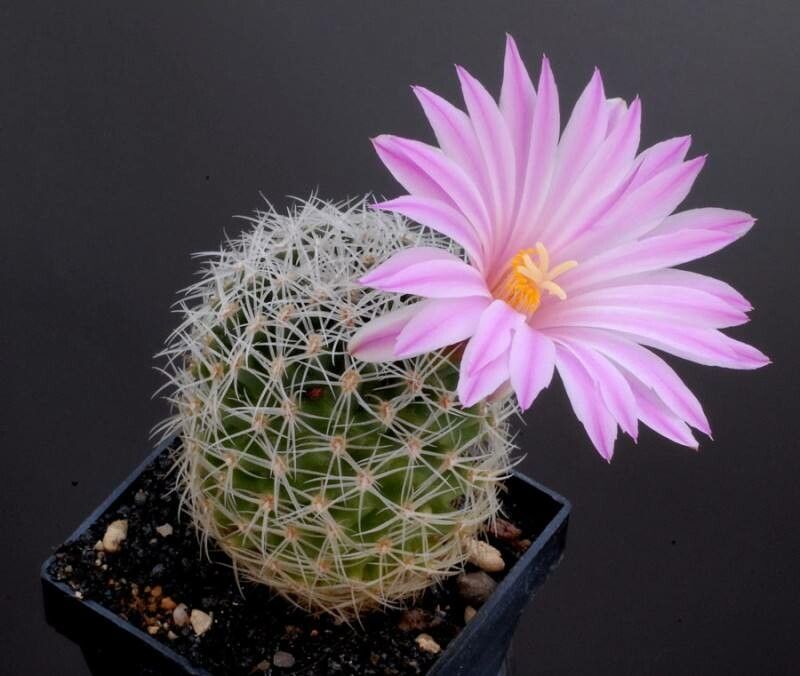
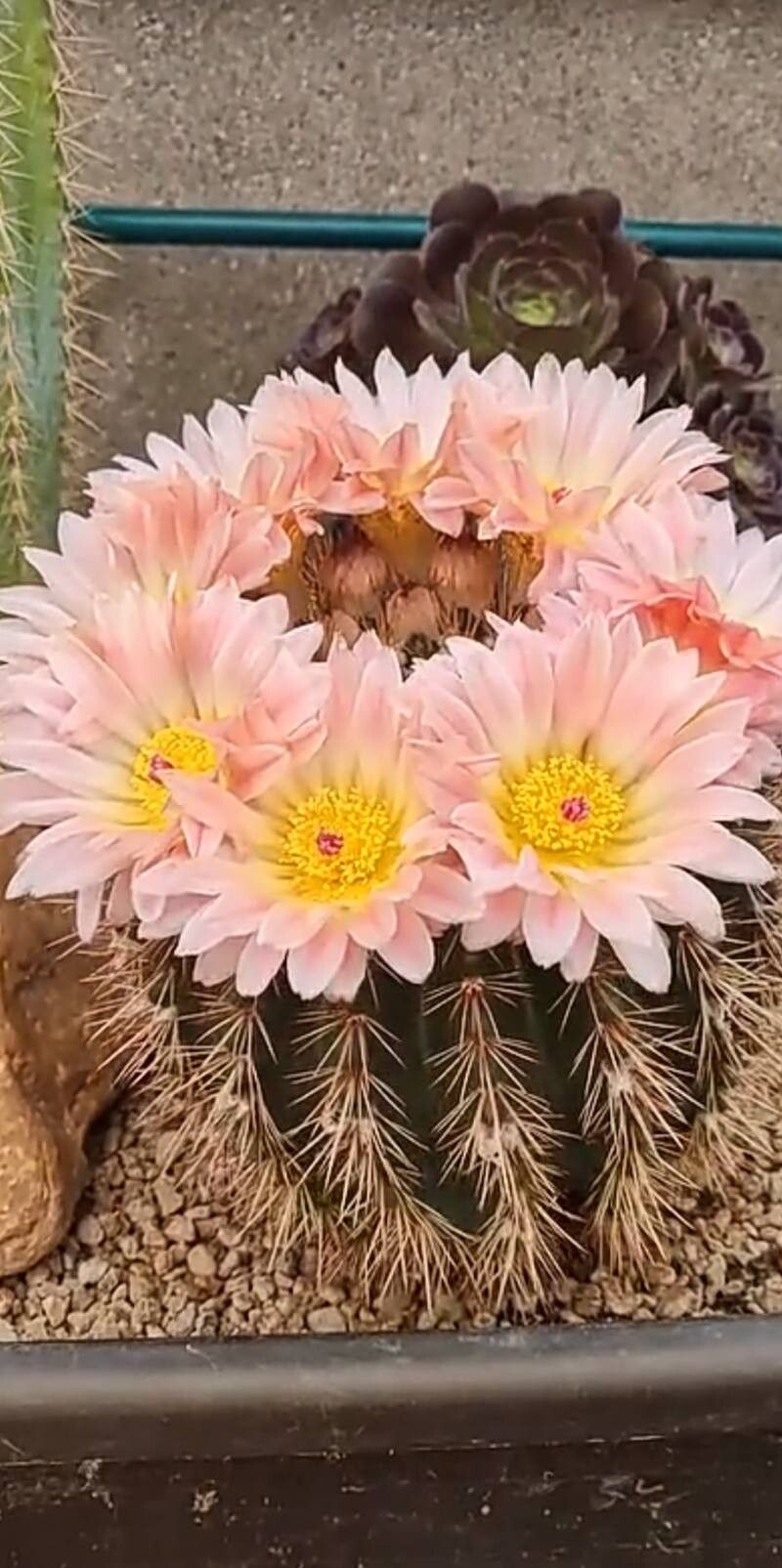
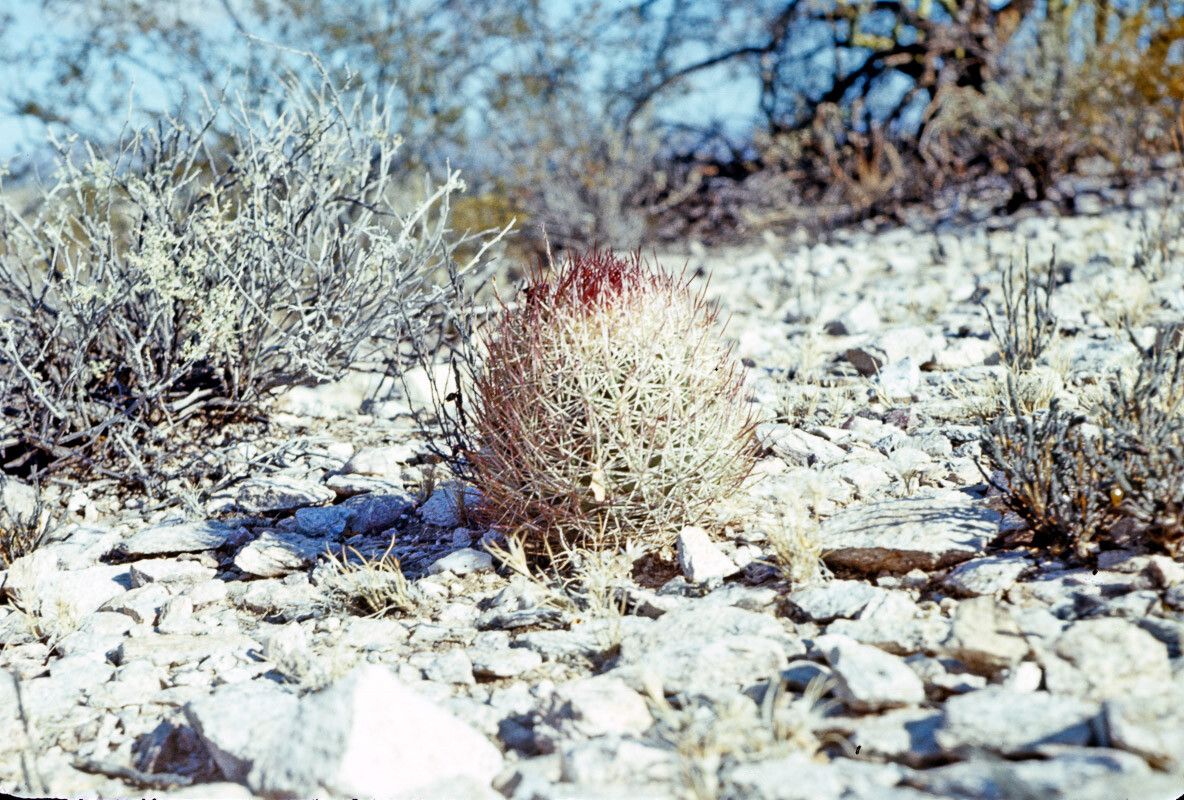
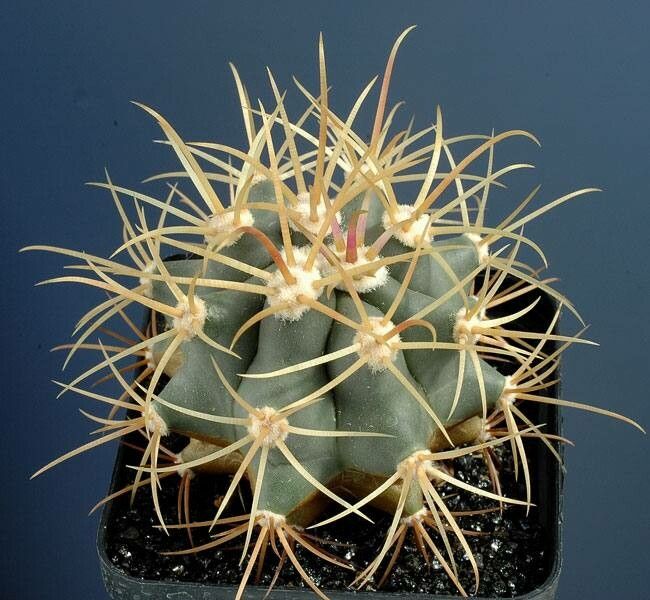
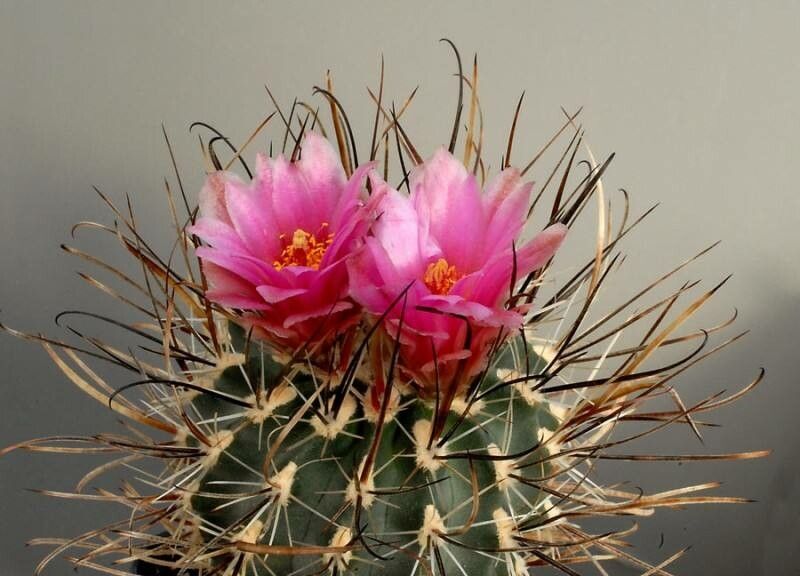
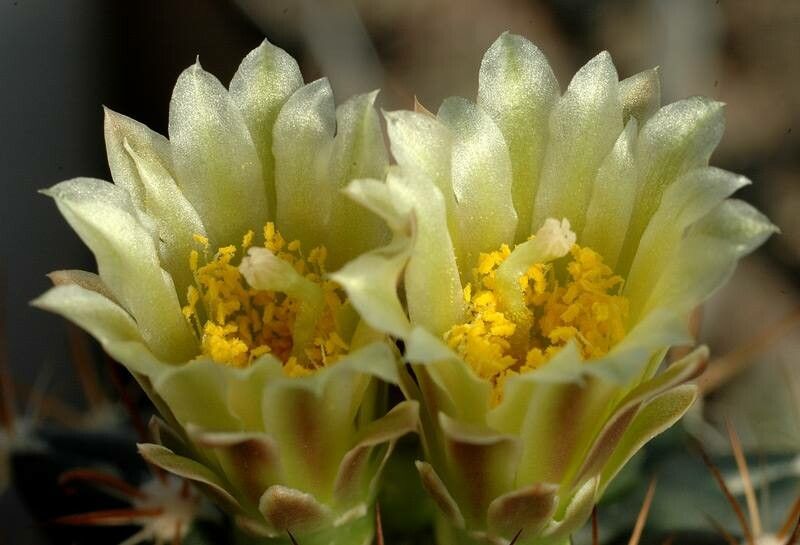
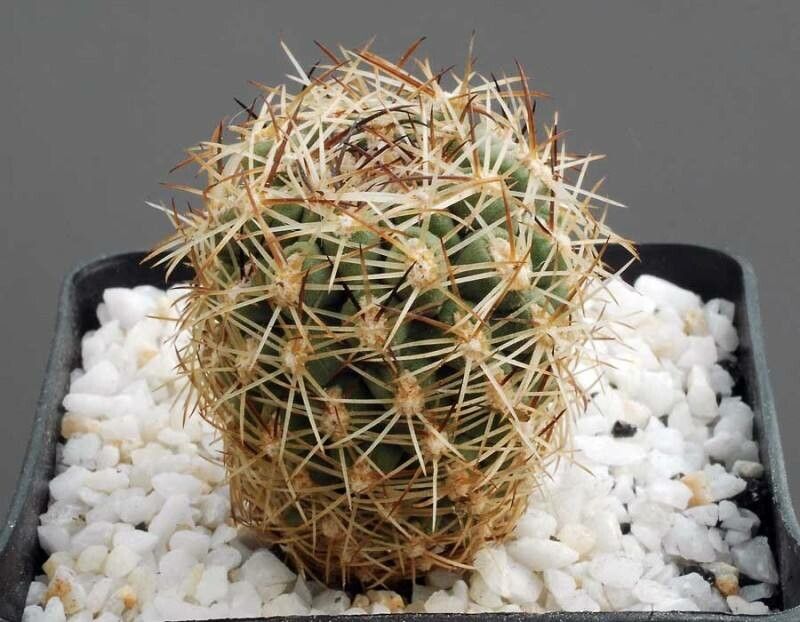
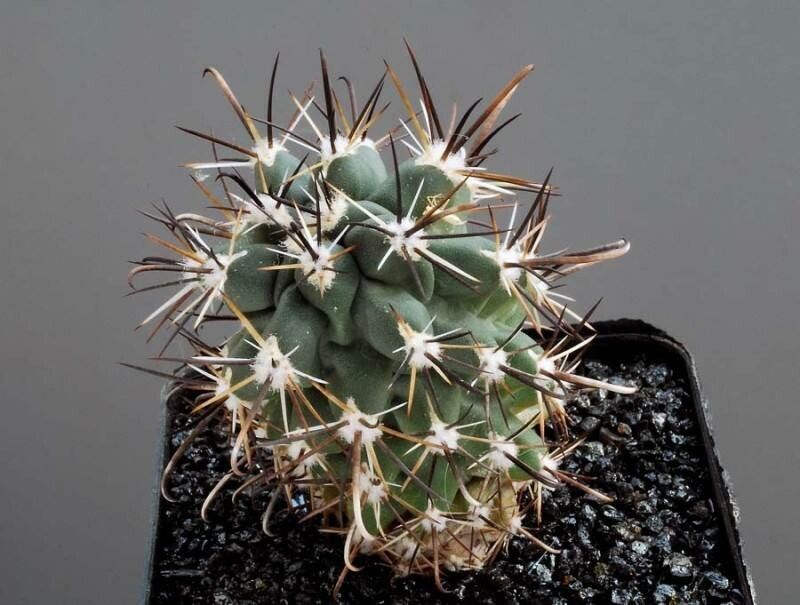
Sclerocactus johnsonii is a species of cactus known by the common names Johnson's beehive cactus and Johnson's fishhook cactus. It is native to the southwestern United States from eastern California to Utah and northwestern Mexico, where it can be found in desert scrub habitat. It produces an egg-shaped or cylindrical stem up to 25 centimetres tall by 10 centimetres wide. It is covered densely in straight and curving spines which may be up to 4 centimetres long and come in shades of yellow, gray, lavender, and pink or red, with up to 24 per areole. The cactus may have yellow or pink flowers; the species is sometimes divided into two varieties on the basis of flower color. Flowers are up to 8 centimetres wide. The scaly, fleshy fruit is up to 1.8 centimetres long.
The Pygmy barrel cactus is fairly disease-resistant and typically tolerates normal care without becoming ill easily. It can, however, be vulnerable to mealybugs; these pests may cause some harm but are usually not a major danger. Regarding care, the Pygmy barrel cactus is drought-tolerant and does not need frequent watering. It can endure long intervals without water and requires little fertilizer. That said, it is very prone to root rot when lighting is poor and it is given too much water. In general, the Pygmy barrel cactus is a good choice for people who prefer low-maintenance plants, though it remains important to meet its basic requirements. It is especially appropriate for those who are often away for long periods and might forget to water their plants regularly.
How to keep Sclerocactus Johnsonii.
Light
Originating from arid regions, the Pygmy barrel cactus does best in full sun; its native habitat has intense sunlight and very little shade. It can also tolerate partial sun, giving it some flexibility in where it can grow.
Water
The Pygmy barrel cactus is well-adapted to dry conditions and requires thorough watering only when the soil is completely dry. During the growing seasons—spring, summer, and fall—water the cactus once or twice a week. In winter, reduce the frequency of watering. It's best to use rainwater or distilled water to avoid soil compaction caused by minerals found in tap water. Be careful not to splash water on the stem.
Temperature
Although the Pygmy barrel cactus can tolerate some heat, it mainly does best and grows in the cooler months and becomes dormant in summer. In very hot summer conditions, it should be shaded to avoid scorching from strong sunlight. Watering ought to be reduced or suspended during the hottest period to prevent root rot. The cactus shows vigorous growth in winter and spring. So long as temperatures do not fall too low, it will continue to grow steadily.
Fertilizer
For the Pygmy barrel cactus, give light applications of fertilizer once or twice a year during the growing season. Avoid fertilizing in winter and in summer when the plant is dormant. Use less fertilizer for plants that have been repotted and wait a couple of months after repotting before you fertilize. Fertilizing helps maintain healthy growth and promotes blooming.
Pruning
The pygmy barrel cactus needs very little pruning, mostly to remove dead or damaged parts. It's best to do this in early spring. Pruning helps improve airflow, reduces the risk of disease, and keeps the cactus in a compact shape while allowing sunlight to reach it. Be sure to use sanitized tools to prevent infection and encourage healthy growth.
Botanical profile.
- Plant Type
- Succulent
- Life Cycle
- Perennial
- Genus
- Sclerocactus
- Family
- Cactaceae
- Hardiness Zone
- 7-10
- Mature Height
- 10 cm to 30 cm
- Mature Spread
- 5 cm to 15 cm
- Leaf Color
- Green, Dark Green
- Leaf Type
- Evergreen
- Flower Size
- 2.03 cm to 4.06 cm
- Bloom Time
- Early spring, Mid spring
- Planting Time
- Spring, Summer
- Harvest Time
- Late spring, Early summer
Other names.