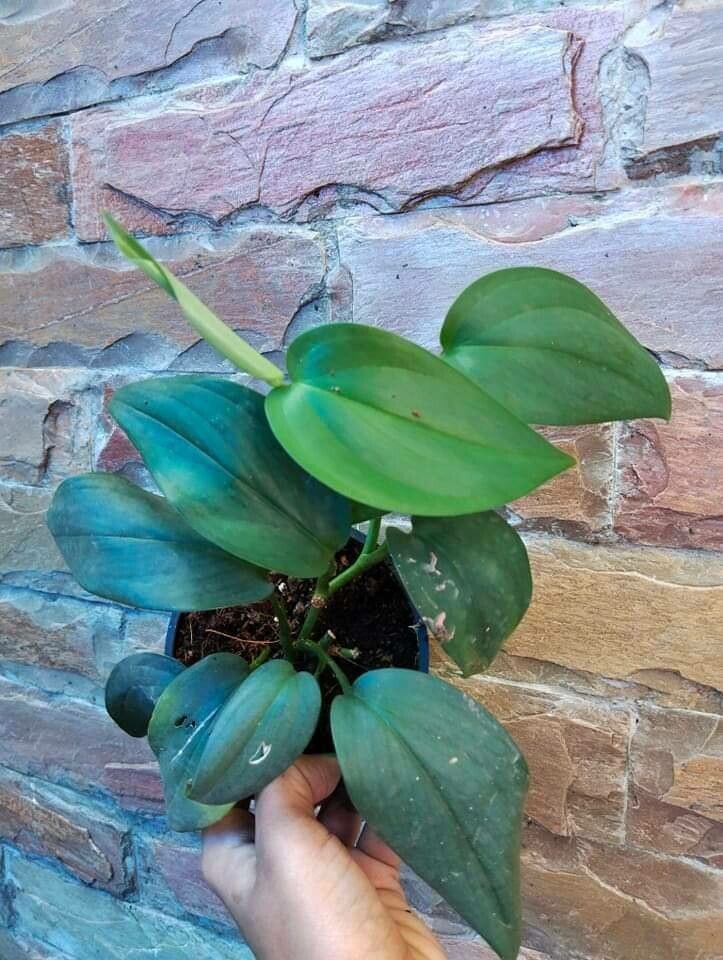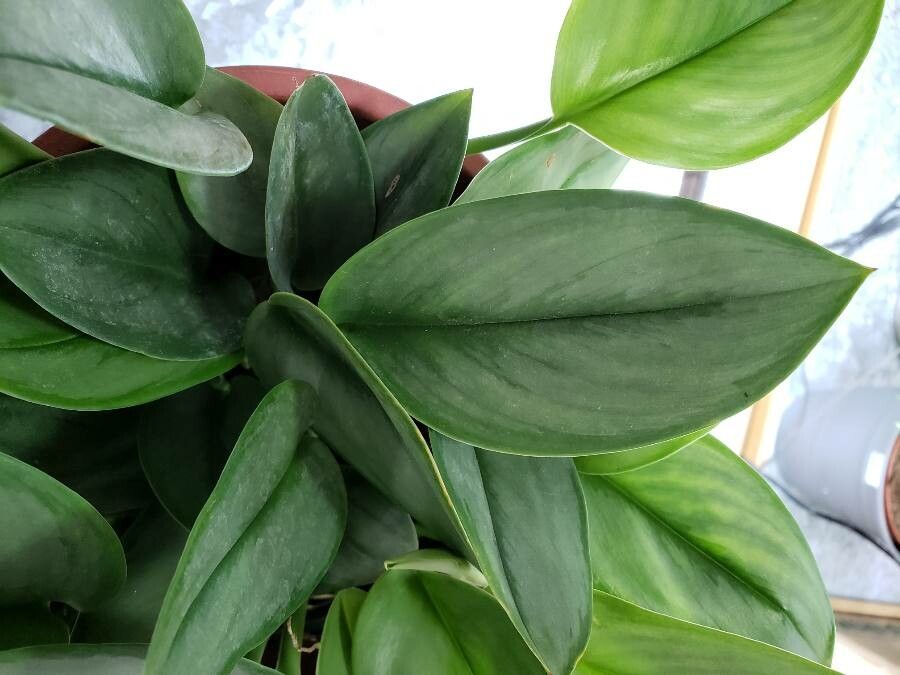
Scindapsus pictus, also known as Satin Pothos or Silver Philodendron, is a popular houseplant within the Araceae family. Native to Southeast Asia, it has gained popularity among plant enthusiasts for its attractive foliage and easy maintenance.
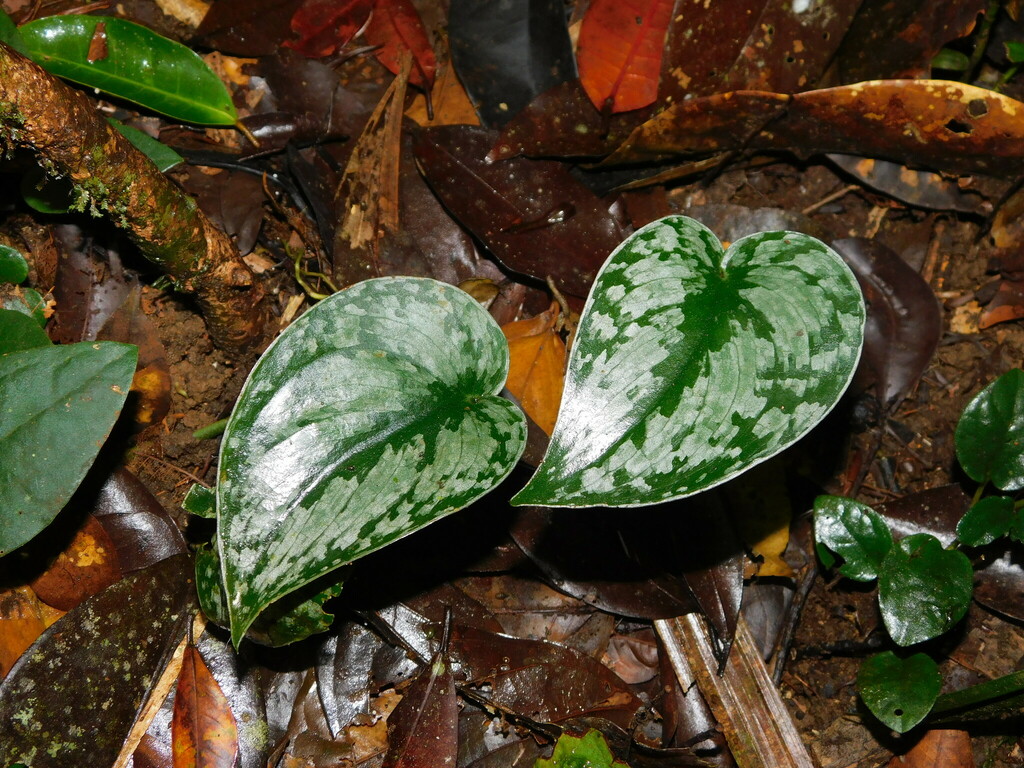
The plant boasts heart-shaped leaves that are dark green with silver markings, which create a velvety texture and give the plant its unique satin-like appearance. Under proper care, Scindapsus pictus can grow up to 6 feet in length.
This houseplant thrives in bright, indirect light but can also tolerate low-light conditions. It prefers well-draining soil and requires moderate watering, allowing the soil to dry out slightly between waterings.
Satin pothos, commonly grown as houseplants in the United States, naturally thrive in the wild within tropical regions. In their natural environment, these plants are epiphytic, meaning they grow on the surfaces of trees. As satin pothos climb up tree trunks, their leaves flatten against the surface for protection. Inside homes, satin pothos are often displayed in hanging baskets, allowing their vines to gracefully trail downward. FUN FACT · FROM THE LIBRARY
Scindapsus pictus is notable for its air-purifying abilities, effectively removing toxins such as formaldehyde from indoor air. Additionally, it is non-toxic to both pets and humans when ingested in small amounts.
Overall, Scindapsus pictus is an excellent addition to any indoor space, thanks to its attractive foliage and low maintenance requirements.
Satin Pothos: Although this species is not technically a pothos plant, it is closely related. It is known for its dark green leaves adorned with abundant silver markings and a satin-like sheen, which is why it is called "satin pothos."
Satin pothos is generally disease-resistant and is usually not prone to illness. However, it can develop leaf spots if light and ventilation are poor and if it is overwatered. The plant is considered easy to care for, since it mainly needs regular watering and little else. Satin pothos is well suited to people who lack the time and energy to provide frequent care.
How to keep Scindapsus Pictus.
Light
Satin pothos prefers places with filtered or reduced sunlight and often thrives in shaded, forest-like settings. Adequate sun exposure is important for its healthy growth; both too little and too much light can be harmful. Nevertheless, it can tolerate some sunlight.
Water
Satin pothos thrives in the humid, tropical understory environment, where it requires consistent moisture. To keep the soil moist but not waterlogged, it's best to water the plant weekly. Higher humidity levels are ideal for promoting its ornamental growth. You can achieve this by misting the plant regularly or using a humidifier to support its lush foliage and overall health.
Humidity
This plant will thrive in moderate humidity, which is probably the level in your home. However, misting it a few times a week can be very beneficial. Make sure the room has good ventilation.
Temperature
Satin pothos' native growing conditions indicate it performs best in an average temperature range of 68 to 86℉ (20 to 30℃). It can, however, tolerate temperatures as high as 105℉ (41℃). In winter, keeping temperatures above 60℉ (15℃) is essential to avoid damaging the plant. During summer, temperatures over 86℉ (30℃) can stress satin pothos, which can be eased by moving it to a cooler spot or providing adequate shade.
Fertilizer
Satin pothos requires the most fertilizer during its active growing period, primarily in spring, summer, and early fall. Fertilizing provides essential nutrients that the soil may lack, supporting healthy root and stem development and maintaining the attractive foliage that is a defining feature of this plant.
Pruning
Satin pothos, known for its silvery, variegated leaves, thrives when pruned from early to late spring. To encourage better growth, enhance air circulation, and maintain its visual appeal, trim any leggy stems just above the leaf nodes and remove any yellowing leaves. This practice helps prevent overcrowding and reduces the risk of disease.
Pot & Repot
Repot Satin pothos in spring or summer when temperatures are warm enough, choosing a slightly larger pot with good drainage. Water thoroughly after repotting, and place the plant in bright, indirect light. Consider adding a moss pole for support as it grows.
Botanical profile.
- Plant Type
- Vine, Herb
- Life Cycle
- Perennial
- Genus
- Scindapsus
- Family
- Araceae
- Hardiness Zone
- 10-13
- Mature Height
- 3 m
- Mature Spread
- 1.52 m
- Leaf Color
- Green, Silver, Gray, Variegated
- Leaf Type
- Evergreen
- Flower Color
- Yellow, Green
- Bloom Time
- Mid spring, Late spring, Summer
- Planting Time
- Spring, Summer, Autumn, Winter
- Harvest Time
- Late summer, Fall
- Native Area
- Malaysia, Indonesia, Philippines, Singapore, Bangladesh, Brunei
Other names.
Reader questions.
When Should I Water My Satin Pothos?
Timely watering is crucial for the health and growth of satin pothos. Look for signs like soft or floppy leaves, which suggest dehydration, and wilted or yellowing leaves that might indicate a need for water. Another indicator is the soil moisture level; if the top 1 inch of soil is dry, it's time to water your plant. Leaves often droop when the plant is thirsty, but this should revive post-watering. Failing to water properly can lead to overwatering issues, such as root rot, or underwatering issues, leading to dehydration and slowed growth. By observing these signs and balancing your watering schedule, you can ensure the wellbeing of your satin pothos.
Why should I add fertilizer to my Satin pothos plant?
Satin pothos, like all plants, needs soil nutrients for growth. However, not all soils have the necessary nutrients. Fertilization and soil amendments help ensure that plants have the required nutrients, including those specific to them. For the satin pothos, fertilizer is needed to promote healthy root and stem development throughout the growing season. Additionally, fertilizer helps the satin pothos achieve beautiful foliage, which is its main ornamental feature.
What are the light requirements for satin pothos?
Satin pothos thrives in environments with filtered or diminished sun exposure and can tolerate a range of light conditions from full shade (less than 3 hours of sunlight) to partial sun (about 3-6 hours of sunlight). It's essential to observe how sunlight moves through your garden or home to choose spots that offer the perfect balance of light and shade, ensuring the plant's happiness. For indoor plants, when natural sunlight is insufficient, especially in winter or in less sunny spaces, artificial lighting such as LED lights can be used to provide the necessary wavelengths of light that your plants need. Depending on the plant's natural sunlight needs, the amount of artificial light provided should be adjusted accordingly.
What are the ideal temperature conditions for growing Satin Pothos?
Satin Pothos thrives in an environment with temperatures ranging from 68 to 86°F (20 to 30°C), reflecting its preference for warm conditions. It can endure up to 105°F (41°C) but it's vital to keep it above 60°F (15°C) during winter to avoid plant damage. In times of high temperatures, especially above 86°F (30°C), measures like relocating the plant to a cooler spot or providing shade are recommended. Moreover, in autumn, moving Satin Pothos indoors to a location near a bright window, yet away from direct heat sources, helps in maintaining optimal growth temperatures.
How Should I Water My Satin Pothos?
Satin pothos requires careful watering to thrive, benefiting greatly from the bottom-watering technique. This method allows the roots to absorb moisture adequately without over-saturating the surface, minimizing the risk of fungal diseases and avoiding wetting the foliage excessively. When using a watering can, opt for one with a narrow spout to target the base of the plant and avoid the leaves. This focused approach to watering helps maintain optimal hydration levels at the root level.
When should I fertilize my Satin pothos plant?
During the active growth period of a Satin pothos, which lasts from spring to early fall, it will require the highest amount of fertilizer. Once winter is over, you should feed your Satin pothos every two to four weeks until fall. As fall approaches, gradually reduce the frequency of fertilization until you completely stop feeding the plant in preparation for the winter months when it has a slower growth rate.
What symptoms indicate a satin pothos is getting too much or too little light?
Symptoms of inadequate light in satin pothos include leggy or sparse growth, slower or no new growth, and faster leaf drop. Conversely, too much light can cause chlorosis, where leaves lose their green color and turn yellow, sunscald with pale or necrotic areas on the plant tissue, leaf curling, wilting due to increased water loss, and leaf scorching with brown, dry edges on leaves. These symptoms signal that the plant's light environment needs adjustment.
How does low temperature affect Satin Pothos and what are the solutions?
Satin Pothos is adversely affected by low temperatures, showing a preference for warmth, as highlighted by its native tropical origins. Signs of low temperature stress include a lightening of leaf color, and after frost exposure, leaves may turn brown or black, accompanied by wilting and drooping. To remedy this, frost-damaged parts should be trimmed and the plant moved indoors to a warmer setting. Placing the plant near a south-facing window guarantees ample sunlight without the risks posed by heaters or air conditioning vents which might dry out the air excessively.
How Much Water Does Satin Pothos Really Need?
Satin pothos's watering needs are influenced by its tropical nature, requiring consistent moist soil without being waterlogged. For pots sized 6-8 inches, enough water should be provided to dampen the soil depth once a week, adjusting according to the size of the pot and the plant. Healthy, well-watered satin pothos will show robust growth and glossy leaves. Over-watering and under-watering can cause yellowing or browning of leaves, respectively. Aim for slightly moist soil, ensuring water reaches the bottom to accommodate the moderately deep roots of the satin pothos.
When should I not put fertilizer on my Satin pothos?
For most of the year, which includes spring, summer, and most of fall, it's important to regularly feed your Satin pothos. However, if you notice that your Satin pothos has received too much fertilizer or if you've fertilized it incorrectly, causing fertilizer burn or any other issues, you need to fix those before resuming regular feeding. The only time you should avoid fertilizing a Satin pothos is during winter. If you grow this plant indoors in a cold winter area, it will go into a dormant phase. Feeding the plant during this phase is unnecessary and harmful, as it can lead to fertilizer burn.
How can I address light-related issues in satin pothos?
To address light-related issues in satin pothos, consider moving your plants to better-suited spots for sunlight exposure. For indoor plants, place them 1-2 meters away from a window to receive ample filtered light, including brief periods of direct morning sunlight. Using artificial light, such as desk or ceiling lamps for at least 8 hours daily or investing in professional plant grow lights, can also be helpful. For outdoor plants, gradually moving them to sunnier locations each week can help them adapt without causing sunburn. If light obstruction is an issue, reducing it by pruning trees or relocating smaller plants can ensure they receive sufficient sunlight. Note that parts of the plant affected by insufficient sunlight may not recover, but new growth will be healthy after adjusting the light exposure.
How does high temperature affect Satin Pothos and what are the solutions?
Satin Pothos should ideally be kept below the maximum tolerable temperatures for optimal growth. Exposure to temperatures beyond its tolerance threshold results in lighter leaf colors and increased susceptibility to sunburn. To combat high temperature stress, it's advisable to prune away sunburned and dried parts, relocate the plant to a shaded area avoiding direct midday and afternoon sun, and ensure the soil is kept moist through watering in the morning and evening.