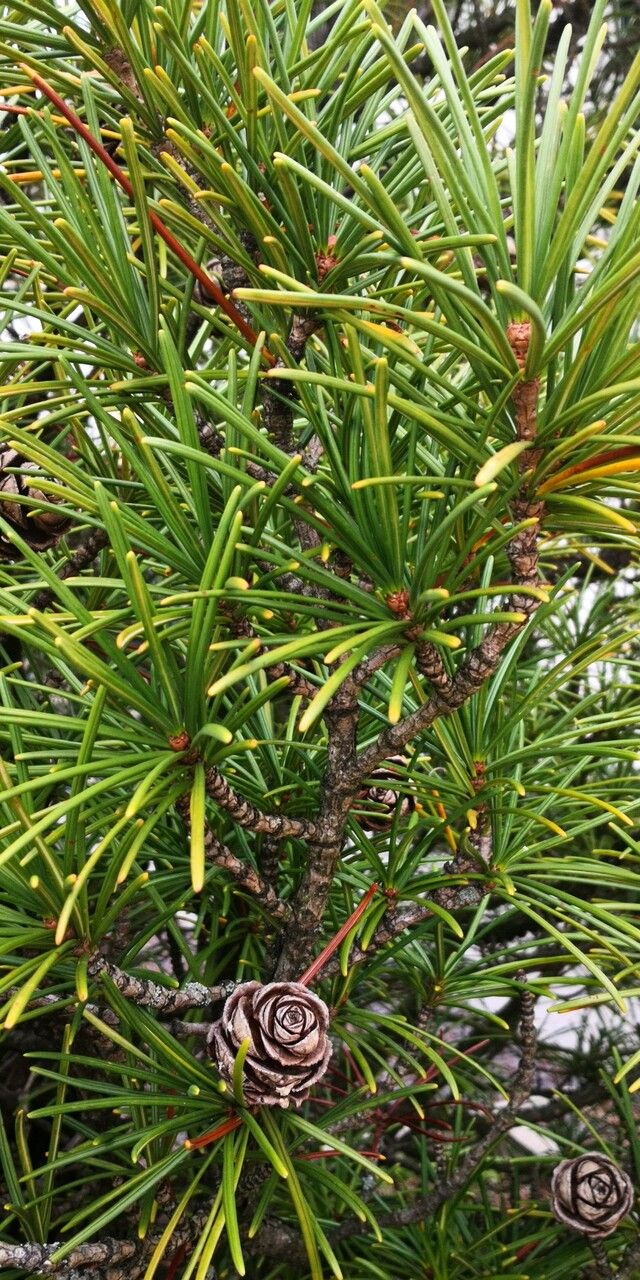
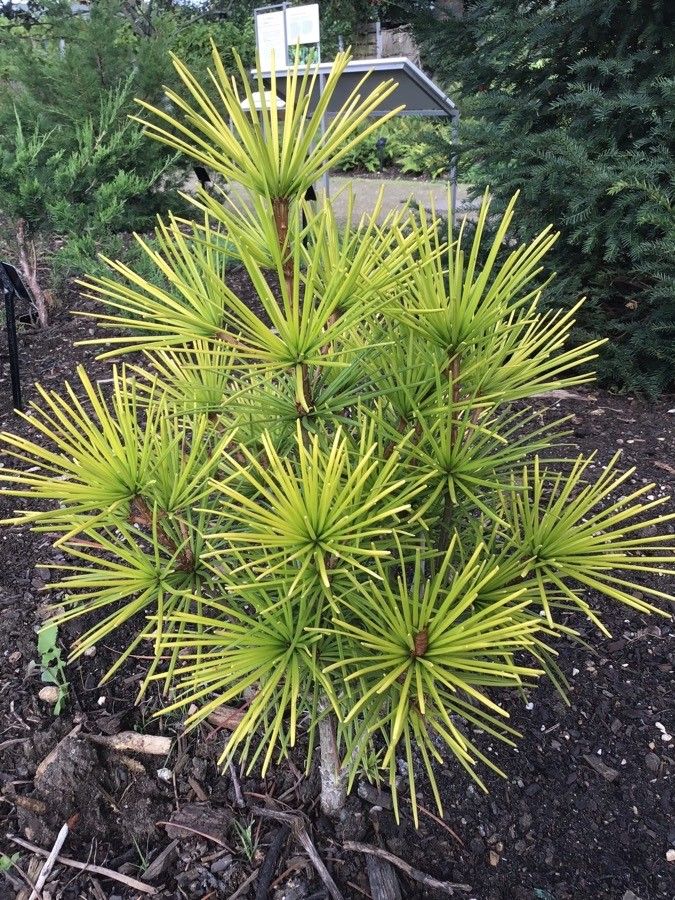
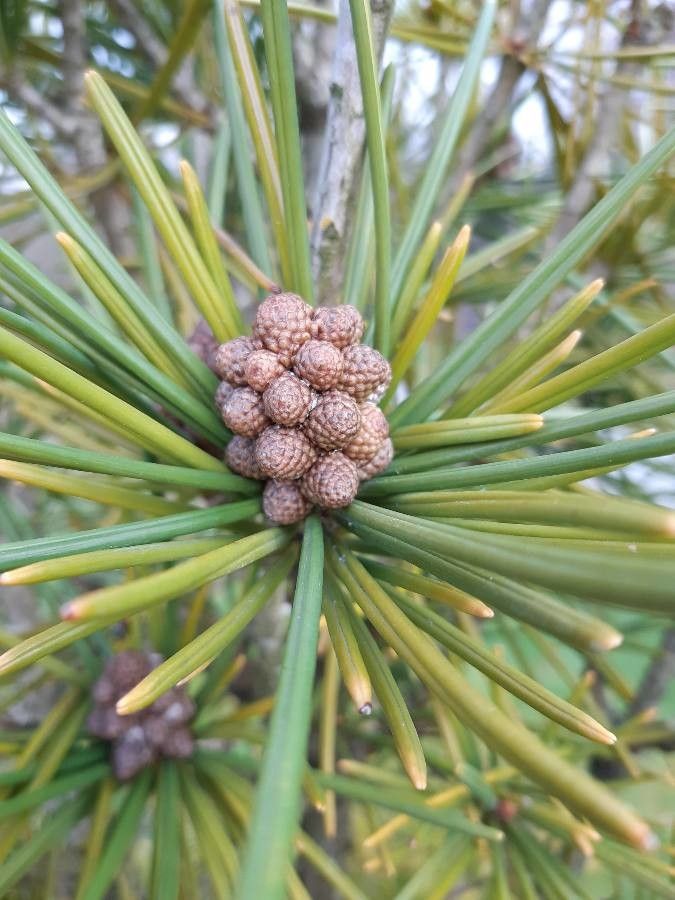
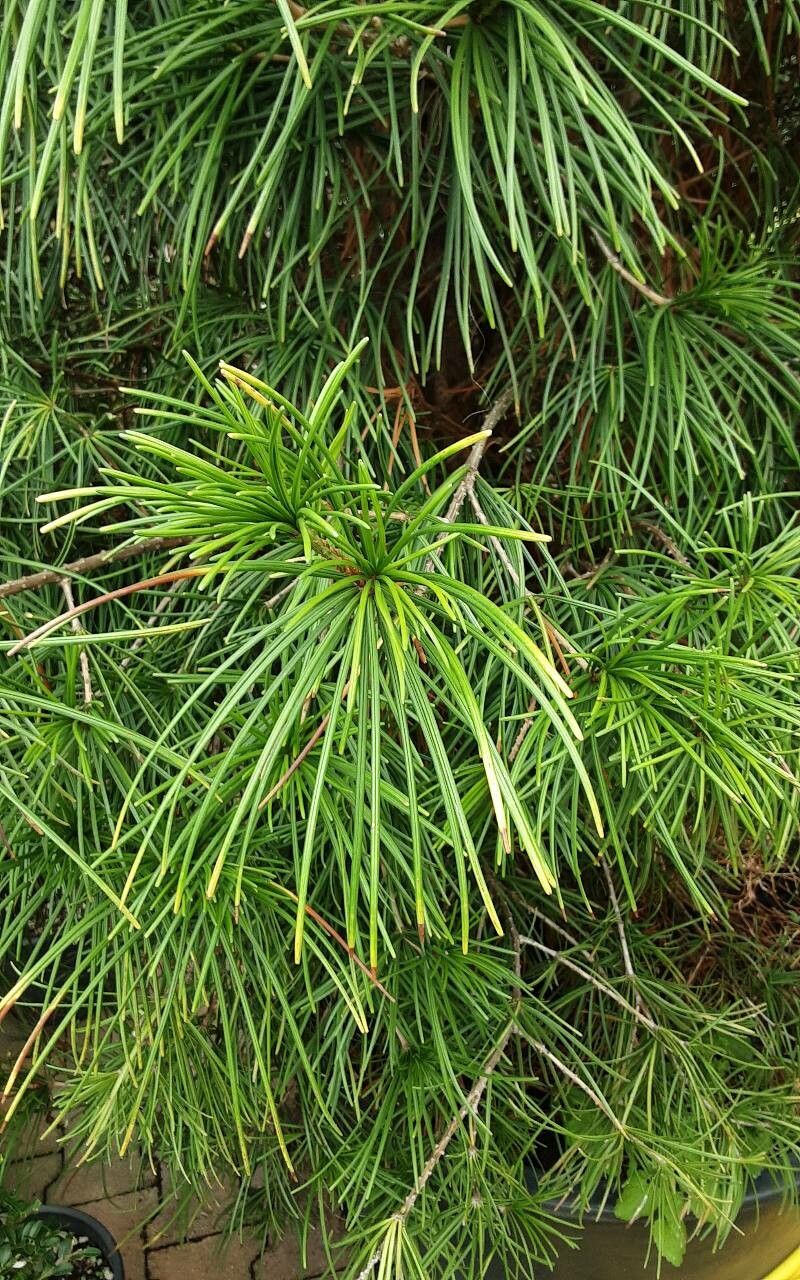
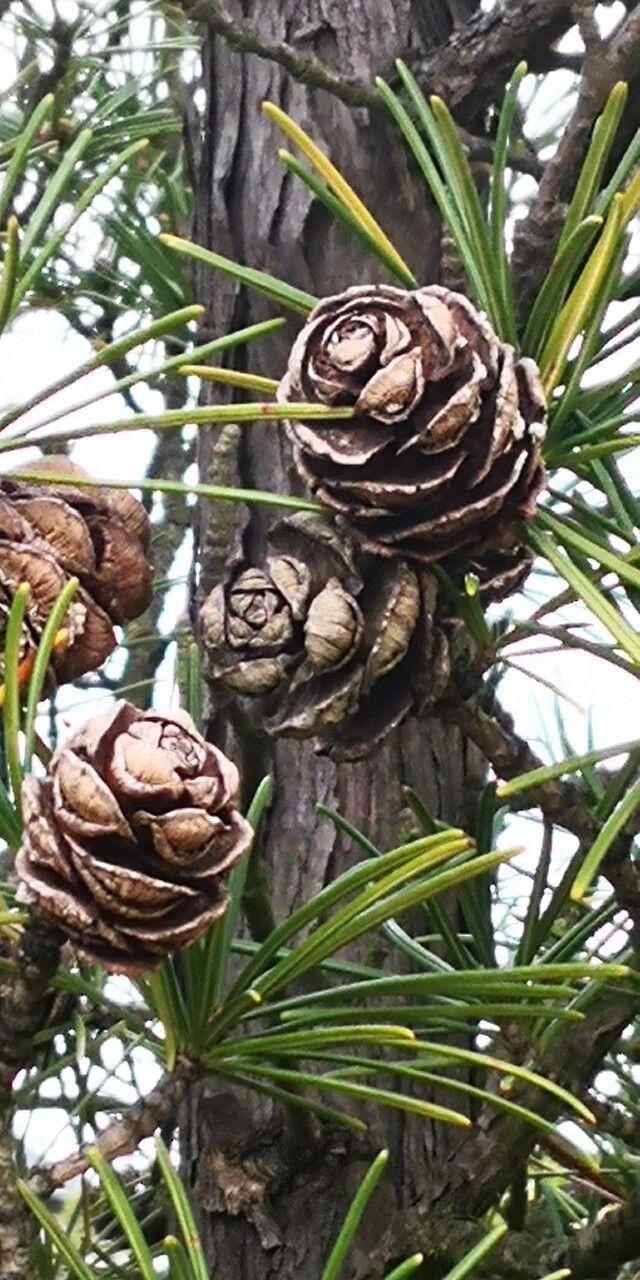
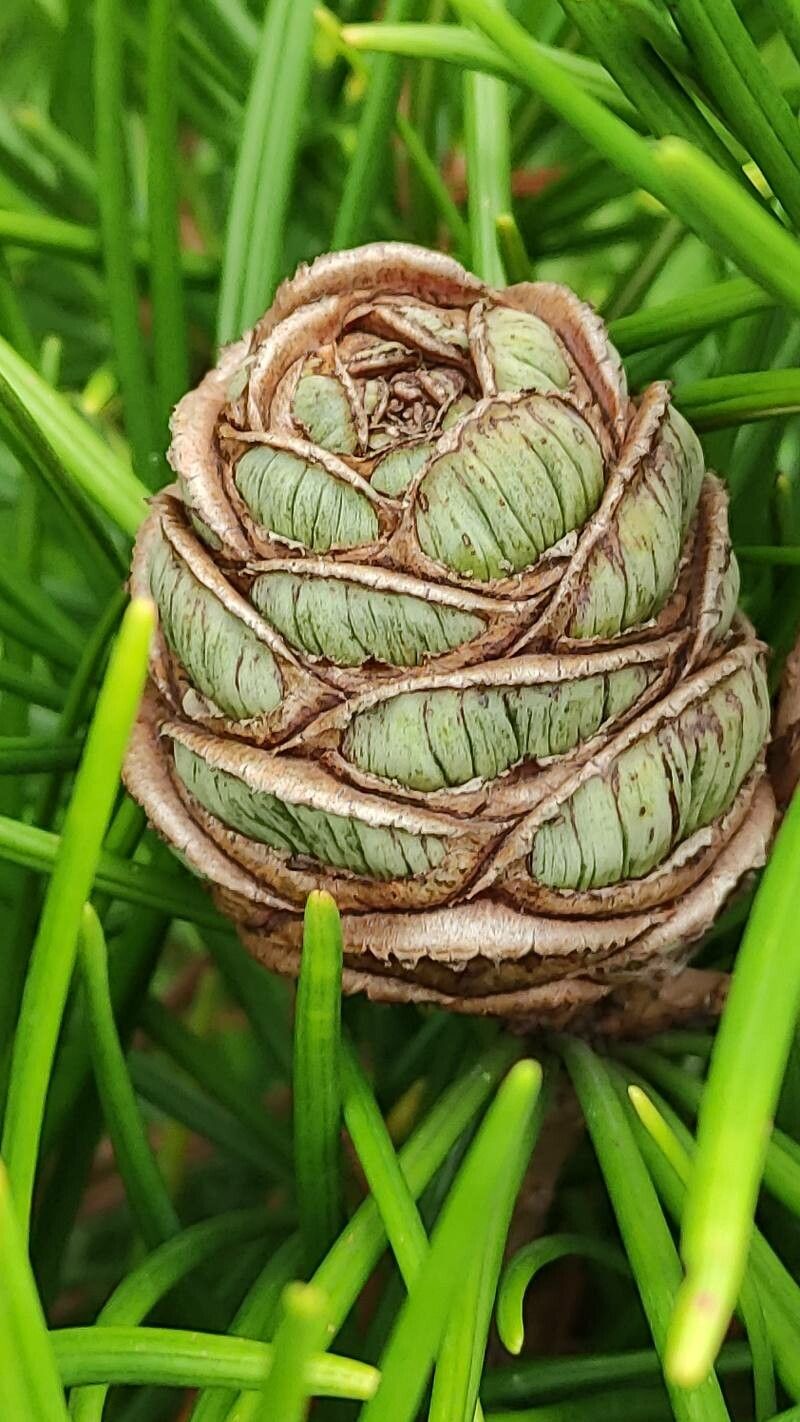
Sciadopitys verticillata, commonly known as the Japanese umbrella pine, is a unique and beautiful evergreen tree native to Japan. This slow-growing conifer can reach heights of up to 20 meters and is notable for its distinctive umbrella-like shape formed by whorls of dark green needles clustered densely along its branches.
The Japanese umbrella pine is highly prized for its ornamental qualities and has been cultivated in Japan for centuries as an important garden plant. It thrives best in moist, well-drained soils and partial shade but is also capable of tolerating full sun.
Beyond its aesthetic appeal, Sciadopitys verticillata possesses medicinal properties. Its leaves contain compounds traditionally used in Japanese medicine to treat ailments such as coughs, colds, fever, and inflammation.
In summary, Sciadopitys verticillata is an impressive tree valued for both its ornamental beauty and medicinal benefits, making it a treasured addition to any landscape or garden setting.
Japanese umbrella pine has strong resistance to disease and is typically not prone to illnesses. Regarding care, this plant is fairly low-maintenance. When planted outdoors it requires little watering, and larger plants usually do not need pruning. Smaller plants, however, should be pruned after they have finished blooming. Japanese umbrella pine is suitable for anyone with outdoor space, such as a garden or deck, and does not require extensive plant-care experience.
How to keep Sciadopitys Verticillata.
Light
The Japanese umbrella pine prefers abundant light, though it can tolerate reduced or partial sunlight in some situations. It naturally does best where the sun is unobstructed, and this is reflected in how it grows. Too little light can slow its growth, while too much can cause its foliage to scorch.
Water
Originating from the forest understory in Japan, the Japanese umbrella pine thrives in humid environments. It needs consistent moisture without becoming waterlogged, so watering every 1-2 weeks is ideal. Often grown outdoors, the Japanese umbrella pine benefits from mulching to help retain soil moisture during its active growing season.
Temperature
The Japanese umbrella pine is native to temperate regions and prefers temperatures between 41 and 90 °F (5 and 32 ℃). In hotter seasons it may need shade and watering to help regulate its temperature.
Fertilizer
The Japanese umbrella pine has specific nutrient needs and does not require heavy fertilization. Spring is the best time to apply fertilizer for ideal growth. Supplying nutrients improves its health, strengthens its resistance to pests and diseases, and helps preserve its long lifespan.
Pruning
Pruning Japanese umbrella pine is best done from early to late winter while the tree is dormant. Focus on removing dead branches and thinning out dense areas to improve air circulation. Making minimal cuts not only enhances growth and aesthetics but also reduces the risk of disease. For detailed care techniques, consult horticultural guides.
Pot & Repot
When repotting Japanese umbrella pine, choose a pot 1-2 inches (2.5–5.1 cm) larger with ample drainage. Use a well-draining potting mix. Repot in spring or fall, ensuring the root ball is slightly lower than the rim of the flower pot. Water thoroughly after repotting and place in a warm spot with indirect sunlight.
Botanical profile.
- Plant Type
- Tree
- Life Cycle
- Perennial
- Genus
- Sciadopitys
- Family
- Sciadopityaceae
- Hardiness Zone
- 5-7
- Mature Height
- 14.94 m to 27.13 m
- Mature Spread
- 4.57 m to 6.1 m
- Leaf Color
- Green
- Leaf Type
- Evergreen
- Flower Size
- 2.54 cm
- Bloom Time
- Spring
- Planting Time
- Spring, Autumn
- Harvest Time
- Mid summer, Late summer, Early fall
- Native Area
- Japan
Other names.
Reader questions.
How should I water my Japanese umbrella pine tree?
When watering your Japanese umbrella pine, you have a lot of options for tools. Watering cans, hoses, and cups all work well. No matter what you choose, it’s important to water directly into the soil and make sure all areas are evenly moistened. Filtering your water is a good idea since tap water can have harmful particles. Using water that is about room temperature is best, as colder or hotter water can shock the plant. However, the Japanese umbrella pine usually does well with any type of water.
Why should I add fertilizer to my Japanese umbrella pine?
To encourage healthy growth of the Japanese umbrella pine, it is recommended to fertilize it in the spring. Keep in mind that this plant has a long lifespan and requires support. Adding nutrients to the soil not only improves its health, but also helps it resist common pests and diseases, which can otherwise hinder growth or shorten its lifespan.
What are the sunlight requirements for Japanese umbrella pine?
The Japanese umbrella pine requires full sunlight, which equates to above 6 hours of direct sunlight, but it can also tolerate partial sun, around 3-6 hours of sunlight. It’s crucial to observe how sunlight moves through your garden to ensure that you place your plants in locations that offer a balanced exposure to light and shade, guaranteeing their growth and well-being. Although this species thrives under abundant light, it can adapt to slightly lesser amounts of direct sunlight in some instances. Insufficient light could hinder growth, while excessive exposure might result in foliage scorching.
What is the native climate for Japanese umbrella pine?
The Japanese umbrella pine is native to temperate zones and thrives in temperatures ranging from 41 to 90 °F (5 to 32 °C). It is well-suited for cooler climates but requires shade and sufficient hydration during hotter seasons to help regulate its temperature. This species is highly cold-tolerant and doesn't need extra frost protection in winter, although it is beneficial to water the plant generously before the first freeze in autumn to keep the soil moist and prevent drought and water scarcity during winter and early spring.
What should I do if I give my Japanese umbrella pine too much or too little water?
Outdoor plants, especially newly planted ones or seedlings, are prone to lack of watering. It's important to remember to water them consistently for a few months while they are small or newly planted. This is because once the roots are established, Japanese umbrella pines can usually rely on rain for hydration. However, overwatering can be a problem when Japanese umbrella pines are planted in pots. If you accidentally overwater your plant, it's important to take immediate action to reduce the impact. Firstly, stop watering the plant to minimize the effects of overwatering. Then, remove the plant from its pot and inspect the roots. If there are no signs of root rot, you can return the plant to its container. But if there are signs of root rot, trim away the affected roots and consider applying a fungicide to prevent further damage. Finally, repot the Japanese umbrella pine in well-draining soil. On the other hand, underwatering a Japanese umbrella pine is a simpler issue to address. If you notice the plant's leaves drooping, drying out, and falling off, it means it is underwatered. Simply water the plant more frequently, and the leaves will quickly return to their fullness. Make sure to adjust your watering schedule as soon as you notice signs of underwatering.
When should I fertilize my Japanese umbrella pine for it to grow best?
The growing medium may not always provide sufficient nutrients for healthy growth. However, Japanese umbrella pine differs from garden annuals and perennials in that it doesn't need a lot of additional nutrients. The ideal time to fertilize Japanese umbrella pine is in the spring, just before new growth starts to appear.
What are the implications of inadequate or excessive sunlight for Japanese umbrella pine?
In conditions of poor lighting, the Japanese umbrella pine may exhibit smaller new leaves, leggy or sparse growth, accelerated leaf drop, halted growth, paler new leaves, and symptoms of chlorosis. On the flip side, excessive sunlight can lead to sunscald, leaf curling, wilting, and leaf scorching. These symptoms indicate either a deficiency or an excess of sunlight exposure, affecting the plant’s ability to photosynthesize effectively, maintain healthy tissues, and undergo proper growth processes.
How does low temperature affect Japanese umbrella pine?
Japanese umbrella pine is extremely cold-tolerant and can withstand winter temperatures down to -25°C. Below this temperature, while there may not be any visible damage during winter, the branches might become brittle and dry by spring, failing to produce new shoots. To help the plant recover from such damage, it is recommended to prune away any dead branches in the spring that have not produced new leaves.
How frequently should I give water to my Japanese umbrella pine tree?
If your area doesn't receive much rainfall, you'll need to water your outdoor plants every 2 weeks in the spring and fall, and more frequently in the summer. In the winter, when growth slows down, you can water them less often or not at all. However, if your Japanese umbrella pine is young or newly planted, you should water it more frequently to help it establish and grow. For potted plants like the Japanese umbrella pine, there are two main ways to determine how often to water them. The first is to set a predetermined watering schedule, such as once a week or every other week. However, this may not always be accurate for your specific plant and growing environment. Alternatively, you can base your watering frequency on the moisture level of the soil. It's best to wait until the top 2 to 4 inches of soil (about ⅓ to ½ depth of the pot) have completely dried out before watering again. This approach allows you to adjust your watering schedule based on the season and the plant's water needs, especially during the high-demand period of summer.
When is the best time to not add fertilizer to my Japanese umbrella pine?
While some plants benefit from frequent fertilization, the Japanese umbrella pine is not one of them. This particular plant does not require large amounts of additional nutrients, and excessive fertilizer can actually harm it by causing it to deteriorate. It is best to only apply fertilizer during the spring season, and refrain from doing so in the summer, fall, and winter. During these seasons, it is advised not to add fertilizer or organic matter to the soil.
How can artificial lighting be used for Japanese umbrella pine indoors?
For indoor Japanese umbrella pines, artificial lighting can compensate when natural sunlight is insufficient. LEDs are recommended due to their ability to provide specific light wavelengths needed for plant growth. Full sun plants require 30-50W/sq ft, partial sun plants 20-30W/sq ft, and full shade plants 10-20W/sq ft of artificial light. The light source should be placed 12-36 inches above the plant to mimic natural sunlight, ensuring the plant receives 8-12 hours of light per day to promote healthier, faster growth.
What happens to Japanese umbrella pine in high temperatures, and how can it be managed?
Japanese umbrella pine is not tolerant of high temperatures. Should the temperatures exceed 32°C, the plant may suffer significant leaf drop or, in severe cases, the entire plant may wither and die. To manage this, trim away any sunburned and dried-up parts of the plant. It is essential to relocate the plant to an area with shade during the midday and afternoon sun or use a shade cloth to provide protection. Additionally, water the plant in the morning and evening to keep the soil moist and help the plant stay hydrated.