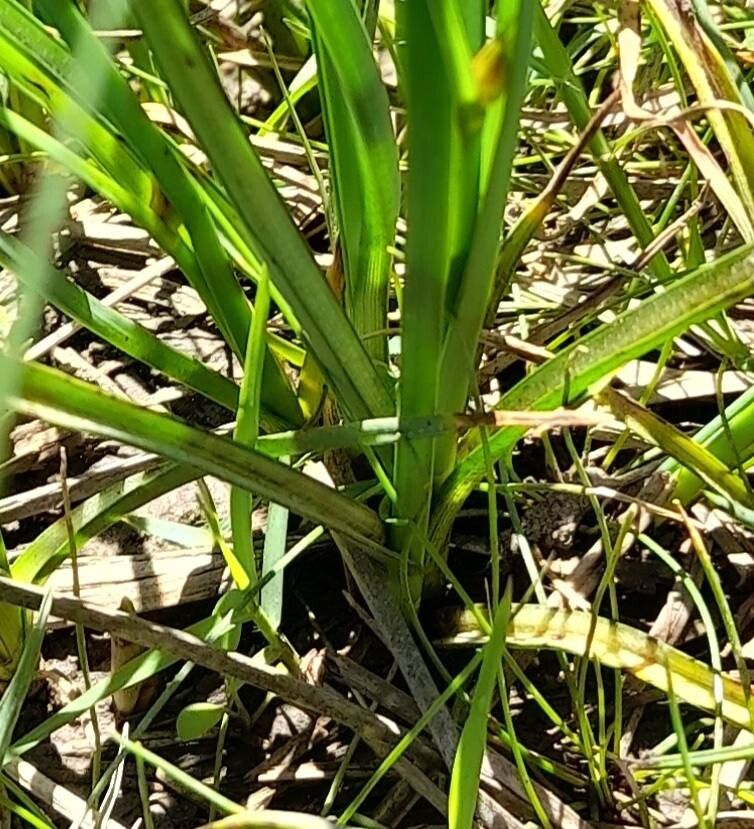
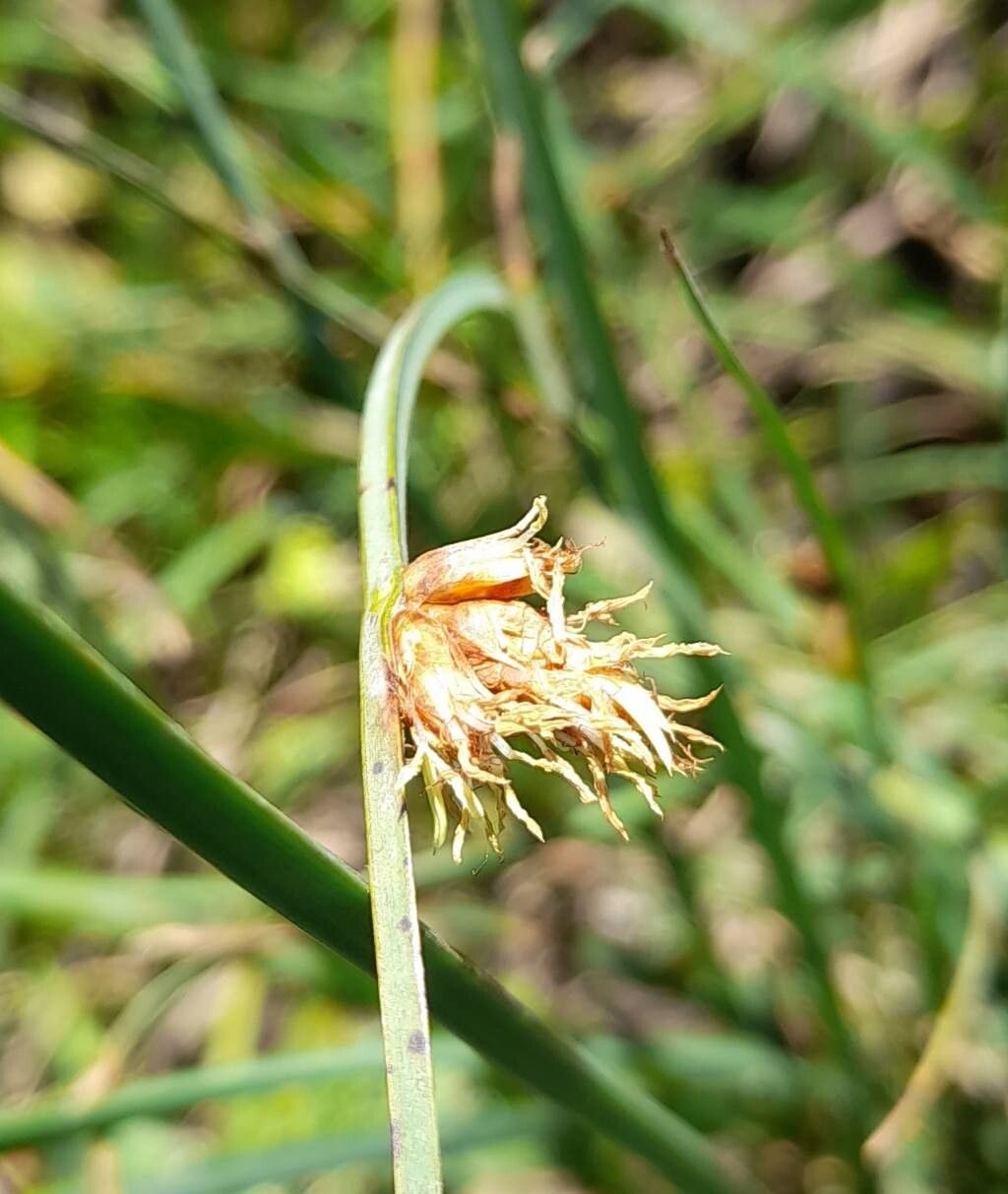
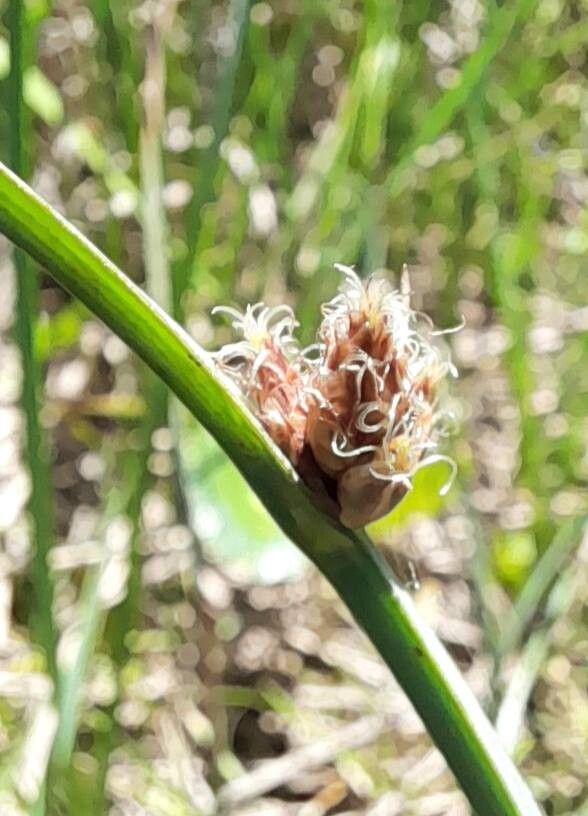
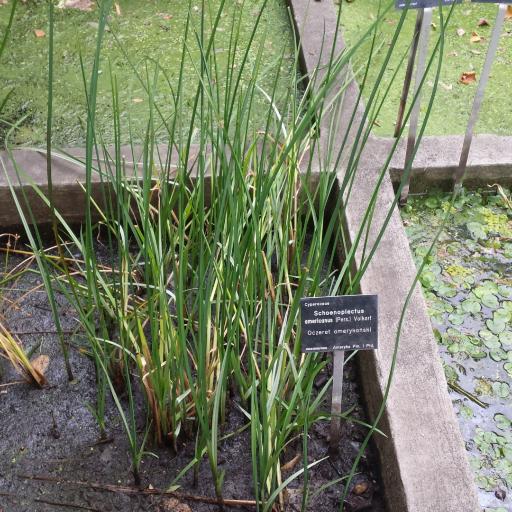
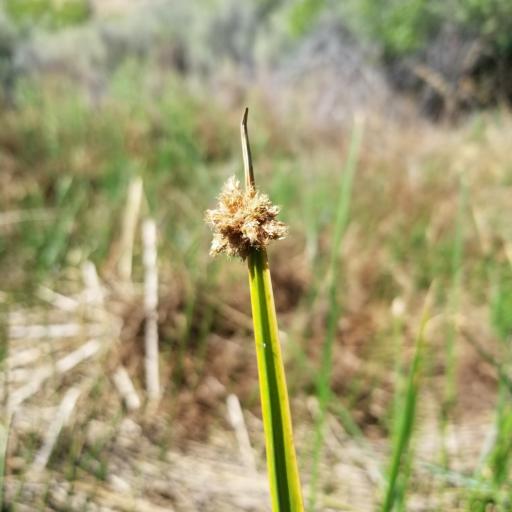
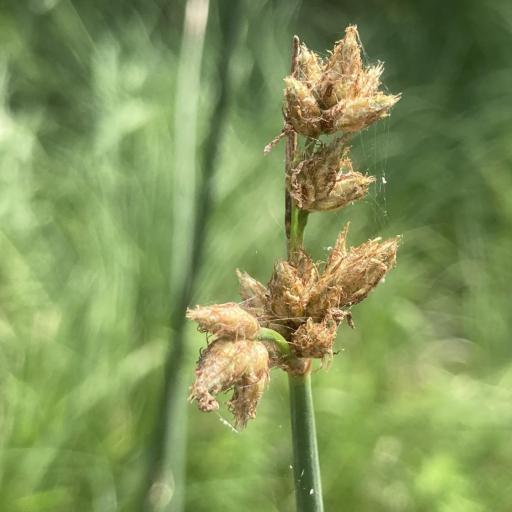
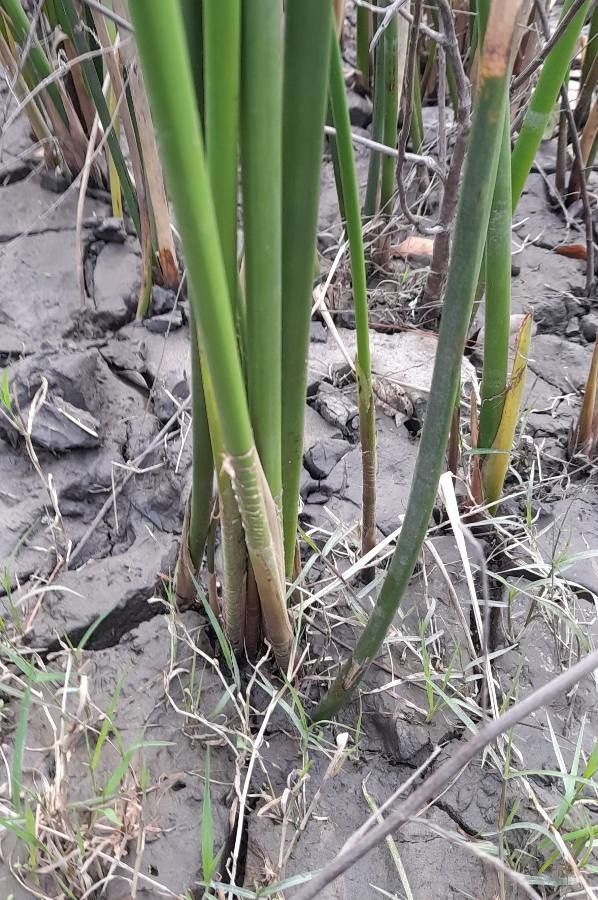
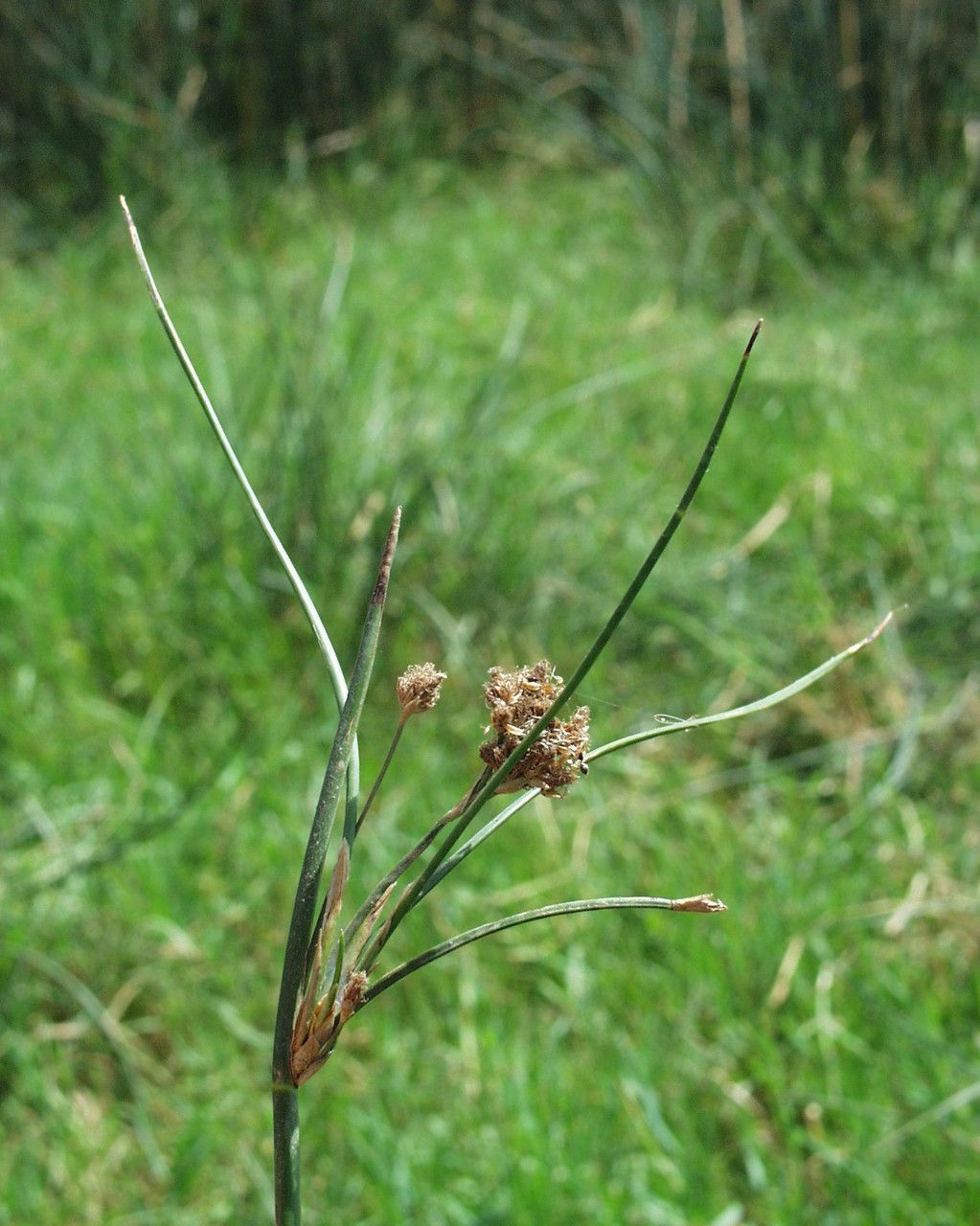
Schoenoplectus americanus (syn. Scirpus americanus) is a species of flowering plant in the sedge family known by the common names chairmaker's bulrush and Olney's three-square bulrush. It is native to the Americas, where it is known from Alaska to Nova Scotia and all the way into southern South America; it is most common along the East and Gulf Coasts of the United States and in parts of the western states. It grows in many types of coastal and inland wetland habitat, as well as sagebrush, desert scrub, chaparral, and plains. This rhizomatous perennial herb easily exceeds two meters in height. The stiff stems are sharply three-angled and usually very concave between the edges. Each plant has three or fewer leaves which are short and narrow. The inflorescence is a small head of several spikelets which may be brown to bright orange, red, purplish, or pale and translucent. They have hairy edges. The fruit is a brown achene. The plant reproduces sexually by seed and colonies spread via vegetative reproduction, sprouting from the rhizomes. This plant, particularly the rhizomes, are a food source of muskrat, nutria, and other animals; it is strongly favored by the snow goose in its wintering grounds. Native American groups used this plant for many purposes, including food, basketry, and hatmaking. It is used for revegetation projects in salt marsh habitat in its native range. It is a model organism in the study of salt marsh ecology and its response to climate change (currently global warming).
The sharp clubrush has good disease resistance and is generally not prone to illness. However, it can be vulnerable to pests and diseases present in its environment. These infections are typically not severe. Care-wise, this plant needs moderate maintenance. Regular pruning is required to keep a pleasing appearance and support healthy growth. Fertilizing can also aid in encouraging flowering. The sharp clubrush is well-suited for anyone with outdoor space, such as a garden or patio, and does not demand extensive experience in plant care. It may need more attention if cultivated indoors.
How to keep Schoenoplectus Americanus.
Light
Sharp clubrush is found in habitats that receive abundant sunlight, for example the shallow margins of ponds and lakes. It prefers full sun but can also tolerate partial sun.
Temperature
Sharp clubrush can adjust to a broad range of temperature conditions, but its distribution can still be constrained by various combinations of moisture and heat. It grows best in warm summer climates with sufficient rainfall or watering. Extended periods of cloudy, rainy weather, as well as long stretches of high temperatures, can raise the chance of Sharp clubrush dying. In winter, adequate protection from cold can increase the plant's survival rate.
Botanical profile.
- Plant Type
- Herb
- Life Cycle
- Perennial
- Genus
- Schoenoplectus
- Family
- Cyperaceae
- Hardiness Zone
- 4-9
- Mature Height
- 3.05 m
- Mature Spread
- 30 cm to 61 cm
- Leaf Color
- Dark Green
- Leaf Type
- Deciduous
- Flower Color
- White, Yellow, Brown
- Flower Size
- 0.25 cm to 0.51 cm
- Bloom Time
- Early summer, Mid summer
- Planting Time
- Spring, Summer, Autumn
- Harvest Time
- Late summer, Early fall
- Native Area
- Belize, Cuba, Mexico, Guatemala, Bolivia, Venezuela, Peru, New Zealand, Nicaragua, Costa Rica, Jamaica
Other names.