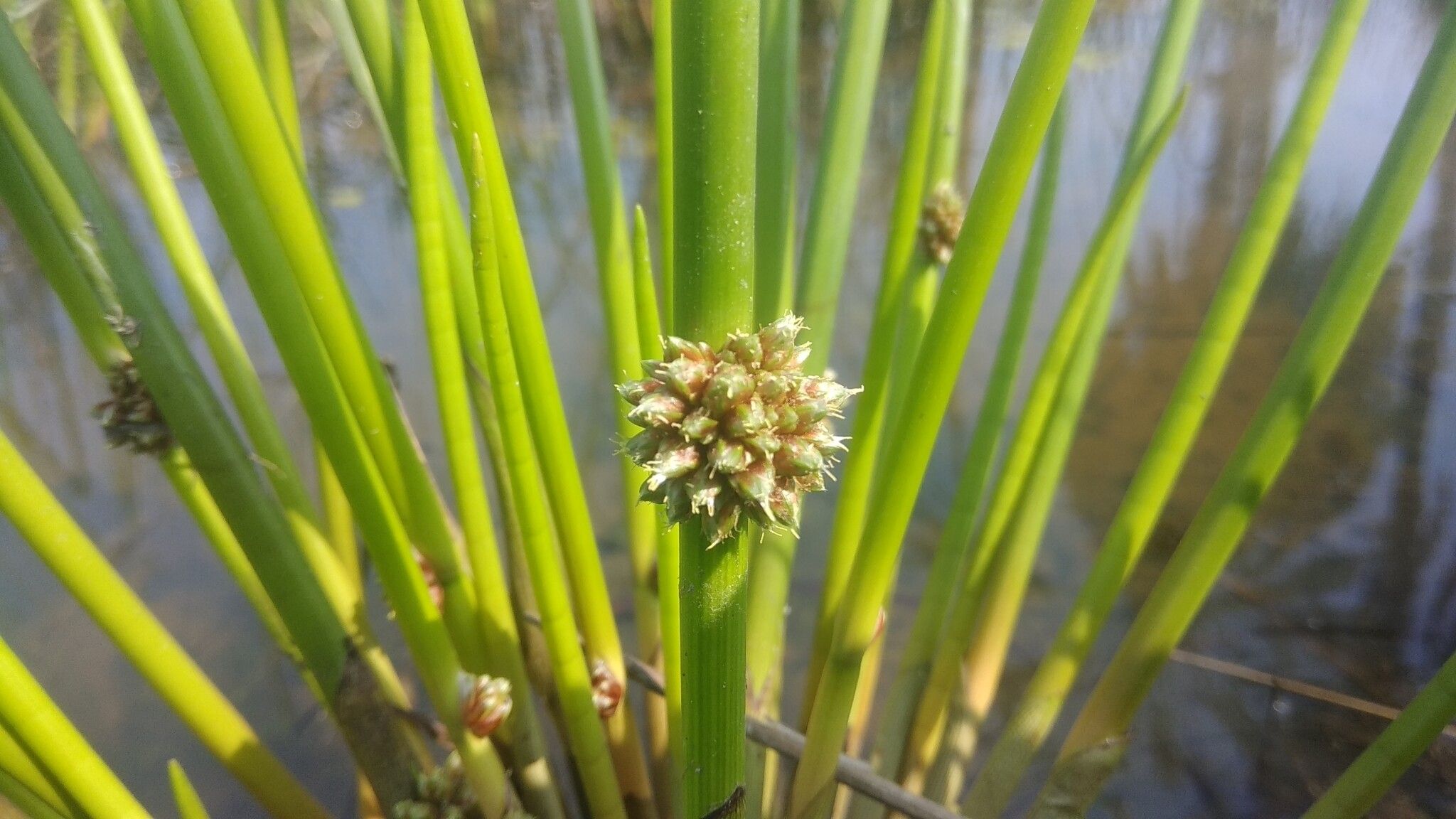
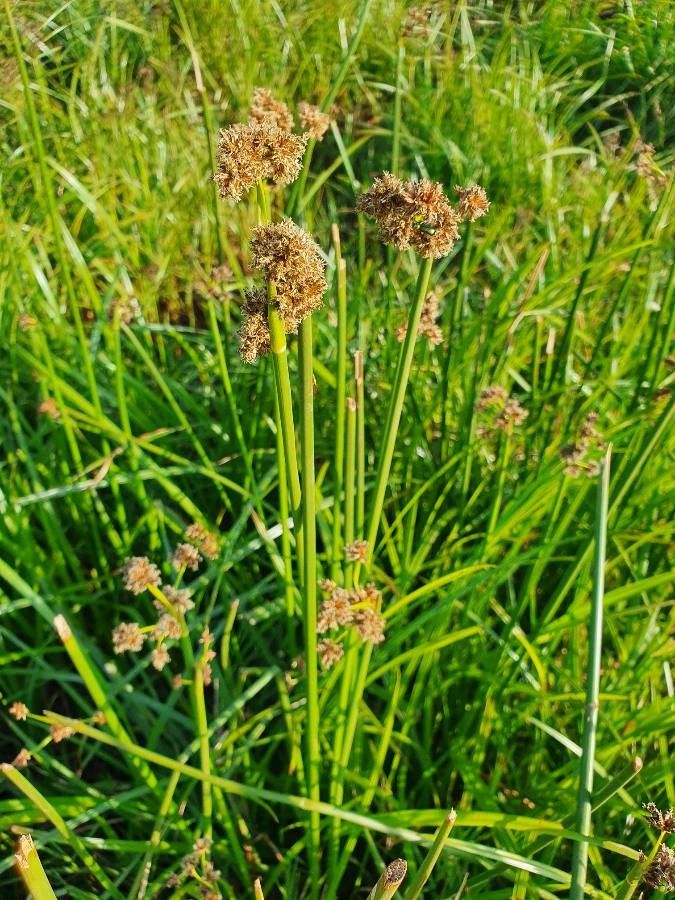
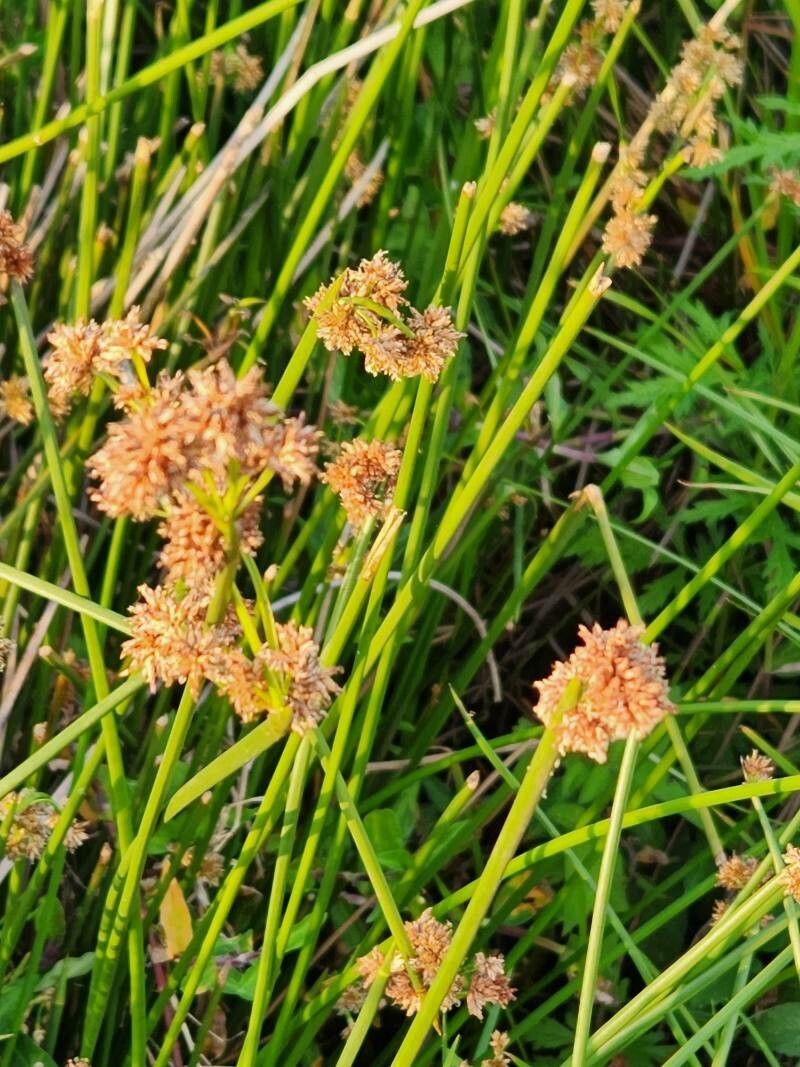
Schoenoplectiella hallii is a species of flowering plant in the sedge family known by the common name Hall's bulrush. It is native to the United States, where it has a disjunct distribution, occurring in widely spaced locations throughout the Midwest and East. It is a rare plant.This rhizomatous annual, or sometimes perennial, plant has stems which bend down or spread out instead of growing erect. They are up to 80 centimeters long, but often much shorter. The inflorescence contains a few spikelets which are up to 2 centimeters long by 2 to 3 millimeters wide. Some flowers may also be produced on short stems that barely emerge from the leaf sheaths later in the season.This species grows in wet, sandy soils next to water bodies such as ponds and lakes. It is adapted to a habitat with fluctuating water levels. This fluctuation prevents many other types of plants from moving into the area and competing with the sedge.Threats to this plant include anything that alters the hydrology of the habitat, for example, anything that prevents the fluctuating water levels and flooding that the plant requires. Other threats include loss of habitat to development or agriculture, livestock activity, off-road vehicle use, pollution, road maintenance, and habitat fragmentation.
Hall's bulrush has strong resistance to disease and is generally not prone to illnesses. Regarding care, the plant is fairly low maintenance. Outdoors it needs little watering; larger specimens typically do not require pruning, while smaller ones should be trimmed after they have bloomed. Hall's bulrush is suitable for anyone with outdoor space, such as a garden or deck, and does not demand a great deal of care experience.
How to keep Schoenoplectiella Hallii.
Temperature
Hall's bulrush can accommodate a broad spectrum of temperature situations, yet its dissemination might be restricted by varying mixes of water and heat circumstances. It flourishes optimally in mild climates during the summer with sufficient rainfall or irrigation. Extended intervals of overcast and wet weather, along with prolonged extreme heat, can raise the chances of Hall's bulrush perishing. During winter, appropriate safeguards against chilliness can enhance the survival rate of the plant.
Pruning
Hall's bulrush has slender, tufted stems and requires minimal pruning, ideally performed from early to late spring. Trim any dead or damaged stems to promote plant health and enhance appearance, but be careful not to over-prune. Regular maintenance is crucial for managing growth and supporting habitat restoration.
Botanical profile.
- Plant Type
- Grass
- Life Cycle
- Annual, Perennial
- Genus
- Schoenoplectiella
- Family
- Cyperaceae
- Leaf Type
- Deciduous
- Bloom Time
- Summer, Fall