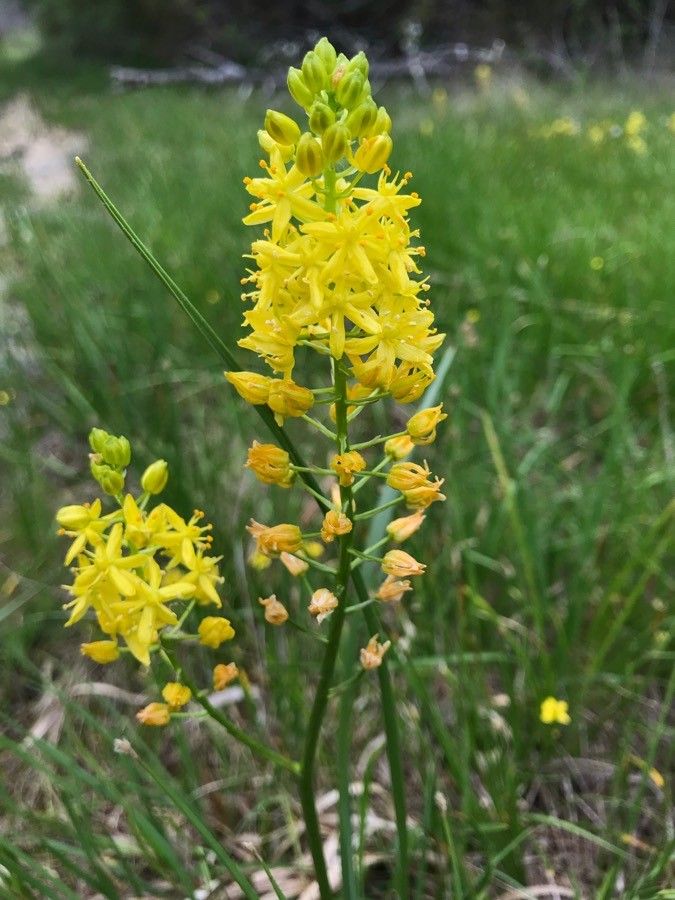
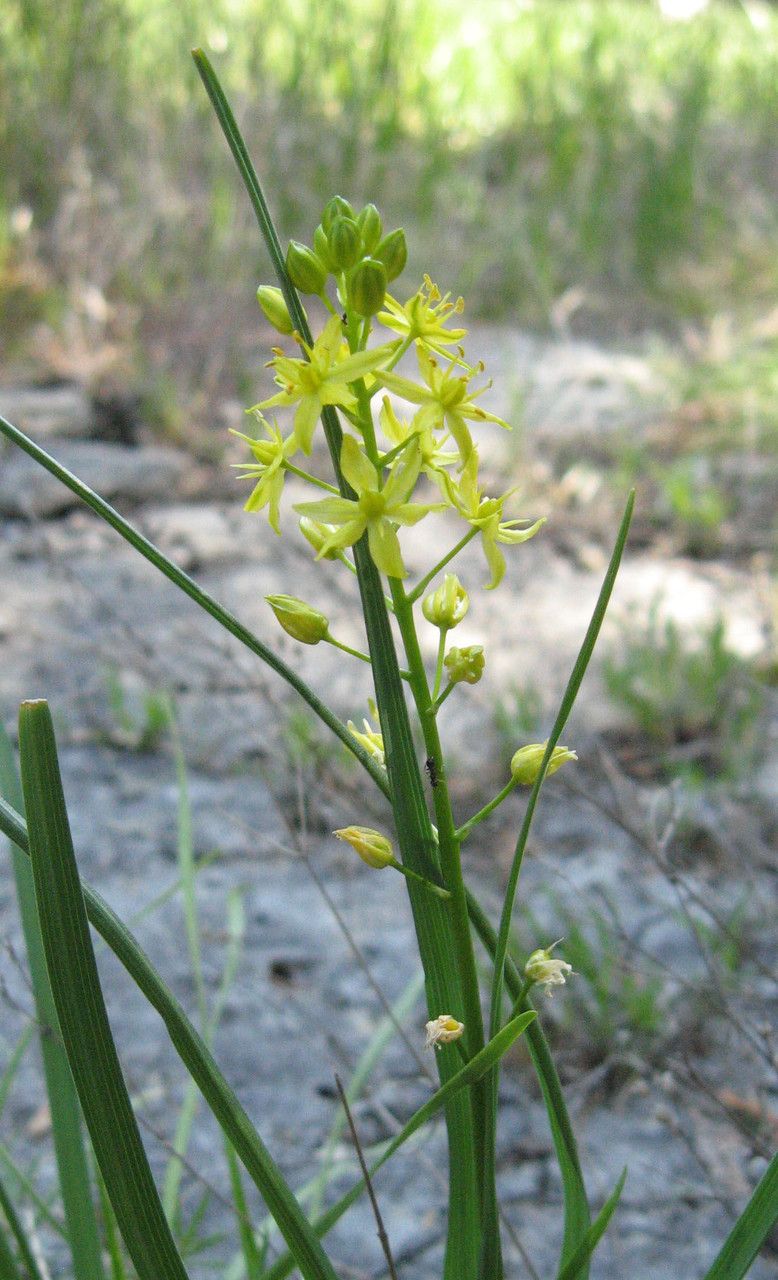
Schoenolirion croceum, known by the common names yellow sunnybell, sunnybells and swamp candle, is a species of flowering plant in the Agave subfamily. It is native to the Southeastern United States from Texas to North Carolina. It is found on moist rock outcrops and in wet pinelands. It is found in habitats that are very wet in the spring but dry in the summer. In middle Tennessee, it is found in fen-like areas in cedar glades, fed by spring water. Further south, it inhabits wet pine savannas and bogs.It produces yellow flowers in the spring.
Wood-candle is fairly resistant to disease and generally does not get sick often. Still, it can be affected by pests and diseases present in its surroundings. These problems are usually minor. For care, the plant needs moderate maintenance. It should be pruned regularly to keep a neat appearance and support healthy growth. Fertilizing can also help boost flowering. Wood-candle is appropriate for anyone with outdoor space, like a garden or patio, and does not demand extensive care experience. It may need extra attention if grown indoors.
How to keep Schoenolirion Croceum.
Light
Wood-candle is native to habitats such as forest understories or rocky areas, where it grows under natural shade. It prefers partial sun but can adapt to full sun or full shade, illustrating its versatile and hardy nature.
Temperature
Wood-candle can tolerate a wide range of temperatures, though its distribution may still be restricted by different combinations of moisture and heat. It performs best in warm summer climates with sufficient rainfall or regular watering. Long stretches of cloudy, rainy weather or extended high temperatures increase the chances of Wood-candle dying. In winter, protecting it from the cold can enhance its survival rate.
Fertilizer
Usually one fertilizer application in spring is sufficient for Wood-candle, but multiple feedings can maximize growth. Feed once every month to a month and a half. Fertilization improves leaf appearance and function, promoting consistent color and a healthy texture. It also stimulates root growth and nutrient uptake for long-term plant health.
Pruning
The Wood-candle plant is known for its impressive floral spikes and requires minimal pruning. To encourage growth and flowering, prune the plant from early to late spring. Remove any dead foliage to enhance its vitality, and lightly trim the plant after it has finished flowering to maintain its shape. Pruning also helps improve air circulation and reduces the risk of disease.
Botanical profile.
- Plant Type
- Herb
- Life Cycle
- Perennial
- Genus
- Schoenolirion
- Family
- Asparagaceae
- Hardiness Zone
- 7-10
- Mature Height
- 30 cm to 61 cm
- Mature Spread
- 20 cm to 30 cm
- Leaf Color
- Green
- Leaf Type
- Deciduous
- Flower Size
- 1.02 cm to 1.52 cm
- Bloom Time
- Mid spring, Late spring
- Planting Time
- Spring, Autumn
- Harvest Time
- Early summer, Mid summer
Other names.