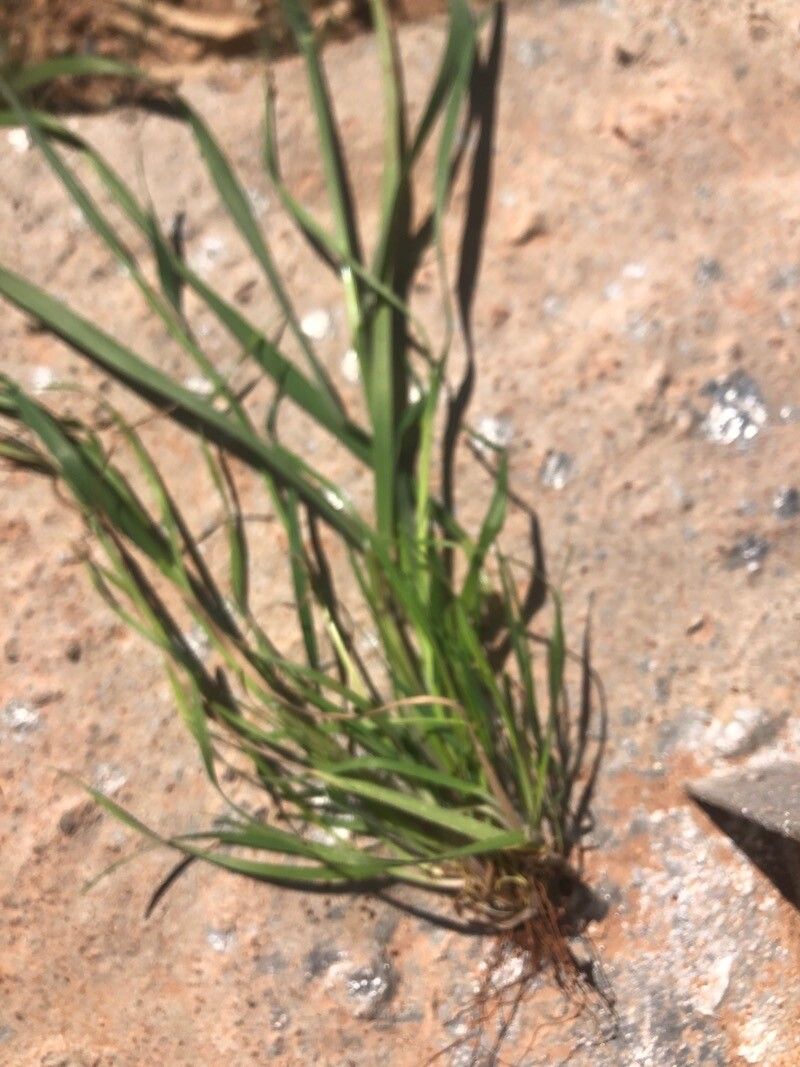
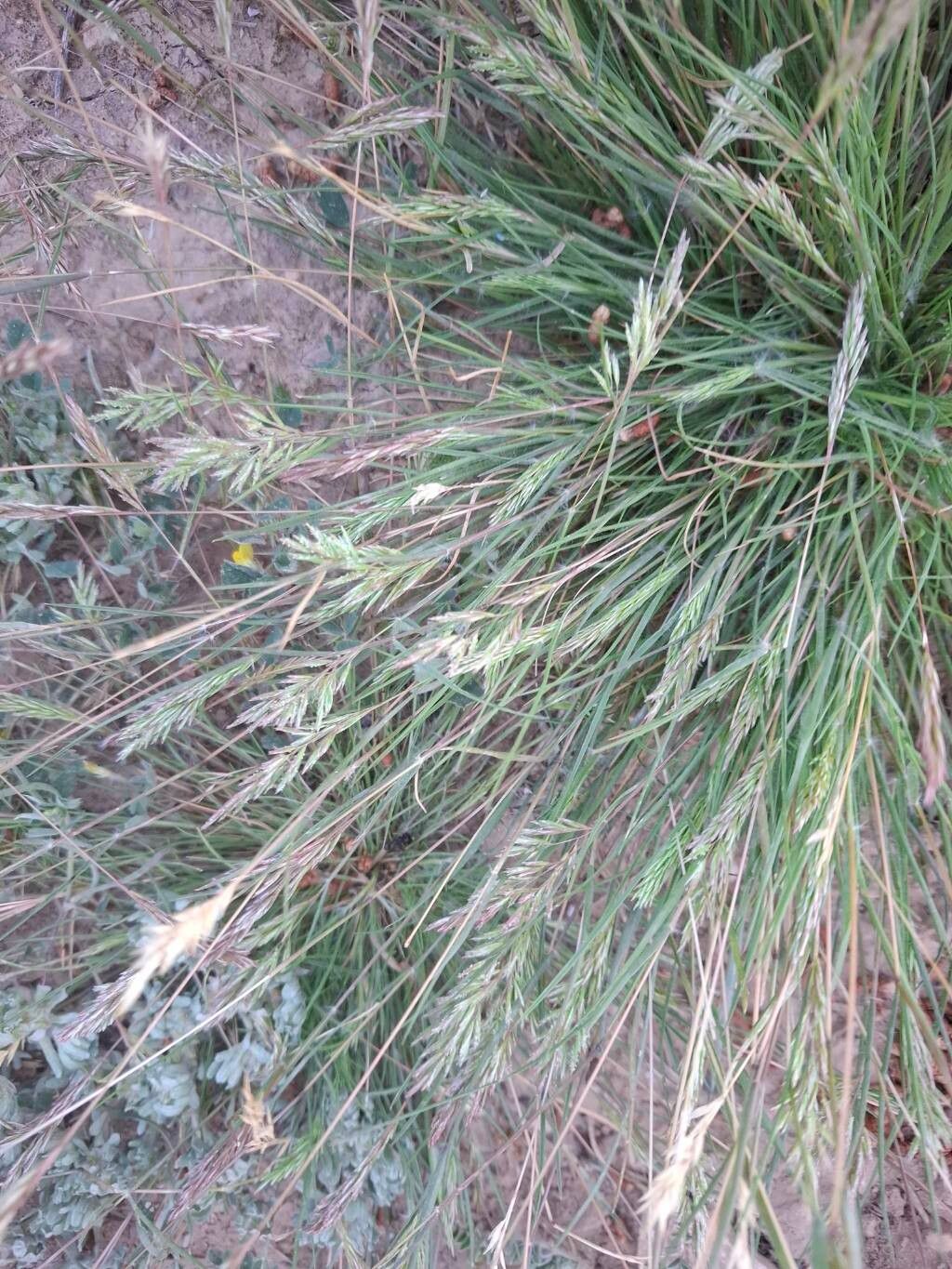
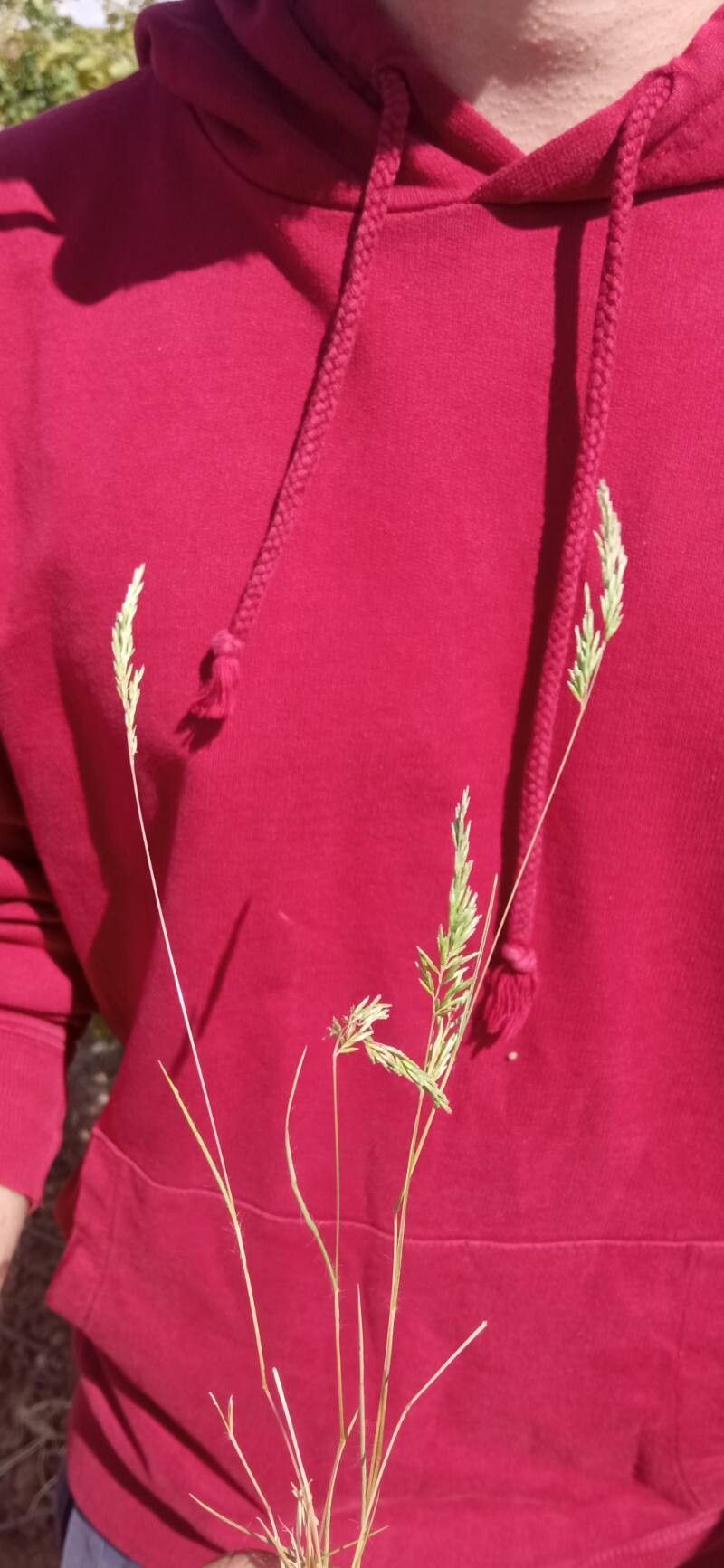
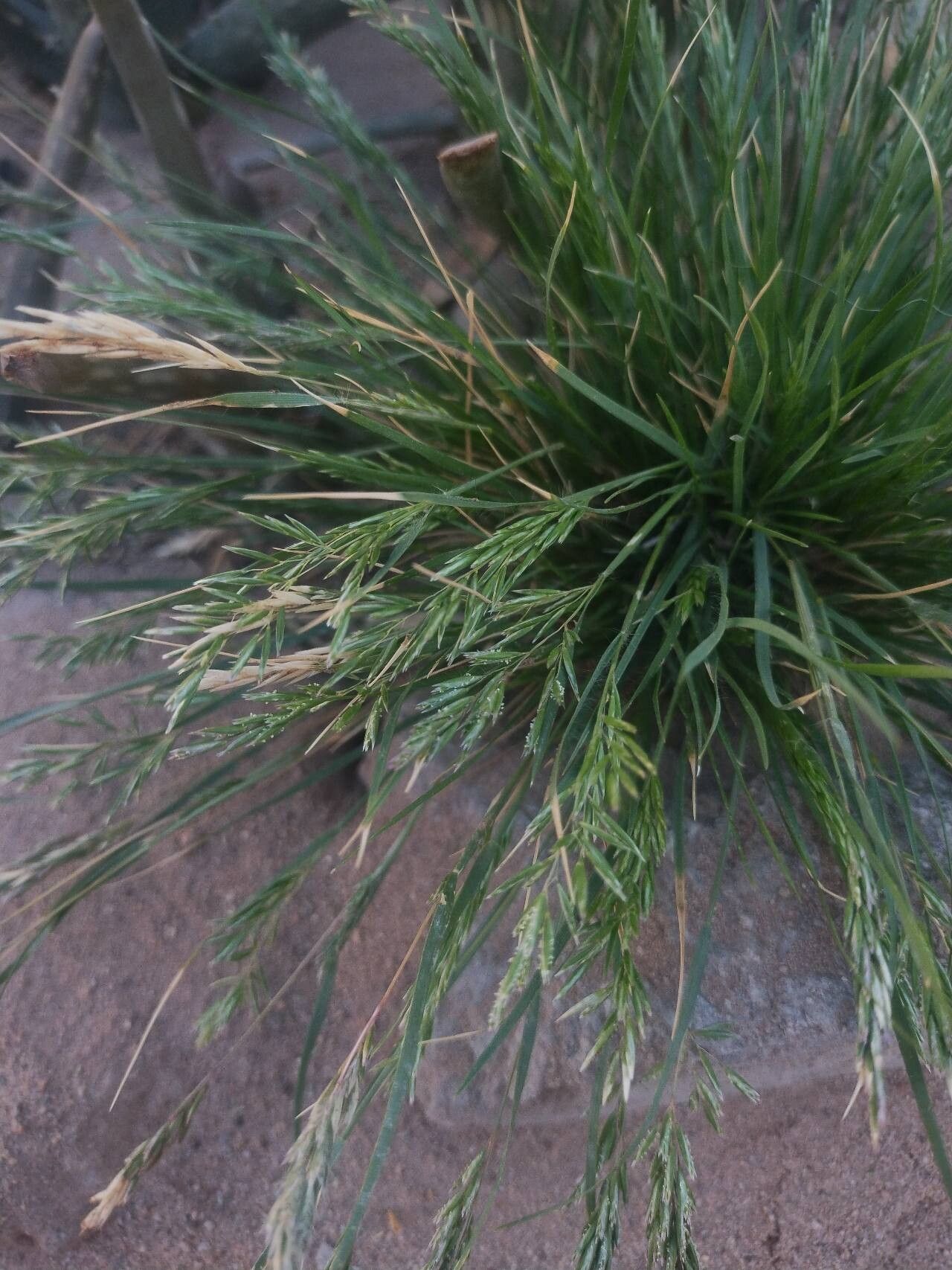
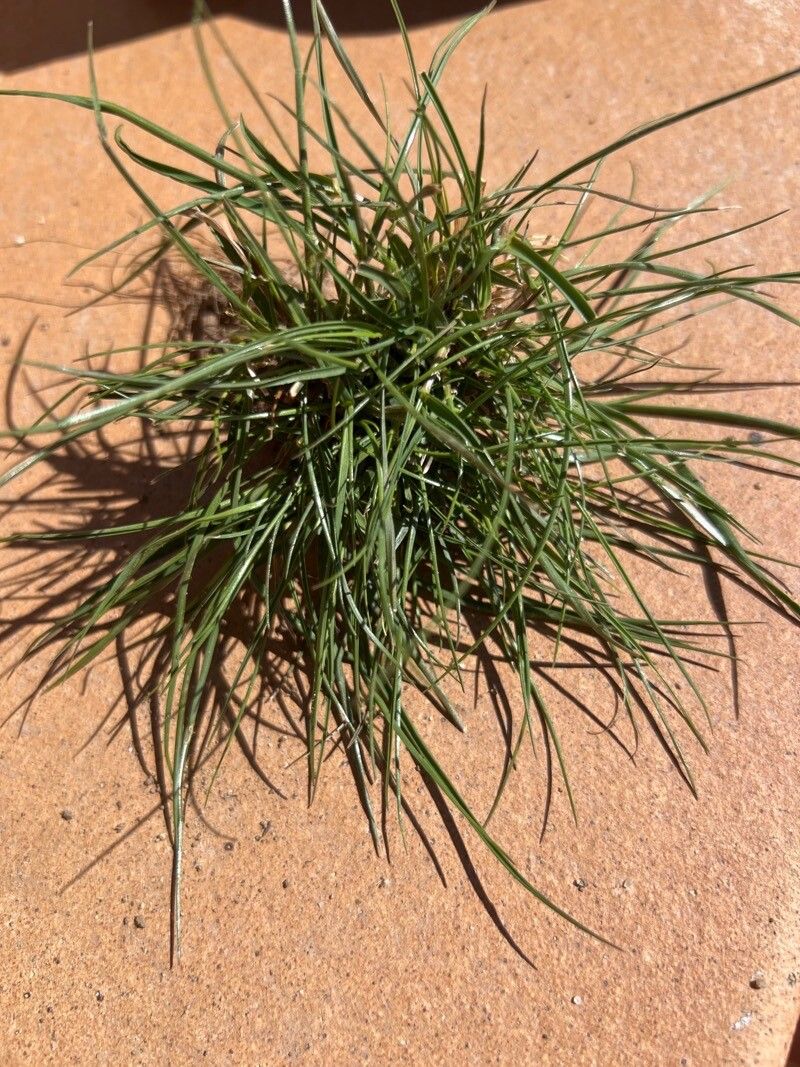
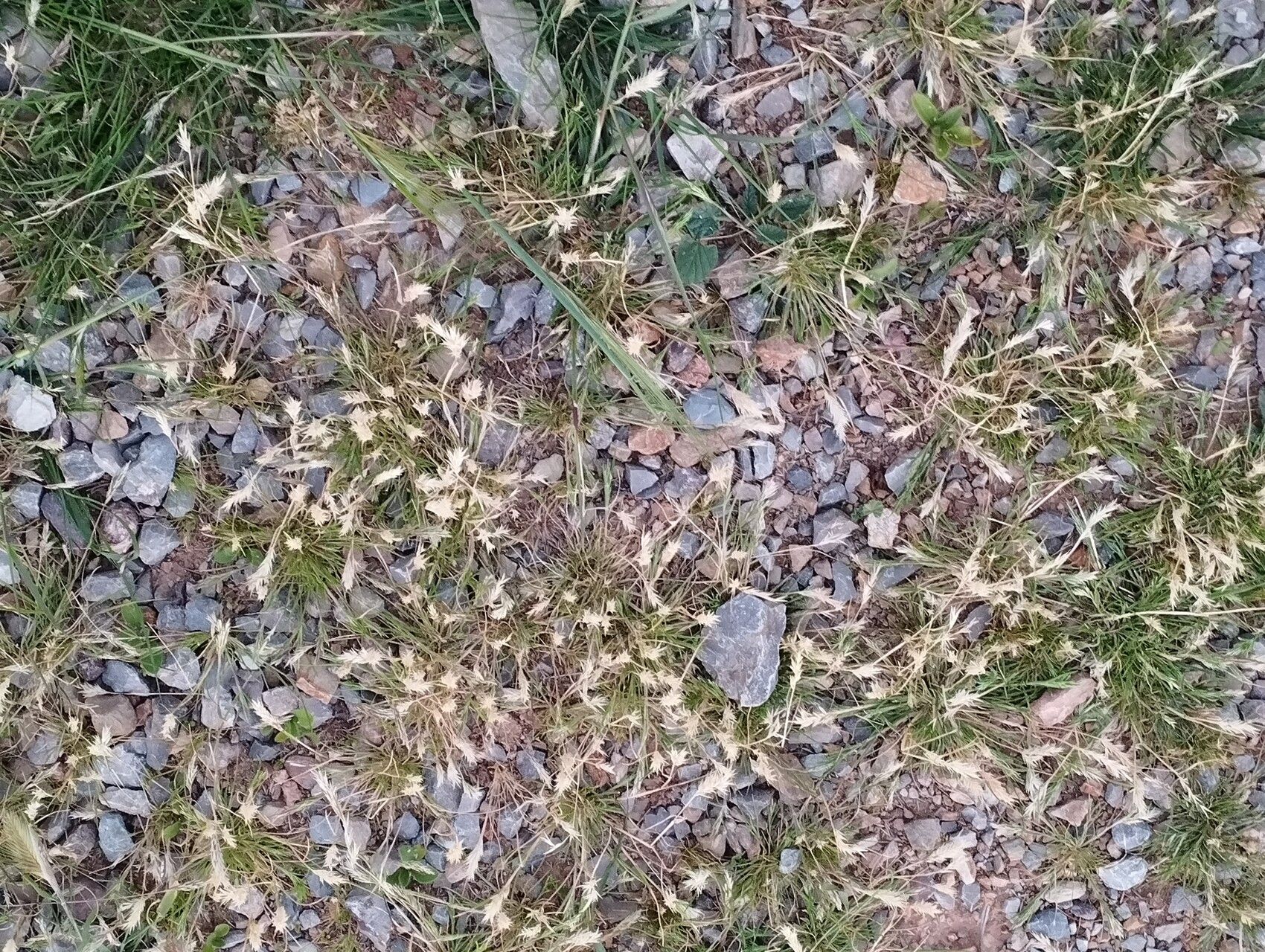
Schismus barbatus, commonly referred to as Mediterranean grass or common Mediterranean schismus, is a small annual grass native to the Mediterranean region. It features a slender stem that can grow up to 50 cm in height and produces small, inconspicuous flowers. The leaves are narrow, pointed, and have rough edges.
This plant is well-adapted to dry and arid environments and can thrive in various soil types. It has become naturalized in many parts of the world, including North America, South America, Australia, New Zealand, and South Africa.
Schismus barbatus plays a crucial role in stabilizing soil on disturbed sites such as roadsides and construction areas due to its ability to quickly establish itself from seed. However, it can also be considered an invasive species because of its ability to outcompete native vegetation.
In traditional medicine practices in some cultures, such as in Iran and Turkey, Schismus barbatus has been used to treat various ailments, including stomach disorders and respiratory problems.
Overall, Schismus barbatus is an interesting plant with both positive ecological benefits and potential negative impacts on local ecosystems if not managed properly.
Kelch-grass displays strong resistance to disease and is, overall, not prone to becoming diseased. With regard to care, the plant is fairly low-maintenance. Planted outdoors it needs only light watering, and larger plants typically do not need pruning. Smaller plants, however, should be trimmed after they have finished blooming. Kelch-grasst is a good choice for anyone who has an outdoor area, such as a garden or a deck, and it does not require much prior plant-care experience.
How to keep Schismus Barbatus.
Light
Kelch-grass is native to bright, open habitats and performs best in full sunlight. It tolerates partial shade but prefers direct sun for optimal growth. This plant, which can be annual or biennial, is noted for its sun-loving habit.
Water
Kelch-grass, which originates from arid regions, is exceptionally drought-tolerant and typically only needs to be watered once a week. Be careful not to overwater it, as this can be detrimental to its health. Ideally suited for outdoor cultivation, kelch-grass thrives in well-draining soil. This type of soil is crucial to prevent water from accumulating around its roots, ensuring the grass remains vigorous during its active growth periods.
Temperature
Kelch-grass grows best when temperatures fall between 68 and 100 °F (20 and 38 ℃). During different seasons, temperature adjustments may be necessary to maintain its preferred climate.
Pruning
Kelch-grass is a low-growing annual grass that benefits from pruning in early to late spring. This process removes dead growth and encourages healthy development. To prune effectively, use clean, sharp tools and trim just above the leaf nodes. Regular pruning also helps prevent overcrowding. Be sure to dispose of the cuttings properly to avoid attracting pests.
Botanical profile.
- Plant Type
- Grass
- Life Cycle
- Annual
- Genus
- Schismus
- Family
- Poaceae
- Hardiness Zone
- 9-11
- Mature Height
- 28 cm
- Mature Spread
- 5 cm to 15 cm
- Leaf Color
- Light Green
- Leaf Type
- Semi-evergreen
- Flower Color
- Yellow, Green, Brown
- Flower Size
- 1.02 cm
- Bloom Time
- Early spring, Mid spring
- Planting Time
- Spring, Autumn
- Harvest Time
- Mid spring, Late spring
- Native Area
- Libya, Lesotho, Egypt, India, United Arab Emirates, Namibia, Pakistan, Morocco, Iraq, Oman, Qatar, Botswana, France, Saudi Arabia, Tunisia, South Africa, Sudan, Mauritania, Cyprus, Armenia, Greece, Chad, China, Afghanistan, Kazakhstan, Spain, Israel, Iran, Azerbaijan, Algeria, Kuwait, Turkmenistan
Other names.
Reader questions.
What are the sunlight requirements for Kelch-grass?
Kelch-grass, also known by its botanical name Schismus barbatus, thrives in environments that offer full sun, which means it requires more than 6 hours of sunlight daily. It can also grow in partial sun, defined as about 3-6 hours of sunlight. This makes it essential to watch the movement of sunlight throughout your garden to ensure your Kelch-grass gets the optimal balance of light and shade for its growth.
What is the ideal temperature range for growing Kelch-grass?
Kelch-grass, or Schismus barbatus, thrives in a temperature range from 68 to 100 °F (20 to 38 °C). It is important to adjust the environment according to seasonal changes to maintain these optimal conditions. Kelch-grass is heat-loving, and exposure to cold temperatures is harmful. During colder months, it's advisable to bring the plant indoors, placing it near a bright window but at a distance from heaters, to ensure the temperature remains above 20°C and to avoid the detrimental effects of temperatures reaching 0°C or below.
Can Kelch-grass be grown indoors, and how?
Yes, Kelch-grass can be grown indoors, especially in conditions where natural sunlight is insufficient, such as during winter or in less sunny spaces. Indoor plants require adequate lighting for optimal growth, which can be provided by artificial lights. LED lights are recommended because they can be customized to provide specific wavelengths needed by the plants. Full sun plants need 30-50W/sq ft, partial sun plants need 20-30W/sq ft, and the light source should be placed 12-36 inches above the plant for 8-12 hours per day to mimic natural daylight hours.
How does low temperature affect Kelch-grass and how can it be protected?
Kelch-grass prefers warm conditions and does not tolerate low temperatures well. It grows best when the temperature is above 20°C and should be kept above 0°C during winter to avoid damage. Exposure to temperatures below -5°C may cause the leaves to lighten in color, and frost damage can turn them brown or black, leading to wilting and drooping. To protect Kelch-grass from cold damage, trim off frost-damaged parts and move the plant indoors to a warm spot near a south-facing window for ample sunlight. Also, ensure the plant is not placed near heaters or air conditioning vents to avoid excessively dry air.
What are the symptoms of inadequate light for indoor Kelch-grass?
Indoor Kelch-grass suffering from inadequate light may exhibit symptoms such as smaller new leaves, leggy or sparse growth, faster leaf drop, slower or no new growth, and lighter-colored new leaves. Conditions such as chlorosis, where leaves lose their green color and turn yellow, sunscald, leaf curling, wilting, and leaf scorching can also occur due to inappropriate light conditions, indicating the plant's struggle with light deficiency or overexposure.
How should Kelch-grass be cared for in high temperatures?
During summer, it's crucial to keep Kelch-grass' temperature below 38°C. If temperatures rise above 43°C, the leaves may lighten, and the plant can suffer from sunburn. Care for Kelch-grass in high temperatures by trimming away sunburned or dried sections and moving the plant to a shadier spot, especially during the peak sun hours of midday and afternoon. Watering the plant in the morning and evening will help keep the soil moist, aiding in its health and growth during hot periods.
How can you address light deficiency or overexposure issues in Kelch-grass?
To address light deficiency in indoor Kelch-grass, gradually move the plant to a sunnier location each week until it receives at least 6 hours of direct sunlight daily. Using a south-facing window can maximize sunlight exposure. For large or immovable plants, consider using artificial light, keeping a lamp on for at least 8 hours daily or investing in professional plant grow lights. For outdoor plants, move them to brighter spots gradually to prevent sunburn, remembering that parts of the plant damaged by insufficient light may not recover, but new growth will be healthy after adjusting the light exposure. If trees obstruct sunlight, consider pruning them to improve light access. For smaller plants needing more sunlight, the dormant period is ideal for transplanting to a better-lit location.