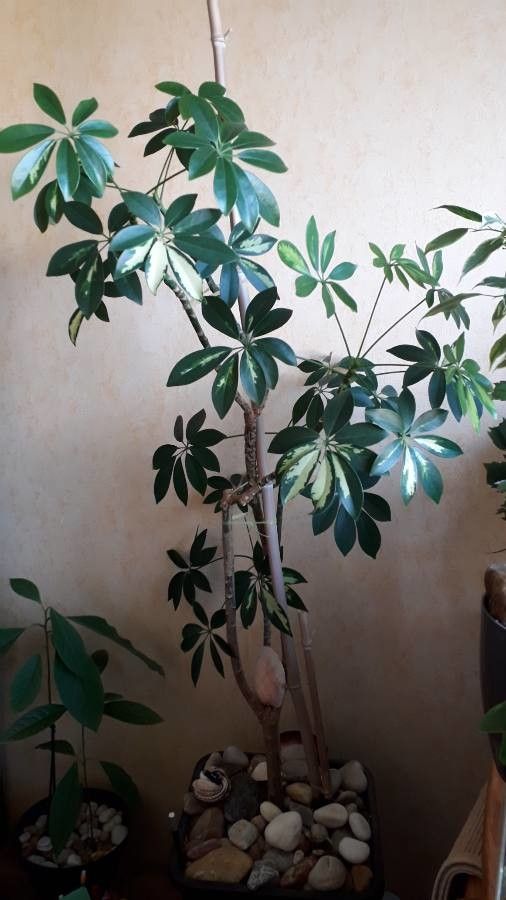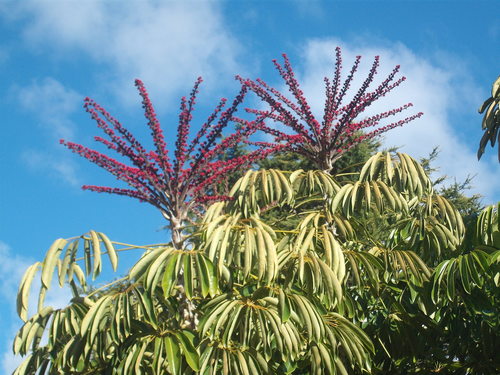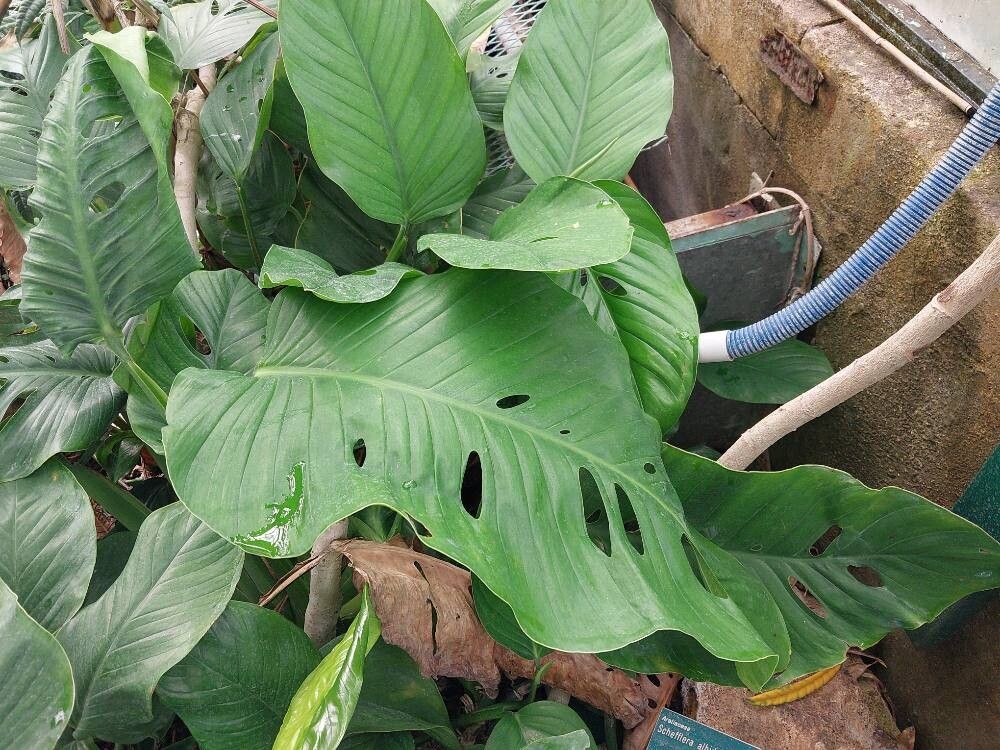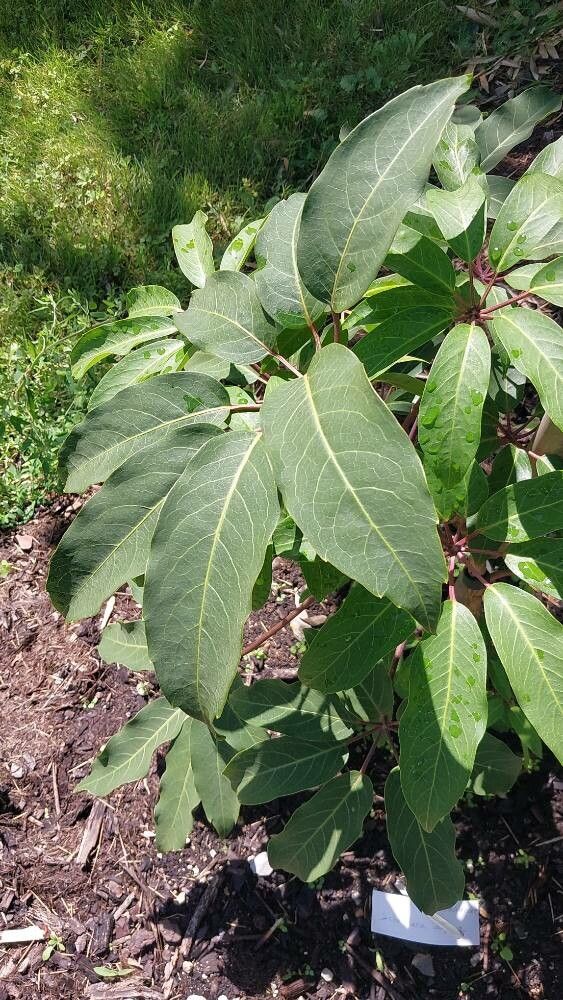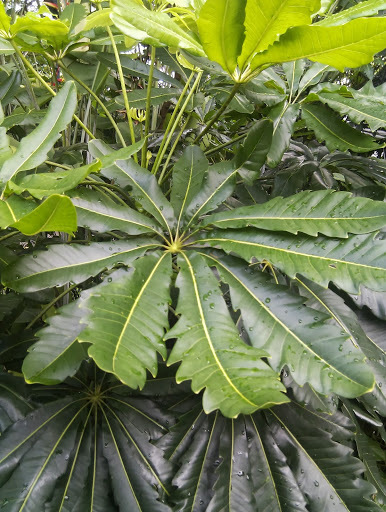
Plerandra elegantissima (formerly called Schefflera elegantissima and Dizygotheca elegantissima), the false aralia, is a species of flowering plant in the family Araliaceae, native to New Caledonia.
False aralia is fairly disease-resistant and usually does not suffer from illnesses. Still, when grown in poor conditions it can be more vulnerable to disease. It also faces only a few insect pests. Carewise, its needs are moderate. It requires ample sunlight; in low light it can become more disease-prone and develop spindly growth. Because it is commonly grown indoors, it may need to be placed in a bright spot on a regular basis. It does not need frequent watering. In general, False aralia is appropriate for most people, though it is best for those who can provide strong light.
How to keep Schefflera Elegantissima.
Light
The false aralia flourishes optimally in locations where sunlight is adequately filtered, although it can cope with surroundings that have abundant or insufficient sunlight. In its original environment, it had protection from strong sunrays due to the canopy. Too much sunlight could cause the leaves to burn, while too little may cause the plant to grow spindly.
Water
Regularly water your false aralia to ensure adequate moisture but not soggy conditions. Once 1-2 inches of soil surface becomes dry to the touch, then you can water your plant. This method ensures that you don’t waterlog it while giving it enough hydration.
Temperature
False aralia, in its natural habitat, favors temperatures between 20 and 38 ℃ (68 to 100 ℉). This temperate woody plant needs a moderate temperature spectrum but has the ability to adapt to seasonal variations if required.
Fertilizer
The care of False aralia greatly depends on consistent fertilization. Regular nourishment throughout the growth period is essential for maintaining vitality for lavish leaves and for supporting its total development. Overlooking the need for fertilization can lead to diseased leaves, reduced aesthetic attractiveness, and inhibited or fragile growth that is susceptible to damage.
Pruning
False aralia’s slow-growing nature eliminates the need for pruning. You can practice light trimming to keep it neat or manage its size. Otherwise, it will grow just fine on its own.
Pot & Repot
When replanting False aralia, select a container that is 1-2 inches (2.5-5 cm) larger and has plenty of drainage. Opt for a potting mix that drains well. Carry out the replanting in either spring or autumn, ensuring the root sphere is marginally below the lip of the plant pot. Drench thoroughly post-replanting and position in a cosy location with filtered sunlight.
Toxicity
False aralia plants are toxic to both people and pets. They contain synthetic compounds like oxalates, solanine, glycosides, or alkaloid lycorine that can induce a range of toxicity symptoms when ingested. You might experience vomiting, nausea, diarrhea, inflammation, redness, and difficulty breathing.
Further reading →
The toxicity and danger assessments provided are for reference only. We do not assure their accuracy, so it's crucial not to depend on them. Seek professional advice when necessary for accurate guidance.
Botanical profile.
- Plant Type
- Shrub
- Life Cycle
- Perennial
- Genus
- Schefflera
- Family
- Araliaceae
- Hardiness Zone
- 10-12
- Mature Height
- 7.62 m to 15.24 m
- Mature Spread
- 1.22 m to 1.83 m
- Leaf Color
- Green, Yellow, Gold
- Leaf Type
- Evergreen
- Flower Color
- Yellow, Green, Gold
- Flower Size
- 2.54 cm
- Bloom Time
- Early summer, Mid summer
- Planting Time
- Spring, Summer, Autumn, Winter
- Harvest Time
- Mid summer
- Native Area
- South Pacific