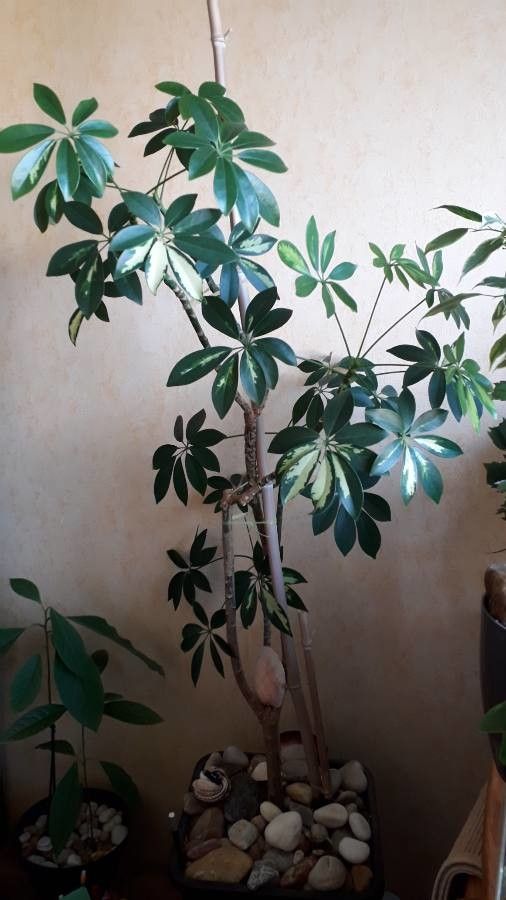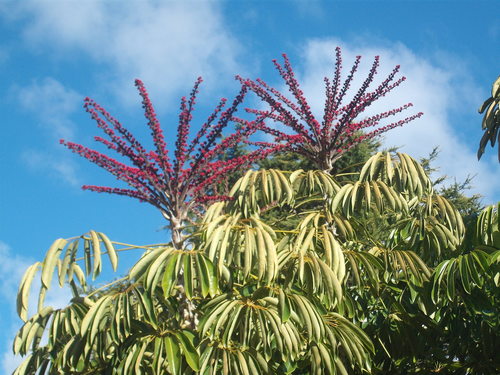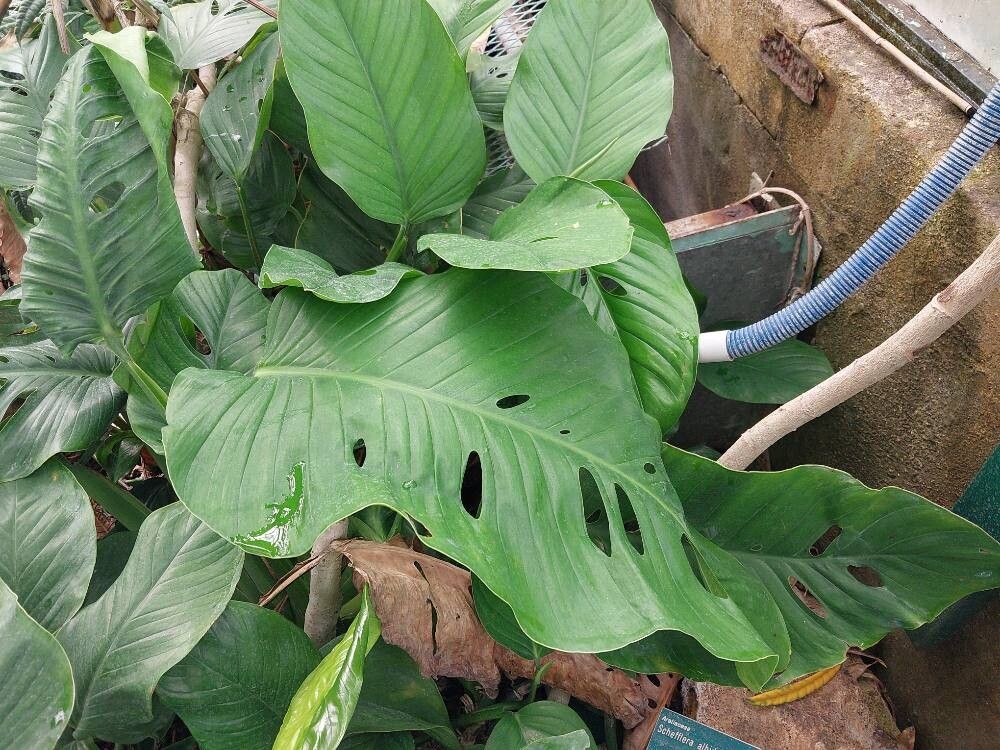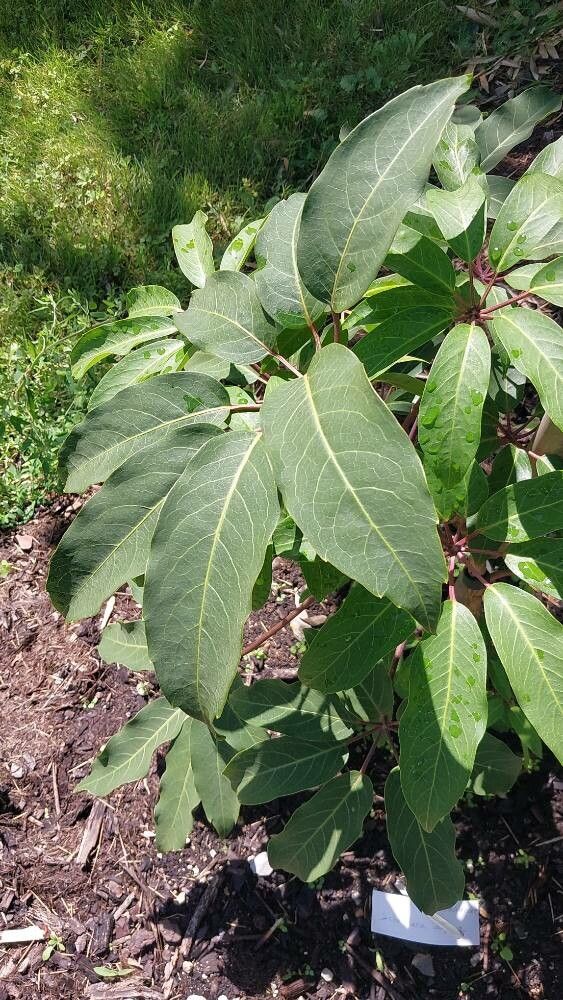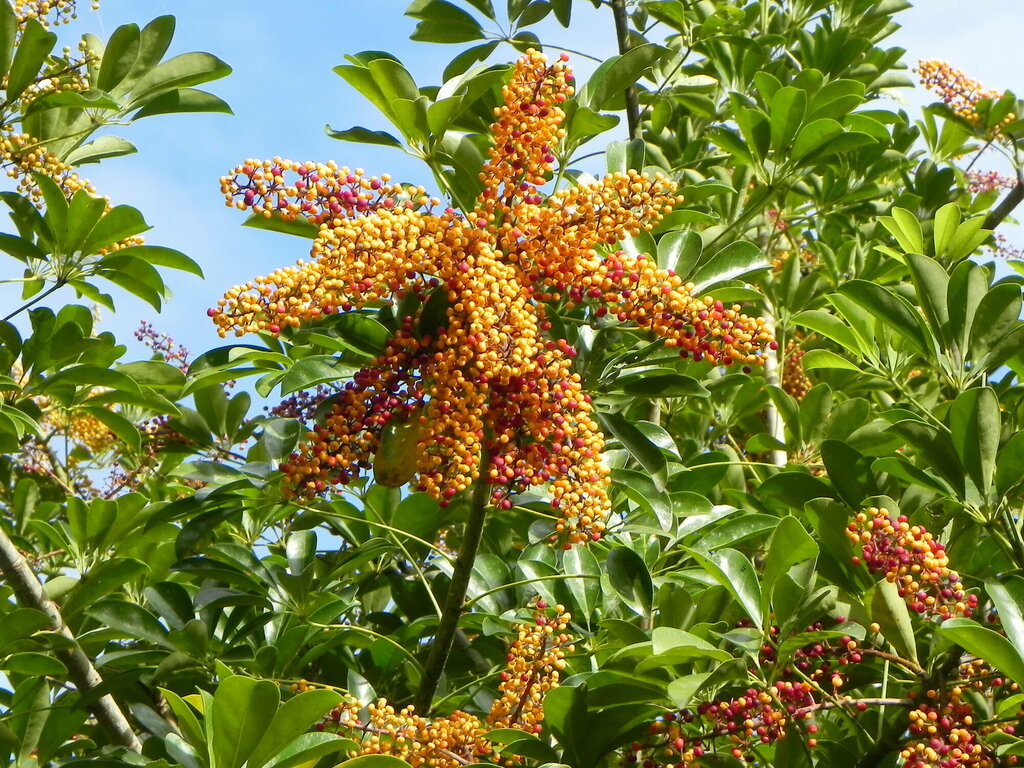
Schefflera arboricola, commonly known as the dwarf umbrella tree, is a popular houseplant native to Taiwan. Belonging to the Araliaceae family, it can grow up to 8 feet tall in its natural habitat. However, when grown indoors, it typically reaches a height of 4-6 feet.
The plant features glossy green leaves arranged in an umbrella-like pattern on its stems. The oval-shaped leaves can grow up to 8 inches long and are complemented by small greenish-white flowers.
Schefflera arboricola is easy to care for, thriving in bright indirect light but capable of tolerating low light conditions as well. It prefers well-draining soil and should be watered when the top inch of soil feels dry to the touch.
The leaves of the dwarf umbrella tree resemble the webbed foot of a goose. This tree is highly adaptable and possesses a strong capacity for growth. It evokes the essence of a tropical jungle, creating a lush and magnificent atmosphere that instills a sense of vitality and renewal. The presence of this tree can help people feel optimistic and positive. FUN FACT · FROM THE LIBRARY
The dwarf umbrella tree is also known for its air-purifying properties, effectively removing harmful toxins from indoor air, such as formaldehyde, benzene, and trichloroethylene.
Overall, Schefflera arboricola makes for an attractive addition to any indoor space. Its minimal care requirements make it ideal for beginners or anyone with a busy lifestyle who desires some greenery without too much fuss.
The dwarf umbrella tree gets its name because its shape closely resembles an umbrella. Whether it's planted in a garden or grown as a bonsai, this tree features a canopy of densely packed green leaves. Beneath this lush canopy, the trunk stands tall and slender. The dwarf umbrella tree is actually a smaller version of the Schefflera actinophylla, which belongs to the Apiales order.
The Dwarf umbrella tree has strong disease resistance and is generally not prone to illnesses. Still, if grown in a poor environment it can become more vulnerable to disease. It also has relatively few insect pests. Regarding care, this plant has moderate needs. It requires ample sunlight, since inadequate light can make it more susceptible to disease and cause thin, weak growth. Because it is often kept indoors, it may need to be moved to a bright spot on a regular basis. It does not need frequent watering. Overall, the Dwarf umbrella tree is suitable for most people, though it is best for those who can provide good lighting.
How to keep Schefflera Arboricola.
Light
The dwarf umbrella tree does best with moderate daily sun exposure and can tolerate both fully lit and completely shaded conditions. It comes from habitats where light levels fluctuate. However, a lack of light can stunt its growth, while too much exposure may dry it out.
Water
The dwarf umbrella tree flourishes in humid tropical environments, where it prefers consistent moisture without becoming waterlogged. Water the plant every 1 to 2 weeks, letting the soil partially dry between waterings. Although it is typically grown indoors, the dwarf umbrella tree benefits from higher humidity levels, which promote lush foliage and robust growth.
Temperature
The dwarf umbrella tree comes from warm areas and prefers temperatures of 68 to 100 ℉ (20 to 38 ℃) during its growing period. In winter, it can tolerate cooler conditions of 50 to 60 ℉ (10 to 16 ℃). To accommodate seasonal temperature differences, it is recommended to keep the plant in a warm, bright spot in summer and move it to a cooler place in winter.
Fertilizer
Fertilization is essential for the care of the Dwarf umbrella tree. Regular feeding during the growing season maintains the energy for its showy leaves and supports overall growth. Neglecting fertilization can lead to unhealthy foliage, reduced ornamental value, and stunted or weak growth that is prone to breakage.
Pruning
The dwarf umbrella tree features glossy, palmate leaves and has a compact growth habit. To maintain its shape and encourage new growth, prune the tree from early to late winter. During pruning, remove any dead or crowded branches. Always use clean, sharp tools to make precise cuts, which will help the tree recover quickly and experience less stress.
Pot & Repot
When repotting a dwarf umbrella tree, select a pot 1–2 inches (2.5–5.1 cm) larger with adequate drainage. Use a well-draining potting mix. Repot in spring or fall, making sure the root ball sits slightly lower than the rim of the flower pot. Water thoroughly after repotting and place it in a warm spot with indirect sunlight.
Botanical profile.
- Plant Type
- Shrub
- Life Cycle
- Perennial
- Genus
- Schefflera
- Family
- Araliaceae
- Hardiness Zone
- 9-12
- Mature Height
- 2.13 m to 9.14 m
- Mature Spread
- 1.22 m to 2.44 m
- Leaf Color
- Green
- Leaf Type
- Evergreen
- Flower Color
- Yellow, White, Red, Green
- Flower Size
- 0.51 cm to 1.02 cm
- Bloom Time
- Mid summer, Late summer
- Planting Time
- Spring, Summer, Autumn, Winter
- Harvest Time
- Mid summer, Late summer, Early fall
- Native Area
- Taiwan
Other names.
Reader questions.
When Should I Water My Dwarf Umbrella Tree?
Watering your dwarf umbrella tree at the right time is crucial for its health. You should water it when the top one inch of soil becomes dry to the touch. Another sign that it's time to water is when the leaves start drooping or sag without any yellow coloration, indicating the plant may be underwatered. If the leaves turn pale or yellow, this could also suggest it needs water, though be cautious as yellowing might also mean overwatering. Additionally, if the leaves feel dry and crispy, it's an immediate sign the plant needs water. It's important to balance watering as both overwatering and underwatering can lead to adverse effects such as root rot, wilting, stunted growth, or even death due to dehydration.
Why should I put fertilizer on my Dwarf umbrella tree?
The Dwarf umbrella tree needs regular fertilization because its showy leaves require a lot of energy to produce and maintain. Not only does the tree need enough energy to keep its leaves looking good, it also needs energy to support the growth of its stems, branches, roots, and other vital structures. Neglecting fertilization can lead to two likely outcomes. Firstly, the leaves may lose their natural color and texture and overall look unhealthy, diminishing the tree's ornamental appeal. Secondly, the tree's growth may slow down or produce weak growth that could easily break.
What are the sunlight requirements for a Dwarf Umbrella Tree?
The Dwarf Umbrella Tree, or Schefflera arboricola, thrives in moderate amounts of daily sunlight and can adapt to fully lit or completely shaded environments, mimicking its natural habitat where light levels vary. It needs about 3-6 hours of sunlight for partial sun conditions and more than 6 hours for full sun to full shade conditions. Be attentive to how sunlight moves through your garden to ensure your plants enjoy the right balance of light and shade for optimal growth. However, it's important to note that insufficient light can stunt the dwarf umbrella tree's growth, while too much direct sunlight might dry it out.
What is the native climate of the Dwarf Umbrella Tree?
The Dwarf Umbrella Tree, with its botanical name Schefflera arboricola, is native to regions that enjoy warm temperatures. Throughout the growing season, it prefers temperatures ranging from 68 to 100°F (20 to 38°C), and during winter, it can handle cooler conditions, tolerating temperatures between 50 to 60°F (10 to 16°C). It is crucial to move the plant to a warm, bright location during summer and to a cooler spot in winter to accommodate its temperature preferences. This plant loves heat, and exposure to cold can be harmful. As the colder months approach, if the Dwarf Umbrella Tree is grown outdoors, it should be brought indoors near a bright window but kept away from direct heat sources.
How Should I Water My Dwarf Umbrella Tree?
To water your dwarf umbrella tree effectively, you should aim for evenly moist soil, ensuring you do not overwater it to avoid root rot. A bottom-watering method is recommended, where you let the plant absorb water from the bottom up, which helps prevent diseases by avoiding foliage wetness. Use a watering can with a narrow spout to target the water directly to the base, avoiding the leaves. Employing a moisture meter can offer a precise measurement of soil moisture levels. Additionally, maintaining higher humidity around your plant by misting or using a pebble tray can be beneficial, especially considering its preference for a humid environment. If your tree is outdoors, natural rainfall must be taken into account, adjusting watering as needed. Always use well-draining soil to promote healthy root growth.
When should I put fertilizer on my Dwarf umbrella tree?
To properly nourish your Dwarf umbrella tree, it is advisable to feed it occasionally rather than adhere to a rigid feeding schedule. One convenient method of fertilization is to apply the fertilizer while watering the plant periodically. Additionally, remember to provide an adequate amount of water during the growing season. Feeding the plant every two to three weeks is sufficient, and this frequency should be maintained as long as the tree is producing new growth.
Can artificial lighting be used for Dwarf Umbrella Trees? If yes, how?
Yes, artificial lighting can be utilized for Dwarf Umbrella Trees, especially when natural sunlight is insufficient, like in winter or less sunny spaces. For optimal growth, indoor plants can benefit from artificial lights that promote faster, healthier growth. LED lights are recommended because they can be tailored to provide the necessary wavelengths of light. The amount of artificial light needed varies: 30-50W/sq ft for full sun plants, 20-30W/sq ft for partial sun plants, and 10-20W/sq ft for full shade plants. The light source should be placed 12-36 inches above the plant, mimicking natural sunlight as closely as possible, and kept on for 8-12 hours per day depending on the plant's needs.
How does low temperature affect the Dwarf Umbrella Tree, and what are the solutions?
Low temperatures can negatively impact the Dwarf Umbrella Tree, which prefers to remain above a certain minimum temperature suitable for its growth. During winter, keeping it above a tolerable minimum is advisable. Exposure to temperatures below its growth limit can lead to a lightening of the leaves' color, followed by browning or blackening after frost damage, along with wilting and drooping. To address frost damage, the affected parts should be trimmed off and the plant moved to a warm, indoor spot away from cold drafts. Placement near a south-facing window ensures adequate sunlight without the risk of dry air caused by heaters or air conditioning vents.
How Much Water Does Dwarf Umbrella Tree Really Need?
The amount of water your dwarf umbrella tree needs varies depending on its size and the size of its container. Generally, a mature plant in a 10-inch pot needs around 1 liter of water, enough to moisten the soil thoroughly until it begins to drain from the bottom. The soil should stay moist but not waterlogged. Over-watering or under-watering can adversely affect the plant, causing issues like root rot or leaf drop. Adjust the frequency and volume of watering based on the plant's needs, ensuring the top 1-2 inches of soil dries out between watering sessions.
When is the best time to not fertilize my Dwarf umbrella tree?
For most of the year, you can fertilize your Dwarf umbrella tree regularly. This includes spring, summer, and early fall, which are the active growing seasons. However, during winter, you should not fertilize the plant at all. In winter, the Dwarf umbrella tree enters a dormant phase with little or no new growth. Since the plant is using less energy during this time, fertilization is not necessary.
What symptoms indicate inadequate light for a Dwarf Umbrella Tree?
Symptoms of light deficiency in Dwarf Umbrella Trees include leggy or sparse growth, characterized by long spaces between leaves or stems, leading to a stretched-out appearance; slower or no new growth, as the plant enters survival mode and halts leaf production; faster leaf drop to conserve resources; and chlorosis, where leaves lose their green color and turn yellow due to chlorophyll breakdown. Additionally, excessive sunlight can cause sunscald, leaf curling as a defense against water loss, wilting from elevated transpiration rates, and leaf scorching, evident by brown, dry edges on leaves.
How should the Dwarf Umbrella Tree be cared for in high temperatures?
During the summer, it's important to keep the Dwarf Umbrella Tree below a maximum suitable temperature for its growth. Surpassing a maximum tolerable temperature can cause the leaves to lighten and increase the risk of sunburn. To mitigate high temperature effects, sunburned or dried parts of the plant should be trimmed. Relocating the plant to a shaded area, especially from midday and afternoon sun, and ensuring the soil is kept moist with watering in the morning and evening, are effective measures for its care.