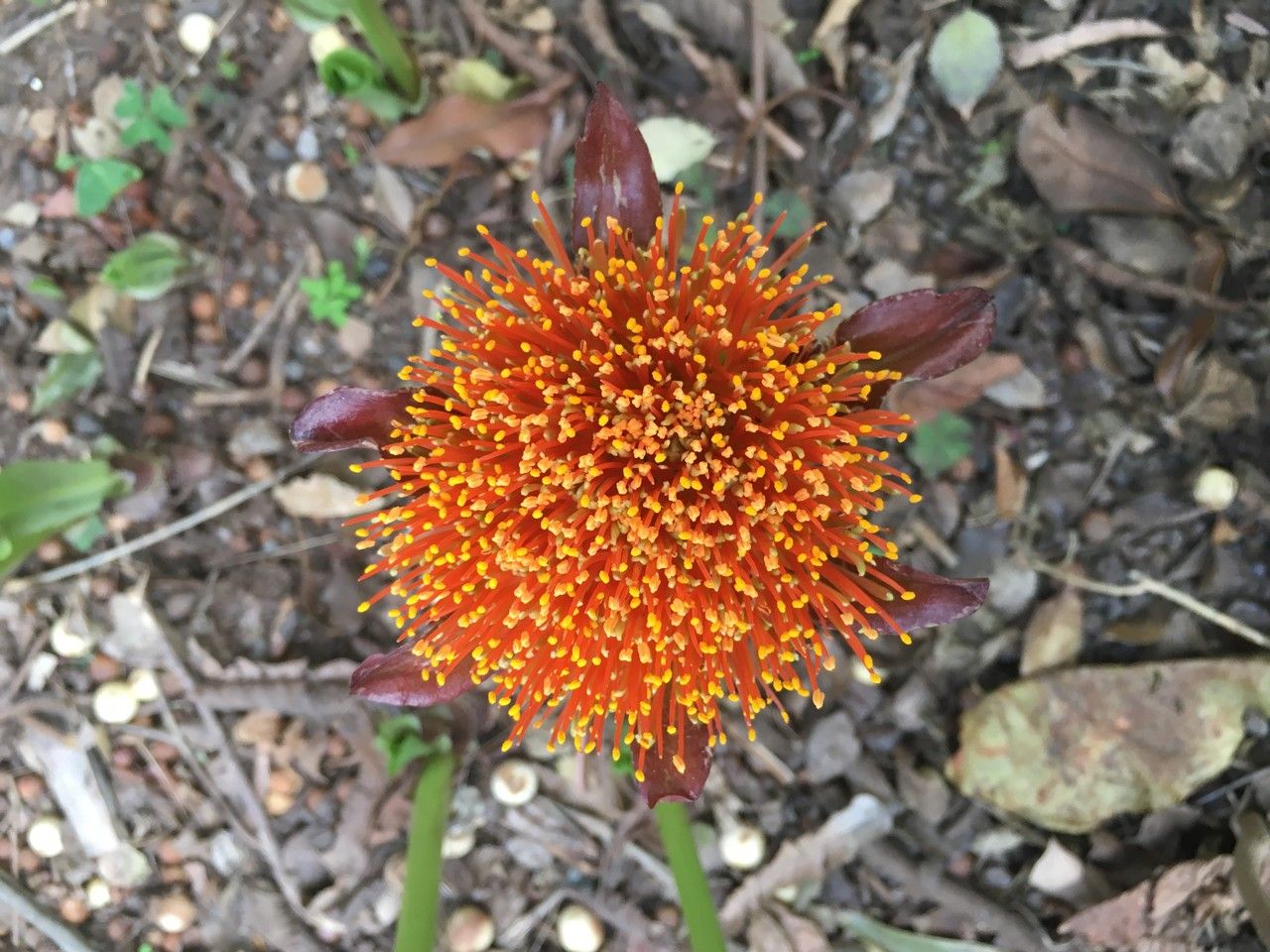
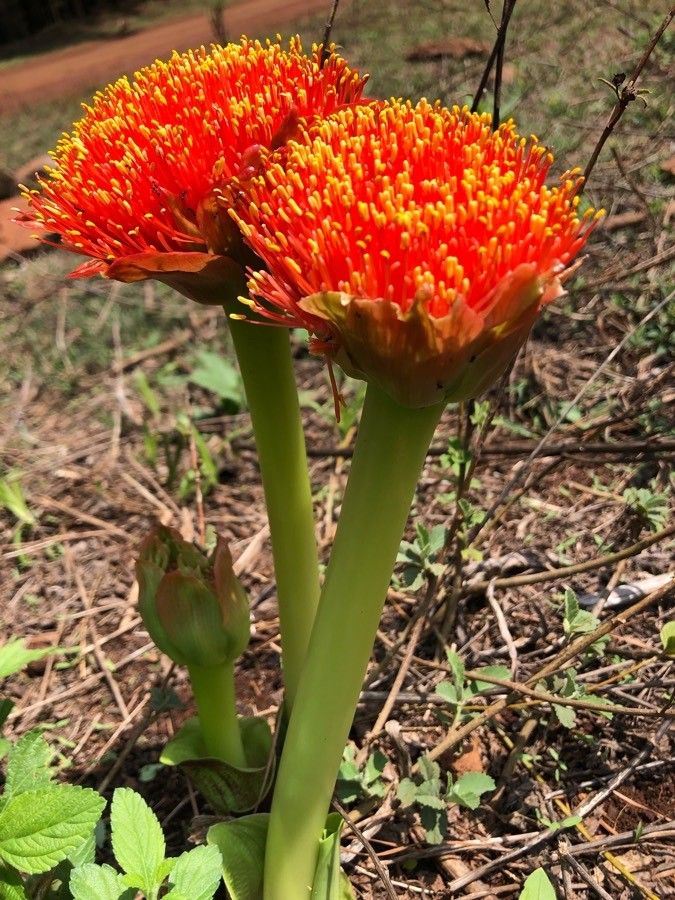
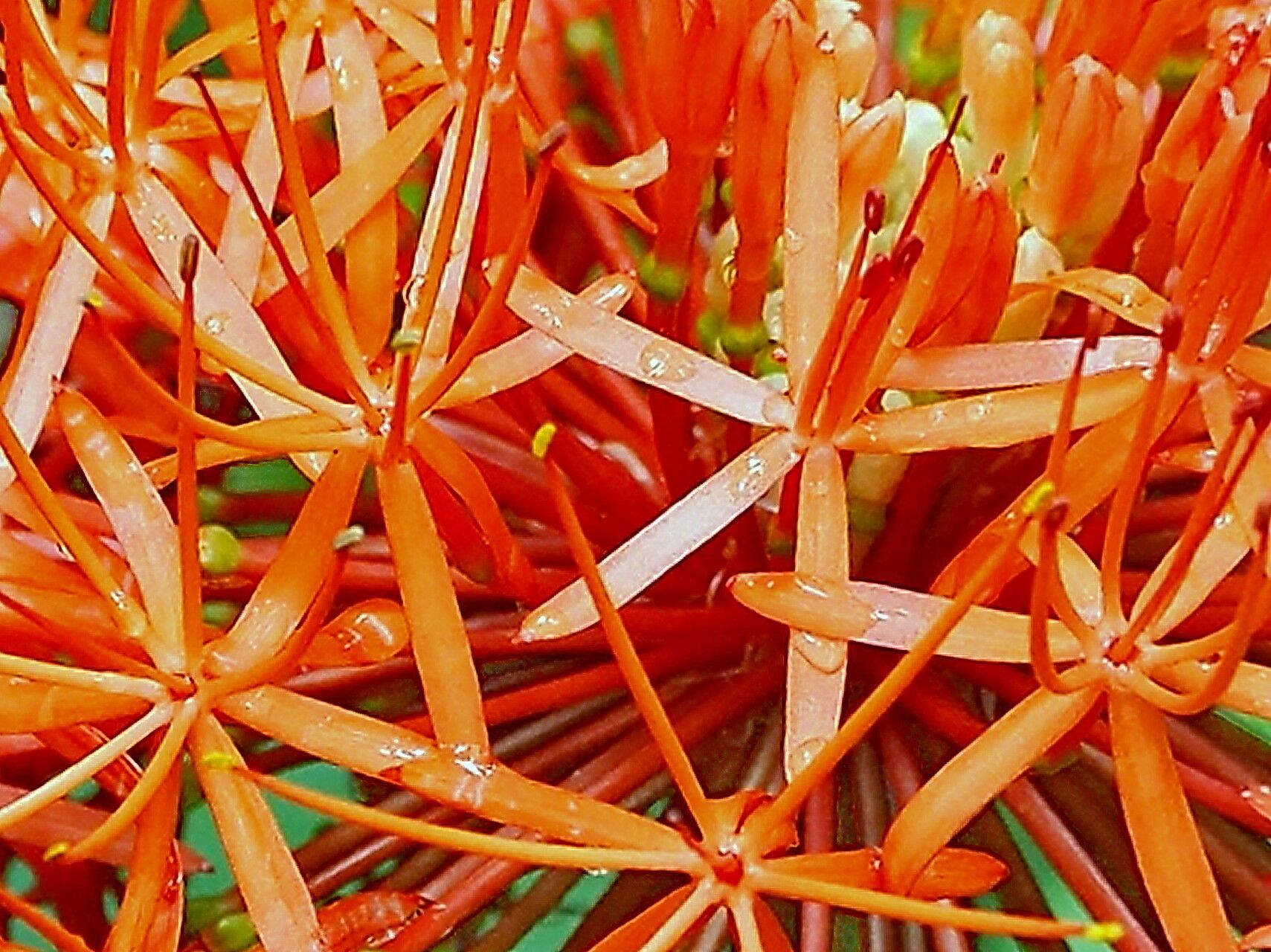
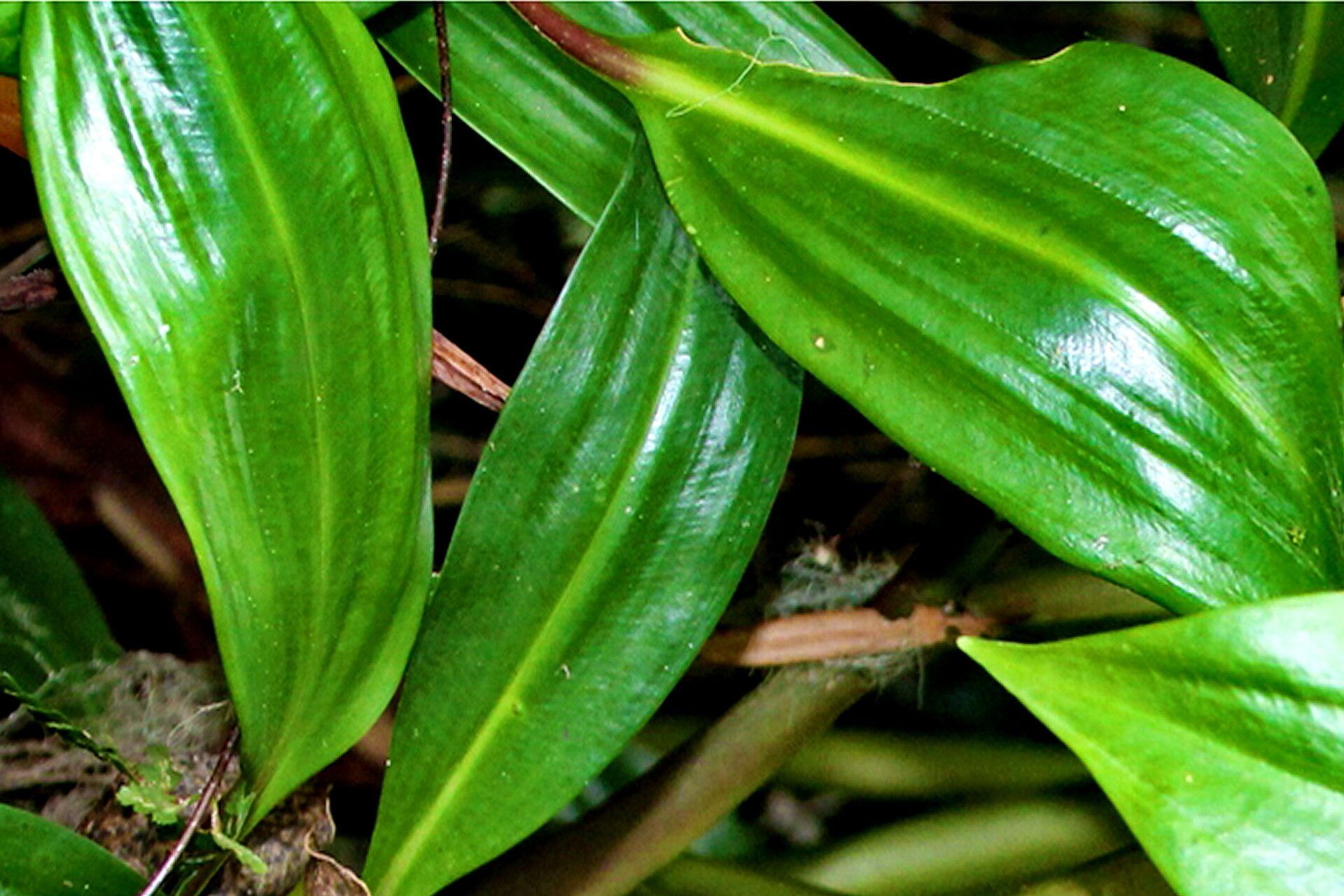
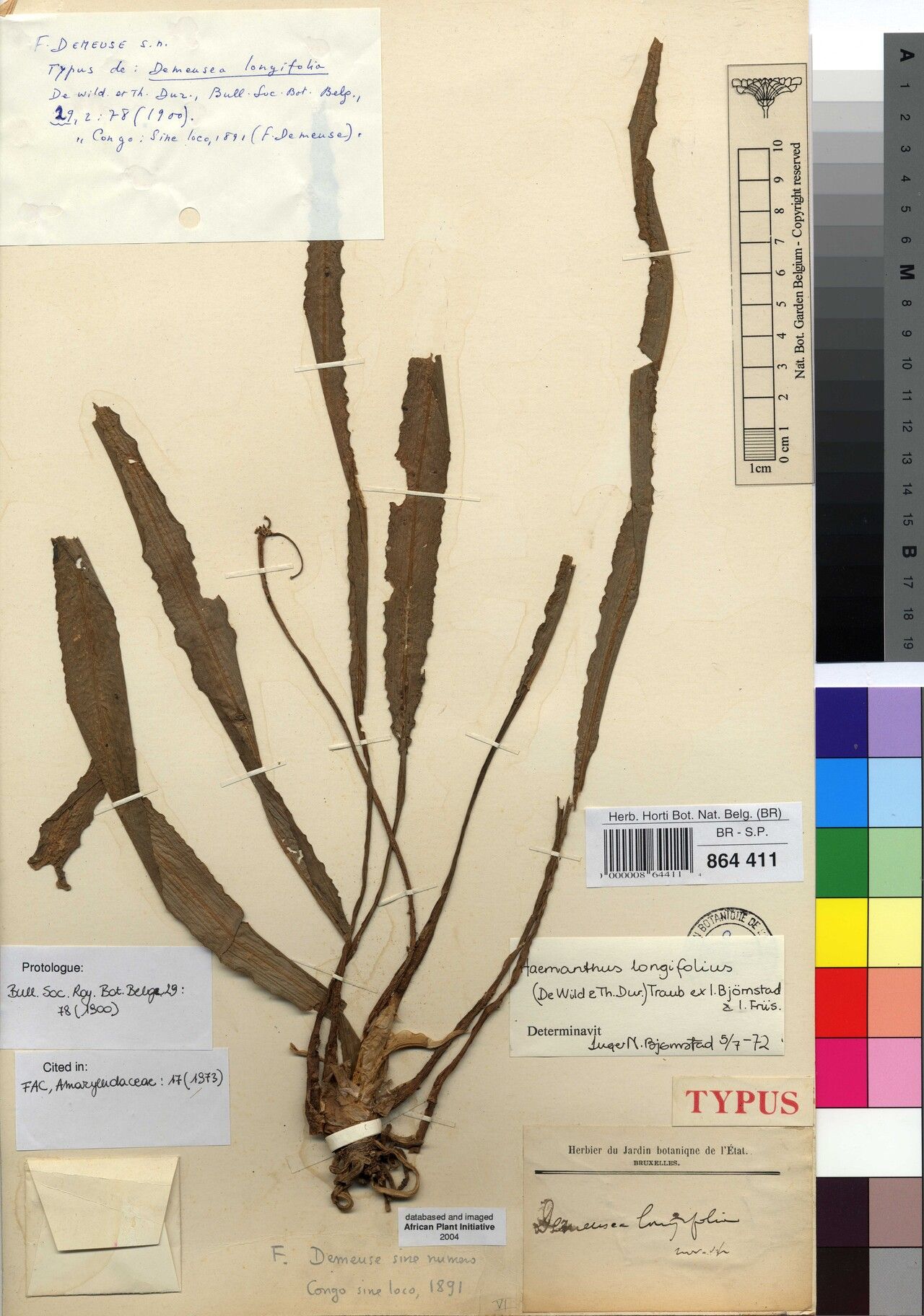
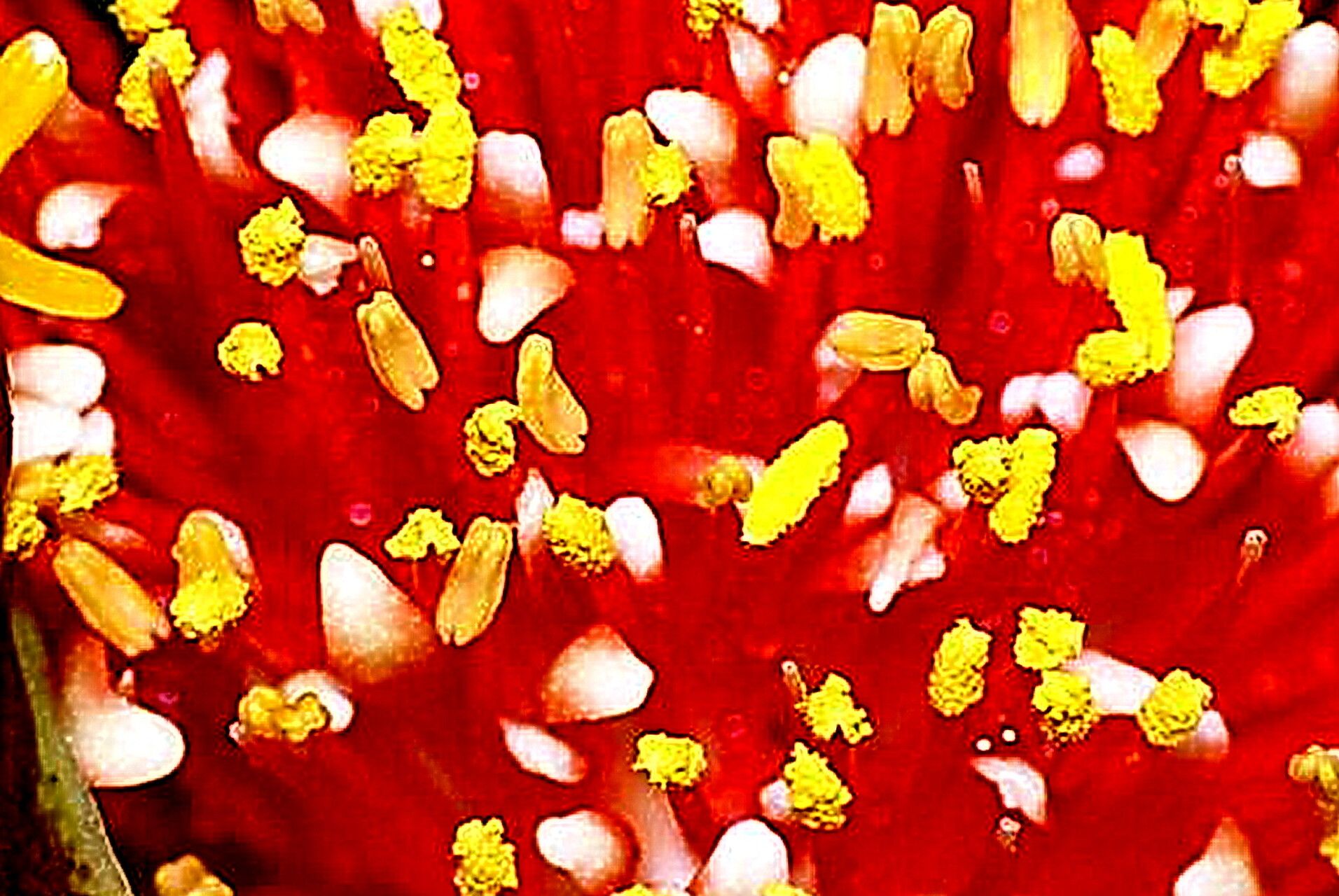
Scadoxus puniceus, commonly known as the paintbrush lily, is a species of bulbous plant. It is native to much of southern and eastern Africa: Ethiopia, Sudan, Tanzania, Malawi, Mozambique, Zambia, Zimbabwe, Botswana, Eswatini (Swaziland), and South Africa (the Cape Provinces, KwaZulu-Natal, the Free State and the Northern Provinces). Scadoxus puniceus can be found in cool, shady habitat such as ravines and forests, where it is often found in moist leaf litter. Other common names include snake lily, royal paintbrush, King-of-Candida, African blood lily (English), rooikwas (Afrikaans), isisphompho, and umgola (Zulu). There are nine species of Scadoxus of which three, S. puniceus, S. multiflorus (with 2 subspecies) and S.membranaceus, occur in South Africa.
Paintbrush lily is fairly disease-resistant and typically does not suffer from many illnesses. However, it can be vulnerable to pests and diseases present in its surroundings. Such infections are generally not severe. For care, this plant requires moderate maintenance. Regular pruning is needed to preserve a good appearance and encourage healthy growth. Fertilizing can also help stimulate flowering. Paintbrush lily suits anyone with an outdoor area, such as a garden or patio, and does not demand extensive gardening experience. It may need extra care when grown indoors.
How to keep Scadoxus Puniceus.
Light
The paintbrush lily grows best when exposed to a substantial amount of light, resembling the conditions of its native habitat. Its development is ideal in settings with plenty of light, though it can tolerate less sunny conditions. Both excessive and insufficient light can interfere with its healthy growth, impacting leaf color and flowering.
Water
The paintbrush lily, originally from African forests, thrives in consistently moist conditions but can withstand moderate drought. Water it every 1–2 weeks, taking humidity into account. This plant is well-suited for indoor cultivation and flourishes with higher humidity levels, which encourage vibrant blooms and lush foliage.
Temperature
The paintbrush lily is native to warm climates and generally thrives in temperatures between 59 and 100 °F (15 to 38 °C). Care adjustments may be required during seasons with extreme temperatures to ensure its survival.
Fertilizer
Proper fertilization is essential for the Paintbrush lily's health and appearance. Fertilize the Paintbrush lily in summer, repeating the application monthly during the season. Nutrients provide energy for growth and help maintain the plant's parts. Fertilizing the Paintbrush lily improves its floral display, ensuring the best blooms.
Pruning
The paintbrush lily boasts vibrant, brush-like flowers and requires minimal pruning, primarily in early to late spring, after it has finished blooming. To encourage healthier growth, remove any dead leaves; this will enhance air circulation, reduce the risk of disease, and promote denser foliage along with robust flowers.
Botanical profile.
- Plant Type
- Herb
- Life Cycle
- Perennial
- Genus
- Scadoxus
- Family
- Amaryllidaceae
- Hardiness Zone
- 8-11
- Mature Height
- 46 cm to 61 cm
- Mature Spread
- 46 cm to 61 cm
- Leaf Color
- Green
- Leaf Type
- Deciduous
- Flower Color
- Red
- Flower Size
- 15.24 cm
- Bloom Time
- Mid spring, Late spring
- Planting Time
- Spring
- Harvest Time
- Summer
- Native Area
- Malawi, Mozambique, Tanzania, South Africa, Sudan, Eswatini, Ethiopia, Botswana, Zimbabwe
Other names.