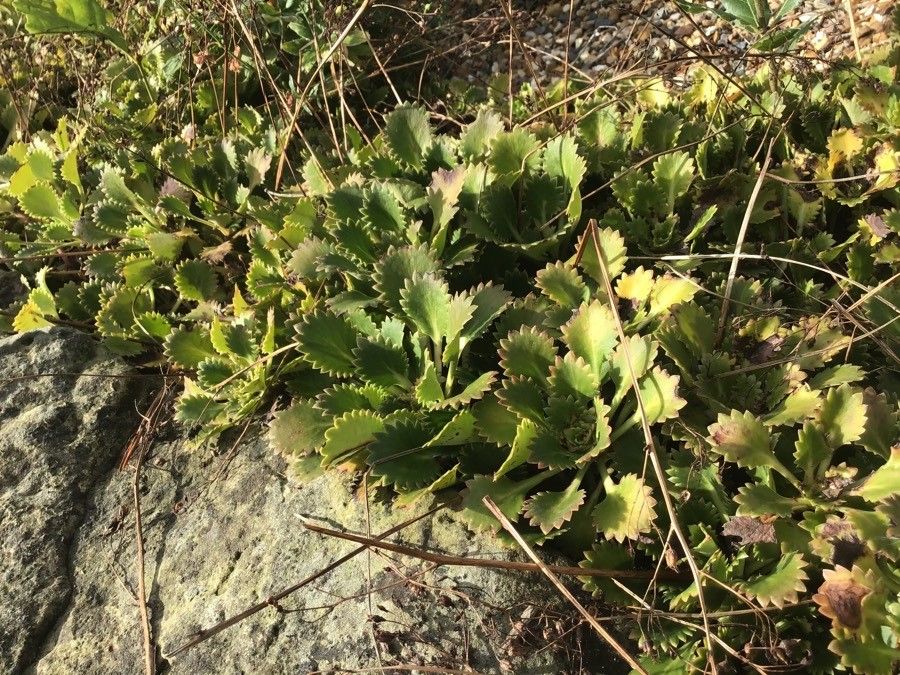
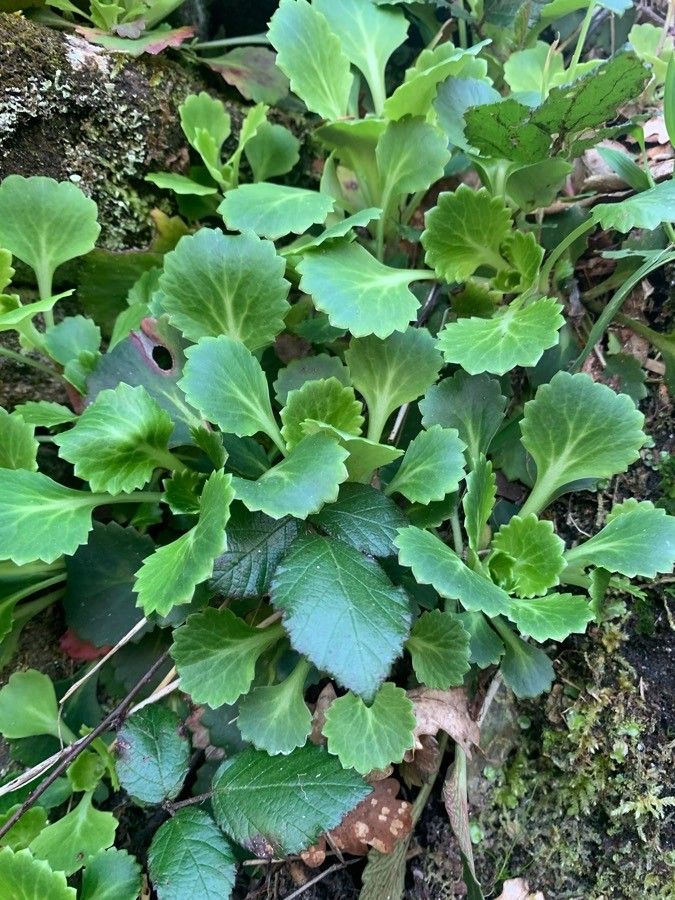
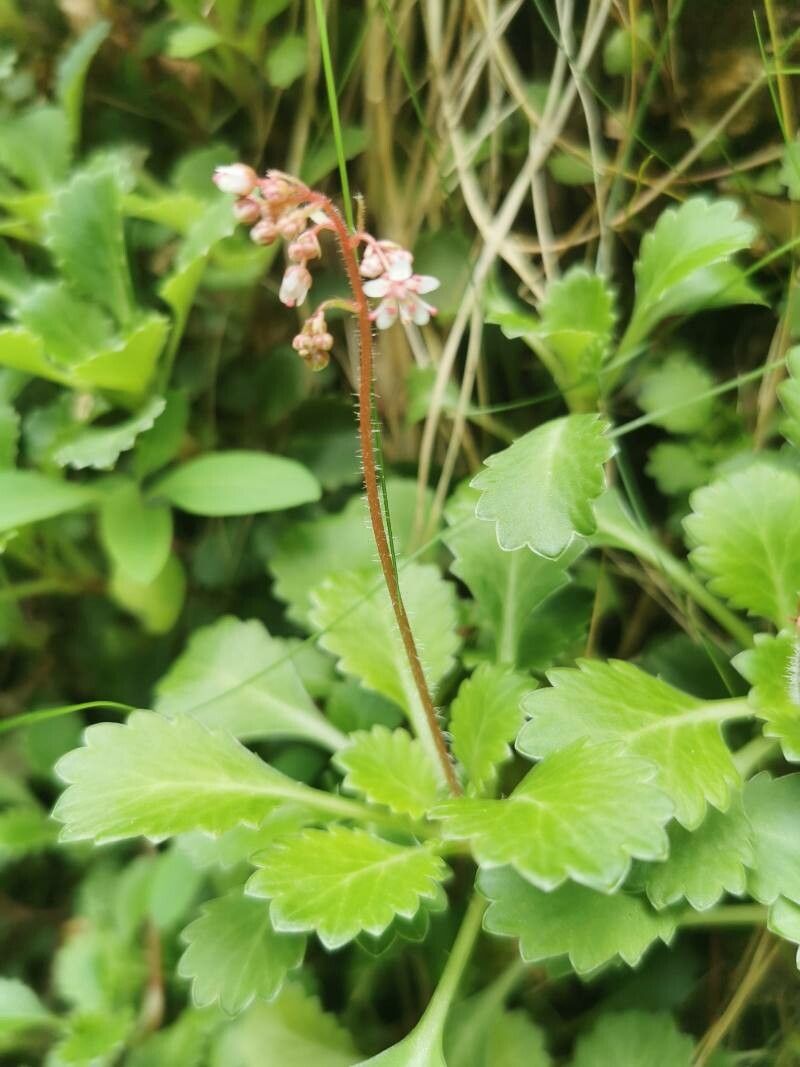
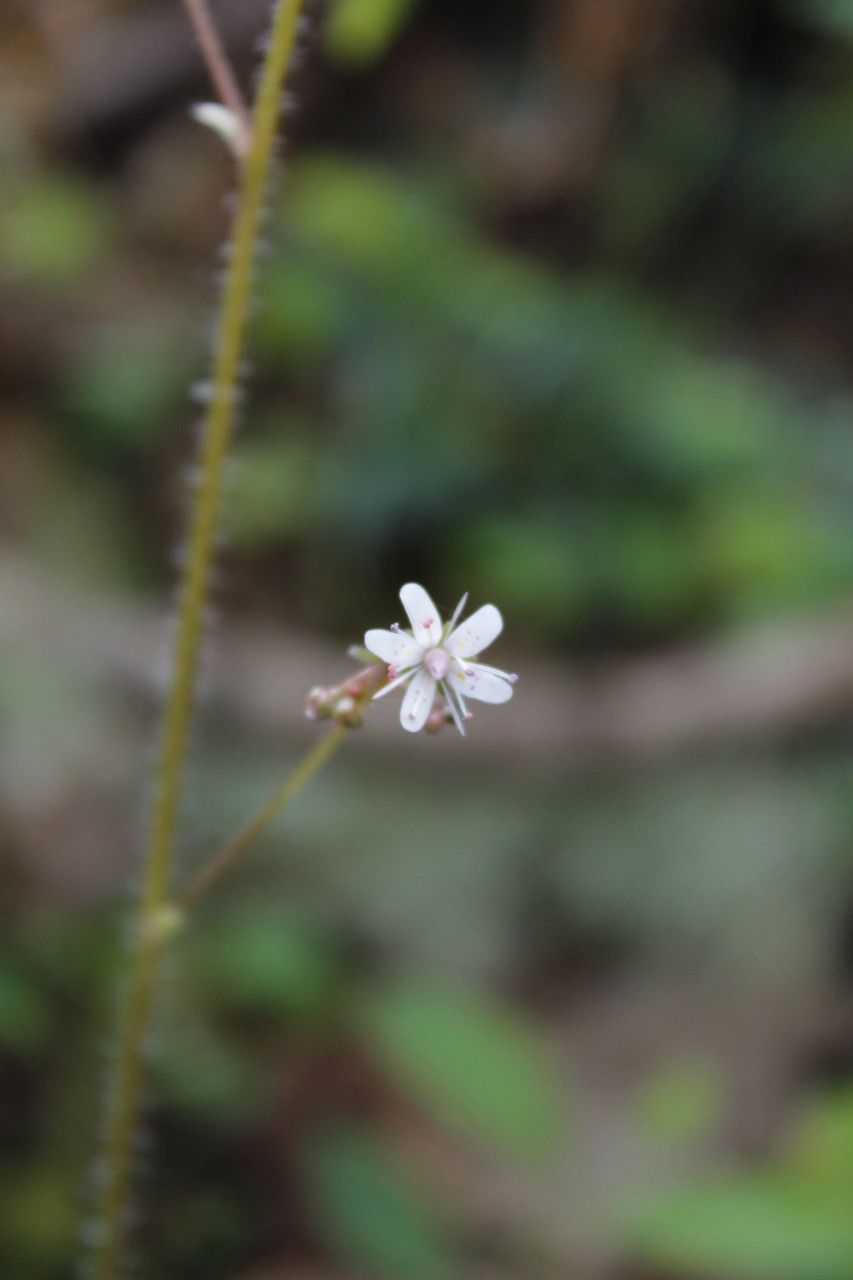
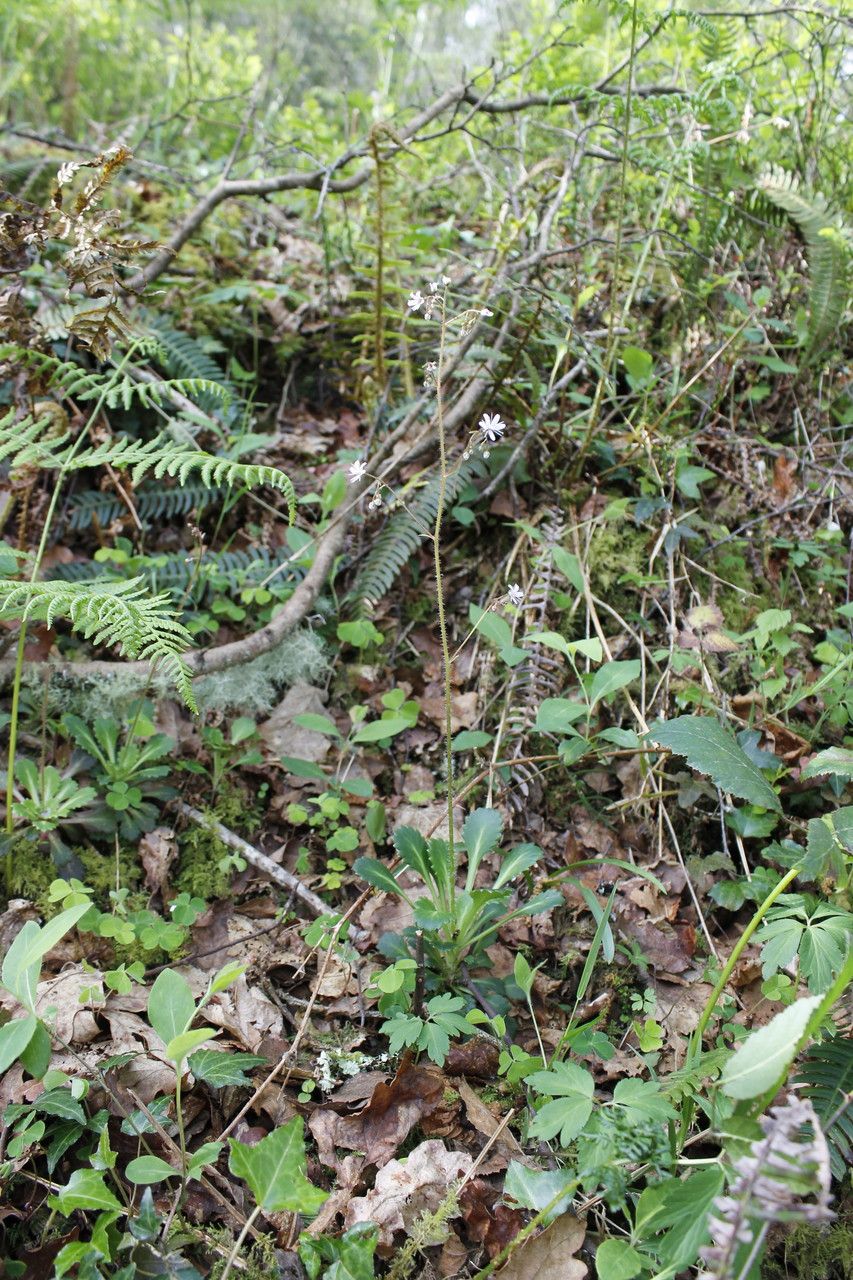
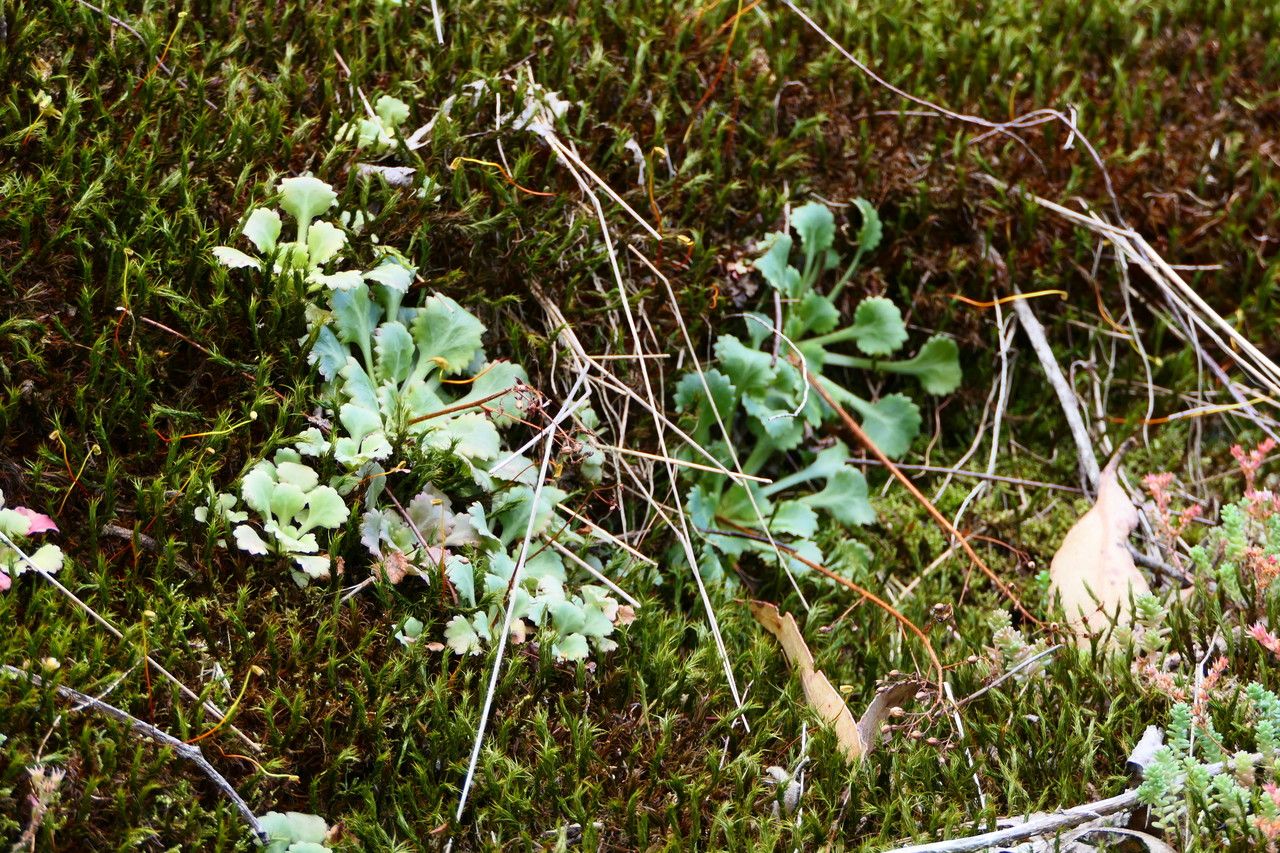
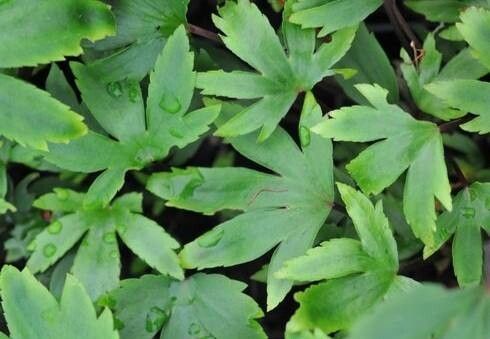
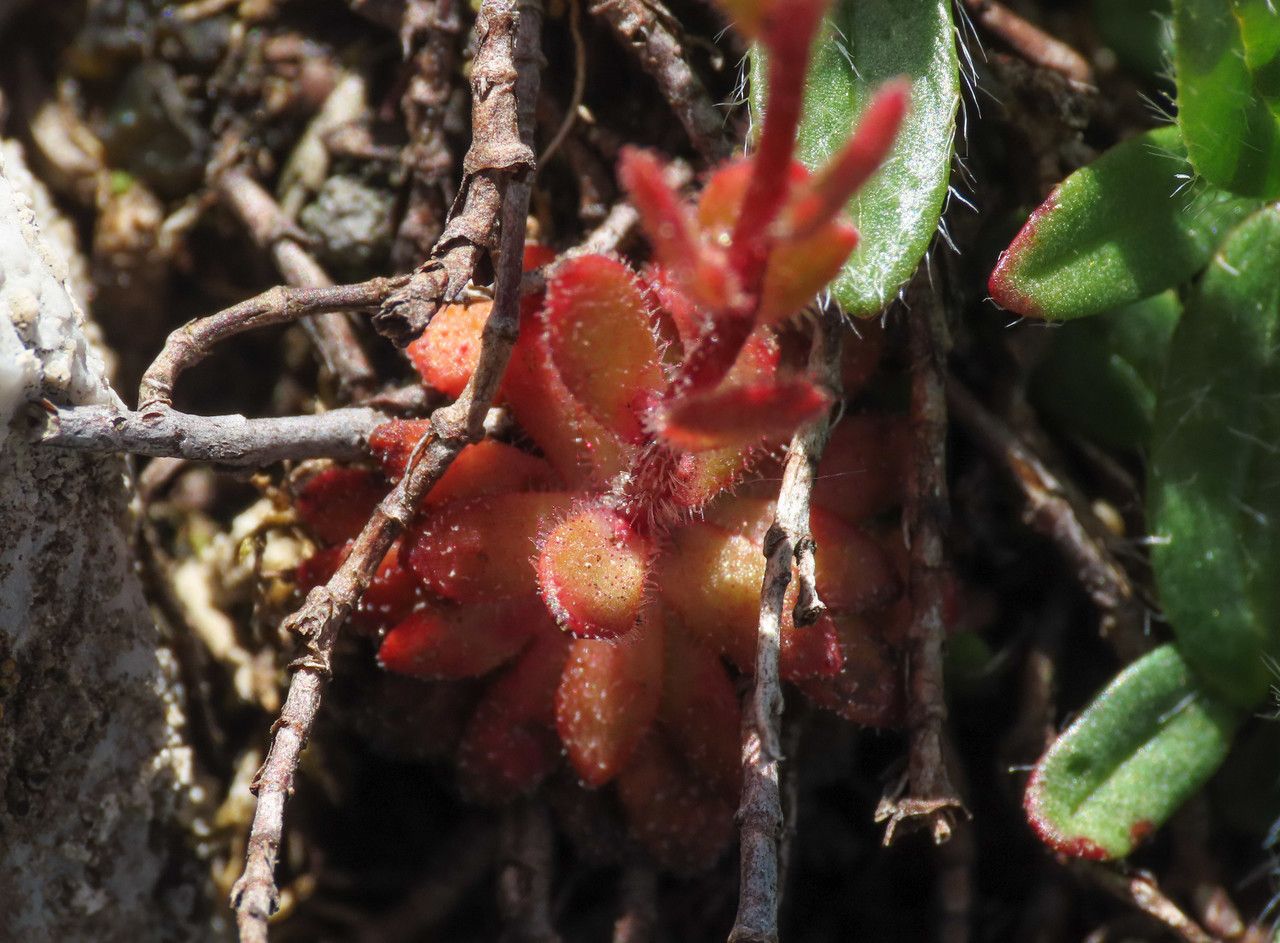
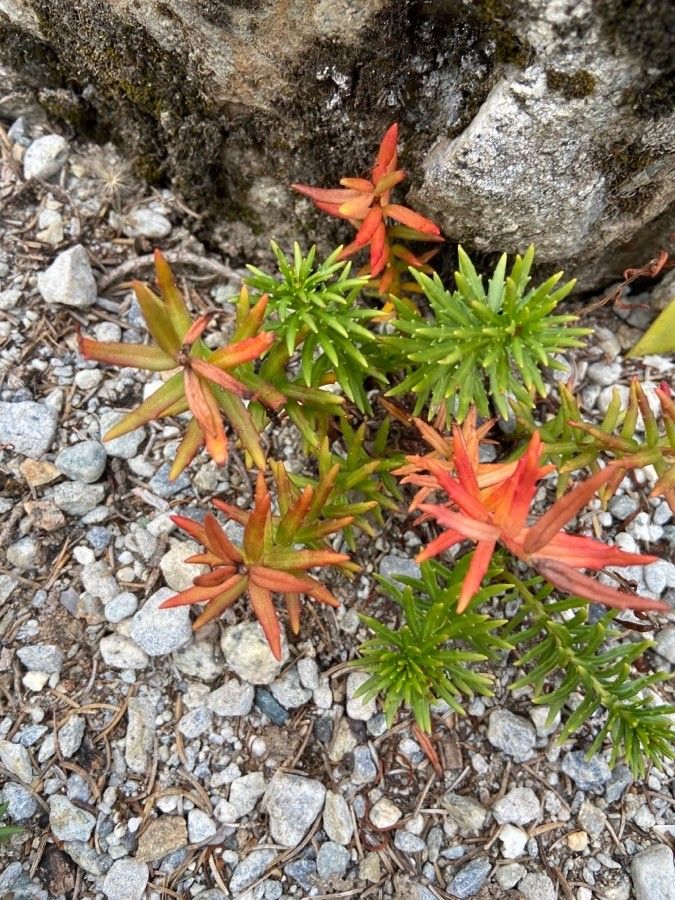
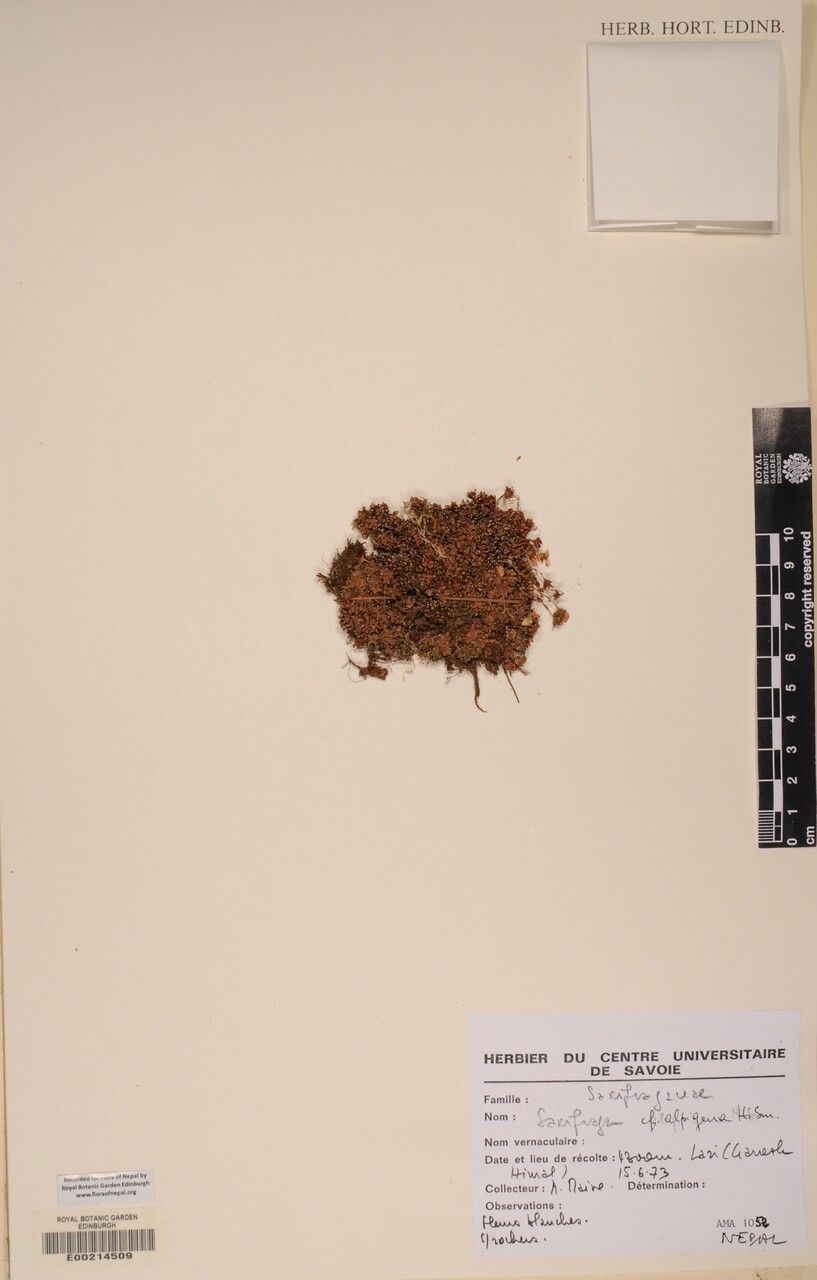
Saxifraga spathularis, the St Patrick's cabbage, is a species of saxifrage native to Ireland, Portugal, and Spain. It is a member of the so-called Lusitanian flora, a small set of plants which are native to Ireland but inexplicably absent from Great Britain. It consists of a basal rosette of elongate obovate succulent leaves around an upright leafless flowering stem. It seems to grow best in humus-rich alpine habitats among acidic rocks. With Saxifraga umbrosa it is a parent of Saxifraga × urbium (London pride).
St. Patrick's cabbage has good disease resistance and is generally not prone to illnesses. However, it can be affected by pests and diseases present in its environment. These infections are typically not serious. In terms of care, this plant requires moderate maintenance. It should be pruned regularly to keep a neat appearance and support healthy growth. Fertilizing can also help encourage flowering. St. Patrick's cabbage is suitable for anyone with outdoor space, such as a garden or patio, and does not demand extensive care experience. It may need more attention when grown indoors.
How to keep Saxifraga Spathularis.
Light
St. Patrick's cabbage is native to habitats like forest understories and rocky sites, where it grows in natural shade. It prefers partial sun but can adapt to full sun or full shade, showing its versatile and hardy nature.
Water
St. Patrick's cabbage requires consistent watering, ensuring the soil remains moist but not waterlogged during the summer. In the winter, it's important to reduce watering to avoid overwatering, especially in cooler, wetter climates.
Fertilizer
Usually one fertilizer application in spring is enough for St. Patrick's cabbage, though repeated feedings can help achieve maximum growth. Apply every month to six weeks. Fertilizing improves the leaves' appearance and function, supporting even color and a healthy texture. It also promotes root development and nutrient uptake for long-term plant health.
Pruning
St. Patrick's cabbage is characterized by its star-shaped flowers and fleshy leaf rosettes. It requires minimal pruning, which is best performed in early spring. The primary goal should be to remove dead foliage, promoting airflow and preventing disease. Light pruning helps maintain the plant's health, encourages flowering, enhances its appearance, and aids in pest control.
Botanical profile.
- Plant Type
- Herb
- Life Cycle
- Perennial
- Genus
- Saxifraga
- Family
- Saxifragaceae
- Hardiness Zone
- 5-8
- Mature Height
- 10 cm to 30 cm
- Mature Spread
- 15 cm to 25 cm
- Leaf Color
- Dark Green, Forest Green
- Leaf Type
- Evergreen
- Flower Color
- White
- Flower Size
- 1.02 cm to 1.52 cm
- Bloom Time
- Mid spring, Late spring
- Planting Time
- Spring, Summer, Autumn
- Harvest Time
- Early summer, Mid summer
- Native Area
- Spain, Ireland, Portugal
Other names.
Reader questions.
What are the sunlight requirements for St. Patrick's cabbage?
St. Patrick's cabbage (Saxifraga spathularis) requires specific sunlight conditions to thrive. For partial sun exposure, it needs about 3-6 hours of sunlight each day. If the plant is to be placed in full shade, it should receive less than 3 hours of sunlight daily. It's important to observe the way sunlight moves through your garden to select the optimal locations for your plants, ensuring they receive the right balance of light and shade to flourish.