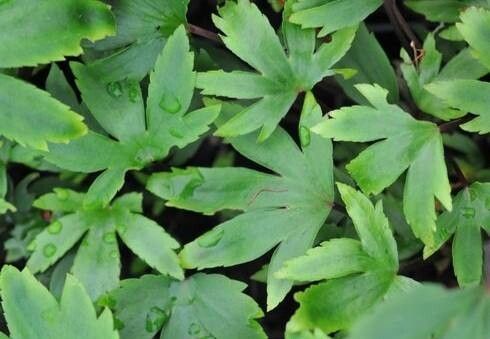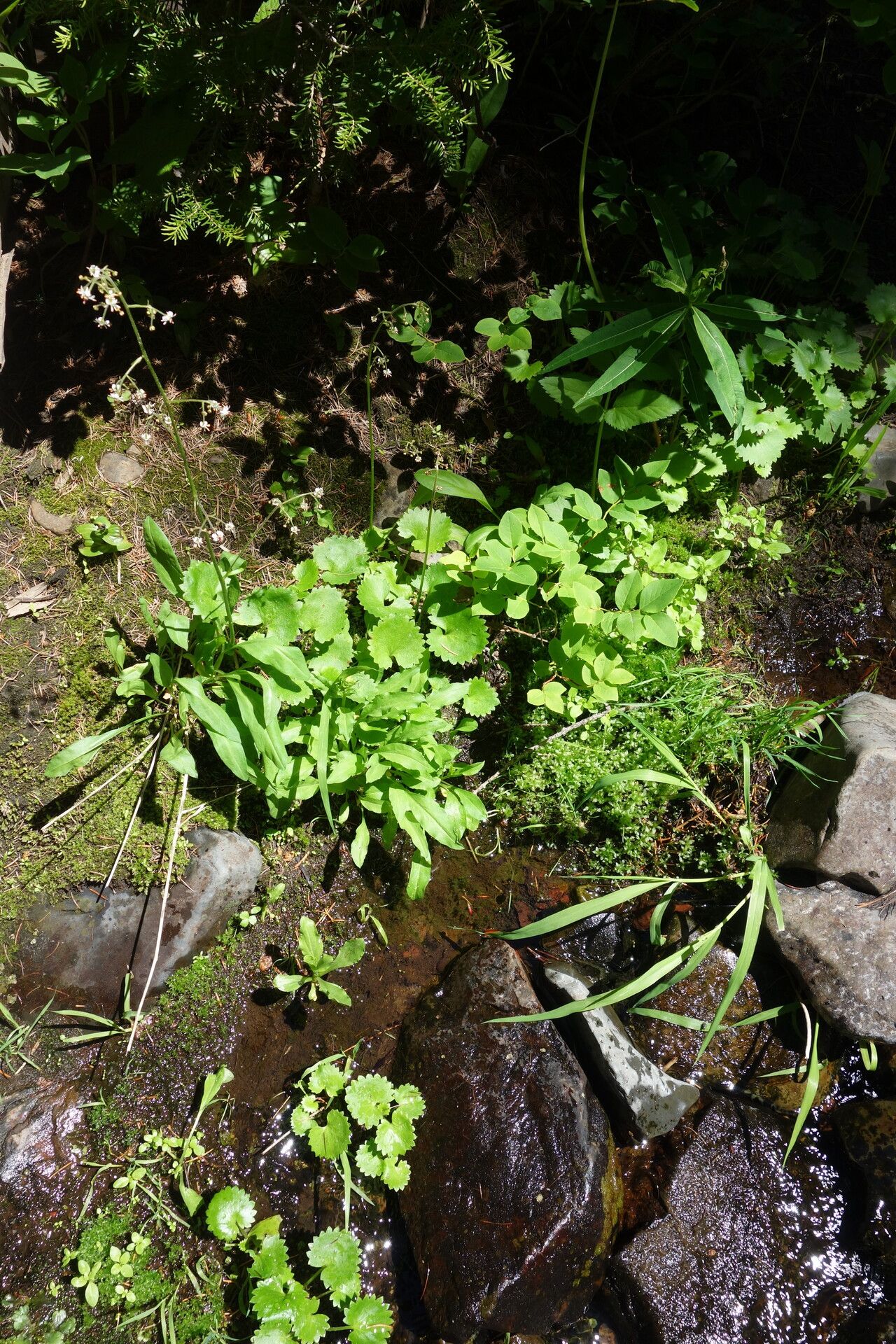
Micranthes odontoloma is a species of flowering plant known by the common name brook saxifrage. It is native to much of western North America, where it can be found in many types of moist and rocky habitat types. It is a perennial herb. It produces a clump of leaves with rounded, toothed, or scalloped blades on long, thin petioles. The branching inflorescence arises on a slender, erect peduncle up to half a meter tall bearing many flowers. Each flower has five teardrop-shaped white petals with threadlike bases, and stamens with flat, narrow filaments that sometimes resemble additional petals.
Brook saxifrage has good resistance to disease and is generally not prone to illnesses. Still, it can be affected by pests and diseases present in its surroundings, though these problems are usually not severe. Care-wise, the plant needs a moderate level of attention. It should be pruned regularly to preserve an attractive appearance and support healthy growth, and fertilizing can help encourage flowering. Brook saxifrage is appropriate for anyone with outdoor space, such as a garden or patio, and does not demand extensive gardening experience. When grown indoors, however, it may need more care.
How to keep Saxifraga Odontoloma.
Light
Brook saxifrage is native to habitats like forest understories and rocky areas, where it receives natural shade. It prefers partial sun but can tolerate full sun or full shade, showing its versatile, hardy character.
Fertilizer
The best time to fertilize a Brook saxifrage is in early spring, as it comes out of dormancy and begins active growth. Fertilizing supplies essential nutrients for healthy growth. Although Brook saxifrage has relatively low fertilizer needs, annual fertilization can improve its survival and promote better, longer-lasting flowers.