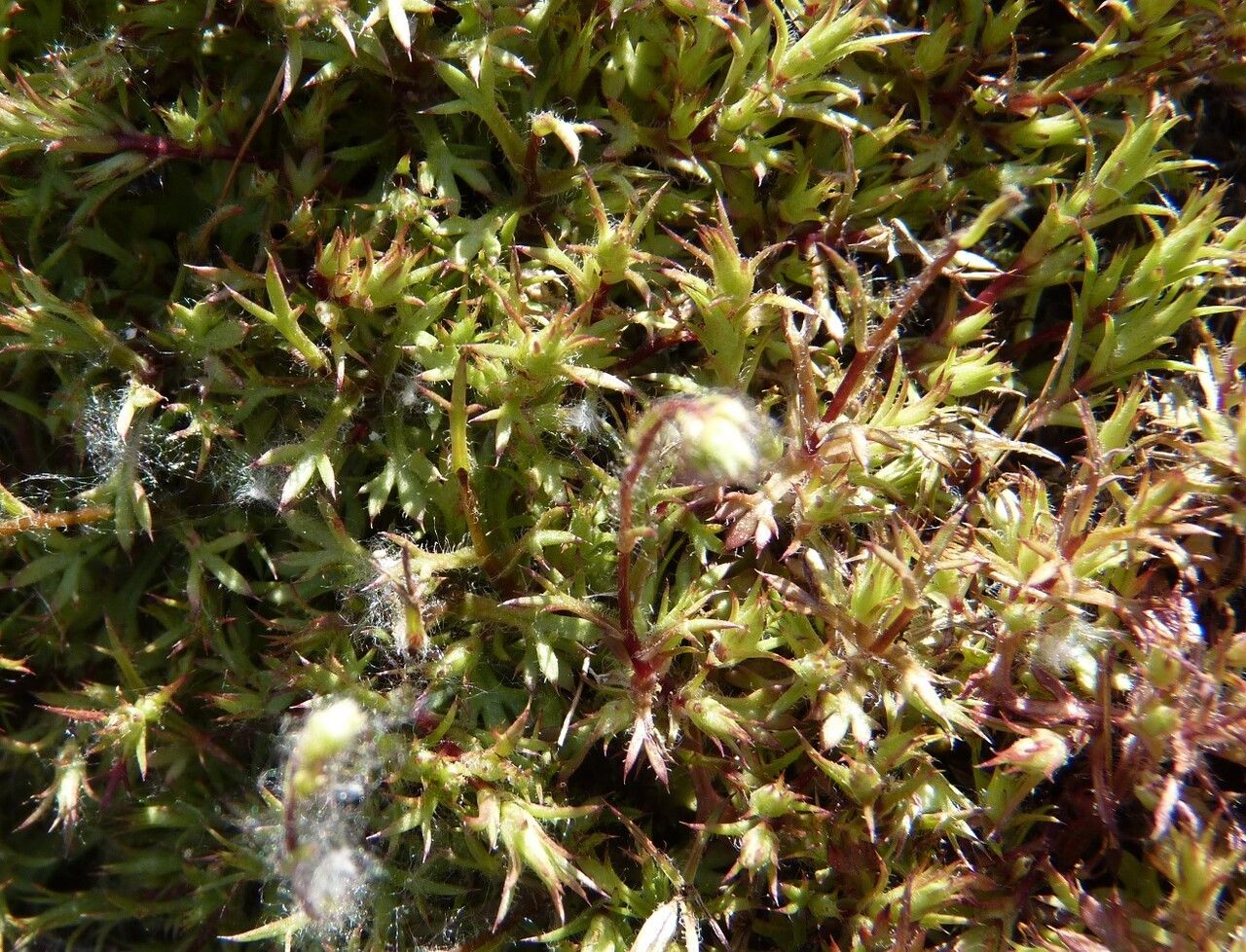
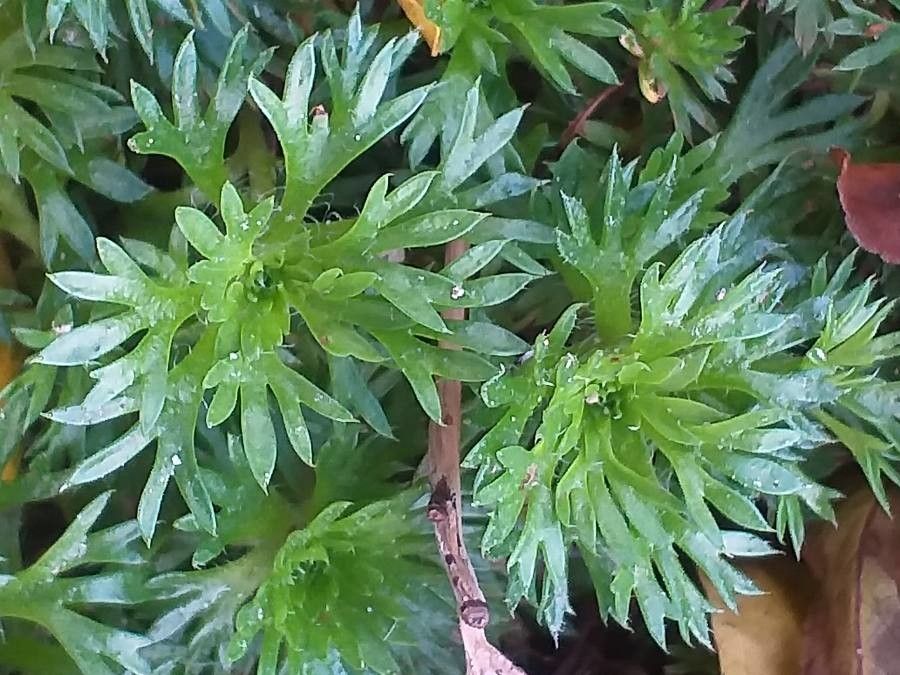
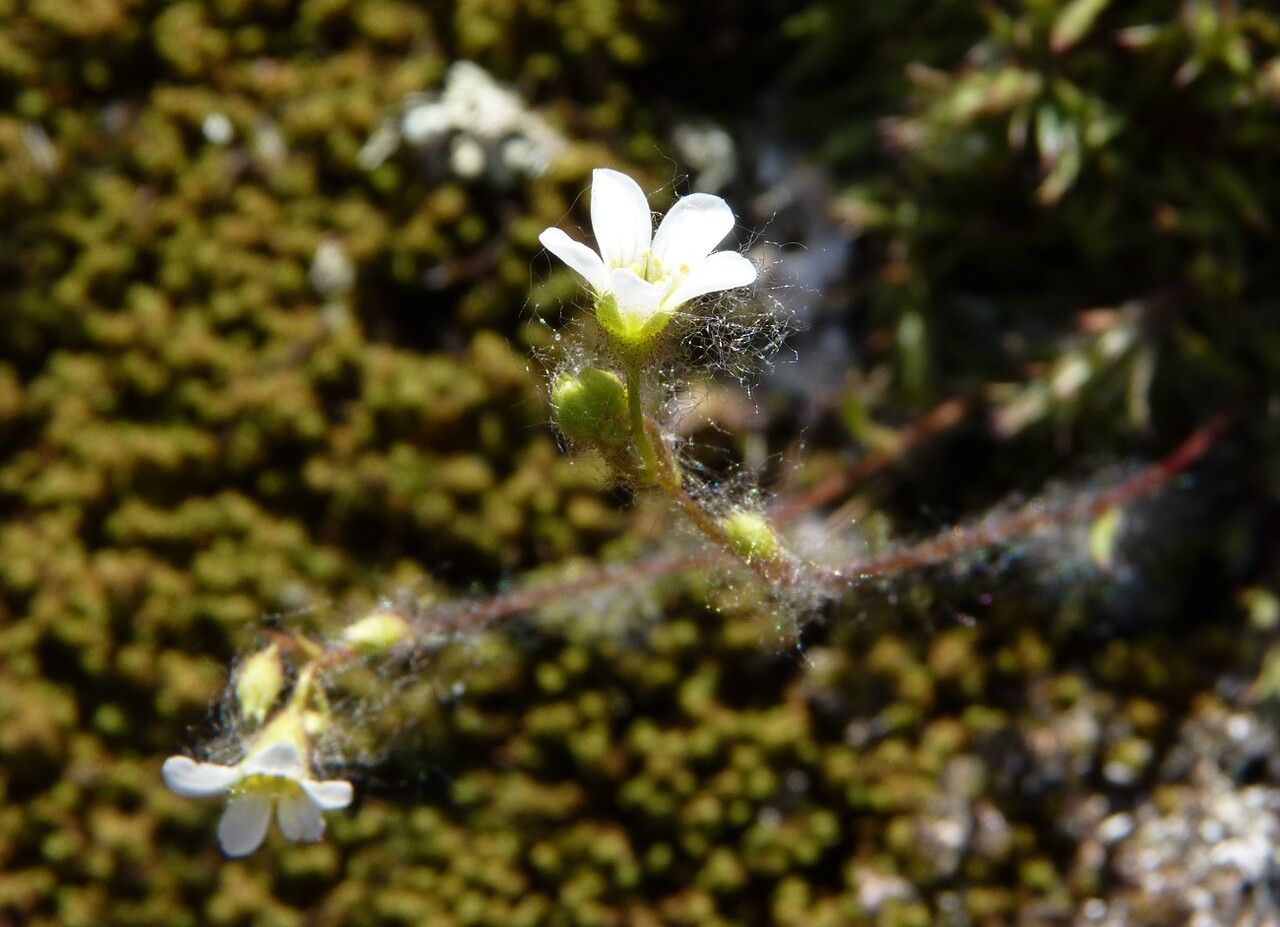
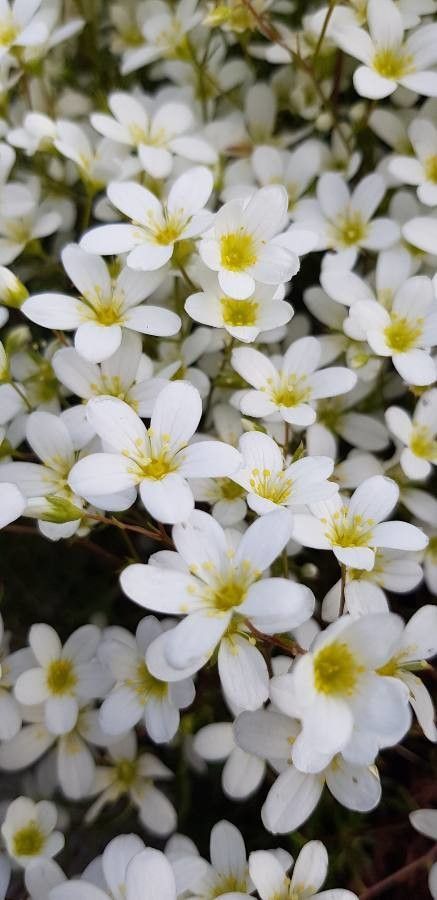
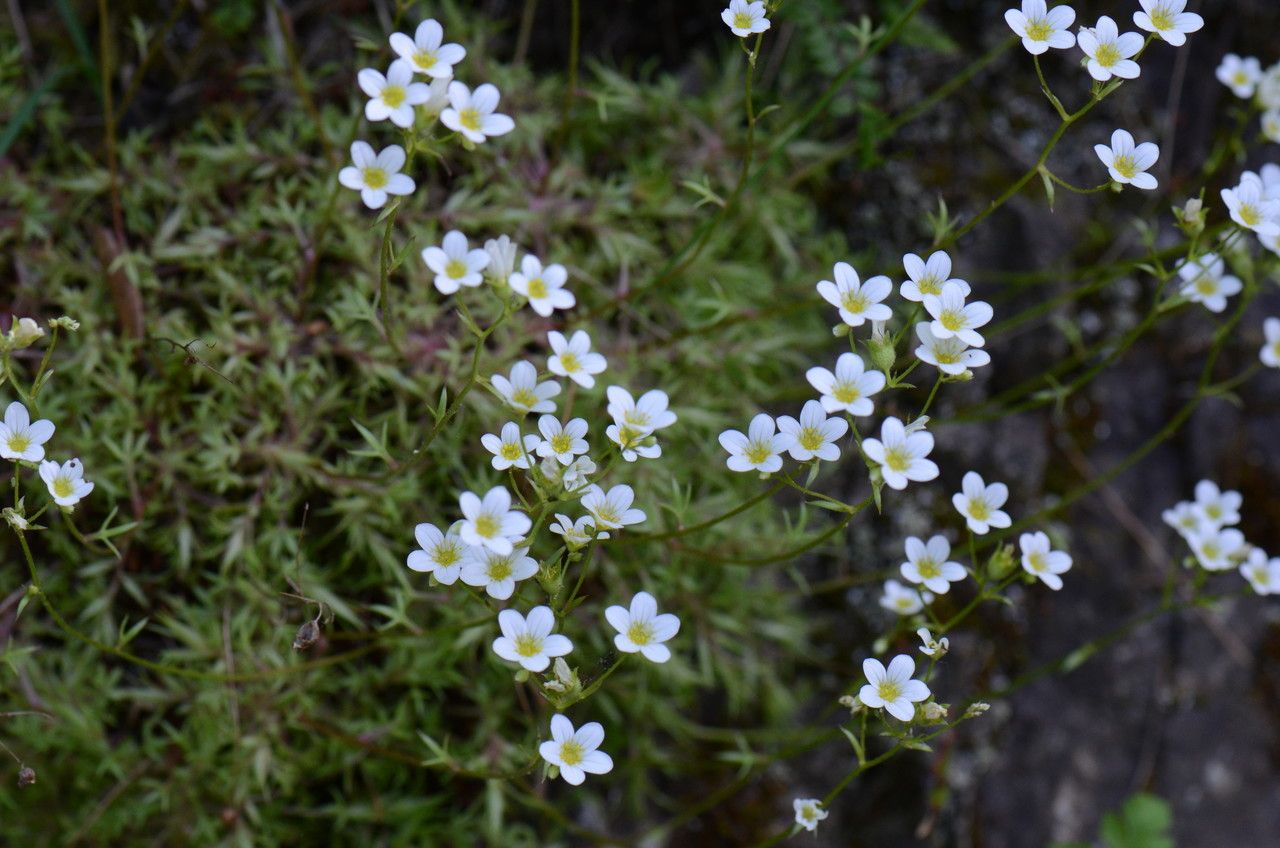
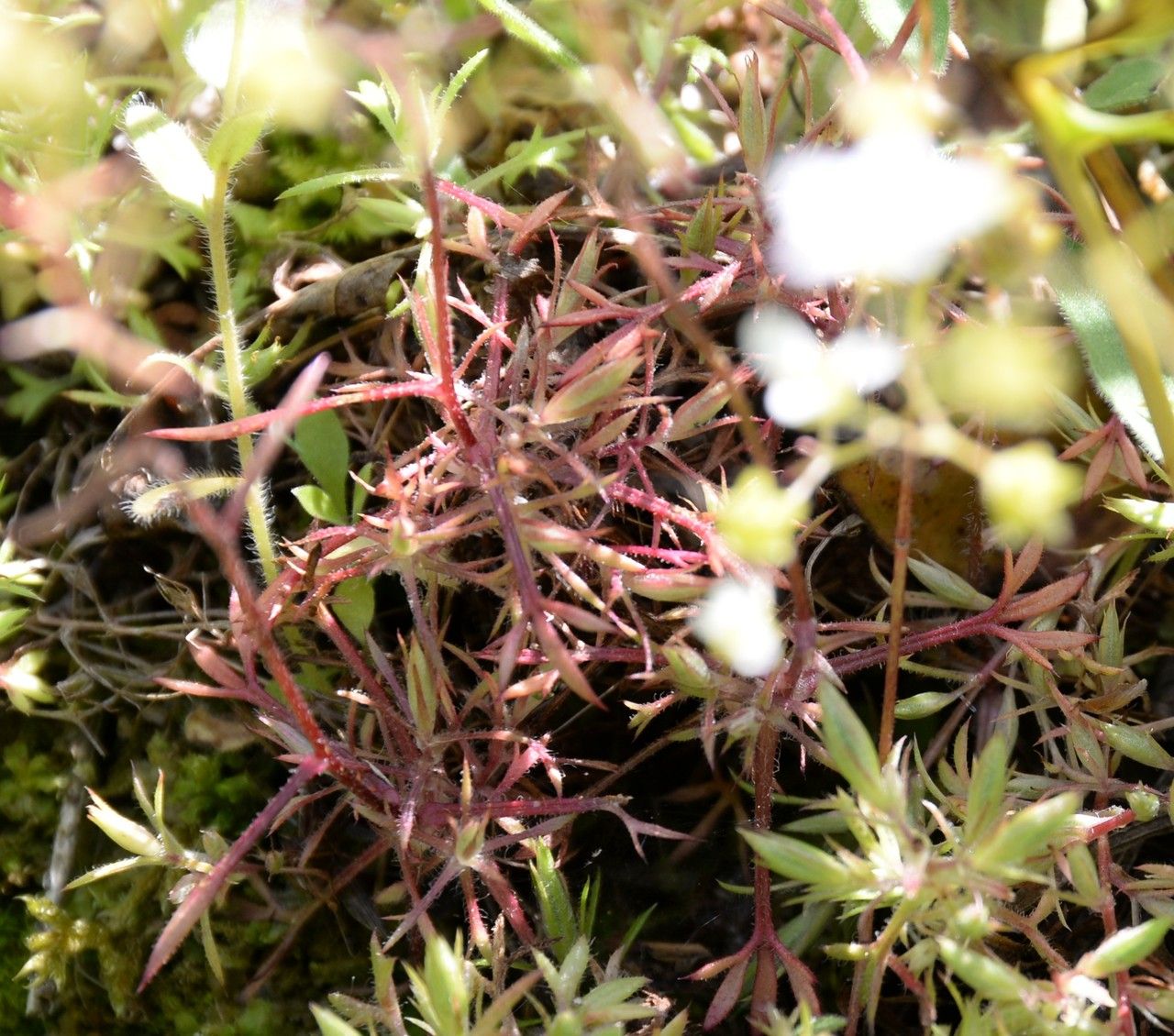
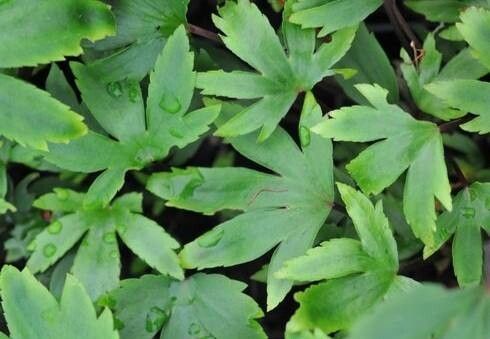
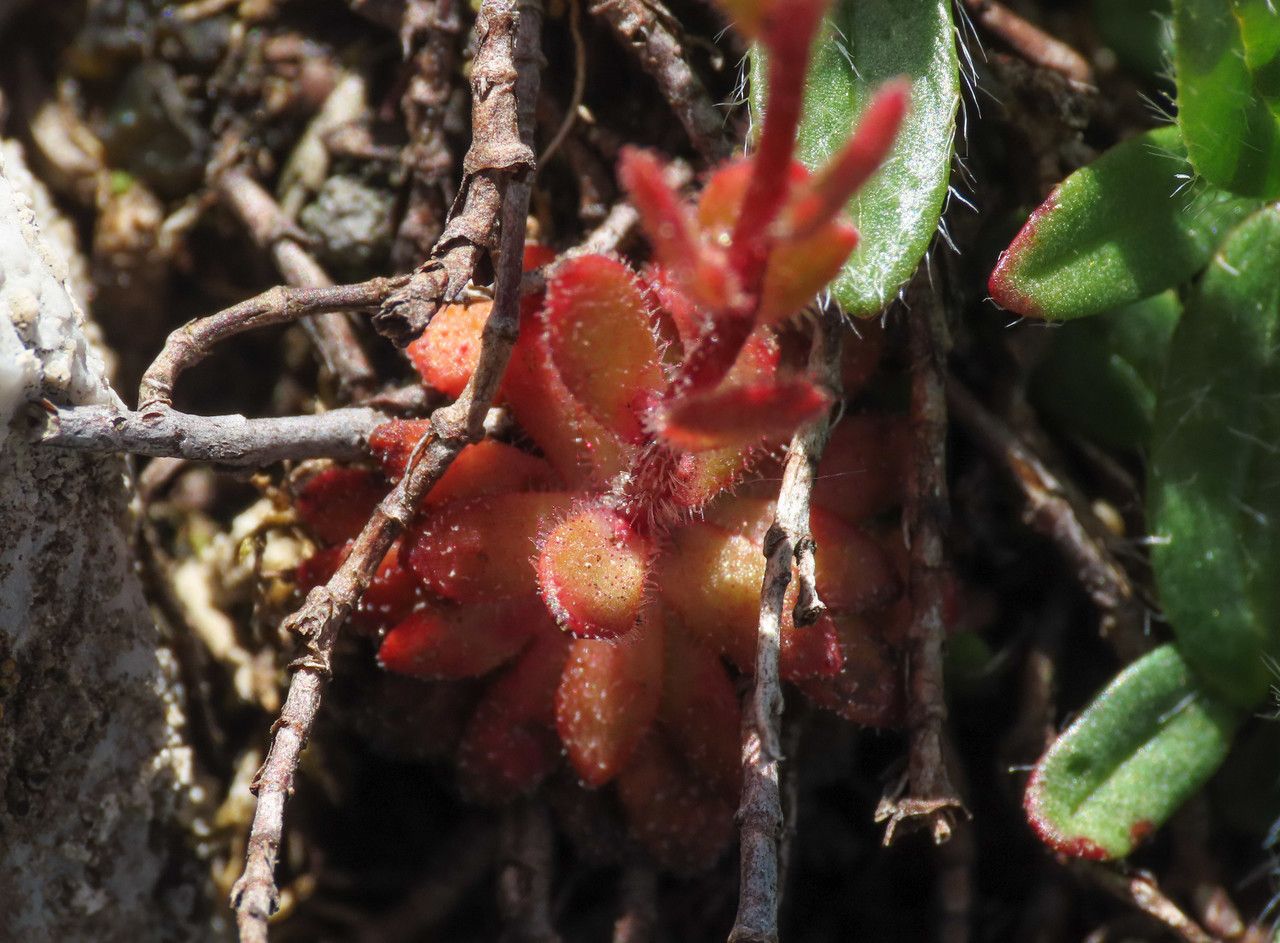
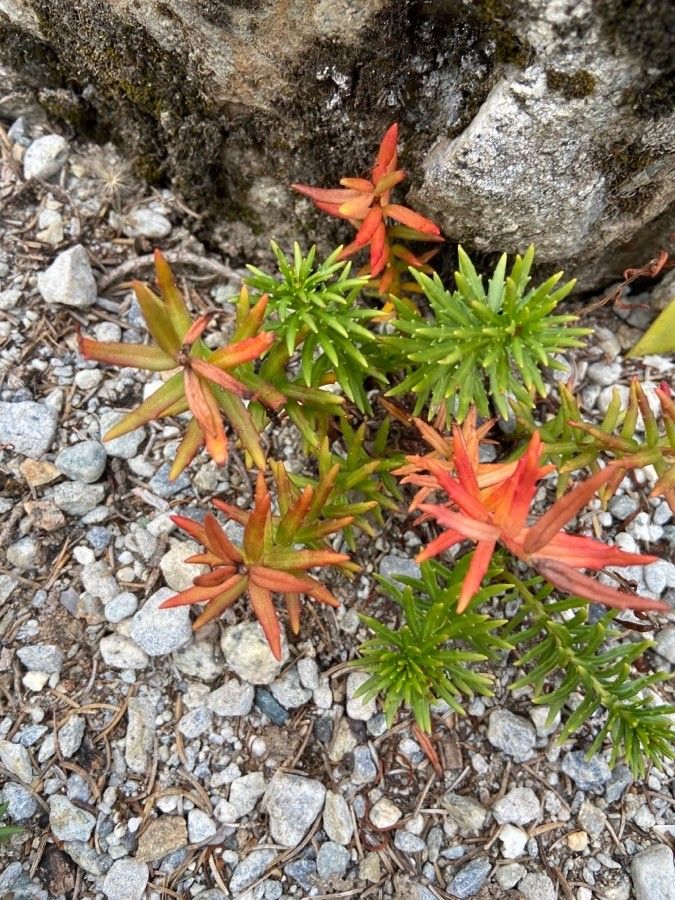
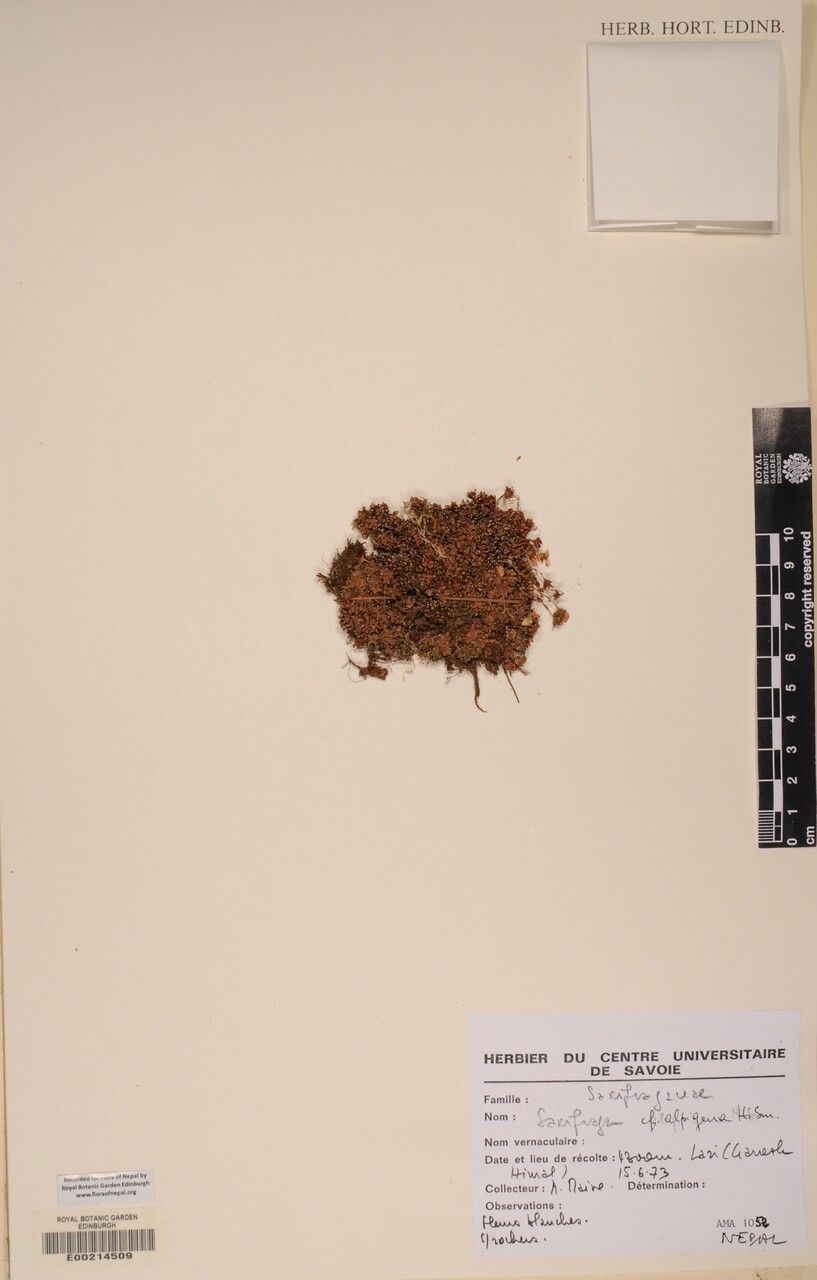
Saxifraga hypnoides, called mossy saxifrage, cut-leaved saxifrage, Dovedale moss, Eve's cushion, Indian moss, lady's cushion, and queen's cushion, is a species of flowering plant in the family Saxifragaceae. It is native to northwestern Europe; Iceland, the Faroe Islands, Norway, Ireland, Great Britain, Belgium, and France, and has been introduced to Czechia, the Eastern Himalayas, and Tibet. In the north of its range a tetraploid form predominates, and in the south a diploid form is more likely to be found.
Mossy saxifrage has good disease resistance and is generally not prone to illnesses. Nevertheless, it can be affected by pests and diseases present in its environment. Such infections are usually mild. Regarding care, this plant needs moderate maintenance. It should be pruned regularly to keep a neat appearance and support healthy growth. Fertilizing can also help encourage flowering. Mossy saxifrage is suitable for anyone with an outdoor area, such as a garden or patio, and does not require extensive care experience. It may demand more attention when grown indoors.
How to keep Saxifraga Hypnoides.
Light
Mossy saxifrage favors sites where it receives moderate sunlight, though it can also tolerate areas with plentiful sun. Its native habitat reflects this light preference. Proper exposure is essential for healthy growth, while too much or too little can affect its vitality.
Water
Mossy saxifrage originates from the cool and moist regions of the Northern Hemisphere, and it thrives in consistently moist conditions and can tolerate cold temperatures. To keep it healthy, water mossy saxifrage weekly, taking care not to overwater. Often found in rock gardens, this plant benefits from rainwater, which provides a natural balance of moisture for its growth.
Temperature
Mossy saxifrage is indigenous to areas where temperatures range from 41 to 95 °F (5 to 35 ℃). It favors cooler climates, and seasonal adjustments during hotter periods are recommended to ensure its survival.
Fertilizer
For Mossy saxifrage, the primary time to apply fertilizer is in early spring when the flowers are developing. The appropriate fertilizer promotes improved blooms and assists Mossy saxifrage in producing attractive flowers. Fertilizing in early spring guarantees strong flowering during the season and supplies energy for dormant growth phases.
Pruning
Mossy saxifrage has foliage that resembles moss and produces small white flowers. Prune it between early and late spring to remove any dead stems and encourage blooming. Be careful not to cut too heavily, as gentle pruning supports healthy growth and prevents the plant from becoming leggy. Always use sanitized tools to reduce the risk of spreading diseases.
Pot & Repot
Repot mossy saxifrage every 2 to 3 years in the spring, using a well-draining pot that accommodates its compact growth. After repotting, water it moderately to avoid waterlogging. With the right care, mossy saxifrage will thrive, providing a lush ground cover adorned with attractive foliage and delicate blooms.
Botanical profile.
- Plant Type
- Herb
- Life Cycle
- Perennial
- Genus
- Saxifraga
- Family
- Saxifragaceae
- Hardiness Zone
- 5-9
- Mature Height
- 10 cm to 30 cm
- Mature Spread
- 34 cm
- Leaf Color
- Green
- Leaf Type
- Evergreen
- Flower Color
- White
- Flower Size
- 0.76 cm to 1.02 cm
- Bloom Time
- Mid spring, Late spring, Early summer
- Planting Time
- Spring, Autumn
- Harvest Time
- Summer
- Native Area
- Norway, Iceland, Ireland, United Kingdom, Belgium, France
Other names.
Reader questions.
How should I water my Mossy saxifrage?
To ensure the health of Mossy saxifrage when watering, it is recommended to use filtered water at room temperature. Tap water may contain harmful particles, so filtered water is better. This plant prefers slightly warm water, as it originates from a warm environment and cold water can be a shock to its system. It is also advised to avoid overhead watering, as it can lead to problems with the foliage. Instead, simply soak the soil with filtered room temperature water until it is completely saturated. This helps moisten the roots and supports their spread through the soil, allowing for the collection of necessary nutrients.
Why should I put fertilizer on my Mossy saxifrage?
The main structure of the Mossy saxifrage is made up of its leaves. Fertilization is an important way to ensure that these leaves look great and function well. Proper fertilization will help the leaves maintain consistent color and a healthy texture. It also helps the plant below the soil's surface by generating new roots and maintaining the existing ones. This means that fertilization not only keeps the plant healthy now, but also improves its ability to absorb nutrients from the soil in the future.
What are the sunlight requirements for Mossy Saxifrage?
Mossy Saxifrage thrives in both partial and full sunlight conditions. It requires about 3-6 hours of sunlight for partial sun exposure and more than 6 hours for full sun exposure. It's essential to observe the movement of sunlight in your garden to find the best spots that offer a balance of light and shade, which promotes the plant's well-being. Mossy Saxifrage's native environment reflects this adaptability to varying light conditions, highlighting the importance of adequate sunlight for its healthy growth while cautioning against both overexposure and insufficient light, which can impact the plant's vitality.
What is Mossy Saxifrage and where is it native to?
Mossy Saxifrage, botanically known as Saxifraga hypnoides, is native to environments that experience temperatures ranging from 41 to 95 °F (5 to 35 °C). It thrives best in cooler climates and has a strong resistance to cold, making it a versatile plant for various seasonal conditions.
What should I do if I give my Mossy saxifrage too much or too little water?
Overwatering is a more common issue than underwatering for Mossy saxifrage. When this plant receives too much water, its stems and leaves may wilt, turn yellow, and it can lead to diseases like root rot, mold, and mildew. Underwatering is less common but can cause brittle and brown leaves. It's important to notice the signs of overwatering early to prevent irreversible damage. Reduce watering if you see early signs and check soil drainage. If your plant is underwatered, simply increase watering until symptoms improve.
When should I fertilize my Mossy saxifrage plant?
If you grow Mossy saxifrage outdoors each year, it will start growing new leaves in early spring. This is the signal to begin fertilizing. Normally, one application of fertilizer is enough for Mossy saxifrage in the spring. However, if you want it to grow as much as possible, you can fertilize multiple times in spring and early summer, around once every month to a month and a half.
How do artificial lights support Mossy Saxifrage growth indoors?
Indoor Mossy Saxifrage plants benefit significantly from artificial lighting, especially when natural sunlight is insufficient. During winter or in less sunlit areas, artificial lighting is a crucial alternative to promote optimal growth. LED lights are recommended due to their adjustability to provide specific light wavelengths necessary for the plant. The artificial light intensity required varies with the type of plant: full sun plants need 30-50W/sq ft, partial sun plants require 20-30W/sq ft, and full shade plants should get 10-20W/sq ft. The lights should be positioned 12-36 inches above the plant to simulate natural sunlight and left on for 8-12 hours a day to mimic the natural daylight duration.
How does Mossy Saxifrage adapt to winter conditions?
Mossy Saxifrage has a high tolerance for cold and usually doesn't require special frost protection measures during winter. However, if temperatures are expected to drop below -25°C, it's important to provide cold protection by covering the plant with soil or straw. Additionally, watering the plant abundantly before the first freeze in Autumn, ensuring the soil remains moist when it enters a frozen state, helps prevent drought and water scarcity for the plant during winter and early spring.
How often do I need to water my Mossy saxifrage?
If your Mossy saxifrage is in a pot, the best way to know if it needs water is by checking the soil with your finger. If the top two to three inches of soil feel dry, then it's time to water it. For Mossy saxifrage planted outdoors in the ground, you can use the same method. When the top few inches of soil are dry, it's time to water. During spring and early fall, you'll likely need to water this plant about once a week. When it's extremely hot, you may need to water it two or more times per week. However, mature and well-established Mossy saxifrage can actually tolerate drought quite well.
When is the best time to not put fertilizer on my Mossy saxifrage?
During late fall and winter, your Mossy saxifrage goes into a dormant phase and stops producing new growth. It is important to avoid fertilizing it during this time. In spring and summer, if you choose to fertilize, start reducing the rate as summer approaches because the growth rate of your Mossy saxifrage will also slow down. In general, it is not recommended to fertilize your Mossy saxifrage when the weather is too hot or the soil is exceptionally dry. Fertilizing in these conditions can stress the plant and lead to premature death.
What are the symptoms of incorrect lighting for Mossy Saxifrage?
Mossy Saxifrage can exhibit several symptoms when exposed to inadequate lighting. Insufficient light leads to smaller new leaves, leggy or sparse growth, accelerated leaf drop, stunted or halted growth, and pale or discolored new leaves. Overexposure to sunlight can result in chlorosis, sunscald, leaf curling, wilting, and leaf scorching. These symptoms highlight the plant's struggle with imbalance, as it either attempts to conserve energy in low light conditions or suffers damage from excessive sunlight. Observing these symptoms can guide necessary adjustments to the plant's lighting conditions.
What should I do if Mossy Saxifrage is exposed to temperatures below -25°C?
If Mossy Saxifrage is exposed to temperatures below -25°C, there may not be any noticeable changes during winter. However, there might be a decrease in sprouting or even no sprouting during spring. In such cases, it's recommended to remove any parts of the plant that have failed to sprout in spring as a solution.