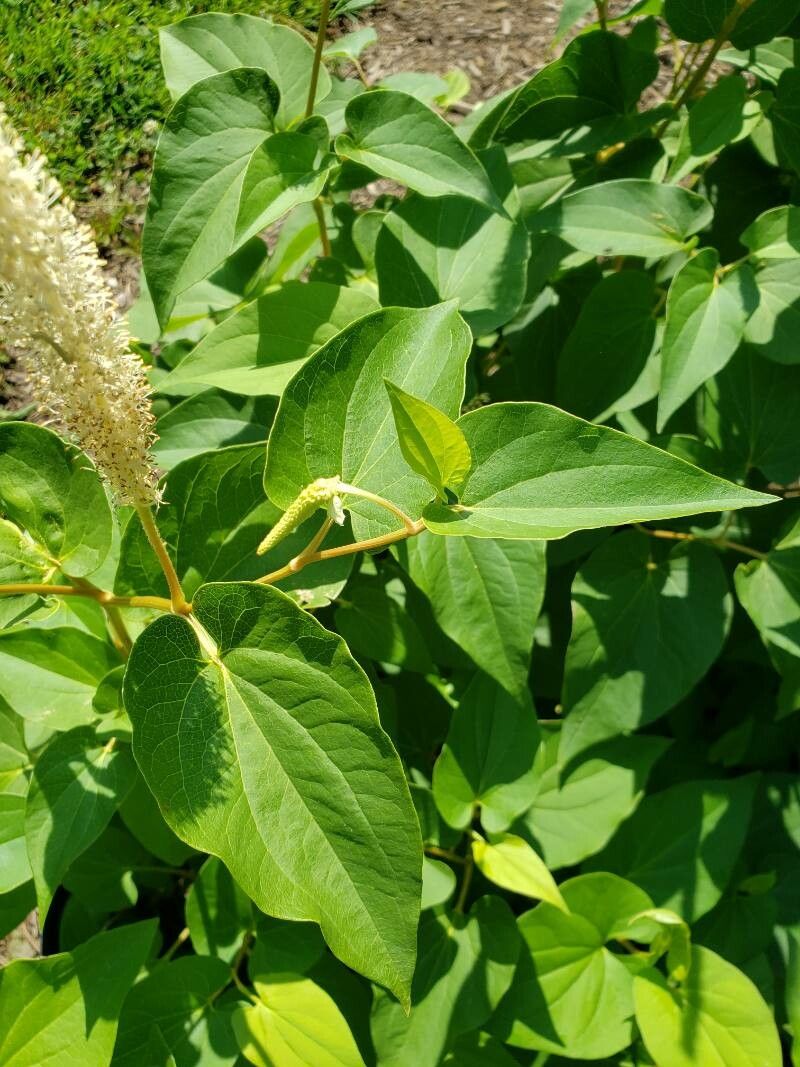
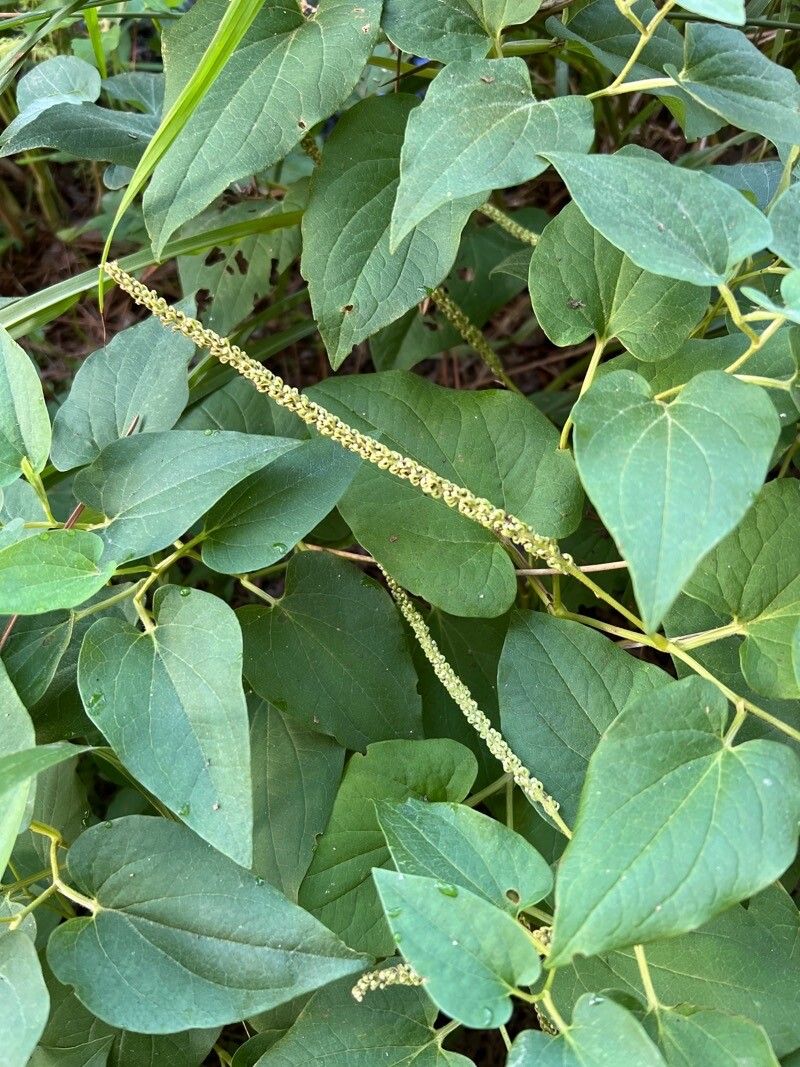
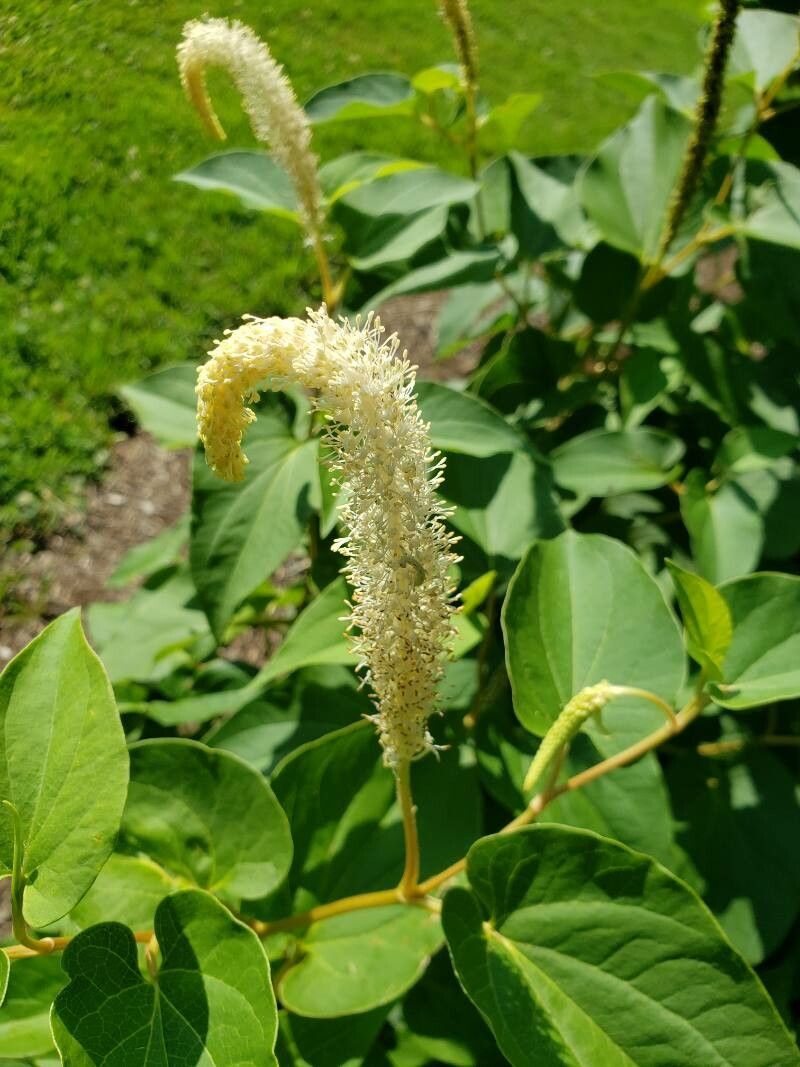
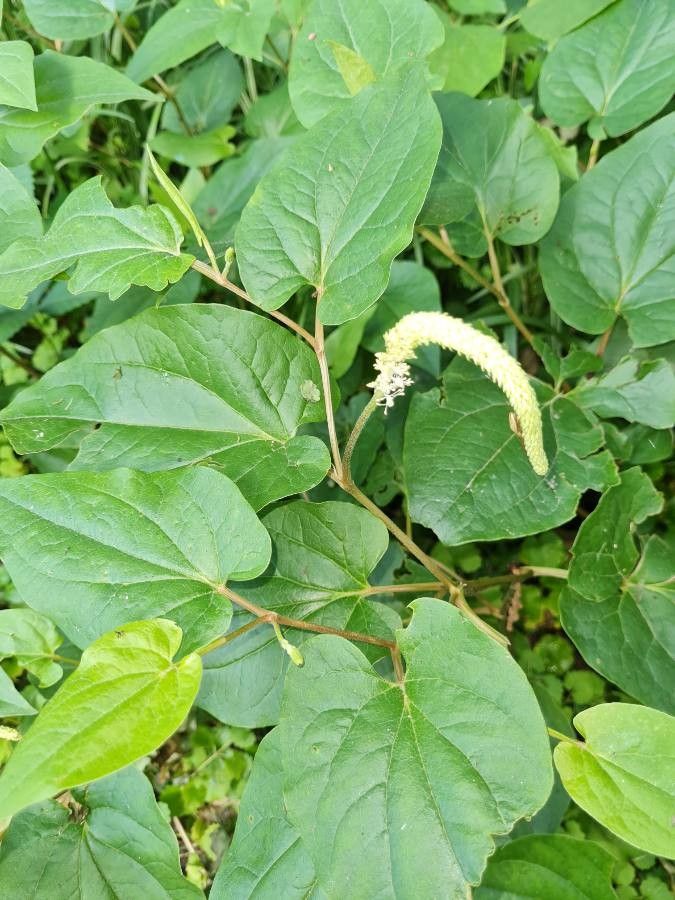
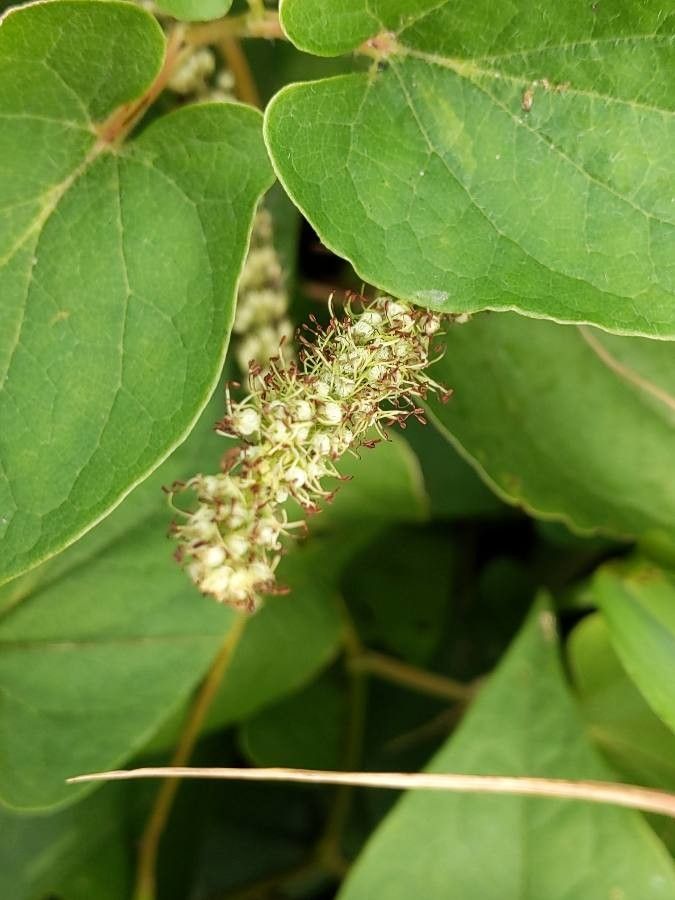
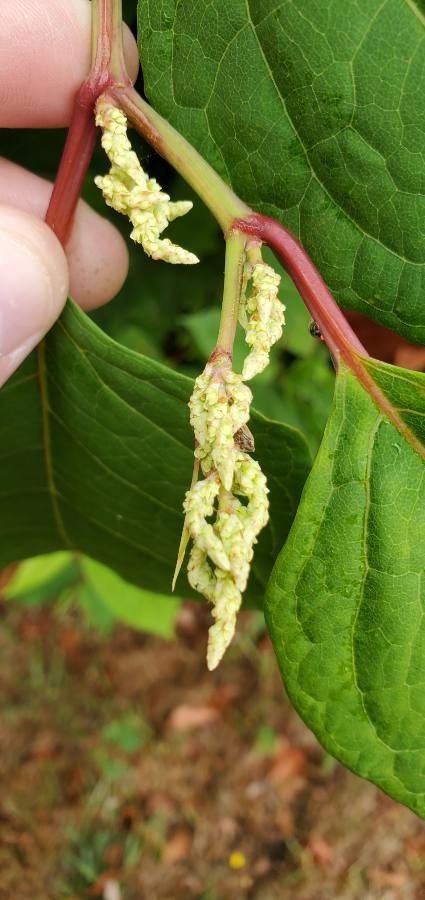
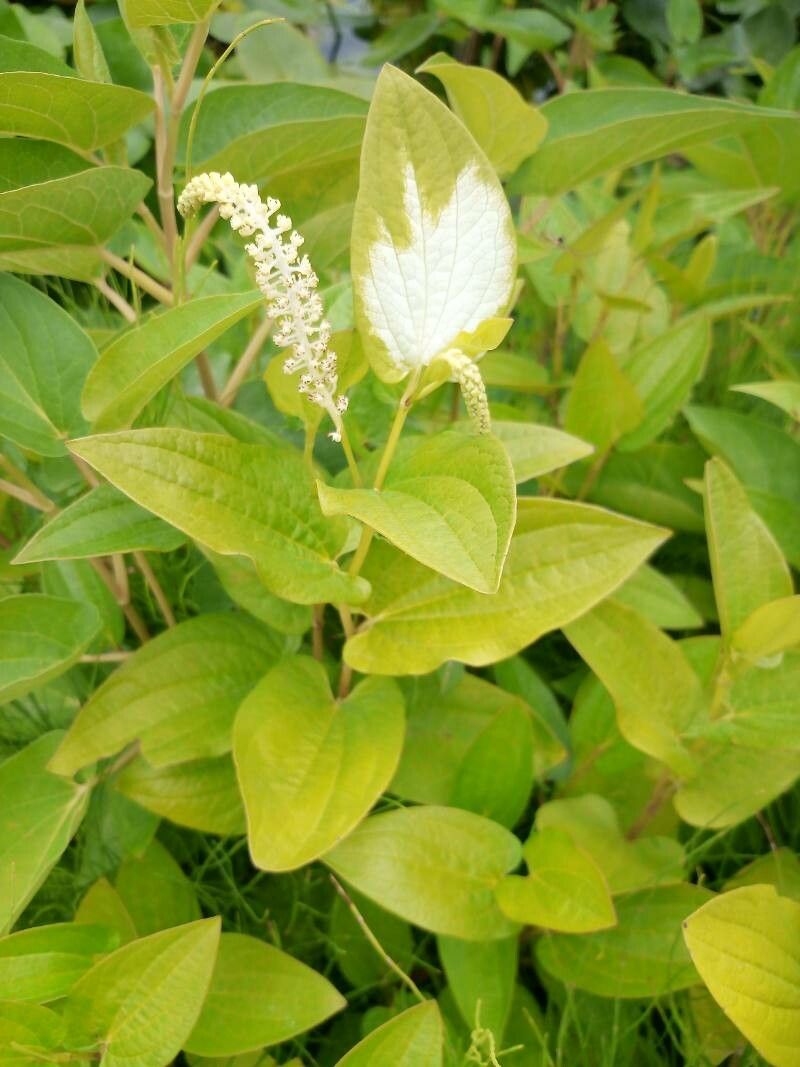
Saururus cernuus, commonly known as lizard's tail or water dragon, is a perennial aquatic plant belonging to the family Saururaceae. Native to North America, it thrives in wetlands, swamps, and along the edges of streams and ponds. This plant stands out with its long, slender stems that can reach up to 3 feet in height. The heart-shaped leaves, featuring pointed tips, are arranged alternately along the stem. The flowers of Saururus cernuus are small white spikes that grow from the base of each leaf. Saururus cernuus plays a vital role in wetland ecosystems by providing habitat for various aquatic animals, such as fish, turtles, frogs, and insects. Additionally, it helps stabilize soil erosion along riverbanks. Traditionally, Native Americans have used this plant for medicinal purposes, including treating skin infections and respiratory ailments. Beyond its ecological importance, Saururus cernuus is popular among water garden enthusiasts for its unique appearance, which adds an interesting element to any pond or water feature. In summary, Saururus cernuus is a fascinating aquatic plant with significant ecological and aesthetic value, making it an essential component of North American wetland ecosystems.
Lizard's tail is fairly disease-resistant and generally not prone to illness. However, it can be affected by pests and diseases present in its environment. These issues are typically mild. In terms of care, the plant requires moderate maintenance. It should be pruned regularly to maintain a neat appearance and healthy growth. Fertilizing can also help encourage flowering. Lizard's tail is suitable for anyone with outdoor space, such as a garden or patio, and does not need extensive gardening experience. It may demand more attention when grown indoors.
How to keep Saururus Cernuus.
Light
The lizard's tail plant prefers abundant sunlight but can tolerate areas that receive only partial sun. It grows best in bright spots that resemble its native environment. Too little light can stunt its growth, while too much can cause the plant to weaken.
Water
The lizard's tail thrives in humid environments near water and shows a remarkable ability to tolerate drought. It can adjust to varying moisture levels, requiring watering twice a week for optimal health. Being an herbaceous perennial, the lizard's tail is frequently grown outdoors, where it benefits from abundant rainfall during its growing season.
Temperature
Lizard's tail grows best at temperatures between 41 ℉ (5 ℃) and 100.4 ℉ (38 ℃). It is native to wetland habitats, such as swamps and marshes, where it undergoes temperature fluctuations over the year. In colder seasons temperatures can fall below freezing, so it is advisable to plant lizard's tail in a sheltered spot with southern exposure to maximize warmth. During the warmer months, lizard's tail prefers full sun.
Fertilizer
Typically one application of fertilizer in spring is enough for Lizard's tail, though multiple feedings can maximize growth. Feed every month to month and a half. Fertilizing improves the leaves' appearance and function, helping maintain even color and a healthy texture. It also encourages root growth and nutrient uptake, supporting the plant's long-term health.
Pruning
Lizard's tail is an aquatic perennial plant that features heart-shaped leaves and white, spiky flowers. To encourage new growth and maintain its shape, prune the old foliage from early to late spring. Regular pruning helps prevent overcrowding and promotes vibrant growth, all while considering its wetland habitat preferences.
Pot & Repot
When repotting Lizard's tail, select a pot 1–2 inches (2.5–5.1 cm) larger with good drainage. Use a well-draining potting mix. Repot in spring or fall, making sure the root ball sits slightly below the rim of the flower pot. Water thoroughly after repotting and place it in a warm spot with indirect sunlight.
Botanical profile.
- Plant Type
- Herb
- Life Cycle
- Perennial
- Genus
- Saururus
- Family
- Saururaceae
- Hardiness Zone
- 5-11
- Mature Height
- 30 cm to 61 cm
- Mature Spread
- 30 cm to 61 cm
- Leaf Color
- Green
- Leaf Type
- Deciduous
- Flower Color
- White
- Flower Size
- 2.54 cm
- Bloom Time
- Early summer, Mid summer
- Planting Time
- Spring
- Harvest Time
- Mid summer
- Native Area
- Mexico
Other names.
Reader questions.
How should I water my Lizard's tail?
To properly water the Lizard's tail plant, it is best to use filtered water at room temperature. Tap water may have harmful particles, so using filtered water is recommended. It is important to use water that is at room temperature or slightly warmer since this plant is used to a warm environment and cold water can be a shock to its system. It is also advised to avoid overhead watering as it can cause issues with the foliage. Instead, simply water the soil with your filtered room temperature water until the soil is fully soaked. This will benefit the plant by providing moisture to the roots and helping them spread through the soil to collect necessary nutrients.
Why do I have to add fertilizer to my Lizard's tail?
The Lizard's tail relies heavily on its leaves for structure and function. Fertilization plays a crucial role in maintaining the appearance of these leaves and ensuring they serve their purpose effectively. By properly fertilizing, you can help the Lizard's tail maintain consistent leaf color and a healthy texture. Additionally, fertilization benefits the plant not only above ground but also below the soil's surface. It aids in the development of new roots and the preservation of existing roots, enhancing the plant's ability to absorb soil nutrients both now and in the future.
What are the sunlight requirements for a Lizard's tail plant?
The Lizard's tail plant requires full sun, defined as over 6 hours of sunlight, for optimal growth, but it can also tolerate partial sun, which amounts to about 3-6 hours of sunlight. It's important to observe the movement of sunlight through your garden, opting for locations that offer a mix of light and shade to ensure the health and happiness of your plants.
What is the optimal temperature range for Lizard's tail's growth?
Lizard's tail, or Saururus cernuus, thrives in temperatures between 41°F (5°C) and 100.4°F (38°C). Originating from wetland areas like swamps and marshes, it adapts well to the seasonal temperature shifts experienced in these environments. While the plant prefers the warmth and can be planted in a location with southern exposure to ensure it stays warm in cooler seasons, it also has a strong resilience against cold. During winter, it can withstand temperatures without special frost protection measures, but extra care may be needed if temperatures are expected to fall below -25°C.
What should I do if I give my Lizard's tail too much water or not enough water?
Overwatering is a common issue for Lizard's tail plants and can cause wilting, yellowing, and diseases like root rot, mold, and mildew. Underwatering is less common, but can result in brittle, brown leaves. It's important to recognize the signs of overwatering early and reduce watering immediately. Check the soil's drainage and replace it if necessary. If your plant shows signs of underwatering, increase watering until the signs disappear.
When should I fertilize my Lizard's tail?
If you grow your Lizard's tail outdoors, you'll notice new growth in early spring. This is when you should start fertilizing. Usually, one application of fertilizer in spring is enough for the plant to thrive. But if you want to promote maximum growth, you can fertilize multiple times during the spring and early summer. In this case, feed your Lizard's tail about once every month to a month and a half.
What are the essential care tips for the Lizard's tail plant concerning light?
The Lizard's tail plant, thriving in luminous conditions, mimics its native habitat when it receives an abundance of sunlight, though it can endure partial sun exposure. Both inadequate and excessive sunlight can negatively affect the plant's growth and health. If natural sunlight is insufficient, especially during winter or in less sunny spots, artificial lighting, such as LED lights customized to provide specific wavelengths necessary for the plant, can be used to promote healthier growth. For full sun plants, 30-50W/sq ft of artificial light is recommended, partial sun plants need 20-30W/sq ft, and full shade plants require 10-20W/sq ft. The artificial light source should be positioned 12-36 inches above the plant, mimicking natural sunlight as closely as possible, and plants typically need 8-12 hours of light per day.
How should Lizard's tail be cared for in winter?
Lizard's tail demonstrates significant cold tolerance, not necessitating special frost protection in winter under normal circumstances. However, if temperatures are forecasted to plunge below -25°C, ensuring cold protection by covering the plant with soil or straw becomes crucial. To prepare for winter's freeze, watering the plant abundantly ahead of the first frost to keep the soil moist is advisable. This moisture can help prevent drought and water scarcity for the plant during the winter and into early spring.
How frequently should I give water to my Lizard's tail?
If your Lizard's tail plant is in a pot, the most precise way to determine if it needs water is to check the soil with your finger. If you find that the top two to three inches of soil are dry, it's time to water it. On the other hand, if you are growing your Lizard's tail plant outdoors in the ground, you can use a similar method to test the soil. Again, if the top few inches of soil have dried out, it needs watering. Generally, during the spring and early fall, you will usually need to water this plant about once a week using this method. However, during extremely hot weather, you may need to increase the frequency to twice or more per week. It's important to note that mature, well-established Lizard's tail plants have a remarkable ability to tolerate dry conditions.
When is it best not to put fertilizer on my Lizard's tail?
During the late fall and winter, your Lizard's tail goes dormant and stops growing. So, don't fertilize it during this time. In spring and summer, if you decide to fertilize, gradually reduce the amount as summer approaches because the Lizard's tail growth rate slows down. It's always best to avoid fertilizing when it's very hot or when the soil is exceptionally dry, as this can stress and harm your Lizard's tail.
What symptoms indicate poor lighting conditions for a Lizard's tail plant?
Symptoms of insufficient lighting in Lizard's tail include smaller new leaves, leggy or sparse growth, faster leaf drop, slower or no new growth, lighter-colored new leaves, chlorosis (leaves turning yellow), sunscald (damaged leaves from intense light), leaf curling, wilting, and leaf scorching (brown, dry edges on leaves). These symptoms reflect the plant's struggle with inadequate sunlight, affecting its ability to grow and maintain health.
What symptoms indicate that Lizard's tail is experiencing low temperature stress and what are the solutions?
Lizard's tail handles cold well and performs best when the temperature remains above 5°C. If winter temperatures don't drop below -20°C, the plant usually remains unaffected. However, if temperatures dip below -25°C, you might not notice immediate changes, but the plant's ability to sprout in spring could be reduced or completely inhibited. The solution for springtime following such conditions involves removing parts of the plant that have failed to sprout, promoting the growth of new, healthy parts.