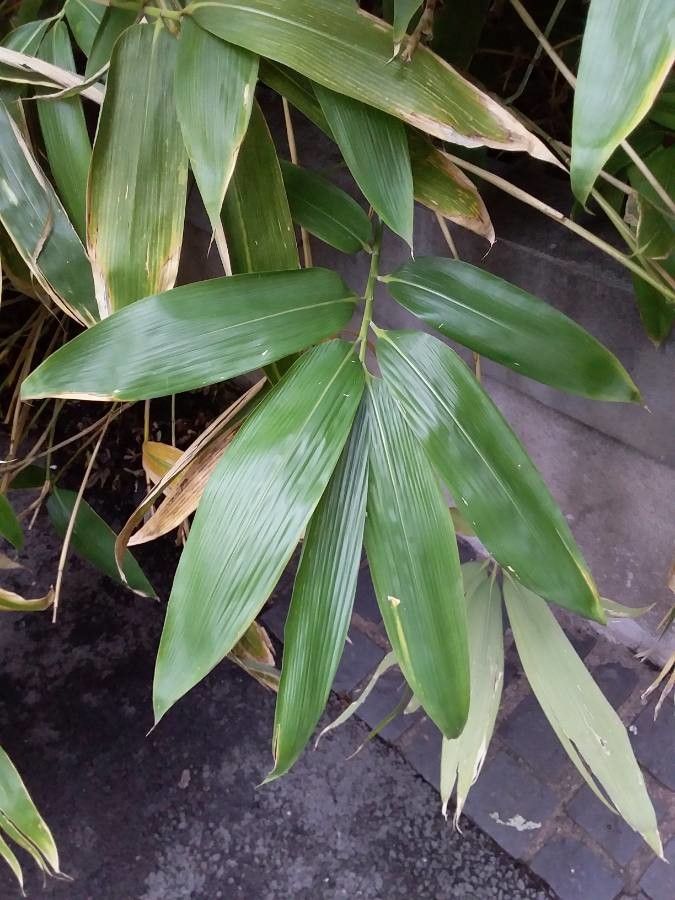
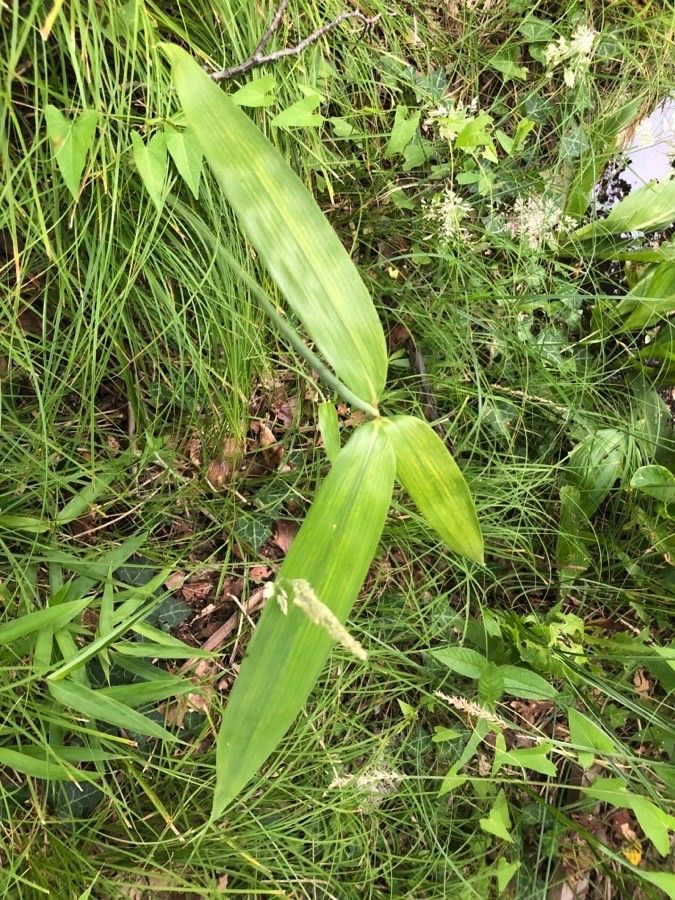
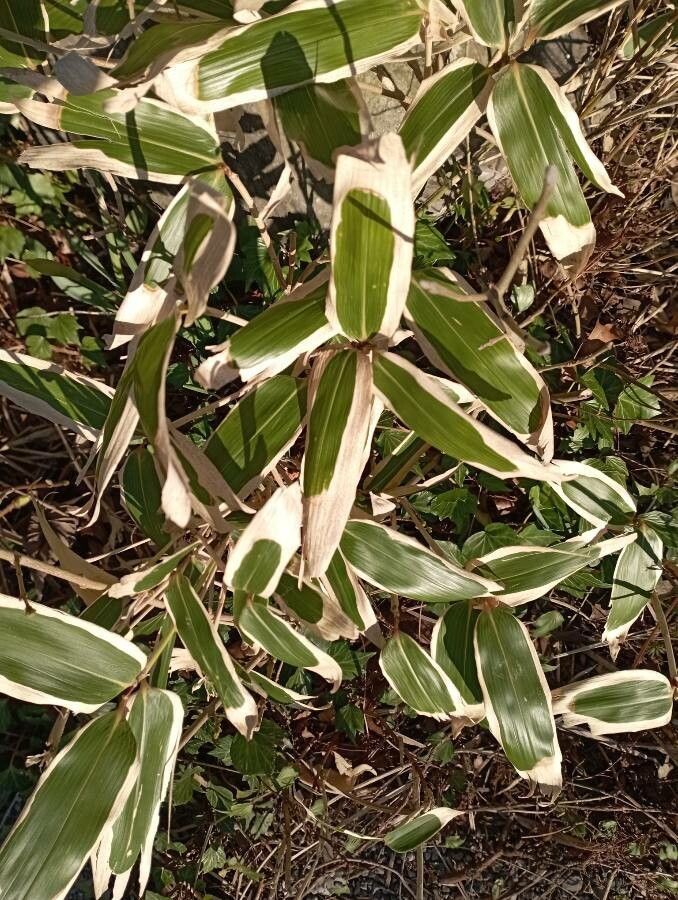
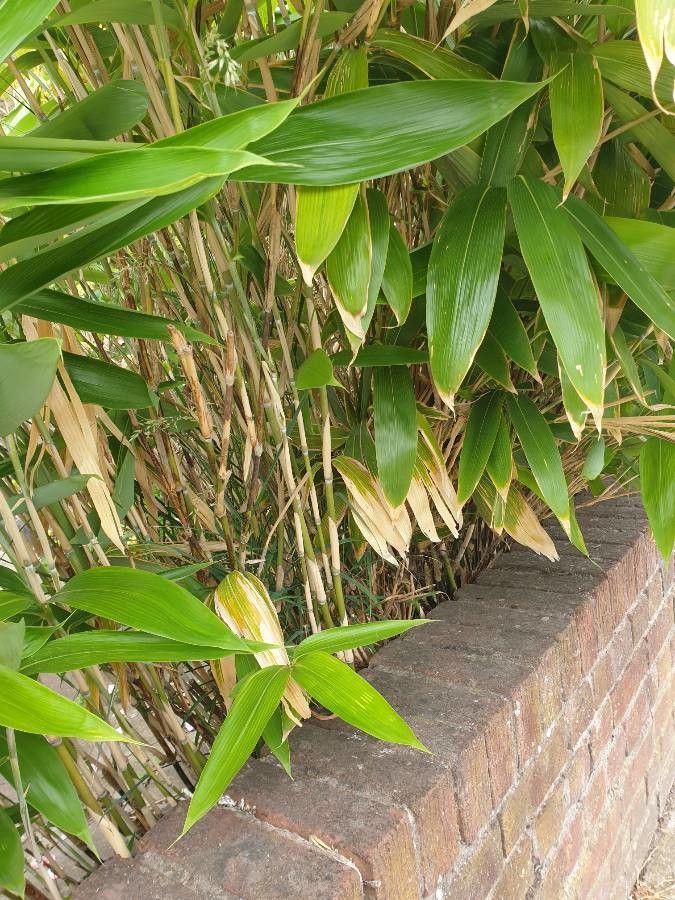
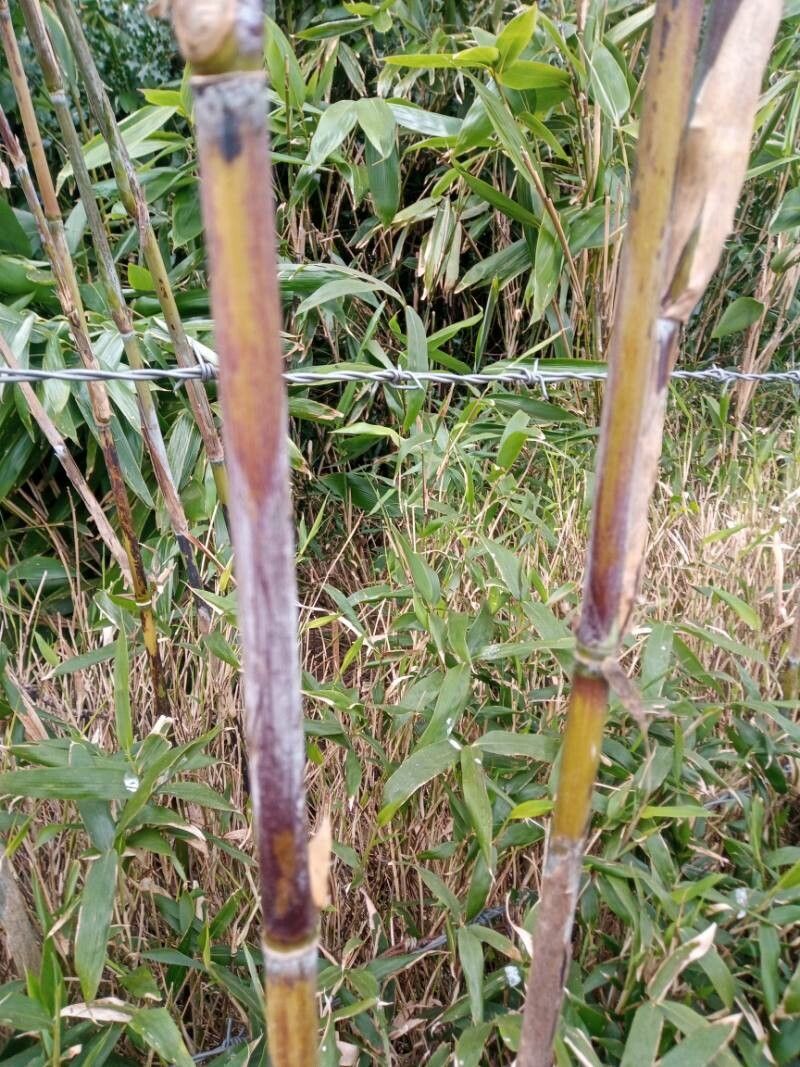
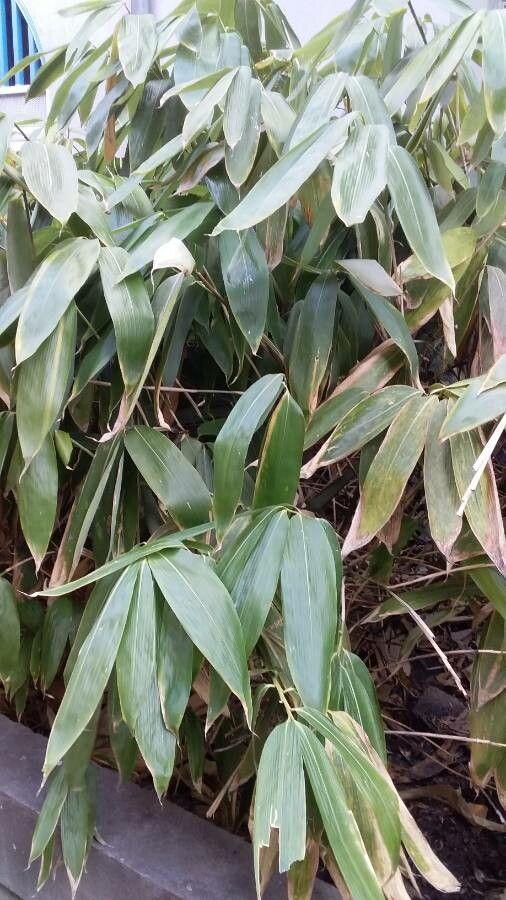
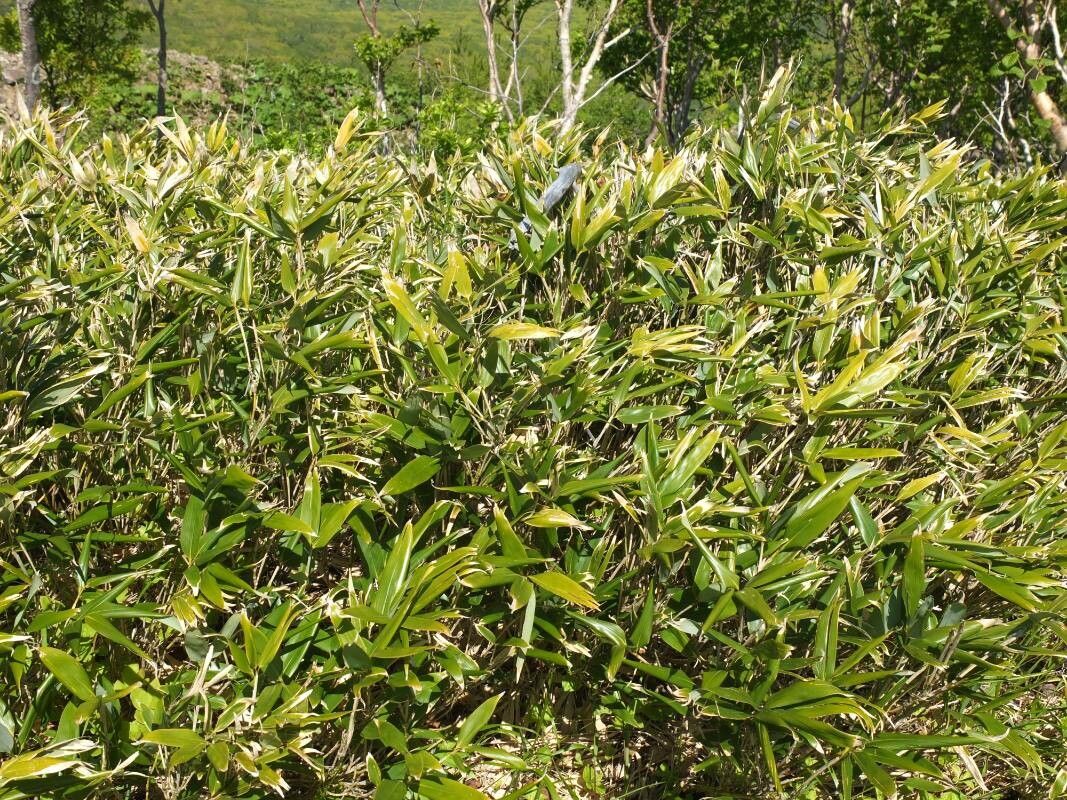
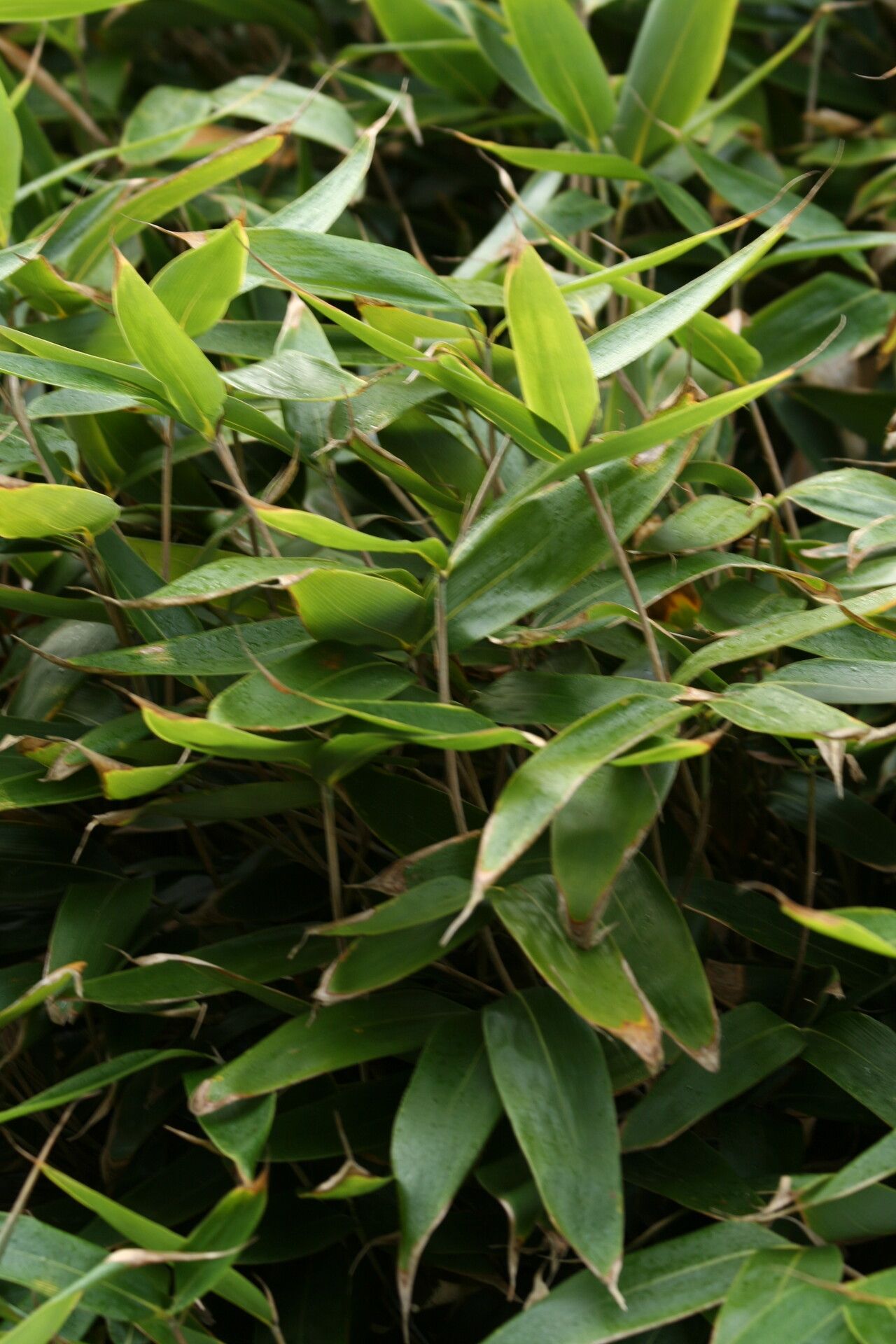
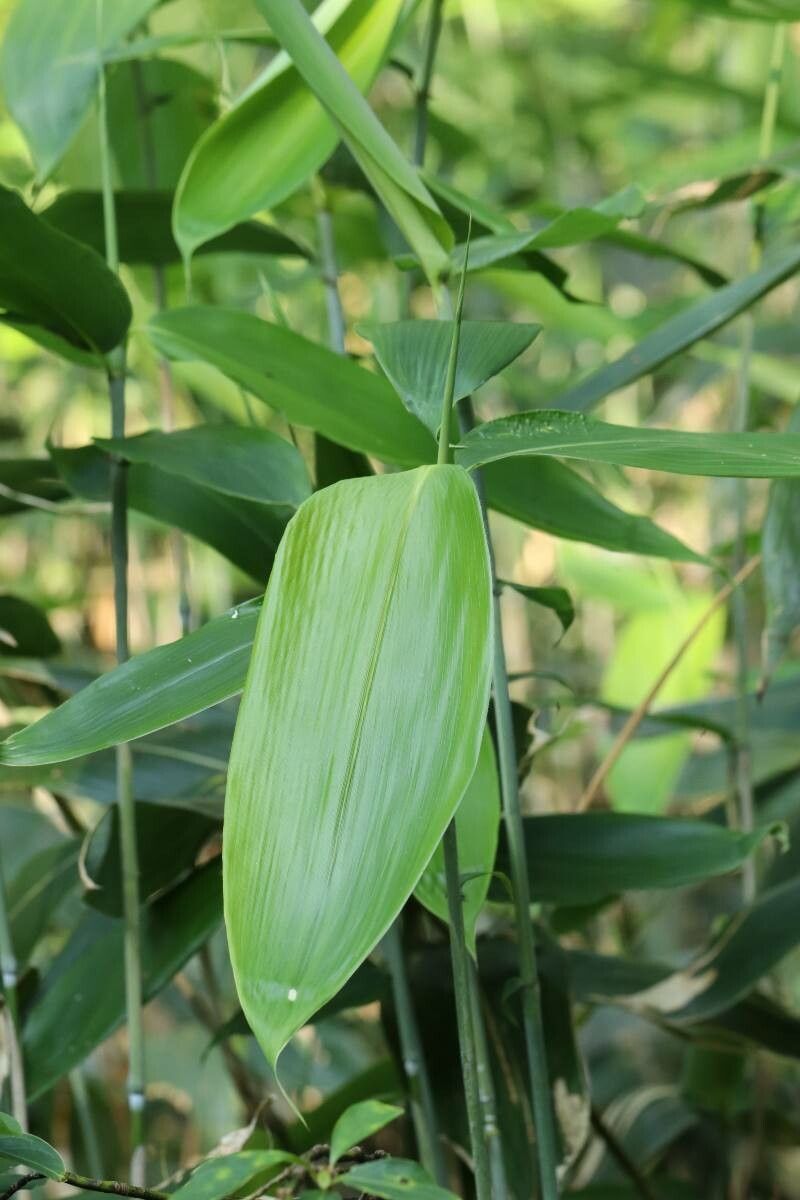
Sasa palmata, commonly known as dwarf bamboo or palmate bamboo, is an evergreen perennial species that belongs to the grass family. Native to Japan and Korea, it thrives in mountainous regions. This plant has a clumping growth habit and typically reaches up to 1-2 meters in height and width.
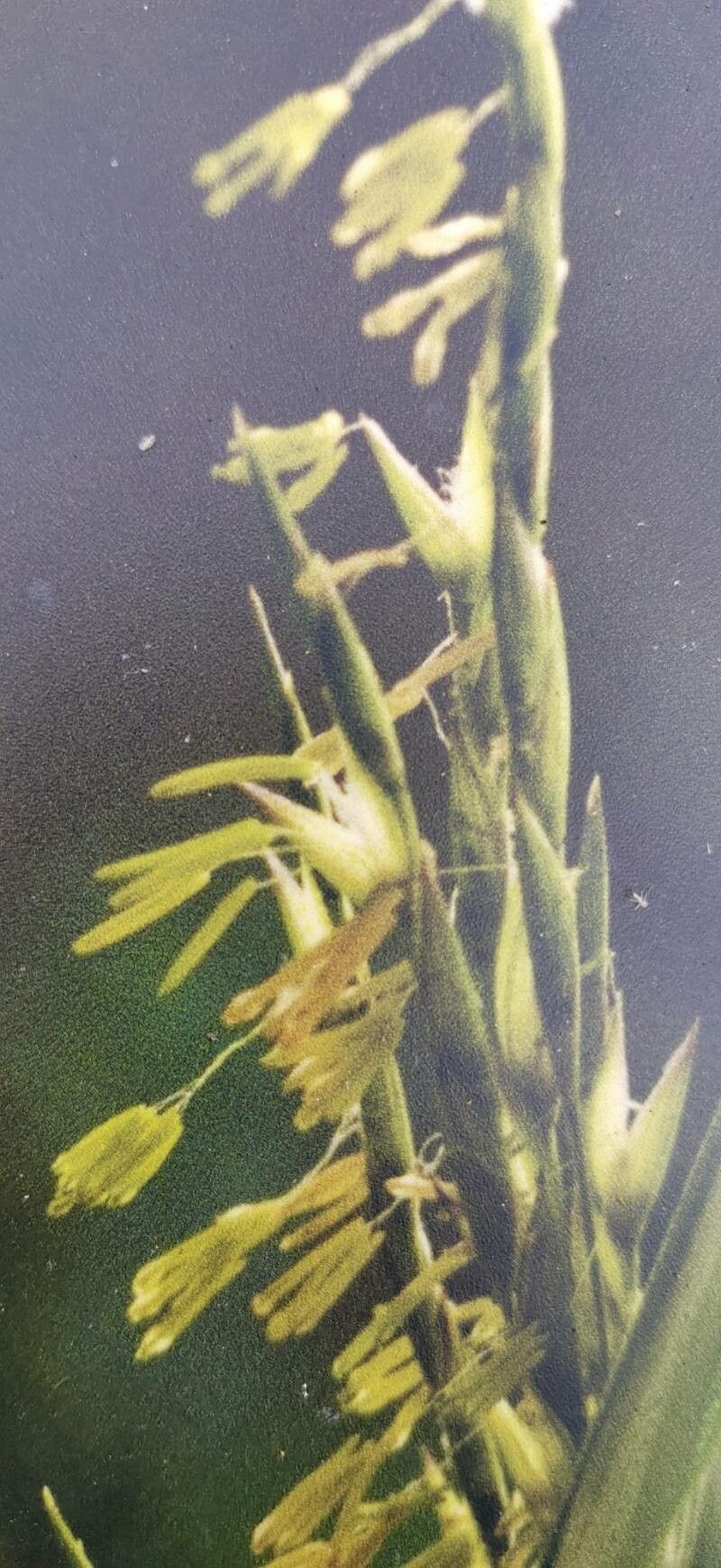
The leaves of Sasa palmata are dark green, glossy, and oval-shaped with pointed tips. They are alternately arranged on the stem and feature prominent veins. In late summer or early fall, the plant produces small white flowers.
Sasa palmata is often used as an ornamental plant due to its attractive foliage, which adds texture to gardens and landscapes. Its dense growth habit makes it an excellent ground cover, helping to prevent soil erosion.
This dwarf bamboo prefers moist soil but can tolerate drought conditions once established. It grows best in partial shade but can also endure full sun if provided with adequate moisture.
Overall, Sasa palmata is a low-maintenance plant that enhances the beauty and functionality of any garden or landscape. It offers ecological benefits such as erosion control and provides habitats for wildlife, including birds and insects.
Broad-leaved bamboo has strong resistance to disease and is typically not vulnerable to illnesses. Regarding care, this plant is fairly low-maintenance. Planted outdoors, it needs little watering, and larger specimens generally do not require pruning. Smaller plants, however, should be pruned after they have bloomed. Broad-leaved bamboo is suitable for anyone who has outdoor space, such as a garden or deck, and does not require much experience in plant care.
How to keep Sasa Palmata.
Light
Broad-leaved bamboo is a sun-loving perennial herbaceous plant that comes from open habitats and often thrives in meadows and grasslands. It prefers full sun but can also tolerate partial sun.
Water
Broad-leaved bamboo flourishes in humid environments and prefers moderate moisture with occasional dry periods. Watering it every 1-2 weeks is adequate for maintaining its health. As an evergreen plant often grown outdoors, it requires careful soil moisture management during the growing season to ensure lush foliage.
Temperature
Broad-leaved bamboo can tolerate a wide range of temperatures, but its distribution can still be limited by different combinations of moisture and heat. It performs best in warm summer conditions with sufficient rainfall or irrigation. Extended periods of cloudy, rainy weather or prolonged high temperatures can raise the risk of Broad-leaved bamboo dying. In winter, adequate protection from cold can increase the plant’s survival rate.
Fertilizer
Broad-leaved bamboo needs extra nutrients to encourage healthy new growth. In spring, spreading some compost around the plant’s base will effectively supply the nutrition it requires. Fertilizing helps support vigorous growth and improves the plant’s ability to withstand diseases and pests.
Pruning
Pruning broad-leaved bamboo is best done in early spring, before the growing season begins, to enhance its shape and promote better growth. Start by removing any dead canes and thinning out crowded areas to improve air circulation. It's important to use clean, sharp tools to ensure smooth cuts and prevent the spread of disease.
Pot & Repot
Repot broad-leaved bamboo every 2 to 3 years in the spring. Use a large, fast-draining container to support its bushy growth. After repotting, keep the soil consistently moist and provide bright, indirect light to help the bamboo recover optimally and maintain its lush, broad leaves.
Botanical profile.
- Plant Type
- Grass
- Life Cycle
- Perennial
- Genus
- Sasa
- Family
- Poaceae
- Hardiness Zone
- 6-9
- Mature Height
- 2.44 m
- Mature Spread
- 3.96 m
- Leaf Color
- Green, Brown, Blue, Variegated
- Leaf Type
- Evergreen
- Bloom Time
- Early summer, Mid summer
- Planting Time
- Spring, Summer
- Harvest Time
- Late summer, Early fall, Mid fall
- Native Area
- Russia, Japan, South Korea
Other names.
Reader questions.
What should I do if I give my Broad-leaved bamboo too much or too little water?
Proper watering is crucial for the health and performance of ornamental grass, such as Broad-leaved bamboo. In the ground, any watering issues can be resolved, but in a container, too much or too little water can quickly kill the plant. If Broad-leaved bamboo is not receiving the right amount of water, it may halt its growth. Overwatering can cause yellow leaves with brown tips, while underwatering can result in drooping leaves, weak seed head production, and browned leaves. If you suspect the bamboo has been watered improperly, first determine if there is an excess or deficiency. If there is too much water, stop watering immediately and be patient as it may take weeks for the soil to dry out. Once new growth appears, test the soil for moisture and adjust watering accordingly. On the other hand, if the bamboo is receiving too little water, simply give it a deep drink and observe if it perks up. Keep in mind that a long, deep watering is preferable to frequent shallow waterings. This promotes deep root growth, making the grass more resilient to drought and watering problems.
Why should I put fertilizer on my Broad-leaved bamboo?
Fertilizing Broad-leaved bamboo is important for a few reasons. Firstly, it provides extra nutrients that are essential for promoting healthy new growth. Secondly, these additional nutrients also bolster the health of existing growth and aid in protecting the plant against diseases and pests.
What kind of sunlight does Broad-leaved bamboo require?
Broad-leaved bamboo, scientifically known as Sasa palmata, is a sun-loving perennial herbaceous plant that thrives in full sun, requiring more than 6 hours of sunlight daily. However, it can also tolerate partial sun conditions, which involve about 3-6 hours of sunlight. It's important to observe the movement of sunlight in your garden to find the ideal locations that provide the necessary balance of light and shade to ensure the plant's well-being.
How many times should I water my Broad-leaved bamboo?
The watering needs of Broad-leaved bamboo depend on where it is planted. In general, watering once a week is sufficient. In hot climates, watering once or twice a week during the summer may be necessary. In moderate climates, watering once every seven days or more should be enough. Grass in containers usually needs more frequent watering than grass in the ground. However, the location of the grass also matters since shaded grasses require less frequent watering than grasses in the ground. Only water Broad-leaved bamboo when the soil is dry. To determine if the soil is dry, press your finger a couple of inches into the soil or weigh the grass if it's in a pot. When the roots lack sufficient water, the blades may appear folded and thinner than usual. Despite its drought tolerance, regular, deep waterings will result in beautiful color. Although Broad-leaved bamboo is drought resistant, it still requires care and attention and thrives best with consistent water. When first planted, it needs more frequent water until it develops deep roots. For potted Broad-leaved bamboo, test the soil every 3 to 4 days and water when it feels dry. Broad-leaved bamboo in the ground generally requires less watering, but this depends on the type of soil. Clay soil holds water for a long time, so it may be dry at the surface while still retaining moisture below. Sandy soils that drain quickly will need more frequent watering.
When should I fertilize my Broad-leaved bamboo for the best results?
To ensure the survival of Broad-leaved bamboo in your garden, it's important to know when to fertilize it. This type of bamboo doesn't need a lot of nutrients when it's dying back, so there's no need for additional fertilization at that time. While you can use diluted fertilizer at the beginning of the growing season, it's actually not recommended. Instead, it's better to apply mulch or compost around the plant's base.
How can artificial lighting support Broad-leaved bamboo indoors?
When natural sunlight is insufficient, especially during winter or in spaces that do not receive enough sunlight, artificial lighting can significantly benefit indoor Broad-leaved bamboo plants. Adequate lighting is crucial for optimal growth. Using LED lights is advisable as they can be adjusted to provide specific light wavelengths needed by the plant. For full sun plants, 30-50W per square foot is recommended; for partial sun plants, 20-30W per square foot; and for full shade plants, 10-20W per square foot. The light source should be placed 12-36 inches above the plant and kept on for 8-12 hours per day, mimicking natural daylight hours.
What do I need to be cautious about when watering my Broad-leaved bamboo in various seasons, climates, or during different growth periods?
To determine if you are watering enough, observe the growth rate of your grasses. Broad-leaved bamboo, for example, can double in size within a year during the hottest months. So, if the weather is hot but the grass isn't growing vigorously, you might need to adjust your watering schedule. In winter, you could potentially water just once a month, but it's still important to check the soil's moisture level by touching it. During the grass's growth cycle (in the warmest months), it will require more water. However, in winter and cooler months, the water needed will significantly decrease. A crucial point to remember when caring for Broad-leaved bamboo is to let the soil completely dry out before adding water.
When is it not a good idea to fertilize my Broad-leaved bamboo?
If you are not using packaged fertilizers, you don't have to be concerned about when to stop feeding Broad-leaved bamboo. All you need to do in the spring is applying a layer of compost or mulch, and this will keep the plant happy throughout the year. During the winter, when the plant is dormant, there is no need to worry about mulching or composting.
What are some common symptoms of inadequate lighting in Broad-leaved bamboo?
Inadequate lighting can lead to several issues in Broad-leaved bamboo, including smaller new leaves, leggy or sparse growth, faster leaf drop, slower or halted new growth, and leaves developing pale or lighter colors due to insufficient chlorophyll. Additionally, excessive sunlight can cause symptoms such as chlorosis, sunscald, leaf curling, wilting, and leaf scorching, indicating the importance of finding a balance in sun exposure.
What kind of plant food does my Broad-leaved bamboo need?
If you have broad-leaved bamboo, there's no need to hurry to the garden center for fertilizer. Instead, in the spring, you can simply use compost to provide the necessary nutrients. Additionally, if you mulch your garden every year, the bark will also help keep your plant well-fed and happy.
What are the solutions for Broad-leaved bamboo suffering from light deficiency?
To address light deficiency in Broad-leaved bamboo, gradually move the plants to sunnier locations until they receive at least 6 hours of sunlight daily. Indoor plants can benefit from using a south-facing window or artificial lighting for at least 8 hours daily. Outdoors, it's crucial to avoid sudden changes in light exposure to prevent sunburn. If obstructions like trees block sunlight, consider pruning or transplanting smaller plants during their dormant period for better sunlight access.
How can I give my Broad-leaved bamboo plant the nutrients it needs to grow?
To care for Broad-leaved bamboo, no matter whether you choose mulch or compost, the process is the same. Begin by placing a layer of the chosen material, ensuring that it adequately covers the base of the plant. If you decide to utilize both mulch and compost, it is advisable to reduce the amount of compost used. Mulch serves a dual purpose: assisting in retaining moisture within the soil and providing nourishment to your plant.