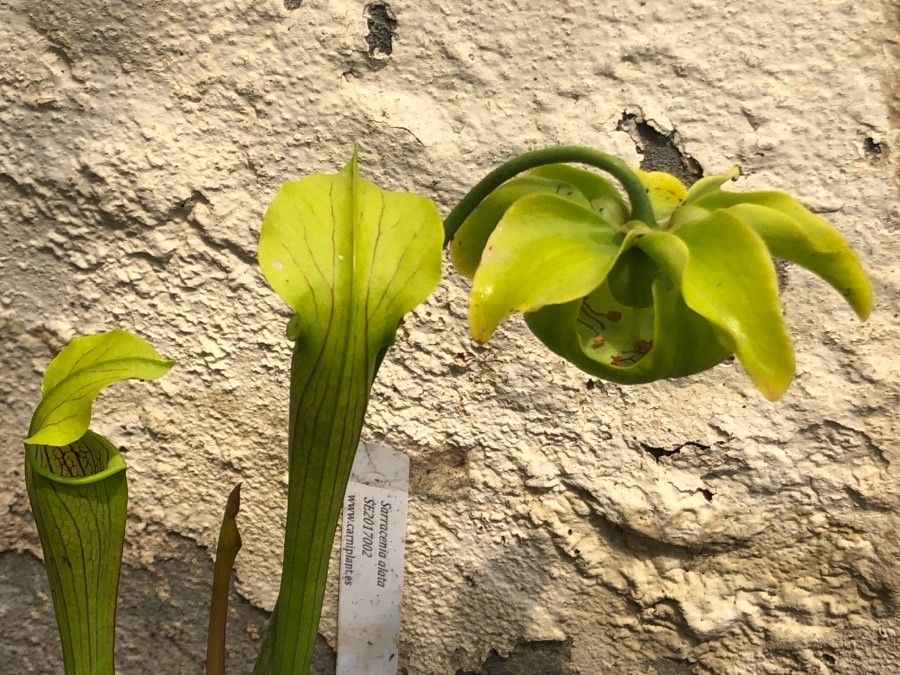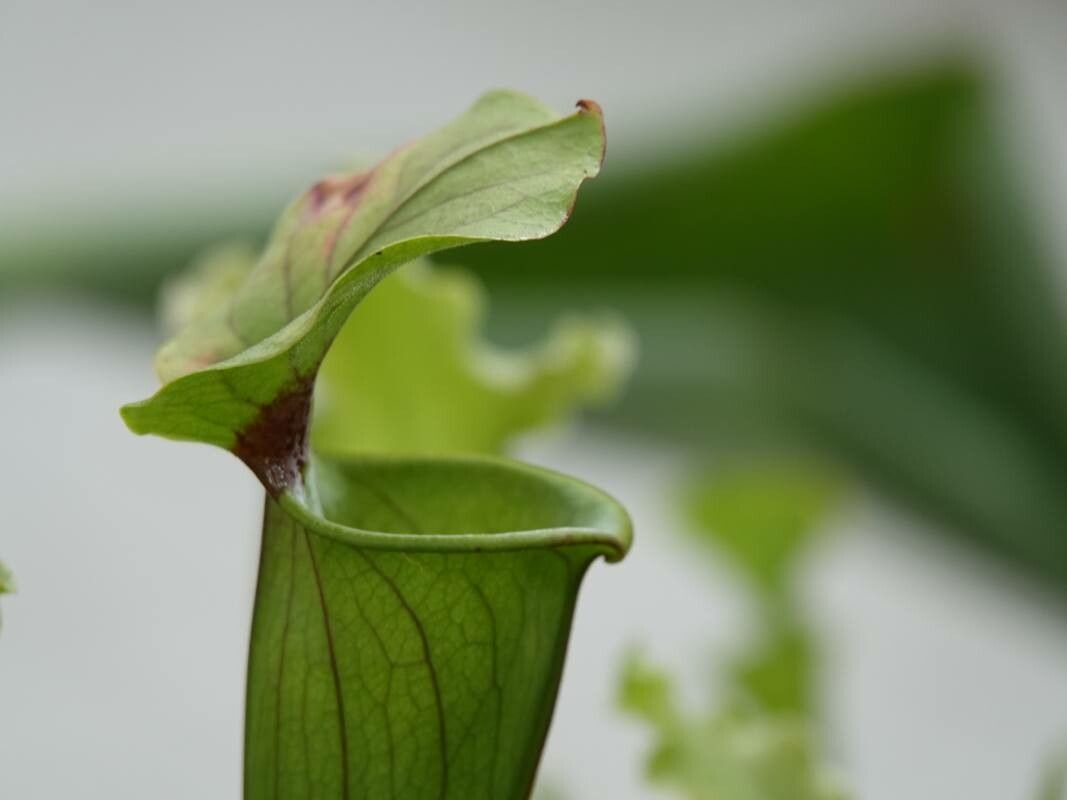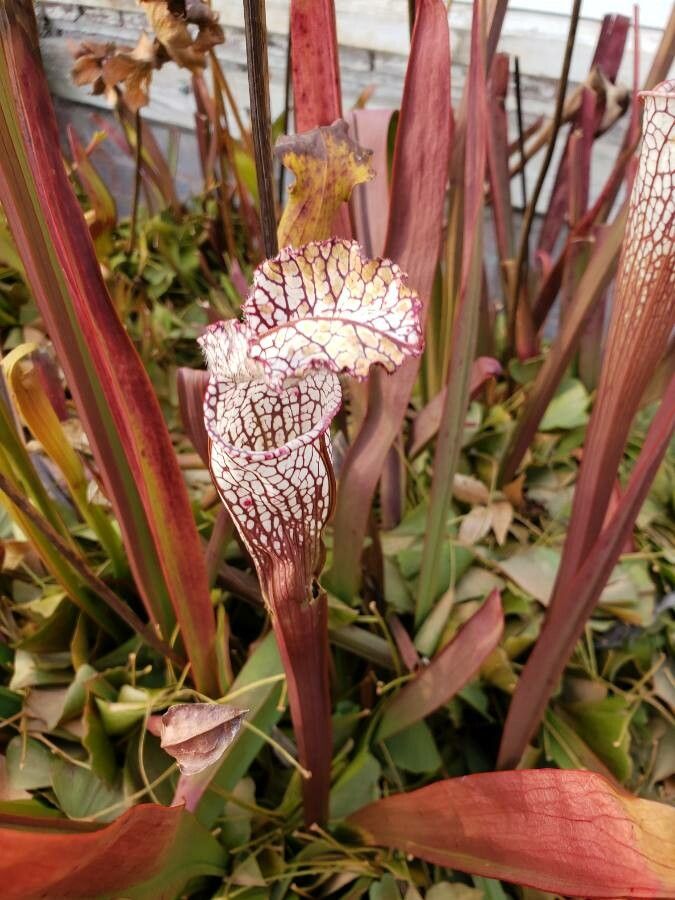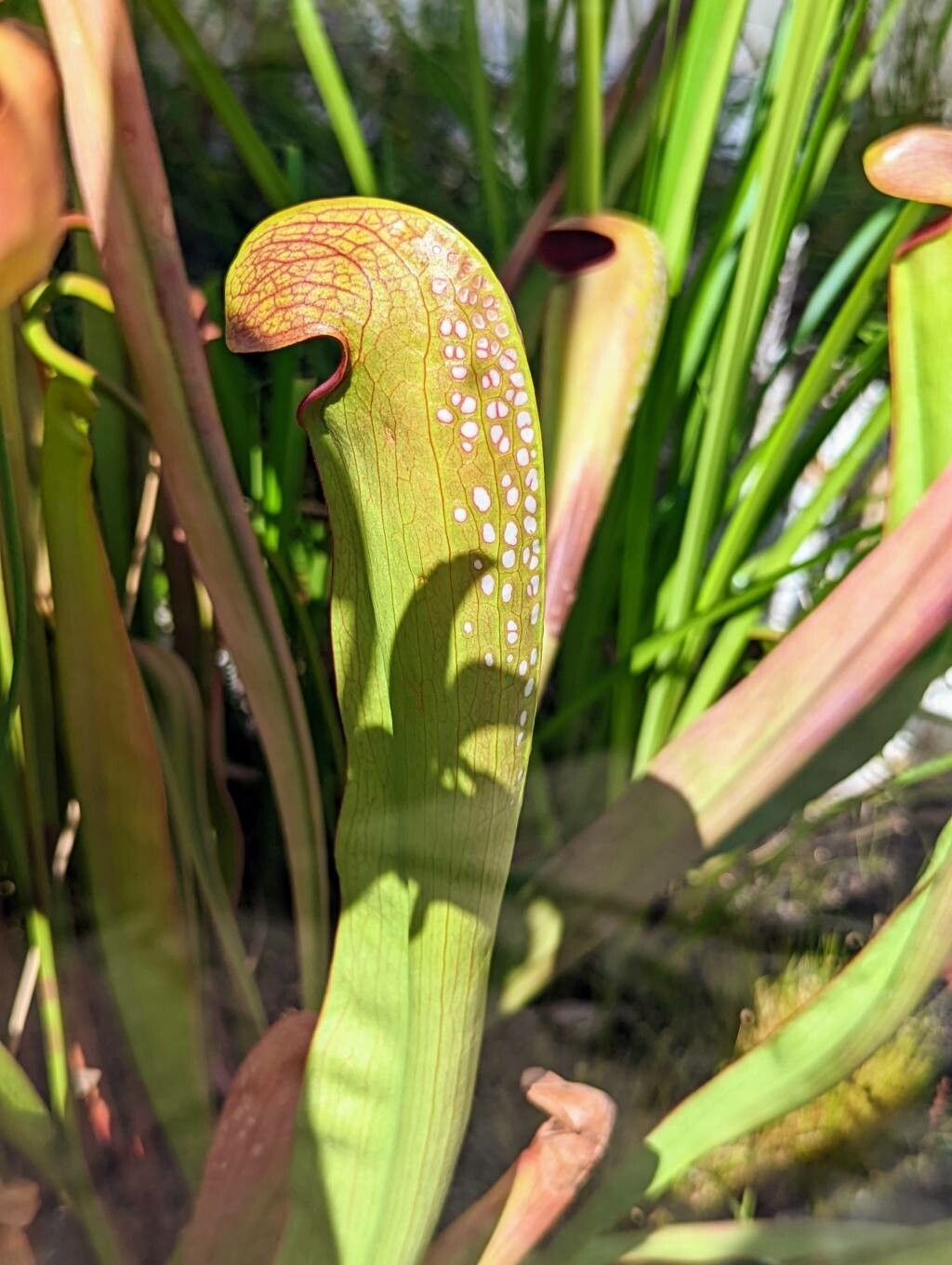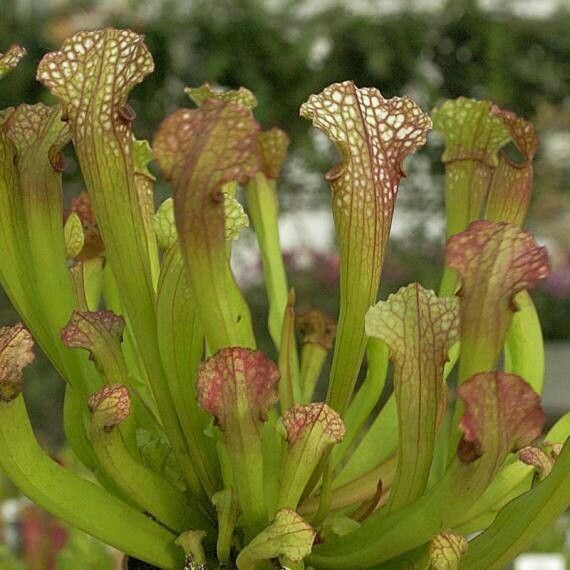
Pitcherplant has moderate resistance to disease and needs a high-humidity environment. If ventilation is poor, however, it can be prone to rot. Its care is considered difficult because it requires continuous humidification to maintain high humidity. It is also highly susceptible to rot when the environment is poorly ventilated and too warm. Pitcherplant is best suited to more experienced growers who can provide an appropriate growing environment.
How to keep Sarracenia Ux Catesbaei.
Light
The pitcherplant primarily comes from habitats that are rich in sunlight, like open marshes and sun-drenched wetlands. It best thrives under full sun exposure, but it can also withstand conditions of partial sun.
Temperature
Pitcherplant prefers moderate temperatures, roughly the same range most people find comfortable. It does best in conditions that are neither excessively hot nor overly cold. The primary problem with high temperatures is the danger of sunburn, so providing some shade in summer is recommended to prevent overheating. When temperatures decline, Pitcherplant becomes dormant. If you want it to keep growing continuously, you need to maintain warmer temperatures through the winter. Frost can damage the plant and should be avoided.
Pot & Repot
When repotting Pitcherplant, choose a pot 1-2 inches (2.5–5.1 cm) larger with ample drainage. Use a well-draining potting mix. Repot in spring or fall, making sure the root ball is slightly lower than the rim of the flower pot. Water thoroughly after repotting and place it in a warm spot with indirect sunlight.
Botanical profile.
- Plant Type
- Herb
- Life Cycle
- Perennial
- Genus
- Sarracenia
- Family
- Sarraceniaceae
- Hardiness Zone
- 6-9
- Mature Height
- 30 cm to 46 cm
- Mature Spread
- 46 cm
- Leaf Color
- Red, Purple, Green
- Leaf Type
- Deciduous
- Flower Color
- Yellow
- Flower Size
- 5.08 cm to 7.62 cm
- Bloom Time
- Mid spring, Late spring
- Planting Time
- Spring, Summer, Autumn
- Harvest Time
- Summer