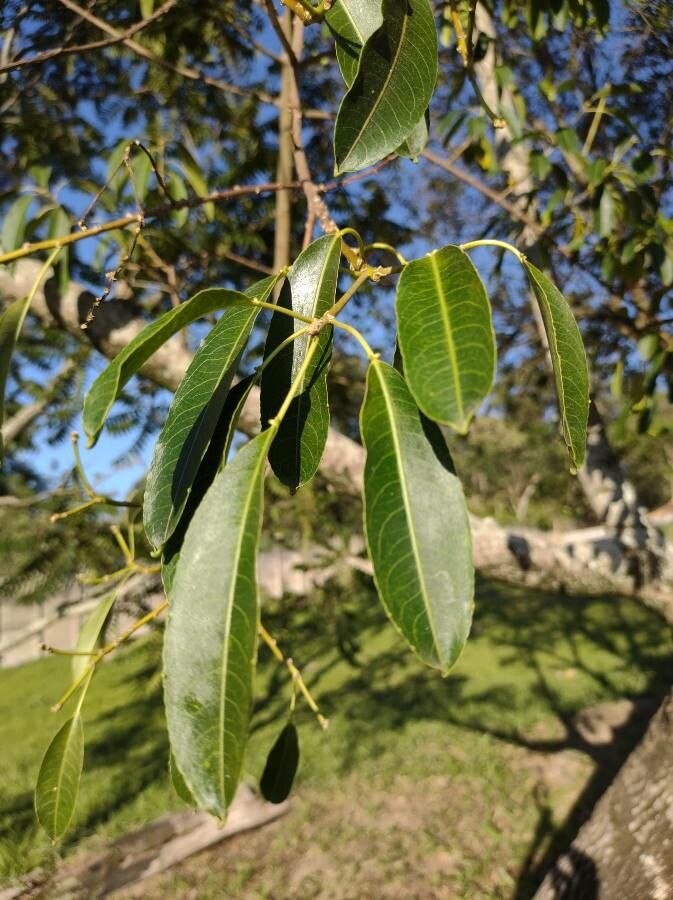
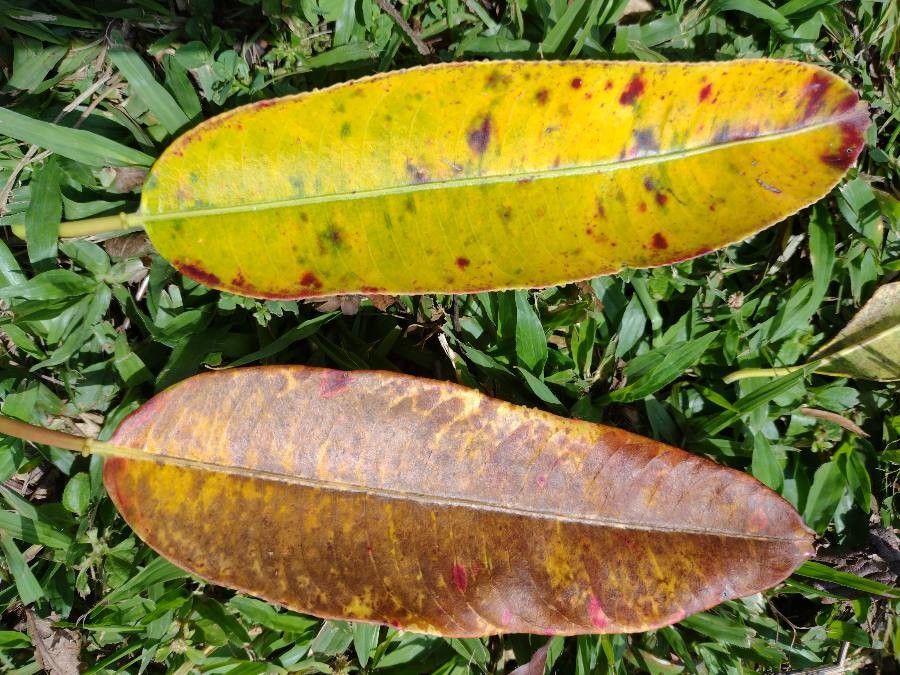
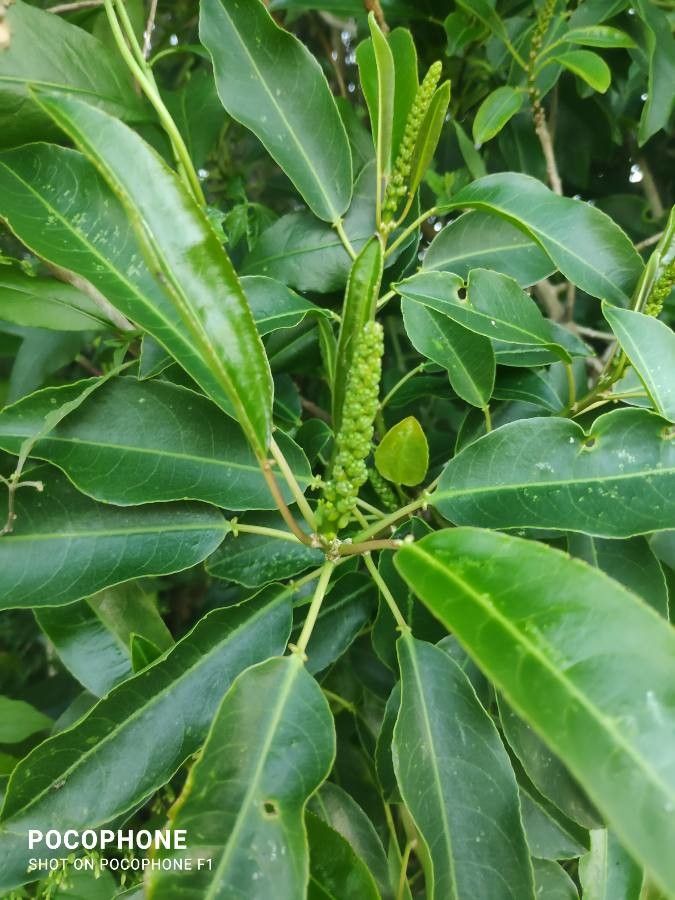
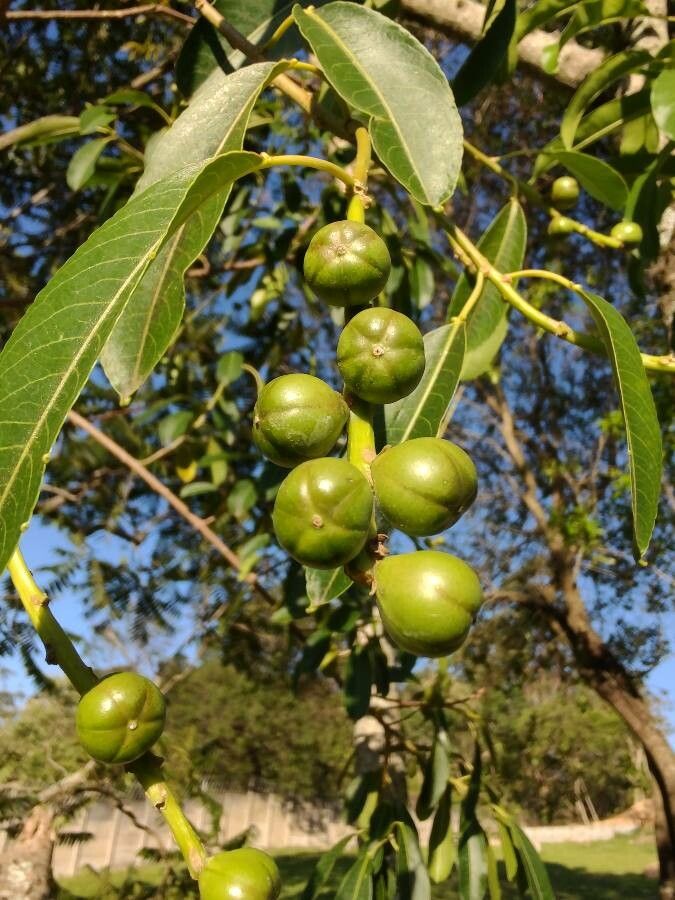
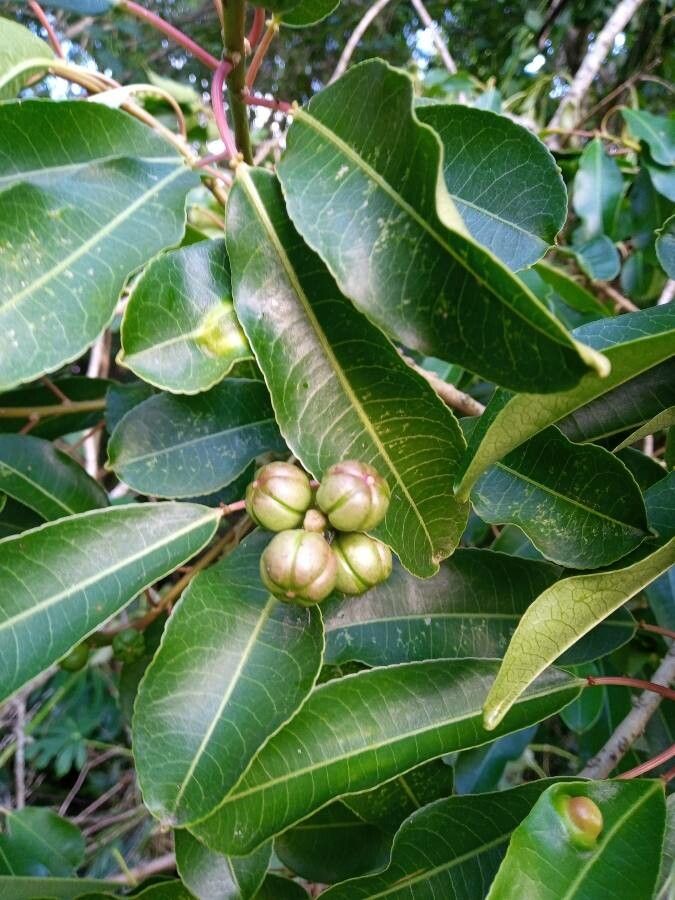
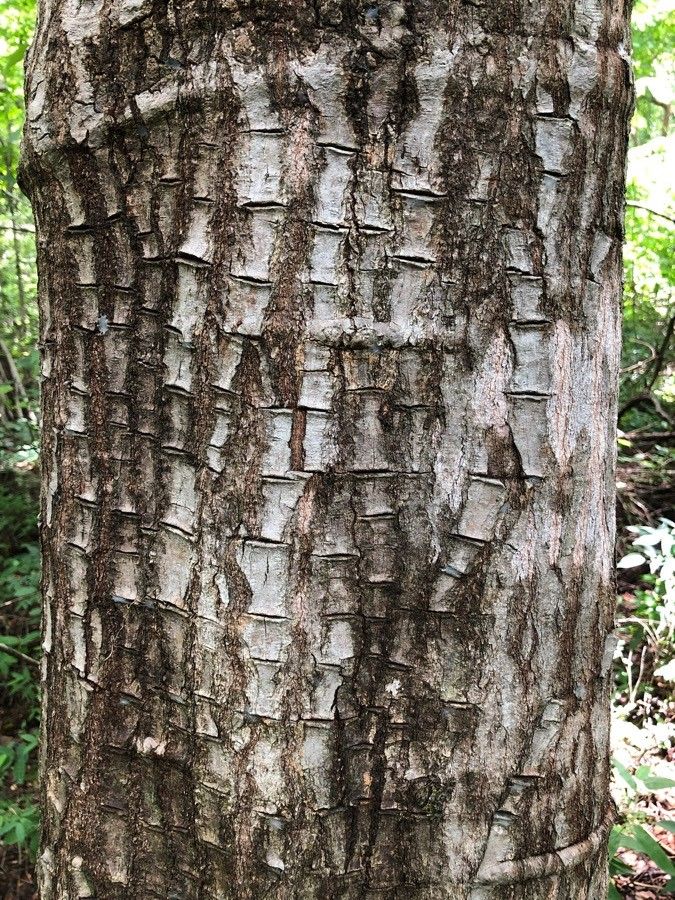
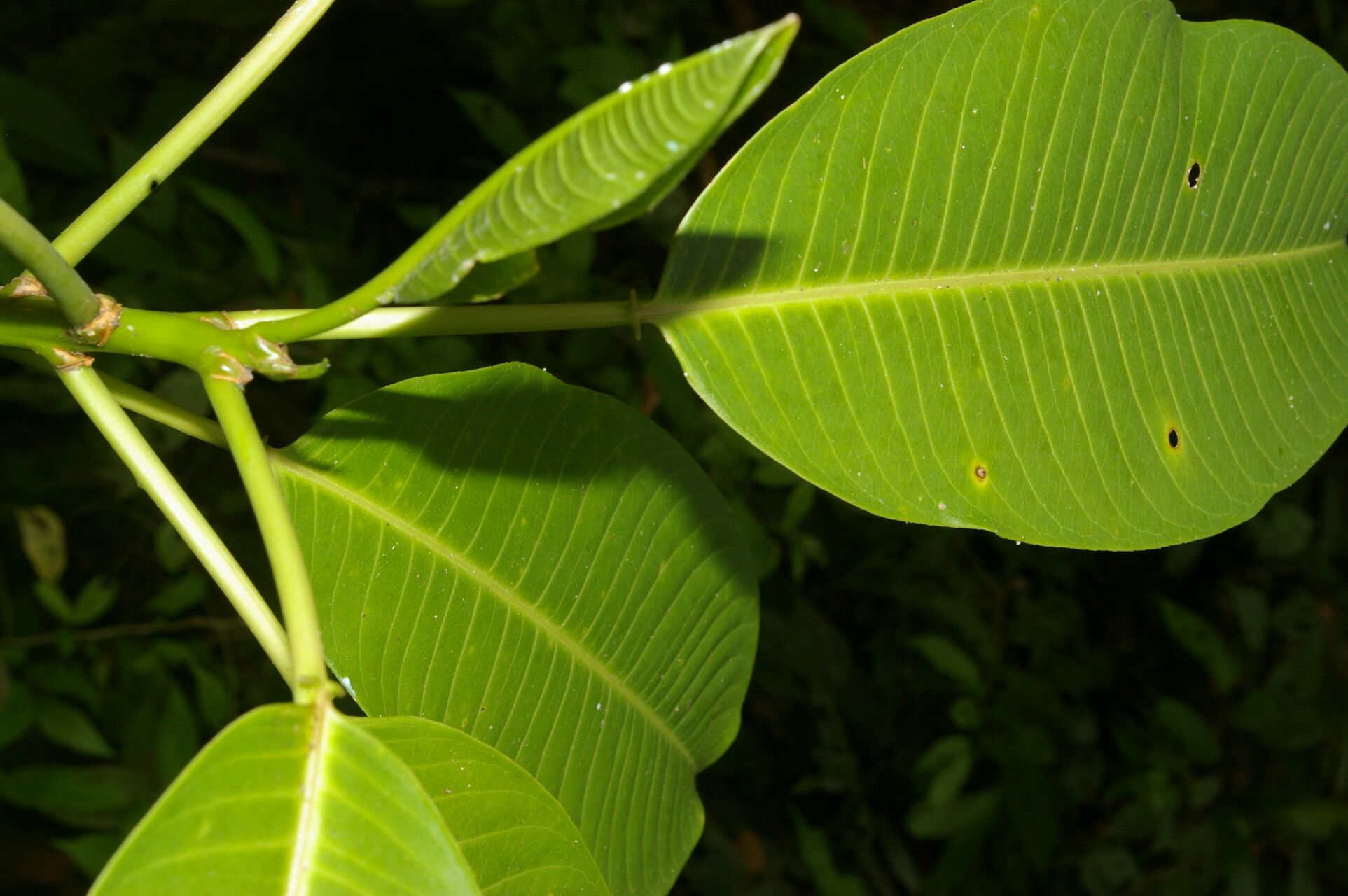
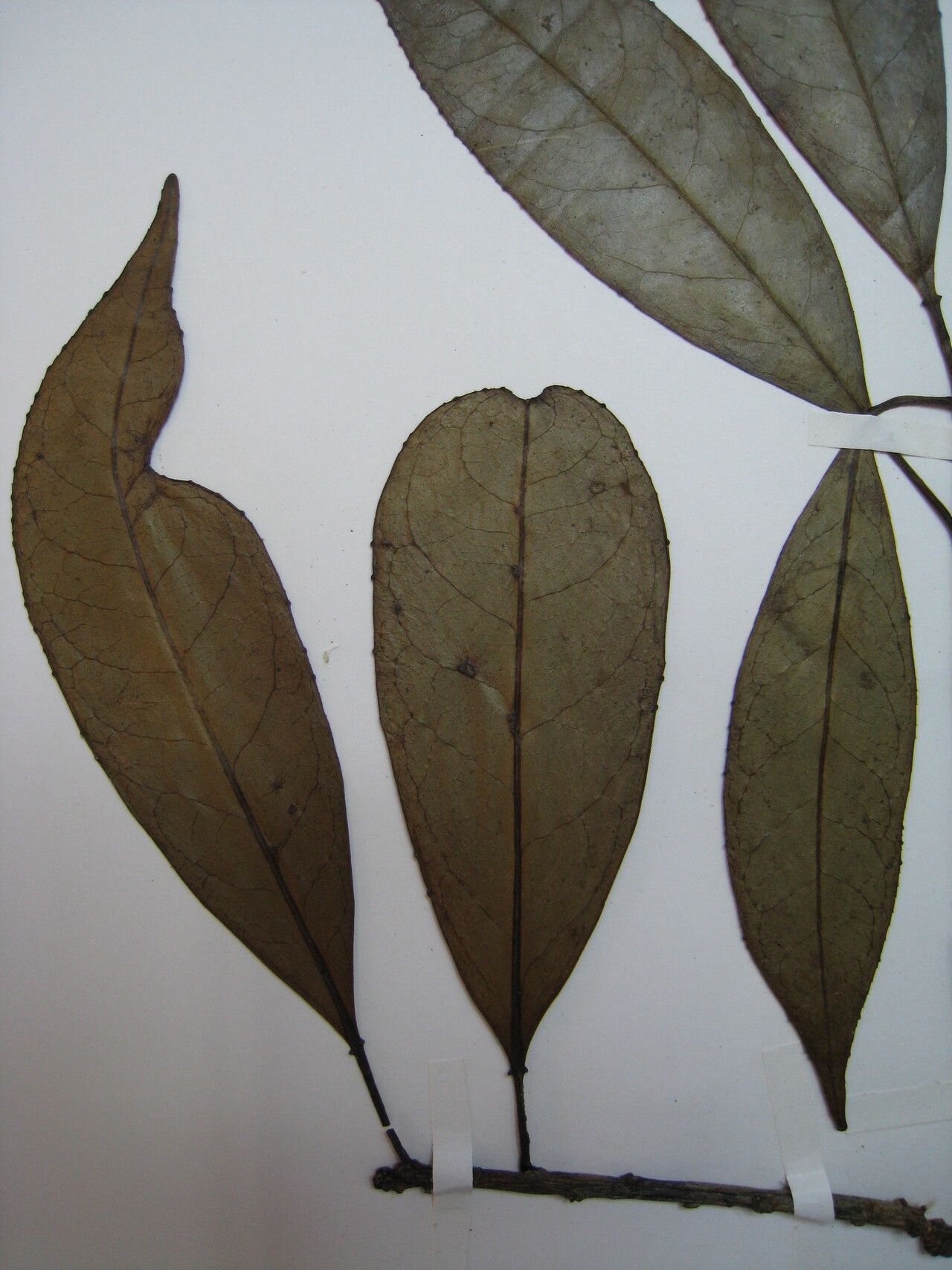
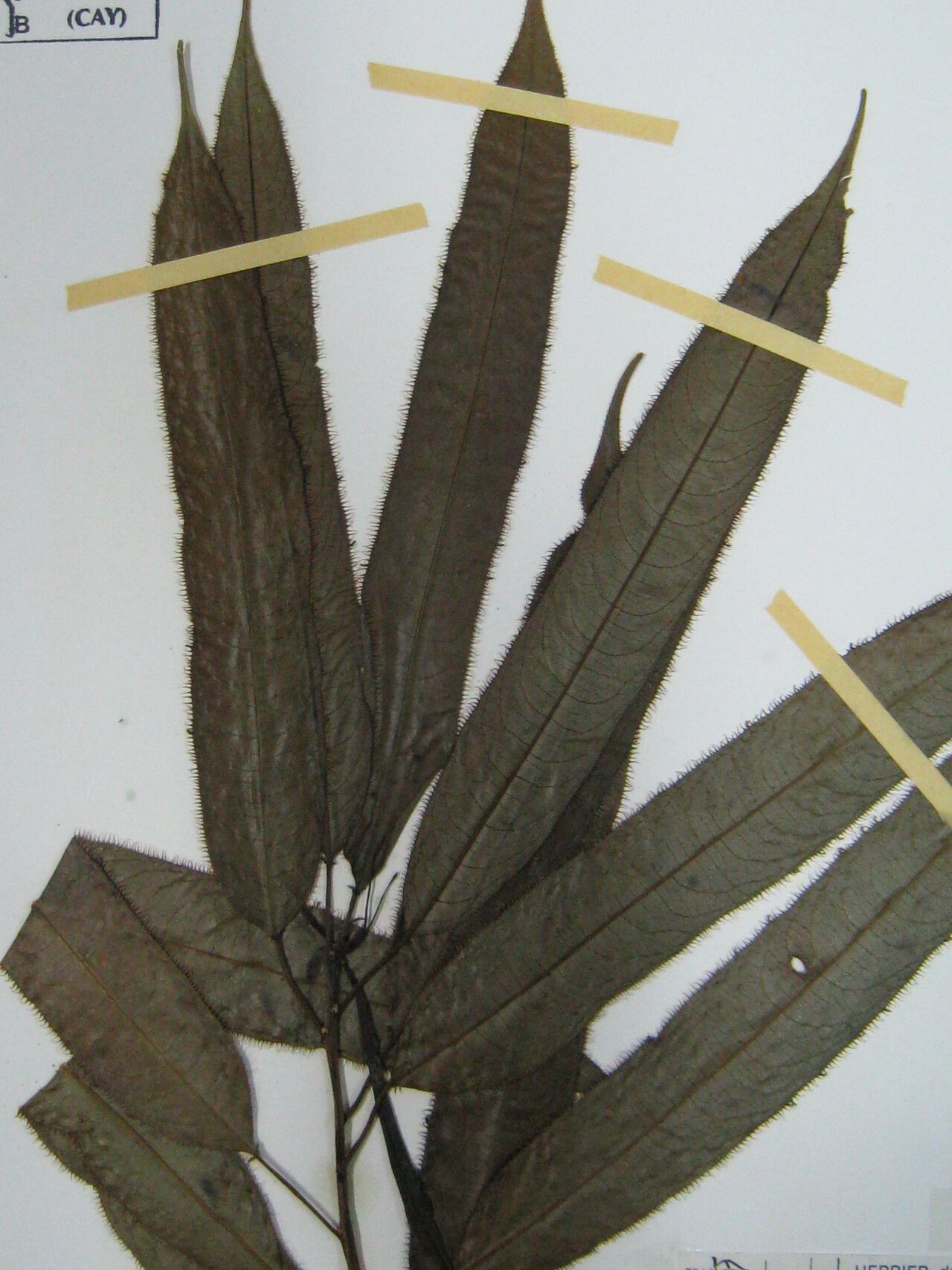
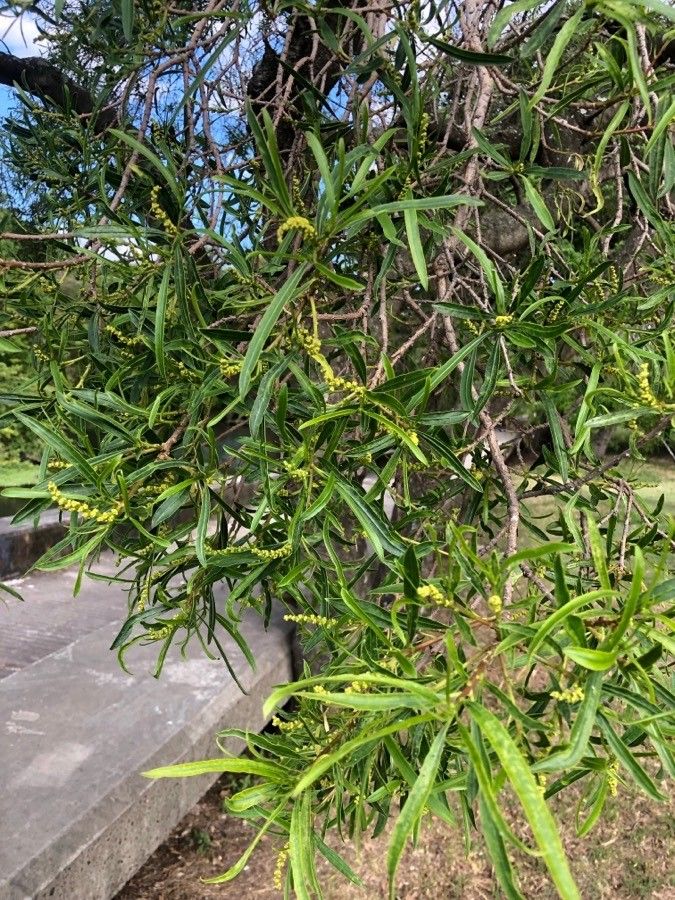
Sapium glandulosum is a species of tree in the family Euphorbiaceae. It is native to the Neotropics from Mexico and the Caribbean south to Argentina, and it has been cultivated elsewhere. It is the most common Sapium species. Its common names include gumtree, milktree, leche de olivo, and olivo macho.This is a species of tree up to 30 meters tall, usually with some buttress roots and multiple trunks. Smaller woody parts can have short, thick spines. It has a thin, patchy, peeling, scarred outer bark and a granular inner bark. It produces large amounts of milky latex. The alternately arranged leaves have toothed oblong or oval leaves up to 27 centimeters long by 8 wide. New leaves have gland-tipped teeth. The species is monoecious. The inflorescence is a spikelike arrangement of clusters of male flowers with a few female flowers at the base. The tiny rounded purple male flower is barely over a millimeter long. The female flower has 3 styles about 2 millimeters long. The fruit is a greenish-brown, rounded capsule up to a centimeter long which splits into 3 segments, each holding a seed. The seed is covered in a thin layer of red pulp.This tree grows in tropical moist and wet forests.The copious latex is of high quality and can be used to make rubber. It is difficult to harvest, so it is not commercially useful.
Bolivian rubber shows good disease resistance and is usually not susceptible to diseases. Regarding care, this plant is fairly low-maintenance. When grown outdoors it needs minimal watering, and larger specimens typically do not require pruning. Smaller plants, however, should be pruned after they have bloomed. Bolivian rubber is appropriate for anyone with outdoor space, such as a garden or deck, and does not demand much plant-care experience.
How to keep Sapium Glandulosum.
Light
Bolivian rubber comes from open habitats like sunny meadows and forest margins, where light is abundant. It does best in Full Sun but can tolerate Partial Sun, showing good adaptability to different light conditions.
Water
Bolivian rubber plants flourish in environments that are warm, humid, and consistently moist, similar to tropical climates. They have a moderate tolerance for drought, so they need to be watered every 2 to 3 weeks. It's important to let the soil dry out slightly between waterings. As evergreen plants, Bolivian rubber plants need careful watering during the growing season to maintain their foliage throughout the year.
Temperature
Bolivian rubber comes from tropical areas where the climate is usually warm and humid. Therefore it is adapted to high heat and humidity. It is sensitive to sudden temperature changes and prefers a steady temperature, so indoor temperature swings should be avoided. It generally does not tolerate cold and needs warmer conditions to grow. If the surrounding temperature drops too far, the plant may stop growing or even die.
Fertilizer
Fertilization is essential for caring for the Bolivian rubber. Regular feeding during the growing season preserves the energy required for its showy leaves and aids overall growth. Failing to fertilize can lead to unhealthy leaves, reduced ornamental value, and stunted or weak growth that is prone to breaking.
Pruning
To ensure healthy growth, Bolivian rubber plants need to be pruned each year in early spring. This involves removing any dead or diseased branches. Thinning the canopy helps improve air circulation and allows more light to reach the plant, which in turn enhances its overall vigor and aesthetic appeal. Additionally, this process helps manage the plant's size and encourages denser foliage.
Botanical profile.
- Plant Type
- Tree, Shrub
- Life Cycle
- Perennial
- Genus
- Sapium
- Family
- Euphorbiaceae
- Hardiness Zone
- 9-11
- Mature Height
- 10.06 m to 14.94 m
- Mature Spread
- 4.88 m to 7.92 m
- Leaf Color
- Green, Dark Green
- Leaf Type
- Deciduous
- Flower Color
- Yellow, Green
- Flower Size
- 0.25 cm to 0.51 cm
- Bloom Time
- Late spring, Early summer, Mid summer
- Planting Time
- Spring, Summer, Autumn
- Harvest Time
- Late summer, Early fall, Mid fall
- Native Area
- Belize, Honduras, Mexico, Guatemala, Peru, Panama, Jamaica, Colombia, Cuba, Bolivia, Venezuela, Guyana, El Salvador, Nicaragua, Brazil, Ecuador, Costa Rica
Other names.
Reader questions.
What's the easiest way to water my Bolivian rubber plant?
To promote excellent root development, it's best to place a garden hose at the base of the plant. Avoid spraying the leaves directly, as this can lead to overwatering. If the plants are outdoors and exposed to direct sunlight, the leaves may need more frequent watering. You can use bubblers or soaker hoses to moisten the roots of each plant, or choose a soaker hose that covers the entire garden or bed when adding or removing plants. Remember to drain any excess water and allow the soil to dry before watering again. Watering at ground level is advised to prevent diseases. On a sunny day, it may be beneficial to spray the entire bush with water. Whether the plant is potted or in the ground, deep watering is preferred over light sprinkling for Bolivian rubber plants.
What are the sunlight requirements for Bolivian rubber?
Bolivian rubber, or Sapium glandulosum, thrives in environments that provide ample light, such as sunny meadows and forest edges. It requires full sun, which is above 6 hours of sunlight per day, to flourish but can also tolerate partial sun, defined as about 3-6 hours of sunlight per day. It's adaptable to various sunlight conditions, making it a versatile plant for different garden spots. When considering plant placement, observe the movement of sunlight through your garden to find locations that offer a good balance of light and shade, ensuring the plant’s health and happiness.
What is Bolivian rubber?
Bolivian rubber, known botanically as Sapium glandulosum, is a species recognized for its significance in the production of natural rubber. Originating from Bolivia, this plant plays a crucial role in both the local and global natural rubber industry. Despite the lack of detailed information provided on its essentials and symptoms, the name itself highlights its primary utility and geographic origin.
What do I do if I give Bolivian rubber plant too much or too little water?
An overwatered Bolivian rubber plant can exhibit signs such as yellowing, dropping, and wilting leaves. The plant may also appear dull and unhealthy, with mushy stems. It is advisable to adjust your watering schedule when these signs begin to appear. On the other hand, wilting can also indicate under watering, with leaves turning crispy and dry. In such cases, a thorough watering is needed when the soil is dry. While enough water will help the plant recover, it may still have dry and yellow leaves due to a damaged root system. Once the plant returns to normal, the yellowing of leaves will cease. When growing a Bolivian rubber plant indoors, always check the moisture levels in the pot and avoid overwatering. Look for any signs of black spots, and if present, allow the soil to dry out by refraining from watering for a few days. Overwatering can lead to root rot, so it is important to prevent this by ensuring the soil does not become too soggy. When planting the Bolivian rubber plant outdoors, check for soil dryness by digging a little deeper with your fingers. If the soil feels dry, it may indicate under watering, and adequate watering is necessary for the plant's recovery.
How can artificial lighting be used for Bolivian rubber?
When natural sunlight is not sufficient, especially during winter or in less sunny spaces, artificial lighting can be crucial for the healthy growth of indoor Bolivian rubber plants. Optimal growth under artificial lighting involves choosing the right type of light, such as LEDs that can be customized to the plant's specific needs. Full sun plants need 30-50W/sq ft, partial sun plants require 20-30W/sq ft, and full shade plants should have 10-20W/sq ft of artificial light. The light source should be placed 12-36 inches above the plant, and the lighting duration should mimic natural daylight hours, typically between 8-12 hours per day.
How frequently should I add water to my Bolivian rubber plant?
The Bolivian rubber plant prefers deep watering infrequently. When planted in pots, make sure to soak them with a gallon of water to account for limited water storage. In colder regions, water every 3 to 5 days, preferably in the morning when the soil is dry. To know when watering is needed, check the top 2-3 inches of soil for dryness. High temperatures can quickly dry out pot soil, so monitor the moisture level daily. Likewise, garden soil may require irrigation in hot climates, usually once a week. Only water when the soil is 2 to 3 inches dry. Take into account rainfall to avoid overwatering and root rot. During spring and fall, Bolivian rubber plants grow best outdoors with 3-4 inches of mulch to conserve water. Sandy soil drains faster, necessitating more frequent watering. On the other hand, clay soil requires less watering, with intervals of 2-3 days to allow the plant to dry and prevent root rot. Use a calendar to keep track of watering dates and look out for drooping leaves as a sign of potential delay.
What are common symptoms of insufficient light in Bolivian rubber?
Bolivian rubber may show several symptoms when it doesn't receive enough light, including smaller new leaves, leggy or sparse growth, premature leaf drop, slowed or halted new growth, lighter-colored or irregularly patterned new leaves. Conditions like chlorosis (loss of green color and yellowing of leaves due to the breakdown of chlorophyll), sunscald (damage from intense sunlight exposure), leaf curling (a defense mechanism to reduce surface area exposed to sunlight), wilting (loss of turgor pressure causing drooping), and leaf scorching (brown, dry, and crispy leaf edges from excessive sunlight) can also arise either from too much or too little light.
How much water does my Bolivian rubber plant need?
The Bolivian rubber plant usually needs one gallon of water on a regular schedule. For potted plants, it is best to water them deeply until the water begins to drip from the bottom of the pot. Then, allow the soil to dry before watering again. You can use a water calculator or moisture meter to determine how much water your plant has received in a week. During the flowering period, provide ample water but allow the moisture to evaporate to avoid root rot. If the Bolivian rubber plant is planted outdoors in an area with sufficient rainfall, it may not need additional watering. However, when the plant is young or newly planted, ensure it receives 1-2 inches of rain each week. As the Bolivian rubber plant grows, it can rely solely on rainfall. Only if the weather is exceptionally hot or there is a lack of rainfall for 2-3 weeks should you consider giving the plant a full watering during the cooler part of the day to prevent damage from extreme heat. Additional watering will be necessary during prolonged dry periods.
How can you improve light conditions for Bolivian rubber?
Improving light conditions for Bolivian rubber involves a few strategies. Indoors, gradually moving the plant to sunnier locations to achieve at least 6 hours of direct sunlight or using artificial light sources like desk or ceiling lamps for a minimum of 8 hours a day can help. For outdoor plants, adjusting the environment gradually to acclimate them to brighter spots while avoiding sudden changes that can cause sunburn is key. Pruning obstructive branches or leaves and transplanting smaller plants during their dormant period to sunnier locations with good drainage are effective solutions for enhancing sunlight exposure. Note that parts of the plant damaged by insufficient light may not recover, but new growth will be healthier with improved light conditions.
Do I need to change how often I water my Bolivian rubber plant based on the seasons or different weather conditions?
To properly care for Bolivian rubber plants, it is important to consider their watering needs based on different seasons. During the spring and fall growing seasons, the soil should be kept consistently moist but not overly saturated. Providing alternating dry and moist conditions will promote healthy growth. In the summer, hot weather and lack of rainfall can cause water to evaporate quickly, so more frequent watering is necessary to keep the soil adequately moist. However, during the winter when the plant goes dormant and loses its leaves, less water is typically needed. It is recommended to use a well-draining soil mixture, such as terracotta, to allow for quicker water evaporation. Once the plant starts to leaf out in the spring, watering can be reduced or even skipped entirely, as the plant can rely on natural rainfall during the fall and winter dormant period. To encourage growth and blooming, cultivation can be done when the temperature warms up. Good drainage is essential year-round, particularly during winter, and when the plant is kept in a pot, regular watering is necessary, especially in the summer. It is important to avoid shallow sprinkles that only reach the leaves, as they can promote fungal growth and don't adequately reach the roots. Even during dormancy in the fall and winter, the plants should not be completely dried out. However, it is crucial not to overwater, as the plants do not tolerate prolonged exposure to water. Insufficient drainage can be detrimental, particularly in winter. Using mulch is advised whenever possible, as it helps reduce stress, conserve water, and promote healthy blooms.
What should I watch out for when watering my Bolivian rubber plant in different seasons, climates, or growing stages?
If you are planting Bolivian rubber in the ground, it mainly relies on rain. However, if there is no rainfall for 2-3 weeks, you may need to water the plants deeply. During the summer, it is best to water them in the morning to avoid stressing the roots with a large temperature difference. Avoid watering the bushes when it's too hot outside. Start mulching them in the spring, when the ground is not too cold. The age of the plants is important, as lack of water is a common reason for newly planted ones to fail to grow. Once they are established, reduce the watering schedule. In the fall and winter, especially if the soil has water-retaining material, reduce watering as dry winds can dry them out. Newly planted ones are at risk of drought during windy seasons. Plants in pots dry out faster, so they need more watering. If you see less blooming and drying leaves, they may need more water. Watering potted plants can be complex and the frequency may fluctuate. Be cautious not to let the potted plant sit in water and avoid using containers with saucers, bowls, or trays. Overwatering in the fall can lead to mottled or yellowish foliage. Prevent overwatering regardless of the climate or season. During the flowering months, you may increase the watering frequency, but once they are fully grown, give them a rest. Water them adequately every 3 to 5 days, checking the soil moisture by sticking your finger in the pot or using a moisture meter. Be careful not to overwater or underwater as it can cause root rot and lead to their death.
Why is it important to water my rubber plant from Bolivia?
Watering the Bolivian rubber plant is crucial for transporting nutrients from the soil to the rest of the plant. Keeping the plant healthy requires knowing the right amount of water to provide. This will depend on the weather and soil conditions in your area. The Bolivian rubber plant thrives in moist soil but cannot tolerate being waterlogged. When planting in the ground, it is important to use enough mulch and avoid under-watering. When planting in a pot, it is best to water until the base of the plant is moist. When growing as foliage, watering should be done to a depth of 10 to 20 inches to support growth. If it is raining, it is advisable to refrain from watering and allow the plant to absorb nutrients from the rainwater.