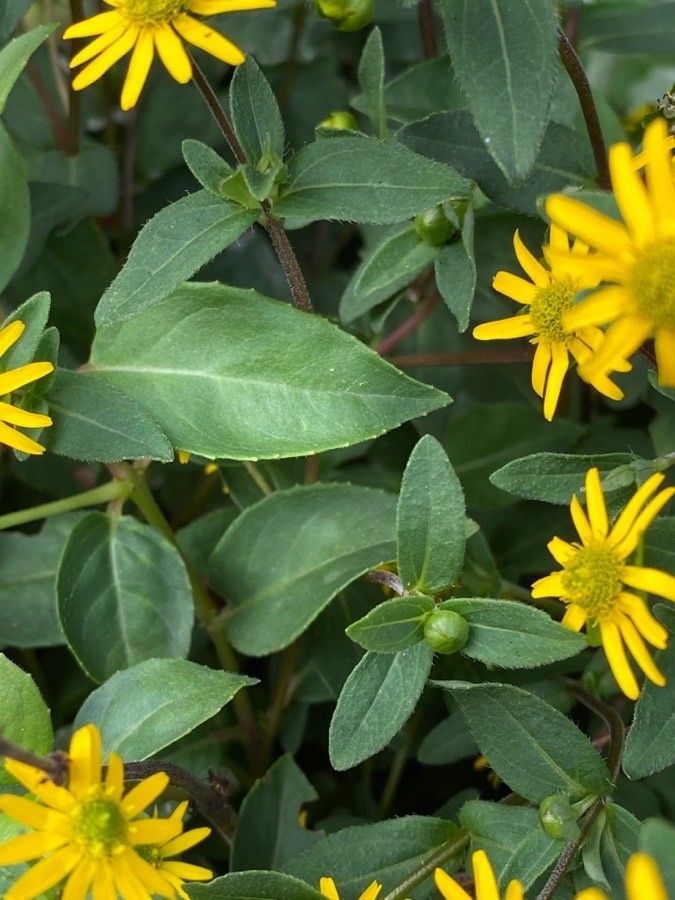
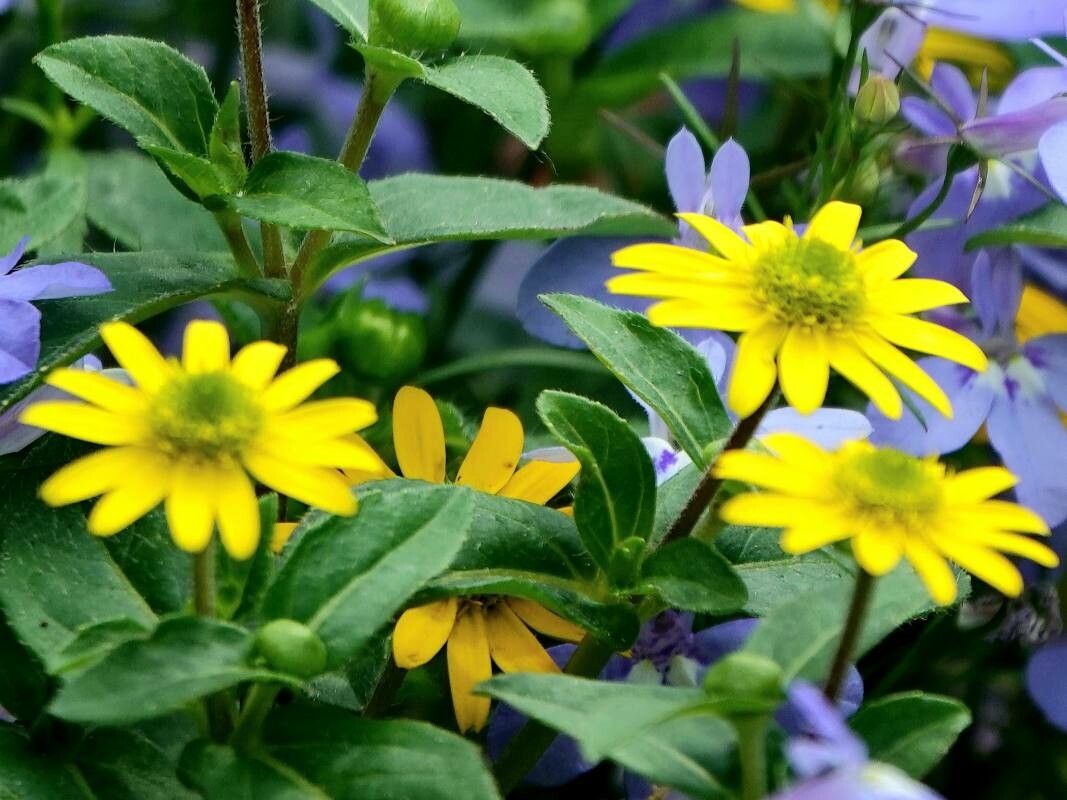
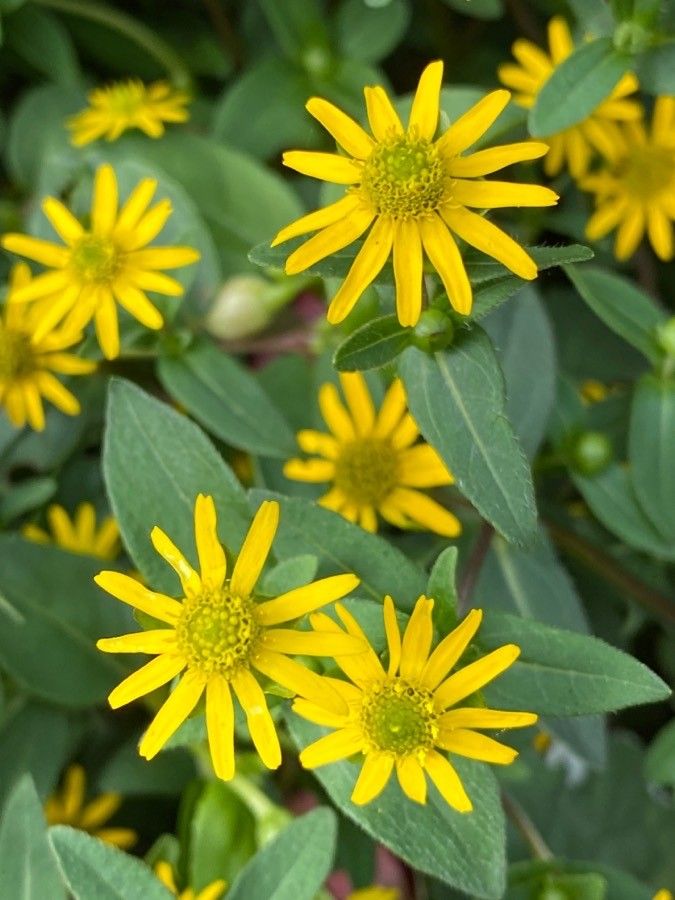
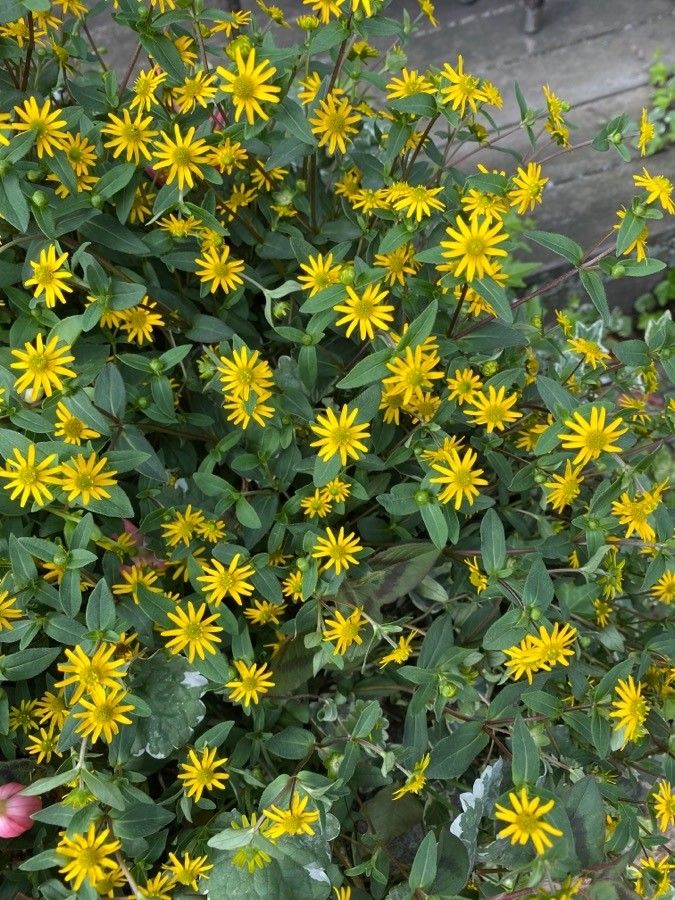
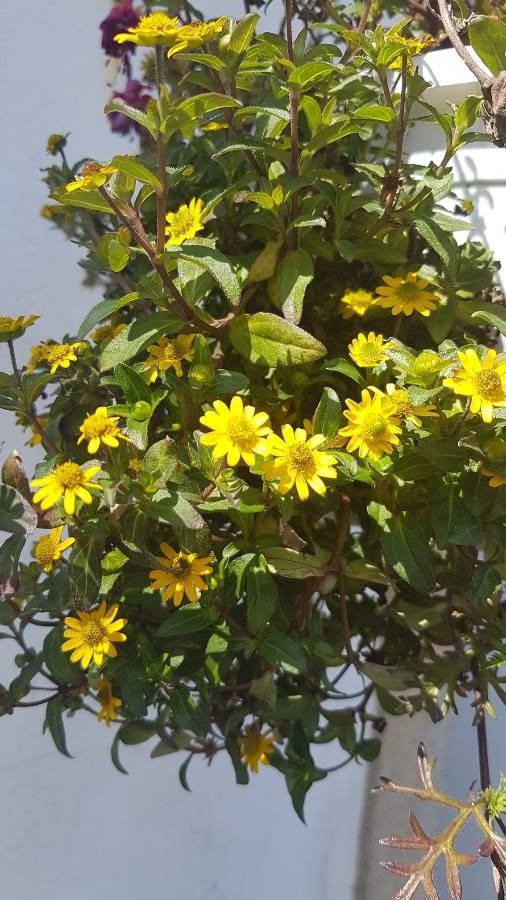
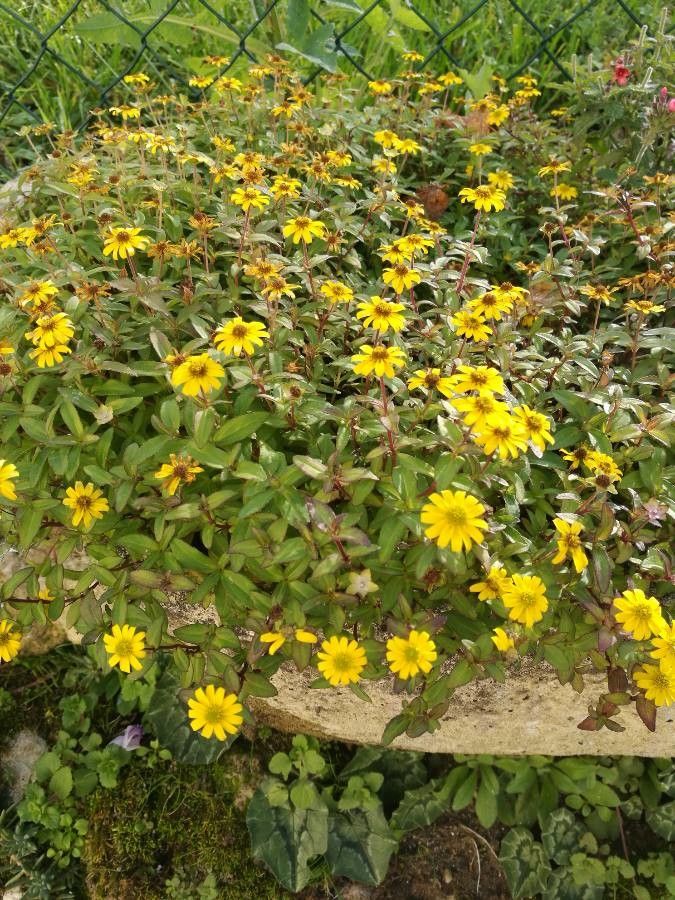
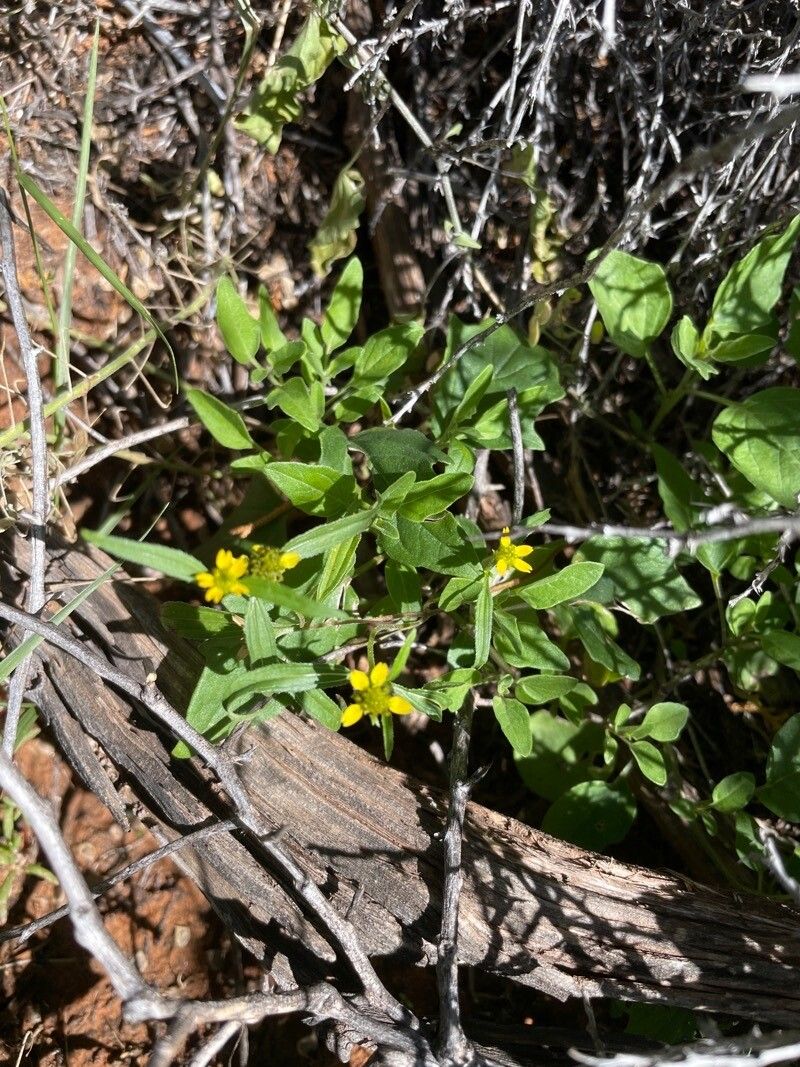
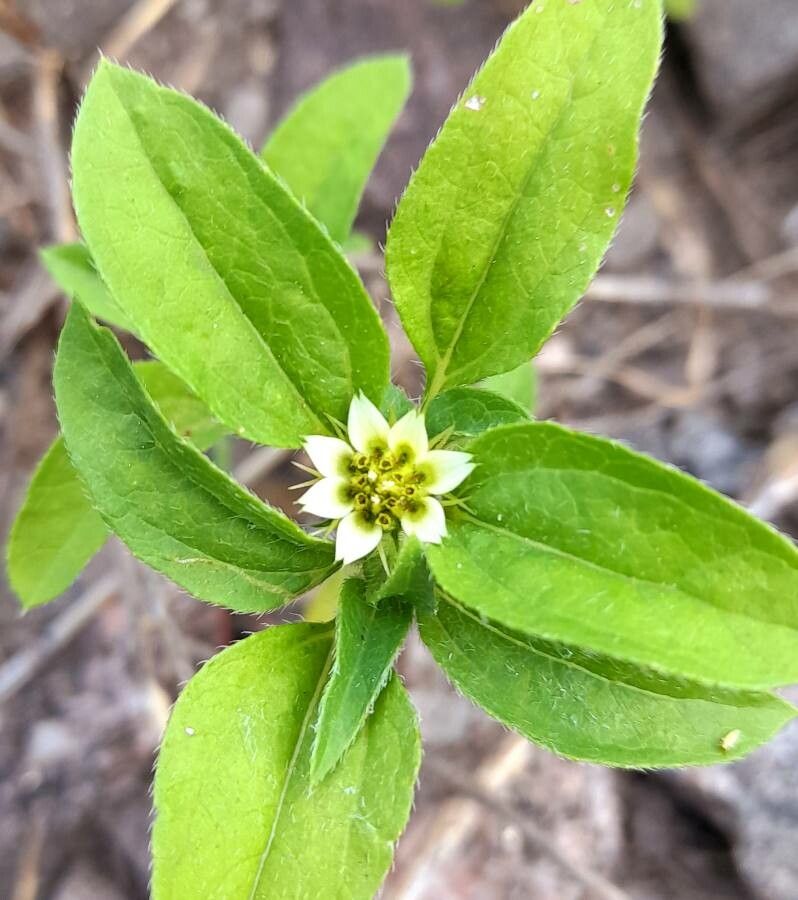
Sanvitalia procumbens, commonly known as creeping zinnia or dwarf sunflower, is a low-growing perennial plant in the Asteraceae family. Native to Mexico and Central America, it has been widely cultivated worldwide for its attractive yellow flowers and its resilience in hot, dry conditions.
This plant typically reaches a height of up to 15 cm and can spread up to 30 cm. It features small, oval-shaped green leaves that are slightly hairy. The bright yellow flowers, featuring dark center disks, resemble miniature sunflowers.
Sanvitalia procumbens is easy to grow and prefers full sun but can tolerate partial shade. It thrives in well-drained soil with moderate moisture levels but can withstand drought conditions once established.
Due to its low-growing habit, Sanvitalia procumbens is often used as ground cover or to edge garden borders. Its trailing growth makes it an excellent choice for containers or hanging baskets.
Additionally, Sanvitalia procumbens attracts bees, butterflies, and other pollinators, making it a valuable addition to pollinator gardens. Overall, it's a beautiful plant that can bring a splash of bright yellow to any garden!
Mexican creeping zinnia is fairly disease-resistant and typically not prone to illnesses. Still, it can be affected by pests and diseases present in its environment. Such infections are generally mild. Regarding care, this plant needs moderate maintenance. It should be pruned regularly to preserve an attractive appearance and healthy growth. Applying fertilizer can also encourage flowering. Mexican creeping zinnia is appropriate for anyone with outdoor space, like a garden or patio, and does not demand extensive care experience. It may need more attention when grown indoors.
How to keep Sanvitalia Procumbens.
Light
The Mexican creeping zinnia requires plentiful light and performs best in places with generous sun exposure. Its native growth in sunny regions explains this preference. However, if it receives either too much or too little sunlight, the plant's vibrancy and health can suffer.
Water
Mexican creeping zinnia thrives in warm, sunny conditions and needs consistent moisture, with weekly watering being ideal. Although this adaptable plant can tolerate brief dry spells, mulching in outdoor settings helps retain soil moisture and reduces the need for frequent watering.
Temperature
Mexican creeping zinnia naturally occurs in habitats where temperatures range from 68 to 95 °F (20 to 35 ℃). This plant prefers warm conditions and does best when temperatures remain within that range. In cooler or hotter periods, appropriate temperature adjustments should be made to promote healthy growth.
Fertilizer
When most of the Mexican creeping zinnia's blooms have reached full size, resume fertilizing. Around the time the blooms are at their peak, feed it every three to four weeks, weather permitting. Then, once the plant starts producing fewer new blooms, stop fertilizing; there’s no need to feed it when it can’t produce any more flowers.
Pruning
This mat-forming plant features bright yellow flowers and thrives in full sun. To promote growth, prune Mexican creeping zinnia in the spring and trim spent blooms to encourage continuous flowering. Ensure the soil is well-draining to prevent root rot. Avoid heavy pruning during peak bloom to maintain good air circulation and reduce the risk of disease.
Botanical profile.
- Plant Type
- Herb
- Life Cycle
- Annual, Biennial
- Genus
- Sanvitalia
- Family
- Asteraceae
- Hardiness Zone
- 7
- Mature Height
- 8 cm to 15 cm
- Mature Spread
- 30 cm to 46 cm
- Leaf Color
- Green
- Leaf Type
- Semi-evergreen
- Flower Color
- Yellow, Gold
- Flower Size
- 2.54 cm
- Bloom Time
- Summer
- Planting Time
- Spring, Summer
- Harvest Time
- Mid summer, Late summer, Early fall
- Native Area
- Mexico, Guatemala
Other names.
Reader questions.
How should I water my Mexican creeping zinnia plant?
Mexican creeping zinnia can be watered using various tools such as a garden hose with a spray nozzle or a watering can. This plant is not too specific about the type of water it receives, as rainwater, tap water, or filtered water will all suffice. It is generally recommended to avoid watering from above as this can harm the leaves and flowers and may lead to disease. A drip irrigation system is often the best way to water Mexican creeping zinnia, as it applies water evenly and directly to the soil. When watering a container-grown Mexican creeping zinnia, you can use a cup, watering can, or tap water to directly water the soil.
When should I put fertilizer on my Mexican creeping zinnia?
Mexican creeping zinnia experiences significant growth in the early part of the growing season, after the risk of frost has passed. During this time, it is recommended to fertilize Mexican creeping zinnia when initially planting it in the ground or in planters. This should be the only application of fertilizer until later in the season when the blooms are in full bloom. As the season progresses and the Mexican creeping zinnia has opened most of its full-sized blooms, it is time to resume fertilizing. This should be done every three to four weeks, depending on the weather, when the blooms are at their peak. Once the plant starts producing fewer new blooms, it is no longer necessary to fertilize as it cannot produce any more blooms.
What are the sunlight requirements for Mexican creeping zinnia?
Mexican creeping zinnia thrives in conditions where it can receive an abundance of light. It requires full sun, which means it should get more than 6 hours of sunlight daily, to reflect its origins in sunny areas and maintain its health and vibrancy. It can also grow under partial sun, about 3-6 hours of sunlight, but its growth may be impacted if it receives too much or too little sunlight. It's crucial to observe the movement of sunlight through your garden to find the perfect balance of light and shade for these plants.
What is the ideal temperature range for Mexican creeping zinnia?
Mexican creeping zinnia thrives in warm climates, with an ideal temperature range of 68 to 95 °F (20 to 35 °C). It is indigenous to areas where temperatures primarily fall within this range, uncovering its full potential in such environments. For healthy growth, it's important to make temperature adjustments during seasons that are cooler or hotter than this preferred range.
What can I do if I give too much or too little water to my Mexican creeping zinnia?
The solution for underwatering Mexican creeping zinnia is simple: increase watering frequency when you notice the plant lacks moisture. Overwatering, on the other hand, can be a more serious issue if not detected early. It can lead to disease and ultimately the decline and death of the plant. To prevent overwatering, choose a growing location with ample sunlight to dry the soil and ensure good drainage to avoid water pooling and waterlogged soil. If you have overwatered your potted Mexican creeping zinnia, consider transferring it to a new pot with better soil drainage and adequate drainage holes. When repotting, use loose soil and ensure the new pot has efficient drainage.
When is the best time to not add fertilizer to my Mexican creeping zinnia?
Fertilizing is important for Mexican creeping zinnia, but it's crucial to apply it at the right time. There are situations when it's best to hold off on fertilizing, usually due to climate-related issues or controllable factors. If something is wrong with the plant, soil, or climate, it's best to wait until the problem is resolved and the plant has recovered. For example, if there are sudden severe weather changes like a cold snap in summer, it's better to wait until it warms up before fertilizing. Similarly, if the soil is too dry or compacted, it won't effectively absorb the fertilizer, which can harm the roots. During hot temperatures in the 90-degree Fahrenheit range, it's advised not to apply fertilizer as it can break down too quickly. Pests or diseases should also be treated and resolved before re-fertilizing.
How can artificial lighting support Mexican creeping zinnia growth indoors?
When natural sunlight is insufficient for Mexican creeping zinnia, particularly during winter or in less sunny spaces, artificial lighting can compensate effectively. For optimal growth indoors, choose the right type of artificial light such as LED lights, which can be customized to provide specific wavelengths necessary for the plant. Full sun plants need 30-50W/sq ft, partial sun plants require 20-30W/sq ft, and full shade plants need 10-20W/sq ft of artificial light. The light source should be placed 12-36 inches above the plant to mimic natural sunlight, and it's recommended to mimic natural daylight hours, with most plants needing 8-12 hours of light per day.
Does Mexican creeping zinnia need frost protection in the winter?
Mexican creeping zinnia has strong cold resistance and usually does not require special frost protection measures during winter. However, if winter temperatures are expected to plummet below -15°C, it's crucial to provide cold protection to prevent potential damage. This can be accomplished by covering the plant with soil or straw. Moreover, watering the plant abundantly before the first freeze in autumn to ensure the soil remains moist helps prevent drought and water scarcity for the plant during the winter and early spring months.
How often do I need to water my Mexican creeping zinnia?
Mexican creeping zinnia requires regular watering throughout its growing season. In spring, water once a week, increasing to two or three times a week as the weather gets warmer. It's important not to exceed this watering rate as it can harm the plant. Regardless of watering frequency, make sure the soil remains moist but not wet. If the Mexican creeping zinnia is in a pot, you'll need to water more frequently as potted soil can dry out faster. Typically, water container-grown zinnia a few times per week compared to once per week for an in-ground plant.
What kind of fertilizer should I use for my Mexican creeping zinnia?
Most types of Mexican creeping zinnia require a specific balance of nutrients from fertilizer. It is recommended to use a fertilizer specifically formulated for high-yield blooming plants, which should have a higher level of phosphorus (indicated by a higher P number in its NPK number, like 10-30-10). Many fertilizer brands offer options that are suitable for blooming plants such as Mexican creeping zinnia, making it easy to provide the necessary nutrients. If you choose to use a pre-mixed fertilizer, make sure to follow the instructions on the package to avoid over-fertilizing or under-fertilizing the plant, as both can lead to poor growth or wilting.
What are some common symptoms of inadequate lighting for indoor Mexican creeping zinnias?
When Mexican creeping zinnia is grown indoors with insufficient light, it may exhibit symptoms like small new leaves, leggy or sparse growth, faster leaf drop, slower or no new growth, and lighter-colored new leaves. These signs indicate light deficiency, which can lead to chlorosis--a condition where leaves lose their green color and turn yellow-- sunscald, leaf curling, wilting, and leaf scorching, all of which negatively affect the plant's health.
What are the symptoms and solutions for low temperature exposure in Mexican creeping zinnia?
When exposed to temperatures below -15°C, Mexican creeping zinnia may not exhibit immediate changes. However, such low temperatures can lead to a decrease in sprouting or a complete lack of it during springtime. To manage this, it is recommended to remove any parts of the plant that have failed to sprout in spring as a solution to encourage new growth.