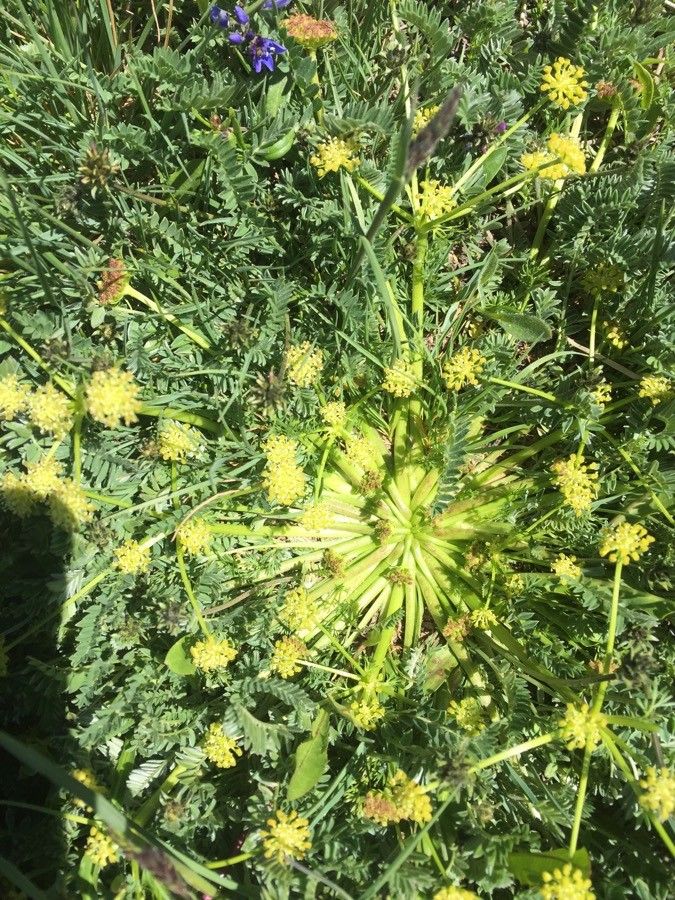
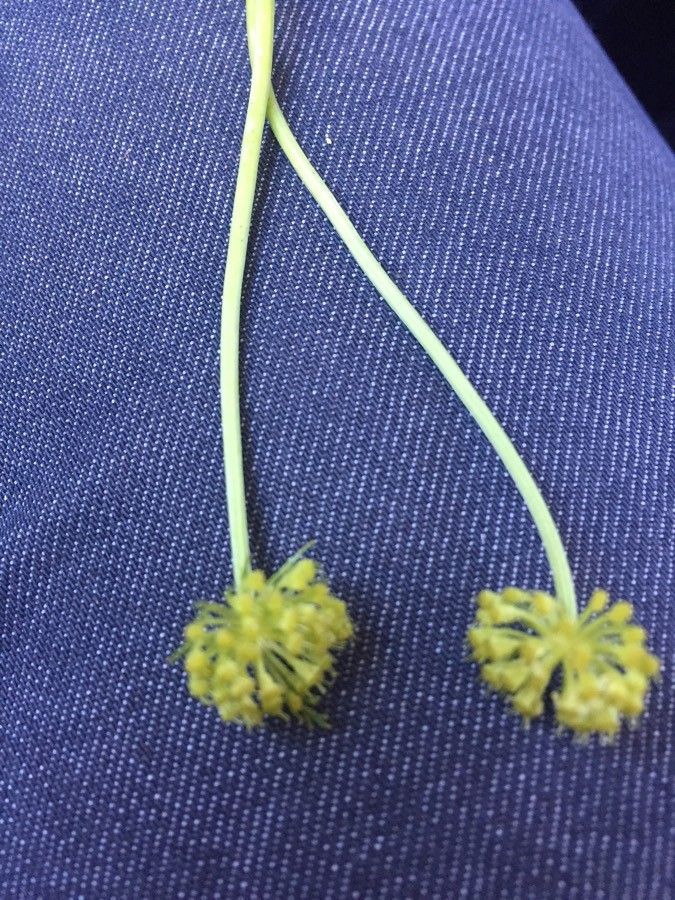
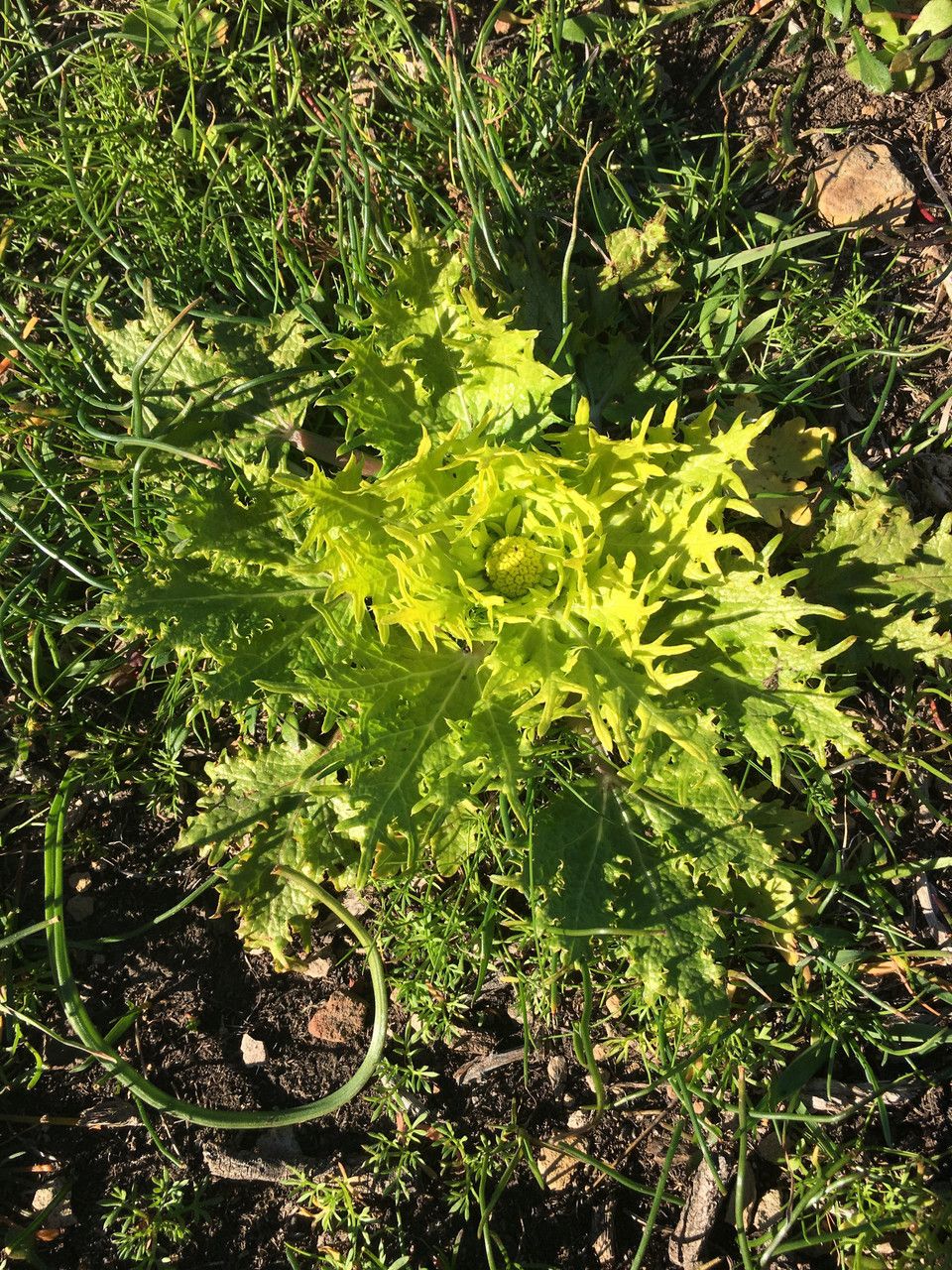
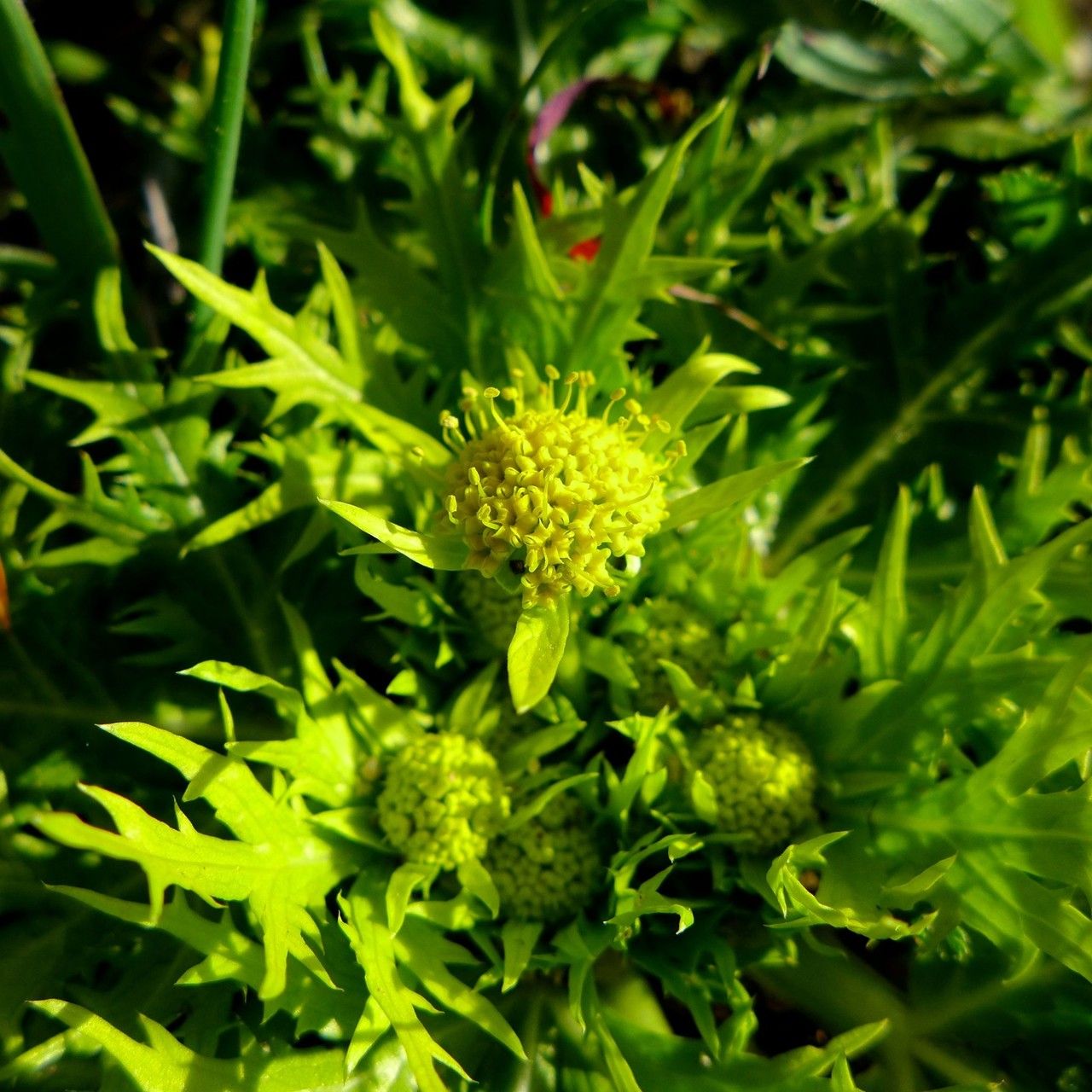
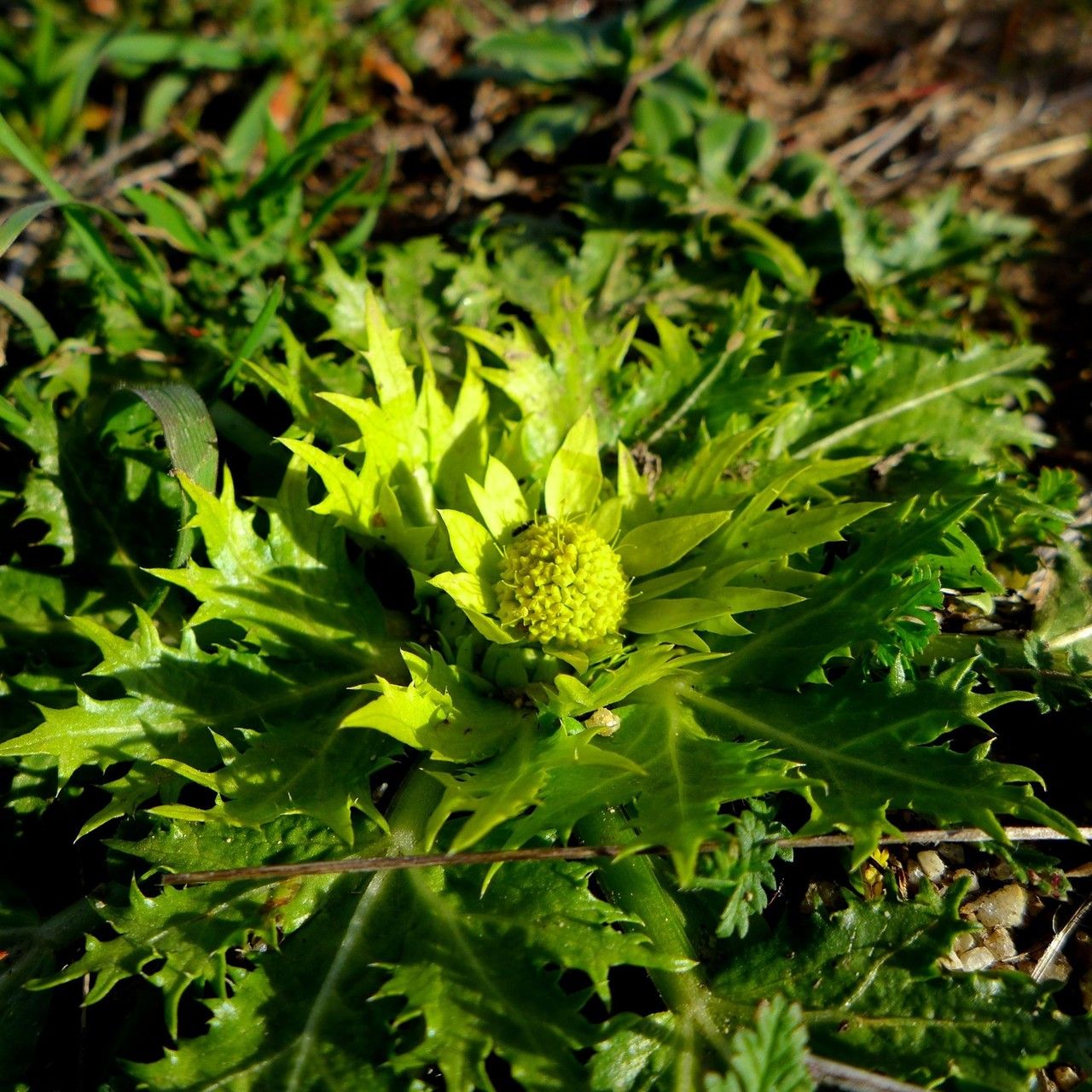
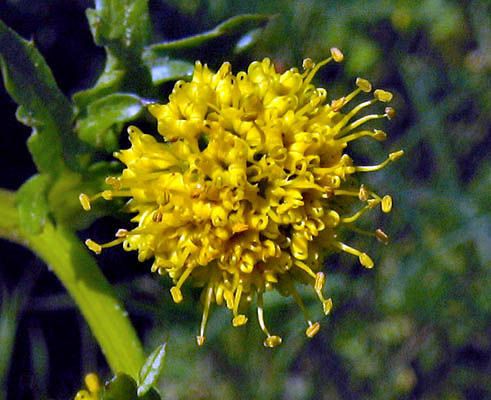
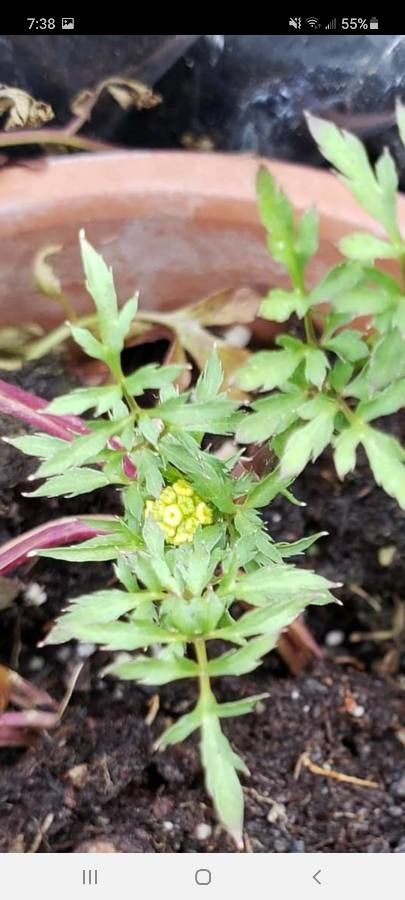
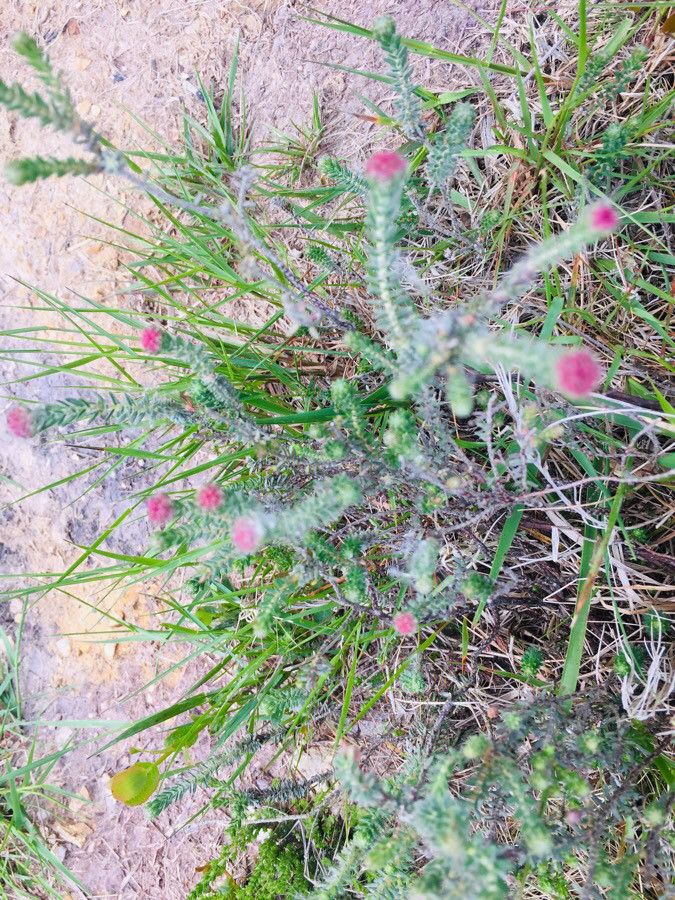
Sanicula arctopoides, commonly known as bear's foot sanicle, is a perennial herbaceous plant that belongs to the Apiaceae family. Native to North America, it thrives in a variety of habitats including forests, meadows, and rocky slopes. The plant can grow up to 60 centimeters tall and features a basal rosette of deeply lobed, toothed leaves. Its hairy stem is crowned with small greenish-white flowers, which cluster in umbels at the top. These flowers bloom from May to August, eventually giving way to small fruits equipped with hooked bristles for dispersal by animals or the wind.
Traditionally, Native American tribes have utilized Sanicula arctopoides for its medicinal properties to treat ailments such as coughs, colds, fevers, and wounds. The plant contains compounds like coumarins, which possess anticoagulant properties.
Bear's foot sanicle also plays an essential role in supporting wildlife habitats. It provides food for pollinators like bees and butterflies and serves as a host plant for the caterpillars of certain butterfly species.
In summary, Sanicula arctopoides is an important native species with considerable ecological significance and medicinal value. It holds scientific interest and cultural importance within Native American communities, who have relied on this herbaceous perennial through the ages.
Botanical profile.
- Plant Type
- Herb
- Life Cycle
- Perennial, Biennial
- Genus
- Sanicula
- Family
- Apiaceae
- Hardiness Zone
- 7-10
- Mature Height
- 5 cm to 30 cm
- Mature Spread
- 10 cm to 30 cm
- Leaf Color
- Green, Yellow Green
- Leaf Type
- Semi-evergreen
- Flower Color
- Yellow
- Flower Size
- 1.52 cm
- Bloom Time
- Early spring, Mid spring
- Planting Time
- Spring, Summer
- Harvest Time
- Early summer, Mid summer
Other names.