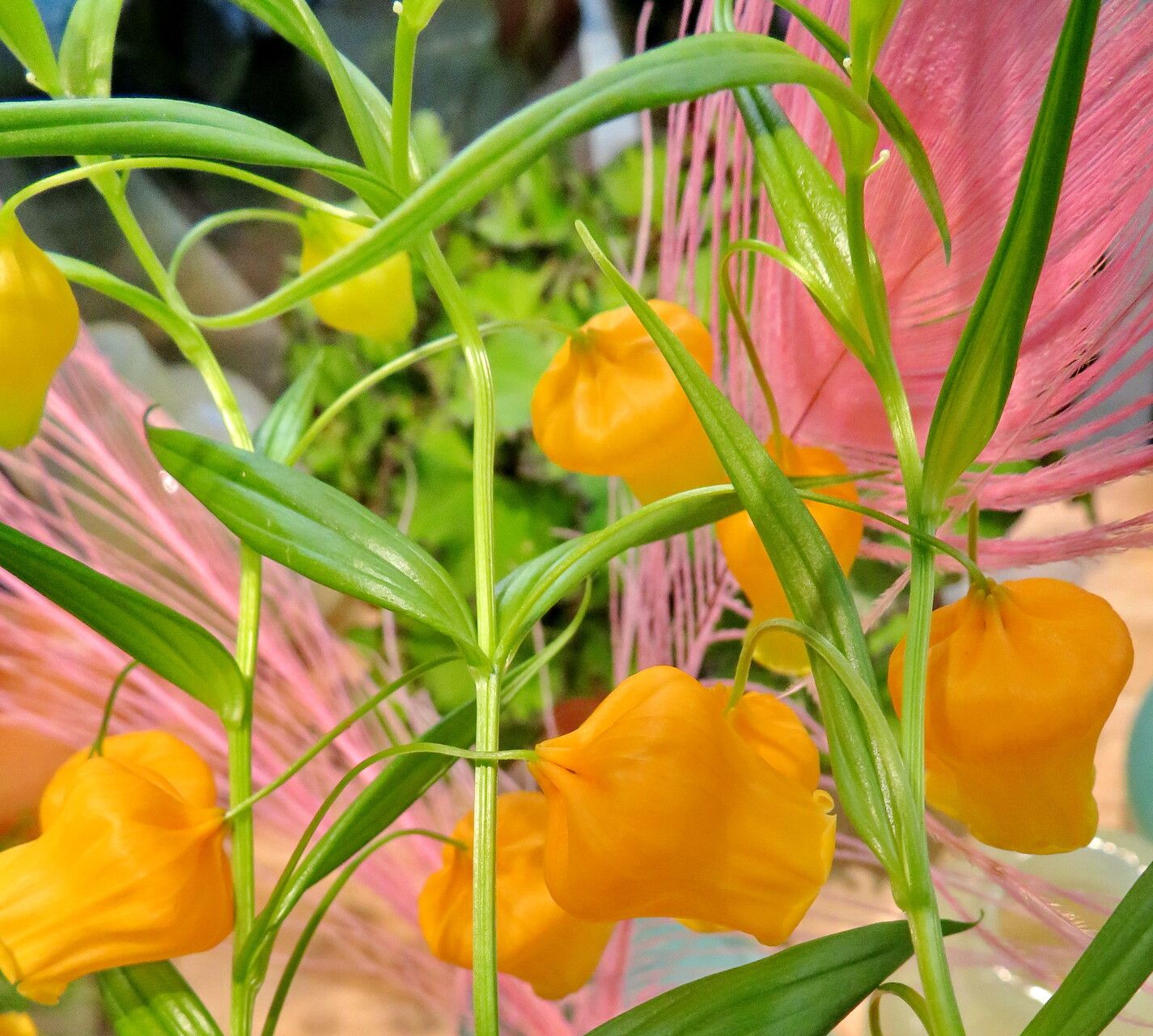
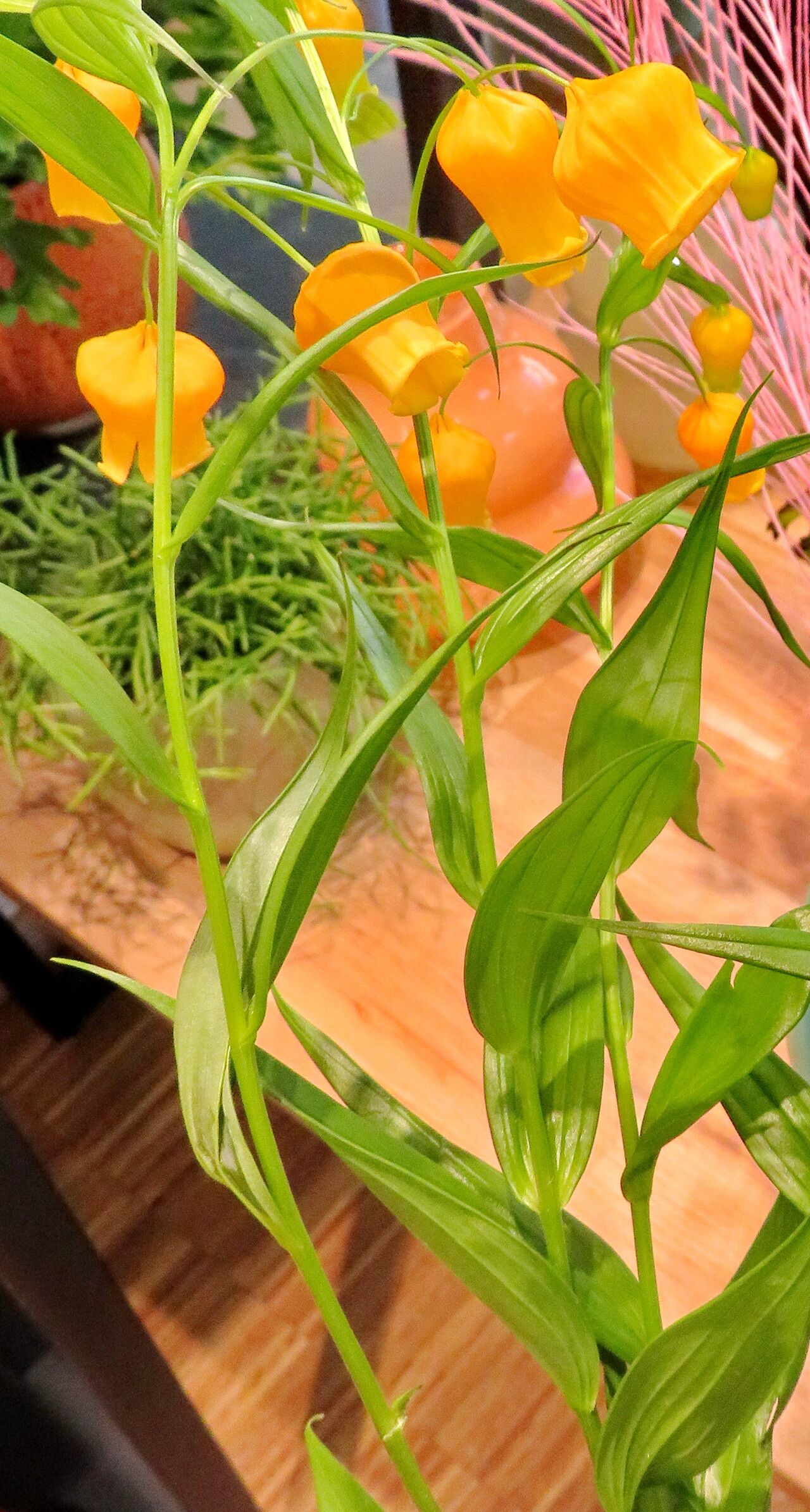
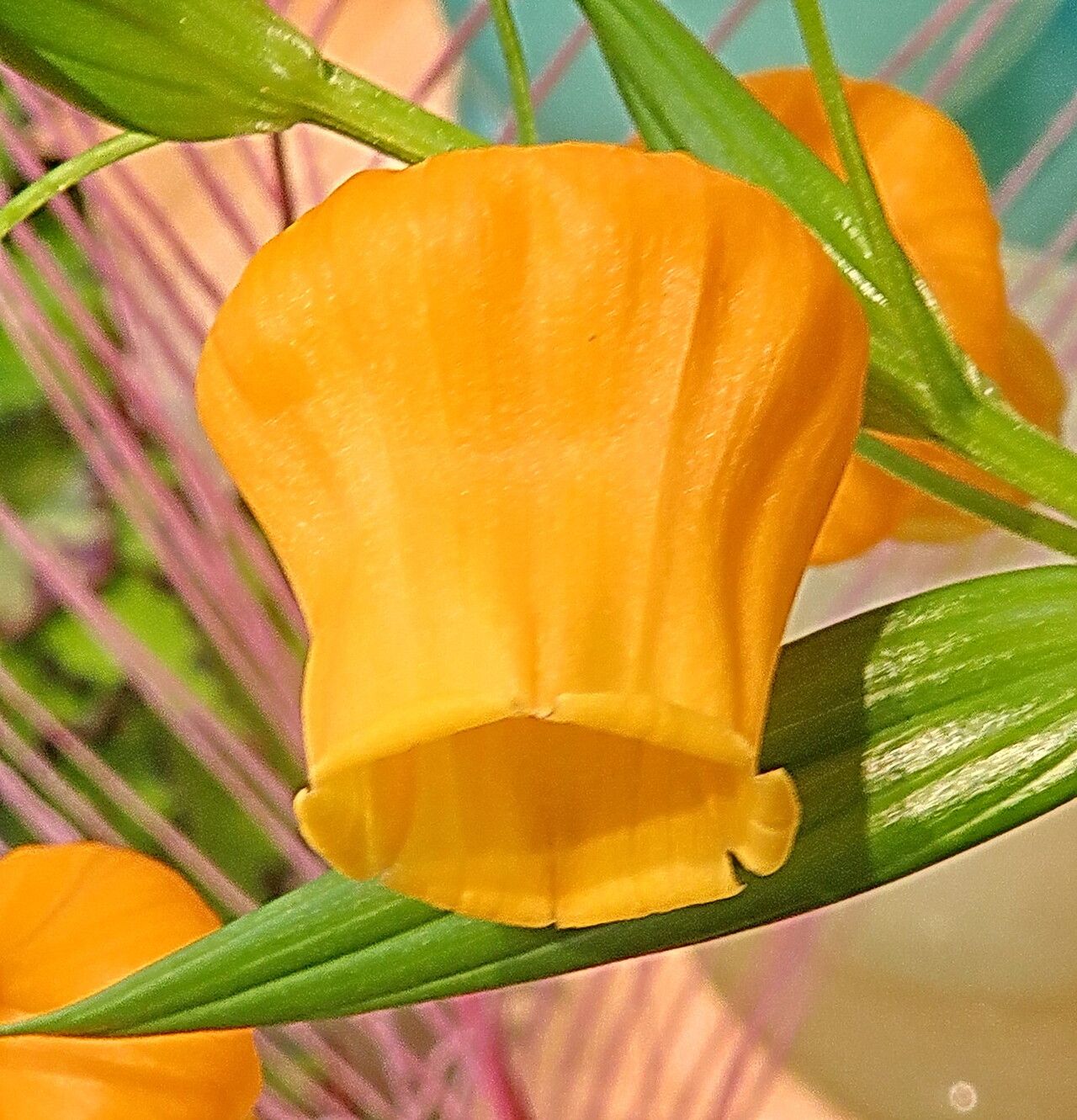
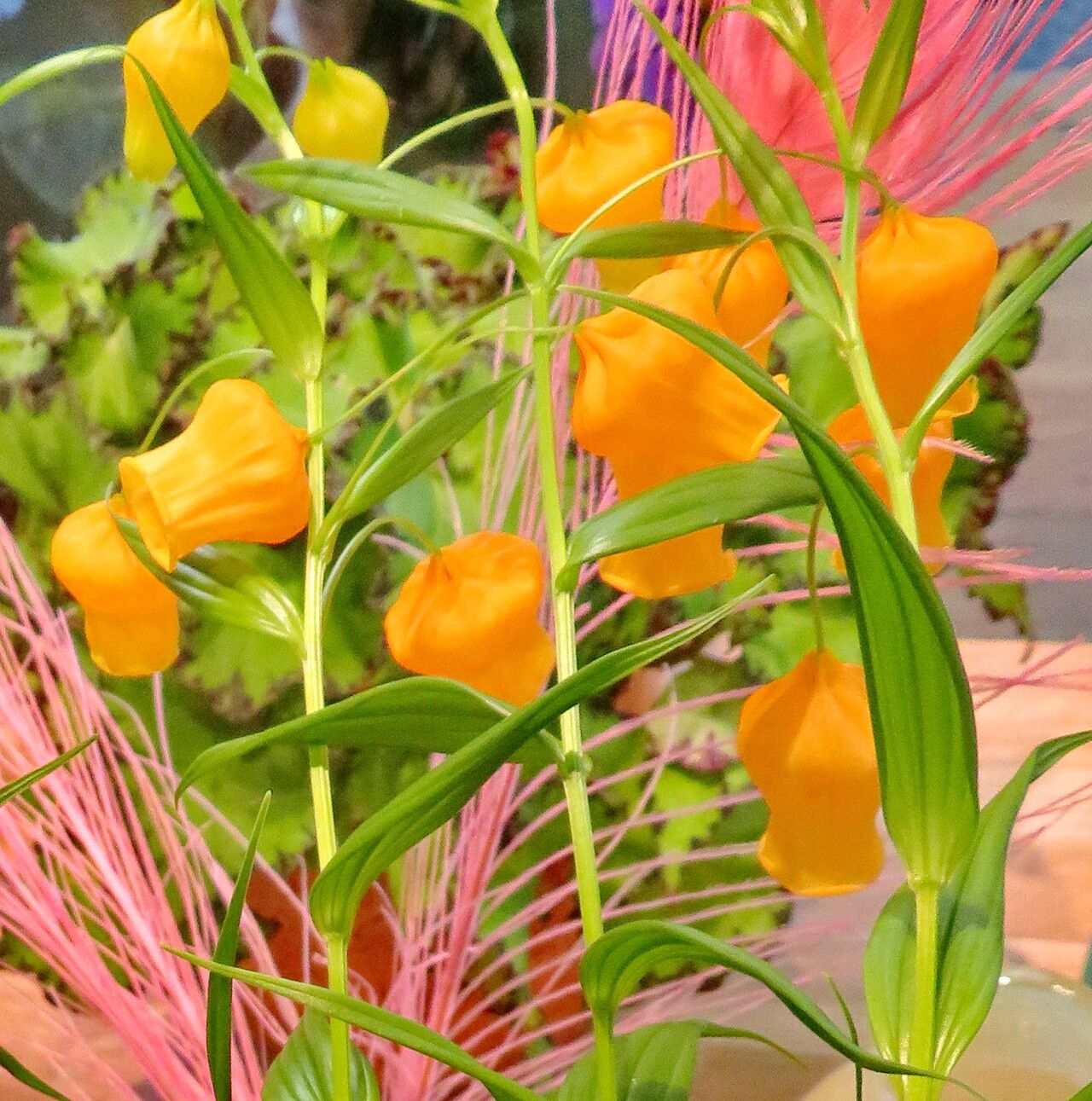
Sandersonia is a monotypic genus of rhizomatous plant, belonging to the family Colchicaceae, the single species Sandersonia aurantiaca being native to South Africa and Eswatini (Swaziland). Common names for S. aurantiaca include Christmas bells, golden lily of the valley, Chinese lantern lily and Chinese lantern bulb. S. aurantiaca is a perennial plant of trailing growth that can reach 30 inches in height. The flowers are yellow or orange.
Christmas bells has good disease resistance and is generally not susceptible to illnesses. However, it can be vulnerable to pests and diseases present in its environment. Such infections are typically mild. Regarding care, the plant needs moderate maintenance. It should be pruned regularly to preserve a neat appearance and promote healthy growth. Applying fertilizer can also encourage flowering. Christmas bells is suitable for anyone who has outdoor space, such as a garden or patio, and does not demand extensive care experience. It may need extra attention when grown indoors.
How to keep Sandersonia Aurantiaca.
Light
Christmas bells prefers an environment with steady, strong light for optimal growth, although it can tolerate conditions where radiant heat is somewhat reduced. Native to habitats with abundant sun, it may exhibit poor growth if kept in prolonged shade or given too little light.
Water
Christmas bells originate from the grasslands of Southern Africa. They thrive in well-drained soil and can tolerate moderate drought. However, during the growing season, they need consistent moisture, so weekly watering is necessary. By mimicking the plant’s natural rainfall patterns, you can enhance its ornamental value in cultivation.
Temperature
Christmas bells is native to temperate zones where natural temperatures range from 68 to 95 °F (20 to 35 ℃). It prefers comparable conditions, growing best within that identical range. Seasonal adjustments for warmer or cooler periods may be required to maintain its health.
Fertilizer
The best time to fertilize a Christmas bells is in early spring, as it comes out of dormancy and begins active growth. Fertilizing supplies essential nutrients for healthy growth. Although Christmas bells has relatively low fertilizer needs, applying fertilizer once a year can improve its survival and produce better, longer-lasting flowers.
Pruning
Christmas bells have vibrant, bell-shaped flowers that add a festive touch to any garden. To ensure healthy growth and beautiful blooms, it is important to prune them from early to late spring. Focus on removing dead stems and thinning out crowded areas to improve growth and airflow. Regular pruning not only enhances blooming but also promotes the overall health of the plant. Always use sharp, sterilized tools to prevent the spread of diseases.
Botanical profile.
- Plant Type
- Herb
- Life Cycle
- Perennial
- Genus
- Sandersonia
- Family
- Colchicaceae
- Hardiness Zone
- 9-10
- Mature Height
- 30 cm to 91 cm
- Mature Spread
- 20 cm
- Leaf Color
- Green
- Leaf Type
- Deciduous
- Flower Color
- Orange, Yellow, Cream, Gold
- Flower Size
- 0.76 cm to 2.54 cm
- Bloom Time
- Early summer, Mid summer
- Planting Time
- Spring
- Harvest Time
- Late summer, Early fall
- Native Area
- South Africa, Eswatini, Mozambique
Other names.