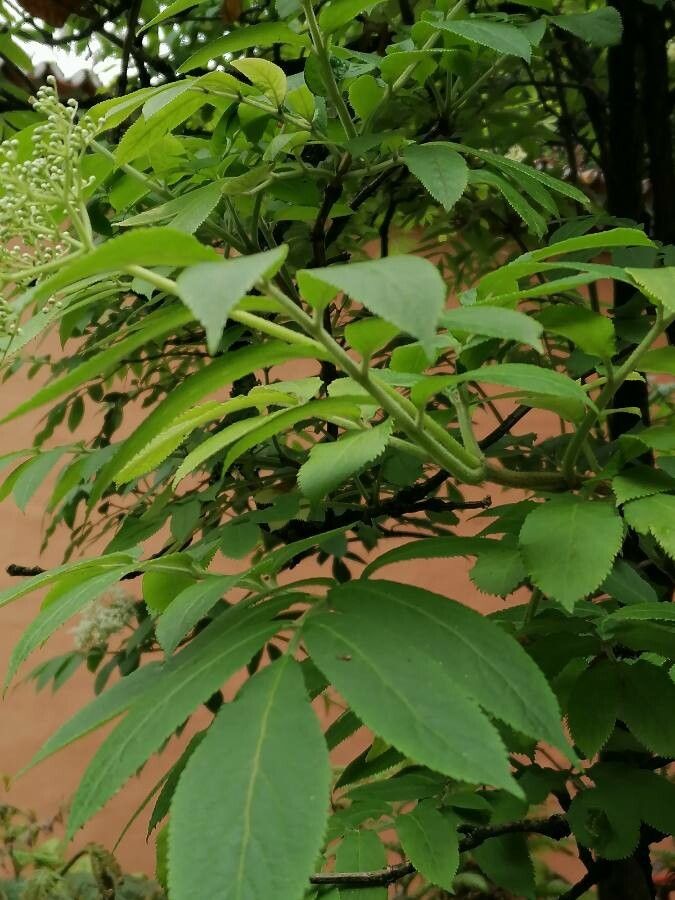
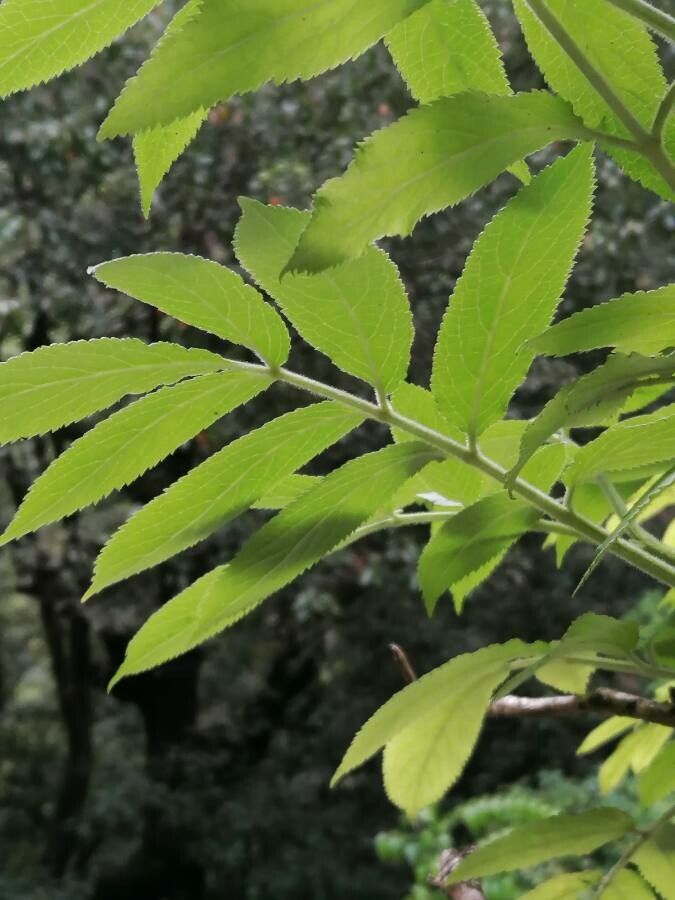
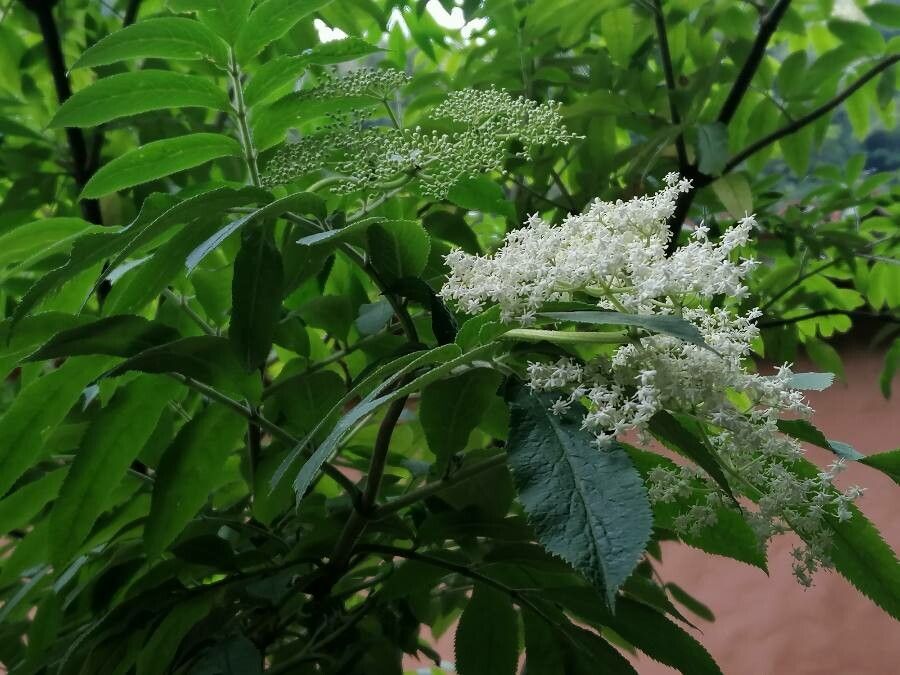
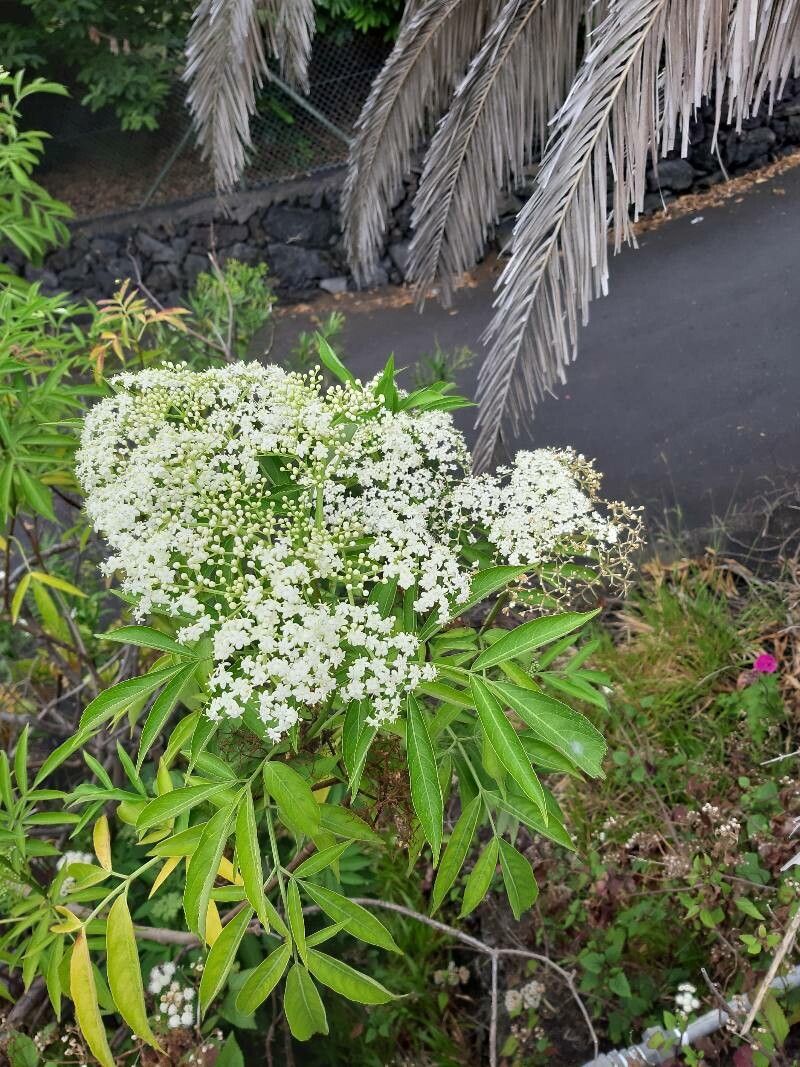
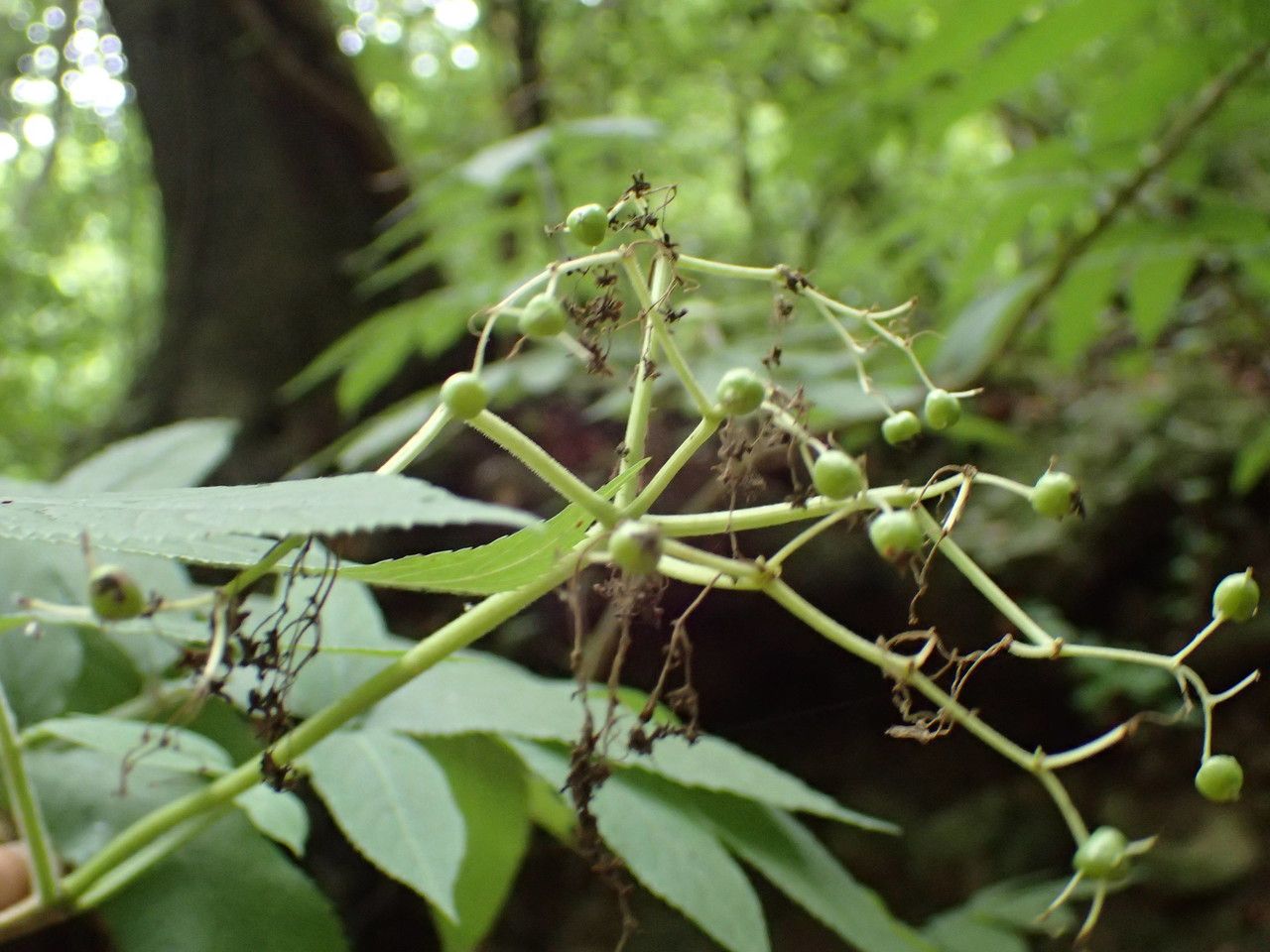
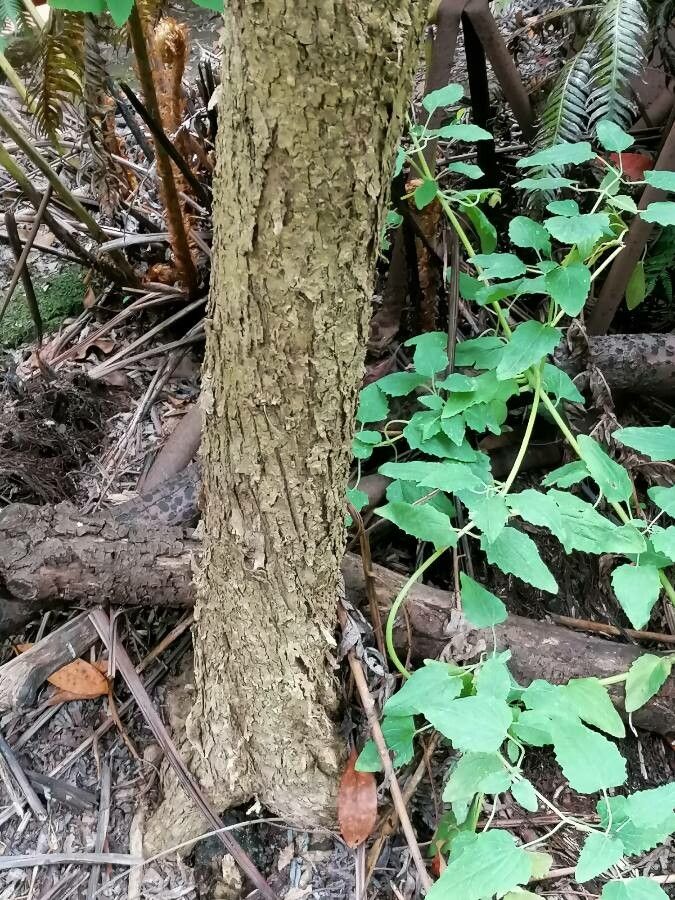
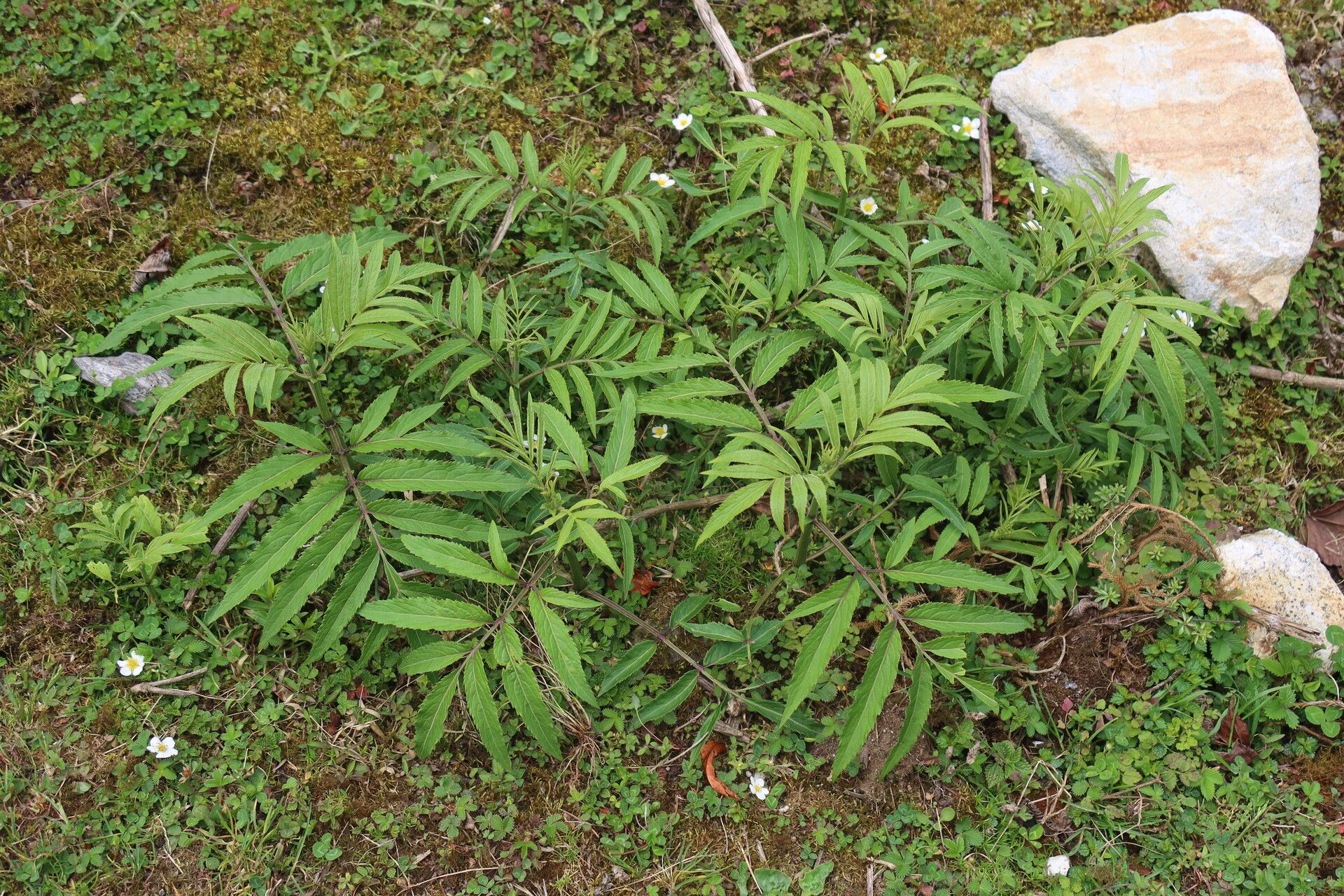
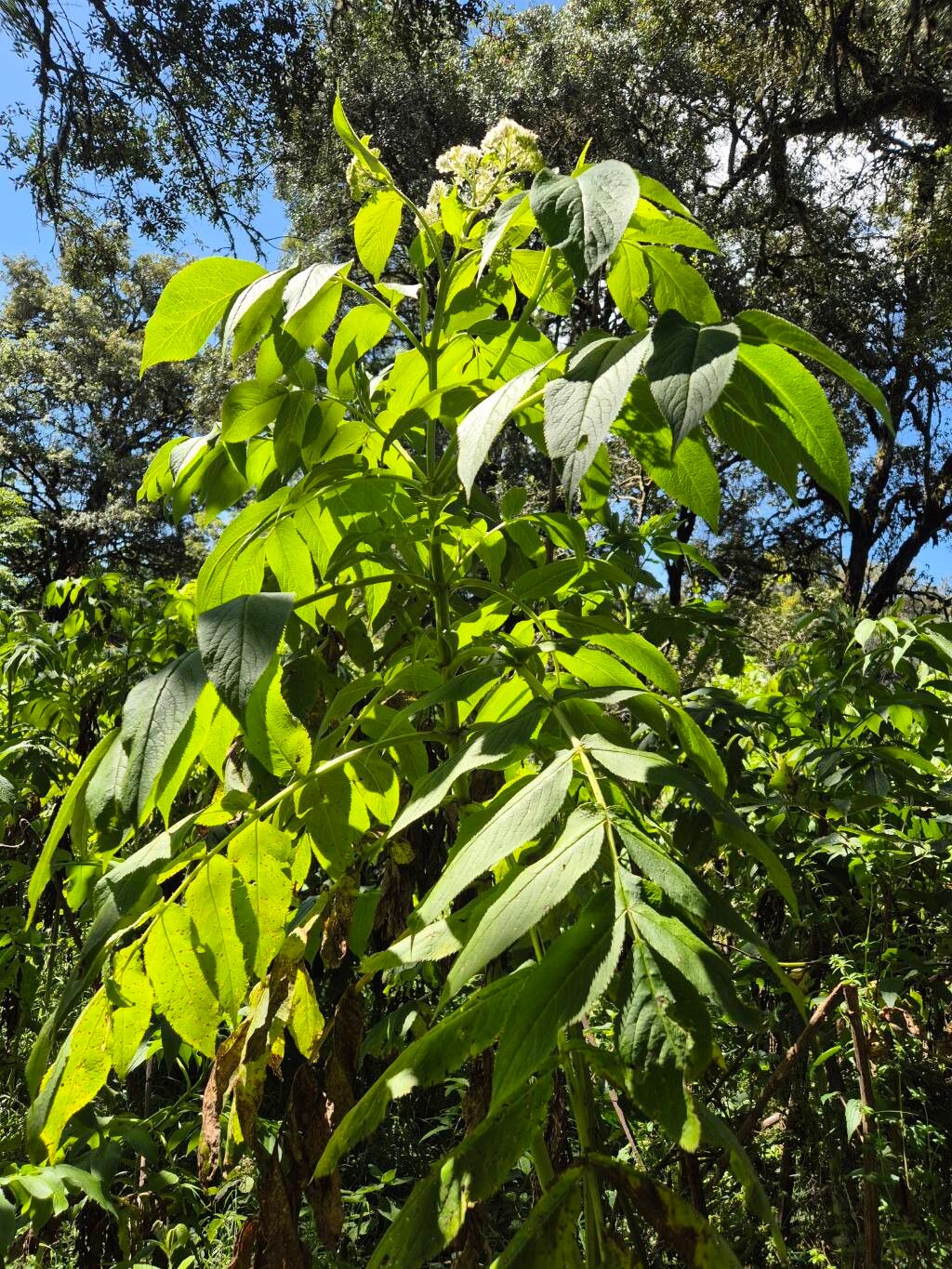
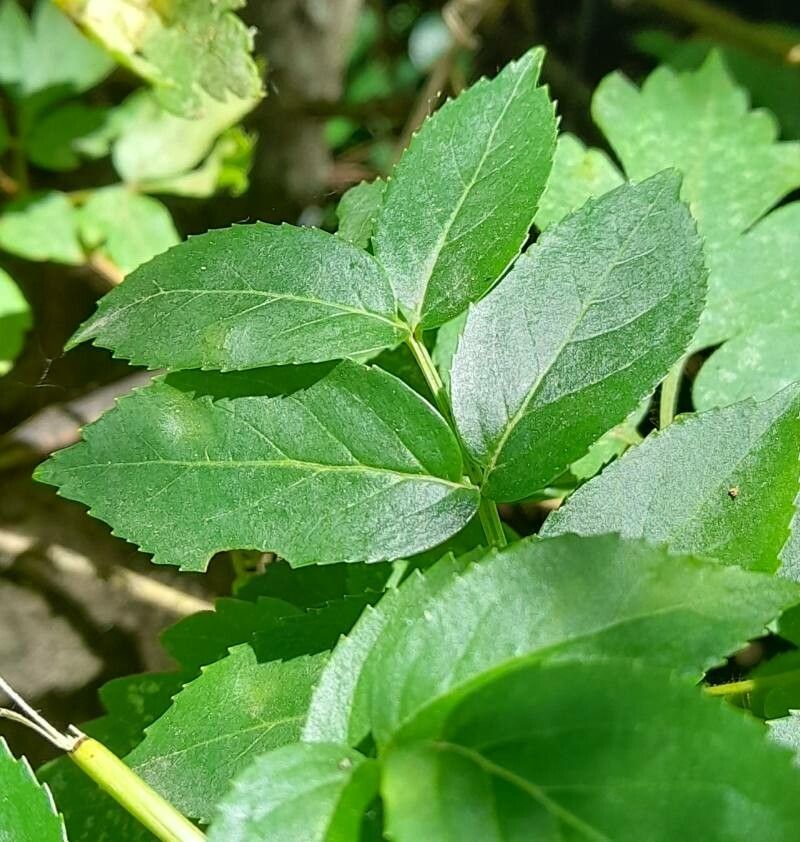
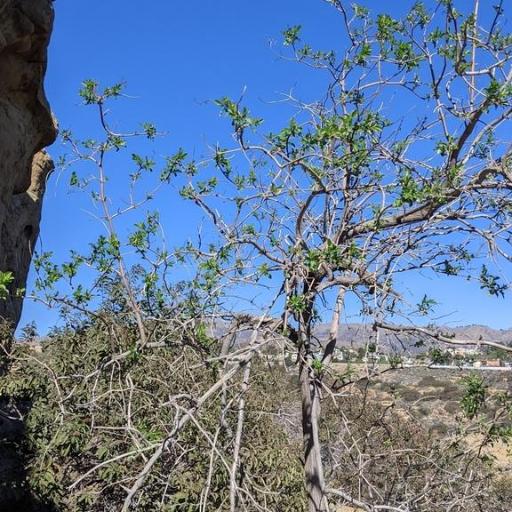
Sambucus palmensis, commonly known as the Canary Island elderberry, is a flowering plant in the Adoxaceae family. It is native to the Canary Islands, particularly on La Palma and Tenerife. This plant typically grows up to 5 meters tall and features a rounded crown with dark green, pinnately compound leaves. The small white flowers are arranged in large clusters that can reach up to 30 cm in diameter. The plant's fruit is a small black berry that ripens from August to September.
Traditionally, indigenous people in the Canary Islands have used Sambucus palmensis for its anti-inflammatory properties. Aside from its medicinal uses, the plant is also valued for its ornamental appeal, sporting attractive foliage and flowers that make it a popular choice for gardens.
However, the species is currently threatened by habitat loss due to urbanization and agricultural activities on its native islands. Consequently, the International Union for Conservation of Nature (IUCN) has listed it as endangered. To help preserve this unique species for future generations, conservation efforts such as seed collection programs and habitat restoration projects are underway.
Sauco displays strong disease resistance and is generally not likely to suffer from illnesses. With regard to care, this plant is fairly low-maintenance. Planted outdoors, it needs only minimal watering, and larger specimens typically do not require pruning. Smaller plants, though, should be pruned after they finish blooming. Saucot is appropriate for anyone who has an outdoor area, such as a garden or a deck, and it does not demand extensive care experience.
How to keep Sambucus Palmensis.
Light
Sauco is native to habitats like forest understories and rocky areas, where it grows in natural shade. It prefers partial sun but can adapt to full sun or full shade, showing a versatile and hardy nature.
Temperature
Sauco shows strong adaptability to various climatic conditions, whether in scorching summers or chilly winters. However, it does have an optimal temperature range for growth. When temperatures become excessively high, the plant is susceptible to heat and humidity stress, which can result in its death. In areas where temperatures approach the lower limit of its cold tolerance, it's important to implement insulation measures to protect the plant.
Fertilizer
The Sauco plant needs adequate nutrients to achieve optimal fruit production. Fertilize in early spring to promote new growth and bloom development. Regular feeding keeps the plant healthy, helps it produce more delicious fruit, and prevents nutrient-deficiency problems like yellow leaves and poor fruit production.
Botanical profile.
- Plant Type
- Shrub
- Life Cycle
- Perennial
- Genus
- Sambucus
- Family
- Viburnaceae
- Hardiness Zone
- 9-11
- Mature Height
- 3.05 m to 6.1 m
- Mature Spread
- 2.13 m to 3.96 m
- Leaf Color
- Dark Green
- Leaf Type
- Deciduous
- Flower Color
- White
- Flower Size
- 0.51 cm to 0.76 cm
- Bloom Time
- Early summer, Mid summer
- Planting Time
- Spring, Summer
- Harvest Time
- Late summer, Early fall
Other names.